Our readers keep the lights on and my smoothie glass nicely filled. As an Amazon Associate, I earn from qualifying purchases.
Ceramic blades are exceptionally hard, but that hardness comes with a specific challenge: finding a sharpener that can actually refine the edge without chipping or wearing out prematurely. Standard steel hones often slide right off, and coarse diamond plates can be too aggressive for a material that demands precision. The right tool for the job uses a ceramic or diamond abrasive matched to the blade’s rigidity, restoring that factory-fresh slicing ability with consistent results.
I’m Mohammad Maruf — the founder and writer behind WellFizz. I’ve spent hundreds of hours analyzing abrasives, grit ratings, and angle guides to separate the tools that actually work from those that just look good on a countertop.
After poring over customer feedback and technical specifications, these five models represent the most effective and reliable options for keeping your ceramic knives sharp. This guide breaks down the best ceramic knife sharpener for every skill level and budget.
How To Choose The Best Ceramic Knife Sharpener
Choosing a sharpener for ceramic knives isn’t the same as picking one for steel. The extreme hardness of the blade material (often above 65 HRC) requires a similarly hard abrasive, and the brittle nature of ceramic demands a controlled, non-impact approach. Here are the critical factors to consider.
Abrasive Material: Diamond or Ceramic
Only diamond or specialized ceramic abrasives are hard enough to grind and polish a ceramic blade effectively. Standard metal files or steel rods will just skid across the surface. Diamond abrasives are the most aggressive, ideal for reshaping or repairing a damaged edge, while high-grit ceramic rods offer a finer finish for maintenance and honing. Avoid any sharpener that relies on steel or tungsten carbide wheels, as these can chip or crack the blade.
Grit Rating and Stage Design
Grit rating indicates the coarseness of the abrasive. For ceramic knives, a coarser grit (around 400-600) is useful for repairing chips or re-establishing a very dull edge, while a medium grit (1000-1500) handles daily sharpening. A fine or superfine grit (3000+) is used for polishing and honing to a razor finish. Multi-stage sharpeners combine these steps into one tool, making the process more convenient but often less customizable than a single rod or stone.
Angle Control and Safety
Maintaining a consistent angle is crucial for ceramic knives, as a misaligned stroke can create a weak or asymmetrical edge that is prone to chipping. Some sharpeners feature built-in angle guides (usually 15 or 20 degrees) that lock the blade in position, removing the guesswork. For hand-held rods, a steady, practiced hand is required. A good grip and a non-slip base or handle also add a layer of safety when working with such hard, brittle materials.
Quick Comparison
On smaller screens, swipe sideways to see the full table.
| Model | Category | Best For | Key Spec | Amazon |
|---|---|---|---|---|
| Bogoni Rolling Sharpener | Rolling Pull-Through | Effortless, consistent sharpening | 400-Grit Diamond & 3000-Grit Ceramic Discs | Amazon |
| Global Minosharp G-91 | Pull-Through | Glass & Global brand knives | Superfine, Fine & Coarse Ceramic Wheels | Amazon |
| VIDOME Electric | Electric | Fast, powered sharpening | 100% Diamond Abrasives, 3-Stage | Amazon |
| Sharpeak 109R | Honing Rod | Precision honing between sharpening | 3000-Grit Ceramic Rod, 12-inch | Amazon |
| Shenzhen Knives White Rod | Honing Rod | Budget-friendly daily honing | 1000-Grit White Ceramic, 12-inch | Amazon |
In‑Depth Reviews
1. Bogoni Rolling Knife Sharpener

The Bogoni Rolling Sharpener takes a unique approach by combining a 400-grit diamond disc for reshaping with a 3000-grit ceramic disc for polishing, all in a rolling, magnet-guided system. This design eliminates the angle-guessing that often plagues manual rod sharpeners, especially for brittle ceramic blades. The included leather strop is a thoughtful addition for that final, hair-popping finish, making it a complete sharpening solution in a single, compact unit.
Its magnetic angle guides lock the knife at exactly 15 or 20 degrees, which is a huge advantage for anyone who wants consistent results without a steep learning curve. Users with hand or wrist fatigue, including professional chefs, have reported effortless use and dramatically sharper edges in a matter of minutes. The high-quality natural wood construction feels substantial, and the N52 magnets hold the knife securely without any wobble.
The dual-disc system is what makes this model stand out for ceramic knives. The diamond wheel handles the hard work of grinding the edge, while the finer ceramic disc refines and polishes it to a razor finish. While it’s more of a complete system than a simple hone, the convenience and speed are hard to beat for anyone serious about maintaining a perfect edge on both steel and ceramic blades.
Why it’s great
- Effortless magnetic angle guides remove guesswork
- Dual diamond and ceramic discs handle reshaping and polishing
- Safe and comfortable for users with hand fatigue
Good to know
- Not as portable as a simple honing rod
- More of a sharpening system than a quick-touch hone
2. Global Minosharp Stage 2 Sharpener (G-91)
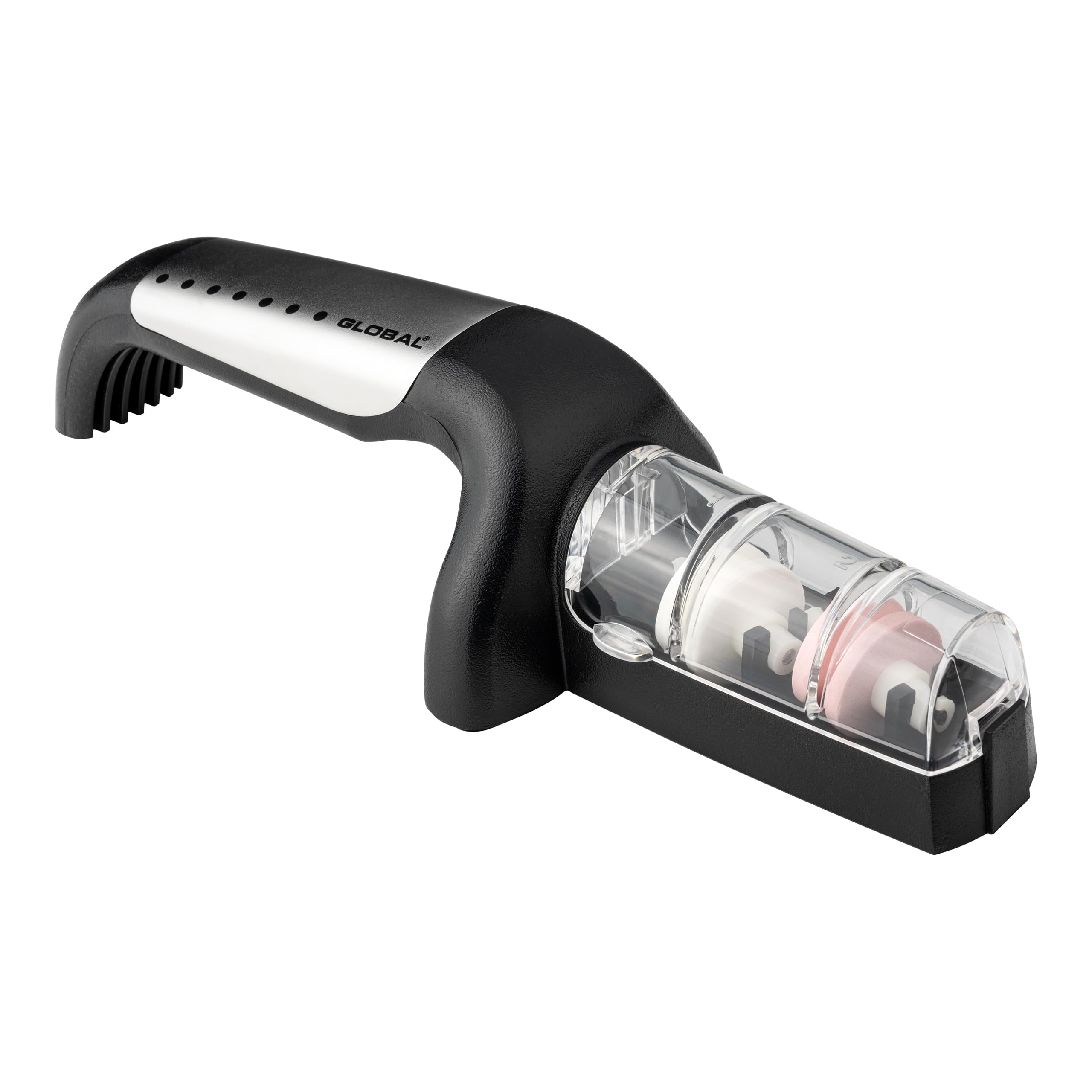
The Global Minosharp is a dedicated pull-through sharpener designed with three distinct ceramic stages: a white coarse wheel, a pink fine wheel, and a final superfine polishing wheel. It’s specifically engineered to work with Global’s unique edge geometry, which is a common characteristic of many high-quality Japanese ceramic and steel knives. The water reservoir built into the base cools the blade during sharpening, preventing overheating that can damage a ceramic edge.
This model earns its premium reputation through simplicity and effectiveness. Users report that a few light passes restore incredibly sharp edges with almost no effort, making it an ideal tool for those who don’t want to learn the technique of a whetstone or rod. The rubberized base keeps it firmly planted on the counter, adding a layer of safety that is important when working with hard ceramics.
While it works on most cutlery brands, its sweet spot is unquestionably Global and other Japanese-style knives with a similar edge profile. It’s not a universal solution for every ceramic blade shape, but for those with the right knives, it delivers professional results in seconds. The durable ceramic stones are built to last for years, making it a solid long-term investment for a specific, high-end knife collection.
Why it’s great
- Three refining stages deliver a superfine, polished edge
- Water cooling system protects the blade from heat damage
- Incredibly simple to use with consistent results
Good to know
- Best performance is locked to specific blade geometries
- Not designed for very thick or damaged blades
3. VIDOME Professional Electric Knife Sharpener
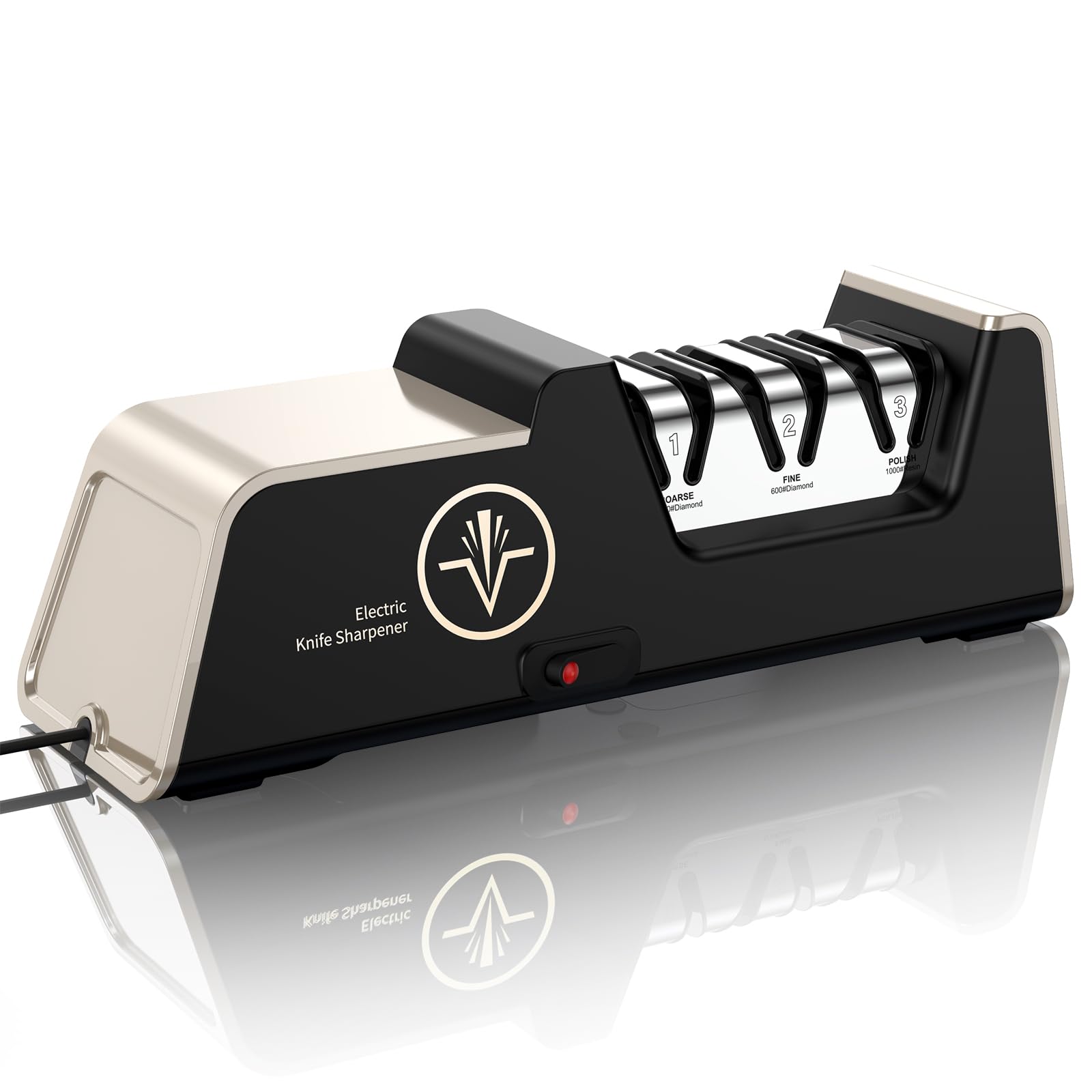
The VIDOME Electric Sharpener stands out for its use of 100% diamond abrasives in the first two stages, making it powerful enough to handle the extreme hardness of ceramic blades without slowing down or clogging. The third stage employs stropping disks for a final polish, bringing the edge to a fine finish. With a simple on/off switch and flexible spring guides that hold the blade at the correct angle, it’s a fast, hands-free solution for the impatient or time-constrained cook.
Reviews highlight its ability to revive a dull ceramic chef knife in about 60 seconds, a feat that would take much longer with a manual system. The diamond abrasives are effective at both reshaping a damaged edge and refining it to a sharp, functional state. The magnetic chip collection tray is a nice touch for easy cleanup, keeping a shard of ceramic or metal dust from ending up on the counter.
Its main trade-off is its size and the fact that the electric motor introduces some noise (rated between 60-80dB). Additionally, some users noted that the guide slots are better suited for larger blades, making it a poor choice for small paring knives. For the home cook with a collection of standard-sized 8-inch chef’s knives and ceramic blades, however, this is the quickest route to a razor edge without any manual labor.
Why it’s great
- Fast electric operation sharpens in under a minute
- Diamond abrasives handle ceramic and high-hardness steel
- Three-stage system for grinding, honing, and polishing
Good to know
- Guide slots are less effective for shorter blades
- Motor noise may be noticeable in a quiet kitchen
4. Sharpeak 109R 3000-Grit Ceramic Sharpening Rod

The Sharpeak 109R is a high-grit (3000) ceramic honing rod that functions more like a finishing stone on a stick. It’s designed for touch-ups between more aggressive sharpening sessions, refining and polishing an already sharp edge rather than grinding down a dull one. Its 12-inch rod length (excluding handle) provides plenty of room for long chef’s knives, and the built-in 20-degree angle guide in the hexagonal hand guard helps maintain consistency.
Users have found it particularly effective for Japanese steels that are harder than 61 HRC, where steel hones are ineffective. It removes material very slowly, which is ideal for maintaining the edge of a high-end ceramic blade over years of use. The rod’s ceramic is non-porous, non-toxic, and completely rust-proof, making it a low-maintenance tool. A wet stroke can enhance the cutting action, delivering a razor-sharp finish in just a few passes.
The Sharpeak’s main strength is also its limitation: it’s not a tool for repairing damage or establishing a new bevel. For that, you would need a coarser diamond stone or the diamond disc in a system like the Bogoni. As a daily driver for keeping an already sharp ceramic knife in top condition, however, this rod is one of the best on the market, backed by a solid warranty from a reputable company.
Why it’s great
- Ultra-fine 3000-grit finish polishes edges beautifully
- Includes a built-in 20-degree angle guide
- Perfect for maintaining high-hardness Japanese steel
Good to know
- Not effective for repairing chips or very dull blades
- Requires a steady hand for consistent passes
5. Shenzhen Knives White Ceramic Honing Rod

The Shenzhen Knives White Ceramic Rod offers a 1000-grit abrasive surface that is slightly coarser than the Sharpeak, making it better suited for general sharpening and honing on moderately dull knives. It’s long enough (12-inch rod) for professional kitchen use and comes with a reinforced zinc-alloy blade guard on the handle for safety. Users have found it effective for straightening edges and reducing the need for more aggressive sharpening methods.
Its HRC hardness rating of 68 means it is perfectly capable of handling ceramic and extremely hard steel knives. With 5-10 gentle swipes per side, many users report that it restores old santoku knives to a functional, sharp state. The non-roll nylon handle is comfortable and secure in hand, and the rod cleans easily with soap and water, though it should be hand-washed to avoid breakage.
The key difference here is grit: at 1000, it removes more material than a 3000-grit rod, making it more of a sharpening tool than a pure honing rod. This makes it a fantastic entry-level option for those on a budget who need a single tool to both sharpen and hone. It’s a versatile performer that outperforms many expensive steel rods, though it’s not as refined for final polishing as the finer-grit options.
Why it’s great
- Very affordable for the performance it delivers
- Coarser grit works for sharpening dull blades
- Durable white ceramic with a safe, non-roll handle
Good to know
- Rod may be too long for standard knife blocks
- Not ideal for very fine, final edge polishing
FAQ
Can a ceramic knife sharpener sharpen steel knives too?
How often should I use a ceramic honing rod on my knife?
Is a ceramic rod safe for very high-hardness Japanese knives?
Final Thoughts: The Verdict
For most users, the best ceramic knife sharpener winner is the Bogoni Rolling Sharpener because it combines the power of diamond abrasives with the precision of a guided magnetic angle system in a safe, fast, and easy-to-use package. If you want a dedicated tool for high-end Japanese or Global knives with a perfect factory edge, the Global Minosharp G-91 is the most refined pull-through option. And for a budget-friendly, low-maintenance approach to daily honing that outperforms most steel rods, the Shenzhen Knives White Ceramic Rod is a tough value champion.

Mo Maruf
I created WellFizz to bridge the gap between vague wellness advice and actionable solutions. My mission is simple: to decode the research and give you practical tools you can actually use.
Beyond the data, I am a passionate traveler. I believe that stepping away from the screen to explore new environments is essential for mental clarity and physical vitality.