Our readers keep the lights on and my smoothie glass nicely filled. As an Amazon Associate, I earn from qualifying purchases.
The difference between a blurry speck and a crisp aerial scene comes down to the GPS lock and gimbal stability — two details entry-level buyers often ignore when hunting for a sub-200 model. Below that ceiling, you have to weigh battery count against sensor quality, knowing that every dollar saved on the propeller frame gets spent on signal drop anxiety.
I’m Mohammad Maruf — the founder and writer behind WellFizz. I’ve spent dozens of hours parsing spec sheets, reading real user crash logs, and comparing brushless motor torque figures to identify which models actually hold altitude without wandering into a tree line.
Whether you are buying for a first-time pilot or upgrading from a toy-grade quadcopter, choosing the right drone under $200 with 4k camera means understanding GPS redundancy, battery chemistry, and why a 7.7V cell beats a 3.7V cell for sustained thrust.
How To Choose The Best Drone Under $200 With 4K Camera
When the price cap sits at $200, the biggest mistake is chasing the highest megapixel number while ignoring the propulsion system and navigation sensors. A 4K label means nothing if the camera shakes every time the wind shifts or if the drone drifts out of visual range within two minutes.
Brushless Motors vs Brushed Motors
Brushed motors wear out after roughly 50 to 100 flight hours and lose torque in light gusts. Brushless motors, found on every mid-range and premium model in this guide, deliver consistent RPM, lower noise, and enough thrust to hold steady in level-4 winds. Check for “brushless” in the spec line — if it is missing, the drone will struggle outdoors.
GPS Module and Return-to-Home Logic
A true GPS module locks onto satellites for position hold, route waypoints, and automatic return when the signal drops or battery runs low. Budget units sometimes advertise “GPS” but only use optical flow, which fails above 10 feet. Every product in the premium and mid-range tiers here includes a real satellite receiver that triggers return-to-home at 20% battery.
Battery Voltage and Flight Time
Standard 3.7V cells produce limited climb power and degrade faster. Higher-voltage packs — 7.4V or 7.7V — deliver more consistent discharge curves and longer total flight windows. Two batteries at 1,800mAh each can yield 40 to 48 minutes of combined flight if the voltage is above 7.4V. Anything below that typically cuts total runtime to 25 minutes or less.
Quick Comparison
On smaller screens, swipe sideways to see the full table.
| Model | Category | Best For | Key Spec | Amazon |
|---|---|---|---|---|
| PLEGBLE PL-715 | Premium | Extended flights with 2,700mAh packs | 46 min total flight time | Amazon |
| Punieayi GPS Drone | Premium | Built-in 5-inch screen piloting | 60 min flight time | Amazon |
| Karuisrc K600GPS | Premium | Controller with 4.5-inch screen | EIS stabilization | Amazon |
| SIMREX G29 | Mid-Range | Beginner GPS with optical flow | 500m transmission range | Amazon |
| REDRIE HK33 | Mid-Range | Wind resistance up to level 5 | 1640 ft signal range | Amazon |
| Oddire HK11 | Mid-Range | 48-min flight with 7.7V batteries | 7.7V 1800mAh cells | Amazon |
| NAFYRE N11 Pro | Mid-Range | Triple battery pack for long shoots | 66 min total flight time | Amazon |
| X9 GPS Drone by suangrc | Budget | Beginner-friendly with 4.5-inch LCD controller | 18 min total flight time | Amazon |
| REDRIE HK33 (Budget) | Budget | Entry-level durable quadcopter | 2-axis gimbal (2K effective) | Amazon |
In‑Depth Reviews
1. PLEGBLE GPS Drone PL-715
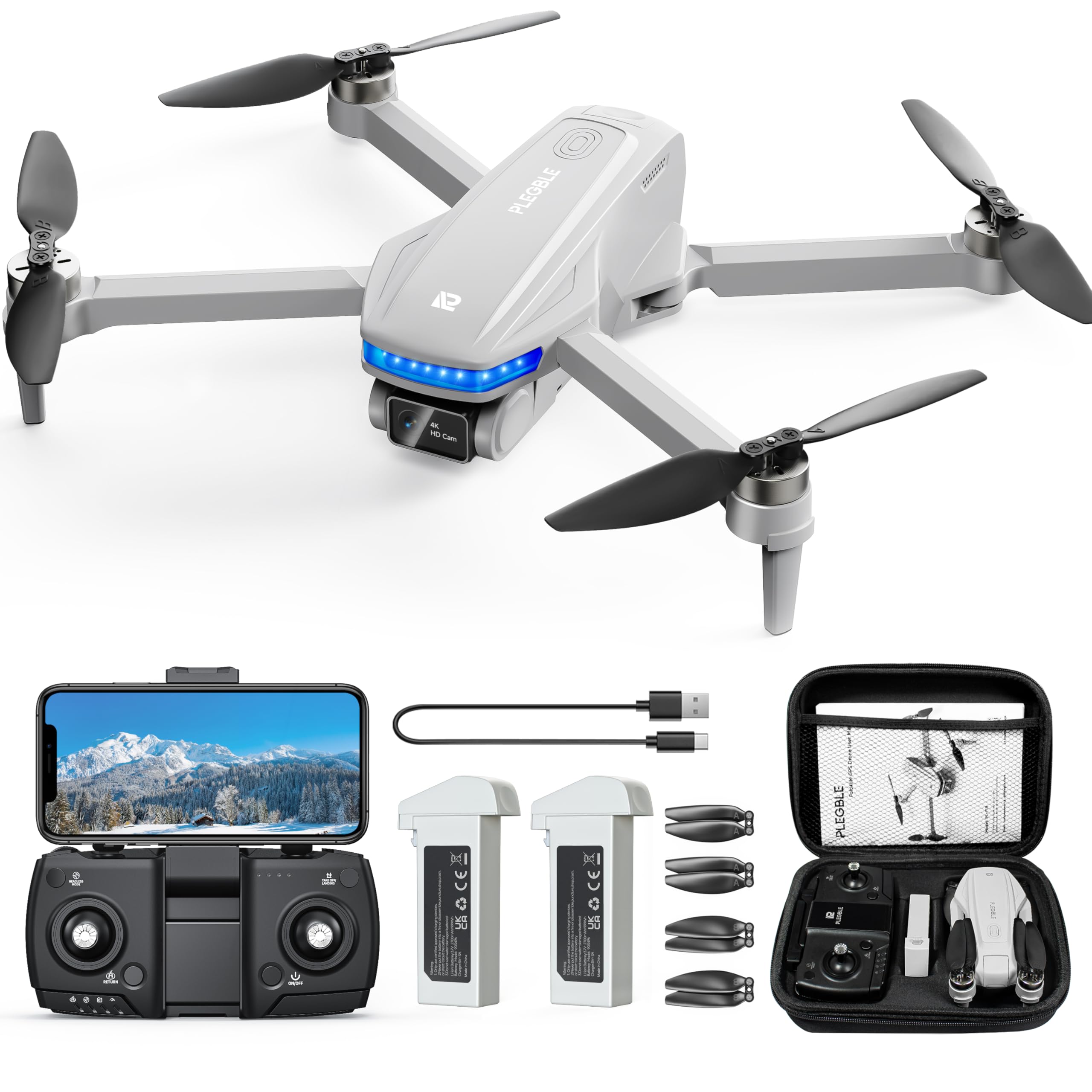
The PLEGBLE PL-715 hits the sweet spot between flight endurance and camera clarity. Each of the two 2,700mAh intelligent batteries supplies roughly 23 minutes of flight, giving you a combined 46 minutes before you need to land. That is enough runtime to cover multiple landscape passes or a full family outing without swapping packs mid-session.
The 4K sensor uses a 120-degree wide-angle lens with a 90-degree remote tilt, and the 5GHz FPV stream stays smooth up to 1,968 feet as long as the area is unobstructed. Beginner Mode restricts the radius to 30 meters, which is a thoughtful safety gate for first-time pilots who are still learning to manage throttle and yaw.
Brushless motors handle level-5 wind better than most competitors at this price tier, and the under-250g weight means no FAA registration is needed. The auto return function engages reliably when the battery hits the low threshold or the signal drops — two features that dramatically reduce flyaway risk for new owners.
Why it’s great
- Exceptional 2,700mAh battery capacity for extended shoot windows
- GPS auto return, Follow Me, and Waypoint modes work without glitching
- Under 250g eliminates FAA paperwork entirely
Good to know
- Beginner Mode is enabled by default and limits the flight radius to 30m
- Charging the batteries may require a USB-C surge protector for reliable top-ups
2. Punieayi GPS Drone with 5-inch LCD
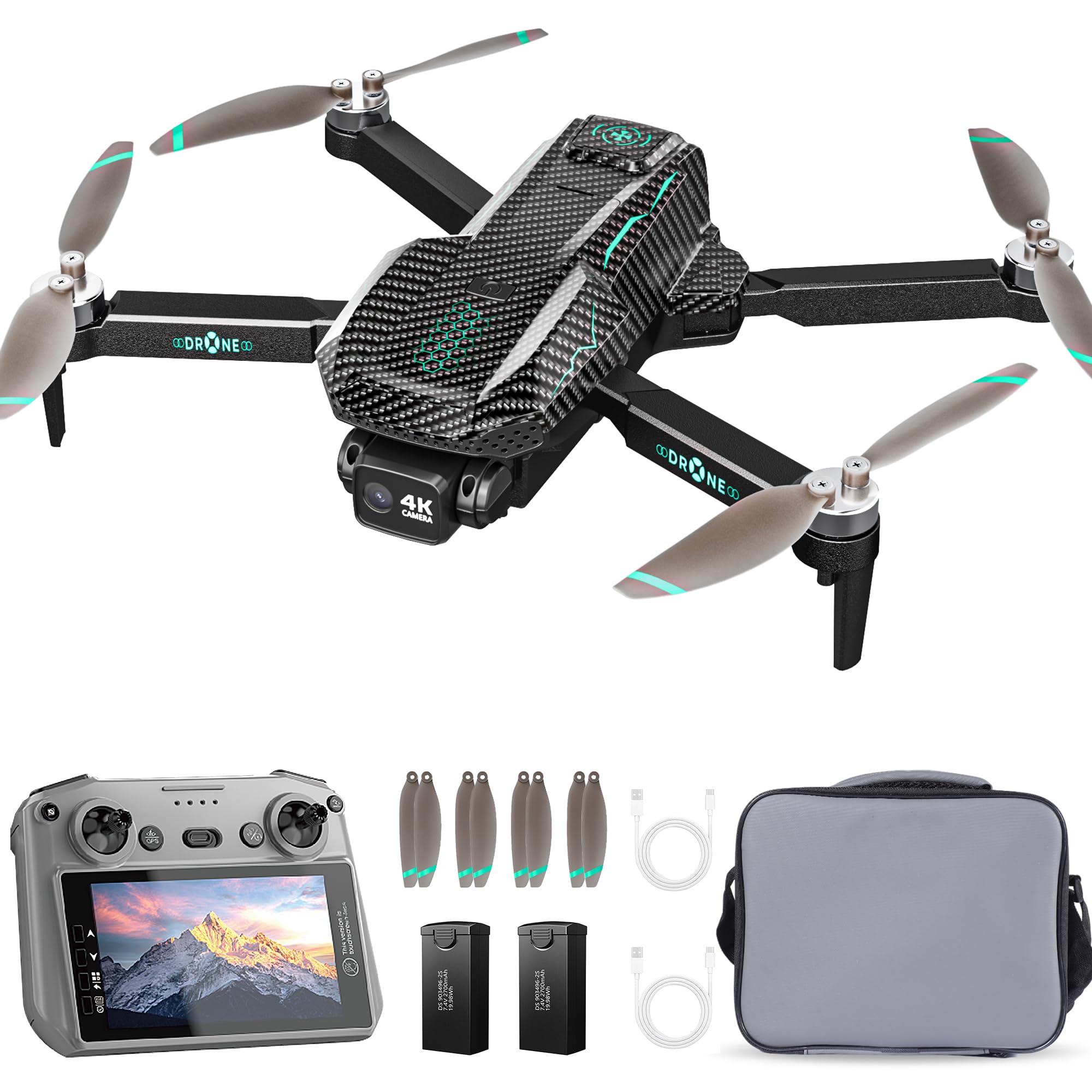
The Punieayi stands out for its non-touch 5-inch HD screen built directly into the remote controller. You do not need to clamp a phone to the transmitter or hunt for an compatible app. That screen delivers FPV video up to 5,000 feet, which is the longest real-time transmission range in this roundup.
Two 7.4V 2,700mAh batteries push the total flight envelope to 60 minutes — the highest capacity you will find under this budget ceiling. The 238g foldable frame stays under the registration threshold, and the included 8GB microSD card means you can start recording immediately instead of scrambling for storage.
GPS functions such as Circle Fly and Follow Me are reliable for outdoor use, though the drone requires a clear sky to lock enough satellites. The 90-degree adjustable camera captures usable 4K stills and smooth 1080P video, making it a strong contender for anyone who values long flight windows and a dedicated viewing display.
Why it’s great
- Built-in 5-inch screen eliminates phone dependency for FPV
- 60 minutes of combined flight time from two high-capacity batteries
- Includes an 8GB SD card and protective carrying case out of the box
Good to know
- The integrated screen is non-touch; all settings are managed through the remote
- No headless mode — orientation practice is needed for beginners
3. Karuisrc K600GPS
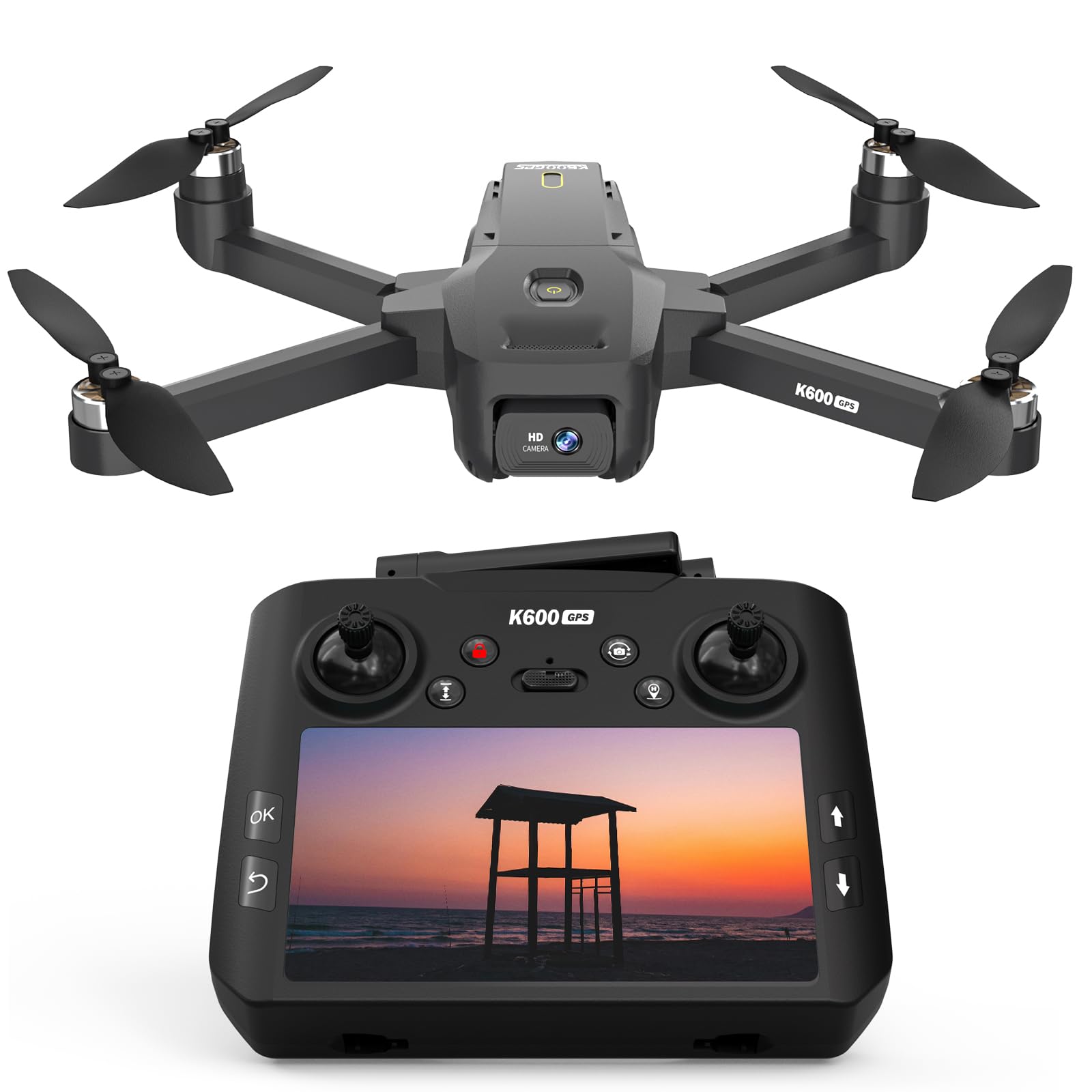
The Karuisrc K600GPS distinguishes itself with Electronic Image Stabilization (EIS) that smooths out vibration artifacts before they hit the memory card.
Its 4.5-inch screen on the controller gives you live FPV without needing to pair a phone, and the 12,000 RPM brushless motors provide enough thrust to hold altitude during aggressive yaw turns. The total weight of 195g makes it one of the lightest models here, which translates to less inertial force if you clip a branch.
GPS auto return triggers consistently on low battery or signal loss, and the Follow Me mode tracks moving subjects without laggy corrections. The modular battery design with USB-C charging reduces the hassle of proprietary cables, although the maximum flight time per battery is shorter than the dual-pack leaders.
Why it’s great
- EIS reduces jello effect in video without needing a mechanical gimbal
- Lightest frame in the lineup at 195g, improving crash survivability
- USB-C charging and modular battery simplify power management
Good to know
- Camera resolution is listed as 1080P rather than true 4K sensor output
- Supports only microSD cards up to 32GB
4. SIMREX G29
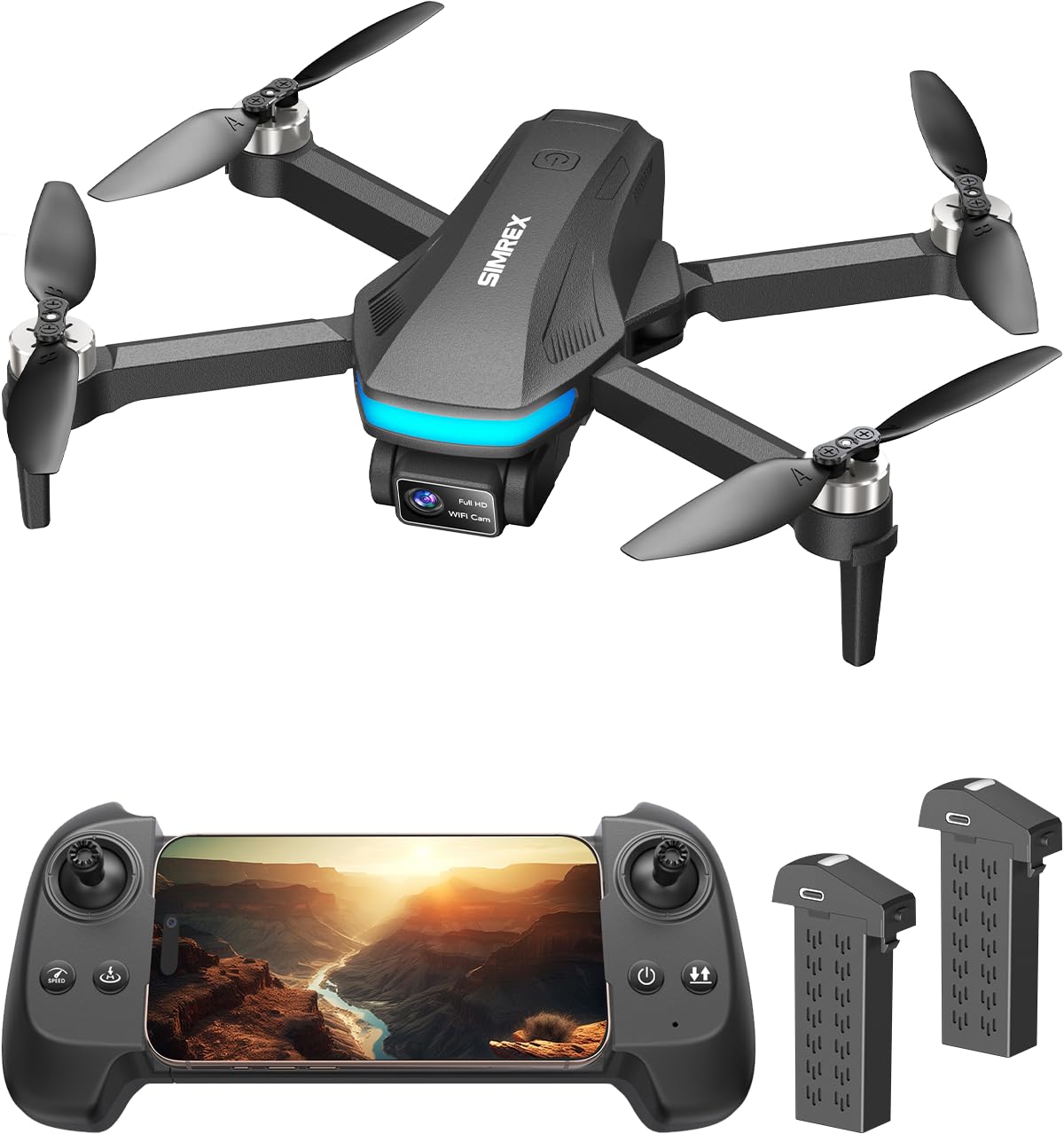
The SIMREX G29 packs a GPS module that locks onto satellites for reliable position hold and automatic return, yet it costs less than many non-GPS toys. That dual-layer navigation system — GPS outdoors plus optical flow for low-altitude indoor hovering — makes it a forgiving platform for new pilots.
The 90-degree electrically adjustable 4K camera and 5GHz FPV transmission cover up to 1,640 feet in open air. Gesture control lets you trigger photos with a hand wave, and the Find My Drone feature in the app shows the last known position on a map if the battery dies mid-flight.
Brushless motors deliver quieter operation and enough torque to cut through moderate wind without oscillating. Total flight time sits around 40 minutes from two batteries, and the foldable frame fits into a standard backpack pocket. Altitude Hold and Headless Mode reduce the learning curve for absolute beginners.
Why it’s great
- GPS and optical flow dual positioning for indoor-outdoor versatility
- Gesture control and Find My Drone add practical safety layers
- Foldable arms and compact form factor for travel
Good to know
- Not suited for experienced pilots looking for high-speed acrobatic flight
- Camera stabilization is purely digital, not mechanical gimbal
5. REDRIE HK33
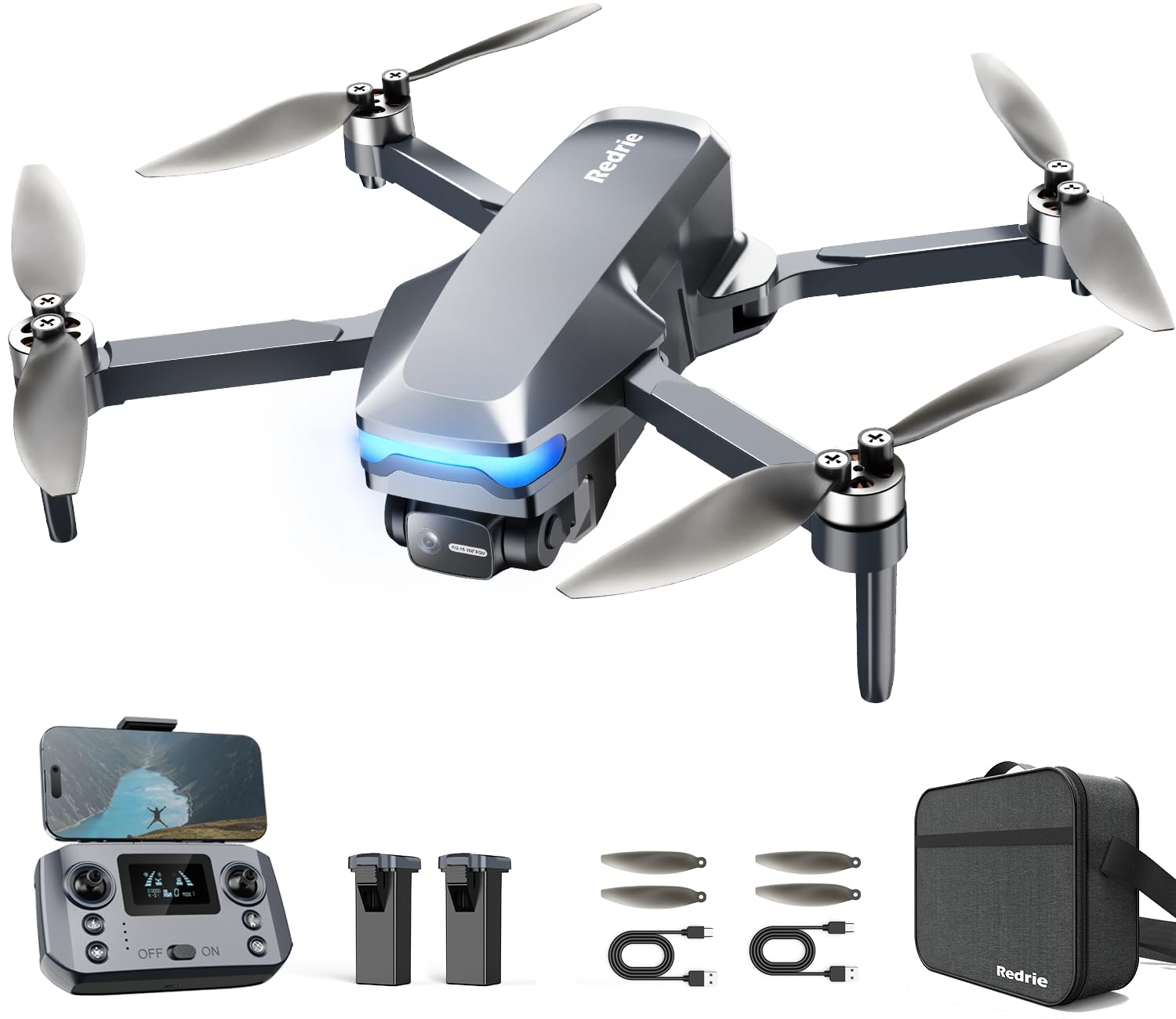
The REDRIE HK33 is built around physical vibration reduction and a wide 110-degree F2.15 aperture lens that pulls in more light during overcast conditions. The 4K photo resolution reaches 4096x3072P, while video records at 2048x1088P — close to true 2K — with enough dynamic range for golden-hour landscapes.
Two 1,800mAh batteries deliver a combined 45 minutes of flight, and the signal repeater in the remote pushes the control range to 1,640 feet. Brushless motors handle level-5 winds without the drone bobbing, which is unusual at this price point. GPS functions include auto return, Follow Me, Route Planning, and Fly Around.
The under-250g frame requires no FAA registration, and the included carrying case keeps everything organized. Setup is straightforward via QR code videos, though beginners report that camera stabilization is less effective than mechanical gimbal systems found on higher-budget models.
Why it’s great
- Physical vibration reduction improves image sharpness versus pure digital correction
- Strong wind resistance keeps the frame steady in gusty coastal conditions
- Built-in signal repeater extends reliable control range to 500 meters
Good to know
- Video resolution tops out at 2K rather than true 4K recording
- Phone holder attachment on the controller is somewhat flimsy
6. Oddire HK11

The Oddire HK11 uses two 7.7V 1,800mAh batteries instead of the standard 7.4V or 3.7V packs found in most competitors. That extra voltage headroom translates to stronger climb rates and more consistent power delivery throughout the discharge curve, giving you a total of 48 minutes of airtime.
The F2.15 110-degree wide-angle lens captures 4096x3072P stills and 2048x1088P video, with storage going directly to a microSD card or mobile device. 5G WiFi transmission with a signal repeater keeps the link stable up to 1,640 feet, and the weight of 249g skirts the FAA registration limit.
GPS smart modes — Follow Me, Waypoint Flight, Circle Fly, and Auto Return — all function reliably based on user reports, though Compass calibration is required before every takeoff. The folding frame includes cool LED lights for low-light orientation, and the kit arrives with a carrying case.
Why it’s great
- Higher 7.7V battery voltage delivers stronger climb and sustained thrust
- 48-minute total flight window from two packs
- Comprehensive GPS flight modes including Waypoint and Circle Fly
Good to know
- Requires compass recalibration at every power-on for accurate GPS lock
- Max effective range is closer to 300m in suburban environments
7. NAFYRE N11 Pro

The NAFYRE N11 Pro ships with three batteries, giving you a total flight envelope of 66 minutes — more airtime than any other model in this selection. That makes it ideal for users who want to spend an afternoon filming without constantly swapping and recharging packs.
Weighing only 180g, it is the lightest drone in this guide and requires no FAA registration. The alloy brushless motors run quietly and resist wind well, while the dual positioning system (optical flow for indoors, GPS for outdoors) helps the drone hover precisely even in tight spaces.
Smart flight modes include Follow Me, Tap Fly, and Point of Interest, all of which are accessible through the remote or app. The 90-degree adjustable wide-angle camera streams live HD video to your phone, though the drone lacks a microSD card slot so all media is stored on the paired mobile device.
Why it’s great
- Three-battery bundle provides 66 minutes total flight time out of the box
- Extremely lightweight 180g frame is the most portable option here
- Dual positioning system works for both indoor and outdoor flying
Good to know
- No microSD slot means all footage records directly to phone storage
- GPS acquisition can be slow, and satellite lock sometimes drops mid-flight
8. X9 GPS Drone by suangrc
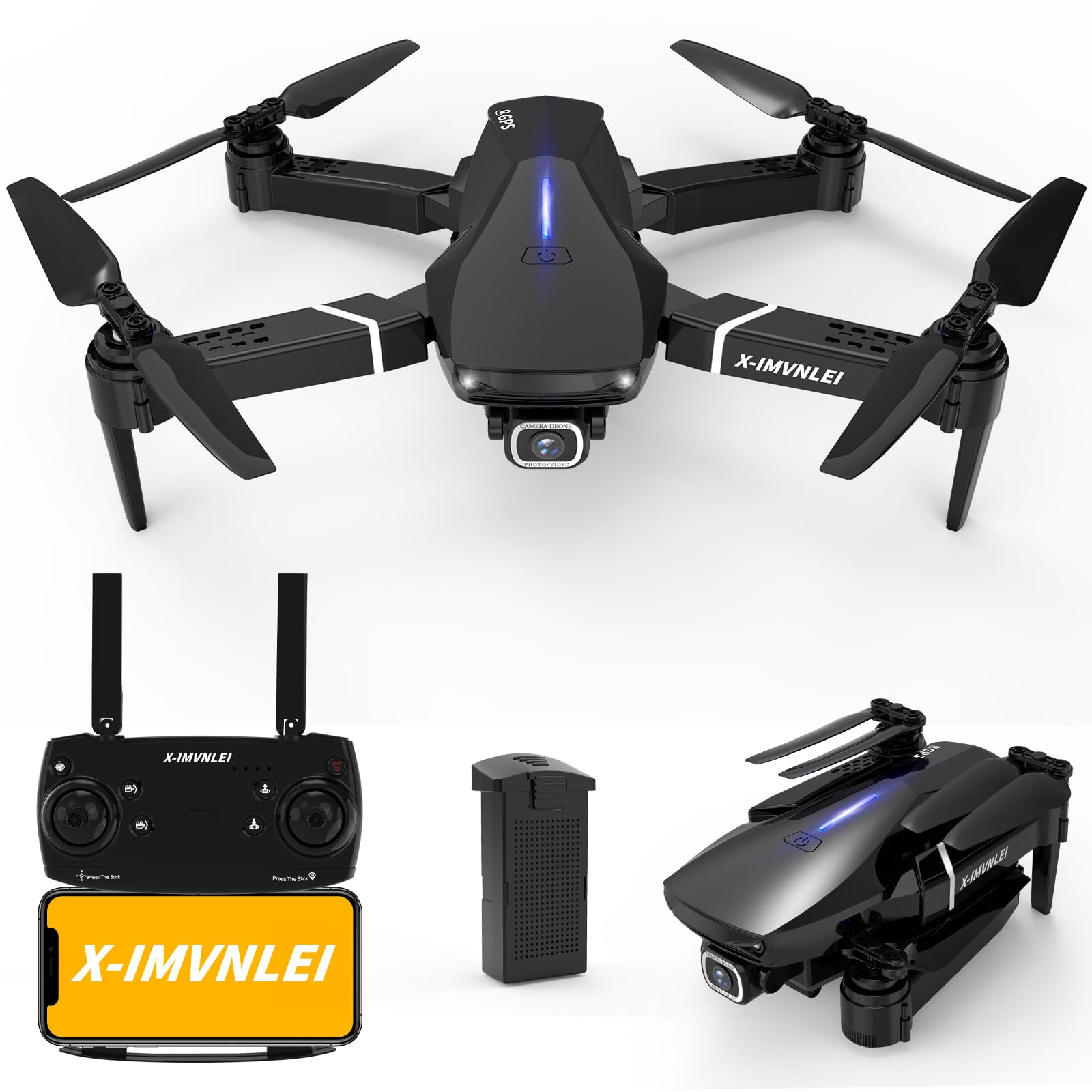
The X9 entry-level GPS drone breaks the norm by including a 4.5-inch LCD screen on the controller, so you can view live FPV without strapping your phone to the remote. That screen also eliminates app pairing frustrations — a common pain point in this price tier.
The 4K UHD camera has a 110-degree adjustable lens that tilts to frame shots, and 5GHz WiFi keeps the video feed responsive. Flight features include One-Key Takeoff, Headless Mode, Altitude Hold, and three speed levels that let beginners gradually build confidence without sudden acceleration surprises.
Total flight time with the included battery registers around 18 minutes, which is the shortest run in this guide. The 249g weight avoids FAA registration, and the foldable body fits into a small bag. Brushless motors provide better durability than the brushed alternatives found on true toy drones.
Why it’s great
- Built-in 4.5-inch LCD controller removes the need for a smartphone app
- Altitude Hold and Headless Mode simplify the learning curve
- Lightweight frame and foldable arms for easy portability
Good to know
- Battery life is limited to roughly 18 minutes total (one pack)
- Some units report voltage drop issues causing premature emergency landing
9. REDRIE HK33 (Budget Edition)
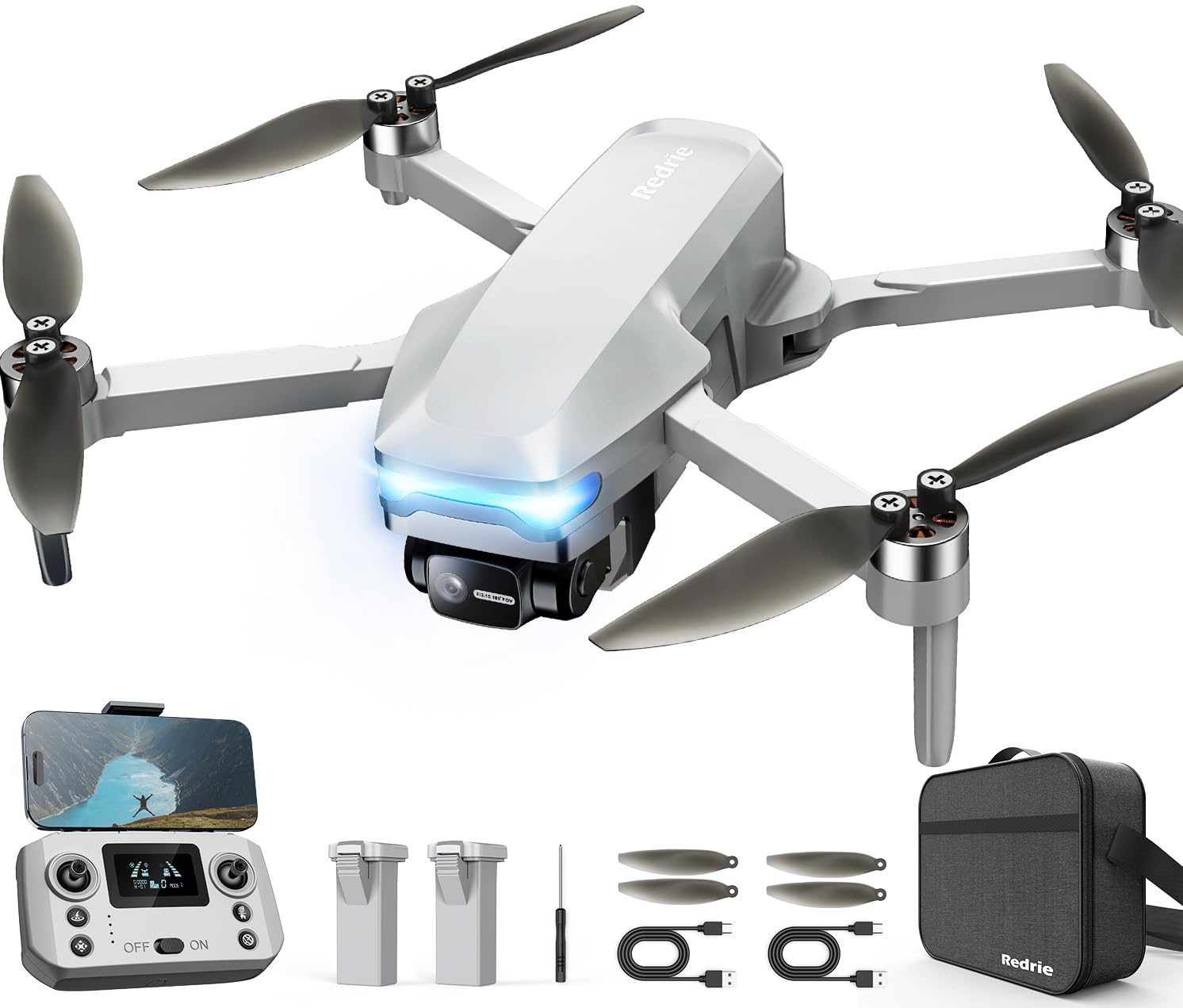
This budget version of the REDRIE HK33 comes with a 2-axis mechanical gimbal — a rarity below the line — that physically levels the camera during flight. The F2.15 aperture and 110-degree wide-angle lens capture 4096x3072P photos and 2048x1088P video with less rolling shutter distortion than purely stabilized sensors.
Two 1,800mAh batteries combine for 40 to 45 minutes of flight, and the 5GHz WiFi delivers FPV video up to 985 feet. The under-250g frame avoids FAA registration, and the foldable design stows into the included carrying case. GPS modes such as Follow Me, Waypoint, and Circle Fly all function through the app.
Beginners report the drone is durable enough to survive multiple crashes on concrete, making it a forgiving platform for learning. Video quality does not match true 4K gimbal drones that cost twice as much, but for a starter unit the stabilization and flight time are impressive.
Why it’s great
- 2-axis mechanical gimbal delivers physical camera leveling absent from most budget drones
- Two batteries provide up to 45 minutes of total flight time
- Extremely durable frame survives beginner crash landings
Good to know
- Effective video resolution is 2K rather than true 4K recording
- App calibration is required before every flight to maintain GPS accuracy
FAQ
Do I need FAA registration for a drone under 250g?
Is 4K on a sub-$200 drone real or interpolated?
How many satellites should the GPS lock before takeoff?
Can I fly these drones indoors with GPS?
Final Thoughts: The Verdict
For most users, the drone under $200 with 4k camera winner is the PLEGBLE PL-715 because its 2,700mAh batteries, brushless motor stability, and reliable GPS auto return deliver the best balance of flight time and feature density. If you want a dedicated controller screen with the longest possible airtime, grab the Punieayi GPS Drone with its 5-inch display and 60-minute flight envelope. And for absolute beginners who need a crash-tolerant platform with a mechanical 2-axis gimbal, nothing beats the value of the REDRIE HK33 budget edition.

Mo Maruf
I created WellFizz to bridge the gap between vague wellness advice and actionable solutions. My mission is simple: to decode the research and give you practical tools you can actually use.
Beyond the data, I am a passionate traveler. I believe that stepping away from the screen to explore new environments is essential for mental clarity and physical vitality.