Our readers keep the lights on and my smoothie glass nicely filled. As an Amazon Associate, I earn from qualifying purchases.
Stepping up from a phone-based drone to a true FPV setup changes how you fly entirely. Instead of watching a small screen with a delayed feed, you strap on goggles that put you directly in the cockpit, offering a real-time, first-person view that makes every maneuver feel instinctive.
I’m Mohammad Maruf — the founder and writer behind WellFizz. For this guide, I’ve sifted through the specs and user feedback on dozens of FPV bundles to pinpoint the kits that deliver genuine, low-latency immersion without burying you in technical setup.
Whether you are learning flips or chasing cinematic shots, finding the right best drone with fpv goggles means balancing video clarity, flight time, and durability within your skill level.
How To Choose The Best Drone With FPV Goggles
Buying your first FPV kit is about matching the drone’s power, the goggles’ clarity, and the controller’s feel to your actual flying ambitions. Getting the right combination from the start saves you money and frustration later on.
Transmission: Real 5.8G vs. Wi-Fi Streaming
A true FPV drone uses an analog 5.8G video transmitter to send a near-zero-latency feed directly to your goggles. Wi-Fi-based drones introduce a quarter-second delay that makes manual acro flying nearly impossible and can cause motion sickness.
Flight Modes for Skill Progression
Look for kits that offer at least three modes: a stable altitude-hold mode for learning orientation, a sport/angle mode for faster directional flight, and a manual/acro mode for flips and freestyle. The best kits let you move between these without needing a separate computer.
Durability and Crash-Tolerance
FPV drones crash, especially when you are learning. A ducted “whoop” frame with propeller guards protects the motors and props during indoor impacts. Brushless motors last longer than brushed ones and offer more power for outdoor flying, but both benefit from a flexible frame.
Battery Life and Connector Type
Flight times in this class range from 3 to 12 minutes per battery. Kits that use modern connectors like BT2.0 or XT30 deliver more consistent power delivery and last longer than the older PH2.0 or JST plugs. Consider the total number of batteries included and whether a multi-charger is part of the package.
Quick Comparison
On smaller screens, swipe sideways to see the full table.
| Model | Category | Best For | Key Spec | Amazon |
|---|---|---|---|---|
| DJI Avata 2 Fly More Combo | Premium | Cinematic FPV, acro | 4K/60fps, 155° FOV | Amazon |
| DJI Neo 2 Motion Fly More Combo | Mid-Range | Beginner FPV, quick shots | 4K, palm launch, 151g | Amazon |
| Antigravity A1-360 | Premium | 360° capture, point-to-fly | 8K 360, 39-min flight | Amazon |
| Tinyhawk 3 RTF | Mid-Range | Indoor agility, Betaflight tuning | Flexible frame, 5.8G VTX | Amazon |
| BETAFPV ELRS Cetus X | Mid-Range | Learning acro, outdoor whoop | 2S power, Betaflight FC | Amazon |
| BETAFPV Cetus Pro | Value | Absolute beginners, turtle mode | Brushless motors, 3 modes | Amazon |
| Tinyhawk Lite RTF | Budget | Ultra-light indoor practice | 37g, 750mAh battery | Amazon |
| Tiny Hawk RTF Micro | Budget | Durable indoor flying | 35 mph top speed | Amazon |
| APEX FPV Drone Kit VR70-2.0 | Budget | Entry-level, 3 batteries | 120° FPV, 400mAh cells | Amazon |
In‑Depth Reviews
1. DJI Avata 2 Fly More Combo (1 Battery)

The DJI Avata 2 is the pinnacle of the ready-to-fly FPV experience. Its integrated propeller guards and durable frame can handle repeated crashes, while the 1/1.3-inch sensor delivers sharp 4K/60fps footage with a cinematic 155° field of view that makes every flight look polished.
The included DJI Goggles 3 and RC Motion 3 controller provide an incredibly intuitive interface — steer by moving your wrist, perform flips and rolls with a tap, and see the world from the cockpit with minimal latency. The 23-minute battery is generous, though aggressive flying will drain it faster.
Experienced pilots will appreciate the full manual control option via the FPV Remote Controller 3, while newcomers can stay in the assisted motion mode. The only real downside is the price of entry, but for a complete, high-end ecosystem that works out of the box, this is the benchmark.
Why it’s great
- Outstanding 4K/60fps image quality with wide FOV.
- Integrated propeller guards make indoor and proximity flying safer.
- Intuitive motion controller lowers the learning curve dramatically.
Good to know
- Premium investment compared to DIY or budget kits.
- Aggressive flying reduces flight time below the 23-minute mark.
- Limited simulator support for practicing without the drone.
2. DJI Neo 2 Motion Fly More Combo
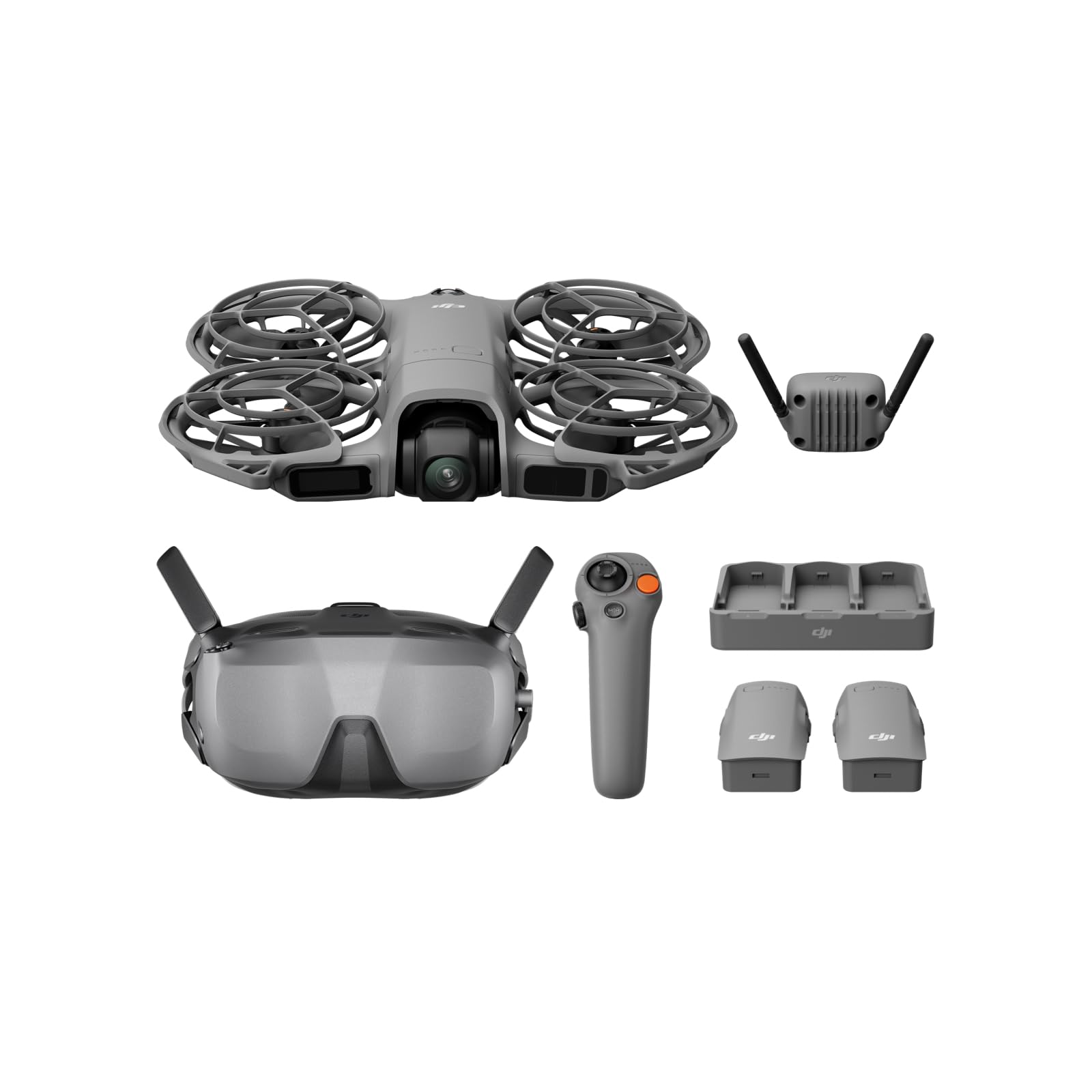
The DJI Neo 2 is a brilliantly designed ultra-light FPV drone that weighs just 151 grams, making it C0 certified and less regulated in many areas. The combo includes the Goggles N3, RC Motion 3, and a Digital Transceiver for a true low-latency FPV feed without the Wi-Fi delays of phone-based drones.
Gesture control and palm takeoff/landing let you launch without a controller, while ActiveTrack keeps subjects framed automatically. The 4K camera with omnidirectional obstacle sensing provides a safety net that is rare at this weight class.
Flight time per battery is around 10-15 minutes, so the three batteries in the Fly More Combo are essential for any real session. The motion controller is less precise than a traditional gimbal for acro flying, but it makes the first FPV experience natural and confidence-building.
Why it’s great
- Ultra-light 151g design with minimal registration hassle.
- Gesture control and palm launch for quick, hands-free starts.
- Omnidirectional obstacle avoidance adds a safety net for beginners.
Good to know
- Motion controller lacks the precision of a traditional remote for acro.
- Flight time per battery is short; the three-battery combo is necessary.
- DJI Fly app requires download from DJI’s website, not Google Play.
3. Antigravity A1-360 Drone with Camera 8K
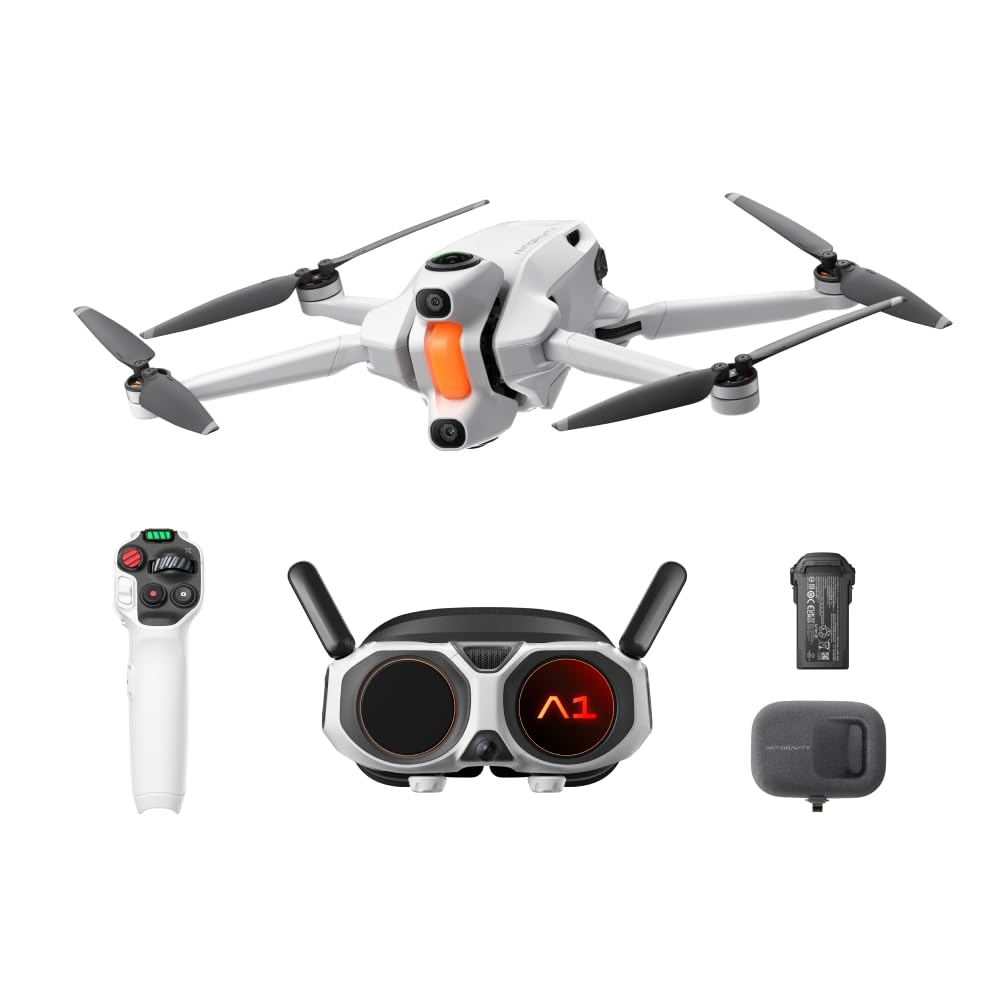
The Antigravity A1-360 is a category of its own, combining the immersion of FPV goggles with a 360-degree camera that captures everything in 8K. The Vision Goggles feature dual 1-inch Micro-OLEDs and Pancake optics for a massive 90° FOV with built-in diopter adjustment, so most users can fly without glasses.
Its 249g weight (with the standard battery) or 39-minute flight time (with the high-capacity battery) gives you flexibility for different regulations and shooting needs. The FreeMotion mode lets beginners point and fly, while the FPV mode satisfies experienced pilots.
Auto Editing 2.0 in the app automatically reframes your 360 footage into shareable cinematic clips, removing the need to frame shots perfectly in the moment. The trade-off is the premium price and the fact that the drone’s value is tied to the 360 workflow, not raw speed.
Why it’s great
- World-first 8K 360 capture eliminates missed angles during flight.
- Vision goggles with built-in diopter adjustment for glasses-free use.
- Auto editing reframes footage into polished clips without manual work.
Good to know
- Premium price point aimed at content creators, not speed racers.
- Standard battery limits flight to under 249g; high-capacity battery adds weight.
- Unique 360 workflow may be overkill for pilots focused on pure acro flying.
4. Tinyhawk 3 RTF Kit 1s FRSKY

The Tinyhawk 3 is a tough little whoop built around a flexible plastic frame that survives falls from a second story onto tile. This kit includes a 5.8G FPV controller and goggles, giving you a true low-latency analog feed that is essential for learning acro maneuvers.
It connects to Betaflight Configurator out of the box, so you can tweak accelerometer settings, power limits, and camera tilt angle as your skills improve. The 1S battery platform keeps it small enough for indoor flight in living rooms and hallways.
Some units arrive with a non-functional motor due to poorly seated wires, and the goggles and controller feel entry-level compared to premium options. However, once dialed in, it is one of the most durable and configurable kits for practicing FPV fundamentals.
Why it’s great
- Extremely durable flexible frame handles repeated hard crashes.
- Full Betaflight access lets you tune PID rates and flight modes.
- Compact size perfect for indoor practice in tight spaces.
Good to know
- Goggle and controller quality feels entry-level.
- Some units have factory wiring issues that need troubleshooting.
- Analog video quality is fuzzy with limited range in noisy environments.
5. BETAFPV ELRS V3 Cetus X FPV Kit

The Cetus X is the next step up from the Cetus Pro, using a Betaflight flight controller and an ExpressLRS receiver for longer range and better penetration than the Frsky-based kits. The 2S power system provides noticeably more thrust for outdoor flying in light wind.
The VR03 goggles include DVR recording, so you can review your flights and share footage immediately. The LiteRadio 3 transmitter feels more substantial than the previous generation, and the BT2.0 battery connectors deliver stable power throughout the discharge cycle.
Some users report controller gimbal failures within weeks and fragile VTX antenna connectors. The analog camera is also sensitive to crashes. Still, for pilots who want a modern ELRS system in a ready-to-fly bundle, the Cetus X offers the best path to learning advanced control.
Why it’s great
- ExpressLRS gives superior range and penetration over older protocols.
- 2S power offers enough thrust for spirited outdoor flying.
- VR03 goggles with DVR let you capture and review your flights.
Good to know
- Some units have gimbal and battery connector reliability issues.
- Analog camera is fragile and prone to damage in crashes.
- Initial tune may need adjustment via Betaflight for best performance.
6. BETAFPV Cetus Pro FPV Kit

The Cetus Pro is the brushless upgrade of BETAFPV’s popular starter kit, giving you the durability and power of brushless motors without the complexity of a full Betaflight setup. Its Normal, Sport, and Manual modes each have three speed levels, letting you scale difficulty gradually.
The altitude hold and self-protection functions make it incredibly forgiving for new pilots. If you crash, the emergency landing and disarm features protect the components, and the turtle mode flips the drone back over so you don’t have to walk to it.
Battery life is tight at around 3-5 minutes per 450mAh cell, and the goggles are basic but functional. The BT2.0 connectors are a plus. This kit is ideal for anyone who wants to learn acro mode without spending premium money to fix broken frames.
Why it’s great
- Brushless motors provide more power and longer lifespan than brushed ones.
- Turtle mode flips the drone over after a crash, saving walks.
- Altitude hold and self-protection make learning much less stressful.
Good to know
- Very short flight time per battery — extra packs are a must.
- No orientation light, making it easy to lose direction at dusk.
- Goggles lack a diversity antenna, limiting range in noisy areas.
7. Tinyhawk Lite RTF Kit
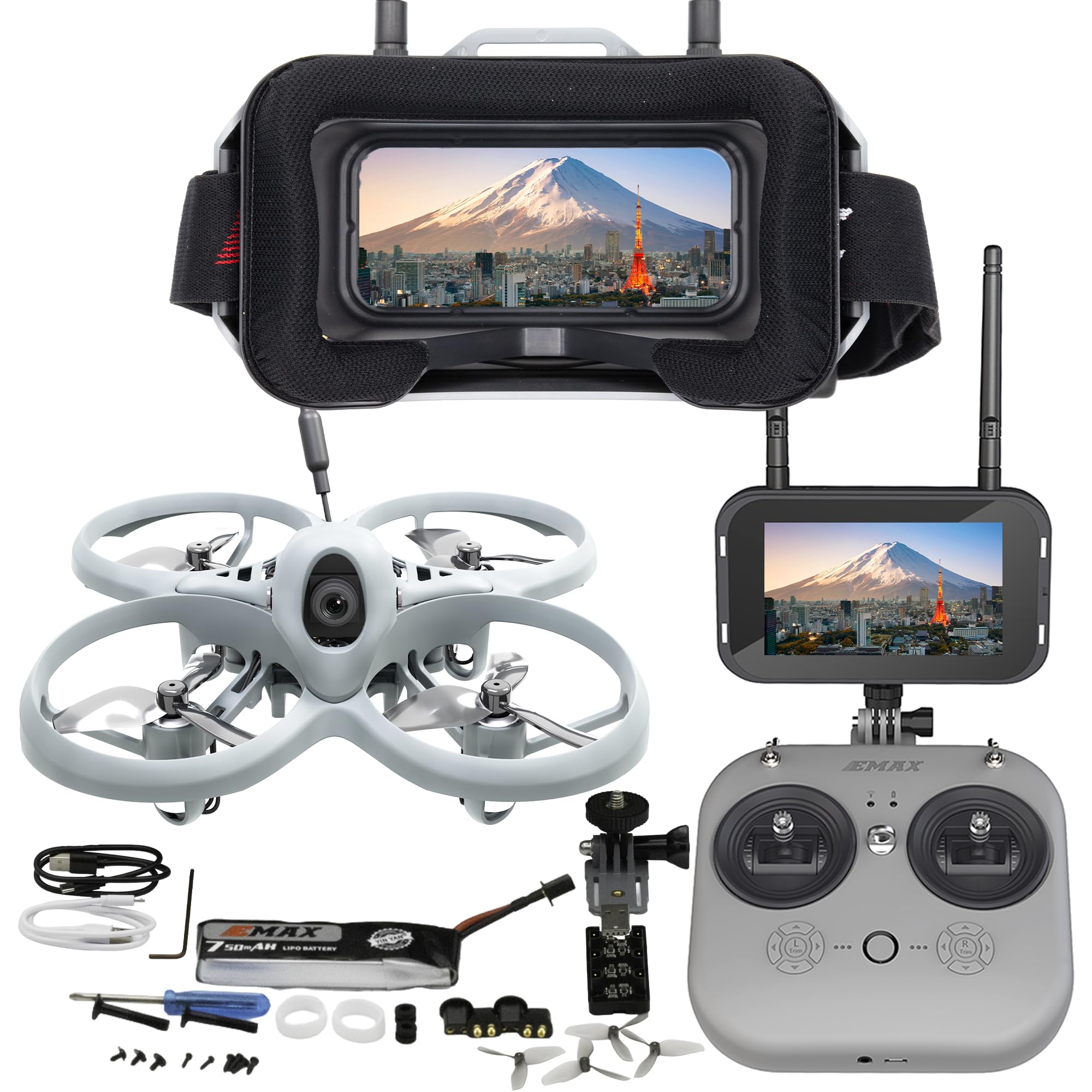
The Tinyhawk Lite is a truly ultralight FPV kit at just 37 grams, making it safe to fly inside a small apartment without damaging walls or furniture. It uses real 5.8G analog transmission for zero-lag video, which is a significant step up from toy-grade WiFi drones.
The 750mAh 1S battery gives noticeably longer flight times than the 300-450mAh packs found in other micros, and the Betaflight Configurator compatibility means you can adjust rates and modes as you improve. The goggles can be converted into a standalone monitor, adding flexibility.
Build quality is hit-or-miss — some units arrive with faulty monitors or poor goggle fit that forces eye strain. The goggles’ resolution is low even by analog standards. For the price, it is a capable tool for practicing proximity flying indoors without fear of causing damage.
Why it’s great
- Ultra-light 37g design is safe for indoor flying in tight quarters.
- Large 750mAh battery provides extended flight sessions.
- Betaflight support allows custom tuning as skills progress.
Good to know
- Goggle fit and resolution are the weakest link in the kit.
- Quality control issues with monitors failing after a few uses.
- Not powerful enough for reliable outdoor flight in wind.
8. Tiny Hawk RTF Micro Indoor Racing Drone

The original Tiny Hawk RTF kit is a proven workhorse that has survived water submersion and hundreds of hard crashes in the hands of beginners. It reaches speeds of up to 35 mph and maintains a solid 5.8G FPV link up to 200 feet through obstacles.
The included carrying case keeps the drone, controller, and goggles together without a heavy backpack. It connects to Betaflight for advanced tuning, and the community support is enormous, with thousands of tutorials for repairs and upgrades.
The frame is less flexible than newer designs, and some users report the transmitter range dropping after minor impacts. The goggles are also on the heavy side. Still, for raw durability and proven performance, this kit remains a strong entry point for teen and adult beginners.
Why it’s great
- Extremely durable frame tolerates crashes that would break other micros.
- Fast 35 mph top speed for indoor racing lanes.
- Large Betaflight community provides endless tuning resources.
Good to know
- Heavier goggles and controller feel less refined than newer kits.
- Some units develop transmitter range issues after minor crashes.
- Camera angle is tilted upward, requiring speed to get a straight view.
9. APEX FPV Drone Kit VR70-2.0

The APEX VR70-2.0 is a budget-focused FPV kit that includes three 400mAh batteries and a multi-charger, giving you around 15-18 minutes of total flight time out of the box. It comes pre-tuned and ready to fly without soldering or complicated parameter setting.
The 120° FPV view through the goggles provides a decent field of view for orientation, and the beginner mode with altitude hold makes it accessible for first-time pilots. The drone body is illuminated, making it easier to find after a crash in dim light.
Build quality is the main concern — several units arrive with broken propeller mounts or non-functional charging ports, and the battery compartment is tight, making swaps difficult. Think of this as a low-risk way to see if you enjoy FPV before committing to a more expensive kit.
Why it’s great
- Three batteries included for longer cumulative flight sessions.
- Pre-tuned and ready to fly with no soldering or setup required.
- Altitude hold mode makes initial flights much more stable.
Good to know
- Quality control issues with broken ports and prop mounts are common.
- Batteries are difficult to insert and remove due to tight fit.
- Camera quality is VHS-grade and not suitable for sharing footage.
FAQ
What does “RTF” mean in an FPV drone kit?
Can I use any FPV goggles with these drones?
How long does a typical battery last on these FPV drones?
Do I need a license to fly a drone with FPV goggles?
Final Thoughts: The Verdict
For most users, the best drone with fpv goggles winner is the DJI Avata 2 Fly More Combo because it combines a polished 4K camera, intuitive motion controls, and a durable, guard-protected frame that makes learning acro and capturing cinematic footage equally accessible. If you want a lightweight, regulation-friendly kit with obstacle avoidance for worry-free flying, grab the DJI Neo 2 Motion Fly More Combo. And for a unique 360-degree creation workflow that captures every angle in 8K, nothing beats the Antigravity A1-360.

Mo Maruf
I created WellFizz to bridge the gap between vague wellness advice and actionable solutions. My mission is simple: to decode the research and give you practical tools you can actually use.
Beyond the data, I am a passionate traveler. I believe that stepping away from the screen to explore new environments is essential for mental clarity and physical vitality.