Our readers keep the lights on and my smoothie glass nicely filled. As an Amazon Associate, I earn from qualifying purchases.
A bioactive terrarium is a self-sustaining ecosystem, but the number one killer of these miniature worlds is stagnant water at the bottom. Without a proper separation between the soil and the accumulated water, you risk root rot, foul odors, and a dead bioactive cycle. The solution lies in a drainage layer, a false bottom that allows water to pool safely below the substrate, keeping the soil aerated and the roots healthy.
I’m Mohammad Maruf — the founder and writer behind WellFizz. I’ve spent countless hours analyzing substrate structures, water retention rates, and how different materials affect the gas exchange in sealed terrariums to bring you this focused guide.
This guide compares the top options for a drainage layer for bioactive terrarium, covering clay pebbles, volcanic soil blends, and complete starter kits to help you build a resilient foundation for your vivarium.
How To Choose The Best Drainage Layer For Bioactive Terrarium
Selecting the right drainage layer is about more than just grabbing a bag of rocks. The material must be porous enough to capture water, structurally sound so it doesn’t collapse under the weight of the substrate, and chemically inert to avoid harming your microfauna or plants.
Particle Size and Porosity
The diameter of the individual pellets dictates how much water they can wick away and how well air can circulate. Smaller, denser balls pack together too tightly, reducing the water-holding capacity. The ideal sweet spot is around 4–16 mm, which creates enough interstitial space for water to pool without the soil above becoming saturated.
pH Neutrality and Material Safety
Not all clays and volcanic rocks are created equal. Some expand or crumble when wet, releasing dust or altering the pH of the water. A pH-neutral material ensures that the water reservoir below does not become acidic or alkaline, which could harm sensitive springtails, isopods, or amphibian skin.
Reusability and Longevity
A good drainage layer should last the life of the vivarium. Materials that break down or disintegrate after a few years force you to tear down the entire enclosure to replace them. Expanded clay pebbles (LECA) and fired volcanic rock are durable enough to be washed, dried, and reused in a new setup.
Quick Comparison
On smaller screens, swipe sideways to see the full table.
| Model | Category | Best For | Key Spec | Amazon |
|---|---|---|---|---|
| Josh’s Frogs False Bottom | LECA Pebbles | Misted vivariums with live plants | 4 Quarts; 0.8 gal volume | Amazon |
| Legigo 10LBS Leca Balls | Expanded Clay | Large enclosures needing max water storage | 10 lbs; 4-16mm balls | Amazon |
| Exo Terra Sub Stratum | Volcanic Soil | Natural odor control and nutrient addition | 4.4 lbs; volcanic Andisol | Amazon |
| Zoo Med Tropical Bioactive Kit | Starter Kit | Setting up a beginner 10-gallon tank | 4 qt ReptiSoil + moss + leaves | Amazon |
| The Bio Dude Terra Flora | Soil Mix | Bio-balanced planted ecosystems | 20″x2″x7″ pre-blended bag | Amazon |
In‑Depth Reviews
1. Josh’s Frogs False Bottom – LECA Expanded Clay Pebbles
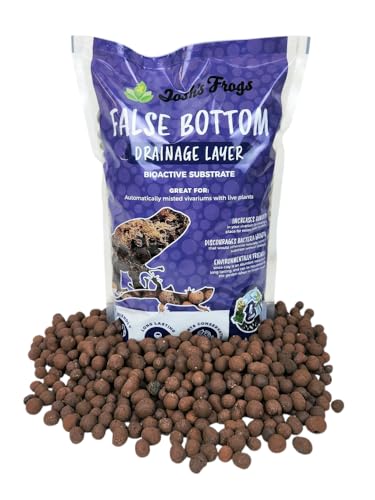
Josh’s Frogs has built a reputation on precision-tuned vivarium supplies, and these expanded clay pebbles are no exception. The 4-quart bag provides the perfect false bottom volume for an 18x18x24-inch enclosure without leaving you with leftover material. The pebbles are lightweight yet rigid, resisting breakage even when you press down hard to level the substrate. Minimal dust after a quick rinse means you won’t cloud the water reservoir or clog the drainage gaps.
This product is specifically engineered for automatically misted vivariums where water accumulation is a constant challenge. The porous structure of each clay ball acts as a wicking agent, drawing excess moisture away from the soil while creating a humid microclimate below. Keepers using this product report consistent humidity levels in the 80-90% range, ideal for dart frogs and tropical plants.
One tradeoff is the bag’s non-resealable packaging. Once opened, you’ll want to transfer the pebbles into a zip-top bag or sealed container to keep out dust and pests. Additionally, the 5-quart stated volume on the packaging may vary slightly due to settling during shipping, but experienced users find the actual coverage meets expectations for standard tank sizes.
Why it’s great
- Engineered specifically for false bottoms in live-plant vivariums
- High porosity stores water without waterlogging soil
- Lightweight and structurally stable after rinsing
Good to know
- Bag is not resealable after opening
- Pebble size may feel small for larger tanks requiring deeper layers
2. Legigo 10LBS Leca Balls Terrarium Substrate
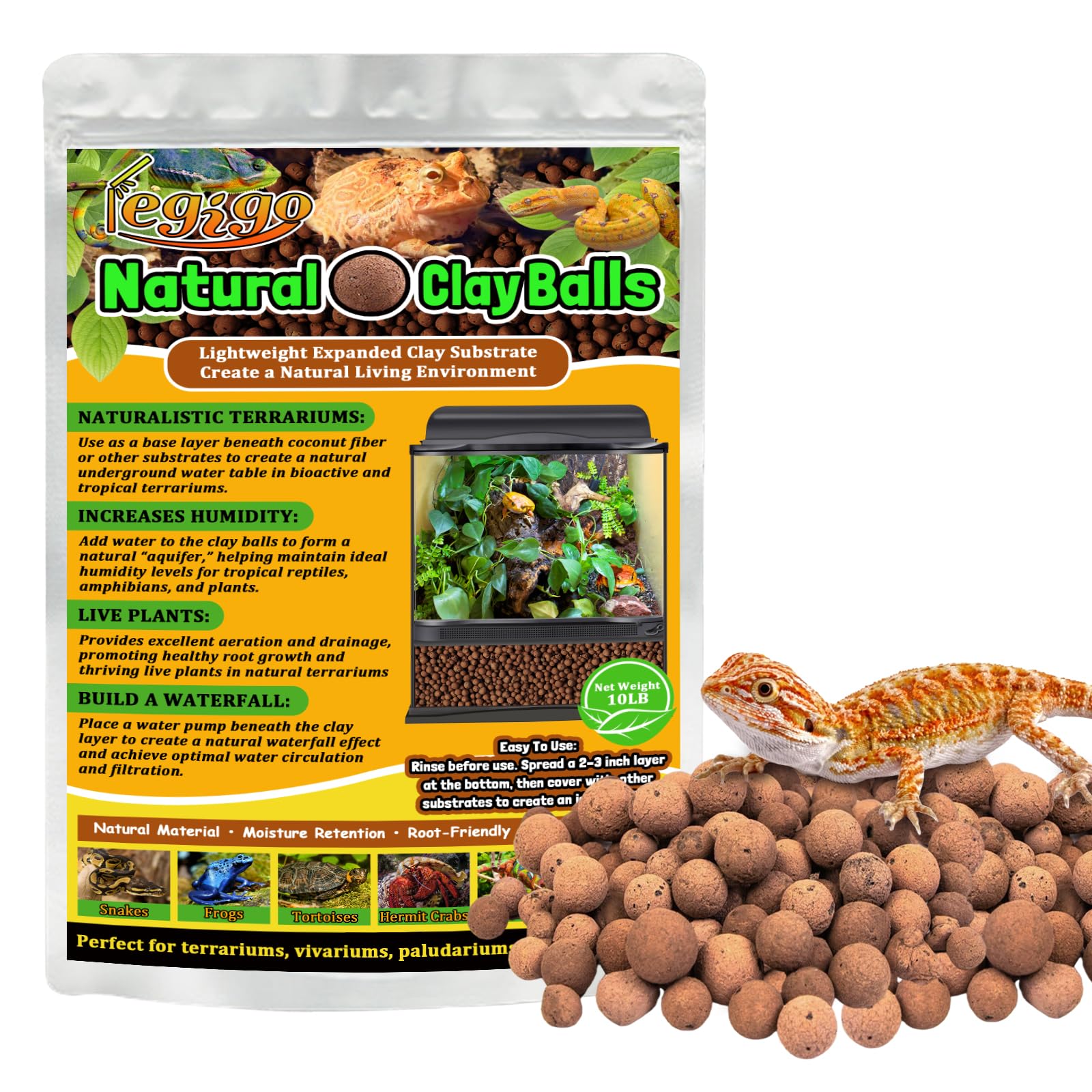
Legigo delivers a generous 10-pound bag of expanded clay balls, making it the strongest option for large terrariums or multi-tank setups. The 4-16 mm diameter range provides excellent drainage while still offering enough surface area for beneficial bacteria to colonize. The 10lb bag easily covers the bottom of an 18x18x36-inch enclosure, with enough left over for a supplementary hydroponic project.
The clay is fired at high temperatures, which makes it durable enough to withstand repeated wet-dry cycles without crumbling. This is critical for bioactive setups where you might need to break down and reset the enclosure years later. The porous structure also absorbs odors and reptile waste, keeping the tank smelling fresh even between cleanings. Customers note the balls are uniformly shaped, which helps create a stable false bottom that doesn’t shift under the weight of the soil mix.
The main consideration is that these require 2-3 thorough rinses before use to remove loose dust. While the bag itself is resealable, some users have pointed out that the foil material can tear if handled roughly. The volume-per-dollar ratio is excellent for those building a large vivarium, but casual keepers with smaller tanks may find the 10lb bag excessive.
Why it’s great
- Generous 10lb volume for large enclosure projects
- Uniform, hard-fired clay resists crumbling after years of use
- Resealable foil bag for convenient long-term storage
Good to know
- Requires multiple rinses to remove surface dust
- Bag foil can tear at the seal if not careful
3. Exo Terra Sub Stratum Bioactive Volcanic Substrate

Exo Terra’s Sub Stratum is a volcanic Andisol that serves a dual purpose — it works as both a drainage layer and a nutrient-rich substrate. The volcanic material is incredibly porous, capturing water in its internal structure while allowing the liquid to drain freely below. Users report that it eliminates ammonia odors better than any clay-based option, a major plus for enclosures housing frogs or geckos with high waste output.
This product is unique because it is technically a soil, not a pebble. The fine volcanic granules allow you to skip the charcoal layer entirely, as the material itself absorbs and neutralizes odors. Isopods and springtails thrive in this medium, and it provides excellent root support for delicate terrarium plants. The 4.4-pound bag is lightweight and easy to spread, but a little goes a long way — reviewers note you need less volume than LECA to achieve the same drainage effect.
Because it is a loose volcanic soil, it can be dusty if handled dry. You’ll want to mist or dampen the substrate before placing it in the tank to avoid airborne particles. Some keepers also note that it is pricier than standard LECA, though the added nutrient value and odor control justify the premium for serious bioactive setups.
Why it’s great
- Superior ammonia and odor elimination compared to clay pebbles
- Acts as both drainage layer and nutrient-rich soil
- Lightweight and easy to work with in small to medium tanks
Good to know
- Dusty when dry — requires pre-misting before use
- Higher cost per pound than standard LECA options
4. Zoo Med Tropical Bioactive Substrate Kit 10 Gallon
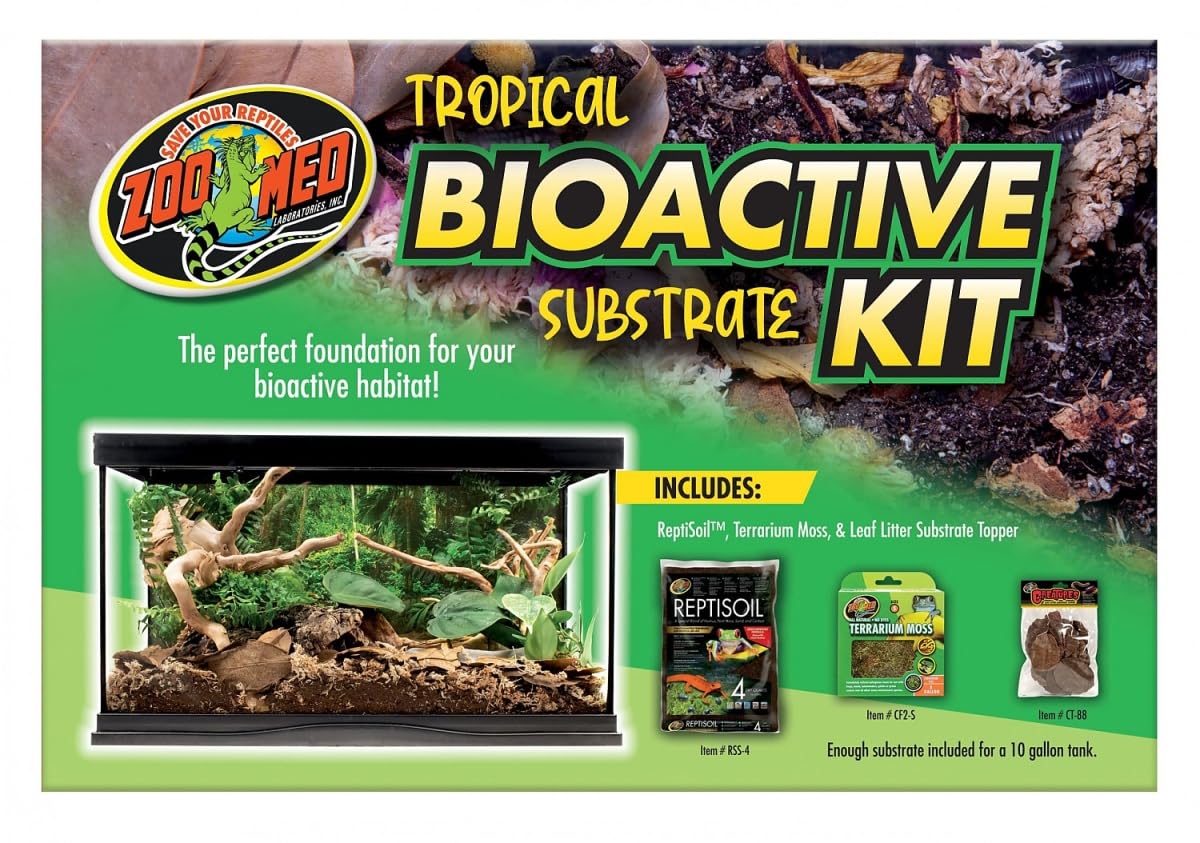
Zoo Med’s Tropical Bioactive Kit is the closest you can get to a plug-and-play foundation for a bioactive terrarium. The kit includes 4 quarts of ReptiSoil, a generous 10-gallon bag of Terrarium Moss, and 20 Catappa leaves, all bundled together. This combination is designed to create the three-layer system: a drainage base, a soil layer, and a leaf litter top-cover, making it incredibly beginner-friendly.
For the drainage layer, the ReptiSoil provides a coarse, organic base that allows water to percolate through while the moss and leaves above it help retain humidity. It is not a traditional false bottom made of hard pebbles, but the kit’s layered structure works effectively in a 10-gallon tank. Parents setting up their child’s first gecko enclosure appreciate that everything needed is in one box — no separate trips to buy charcoal or LECA.
The kit does have a limitation for larger or heavily planted vivariums. While the 4 quarts of ReptiSoil are sufficient for shallow substrate depth, serious plant growers may need to supplement with additional drainage material. A few customers expected a physical tank to be included, so be aware that this is purely a substrate kit and does not come with an enclosure.
Why it’s great
- All-in-one kit simplifies the bioactive setup process
- ReptiSoil provides solid drainage for a 10-gallon enclosure
- Includes moss and leaf litter for a natural forest floor look
Good to know
- Not a dedicated hard false bottom — relies on soil percolation
- Volume may be insufficient for deep plant-root systems
5. The Bio Dude Terra Flora Bioactive Reptile Substrate

The Bio Dude’s Terra Flora is a proprietary blend of components designed to create a balanced ecosystem from top to bottom. Unlike a false bottom product, this is the complete soil and drainage layer combined into one mix. The ingredients are carefully proportioned to provide proper aeration and drainage without clogging, while also supporting a thriving cleanup crew of springtails and isopods. Many keepers of sensitive tropical plants, ferns, and mosses report that this mix outperforms generic soils.
The manufacturer explicitly states that this substrate requires a separate drainage layer for optimal performance when used with microfauna. This means you’ll still need to place a layer of LECA or volcanic rock beneath it. However, the mix itself holds up well against flooding, staying aerated even when misted heavily. Customers with salamanders and frogs note that it stays moist without becoming muddy, keeping the animals clean and healthy.
The bag size (20″x2″x7″) is compact but dense, covering a standard 10-gallon tank with a 2-3 inch depth. The main downside is the price per volume — it is more expensive than buying individual components. However, for keepers who want a proven, bio-balanced solution without mixing their own ingredients, this is a reliable choice that has garnered a 4.9-star rating from verified buyers.
Why it’s great
- Pre-mixed and balanced for tropical plant and microfauna health
- Retains moisture without turning into mud
- Suitable for sensitive amphibians and salamanders
Good to know
- Still requires a separate bottom drainage layer
- Higher cost per volume compared to DIY blends
FAQ
How deep should my drainage layer be in a bioactive terrarium?
Can I use regular pebbles or gravel from a hardware store as a drainage layer?
Final Thoughts: The Verdict
For most users, the drainage layer for bioactive terrarium winner is the Josh’s Frogs False Bottom because it is purpose-built for misted vivariums, offers consistent porosity, and the 4-quart volume perfectly matches standard enclosures without waste. If you want maximum moisture storage for a large tank, grab the Legigo 10LBS Leca Balls. And for a kit that simplifies the entire foundation setup, nothing beats the Zoo Med Tropical Bioactive Kit for beginners.

Mo Maruf
I created WellFizz to bridge the gap between vague wellness advice and actionable solutions. My mission is simple: to decode the research and give you practical tools you can actually use.
Beyond the data, I am a passionate traveler. I believe that stepping away from the screen to explore new environments is essential for mental clarity and physical vitality.