Our readers keep the lights on and my smoothie glass nicely filled. As an Amazon Associate, I earn from qualifying purchases.
The gap between a shaky, drifting toy drone and a smooth, cinematic flying camera has never been narrower. Today’s sub-250g quadcopters pack brushless motors, GPS modules, and electronic image stabilization into foldable frames that fit in a jacket pocket — delivering footage that used to require a much larger investment.
I’m Mohammad Maruf — the founder and writer behind WellFizz. I’ve spent countless hours analyzing flight controllers, camera sensors, gimbal mechanics, and battery management systems to find which models actually earn their place in your kit.
After comparing nine different models ranging from entry-level flyers to feature-packed GPS machines, I’ve identified the standout best drone with camera under $300 for beginners and hobbyists who want reliable performance without the premium price tag.
How To Choose The Best Drone With Camera Under $300
Picking the right quadcopter in this price band means navigating trade-offs between camera quality, flight time, stabilization hardware, and smart features. Here are the specs that separate a capable aerial tool from a frustrating toy.
Gimbal Axes: The Foundation of Smooth Footage
A 3-axis brushless gimbal physically stabilizes the camera across pitch, roll, and yaw — this is the gold standard for eliminating jello effect and wind-induced wobble. Many drones in this range use electronic image stabilization (EIS) or a 2-axis gimbal, which works in calm conditions but struggles in breezy environments. If cinematic footage matters, prioritize a model with a mechanical 3-axis gimbal.
Battery Voltage and Capacity
Standard cells run at 3.7V, but you will find 7.4V and 7.7V packs in serious models. Higher voltage delivers more consistent power to brushless motors, improving wind resistance and climb rate. Capacity is measured in milliamp-hours (mAh); two 1800mAh batteries averaging 45 minutes total is the baseline, while premium packs like 3000mAh or 3800mAh can push flight time beyond an hour. Check whether the charger supports fast charging via USB-C.
Camera Sensor and Stabilization Type
Claimed “4K” resolution varies widely. Look for a 1/3-inch or larger CMOS sensor and physical stabilization — either a 2-axis or 3-axis gimbal. Pure EIS (electronic image stabilization) crops the frame and can introduce latency. For sharing on social media, 2.5K with good stabilization often looks better than 4K with jitter. Also consider the field of view: 110° to 130° wide-angle captures landscapes without heavy fisheye distortion.
GPS and Return-to-Home Reliability
A multi-constellation GPS module (GPS + GLONASS + Galileo) provides faster satellite lock and more accurate position hold. Return-to-home (RTH) should trigger automatically on signal loss, low battery, or out-of-range conditions. Optical flow and altitude-hold sensors add indoor stability when GPS is unavailable. Beginners should prioritize drones with proven RTH behavior — check customer reviews for real-world performance.
Quick Comparison
On smaller screens, swipe sideways to see the full table.
| Model | Category | Best For | Key Spec | Amazon |
|---|---|---|---|---|
| DJI Mini 4K | Premium | Cinematic beginners | 3-Axis Gimbal | Amazon |
| Gleesfun G11PRO | Premium | Gimbal image quality | 3-Axis Brushless Gimbal | Amazon |
| PLEGBLE 5.0″ Screen | Premium | Built-in display | 5.0″ Built-In Screen | Amazon |
| Punieayi ZY-90PRO | Premium | Maximum flight time | 100-Minute Flight | Amazon |
| Potensic ATOM LT | Mid-Range | Long-range transmission | 4KM PixSync 2.0 | Amazon |
| REDRIE HK33 (B0F37MYK6N) | Mid-Range | Budget GPS experience | 45-Min Flight Time | Amazon |
| SIMREX G29 | Mid-Range | Portable starter | Optical Flow Sensor | Amazon |
| Oddire HK11 | Budget | Value and durability | 7.7V 1800mAh Battery | Amazon |
| REDRIE HK33 (B0DG9VCNG7) | Budget | Entry-level price | 2-Axis Gimbal | Amazon |
In‑Depth Reviews
1. DJI Mini 4K

The DJI Mini 4K sets the benchmark for sub-250g drones with its 3-axis mechanical gimbal, delivering true cinematic stabilization that electronic systems cannot match. The 4K UHD camera captures sharp footage at 30fps, and the 10km HD video transmission via Ocusync keeps the feed stable even at distance.
Flight performance is equally impressive — the brushless motors handle Level 5 winds (38kph), and the GNSS module with GPS and GLONASS provides reliable position hold and automatic return-to-home. The 31-minute single-battery runtime is a genuine 31 minutes under normal conditions, not marketing math.
Downsides include the need to use your smartphone as the FPV screen via the RC-N1C controller, which can be finicky with thicker phone cases. One battery also means you need the bundle for extended sessions. Despite this, video quality and flight reliability remain unmatched at this price ceiling.
Why it’s great
- 3-axis mechanical gimbal produces silky footage
- Proven DJI flight controller and GPS reliability
- 10km video transmission range
Good to know
- Requires smartphone for live view; no built-in screen
- One battery included — consider the Fly More combo
- Phone connector may need an extender with bulky cases
2. Gleesfun G11PRO

It captures 6K photos and 4K/30fps video through a 1/3.2-inch CMOS sensor, with the gimbal actively canceling vibration even during fast yaw movements. The GQ2.0 digital transmission system reaches 10,000 feet with a wired plug-and-play connection.
Flight time reaches 70 minutes using two 7.7V 3200mAh smart batteries with fast 2.5-hour charging. The GL2.0 management system tracks charge cycles and includes a breathing alert light. FAA compliance with Remote ID is confirmed, and the kit includes over 40 items including a carrying case.
The main limitation is weight — at 357 grams, this drone exceeds the 249g FAA registration exemption threshold. Some users report that the follow-me mode works best in open GPS conditions. The 3-axis gimbal makes this a serious aerial imaging tool, but you will need to register it before your first flight.
Why it’s great
- True 3-axis brushless gimbal for smooth footage
- 10,000ft digital transmission with wired connection
- Fast-charging smart batteries with cycle management
Good to know
- Weighs 357g — FAA registration required
- Wired phone connection adds setup step
- Follow-me performance varies in weak GPS areas
3. PLEGBLE 5.0″ Screen Drone
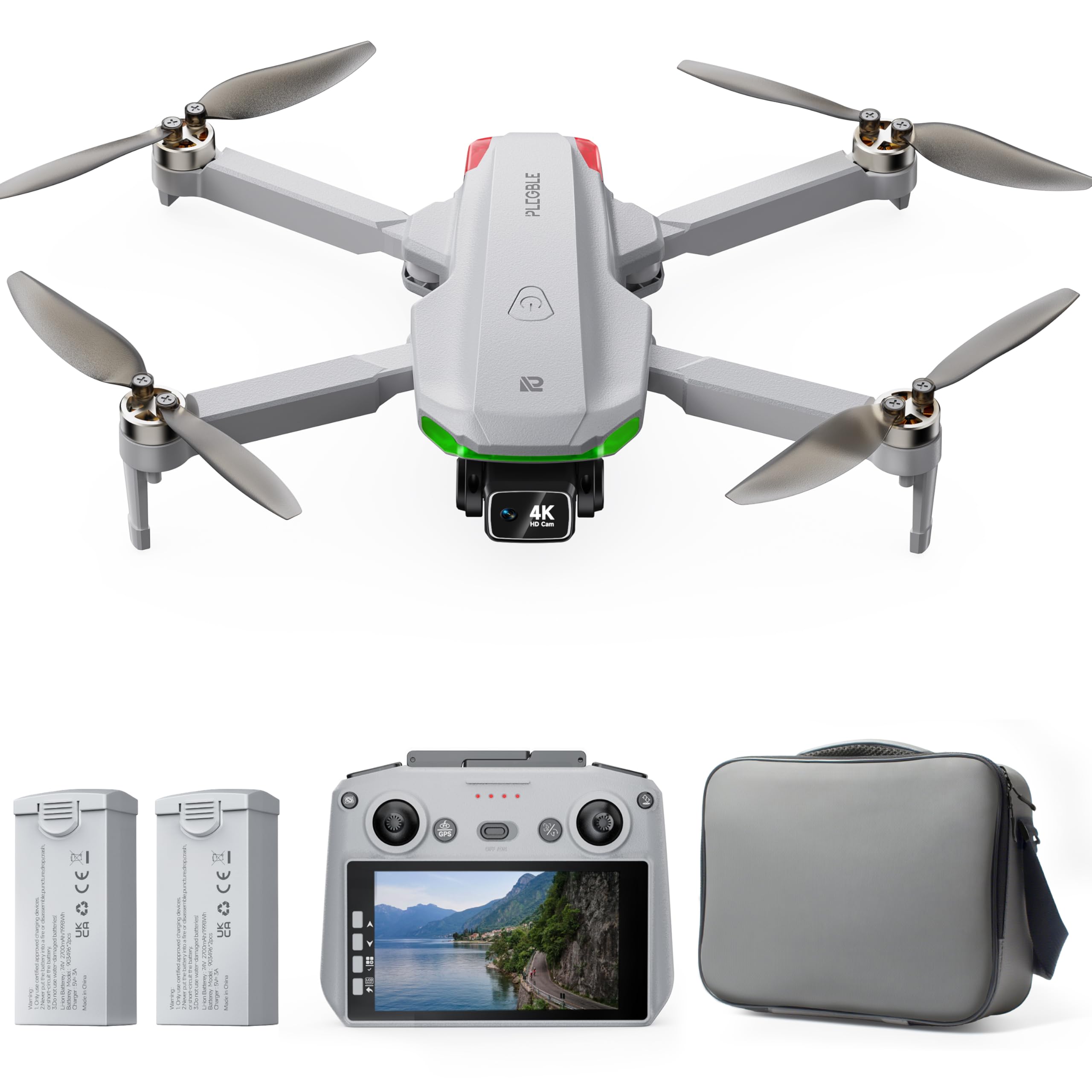
This drone eliminates the phone-as-screen hassle with a 5.0-inch HD display built directly into the controller, providing instant FPV without app downloads or cable juggling. The 4K camera uses EIS with optical flow positioning to smooth out minor vibrations, and the 130° wide-angle lens with 90° remote tilt gives flexible framing for landscapes and selfies.
Two 7.6V 2700mAh batteries provide up to 70 minutes of total flight time, with USB-C fast charging for convenience. The sub-249g weight means no FAA or Remote ID registration. GPS functions including Smart Return to Home and Follow Me work reliably for beginners, and the one-key takeoff/landing lowers the learning curve.
Video quality is good for social media but the EIS cannot fully replace a mechanical gimbal in gusty conditions. The maximum range is around 600 meters, shorter than premium transmission systems. The built-in screen is genuinely liberating for quick flights, but serious image collectors may want mechanical stabilization.
Why it’s great
- Built-in 5-inch screen — no phone required
- Under 249g — no FAA registration needed
- 70-minute total flight with two batteries
Good to know
- EIS only, not a mechanical gimbal
- Range limited to about 600 meters
- Charging time is relatively slow
4. Punieayi ZY-90PRO
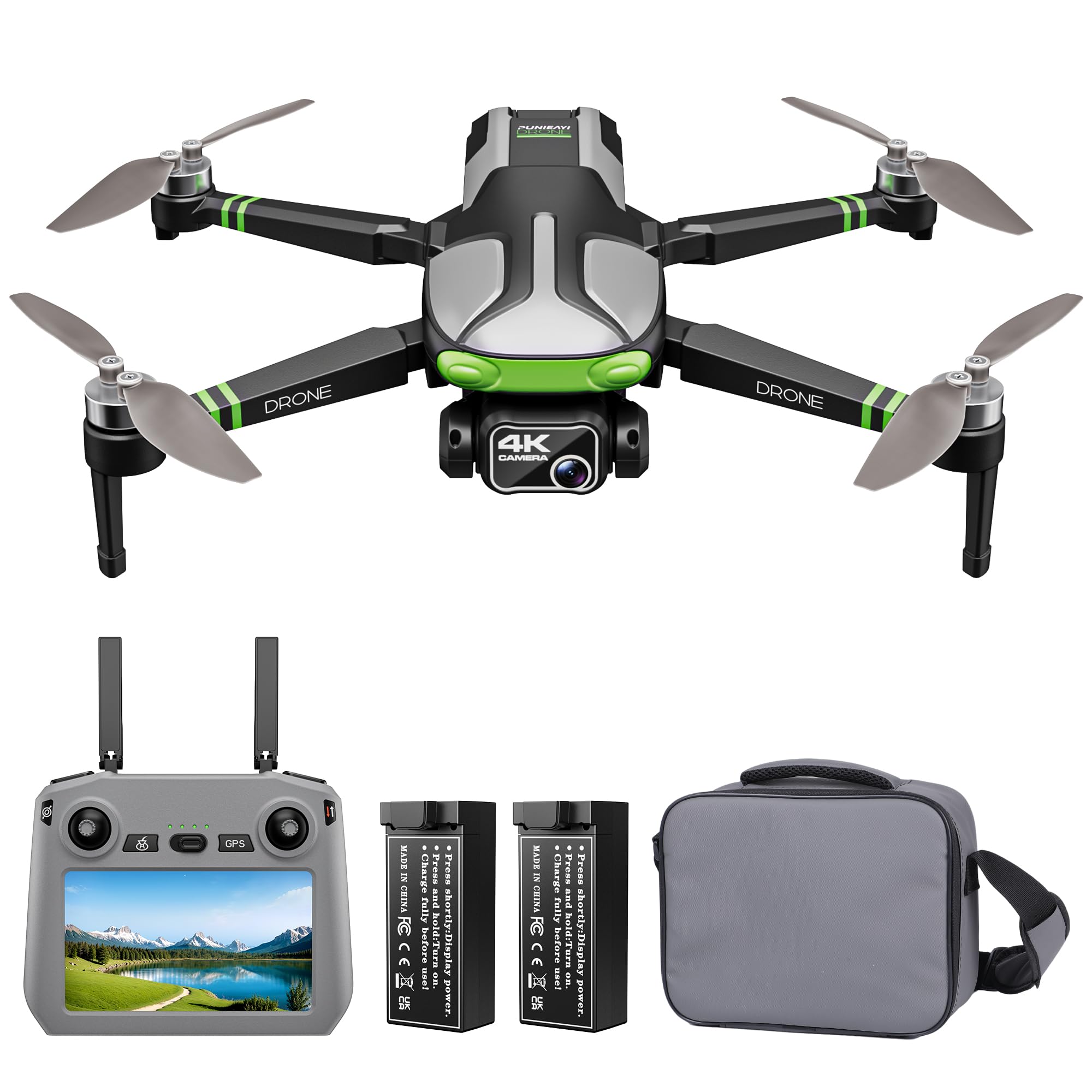
The ZY-90PRO pushes flight endurance to 100 minutes using two high-capacity 7.6V 3800mAh batteries, a standout figure in this price bracket. The 5.7-inch LCD display controller provides FPV without a phone, and the 4K adjustable camera captures 2K@30fps video with Level 4 wind resistance for stable outdoor shots.
GPS features include One-key Return, low-power auto return, Follow Me, Circle Fly, and Waypoint Flight. The on-screen composition guides — diagonal lines, center dot, and 3×3 grid — help beginners frame better shots without guesswork. The foldable design keeps it portable despite the larger battery bay.
Some units have reported controller connectivity issues, and the customer reviews indicate that hardware reliability varies between batches. The camera delivers good daytime results but struggles in low light without gimbal stabilization. For pilots who prioritize battery life above all, this is a compelling choice.
Why it’s great
- Best battery life in class — 100 minutes total
- Large 5.7-inch built-in LCD screen
- Composition guides for better framing
Good to know
- Reliability concerns with controller connection
- No mechanical gimbal — EIS only
- Low-light footage is below average
5. Potensic ATOM LT

The ATOM LT offers the best transmission range in the mid-tier segment — PixSync 2.0 delivers a stable HD feed up to 4 kilometers, a distance typical only for drones costing twice as much. The 2.5K EIS camera uses a Sony sensor with ShakeVanish 2.0 stabilization, producing smooth 2560×1440 footage that looks clean on social platforms.
Two 3000mAh intelligent batteries provide up to 80 minutes of flight time, each charge lasting 40 minutes in real-world conditions. The 4 GNSS support (GPS, GLONASS, Galileo, BeiDou) provides fast satellite locks and precise auto-return. The sub-249g weight avoids registration, and the foldable design packs into a small case.
EIS crop is noticeable in the field of view, and some users report slow GPS acquisition in urban canyons. The 2.5K resolution is below the 4K standard, but the stabilization quality at this price point is exceptional. Potensic’s customer service has a strong reputation for replacing defective units promptly.
Why it’s great
- 4KM transmission range — class-leading at this price
- Quad-constellation GNSS for precise GPS lock
- Excellent customer support reputation
Good to know
- 2.5K video, not true 4K
- EIS crops the frame significantly
- GPS lock can be slow in dense areas
6. REDRIE HK33 (B0F37MYK6N)
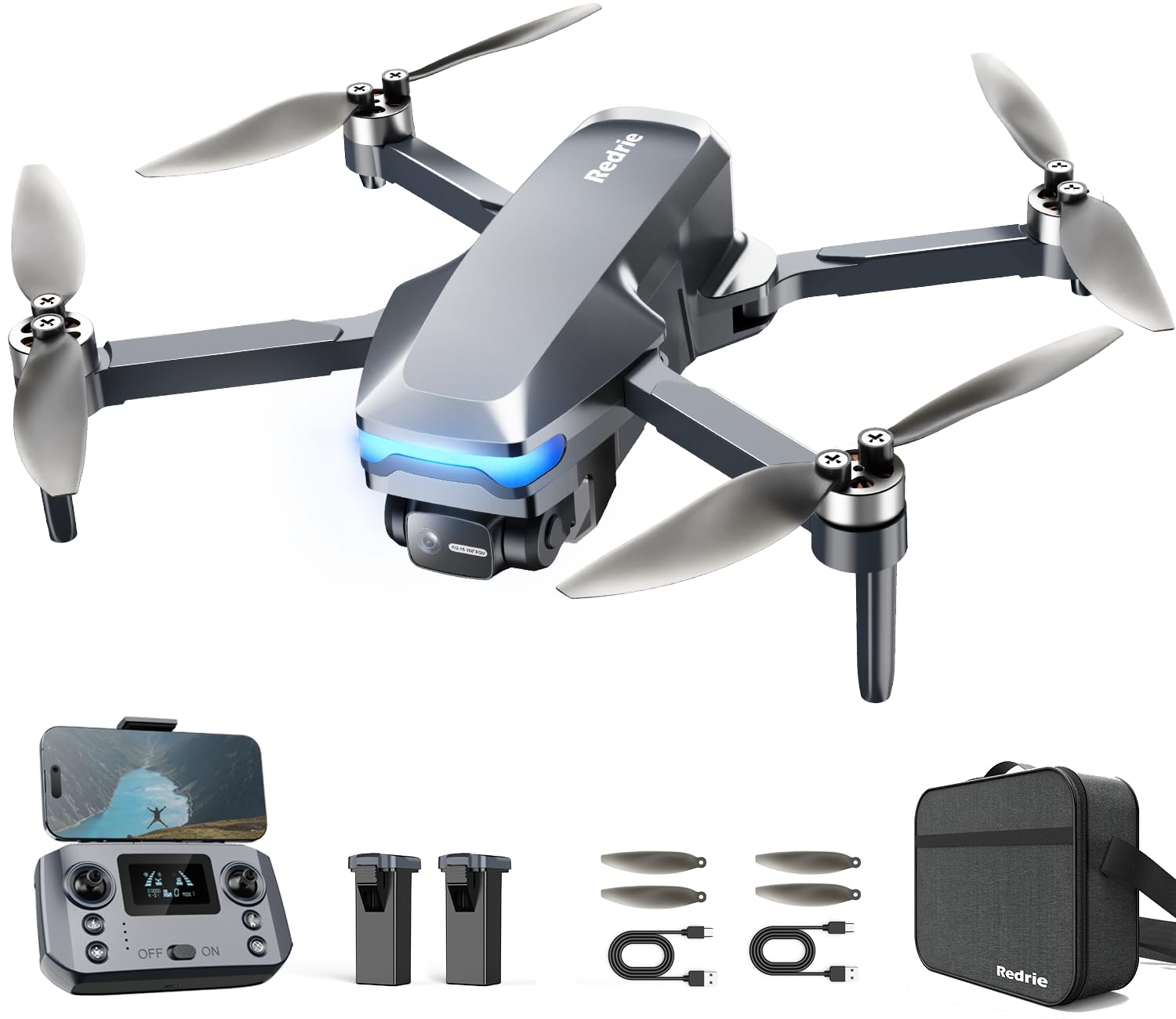
The REDRIE HK33 strikes a solid balance between price and feature depth, offering a 4K camera with physical vibration reduction and a 90° remote-adjustable lens. The 2-axis stabilization paired with optical flow reduces jello effect in calm to moderate wind, producing usable aerial video for social sharing.
Flight time reaches 45 minutes with two 1800mAh batteries, and the 5G WiFi transmission provides up to 500 meters of range using the built-in repeater. GPS functions are comprehensive: Auto Return, Follow Me, Waypoint Flight, and Fly Around all function reliably. Under 250g, it avoids FAA registration, and the carrying case is included.
Video stabilization is not as refined as a 3-axis gimbal — footage shows minor wobble in gusty conditions. The 4K resolution is interpolated; native detail peaks at 2K video. For beginners seeking a full GPS feature set without spending premium money, this is the most balanced option.
Why it’s great
- Full GPS suite including Follow Me and Waypoint
- Under 250g with no FAA registration needed
- Includes carrying case and spare parts
Good to know
- 2-axis stabilization limited in wind
- 4K is interpolated; native 2K video
- Phone holder in controller is fragile
7. SIMREX G29
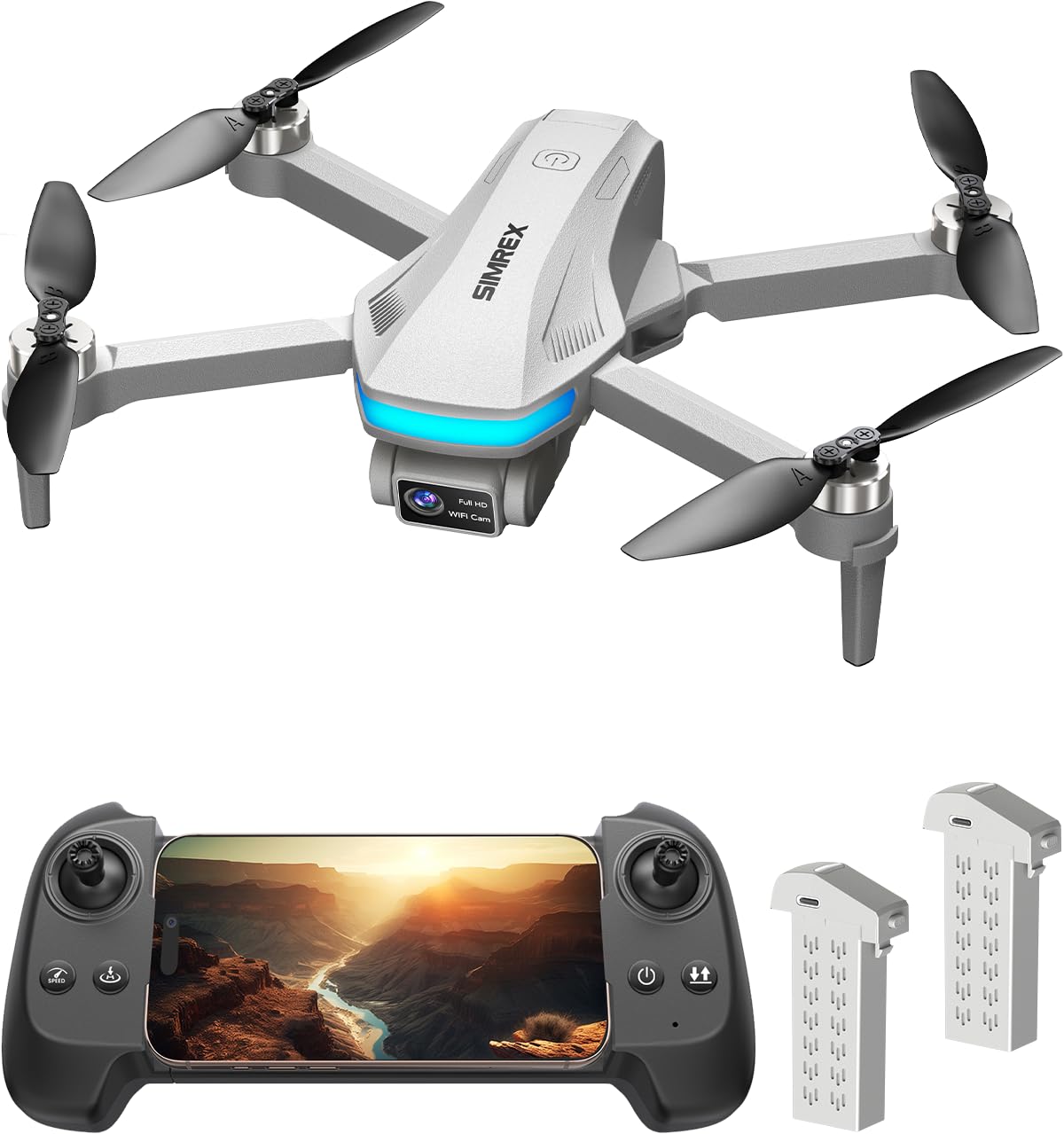
The SIMREX G29 combines a GPS module with optical flow and altitude-hold sensors for stable hovering indoors and out. The 4K adjustable camera tilts 90° via remote control, and the 5G WiFi FPV provides real-time transmission up to 500 meters. Brushless motors keep noise low and wind resistance strong.
Flight time totals 40 minutes with two batteries, and the 249g weight keeps it registration-free. Gesture control, Follow Me, and Waypoint Flight expand creative options without needing a second operator. The find-my-drone feature in the app helps locate a lost aircraft on the map.
The camera delivers acceptable 4K photos but video quality suffers from the lack of mechanical stabilization — EIS only. Some users report that the app experience can be glitchy, requiring the XDRONE GO app instead of the standard one. The compact folded dimensions make it a top choice for hikers and travelers.
Why it’s great
- Optical flow + altitude hold for indoor stability
- Gesture control for hands-free selfies
- Very compact folded size for travel
Good to know
- EIS only — no mechanical gimbal
- App compatibility can be finicky
- Video quality degrades in low light
8. Oddire HK11

The Oddire HK11 uses 7.7V batteries instead of the common 7.4V cells, delivering more consistent power to the brushless motors for better wind resistance and climb performance. The 4K adjustable camera with 110° wide-angle lens captures decent daytime footage, and the 5G WiFi transmission reaches 500 meters.
GPS features include auto return home on signal loss, low battery, or exceeding flight range. Follow Me, Waypoint Flight, and Circle Fly expand the creative toolkit. The 249g weight avoids FAA registration, and the foldable frame with carrying case adds portability. Two 1800mAh batteries provide around 48 minutes of total flight.
Video stabilization is purely electronic, which means footage can look shaky in anything above a gentle breeze. The phone holder on the controller is not sturdy enough for larger phones, and GPS calibration is required at every power cycle. The price-to-feature ratio is very strong for cautious beginners willing to read the manual.
Why it’s great
- 7.7V batteries provide stronger motor performance
- Full GPS suite with reliable auto return
- Very affordable for a GPS-enabled drone
Good to know
- EIS stabilization struggles in wind
- Requires calibration before every flight
- Phone holder is not robust for large phones
9. REDRIE HK33 (B0DG9VCNG7)
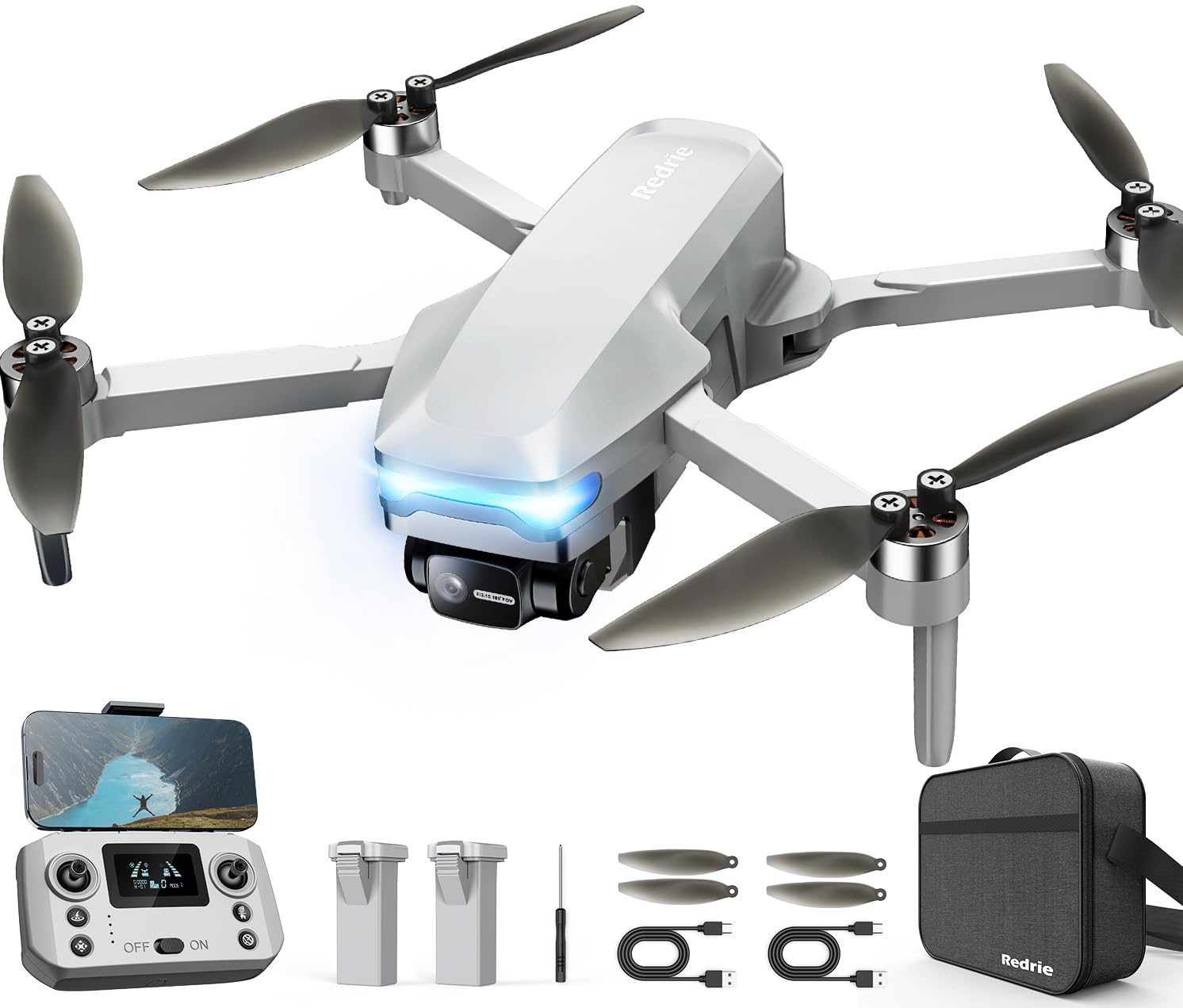
This version of the HK33 is the most affordable entry into 4K camera drones with a 2-axis gimbal and brushless motors. The physical 2-axis stabilization cuts down vibration significantly compared to pure EIS drones at this level, making the footage watchable for social media and casual archiving.
Flight time is 40-45 minutes with two 1800mAh batteries, and the 5G WiFi transmission with signal repeater reaches 500 meters. GPS functions include auto return on signal loss and low battery, plus Follow Me and Waypoint Flight modes. The sub-250g weight eliminates registration, and the carrying case is included in the box.
The 4K camera resolution is interpolated from a lower native sensor, and mechanical noise from the 2-axis gimbal can sometimes be picked up in quiet recordings. The plastic build feels less premium than the mid-range competitors. For absolute beginners who want to learn on a GPS-equipped drone without risking much capital, this is a practical starting point.
Why it’s great
- Cheapest GPS drone with a physical 2-axis gimbal
- Brushless motors for durability and low noise
- Under 250g — no FAA registration or Remote ID
Good to know
- 4K is upscaled, not native
- Gimbal motor noise can affect quiet recordings
- Plastic construction feels less robust
FAQ
Do I need FAA registration for a drone under 250g?
What is the difference between a 2-axis and 3-axis gimbal?
Can I fly a GPS drone indoors?
How important is electronic image stabilization vs mechanical gimbal?
My drone says 4K but looks soft — why?
Final Thoughts: The Verdict
For most users, the best drone with camera under $300 winner is the DJI Mini 4K because its 3-axis mechanical gimbal and proven GPS reliability deliver consistent results that no other drone in this bracket matches. If you want maximum flight time with a large built-in screen, grab the Punieayi ZY-90PRO. And for a true 3-axis gimbal with professional-grade image quality, nothing beats the Gleesfun G11PRO.

Mo Maruf
I created WellFizz to bridge the gap between vague wellness advice and actionable solutions. My mission is simple: to decode the research and give you practical tools you can actually use.
Beyond the data, I am a passionate traveler. I believe that stepping away from the screen to explore new environments is essential for mental clarity and physical vitality.