Our readers keep the lights on and my smoothie glass nicely filled. As an Amazon Associate, I earn from qualifying purchases.
Converting fallen logs into usable lumber means forcing a chainsaw to cut straight, flat, and consistently over its entire bar length. Without a rigid guide, the saw wanders, cuts wedge-shaped boards, and wastes wood that you already hauled out of the woods. The right frame locks the chain into a fixed plane so every pass removes the same depth and every slab leaves the log at the same thickness.
I’m Mohammad Maruf — the founder and writer behind WellFizz. I’ve spent weeks poring over aluminum extrusions, clamping mechanisms, and rail compatibility charts to figure out which frames actually hold alignment under the vibration and torque of a high-displacement saw.
After sorting through dozens of models, these picks cover the real differences in frame rigidity, clamping reach, and scale accuracy that separate a usable best chainsaw mill from a frustrating one that lets the bar drift mid-cut.
How To Choose The Best Chainsaw Mill
Picking the right frame comes down to bar length, frame rigidity, and how much effective cutting width you actually get after the clamps and saw body eat into the advertised number. Every spec matters differently depending on whether you slab occasionally or run a weekend milling operation.
Frame Material and Rigidity
Aluminum alloy frames keep the weight down for carrying to remote logs but must use thick enough extrusions to resist twisting under the saw’s torque. Steel frames add several pounds but dampen vibration noticeably. Look for cross-bracing on the top rails — open C-channel designs can flex during the push stroke and produce a convex board face.
Effective Cutting Length
The bar size stamped on the box is never the slab width you get. The saw’s engine housing prevents the clamp from sitting at the very base of the bar, and the far-end clamp or guide plate takes another inch off the tip. Expect to lose 3 to 5 inches of usable cut width depending on the mill’s clamping geometry. A 36‑inch frame typically makes a 31‑to‑32‑inch slab at best.
Clamping System
U-bolts that wrap around the bar are the most common system, but the bolt quality and the flatness of the clamp plate determine whether the mill stays tight. Some mills use threaded pins or set screws against the bar edge — these can loosen after a few cuts. A clamp that contacts the bar on both the top and bottom of the mill body distributes vibration more evenly than a single-point side clamp.
Rail Guide Compatibility
The first cut on a round log is the hardest because there is no flat reference surface. A separate rail guide system that screws into the log and gives the mill a track to ride on eliminates the guesswork. If you plan to mill logs larger than 20 inches in diameter, a rail guide becomes nearly essential for producing a straight first face.
Quick Comparison
On smaller screens, swipe sideways to see the full table.
| Model | Category | Best For | Key Spec | Amazon |
|---|---|---|---|---|
| Granberg 36-inch MKIV | Premium | Repeatable, accurate slab production | Aircraft aluminum frame, 13-inch depth capacity | Amazon |
| Zozen with Lumber Brackets | Mid-Range | All-in-one kit with guide rail brackets | Modular 3-size frame, 20.8 pounds | Amazon |
| XSLOER 36-inch + 9FT Rail | Premium | Complete mill and rail guide combo | 9-foot rail + 36-inch mill, 33.3 pounds | Amazon |
| 12 FT Rail Guide (XRKJ) | Premium | Long-log first-cut straightness | 12-foot rail, four cross members | Amazon |
| Zozen Patented Locking (B0FS1D5Q79) | Mid-Range | Easy depth changes with ergonomic handle | Reinforced locking system, dual scale | Amazon |
| Nejoney 36-inch | Budget | Entry-level milling of softwoods | Aluminum/steel build, 0.5-13 inch slabs | Amazon |
| FARMMAC 36-inch | Budget | Modular transport for remote sites | Spliced 3-piece frame, 18.13 pounds | Amazon |
In‑Depth Reviews
1. Granberg 36-inch Alaskan MKIV Chainsaw Mill
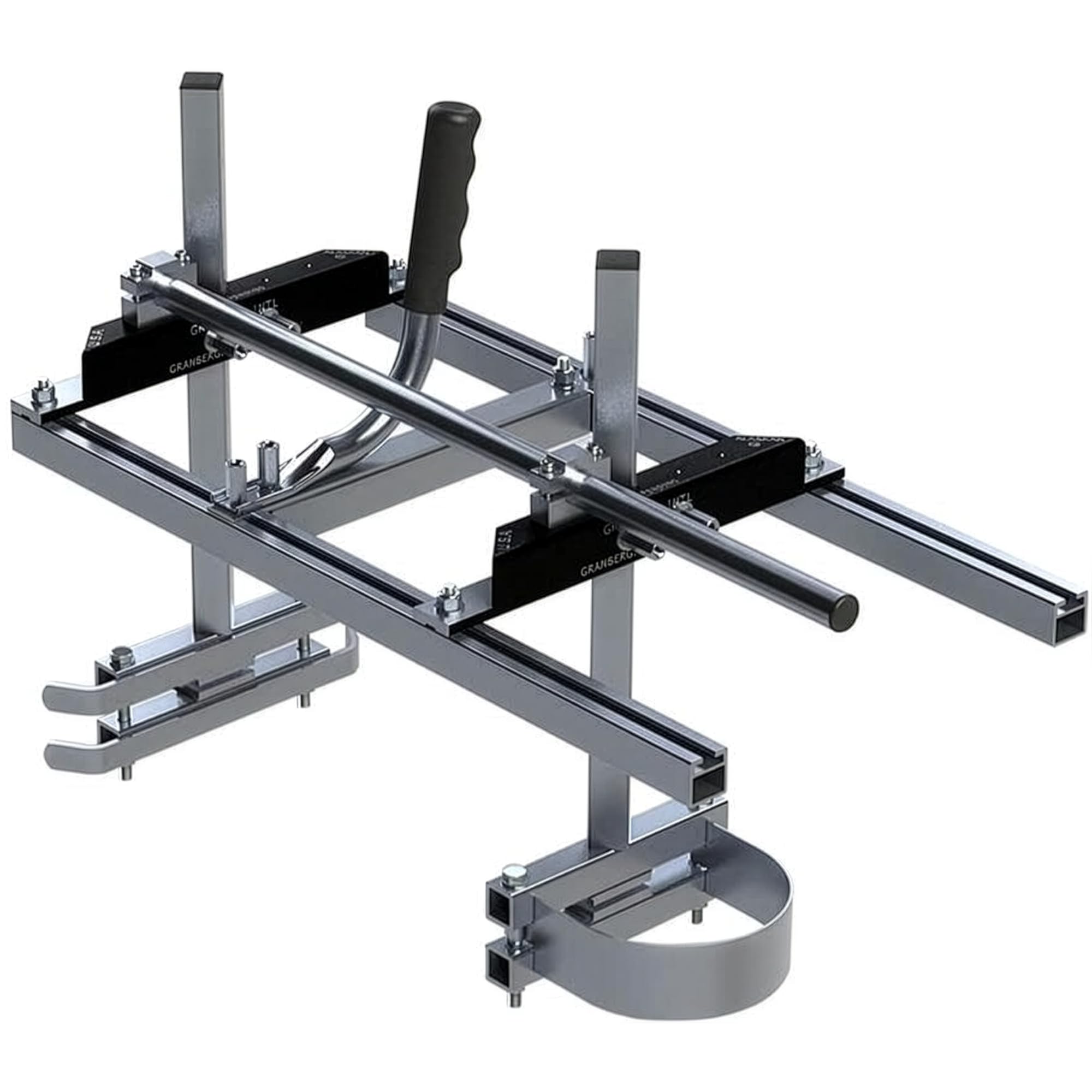
The Granberg MKIV uses aircraft-grade aluminum extrusions and zinc-plated steel hardware that hold alignment over dozens of cuts without the frame bolts loosening. The clamp system contacts the bar on both sides of the mill body, distributing the saw’s torque load better than single-sided U-bolt designs. The integrated depth stop with a ruler lets you set slab thickness without reaching for a tape measure every time.
Owners report losing roughly 4 to 5 inches of cutting width from their bar’s advertised length — a 24-inch bar yields about 19 to 20 inches of usable slab width. That ratio is consistent with most frame designs, but the Granberg’s four-nut bar lock keeps the saw from shifting mid-cut even when pushing a full-tooth ripping chain through white oak. The frame is heavier than budget aluminum mills, but that weight translates into less vibration felt through the handle.
Setup takes roughly an hour for a first-time builder, and the instructions are the clearest of any mill in this category. For hardwoods larger than 18 inches in diameter, a 75cc or larger saw is recommended to maintain chain speed without bogging.
Why it’s great
- Rigid aircraft-grade frame stays square under high torque
- Depth stop with ruler eliminates repetitive measuring
- Bar clamps distribute load evenly across both sides of the mill
- Made in the USA with consistent machining tolerances
Good to know
- Loses 4-5 inches of effective cutting width from bar length
- Heavier than budget options — 18.1 pounds before the saw
- Instructions could include more detail on rail guide setup
2. Zozen Chainsaw Mill with Lumber Guide Brackets

This Zozen kit bundles the 14-to-36-inch mill frame with a set of lumber guide brackets that let you build a straight guide rail from a 2×4 board. The mill itself uses a spliced aluminum profile that breaks down into three smaller sections for transport, then locks together with straight-line connectors into a rigid 36-inch frame. The included brackets come with a level and screws to attach them to the log, solving the first-cut alignment problem without buying a separate rail system.
Reviewers note that the set screws on the mill arrive loose — you should go through every bolt with Loctite before the first pass. The thumb knobs on the upper bar can vibrate loose during long cuts if not tightened fully. Despite these small pre-use adjustments, the frame produces flat cuts on pine and oak when paired with a saw of at least 20-inch bar length and 3.75 horsepower. The dual metric and imperial scales printed on the uprights help set slab thickness faster than measuring from the log surface.
The bracket design works well on logs 6 to 36 inches in diameter, but the 2×4 guide rail must be true — any warp in the board transfers directly into the first cut. At 20.8 pounds, this is one of the heavier mid-range kits, but the added weight comes from thicker aluminum extrusions that resist flex.
Why it’s great
- Modular frame with three independent section sizes
- Comes with lumber guide brackets and level for first cuts
- Dual scale (metric and imperial) for depth setting
- Thicker extrusions provide solid rigidity for the price
Good to know
- Set screws arrive loose — must be tightened before use
- Thumb knobs can vibrate loose during long cuts
- Guide bracket system requires perfectly straight 2×4 rails
3. XSLOER 36-inch Chainsaw Mill + 9FT Rail Guide

The XSLOER combo packages a 36-inch mill frame with a 9-foot rail guide, giving you everything needed to cut the first flat face on a round log and then slab the rest. The rail system splits into three 3-foot sections that connect end-to-end, making it easier to pack into a truck bed than a single 9-foot extrusion. The mill frame uses high-quality aluminum profiles and galvanized steel for corrosion resistance in outdoor storage.
Users running an Echo 590 with a 28-inch bar report that the mill handles the saw well once the track leveling and depth are dialed in. The leveling screws on the rail cross members need lock nuts or jam nuts to stay tight — several owners replaced the stock hardware after the screws vibrated loose during the first few cuts. The curved blade guard on some chainsaws may be too wide for the end clamp to fit, requiring removal of the guard before mounting the mill.
The full kit weighs 33.3 pounds, which is significant for carrying to a remote site, but the rail sections are manageable individually. For logs shorter than 8 feet, you can leave one rail section behind to reduce weight. The combination mill depth goes from 0.5 to 12 inches, and the maximum slab width with the 36-inch frame is roughly 31 inches after clamp clearance.
Why it’s great
- All-in-one mill and rail guide in a single package
- Spliced 3-section rail fits in a standard truck bed
- Galvanized steel resists rust in outdoor storage
- Compatible with multiple saw bar lengths up to 36 inches
Good to know
- Leveling screws need lock nuts or jam nuts for stability
- Some blade guards block end clamp fit
- Heavy at 33.3 pounds for the full kit
4. 12 FT Rail Mill Guide System by XRKJ
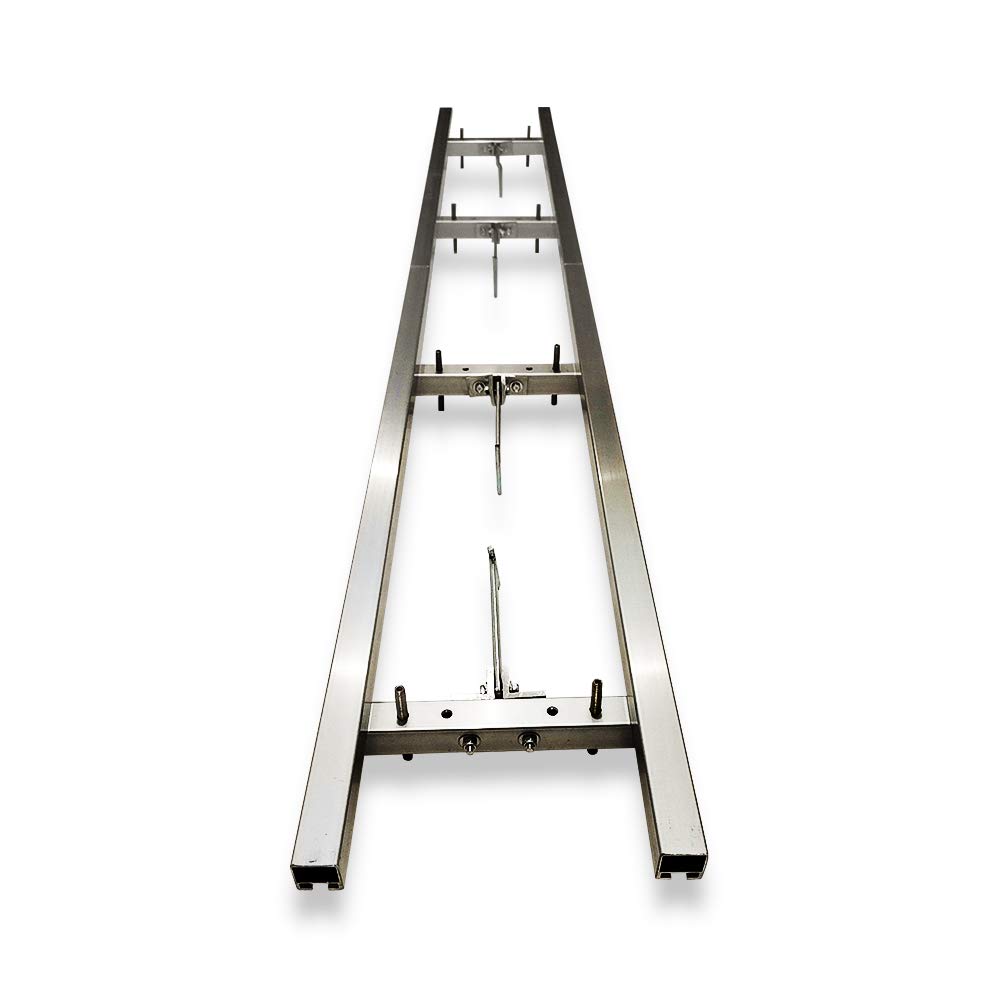
The XRKJ 12-foot rail system provides a long, straight datum for cutting the first flat face on logs up to roughly 10 feet long (the rail extends beyond the log ends to allow room for the mill to sit on the track). The rail uses a single-piece dog hinge plate for easier assembly and four cross members that add lateral stability across the rail’s length. The hammer-in dogs attach to the cross members and lock the rail to the log, preventing the rail from shifting during the cut.
Owners note that the supplied tools do not tighten the hardware enough to hold alignment under vibration — switching to a socket wrench with lock nuts solves the loosening issue. The rail system works best on logs larger than 12 inches in diameter; smaller logs tend to rock the dogs out of position even when fully hammered in. The first cut must be deeper than 3 inches to keep the chain from hitting the adjustment screws on the cross members.
The rail itself is a bare guide — you need a separate mill frame to attach to the saw. If you already own a mill, this rail system adds the missing first-cut precision without buying a whole new frame. The 12-foot length is overkill for short logs, but you can run a shorter configuration by not attaching all sections.
Why it’s great
- Long 12-foot rail supports large-diameter logs
- Four cross members improve lateral stability
- Single-piece dog hinge simplifies assembly
- Can be used in shorter configurations for smaller logs
Good to know
- Supplied tools are not sufficient — need socket wrench
- Rocks on logs under 12 inches in diameter
- First cut must exceed 3 inches depth to clear adjustment screws
5. Zozen Chainsaw Mill Patented Locking (B0FS1D5Q79)
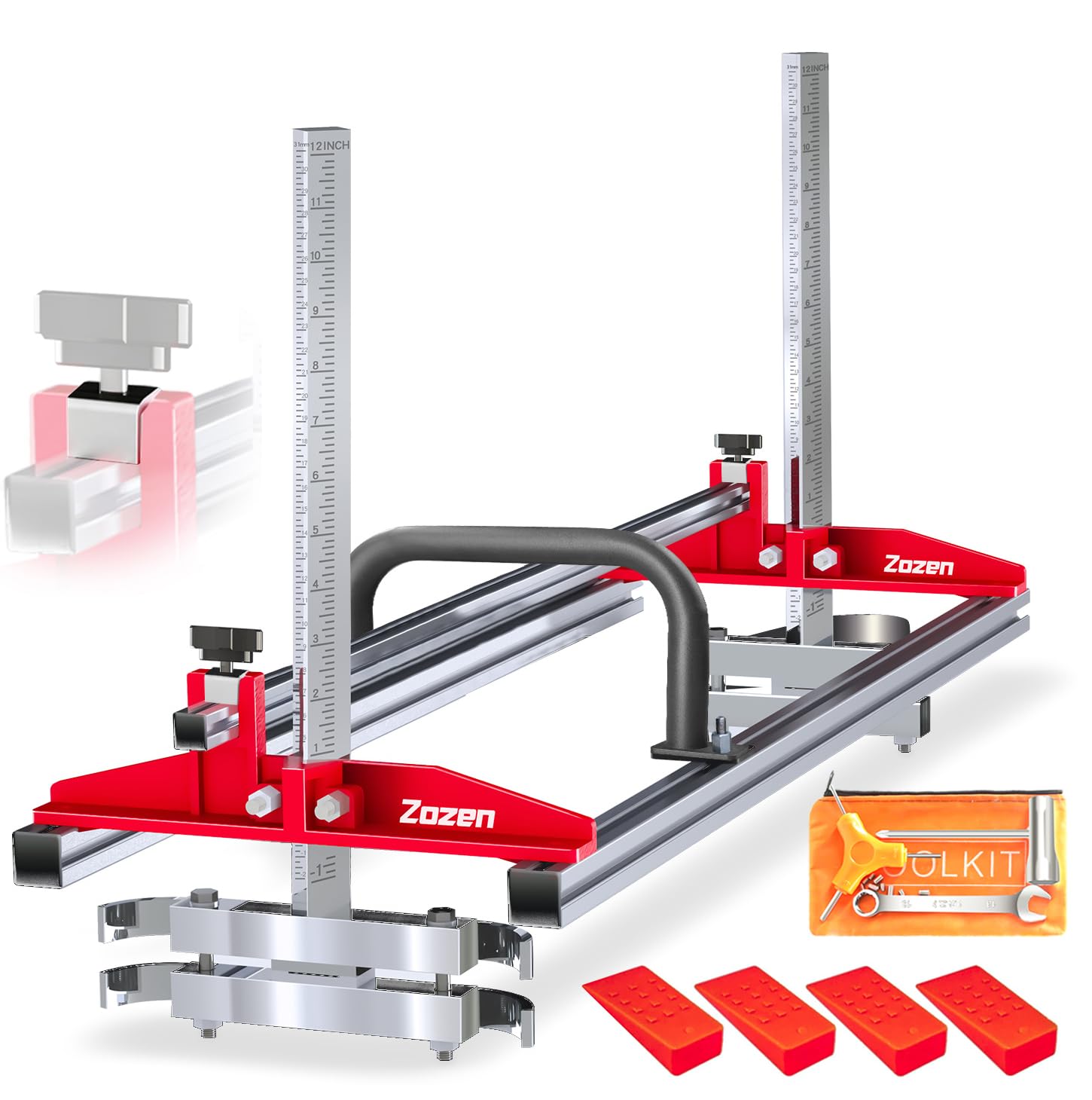
This Zozen mill features a reinforced locking system that clamps the saw bar more securely than the standard U-bolt setup found on many budget frames. The oversized ergonomic handle can be repositioned along the mill body for either push or pull operation, letting the user choose the most comfortable stance for the cut. The mill uses the same spliced construction as the other Zozen models, breaking down into three independent sizes so you can run a 14-inch, 24-inch, or 36-inch configuration without carrying extra weight.
The far-end clamp holds the bar tip securely — a common weak point on budget mills where the tip clamp can slip under load. Multiple reviewers confirm that this clamp design stays tight through entire slabs of western red cedar and white oak. The mill comes with a set of four felling wedges that help prevent the chain from pinching on the back side of the cut, which is a common problem when milling high-tension hardwoods.
Installation is straightforward, but first-time users should snug all bolts before cutting and check them after the first slab. The locking system relies on a threaded pin mechanism that provides finer depth adjustment than slot-and-bolt designs, though changing depth takes a few extra turns compared to a quick-release lever.
Why it’s great
- Reinforced locking system holds bar securely at both ends
- Ergonomic handle adjusts for push or pull operation
- Spliced frame allows three size configurations
- Includes felling wedges to prevent chain pinching
Good to know
- Depth adjustment via threaded pin is slower than quick-release
- All bolts should be checked after the first slab
- Max cutting depth of 12 inches may limit very thick slabs
6. Nejoney 36-inch Portable Chainsaw Mill
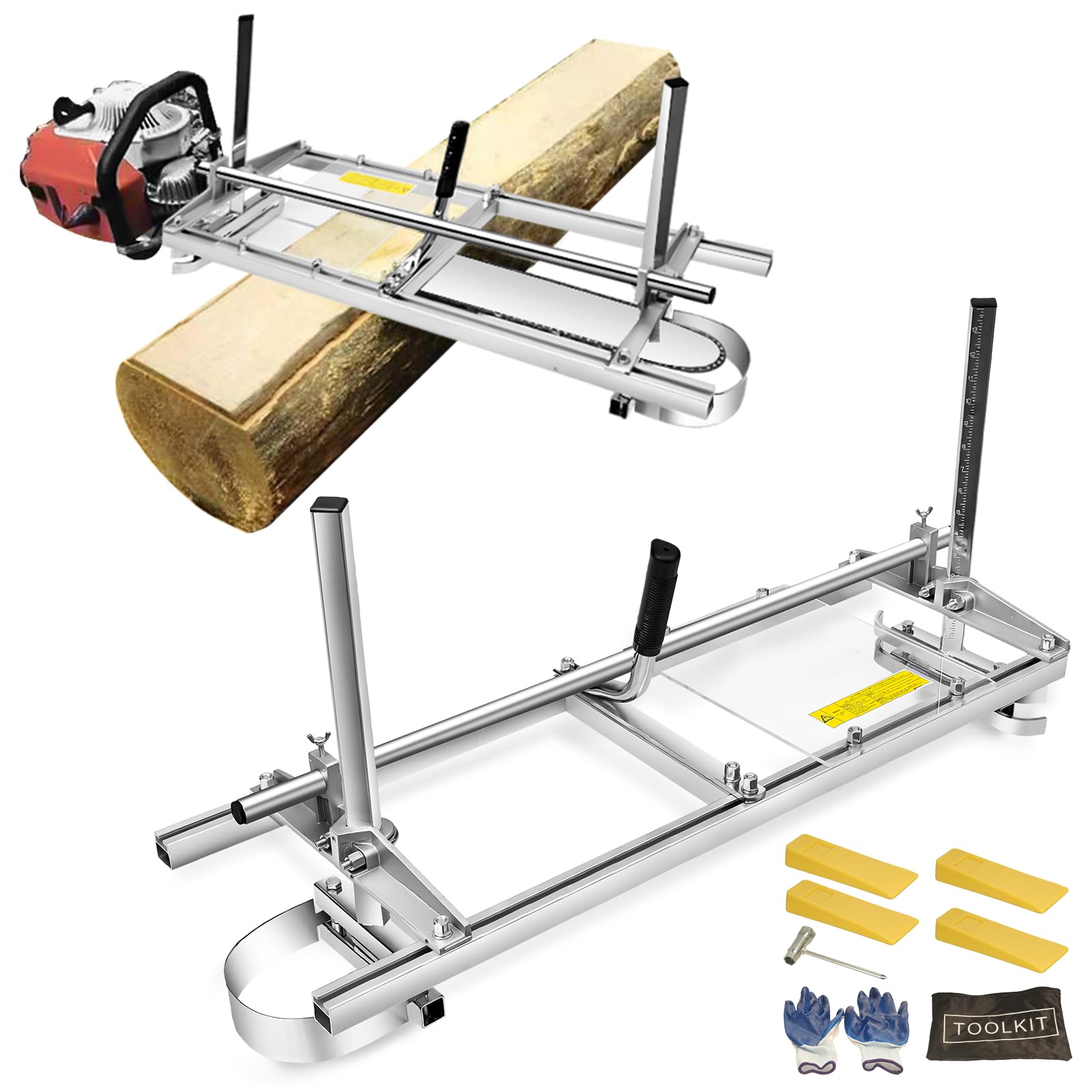
The Nejoney mill is a straightforward aluminum-and-galvanized-steel frame that clamps onto the chainsaw bar with U-bolts and adjusts slab thickness through bolted uprights. It handles logs up to 36 inches in diameter and produces slabs from 0.5 to 13 inches thick. The build quality is adequate for softwoods and occasional hardwoods, but the clamping mechanism requires care to avoid cross-threading the bolts during assembly.
For hardwoods like oak or hickory, a 100cc saw is strongly recommended by owners who tried smaller engines first. The mill assembly is straightforward, but the included instructions lack detail on how to level the first cut without a separate rail guide.
The frame is lightweight enough to fit in a car trunk, making it a viable option for cutting boards from storm-felled trees in a backyard or campsite. The far-end clamp holds well once tightened, but reaching the adjustment bolts during a cut requires stopping the saw and repositioning.
Why it’s great
- Lightweight and portable for car-trunk transport
- Compatible with bars from 14 to 36 inches
- Galvanized steel resists rust in outdoor use
- Budget-friendly entry point for novice millers
Good to know
- Requires a powerful saw (100cc recommended for hardwoods)
- Clamping bolts can cross-thread if not aligned carefully
- No rail guide included — first cut leveling is manual
7. FARMMAC 36-inch Portable Chainsaw Mill
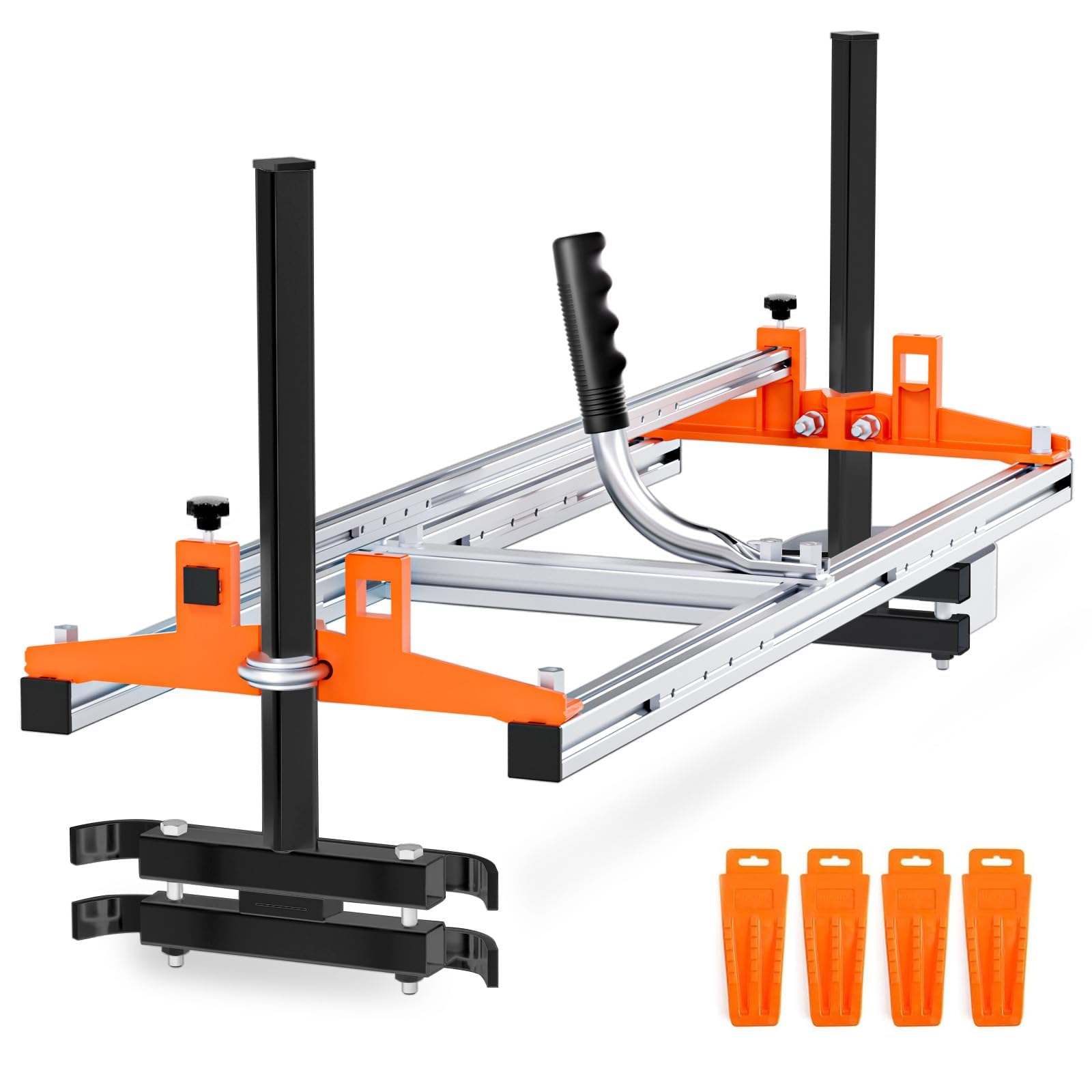
The FARMMAC mill uses a spliced construction that breaks the 36-inch frame into smaller, packable segments that lock together with straight-line connectors. This design makes it one of the most travel-friendly full-size mills — the disassembled pieces fit into a storage bag or backpack without the awkward length of a single 36-inch frame. The aluminum profile is rigid once assembled, with no noticeable flex when tightened properly.
Owners praise the modular concept but point out a few trade-offs. The spliced joints add assembly time compared to a one-piece frame, and the cross-brace screws that hold the segments together can vibrate loose during heavy use. Replacing the stock screws with thread-locked fasteners solves the issue. The depth-setting mechanism uses U-bolts that are fiddly to adjust on the fly — setting a precise slab thickness takes more fiddling than on a mill with a threaded depth stop.
The mill works best with a 20-inch or longer bar, and the effective cutting width is about 4 inches shorter than the bar length due to clamp clearance. For homeowners cutting the occasional slab from felled trees, the FARMMAC packs down small enough to bring along on a truck without sacrificing cutting capacity.
Why it’s great
- Modular design packs down for easy transport
- Rigid once assembled — no flex under load
- Compatible with bars from 14 to 36 inches
- Good entry-level mill for occasional use
Good to know
- Cross-brace screws vibrate loose over time
- Depth setting with U-bolts is fiddly and imprecise
- Loses approximately 4 inches of effective cutting length
8. XSLOER 36-Inch Rail Mill Guide System

The XSLOER 36-inch mill uses a steel-and-aluminum construction that feels sturdier than its budget price suggests. The clamping system attaches directly to the chainsaw bar without drilling and can adjust slabs from 0.5 to 12 inches thick. The frame is designed for bars from 14 to 36 inches, giving you flexibility to swap between different saws without buying a new mill.
Users running Stihl 361 or larger saws report that the mill cuts cleanly through oak once the bar and chain are set up properly. The mill requires a strong saw to maintain chain speed — anything under a 350-series Stihl will struggle with dense hardwoods. The cast aluminum frame may need light grinding in the adjustment slots for a 1/2-inch socket to fit, a minor mod that several owners performed to smooth out the depth adjustment.
The mill is essentially a two-person tool for larger logs, as the weight of the saw and mill together makes one-handed operation impractical. The hardware includes generous spare bolts, which is useful since the stock height lock uses a wrench rather than a wingnut, making depth changes slower than quick-release designs.
Why it’s great
- Sturdy steel-and-aluminum build for the price
- No-drill clamp system attaches directly to bar
- Spare hardware included for field repairs
- Works with bar lengths from 14 to 36 inches
Good to know
- Best suited for saws with at least 350-class power
- Depth adjustment slots may need light grinding
- Two-person operation recommended for large logs
9. 10 FT Rail Mill Guide System by XRKJ
The XRKJ 10-foot rail guide provides a reference track for making the first straight cut on a round log. It uses three cross members with hammer-in dogs that secure the rail to the log. The single-piece dog hinge plate simplifies assembly compared to multi-piece rail guides, and the rail sections can be connected to other 9-foot or 12-foot sections if you need a longer track.
Owners note that the supplied tools are inadequate for tightening the hardware to a vibration-proof level — switching to a socket and replacing the stock nuts with lock nuts is a common modification. The rail works best on logs that are at least 12 inches in diameter and shorter than 8 feet to allow enough rail extending beyond the log for the mill to ride on. For smaller logs, the dogs have difficulty gripping the curve of the log and may slip.
The rail itself is a bare extrusion — you need a separate mill frame to attach to your chainsaw. If you already own a mill and want to improve your first-cut accuracy on medium-diameter logs, this 10-foot system offers enough length for most residential milling projects without the bulk of a 12-foot rail.
Why it’s great
- Good length for residential-scale logs under 8 feet
- Three cross members provide stable support
- Single-piece hinge plate for quick assembly
- Can be combined with other XRKJ rail sections
Good to know
- Supplied tools cannot tighten hardware sufficiently
- Dogs struggle to grip logs under 12 inches diameter
- Not a complete kit — requires separate mill frame
FAQ
How much cutting width do I lose with a chainsaw mill?
What size chainsaw do I need for milling?
Do I need a rail guide for the first cut?
Can I use a standard cross-cutting chain for milling?
Final Thoughts: The Verdict
For most users, the best chainsaw mill winner is the Granberg 36-inch MKIV because its aircraft-aluminum frame, four-nut bar lock, and integrated depth stop produce repeatable flat slabs without constant fiddling. If you want a complete kit with guide brackets for first-cut precision, grab the Zozen with Lumber Guide Brackets. And for a budget-friendly entry that gets you milling without a big investment, the Nejoney 36-inch handles softwoods and occasional hardwoods when paired with a powerful saw.

Mo Maruf
I created WellFizz to bridge the gap between vague wellness advice and actionable solutions. My mission is simple: to decode the research and give you practical tools you can actually use.
Beyond the data, I am a passionate traveler. I believe that stepping away from the screen to explore new environments is essential for mental clarity and physical vitality.