Our readers keep the lights on and my smoothie glass nicely filled. As an Amazon Associate, I earn from qualifying purchases.
A draw knife is a simple tool with a singular purpose: to pull long, controlled shavings from a piece of wood. When the blade is sharp and the angle is right, the work is almost silent—a smooth curl of bark or a precise facet on a chair leg. The wrong draw knife, however, turns that rhythm into a frustrating battle against chatter, blunt steel, and slipping handles. Finding the right one means paying attention to blade geometry, steel quality, and the shape of the handles that your hands will grip for hours.
I’m Mohammad Maruf — the founder and writer behind WellFizz. For this guide, I spent hours analyzing the steel composition, blade curves, handle ergonomics, and real-world feedback on seven draw knives that span from budget-friendly entry-level tools to forged Austrian premium options.
Whether you are stripping bark from fence posts, shaping a spoon blank, or hewing a timber frame, the decision narrows down to edge retention, handle comfort, and blade length. This guide to finding the best draw knife breaks down each model by the specs that actually matter in the shop.
How To Choose The Best Draw Knife
A draw knife is deceptively simple: a long blade with a handle on each end. But small variations in steel, curve, and handle angle turn a general-purpose tool into either a precision shaping instrument or a frustrating bark-stripper. Here are the three factors that separate a joy to use from a shop regret.
Blade Steel and Hardness
High-carbon steel (1095, 5160, or proprietary alloys) holds a keen edge longer than low-carbon alternatives. Hardness ratings around HRC 30-60 are common; higher hardness holds an edge longer but takes more effort to sharpen. Forged steel, as seen in Austrian-made models, typically delivers superior grain structure and edge stability compared to stamped blades. Budget-friendly models often use manganese or basic carbon steel that requires frequent sharpening.
Blade Length and Curve
Blade length dictates the scope of work. A 5-inch blade offers control for spoon carving and concave shaping, while a 10-inch blade strips bark from logs faster. Blade curve matters just as much: a gentle curve (often called a sweep) excels at debarking round logs, while a straighter edge is better for flattening faces and rough dimensioning. Deep curves are specialized for hollowing chair seats or dugout canoes.
Handle Geometry and Ergonomics
Offset handles—where the grips angle upward from the blade—keep your knuckles clear of the wood surface, preventing busted fingers during heavy pulls. Straight handles, common on smaller carving knives, offer more direct feedback but risk knuckle contact. Handle material matters: seasoned hardwoods like oak and ash absorb sweat and provide a secure grip, while painted or varnished wood can become slippery. Ergonomic shaping that fills the palm reduces fatigue over long sessions.
Quick Comparison
On smaller screens, swipe sideways to see the full table.
| Model | Category | Best For | Key Spec | Amazon |
|---|---|---|---|---|
| Stubai Drawknife | Premium | General woodworking, debarking | 9 1/4″ forged steel blade | Amazon |
| Wisemen Mueller Drawknife | Premium | Rough shaping, heavy debarking | Hand-forged Austrian steel | Amazon |
| FLEXCUT KN16 Draw Knife | Mid-Range | Spoon carving, concave shaping | 5″ flexible 1095 steel blade | Amazon |
| Timber Tuff TMB-10DC | Mid-Range | Debarking logs, heavy use | 10″ x 5mm hardened steel blade | Amazon |
| Timber Tuff TMB-05DC | Budget-Friendly | Small diameter debarking | 5″ curved 30° edge | Amazon |
| BeaverCraft DK2s | Entry-Level | Spoon carving, detailing | 4.3″ high-carbon steel blade | Amazon |
| Beendou 10″ Draw Knife | Entry-Level | Bark stripping fence posts | 10″ manganese steel blade | Amazon |
In‑Depth Reviews
1. Stubai Drawknife Made In Austria
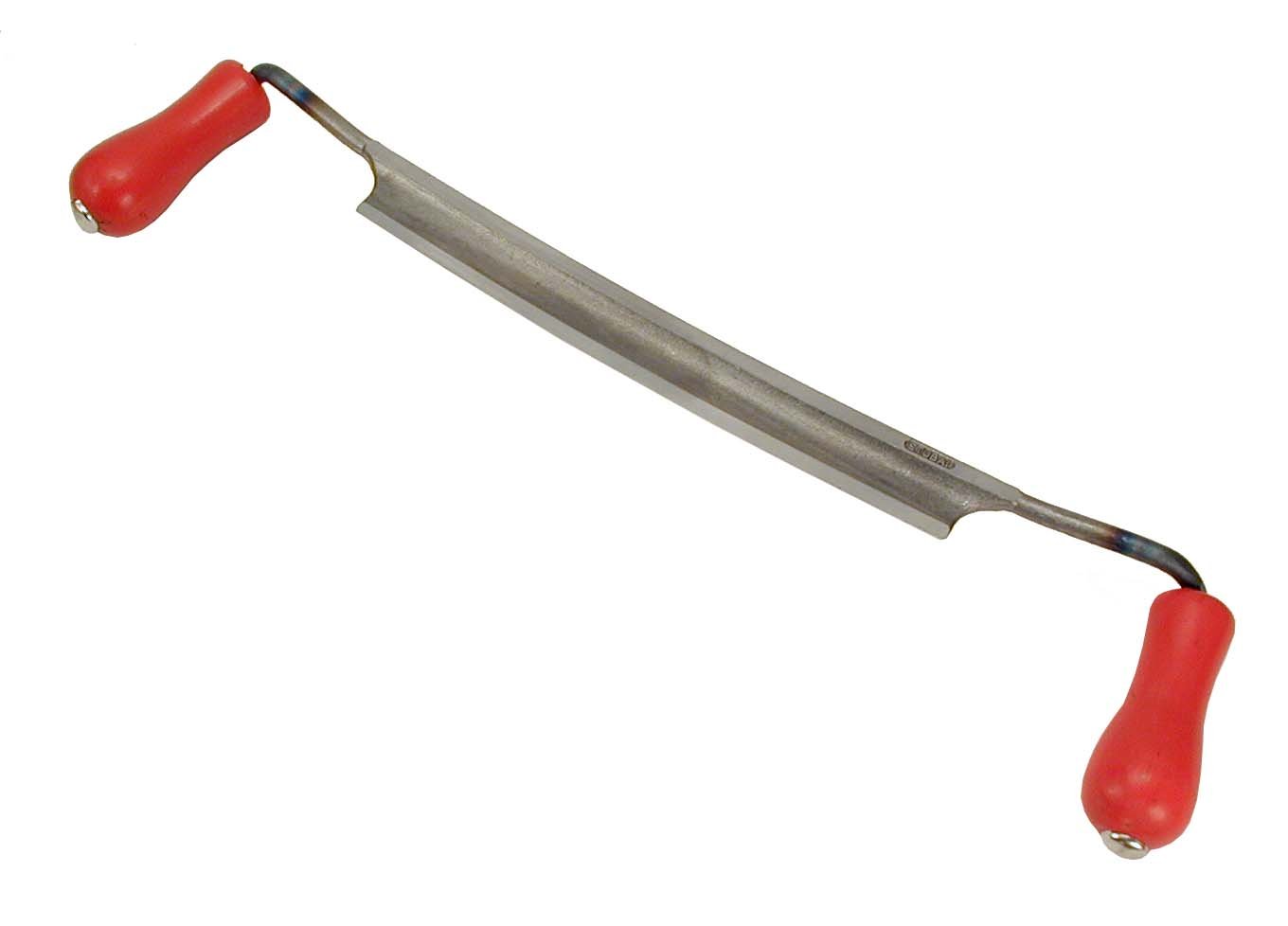
The Stubai Drawknife represents a class of tool that is increasingly hard to find: a forged, heat-treated blade from a European mill with offset handles designed for real knuckle clearance. The 9 1/4-inch blade is hardened and tempered to hold a keen edge through extended debarking sessions on Douglas fir and other softwoods. Experienced woodworkers consistently note that the edge arrives sharp and that the high-quality painted hardwood handles resist checking over years of use.
Carbon steel demands discipline—users must wipe and oil the blade after each session to prevent surface rust. The offset handle geometry is a standout feature: it keeps your hands safely away from the workpiece, reducing the risk of skinned knuckles when pulling through tough grain. The overall length of 17 inches provides good leverage without feeling unwieldy.
For the woodworker who wants a single draw knife that can handle everything from debarking a log to rough-shaping a chair spindle, the Stubai delivers a balance of edge quality, ergonomics, and durability that few competitors match at this level. It is not the cheapest option, but the cost reflects Austrian steel and construction standards that justify the investment.
Why it’s great
- Forged steel edge holds well during heavy use
- Offset handles provide excellent knuckle clearance
- Arrives sharp and ready for work
Good to know
- Carbon steel requires oiling to prevent rust
- Painted handles may feel slick when wet
2. Wisemen Mueller Drawknife 9-1/2 inch Forged in Austria

The Wisemen Mueller is a heavy-duty draw knife that feels substantial in the hands. Hand-forged in Austria from high-carbon steel, it has a 9 1/2-inch blade that is 1 inch wide with a gentle curve that gives the user precise control when stripping bark from felled black cherry or hickory logs. The visible forging lines are not cosmetic flaws—they are evidence of the smith’s hammer work, which aligns the grain structure for better edge stability.
Users with larger hands appreciate the handle geometry; the grips are spaced wide enough to accommodate a full palm without cramping. The factory edge is razor sharp, and experienced woodworkers report that the steel is easy to maintain with a strop or flat stone. The lifetime warranty adds confidence for those who plan to use this tool hard for years.
This is not a finishing tool. The blade is stout and the edge geometry favors aggressive material removal. It excels at rough dimensioning lumber into staffs, paddles, and beams. For fine spoon carving or delicate shaping, a shorter, more flexible blade would be a better pick. But for anyone processing green wood or building timber frames, the Mueller is a workhorse that will outlast cheaper alternatives.
Why it’s great
- Hand-forged Austrian steel with superior edge retention
- Comfortable handles for larger hands
- Lifetime warranty from the manufacturer
Good to know
- Blade is heavy and less suited for fine work
- May require additional sharpening out of box for some users
3. FLEXCUT Wood Carving Tools Set 5-Inch Draw Knife KN16

The FLEXCUT KN16 is a specialized tool designed for the carver who needs a blade that can follow contours. The 5-inch 1095 high-carbon steel blade has a deliberate flex that allows it to conform to concave and convex surfaces, making it ideal for shaping spoon bowls, ladle cups, and sculpted details. The convex edge geometry reduces the effort required to make smooth, continuous cuts.
The ash wood handles are ergonomic and lightweight, but some users note that the light wood feels less substantial than heavier hardwood handles. The included leather sheath is a nice addition, though the stiff leather and exposed steel snaps can be tricky during insertion. The factory edge is exceptionally sharp, often described as usable straight out of the box for carving projects.
This draw knife is built for precision, not brute force. It will struggle with thick bark on large logs, but for any carving task that involves curved surfaces, it outperforms rigid blades. The made-in-USA construction and consistent quality control from Flexcut make this a reliable choice for the serious carver.
Why it’s great
- Flexible blade adapts to curved surfaces
- Extremely sharp factory edge
- Leather sheath included for safe storage
Good to know
- Light handles feel less robust than hardwood options
- Sheath snaps can nick the blade during insertion
4. Timber Tuff 10-Inch Curved Draw Shave TMB-10DC

The Timber Tuff TMB-10DC is a workhorse for anyone who needs to strip bark from logs, fence posts, or timber on a regular basis. The 10-inch blade is 5 millimeters thick and made from hardened HRC 30 alloy steel, giving it the toughness to handle knotty wood and repeated impacts without chipping. The 30-degree cutting angle provides a good balance between aggressive cutting and control.
Users who have processed everything from Poplar porch posts to Beech bed rails report that the knife stays sharp through substantial work sessions. The wooden handles are comfortable for gloved hands, and the included blade protector is a practical safety feature. Some users note that the blade arrives dull and requires sharpening before first use, which is common for tools in this price range.
The curved blade profile is tighter than some photos suggest, making it most effective on logs up to about 10 inches in diameter. For larger timber, a straighter blade would provide better contact. For the price, the TMB-10DC offers heavy-duty construction that can handle abusive conditions without breaking the bank.
Why it’s great
- Thick 5mm blade withstands heavy use
- 10-inch length strips bark efficiently
- Good value for the durability offered
Good to know
- Blade often needs sharpening out of the box
- Tighter curve limits use on large-diameter logs
5. Timber Tuff TMB-05DC Curved Draw Shave Tool, 5″

The smaller sibling to the TMB-10DC, the Timber Tuff TMB-05DC offers a 5-inch curved blade that is ideal for smaller diameter workpieces and more controlled shaping. The 30-degree edge angle and 5-millimeter thickness give it the same robust construction as the larger model, but the shorter blade makes it easier to maneuver on tight curves and smaller logs.
Users who debark oak and other hardwoods report that the blade cuts cleanly when sharp, though some units arrive with small chips in the edge that require filing before first use. The wooden handles are well-shaped and provide a secure grip, and the rubber blade protector is a welcome inclusion. The rounded shape of the blade is preferred by many users over long flat styles for its versatility.
This is a good entry point for someone who wants a quality draw knife without investing in a premium model. It is not ideal for high-volume production work, but for occasional debarking, furniture building, or hobby carving, it offers reliable performance at a budget-friendly price point.
Why it’s great
- Compact size offers great control for small projects
- Thick blade resists flex under pressure
- Includes rubber blade protector
Good to know
- Some units arrive with chipped edges
- Not ideal for large-diameter logs
6. BeaverCraft Draw Knife Woodworking Tool DK2s

The BeaverCraft DK2s is a small, precisely made draw knife aimed at the spoon carver and whittler. The 4.3-inch high-carbon steel blade has a Scandi bevel and a straight edge that excels at controlled, delicate cuts. The overall length of just under 13 inches makes it easy to handle in one hand while the other holds the workpiece, a common posture in green woodworking.
The oak handles are finished with natural linseed oil, providing a warm, grippy surface that becomes more comfortable with use. The leather sheath is a practical inclusion for storage and portability. Users consistently praise the blade sharpness right out of the box, though some note that the factory edge benefits from a quick strop to reach peak performance.
This is not a tool for heavy debarking or large-scale shaping. The small blade and straight edge limit its effectiveness on logs or rough stock. But for anyone carving spoons, kuksa cups, or detailed figurines, the BeaverCraft delivers precision and control that larger knives cannot match.
Why it’s great
- Sized perfectly for spoon carving and detailing
- Straight Scandi bevel provides excellent control
- Leather sheath and oiled oak handles are high-quality touches
Good to know
- Not suitable for heavy debarking or large logs
- Factory edge may need a touch-up for peak sharpness
7. Beendou 10” Draw Knife
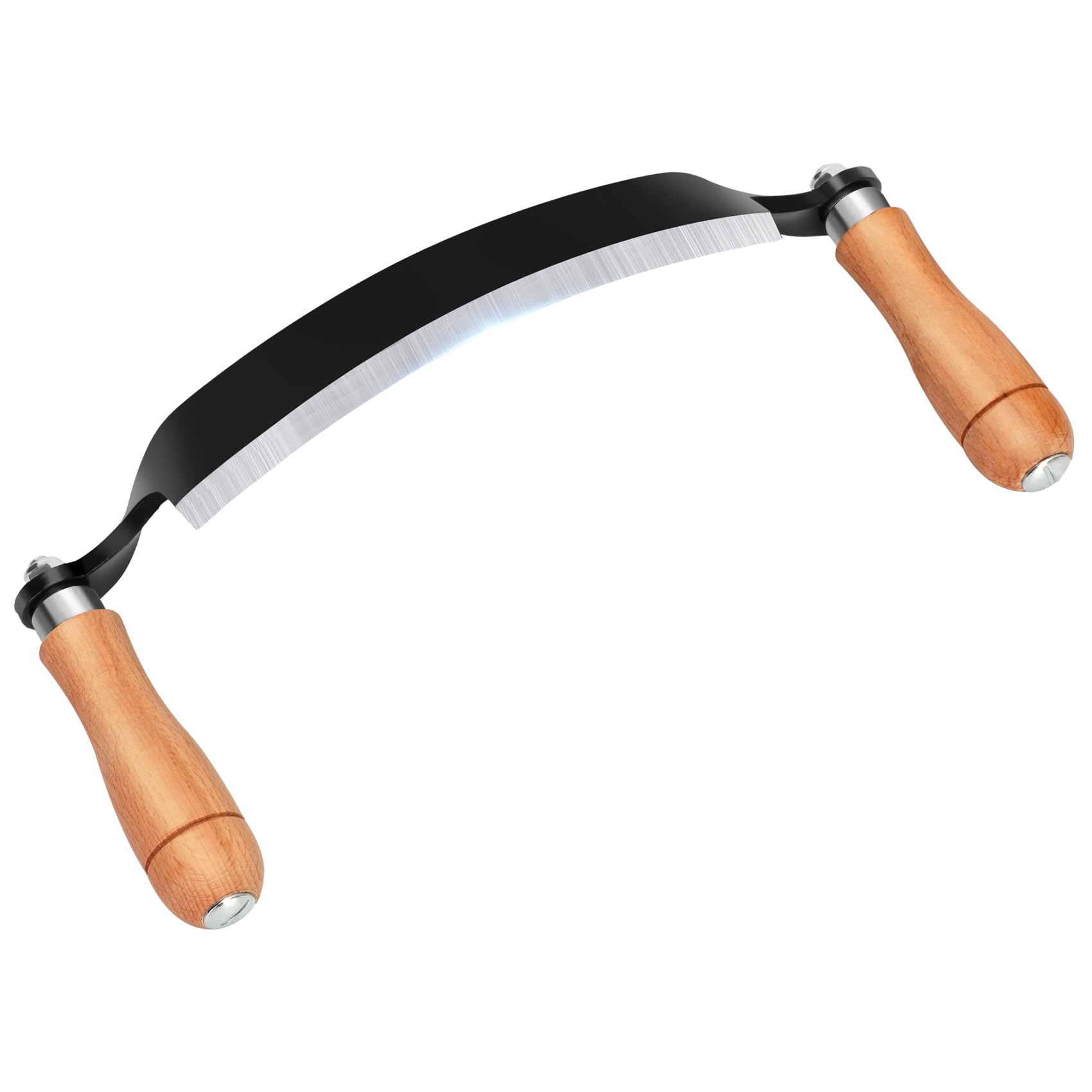
The Beendou 10-inch draw knife is an entry-level tool that focuses on affordability and function for basic bark removal. The manganese steel blade is painted for corrosion resistance and features a 30-degree bevel that is angled for aggressive cutting. The wooden handles are simple but functional, providing a firm grip for pulling motions.
Critical feedback from users centers on the factory edge: many describe the blade as very dull upon arrival, requiring sharpening with a grinder or coarse stone before it becomes usable. This is a common compromise at the budget end of the market, where manufacturers prioritize safety during shipping over ready-to-use sharpness. Once properly sharpened, the tool performs adequately for stripping bark from fence posts and lodge poles.
For the woodworker on a tight budget who has the equipment to sharpen their own tools, the Beendou can serve as a functional bark stripper. For anyone who wants a tool that works out of the box without additional prep, the extra cost for a pre-sharpened model from Timber Tuff or BeaverCraft is money well spent.
Why it’s great
- Very affordable entry point for bark stripping
- Painted finish resists corrosion
- 10-inch blade covers ground quickly
Good to know
- Blade is extremely dull out of the box
- Requires a grinder or coarse stone to become usable
FAQ
How do I tell if a draw knife blade is forged or stamped?
Should I buy a draw knife with offset handles or straight handles?
What angle should I sharpen my draw knife to?
Why are some draw knives labeled as requiring sharpening before use?
Final Thoughts: The Verdict
For most users, the best draw knife winner is the Stubai Drawknife because it combines a forged Austrian steel blade with offset handles and a ready-to-work factory edge in a package that suits both debarking and shaping. If you want a flexible blade for detailed carving and concave shapes, grab the FLEXCUT KN16. And for budget-conscious woodworkers who need a heavy-duty bark stripper, nothing beats the value of the Timber Tuff TMB-10DC after a quick trip to the sharpening stone.

Mo Maruf
I created WellFizz to bridge the gap between vague wellness advice and actionable solutions. My mission is simple: to decode the research and give you practical tools you can actually use.
Beyond the data, I am a passionate traveler. I believe that stepping away from the screen to explore new environments is essential for mental clarity and physical vitality.