Our readers keep the lights on and my smoothie glass nicely filled. As an Amazon Associate, I earn from qualifying purchases.
Spinal stenosis compresses the nerve pathways in your spine, turning an ordinary workday into a battle against radiating pain, numbness, and muscle fatigue. Standard office chairs with flat backrests or soft foam cushions only worsen the problem by failing to support the natural curve of your lower back. Finding a seat that actively reduces pressure on your vertebrae and maintains proper spinal alignment is the single most impactful upgrade for anyone managing this condition.
I’m Mohammad Maruf — the founder and writer behind WellFizz. My research for this guide involved analyzing hundreds of hours of user feedback and cross-referencing material specifications, lumbar adjustment ranges, and seat density data to isolate the models that deliver genuine relief for spinal stenosis.
After evaluating nine chairs against strict criteria for lumbar support adjustability, seat cushion firmness, and dynamic backrest contouring, I’ve identified the models that consistently reduce pressure on compressed nerves. This guide to the best chair for spinal stenosis breaks down what actually works and why.
How To Choose The Best Chair For Spinal Stenosis
Selecting a chair for spinal stenosis isn’t about picking the most expensive or the most padded option. The condition demands a chair that offloads pressure from the lumbar spine, prevents forward slouching (which narrows the spinal canal further), and allows subtle position changes throughout the day. Ignoring adjustability or seat firmness can aggravate symptoms within the first few hours of use.
Lumbar Support Adjustability
A fixed bump in the backrest rarely matches the exact curve of a stenotic spine. Look for lumbar support that moves vertically and in depth. A range of 3 to 5 inches of vertical travel ensures the pad hits precisely at the belt line or slightly above, where canal narrowing often causes the most pain. Depth adjustment of at least an inch lets you dial in the pressure that opens the canal space.
Seat Cushion Firmness and Density
Soft, marshmallow-like cushions allow the pelvis to sink and rotate backward, closing the lumbar curve and narrowing the spinal canal. A high-density foam seat — around 40D to 50D — resists bottoming out and keeps the hips level. For spinal stenosis, firm support that prevents pelvic tilt is more therapeutic than a plush top layer.
Recline and Tilt Mechanism
Static sitting at 90 degrees increases intradiscal pressure. A chair that reclines up to 135 degrees and locks at multiple angles lets you shift your weight and change the load on the spine throughout the day. A synchronized tilt mechanism that moves the seat and backrest together prevents the shirt riding up and keeps the lumbar support engaged at every angle.
Seat Depth and Edge Design
Seat depth should leave two to three fingers of space between the back of your knee and the front edge of the cushion. A waterfall front edge reduces pressure on the back of the thighs and maintains circulation to the legs — critical when stenosis already compromises nerve signaling below the waist. Chairs with adjustable seat depth offer the best fit for different femur lengths.
Quick Comparison
On smaller screens, swipe sideways to see the full table.
| Model | Category | Best For | Key Spec | Amazon |
|---|---|---|---|---|
| FLEXISPOT ErgoX-PRO | Premium | Dynamic spinal support | 5D extendable lumbar support | Amazon |
| Hbada X7 Smart | High-End | Auto-adapting lumbar tension | Gravity-sensing auto lumbar tracking | Amazon |
| Secretlab Titan Evo | Premium | Firm cold-cure foam support | 4-way built-in lumbar support | Amazon |
| Branch Ergonomic Chair | Mid-Range | Full-body adjustability | 8 adjustment points + seat depth | Amazon |
| ELABEST Mesh Office Chair | Mid-Range | Bionic spine contouring | Bionic backrest + adjustable lumbar pad | Amazon |
| GABRYLLY Ergonomic Chair | Mid-Range | Reclining with integrated footrest | 2-way adjustable lumbar (3″ vertical) | Amazon |
| YFO Home Office Chair | Value | Budget-friendly with spring seat | Seat cushion spring bag construction | Amazon |
| CASASIO Ergonomic Chair | Value | Virgin foam pressure distribution | 3.5-inch virgin foam seat cushion | Amazon |
| Kensaker Office Chair | Value | Thick dual-layer cushioning | 4.3-inch thick 40D foam cushion | Amazon |
In‑Depth Reviews
1. FLEXISPOT ErgoX-PRO Ergonomic Office Chair
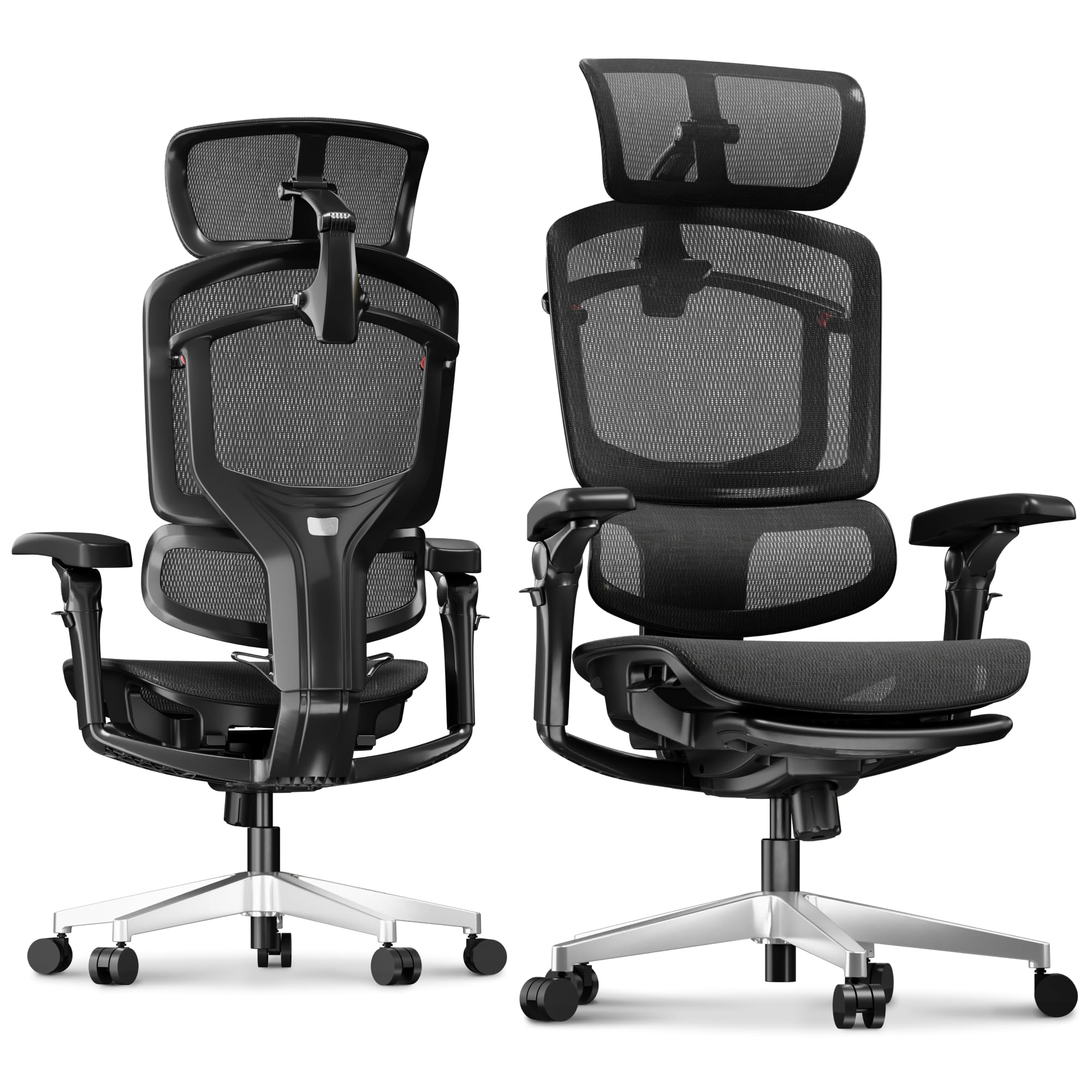
The FLEXISPOT ErgoX-PRO stands apart with its 5D fully extendable lumbar support — a rare feature that adapts its position and pressure as you shift from upright typing to reclined reading. For spinal stenosis, this continuous lumbar engagement prevents the backrest gap that allows your pelvis to rotate backward and compress the canal. The AeroWeave 5.0 mesh seat keeps you cool while providing firm, non-sagging support beneath the hips.
The 7D linkage armrests move in sync with your body, supporting the shoulders and upper back during prolonged keyboard sessions. With a 12-level fine-tuned recline and a 3-position tilt base reaching 135 degrees, you can redistribute spinal load several times an hour without leaving the chair. The reinforced nylon frame and Class 4 lift handle up to 551 pounds without introducing wobble.
Customer reviews highlight the dramatic reduction in lower back fatigue after switching to this model, with multiple users noting that the 5D lumbar pad hits exactly the anatomical point where their stenosis pain originates. The optional footrest adds leg elevation capability, further offloading the lumbar spine during breaks.
Why it’s great
- 5D lumbar adjusts in height, depth, and angle for precise spinal offloading
- 12-level recline with spring cushioning prevents static load buildup
- Breathable mesh seat resists heat buildup during long sitting sessions
- 7D armrests support neutral shoulder posture
Good to know
- Footrest height may be too high for shorter users when fully reclined
- Armrest adjustment range is less extensive than 720-degree alternatives
2. Hbada X7 Smart Ergonomic Chair
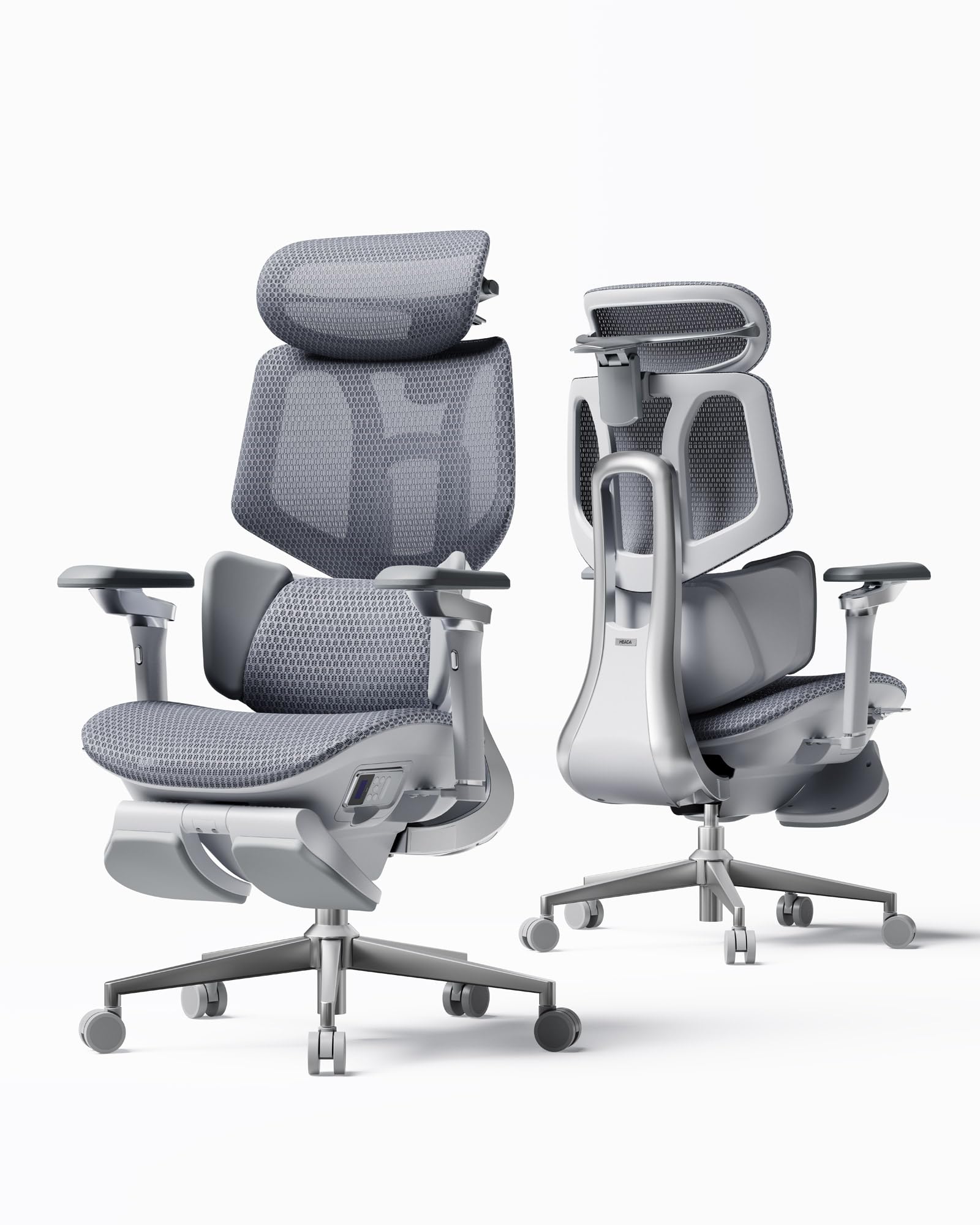
The Hbada X7 Smart introduces auto-adapting lumbar support driven by a gravity-sensing base, meaning the lumbar tension increases automatically as you lean back — exactly when a stenotic spine needs extra structural reinforcement to prevent canal narrowing. The 6D adjustable waist pillow provides both height and depth fine-tuning, and the 8D massage rollers with 3-level heating (40-50°C) can deliver direct relief to paraspinal muscles that tense up as a protective response to nerve compression.
The 720° omnidirectional armrests and 140° recline let you transition between work and rest positions without losing arm support. The dual-fan ventilation system built into the high-resilience mesh seat is a genuine upgrade for anyone who sweats from stress or long sitting hours. The aircraft-grade aluminum frame keeps the weight down while the 5-star nylon base supports up to 330 pounds.
Tall users at 6 feet or above report the included gas cylinder may limit optimal seat height, but a replacement cylinder resolves this. Pre-assembled out of the box, the X7 eliminates the assembly headache and lets you dial in the fit within minutes. The auto-lumbar tracking is not a gimmick — reviewers confirm it adjusts naturally as they shift position throughout the day.
Why it’s great
- Gravity-sensing auto lumbar adapts pressure to your posture in real time
- Heated massage rollers target muscle tension from nerve compression
- Dual-fan cooling seat prevents moisture buildup
- 720° armrests fully synchronize with any recline angle
Good to know
- Standard gas cylinder may need replacing for users over 6 feet tall
- High price point may exceed budgets for value-conscious buyers
3. Secretlab Titan Evo Classic Gaming Chair

The Secretlab Titan Evo uses cold-cure foam that starts firm and conforms gradually without losing its structural integrity — a critical trait for spinal stenosis. Unlike memory foam that allows the pelvis to sink, cold-cure foam maintains a level seating platform that prevents posterior pelvic tilt. The 4-way built-in lumbar support moves up, down, in, and out, letting you dial in the exact depth needed to create space in the spinal canal.
The full-length backrest reclines to 165 degrees, one of the steepest angles available, enabling full spinal decompression during breaks. The memory foam magnetic head pillow provides cervical support that keeps the upper spine aligned with the lumbar curve. The leatherette cover is rated 12 times more durable than standard PU leather, resisting the cracking that plagues cheaper office chairs after a year of daily use.
Users report significant reductions in lower back and shoulder pain after switching, though the firm seat may feel hard initially — the foam requires a break-in period of about two weeks. The metal frame and smooth casters handle heavy daily use without creaking. Available in three sizes, the Regular accommodates users from 5’7″ to 6’2″.
Why it’s great
- Cold-cure foam prevents pelvic sink and maintains spinal alignment
- 4-way lumbar support with independent depth adjustment
- 165-degree recline for advanced spinal decompression
- Durable leatherette resists wear over multiple years
Good to know
- Firm cushion requires a break-in period of 1–2 weeks
- Limited breathability compared to mesh-back alternatives
4. Branch Ergonomic Chair
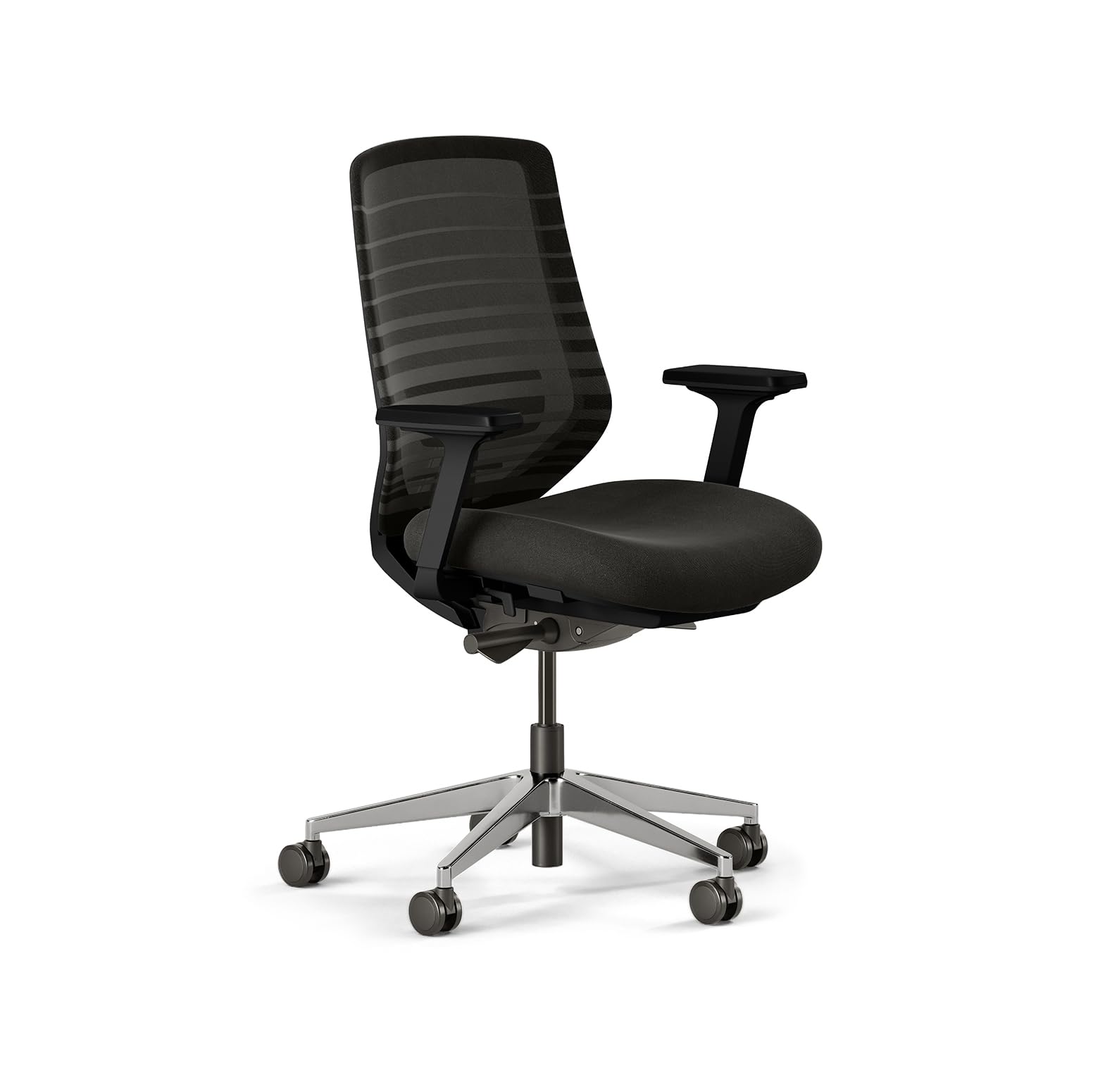
Eight adjustment points make the Branch Ergonomic Chair a chameleon that conforms to different body types — a valuable trait for spinal stenosis sufferers who need exact fit. The adjustable seat depth is a standout feature: sliding the seat pan forward or backward ensures the thigh is fully supported without pressing behind the knee, a pain point for those with nerve symptoms radiating down the leg. The seat height adjustment pairs with a low minimum height that accommodates shorter users without dangling feet.
The breathable mesh backrest keeps the torso cool, and the adjustable lumbar support moves vertically to target the lumbar curve. The aluminum frame keeps the weight at 27 pounds, making it easy to move around the room as needed. The sleek, minimalist design fits into professional office environments without looking like a medical device.
Petite users around 5 feet tall report that the Branch chair fits them perfectly, a rarity in the ergonomic market where most chairs are scaled for taller frames. The smooth-rolling wheels work well on carpet and hard floors. Some users note the armrests can slide forward unintentionally, but tightening the bolts resolves the issue.
Why it’s great
- Adjustable seat depth fits different femur lengths precisely
- Low minimum seat height works for petite users
- Breathable mesh back prevents sweat buildup
- Lightweight aluminum frame is easy to reposition
Good to know
- Armrests may slide forward if bolts are not fully tightened
- Does not include a seat tilt function
5. ELABEST Mesh Office Chair
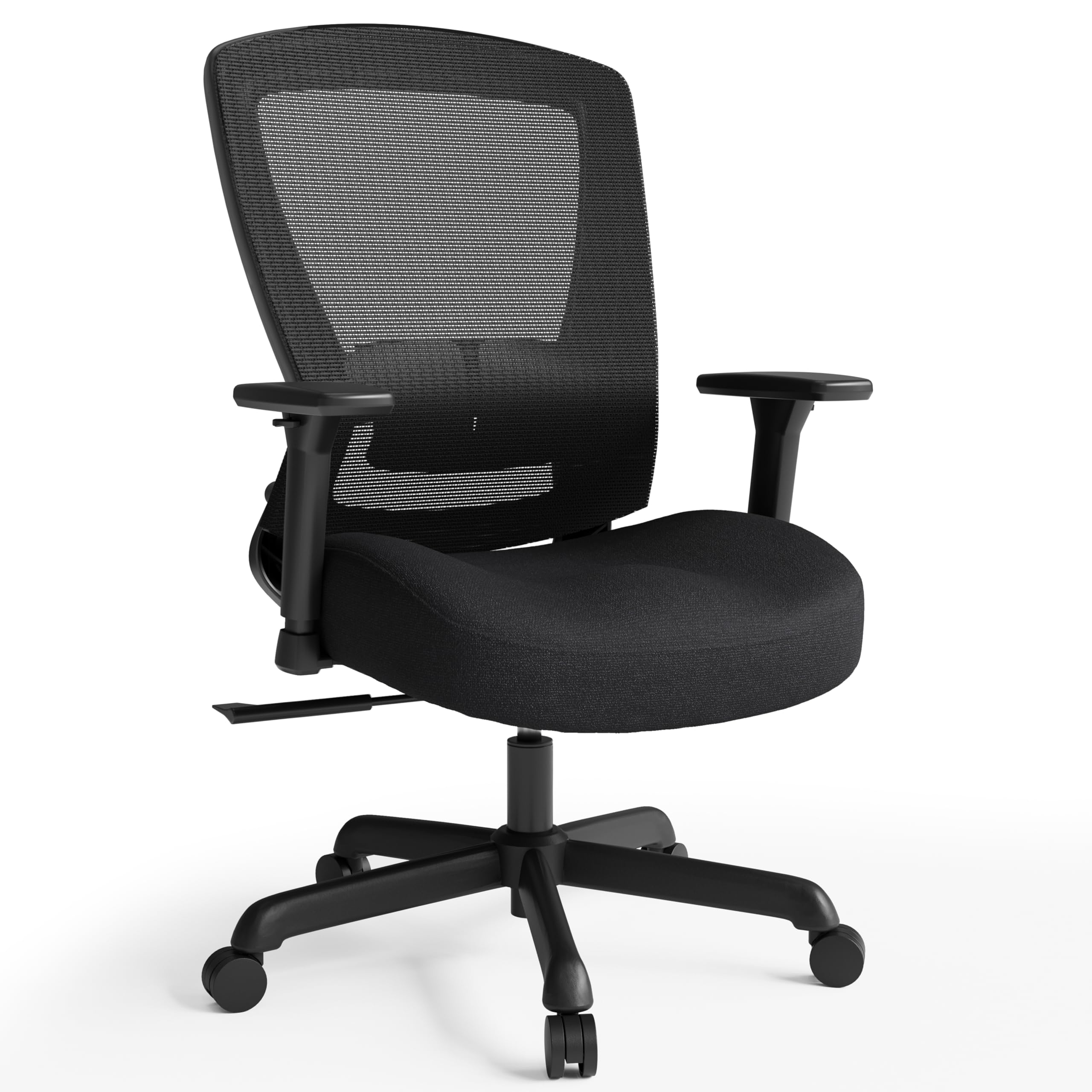
The ELABEST chair employs a bionic backrest designed to mirror the natural S-curve of the spine, with a built-in adjustable lumbar pad that targets the exact curve of your lumbar region. For spinal stenosis, this contour is crucial — it cradles the lower back while preventing the mid-back from collapsing forward, which can narrow the canal. The high-density molded foam seat uses a pressure-zone design with contoured thigh recesses that promote blood flow and reduce numbness during extended sitting.
The 4D armrests add horizontal sliding to the standard height, width, and angle adjustments, letting you align your forearms precisely with your keyboard to cut shoulder and neck strain. The “Golden Triangle” upper backrest delivers targeted support to the shoulders, a feature specifically engineered for professionals who spend all day typing. The BIFMA 5.1 certification confirms the build meets commercial-grade stability and durability standards.
Users praise the high-quality construction and the fact that the chair uses mostly metal components rather than cheap plastic. The firm mesh back provides good airflow while the foam seat avoids the sagging that plagues cheaper mesh-only options. Best suited for users between 5’5″ and 5’10” and under 200 pounds, according to feedback.
Why it’s great
- Bionic backrest mirrors spinal curve for continuous support
- Pressure-zone foam seat reduces thigh numbness
- 4D armrests with horizontal glide for precise forearm alignment
- BIFMA 5.1 certified commercial-grade build
Good to know
- Armrests may be too wide for users with narrow frames
- Best performance under 200 pounds
6. GABRYLLY Ergonomic Office Chair with Footrest
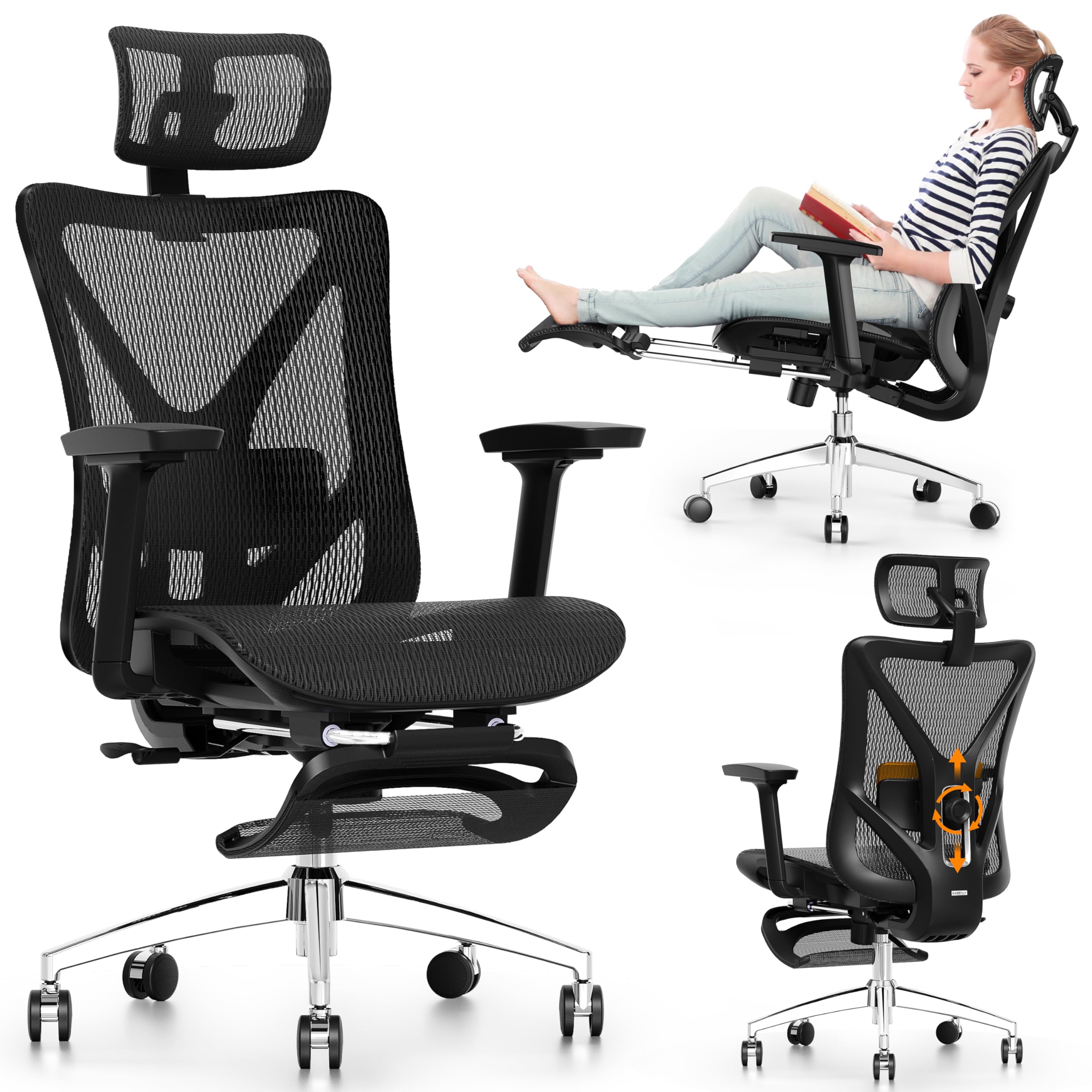
The GABRYLLY chair combines 2-way adjustable lumbar support (3 inches vertical, 1.6 inches horizontal) with a 135-degree recline and an integrated retractable footrest, creating a workstation that transitions into a rest station for spinal decompression. For stenosis sufferers, the ability to fully recline and elevate the legs removes gravitational compression from the lumbar spine and allows the spinal canal to open naturally. The large steel base with a 27.5-inch diameter ensures stability even when the footrest is extended.
The 3D armrests adjust up, down, front, back, in, and out, reducing shoulder strain during typing. The large mesh headrest offers three separate adjustments for height, angle, and bracket position, accommodating different neck lengths. The all-mesh back and seat deliver superior airflow, keeping you cool during long sessions. SGS and BIFMA testing confirm the chair supports up to 300 pounds with consistent durability.
Users consistently report that the lumbar support effectively reduces lower back fatigue, and the built-in footrest is a game-changer for napping during breaks. The mesh material is appreciated in hot climates. Some users note that the armrests can shift unintentionally under pressure and that the lumbar adjustment mechanism is stiff initially.
Why it’s great
- Retractable steel footrest enables full reclining decompression
- 2-way lumbar support adjusts vertically and horizontally
- Large 27.5-inch steel base ensures stability during recline
- All-mesh construction maximizes breathability
Good to know
- Armrests may shift with pressure causing audible clicks
- Lumbar adjustment is initially difficult to manipulate
7. YFO Home Office Desk Chair
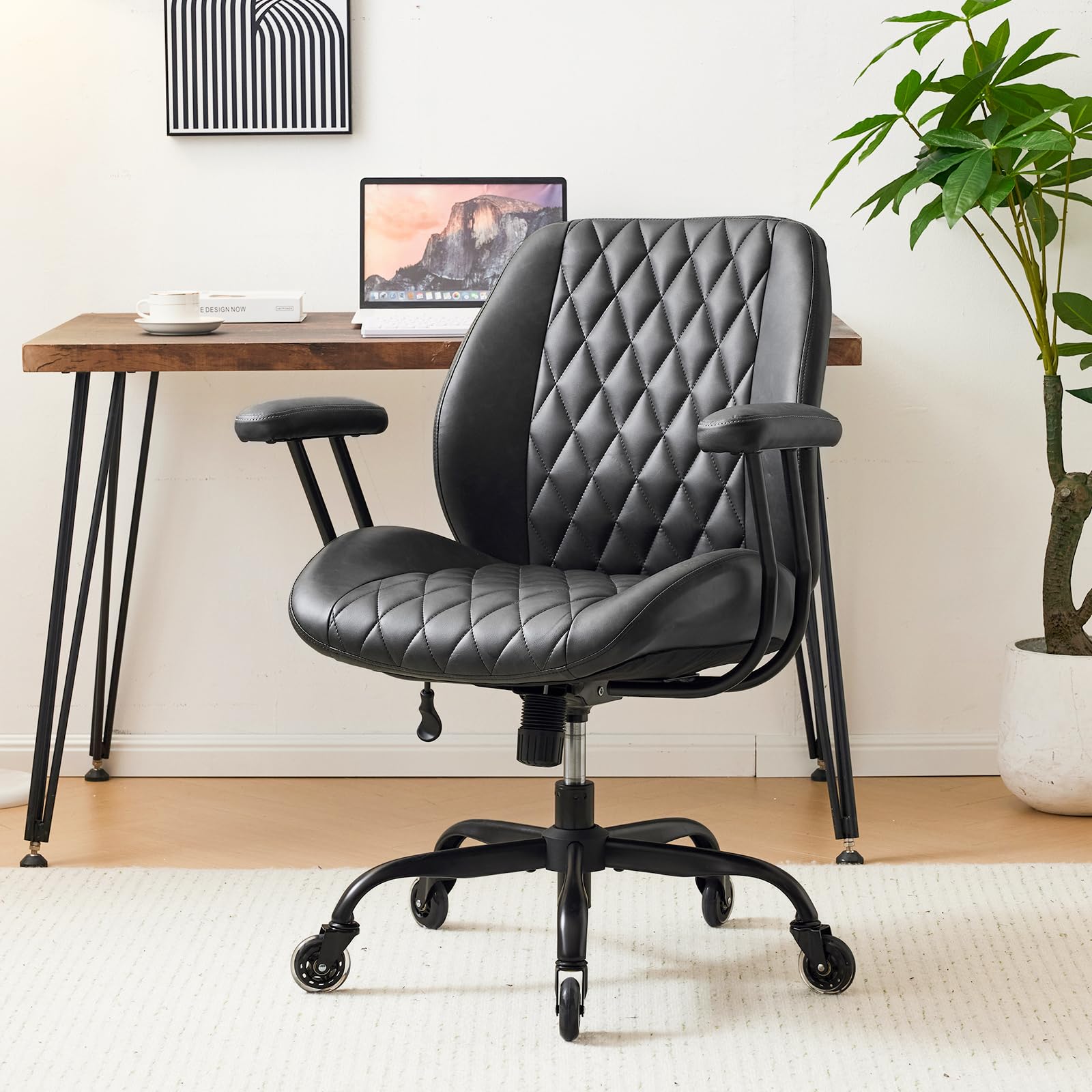
The YFO chair introduces a seat cushion spring bag construction — a wooden board base topped with soft sponge and highly elastic spring packs — that provides bounce without the sink. For spinal stenosis, this firm yet springy foundation prevents pelvic tilt while absorbing impact from shifting positions. The backrest features increased sponge density specifically to keep the lower back supported without the need for a separate lumbar pad.
The 2-in-1 design lets you install or omit the armrests, transforming the chair into a cross-legged seating option for those who need to change positions frequently. The seat width of 22 inches and depth of 20 inches offer generous space for larger body types. The rubber casters roll silently across hardwood, carpet, and marble floors without leaving marks, and the manufacturer uses higher-load-bearing wheels than standard options.
Users appreciate the robust build quality and the smooth, quiet casters. The faux leather finish is compared favorably to Naugahyde in terms of durability. Some buyers note confusion between the high-back and mid-back versions — the mid-back variant lacks adjustable arms and recline functions — so confirm the specific version before purchasing.
Why it’s great
- Spring bag seat cushion prevents pelvic tilt with consistent bounce
- Armless option allows cross-legged sitting for position changes
- Wide 22-inch seat accommodates larger users comfortably
- Rubber casters are silent on all floor types
Good to know
- Mid-back variant lacks adjustable arms and recline — verify version
- Lumbar support is less pronounced than dedicated lumbar pad chairs
8. CASASIO Ergonomic Office Chair
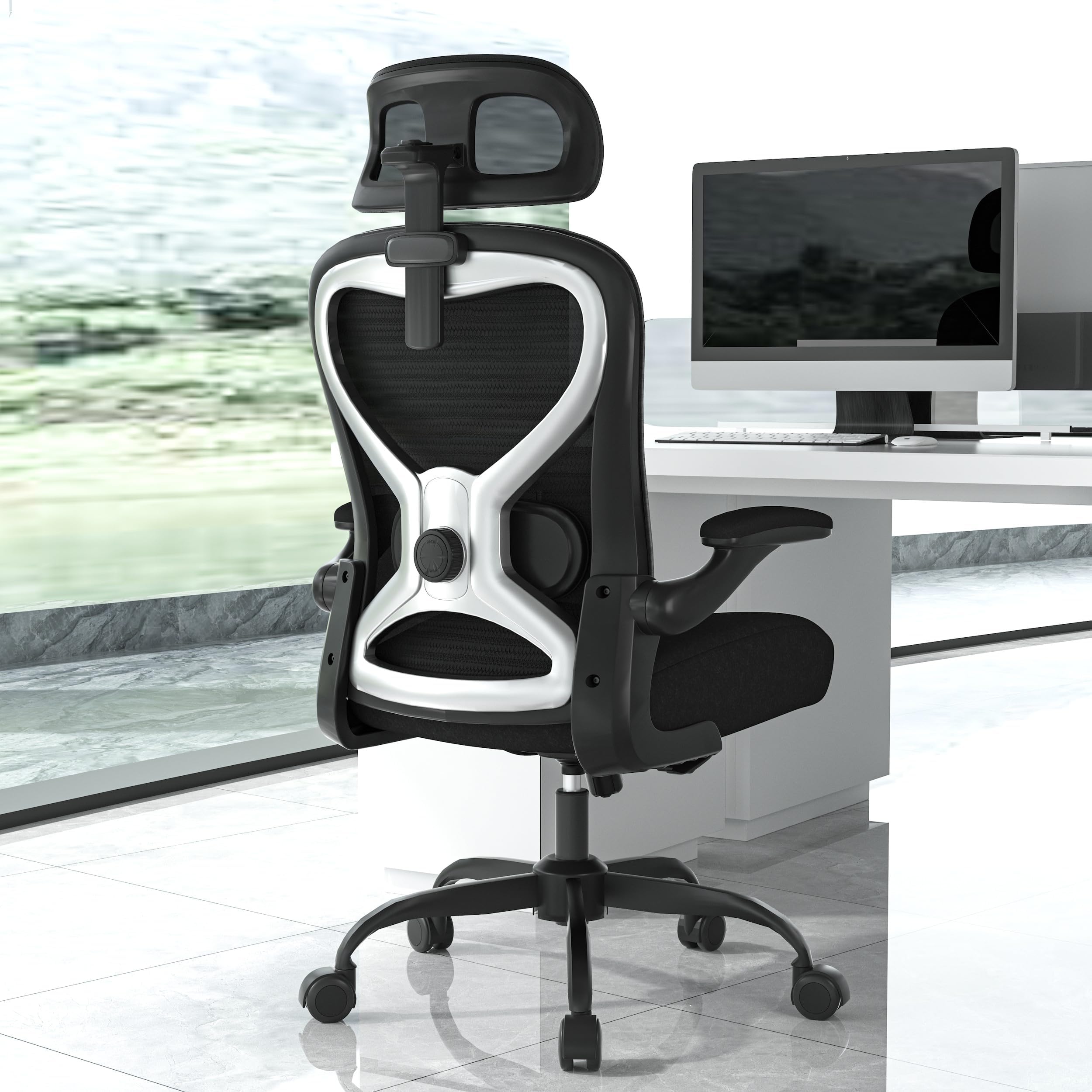
The CASASIO chair uses a 3.5-inch thick virgin foam seat that distributes weight evenly across the hips and thighs, reducing pressure points that aggravate nerve symptoms. Virgin foam resists permanent compression better than recycled foam, meaning the cushion maintains its supportive profile over months of daily use. The dual-direction adjustable lumbar cushion moves forward and backward, letting you dial in the exact depth that opens the spinal canal without over-pressing.
The 3D adjustable headrest adjusts in height, depth, and angle, cradling the neck during reclined breaks. The contoured mesh back aligns with the natural spine curve and keeps the back cool during extended sitting. The tilt-and-rock function with adjustable tension allows subtle motion that pumps fluid into spinal discs. The reinforced metal base supports up to 350 pounds and glides smoothly on premium casters.
Assembly takes about 15 to 20 minutes with clear instructions and labeled parts. Users around 5’2″ report that the headrest adjusts low enough to fit properly, a common issue with budget chairs. The seat cushion is praised for its firmness — it avoids the sinking feeling that causes hip pain in cheaper foam seats.
Why it’s great
- 3.5-inch virgin foam resists sagging and maintains hip support
- Dual-direction lumbar cushion offers depth adjustment
- 3D headrest fits shorter users correctly
- Tilt-and-rock function allows dynamic position shifting
Good to know
- Mesh back may not suit those who prefer padded lumbar contact
- Lumbar cushion depth range is limited compared to premium models
9. Kensaker Office Chair with Adjustable Headrest & Lumbar Support
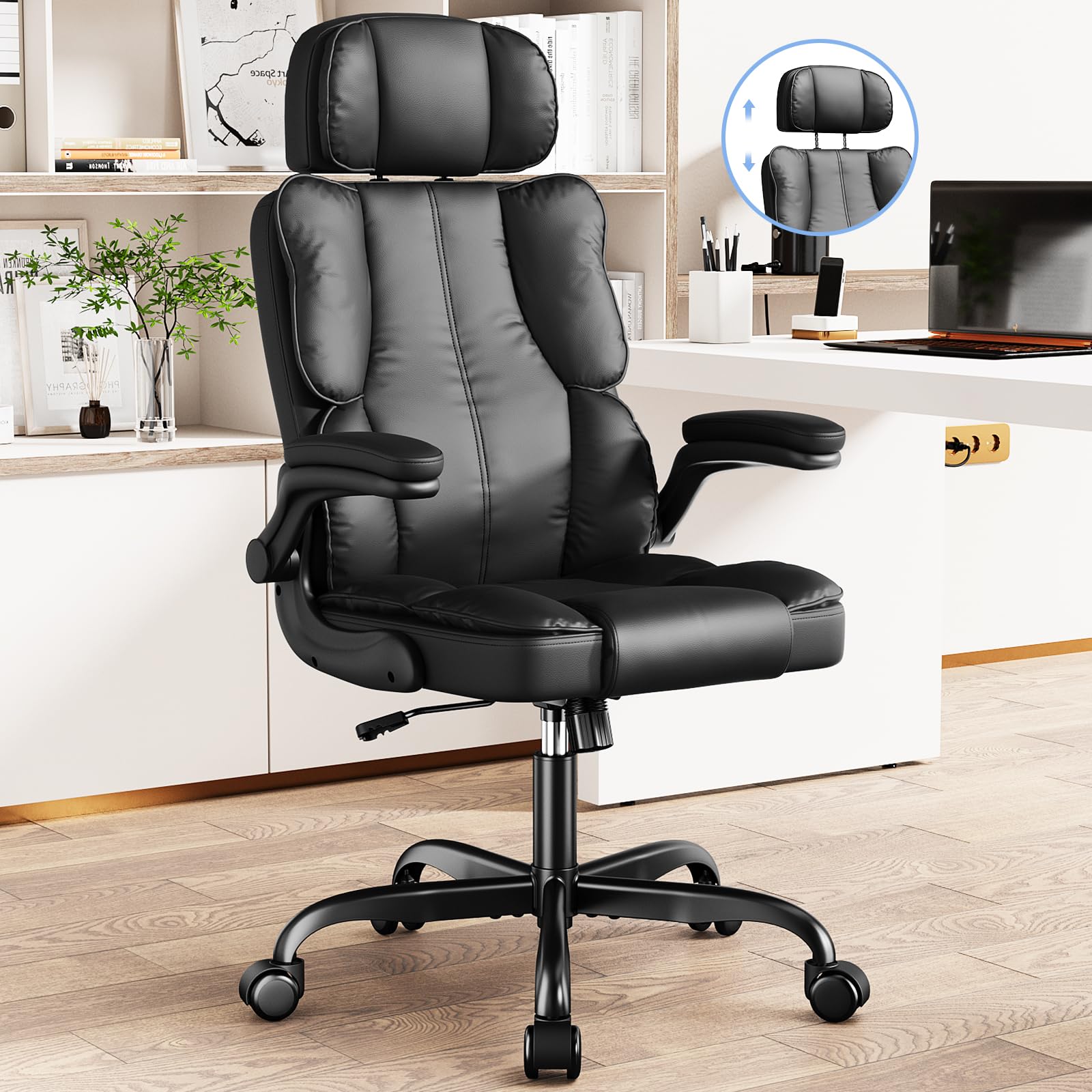
The Kensaker chair packs a 4.3-inch thick 40D high-density foam cushion that is thicker than most chairs in its class. At 40D density, the foam provides firm resistance that keeps the pelvis level and prevents the sacrum from rotating posteriorly — a common trigger for stenosis flare-ups. The S-shaped 3D lumbar support is molded directly into the backrest and complemented by a removable 3-level adjustable headrest that supports the cervical curve.
The 90-degree padded flip-up arms allow the chair to slide under the desk, freeing floor space and enabling closer desk proximity. The 135-degree tilt-and-rock function lets you shift your posture backward periodically to relieve disc pressure. The reinforced base supports up to 350 pounds, and the rubber casters roll silently across both hardwood and carpet. The PU leather is scratch-resistant and easy to wipe down, making it practical for households with pets.
Assembly takes about 20 minutes with included tools. Users consistently praise the double-cushioned seat and backrest for reducing back and shoulder soreness. However, one report of a snapped armrest after a few months of use suggests the arm construction may be a weak point for heavier users who lean on the armrests to exit the chair.
Why it’s great
- Thick 40D foam cushion prevents pelvic sink better than budget peers
- S-shaped lumbar support follows natural spinal contour
- 135° rock function allows easy posture shifting
- Scratch-resistant PU leather is easy to clean
Good to know
- Occasional reports of armrest snapping under weight stress
- PU leather may trap heat compared to mesh alternatives
FAQ
Does a firm seat cushion really help spinal stenosis more than a plush one?
What recline angle is best for relieving spinal stenosis pressure?
Are mesh back chairs better for stenosis than padded back chairs?
How important are armrests for someone with spinal stenosis?
Final Thoughts: The Verdict
For most users, the best chair for spinal stenosis winner is the FLEXISPOT ErgoX-PRO because its 5D lumbar support and 12-level recline offer the most precise and dynamic spinal offloading available at a mid-premium price. If you want automated lumbar tracking that adapts as you move, grab the Hbada X7 Smart. And for a budget-friendly option that still delivers a thick, firm foam cushion and adequate lumbar contouring, the Kensaker Office Chair provides solid relief without the premium price tag.

Mo Maruf
I created WellFizz to bridge the gap between vague wellness advice and actionable solutions. My mission is simple: to decode the research and give you practical tools you can actually use.
Beyond the data, I am a passionate traveler. I believe that stepping away from the screen to explore new environments is essential for mental clarity and physical vitality.