Our readers keep the lights on and my smoothie glass nicely filled. As an Amazon Associate, I earn from qualifying purchases.
The gap between thinking “I want to draw digitally” and actually making the first stroke is almost always a hardware problem — a laggy cursor, a pen that needs charging, a surface that feels like dragging plastic on glass. For beginners, that friction kills momentum fast. The right pad removes the friction entirely, letting your hand move the way it already knows how.
I’m Mohammad Maruf — the founder and writer behind WellFizz. I’ve spent hundreds of hours cross-referencing pressure curves, driver stability logs, surface textures, and real-world beginner feedback to find the pads that actually help someone learn, not frustrate them into quitting.
This guide cuts through the spec noise to deliver the clearest path into digital art. These are the picks that make the best drawing pad for beginners a real shortcut, not a detour.
How To Choose The Best Drawing Pad For Beginners
Picking a first drawing tablet comes down to a handful of real-world factors, not marketing specs. Ignore the flashy numbers and focus on the things that actually affect your hand and your workflow. Here’s what to look for.
Active Area: Size vs. Desk Space
The active area is the part of the tablet your pen works on. A larger area (10×6 inches) lets you draw using your whole arm, which feels more natural. A smaller area (6×4 inches) is easier to fit on a cramped desk and requires more wrist movement. For a beginner, a medium 8×5 or 10×6 inch area offers the best balance of natural motion and portability.
Pressure Sensitivity: Levels and Feel
Pressure sensitivity determines how hard you press the pen and how the software interprets that force for line thickness or opacity. 4096 levels is the modern baseline — it’s plenty for a beginner. 8192 levels gives you finer control for shading and subtle lines, but the difference is minor until you’ve built some skill. 16384 levels (like on the XPPen Deco 01 V3) is overkill for a beginner but future-proofs your pad as you improve.
Pen Technology: Battery-Free is the Standard
Every good beginner pad uses a battery-free (EMR) stylus. The pen doesn’t need charging because it gets power from the tablet surface through electromagnetic resonance. This means the pen is lighter, never dies mid-stroke, and rarely needs replacement. Avoid anything with a battery-powered stylus — it’s a headache you don’t need.
Customizable Shortcuts and Your Workflow
Shortcut keys on the tablet let you map common actions like Undo, Brush Size, or Zoom directly under your non-drawing hand. A scroll wheel adds another layer of speed for zooming or scrolling. For a beginner, having 6-8 programmable keys and a wheel dramatically reduces the need to reach for the keyboard, keeping you in a creative flow.
Quick Comparison
On smaller screens, swipe sideways to see the full table.
| Model | Category | Best For | Key Spec | Amazon |
|---|---|---|---|---|
| HUION Inspiroy 2 Large | Premium | Best Overall – full feature set | 10.5 x 6.56 inch active area | Amazon |
| XPPen Deco 01 V3 (Pink) | Premium | Large drawing area & high pressure resolution | 16384 pressure levels | Amazon |
| Wacom Intuos Small BT | Premium | Wireless freedom & brand reliability | Bluetooth connectivity | Amazon |
| XPPen Deco 01 V3 | Mid-Range | Best value 10-inch beginner pad | 10 x 6.25 inch active area | Amazon |
| UGEE M708 V3 | Mid-Range | Affordable large area & proven quality | 10 x 6 inch papery texture surface | Amazon |
| HUION Inspiroy 2 Small | Mid-Range | Best ultra-portable & compact pad | 6.3 x 3.9 inch active area | Amazon |
| HUION Inspiroy H950P | Budget | Entry-level 8×5 inch starter | 8192 levels + 60° tilt | Amazon |
In‑Depth Reviews
1. HUION Inspiroy 2 Large Drawing Tablet

The Inspiroy 2 Large balances the biggest active area in this guide (10.5 x 6.56 inches) with the most refined pen technology HUION offers. PenTech 3.0 eliminates wobble and lag at the tip level, so your lines go exactly where you intend them to — critical for a beginner learning control. The PW110 stylus has a slimmer body and soft silicone grip, which reduces hand fatigue during long practice sessions.
What sets this model apart is the triple-set shortcut system: three groups of eight customizable keys plus a scroll wheel. That’s 24 programmable shortcuts without lifting your hand from the tablet. For a beginner, mapping brush size, undo, and zoom to those keys keeps the focus on drawing, not hunting keyboard shortcuts. The scroll wheel is particularly useful for zooming in and out rapidly during detail work.
Setup is straightforward over USB-C, and it works with Windows, Mac, Linux, and Android devices. The slim profile slips into any laptop bag. The only trade-off is the lack of Bluetooth — it’s wired-only, but the USB-C connection is fast and reliable, and the cable is long enough for comfortable desk positioning.
Why it’s great
- Largest active area in the roundup with 10.5 x 6.56 inches
- Triple-set 8-key shortcuts + scroll wheel for nearly hands-off keyboard use
- PenTech 3.0 delivers zero-lag, wobble-free lines
- USB-C connectivity for modern laptops and Android
Good to know
- No Bluetooth — wired connection only
- Driver can be finicky on certain Linux distros
2. XPPen Deco 01 V3 Drawing Tablet (Pink)

The Deco 01 V3 in pink stands out with the highest pressure sensitivity in the lineup — 16,384 levels. That’s double the resolution of most mid-range pads and four times the baseline. For a beginner, this means the tablet will not outgrow your skills. It supports up to 60 degrees of tilt, which translates to natural brush shading and angled strokes that mimic real pencil technique.
The 10 x 6.25 inch drawing area gives you room for whole-arm drawing without being desk-hogging large. The eight programmable shortcut keys are positioned in a curved layout that fits the natural arc of your left hand. The bundled protective film gives the surface a paper-like texture that provides some drag, helping you control the pen better than a glossy surface would.
Connectivity is versatile: USB-C to USB-C, plus adapters for USB-A and micro-USB, so it works with almost any computer or Android tablet. Linux support is excellent — plug-and-play with standard digimend drivers. The included artist glove and pen stand are thoughtful additions for a beginner who doesn’t yet have a full kit.
Why it’s great
- Industry-leading 16,384 pressure levels — future-proof control
- 60° tilt for realistic shading and brush effects
- Paper-like surface film included for better sketching feel
- Excellent Linux support out of the box
Good to know
- Large size may feel overwhelming for very small desks
- Pen buttons can be accidentally pressed during use
3. Wacom Intuos Small Bluetooth Graphics Drawing Tablet
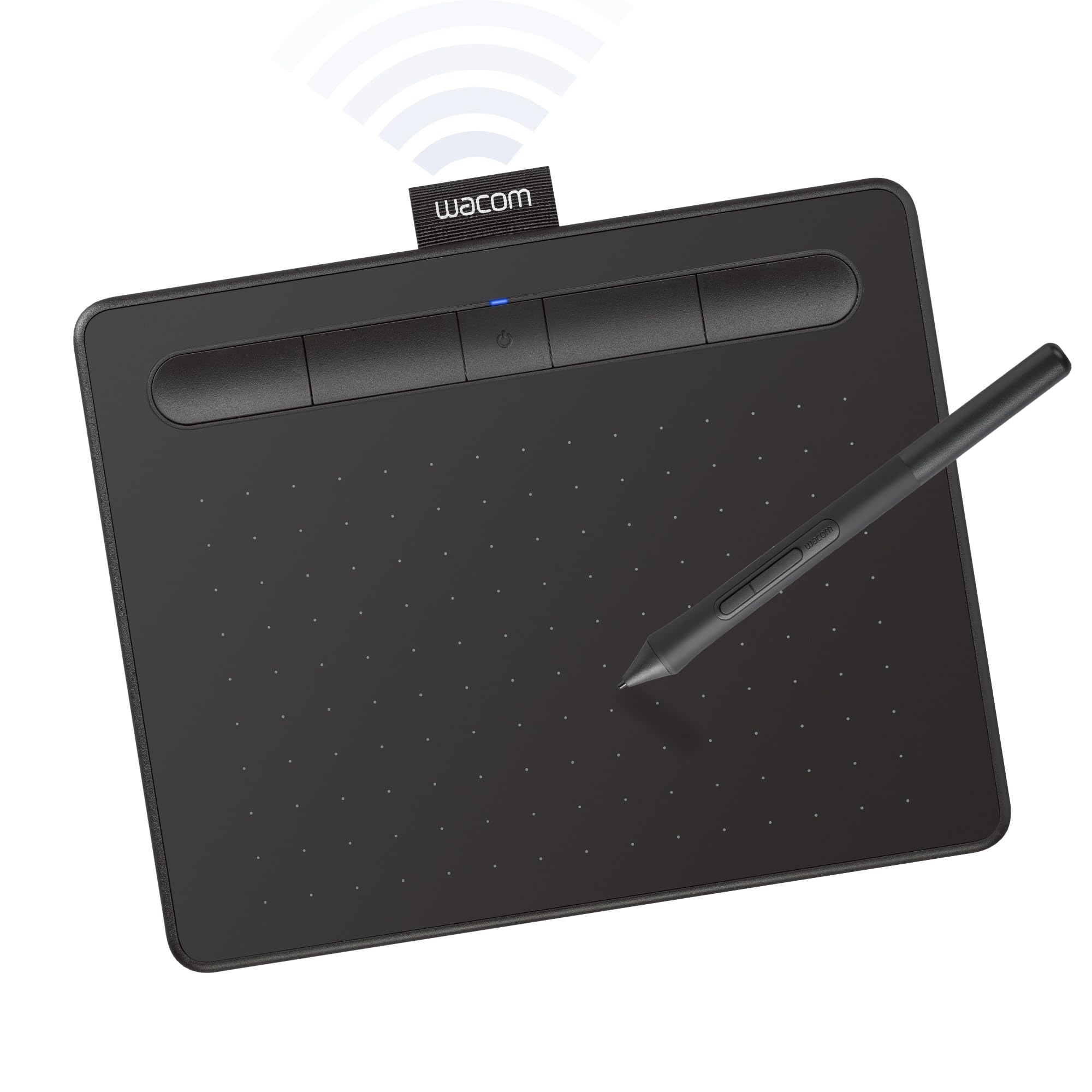
Wacom’s Intuos Small is the most trusted name in the category for a reason. The electromagnetic resonance (EMR) battery-free pen has been refined over decades, and the 4096 levels of pressure are consistent and predictable — exactly what a beginner needs. The tablet connects via Bluetooth or USB-A, giving you wireless freedom if you want to work from the couch or a coffee shop without cable clutter.
The active area is smaller than the others on this list, but for a beginner who prefers a more controlled wrist-based drawing style, the compact surface feels precise and not intimidating. The four customizable ExpressKeys are simple to map in the Wacom Desktop Center software, and the bundled access to creative software like Corel Painter Essentials or Clip Studio Paint Pro adds real value for someone building their first toolkit.
One note: the pen has fewer pressure levels than some competitors, and the lack of tilt support means you won’t get angled brush effects. But for pure drawing, note-taking in class, or photo editing, it’s a rock-solid performer. The Bluetooth connection can introduce slight lag, so for precision work, the wired USB-A connection is recommended.
Why it’s great
- Bluetooth wireless — draw anywhere without cables
- Wacom’s software bundle includes full creative suites
- Industry-leading driver support and build quality
- Compact size fits easily into any backpack
Good to know
- Small active area limits whole-arm drawing motion
- No tilt support and only 4096 pressure levels
- Pen can cause finger fatigue after 3+ hours
4. XPPen Deco 01 V3 Drawing Tablet

The standard black Deco 01 V3 is a near-identical match to the pink version, minus the color option and a slightly different bundle. It still offers 16,384 pressure levels and 60-degree tilt, which is more pressure resolution than double the price of some competitors. For a beginner, this means subtle pressure changes — like a light feather for shading vs. a hard push for a dark line — are captured with remarkable fidelity.
The 10 x 6.25 inch surface is large enough to encourage whole-arm drawing, and the eight customizable round shortcut keys are thoughtfully placed to avoid accidental presses. The included USB-C to USB-C cable with adapters ensures compatibility with modern laptops, Android tablets, and even Chromebooks. The iPad-style setup is genuinely plug-and-play: connect the cable, download the driver, and you’re drawing within minutes.
At this price point, the only real compromises are the build materials (plastic body, though it feels solid) and the entry-level pen stand. But the performance — especially the pressure curve and line smoothness — rivals pads costing three times as much. This is the sweet spot for a beginner who wants pro-level specs without the pro-level cost.
Why it’s great
- 16K pressure and tilt at an entry-level price
- Easy connectivity with USB-C and included adapters
- Large 10 x 6.25 inch area for natural arm motion
- 8 customizable shortcut keys for workflow efficiency
Good to know
- Plastic body can feel less premium than Wacom
- Android compatibility can be inconsistent with older phones
5. UGEE M708 V3 Graphics Drawing Tablet

The UGEE M708 V3 is a mature product — it has been through multiple revisions, and the V3 version benefits from years of user feedback. The 10 x 6 inch active area features a papery texture surface that gives real drag under the pen, making it feel closer to drawing on actual sketch paper than the slick surfaces of some competitors. The battery-free stylus delivers 8192 levels of pressure sensitivity and supports 60 degrees of tilt.
The eight customizable shortcut keys are positioned on the left side and are responsive without being too easy to trigger by accident. The included accessories — a pen stand, 8 replacement nibs, a cleaning cloth, and a two-finger glove — cover almost everything a beginner needs for their first month of drawing. The driver installation on Windows and Mac is straightforward, though some users note the included manual could be clearer for first-timers.
One thing to be aware of: the build quality is solid for the price, but heavy pressing over time can show wear on the surface. The pressure sensitivity can occasionally glitch, requiring a driver reinstall or reset. But for the price, the drawing experience is smooth, accurate, and reliable enough for daily practice. UGEE offers a 12-month warranty and responsive customer support.
Why it’s great
- Papery texture surface mimics real sketch paper feel
- Comprehensive accessory kit for immediate use
- 8192 pressure and 60° tilt at a budget-friendly price
- Mature product with 12-month warranty and good support
Good to know
- Surface can show wear with heavy hand pressure over time
- Driver setup instructions can be confusing for absolute beginners
6. HUION Inspiroy 2 Small Drawing Tablet

The Inspiroy 2 Small is the most portable drawing tablet in this guide. Its active area is just 6.3 x 3.9 inches, making it barely bigger than a large smartphone. For a beginner who needs to draw on the go — between classes, on a train, or in a coffee shop — this is the most convenient option. The pen uses PenTech 3.0, delivering the same jitter-free precision as the larger Inspiroy 2.
Despite the small footprint, it includes a scroll wheel and six programmable keys. The scroll wheel is surprisingly useful for zooming quickly through a canvas, and the six keys can be assigned to your most-used shortcuts. The PW110 stylus is identical to the one on the larger model — slim, with a silicone grip and two side buttons for eraser or right-click. The pink color option adds a fun aesthetic that many beginners appreciate.
The trade-off is obvious: the small area forces you to draw primarily with your wrist rather than your whole arm. This can be fine for quick sketches, detailed linework, or photo editing, but it can feel cramped for expressive, large-scale drawings. At this price, though, you get a highly portable, well-made pad that won’t weigh down your bag or your budget.
Why it’s great
- Ultra-compact and lightweight — fits in any laptop bag
- PenTech 3.0 delivers precise, lag-free lines
- Scroll wheel + 6 keys for efficient workflow
- USB-C connectivity and Android compatible
Good to know
- Small active area limits whole-arm drawing motion
- No Bluetooth — wired connection only
7. HUION Inspiroy H950P Drawing Tablet

The H950P is a classic entry-level tablet that has been on the market for years — and it still holds up. The 8 x 5 inch active area is a sweet spot for beginners: big enough to draw with your arm, compact enough for most desks. The battery-free PW100 pen offers 8192 levels of pressure sensitivity and 60 degrees of tilt support, giving you shading and angled line control that was once exclusive to much pricier tablets.
The eight programmable shortcut keys are placed along the top edge, which takes a little getting used to but works well once you build muscle memory. The tablet is only 0.3 inches thick and weighs about a pound, making it easy to slip into a bag alongside a laptop. It works with Windows, Mac, Linux, and Android devices (version 6.0 or later), so it’s compatible with almost any setup you have.
The main drawback is the connectivity: it uses micro-USB instead of USB-C. That’s an older standard, and the cable can feel less secure over time. The driver software also has a few quirks, particularly on Linux where the tablet buttons may not map correctly without third-party tools. But for a straight-ahead learning tool that won’t break the bank, the H950P remains a reliable choice.
Why it’s great
- 8×5 inch active area — ideal for beginners learning arm drawing
- 8192 pressure + 60° tilt for expressive line control
- Ultra-thin 0.3 inch profile and lightweight build
- Works with Windows, Mac, Linux, and Android
Good to know
- Uses micro-USB instead of modern USB-C
- Driver software can be quirky on Linux and some Windows setups
FAQ
Do I need a screen on the drawing pad to draw well as a beginner?
How do I know if a drawing pad will work with my Chromebook or Android tablet?
What is tilt support and do I need it as a beginner?
Why do some drawing tablets use micro-USB cables instead of USB-C?
Final Thoughts: The Verdict
For most users, the best drawing pad for beginners winner is the HUION Inspiroy 2 Large because it offers the best combination of large active area, pro-level PenTech 3.0 precision, and the most customizable shortcut keys (24 total) in this price range. If you want the highest pressure sensitivity and tilt for future-proofing your skills, grab the XPPen Deco 01 V3 (Pink). And for the budget-conscious beginner who just wants a reliable, proven 8×5 inch pad to get started immediately, nothing beats the HUION Inspiroy H950P.

Mo Maruf
I created WellFizz to bridge the gap between vague wellness advice and actionable solutions. My mission is simple: to decode the research and give you practical tools you can actually use.
Beyond the data, I am a passionate traveler. I believe that stepping away from the screen to explore new environments is essential for mental clarity and physical vitality.