Our readers keep the lights on and my smoothie glass nicely filled. As an Amazon Associate, I earn from qualifying purchases.
Real ceremonial grade matcha isn’t just green powder; it’s a distinct sensory experience defined by a vibrant jade hue, a fine-as-talcum texture, and a flavor profile that delivers natural sweetness and deep umami without any chalky bitterness. The market is flooded with bags of dull, dusty leaves marketed as “ceremonial,” but the genuine article demands a specific origin, harvest, and processing standard that most products never meet.
I’m Mohammad Maruf — the founder and writer behind WellFizz. Over the past several weeks, I’ve analyzed the harvest dates, stone-grinding methods, origin certifications, and third-party lab reports of dozens of matcha products to separate the truly ceremonial from the merely marketed.
Whether you are preparing a traditional koicha or a modern latte, selecting the right powder comes down to a few measurable attributes. This guide breaks down everything you need to know to confidently choose the best ceremonial grade matcha for your daily ritual.
How To Choose The Best Ceremonial Grade Matcha
The difference between a sublime morning cup and a bitter, gritty letdown comes down to four specific factors. Each one traces back to how the leaves were grown, harvested, and processed in Japan.
Origin and Harvest
Legitimate ceremonial matcha originates from specific Japanese prefectures — Uji in Kyoto, Shizuoka, or Kagoshima. The leaves must be first-harvest (first flush), meaning they are the youngest, most nutrient-dense leaves picked in the spring. Second-harvest leaves are spicier, more astringent, and lack the creamy umami that defines the ceremonial tier.
Processing Method: Stone Ground vs. Ball Mill
Authentic ceremonial grade is stone-ground between two granite wheels, a slow process that generates minimal heat and preserves volatile flavor compounds, chlorophyll, and L-theanine. High-speed ball-milled powders generate friction heat that degrades these compounds, yielding a duller color and flatter taste. If the product doesn’t say “stone ground,” it almost certainly isn’t ceremonial grade.
Color and Texture
Open the tin. Ceremonial matcha should be a vivid, almost neon jade green. Any brownish, yellowish, or olive tint indicates oxidation, poor processing, or older leaf material. The texture must be so fine that it floats in the air if you tap the spoon — coarse powders refuse to emulsify properly and leave a sandy residue in the cup.
Third-Party Testing Transparency
Matcha grown in contaminated soil can absorb lead and heavy metals from the environment. Reputable brands publish or provide lab results showing their powder is free of detectable lead, arsenic, and cadmium. A brand that hides or sidesteps this information is not worth your money, regardless of how pretty the packaging is.
Quick Comparison
On smaller screens, swipe sideways to see the full table.
| Model | Category | Best For | Key Spec | Amazon |
|---|---|---|---|---|
| Matcha Moon Pure Zen | Premium | Balanced umami for traditional whisking | First harvest, Uji Kyoto, 100g tin | Amazon |
| Soar Organics Uji | Premium | Creamy latte base with smooth finish | First harvest, Uji Kyoto, 100g tin | Amazon |
| DoMatcha Organic | Premium | Calm focus without jitters | Stone ground, 2.82oz bag | Amazon |
| Ocha & Co. Shizuoka | Mid-Range | Affordable daily drinking and lattes | Gokou cultivar, Shizuoka, 100g | Amazon |
| Nippon Matcha Uji | Mid-Range | Entry-level ceremonial with clean testing | First harvest, Uji Kyoto, 30g tin | Amazon |
In‑Depth Reviews
1. Matcha Moon Pure Zen Ceremonial Grade Matcha
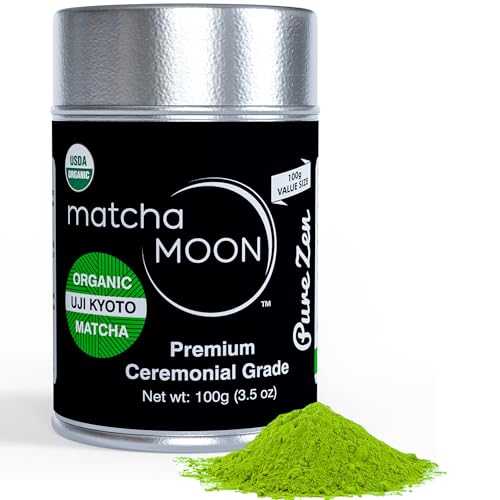
Matcha Moon Pure Zen uses first-harvest leaves from their organic partner farm in Uji, Kyoto, and the powder shows it: a luminous, bright green color that translates directly into the cup. The texture is exceptionally fine, whisking into a consistent microfoam with minimal effort, and the flavor lands squarely in the sweet spot between creamy and grassy without the slightest edge of bitterness.
USDA and JONA certification add a layer of trust that matters in a category where heavy metal contamination is a real concern. The 100g tin provides roughly 50 servings, placing it in a solid value range for a premium Uji-sourced product. Reviewers consistently praise its smoothness and balanced profile, with several noting it performs equally well as a straight usucha or blended into a latte.
A small number of drinkers found the flavor “basic” or “unremarkable” compared to more boutique single-cultivar options. For the vast majority of ceremonial matcha drinkers looking for a daily-grind staple with reliable quality and certification, this tin delivers the most complete package.
Why it’s great
- Smooth, naturally sweet umami with zero bitterness
- USDA and JONA certified organic from Uji
- Whisks into consistent microfoam easily
Good to know
- Premium price reflects genuine Uji origin and certifications
- Some users find the flavor less complex than single-cultivar brands
2. Soar Organics Uji Ceremonial Grade Matcha
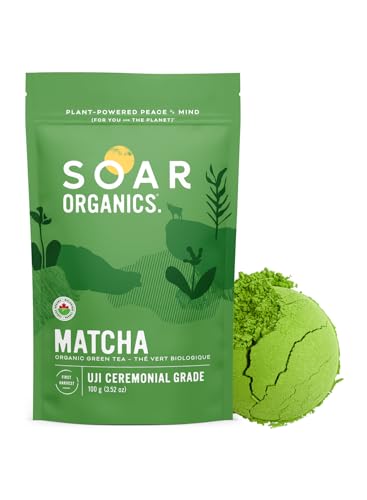
Soar Organics sources its matcha from historic Uji and processes it as a small-batch, stone-ground first harvest. The powder yields a smooth, creamy mouthfeel with a classic umami profile that works beautifully in lattes. The brand’s commitment to 1% for the Planet donations and third-party testing adds an ethical dimension that appeals to values-driven buyers.
Customer feedback consistently praises its clean energy boost without jitters, with several users noting they have replaced expensive café lattes entirely. The tin is resealable and light-blocking, which helps preserve the powder’s color and aroma for the duration of use. The 3.52-ounce size is generous for a premium product, offering strong value for daily drinking.
A minority of reviewers reported a grainy texture that required sifting, and one comparison found it less vibrant green than other top-end brands. The grassy flavor profile is traditional but may not suit palates accustomed to sweeter, more modern blends.
Why it’s great
- Authentic Uji origin with small-batch stone grinding
- Creamy mouthfeel ideal for oat and almond milk lattes
- Third-party tested for purity and heavy metals
Good to know
- Some batches reported as grainy even after sifting
- Flavor leans savory rather than sweet
3. DoMatcha Organic Ceremonial Green Tea Matcha
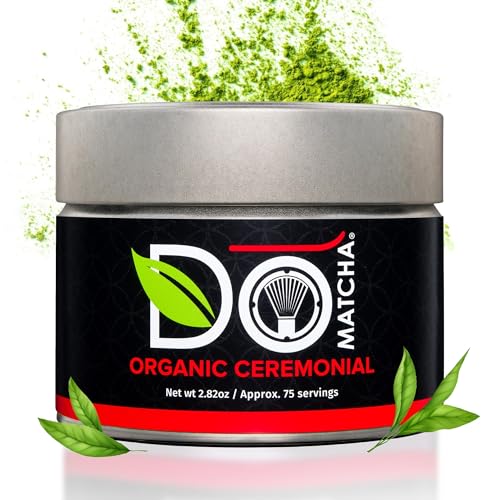
DoMatcha has built a strong reputation for delivering a consistent ceremonial experience with a focus on the synergistic effects of L-theanine and caffeine. The powder is a vibrant neon green, fine enough to float on air, and produces a mellow, naturally sweet flavor that drinkers describe as both relaxing and mentally clarifying.
The 2.82-ounce bag yields roughly 75 half-teaspoon servings, making it an economical choice for daily drinkers who value sustained focus. Many long-term users report it has completely replaced their morning coffee and eliminated the afternoon crash. The brand publishes transparency about its organic certification and sourcing from Japanese tea estates.
Its price point is noticeably higher per ounce than the mid-range competitors, and some users who drink multiple cups per day find it cost-prohibitive for daily use. The bag packaging, while functional, is not as convenient for long-term storage as a resealable tin.
Why it’s great
- Bright neon green color indicates high chlorophyll content
- Mellow, sweet flavor with a clean finish
- High L-theanine provides calm, focused energy
Good to know
- Higher per-ounce cost than comparable premium options
- Bag packaging is less protective than a tin
4. Ocha & Co. Shizuoka Organic Matcha
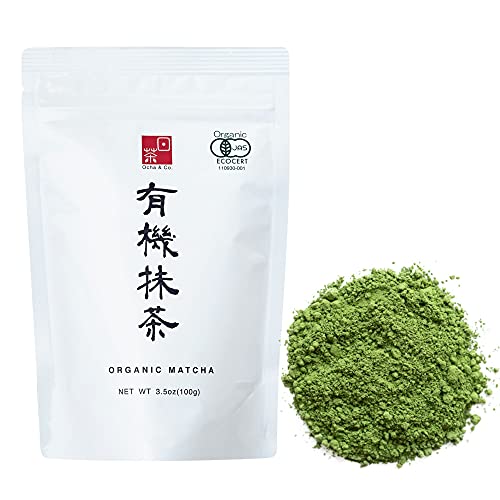
Ocha & Co. differentiates itself by using the rare Gokou cultivar from Shizuoka, a variety prized for its deep umami and natural sweetness. The powder is stone-milled in small batches and shipped weekly from Japan to preserve freshness. JAS BIO certification ensures strict organic standards are met from farm to package.
At 100g, this is one of the most generous packages in the ceremonial grade category, offering roughly 50 servings at a significantly lower per-serving cost than Uji-sourced competitors. The flavor profile is strong and flavorful, with a natural sweetness that works well in lattes and iced preparations. Reviewers consistently recommend it as an excellent daily drinker that still delivers a true ceremonial experience.
The caffeine content is notably high — some caffeine-sensitive users report needing to limit intake to a single serving. A few drinkers note a slight astringency compared to premium-priced Uji matchas, and the color, while bright, is described as slightly yellowish rather than the neon jade of the highest tier.
Why it’s great
- Rare Gokou cultivar delivers deep umami and sweetness
- JAS BIO organic certified with weekly fresh shipments
- Best per-serving value for ceremonial grade
Good to know
- Very high caffeine content may be too strong for some
- Slight astringency compared to top Uji options
5. Nippon Matcha Organic Ceremonial Grade
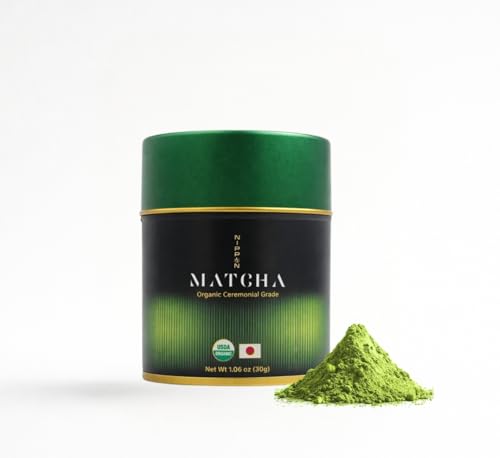
Nippon Matcha offers a genuine first-harvest powder from Uji, Kyoto, in a compact 30g tin that is ideal for first-time ceremonial matcha buyers or those who want to test a brand before committing to a larger size. The powder is stone-ground and USDA certified organic, and the brand publishes third-party lab results for heavy metals and microbial safety that meet California Prop 65 standards.
Reviewers consistently confirm it is non-bitter and smooth enough to drink plain — the defining test of a true ceremonial grade. Several users have made it their repeat purchase after researching safe consumption brands, and the light-blocking tin packaging helps maintain freshness after opening.
The small size means a higher per-ounce cost than bulk options, and it is not the most economical choice for heavy daily drinkers. Some users received units with damaged packaging, though the brand resolved those issues on replacement orders.
Why it’s great
- Genuine first harvest Uji Kyoto origin
- Third-party tested for heavy metals and Prop 65 compliance
- Smooth, non-bitter flavor suitable for drinking straight
Good to know
- Small 30g tin means higher cost per gram
- Packaging reported as damaged on a few units
FAQ
Does ceremonial grade matcha contain caffeine?
What is the difference between ceremonial grade and culinary grade?
How should I store my matcha to keep it fresh?
Final Thoughts: The Verdict
For most users, the best ceremonial grade matcha winner is the Matcha Moon Pure Zen because it delivers a perfectly balanced umami profile, vibrant color, and USDA/JONA certification from a trusted Uji source at a competitive size. If you want a creamier mouthfeel for lattes, grab the Soar Organics Uji. And for the best per-serving value without sacrificing ceremonial quality, nothing beats the Ocha & Co. Shizuoka.

Mo Maruf
I created WellFizz to bridge the gap between vague wellness advice and actionable solutions. My mission is simple: to decode the research and give you practical tools you can actually use.
Beyond the data, I am a passionate traveler. I believe that stepping away from the screen to explore new environments is essential for mental clarity and physical vitality.