Our readers keep the lights on and my smoothie glass nicely filled. As an Amazon Associate, I earn from qualifying purchases.
For endurance athletes, triathletes, and data-driven competitors, the line between a breakthrough performance and a plateau is often drawn in the blood. Moving beyond heart rate and pace to measure the body’s real-time fuel status—blood glucose and lactate—provides an unprecedented window into metabolic efficiency, fatigue thresholds, and recovery readiness. This isn’t about managing a chronic condition; it’s about optimizing training intensity and race-day execution using the same kind of quantitative feedback that professional teams rely on.
I’m Mohammad Maruf — the founder and writer behind WellFizz. By cross-referencing hundreds of athlete reviews and technical spec sheets, I’ve separated the tools that deliver actionable data from those that merely create friction, focusing on sample volume, reading time, and ecosystem integration that matter most in the middle of a training block.
Whether you are refining zone 2 pacing or tracking your body’s stress response overnight, this guide reviews the top devices to help you find the absolute best cgm for athletes that suits your sport and analytical needs.
How To Choose The Best CGM For Athletes
The athlete-grade monitoring market has splintered into three distinct lanes: fingerstick blood meters for glucose and ketones, enzymatic lactate analyzers for threshold testing, and screenless wearables that estimate recovery through heart rate variability and overnight blood pressure. Choosing the wrong category wastes money and training time.
Match the Metric to Your Goal
A marathoner refining zone 2 needs a lactate meter (0.8 µL sample, 10-second read) for immediate pacing feedback. A CrossFit or keto athlete tracking fuel availability needs a dual glucose/ketone meter with auto-strip recognition. An ultra-runner or triathlete monitoring chronic load should look at a screenless wearable (WHOOP) or a premium smartwatch (Garmin Forerunner 970) for an integrated training-readiness score. No single device covers all bases—pick your primary objective first.
Evaluate Ecosystem Lock-in
Garmin users get the deepest value from Garmin-branded peripherals and watches, where blood pressure and training data auto-sync into a single dashboard. WHOOP requires a 12-month membership but delivers unparalleled strain/recovery analytics. Standalone meters from HeartsCare, THE EDGE, and EAGLENOS offer the best hardware value for cash—just budget for recurring strip costs. Connectivity features (Bluetooth vs. Wi-Fi, app quality, exportable PDFs for your coach or doctor) separate a useful tool from a distraction.
Check the Real-World Friction Points
A 45-second reading time is too slow for interval testing between sets. A meter that requires 3 µL of blood is harder to use mid-ride than one needing 0.8 µL. Strips that must be stored away from heat and sunlight (lactate strips are notoriously temperature-sensitive) can produce wildly inconsistent readings if left in a hot gym bag. Devices with memory (300+ records) and a strip-eject button reduce hassle in field settings. Prioritize meters that solve the specific friction of your training environment.
Quick Comparison
On smaller screens, swipe sideways to see the full table.
| Model | Category | Best For | Key Spec | Amazon |
|---|---|---|---|---|
| Garmin Forerunner 970 | Smartwatch | Triathletes, Serious Runners | AMOLED, 26h GPS, Sapphire | Amazon |
| WHOOP 5.0 | Wearable | Recovery & Strain Analysis | 14-day battery, 12-mo membership | Amazon |
| Garmin epix Pro Gen 2 | Smartwatch | Trail Runners, Hikers | 51mm, AMOLED, Titanium Bezel | Amazon |
| Garmin Forerunner 945 LTE | Smartwatch | Safety-Focused Endurance Athletes | LTE, 2-week battery, Maps | Amazon |
| EAGLENOS Lactate Meter | Lactate Meter | Zone 2 Testing, Field Use | 0.8 µL, 10 sec, 800-test memory | Amazon |
| THE EDGE Lactate Meter | Lactate Meter | Lab-Style Accuracy on a Budget | 3 µL, 45 sec, 300-test memory | Amazon |
| WITHINGS Scanwatch Nova | Hybrid Watch | Style-Conscious Athletes | 30-day battery, ECG, SpO2 | Amazon |
| Garmin Index BPM | Blood Pressure | Garmin Ecosystem Users | FDA-Cleared, Wi-Fi sync, 16 users | Amazon |
| HeartsCare C1 Plus | Glucose/Ketone Meter | Keto & Metabolic Athletes | 0.5 µL glucose, 0.8 µL ketone | Amazon |
In‑Depth Reviews
1. Garmin Forerunner 970

The Forerunner 970 is the definitive training command center for triathletes and serious runners who refuse to compromise on battery, display clarity, or training metrics. Its AMOLED touchscreen is exceptionally bright even under direct sun, and the sapphire lens shrugs off trail debris without scratching. The 26-hour GPS mode means even an Ironman finisher won’t see a battery panic on race day.
Garmin has packed genuine innovation into the 970: running economy metrics, step speed loss analysis, and an ECG app for atrial fibrillation screening. The multisport auto-transition is seamless for brick workouts, and the built-in speaker/mic allows phone calls and voice assistant replies from the wrist. Triathletes will appreciate the deep integration with the Garmin ecosystem, including Edge bike computers and HR straps.
The trade-off is a non-trivial investment. Expect a learning curve with the feature set—it took early adopters multiple sessions to get the full coaching suite configured. The silicone band and titanium bezel are comfortable for all-day wear, but the 47mm case may feel bulky for smaller wrists. For runners who want race-day GPS reliability and post-race recovery analytics in one package, this is the top pick.
Why it’s great
- Exceptional AMOLED visibility and 15-day smartwatch battery
- Built-in triathlon mode with auto-transition tracking
- Durable sapphire lens with titanium bezel
Good to know
- Premium price point requires a serious commitment
- Full training metrics still need an optional HRM strap
2. WHOOP 5.0
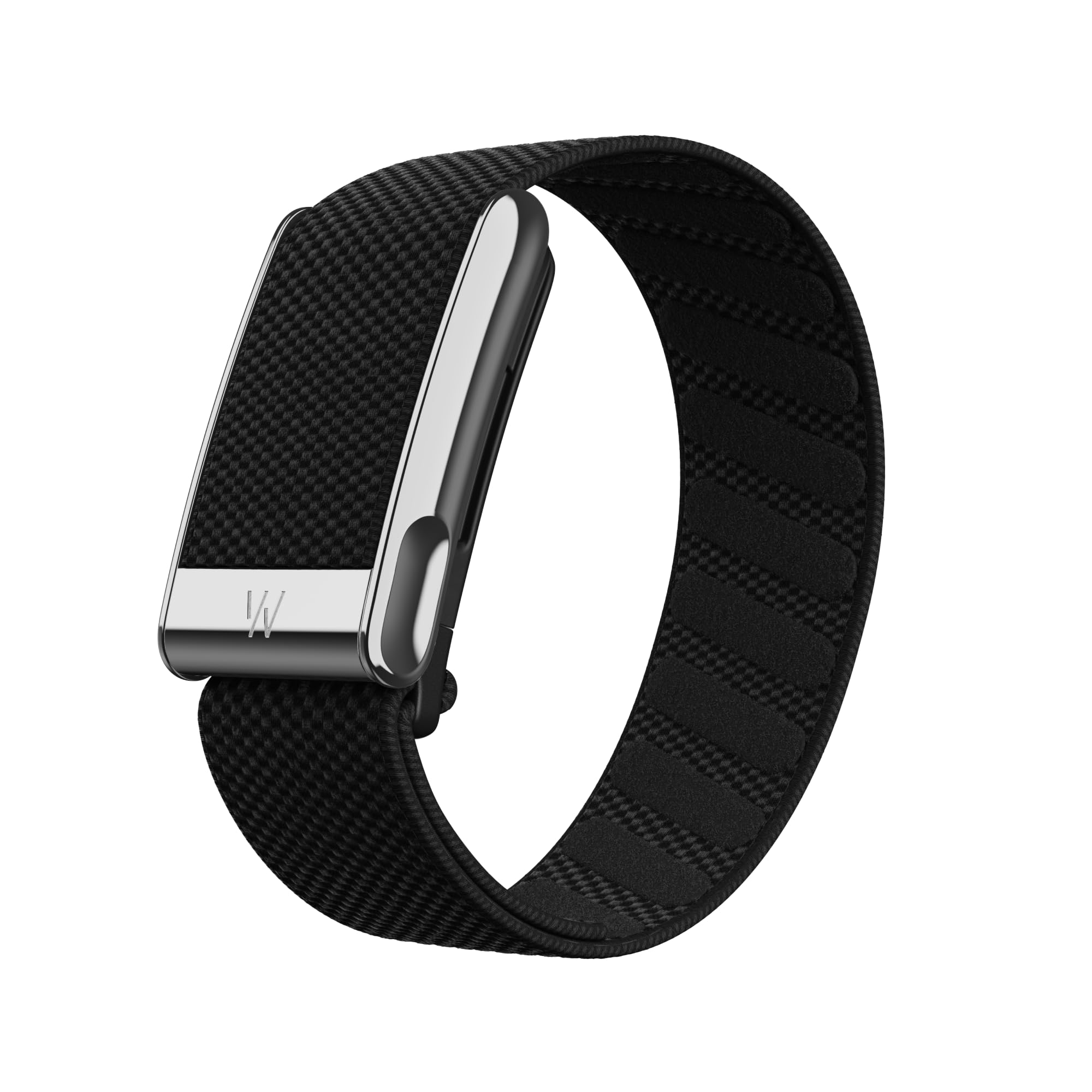
WHOOP 5.0 is the gold standard for athletes who prioritize recovery metrics over real-time split times. Its screenless, distraction-free form factor is designed for 24/7 wear, and the 14-day battery eliminates the daily charging anxiety of a smartwatch. The core offering is the Strain, Recovery, and Sleep trifecta—algorithms that translate 140+ metrics into a daily readiness score.
The new MG hardware adds on-demand ECG, daily blood pressure estimates (using overnight analysis), and irregular rhythm notifications. WHOOP AI adapts daily strain targets based on your recovery status, sleep debt, and HRV trend. It connects with TrainingPeaks and Strava, making it a useful second sensor for Garmin or Apple Watch users rather than a replacement. Cristiano Ronaldo and Patrick Mahomes are public users, which speaks to its professional credibility.
The heavy caveat is the mandatory 12-month membership. If you cancel early, the hardware stops working entirely. Heart rate accuracy during high-intensity intervals can drift 20+ bpm off a chest strap, according to some users. For resting HR, overnight recovery, and sleep stage analysis, WHOOP is superb. For interval pacing, it is not a primary tool. The membership model works best for athletes who want a coach-like algorithm, not just raw numbers.
Why it’s great
- Superb recovery and strain analytics with daily readiness scores
- 14-day battery and comfortable 24/7 form factor
- ECG and blood pressure estimates add medical-grade insight
Good to know
- Requires a 12-month membership for full functionality
- Heart rate accuracy during intense workouts can be suspect
3. Garmin epix Pro (Gen 2) Sapphire Edition

The epix Pro Gen 2 (51mm) is built for athletes who train in the dark, on exposed ridgelines, and through long multi-day efforts. The always-on 1.4-inch AMOLED display is the sharpest in Garmin’s lineup, and the built-in LED flashlight (with variable intensity and strobe) is a genuinely useful tool for pre-dawn runs or night navigation. The scratch-resistant sapphire lens and titanium bezel are overbuilt for rough terrain.
Hill score and endurance score features weigh running strength and overall aerobic capacity separately, giving trail runners and ultrarunners metrics that directly inform pacing on climbs. Multi-band GNSS with SatIQ delivers reliable positioning even in deep canyons, and preloaded TopoActive maps eliminate the need to carry a phone for navigation. The 51mm case fits larger wrists comfortably but definitely has a wrist presence.
The main downside for smaller athletes is the sheer size and weight; the 51mm case is not suitable for slimmer frames. Battery life is excellent (estimated 384 hours in smartwatch mode), but heavy GPS+music usage drains it faster than the Forerunner 970. This watch is best for trail runners and hikers who want a dedicated outdoor tool that also tracks daily health metrics. The renewed pricing makes it an even more compelling value vs. the Fenix 8.
Why it’s great
- Sapphire lens and titanium bezel are trail-tough
- Built-in LED flashlight with multiple modes
- TopoActive maps and multi-band GNSS for navigation
Good to know
- 51mm case is too large for smaller wrists
- Heavy GPS use drains battery faster than competitors
4. Garmin Forerunner 945 LTE

The Forerunner 945 LTE is the endurance athlete’s safety net. Its built-in LTE connectivity enables LiveTrack so family and coaches can follow your run, and Assistance Plus connects to a 24/7 emergency monitoring center. For athletes who train alone on remote roads or trails, this feature alone justifies the device. The LTE subscription is just /month, which is a fraction of a phone plan.
Beyond safety, the 945 LTE is a proven multisport tool: full-color maps, wrist-based running power, an intervals data page that separates fast and slow splits, and daily suggested workouts that adapt to your training load. Battery life hits two weeks in smartwatch mode and 12 hours in GPS mode with music, which is competitive with newer models. Garmin Pay and offline Spotify storage add convenience for runs without a phone.
The display is not AMOLED, so it lacks the vividness of the Forerunner 970 or epix Pro. The LTE is reserved for emergency and tracking features—you cannot make calls or send messages. For athletes who prioritize safety above display technology and already own a Garmin device, the 945 LTE is a rock-solid mid-range choice that still holds its own against newer models.
Why it’s great
- LTE safety features are a game-changer for solo runners
- 2-week battery life in smartwatch mode
- Full-color maps and wrist-based running power
Good to know
- Display is not AMOLED; lower contrast than newer models
- LTE is for emergency tracking only, not general connectivity
5. Withings Scanwatch Nova

The Scanwatch Nova offers athlete-grade health sensors (ECG, SpO2, 24/7 temperature monitoring) inside a case that looks like a classic Swiss timepiece. For athletes who want to track heart health and sleep without wearing a giant black polyurethane block, this is a compelling execution. The 30-day battery life is industry-leading and removes the charging habit entirely.
Health features are genuinely useful: overnight temperature tracking can signal illness onset, and the HR high/low notifications provide peace of mind for athletes monitoring cardiovascular load. Connected GPS and 40+ auto-recognized activities are sufficient for casual to moderate athletes, though the watch lacks on-board GPS for phone-free runs. The Health Mate app is clean and syncs blood pressure data from Withings scales seamlessly.
The limitations are clear for serious athletes: there is no on-watch alarm for interval training, sleep metrics can be off by an hour compared to Oura or WHOOP, and the battery is not user-replaceable, creating a finite lifespan. The non-replaceable battery is a long-term durability concern. For the athlete who values aesthetics and 24/7 health tracking without constant charging, the Scanwatch Nova is a unique hybrid that sits in a class of its own.
Why it’s great
- Stunning traditional watch design with advanced health sensors
- 30-day battery life eliminates daily charging
- ECG, SpO2, and temperature monitoring for proactive health
Good to know
- Sleep metrics can be inaccurate compared to dedicated wearables
- Non-replaceable battery limits long-term usability
6. EAGLENOS Lactate Meter
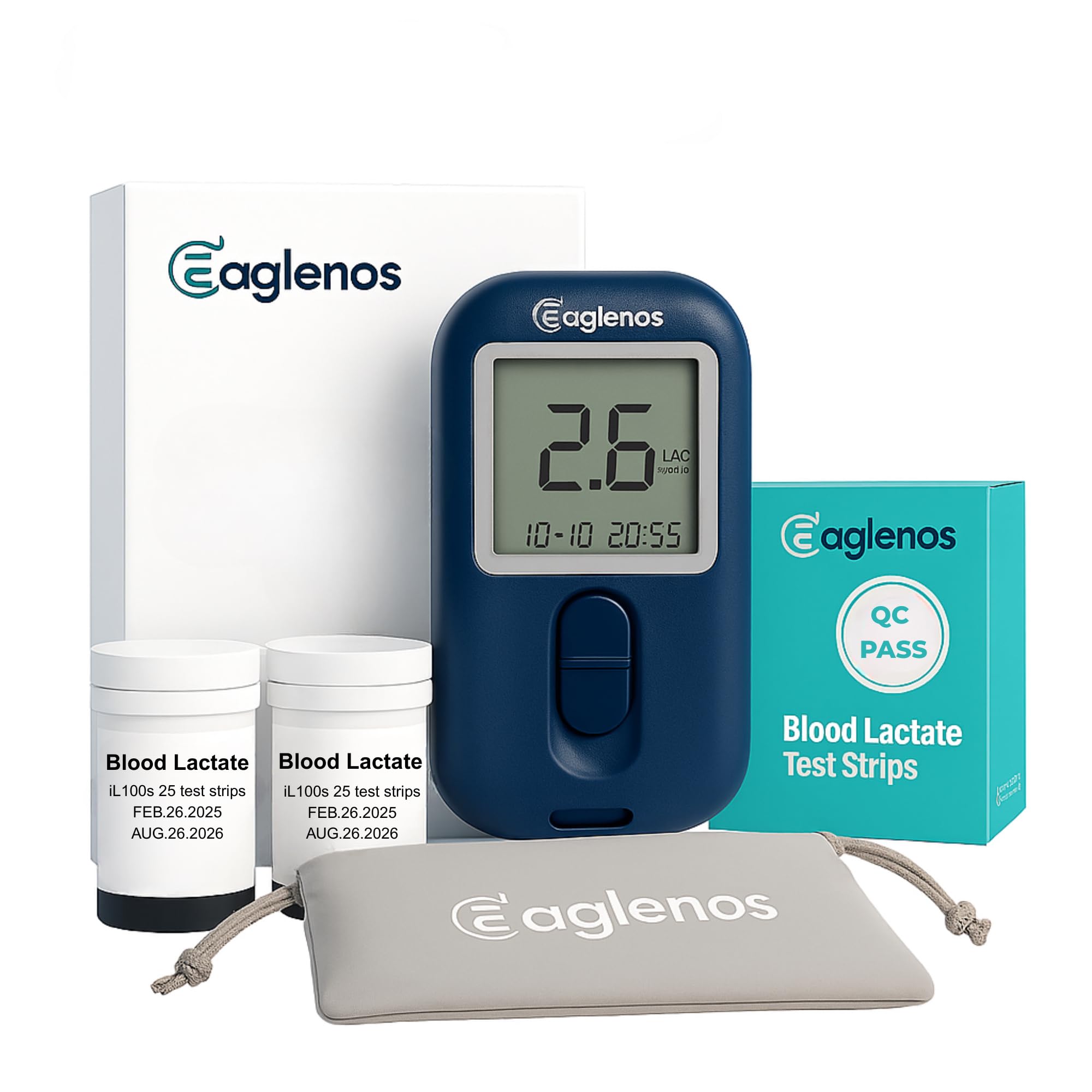
The EAGLENOS Lactate Meter bridges the gap between lab equipment and field testing for athletes serious about zone 2 training. Its defining spec is the 0.8 µL blood sample—one of the smallest in the consumer lactate market—paired with a rapid 10-second reading time. That combination makes it viable for testing between intervals on a track or immediately after a tempo segment on the road.
Bluetooth app connectivity and 800-test memory vault it ahead of older lactate meters in terms of data analysis. Athletes can log readings mid-session and review lactate drift against power or pace after the workout. The auto-start function (strip insertion triggers the meter) and strip eject button reduce fumbling during field use. The included 50 test strips get you started, but replacement strips are a recurring cost.
A small percentage of users reported consistency issues with test strips in hot conditions, which is an inherent weakness of all lactate strip technology. The meter is larger than a standard blood glucose monitor but feels rugged in the hand. For the price, this is the best dedicated lactate meter available on the market today, particularly for athletes who want fast field feedback without lab-level cost.
Why it’s great
- Very small 0.8 µL blood sample and 10-second reading
- Bluetooth app with 800-test memory for data analysis
- Auto-start and strip eject ideal for field use
Good to know
- Test strips sensitive to heat and improper storage
- Ongoing strip cost adds up over training seasons
7. THE EDGE Lactate Meter

THE EDGE Lactate Meter is a dedicated lactate-only device (no glucose) designed for athletes who want to benchmark blood lactate without the complexity of a full wearable. It uses a standard 3 µL blood sample and returns a reading in 45 seconds. While slower than the EAGLENOS, it is reliable for pre- and post-session testing in a controlled environment like a home gym or locker room.
The meter stores up to 300 test results, and its memory is adequate for tracking training cycles. The included lancet and test strips (50) give a complete testing kit out of the box. Athletes using it for zone 2 calibration report that it matches higher-end lab equipment once they master the blood application technique—discarding the first drop is recommended. The temperature sensitivity of lactate strips is a real factor; storing them in a cool, dark place is critical for consistency.
The 45-second wait makes it less suitable for between-interval testing during a workout, and some users found the lancet struggles to produce enough blood, requiring an ear-lobe prick instead. The device earned mixed reviews for accuracy: roughly half of early adopters praised its consistency, while others received high-variance results that led to a full refund. It remains a decent entry-level lactate tester for athletes who test before and after sessions, not during.
Why it’s great
- Dedicated lactate readings for zone 2 calibration
- 300-test memory for tracking over training cycles
- Inclusive kit with 50 test strips and lancet
Good to know
- 45-second reading is too slow for mid-interval testing
- Strip storage and blood sample technique must be precise
8. Garmin Index BPM

The Garmin Index BPM brings FDA-cleared blood pressure monitoring into the Garmin ecosystem, allowing athletes to track systolic, diastolic, and heart rate trends within the same app that logs their runs and swims. The one-touch three-reading averaging feature is clinically sound, and the ability to generate 7-day, 4-week, and 1-year PDF reports for a physician is a significant advantage for athletes managing health alongside performance.
The adjustable cuff (9-17 inches) accommodates a wide range of arm sizes, and up to 16 user profiles make it a viable household device. Integration with Garmin Connect is seamless: readings synchronized via Wi-Fi pop up alongside your training load and HRV data. The build quality feels premium, and the integrated display is crisp enough to read without glasses. Battery life is exceptional; one set of AAAs can last over six months.
The Index BPM is not a tool for every athlete. Serious endurance athletes who already track blood pressure at home found it accurate and convenient, but users who compared it directly to an Omron unit reported alarmingly inflated readings (170 systolic vs. 113) that caused unnecessary concern. The unit is large and the cuff is heavy, making one-handed application difficult. For Garmin ecosystem users who want a single dashboard for all health metrics, this is a premium add-on. For others, a cheaper Omron will work just as well.
Why it’s great
- Seamless Wi-Fi sync with Garmin Connect and physician reports
- FDA-cleared accuracy with clinical validation
- Supports up to 16 user profiles and one-touch 3x averaging
Good to know
- Some units produced inconsistent readings vs. competitor brands
- Large cuff and heavy monitor body can be awkward to use
9. HeartsCare C1 Plus
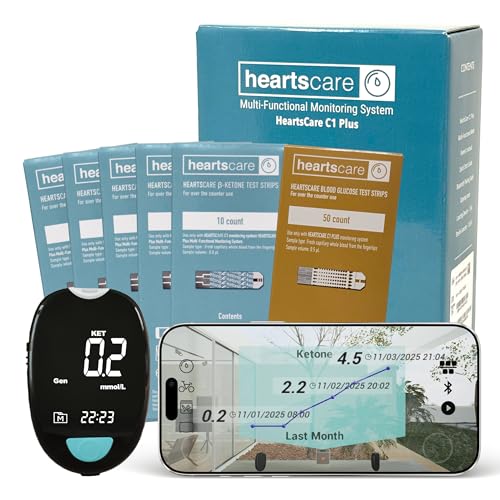
The HeartsCare C1 Plus is a dual-function meter for athletes monitoring both glucose and ketones, a common pairing for those following low-carb or keto diets to optimize fat adaptation. Its auto-strip recognition simplifies the testing process—the meter automatically identifies whether you inserted a glucose or ketone strip and adjusts the measurement range accordingly. Individual foil-packed strips ensure room-temperature storage stability.
Performance specs are competitive: glucose test uses a tiny 0.5 µL sample and returns results in 5 seconds, while ketone requires a 0.8 µL sample with a 10-second reaction. Measurement capacity is solid (10-800 mg/dL glucose, 0.1-8.0 mmol/L ketones). The optional HeartsHome app adds Bluetooth sync for data logging, though the meter works independently if you prefer a simpler workflow. The kit includes 50 glucose and 50 ketone strips—a total of 100 tests out of the box.
Set-up requires inserting a code chip, and some users found the app pairing steps unintuitive. The included lancet is basic, and users who test frequently will want a better lancing device. Ongoing strip restocking is the primary cost consideration—especially for ketone strips, which are more expensive than glucose strips. For the budget-conscious athlete exploring metabolic efficiency and glucose variability, the C1 Plus offers an affordable and easy-to-use entry point.
Why it’s great
- Dual glucose and ketone testing with auto-strip recognition
- Tiny blood sample and fast results (5s glucose, 10s ketone)
- 100 test strips included (50 glucose, 50 ketone)
Good to know
- App setup and code chip process can be confusing
- Ongoing strip restocking adds cost, especially for ketone
FAQ
What is the difference between a CGM and a blood glucose meter for athletes?
Can a lactate meter help me find my zone 2 threshold?
Is a screenless wearable like WHOOP better than a smartwatch for training?
How often do lactate test strips expire, and how should I store them?
Final Thoughts: The Verdict
For most users, the best cgm for athletes winner is the Garmin Forerunner 970 because it integrates real-time training metrics, GPS tracking, and recovery analytics in a single durable package with an exceptional AMOLED display and triathlon-specific features. If you want deep recovery analysis without a screen, grab the WHOOP 5.0. And for precise lactate threshold testing during zone 2 sessions, nothing beats the EAGLENOS Lactate Meter for speed and sample efficiency.

Mo Maruf
I created WellFizz to bridge the gap between vague wellness advice and actionable solutions. My mission is simple: to decode the research and give you practical tools you can actually use.
Beyond the data, I am a passionate traveler. I believe that stepping away from the screen to explore new environments is essential for mental clarity and physical vitality.