Our readers keep the lights on and my smoothie glass nicely filled. As an Amazon Associate, I earn from qualifying purchases.
Keeping a lawn green during scorching summers without running up a massive water bill feels like an impossible trade-off. The good news is that specific grass varieties and alternative ground covers are engineered to survive—and even thrive—on a fraction of the water a traditional bluegrass lawn demands.
I’m Mohammad Maruf — the founder and writer behind WellFizz. I have spent hundreds of hours analyzing seed coating technologies, germination data, root depth metrics, and water retention specifications to find the turf options that genuinely hold up under heat stress and limited irrigation.
Whether you are repairing bare patches or planning a full-scale lawn conversion, this guide cuts through the marketing noise to deliver only the proven options. My goal is to help you choose the right drought resistant grass for your specific climate, soil, and maintenance expectations.
How To Choose The Best Drought Resistant Grass
Not all “drought tolerant” labels are equal. Some grasses survive by going dormant in dry spells; others maintain green color through deep root systems and waxy leaf coatings. The right choice depends on your region, sun exposure, and how much foot traffic your lawn endures.
Root Depth and Rhizome Development
Deep-rooted grasses like tall fescue send roots up to two to three feet into the soil, accessing moisture far below the surface. Varieties with aggressive rhizomes—underground stems that spread horizontally—help fill bare spots naturally and require less frequent watering to maintain density.
Seed Coating Technology
Premium coatings such as OptiGrowth infuse seeds with zinc, phosphorus, and kelp-based nutrients that support early root development without relying on heavy irrigation. These coatings also improve seed-to-soil contact and uniform spreading, which is critical for establishing a drought-resistant lawn with minimal water waste.
Perennial vs. Annual Lifecycle
Perennial species return year after year without replanting, making them the economical choice for long-term drought management. Annual ryegrass provides fast green cover for a single season—useful for overseeding warm-season lawns during winter but not a permanent solution for sustained water conservation.
Quick Comparison
On smaller screens, swipe sideways to see the full table.
| Model | Category | Best For | Key Spec | Amazon |
|---|---|---|---|---|
| Outsidepride Legacy Fine Fescue Mix | Fine Fescue Blend | Dense shade & sun lawns | 5 lbs with OptiGrowth coating | Amazon |
| Scotts Tall Fescue Blend | Tall Fescue | Northern & transition zone lawns | 8 lbs with fertilizer + clay | Amazon |
| Mountain Valley Micro Clover Seed | Clover Alternative | Eco-friendly no-mow lawns | 1 lb with ~400,000 seeds | Amazon |
| Pennington Annual Ryegrass Seed | Annual Ryegrass | Winter overseeding in south | 10 lbs rapid germination | Amazon |
In-Depth Reviews
1. Outsidepride Legacy Fine Fescue Grass Seed Mix
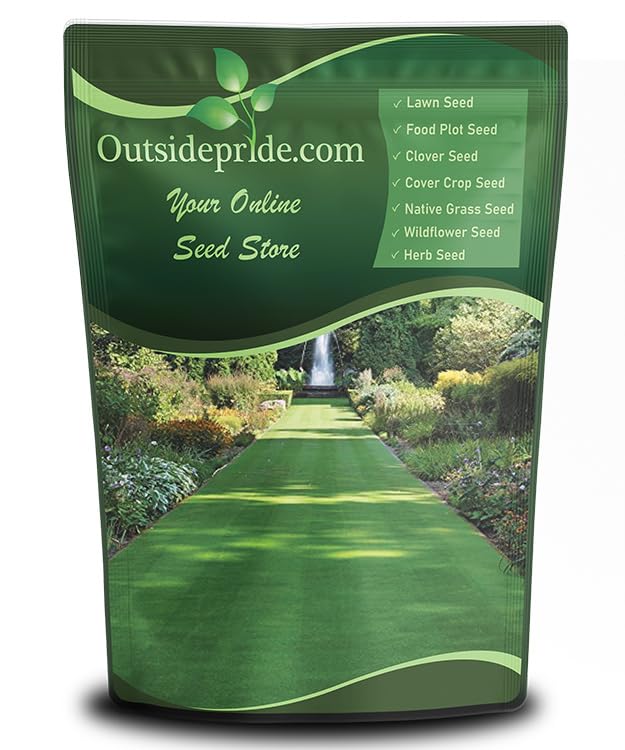
The Outsidepride Legacy Fine Fescue Mix is a premium blend of 20% Hard Fescue, 40% Chewings, and 40% Creeping Red Fescue, designed to perform from full sun to dense shade. The OptiGrowth coating infuses each seed with zinc, phosphorus, and nitrogen plus Elko kelp, which supports more uniform germination and deeper root establishment without demanding daily overhead watering during early growth.
This mix is inherently low-growing with fine, dark green blades that create a dense turf capable of shrugging off light foot traffic. The creeping red fescue component adds rhizomatous spread, helping the lawn self-repair in thin areas. Users in transition zones consistently report good results in shady spots where traditional fescues struggle, provided the soil is prepped with compost and kept moderately moist for the first few weeks.
Challenges arise in cooler springs where germination can stall if soil temperatures stay below optimal range. A small number of users experienced delayed sprouting beyond three weeks, likely due to cold stress rather than seed viability. Overall, this blend delivers the best balance of shade tolerance, minimal water requirements, and fine-textured aesthetics among the premium options.
Why it’s great
- OptiGrowth coating supplies early nutrients for stronger root development
- Three-fescue blend covers sun, shade, and high-traffic areas
- Creeping red fescue rhizomes help fill bare spots naturally
Good to know
- Slower germination in cold soil may require patience in early spring
- Daily watering (ideally twice) needed until blades reach one inch
2. Mountain Valley Micro Clover Seed for Lawn

Mountain Valley’s Micro Clover is a dwarf white clover that grows only four to six inches tall, making it a legitimate no-mow alternative to conventional turf. Each ounce packs approximately 25,000 seeds, and the clover’s nitrogen-fixing ability eliminates the need for synthetic fertilizers while keeping soil moisture locked in during dry spells.
Germination is impressively fast—sprouting begins in as little as two to three days when sown on prepared soil with moderate watering. The micro leaves are roughly one-third the size of traditional white clover, offering a uniform, lush carpet that stays green with far less water than any fescue or ryegrass. It thrives in both sun and partial shade, and the deep root system makes it surprisingly resilient under moderate foot traffic for a clover variety.
The biggest practical hurdle is cost: covering a large yard requires multiple pounds, and the price per ounce is significantly higher than traditional grass seed. Hand spreading can also lead to uneven distribution due to the tiny seed size. For patches, repair work, or small eco-lawns, however, this micro clover outperforms every grass seed on water conservation, maintenance time, and year-round green color.
Why it’s great
- Nitrogen-fixing eliminates fertilizer needs and retains soil moisture
- Extremely fast germination (2–3 days) with consistent results
- Low-growing habit means no mowing required
Good to know
- Cost per square foot is higher than traditional grass seed alternatives
- Tiny seeds are difficult to distribute evenly without a specialized spreader
3. Scotts Tall Fescue Blend Grass Seed
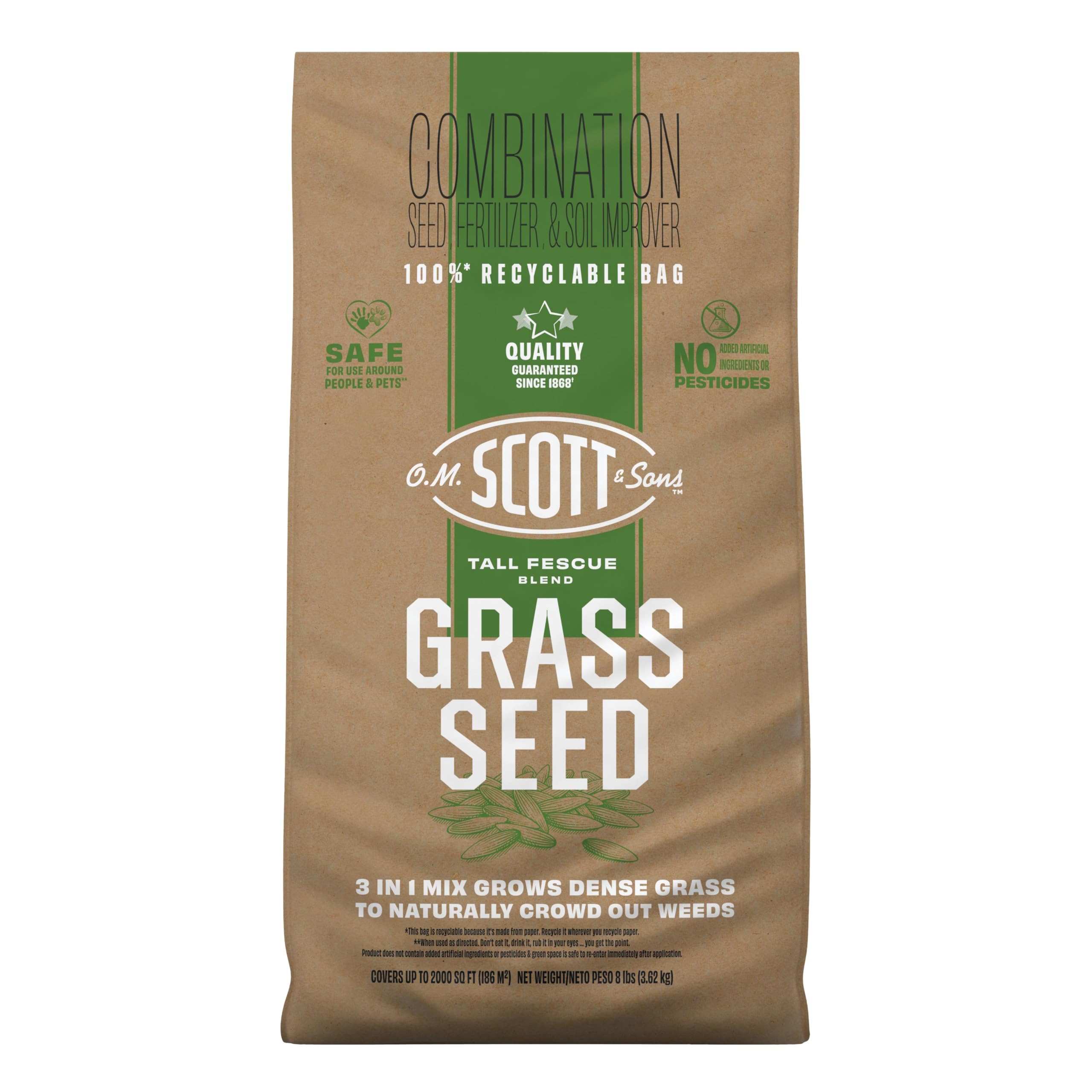
Scotts Tall Fescue Blend combines grass seed with natural grass food and soil-improving clay in a single bag, effectively acting as a 3-in-1 lawn repair system. The tall fescue varieties are selected for deep root growth that helps the lawn stay green longer during dry periods while naturally crowding out weeds through dense tillering.
This blend targets northern and transition regions, and one eight-pound bag covers up to 2,000 square feet when overseeding or 665 square feet for a new lawn. The inclusion of clay improves water retention around the seed zone during germination, which is a practical advantage for homeowners who cannot water multiple times daily. Users report visible germination within ten days in moderate spring or fall temperatures between 65°F and 85°F.
The main drawback is the weight composition: roughly half the bag’s content is the fertilizer and clay carrier rather than pure seed, which makes the effective cost per pound of actual seed higher than loose tall fescue alternatives. A small number of users noted inconsistent germination rates in bags that may have sat on retail shelves for extended periods. For a user-friendly, all-in-one approach to drought-resistant lawn establishment, this remains a reliable entry point.
Why it’s great
- Built-in fertilizer and soil improver simplify the planting process
- Deep-rooting tall fescue provides genuine drought tolerance
- 100% recyclable paper bag packaging is environmentally friendly
Good to know
- Only about half the bag weight is actual grass seed
- Germination may suffer if bag has been stored for a long time before purchase
4. Pennington Annual Ryegrass Seed

Pennington Annual Ryegrass is the fastest green-up option in this lineup, with visible sprouting as early as two days and full coverage by day four under consistent watering. Designed primarily for overseeding warm-season grasses like Bermuda and Zoysia during winter dormancy, it provides a vibrant green lawn when southern yards would otherwise go brown.
The ten-pound bag covers up to 2,000 square feet, making it a cost-effective temporary cover for large areas. Annual ryegrass establishes quickly even in poor soil conditions and holds up well under foot traffic, which is unusual for a temporary grass. Its rapid growth also makes it useful as a temporary nurse crop for permanent northern lawns that need erosion control during establishment.
The limitation is clear: annual ryegrass dies off when summer heat arrives, so it provides no permanent drought-resistant turf. The leaf texture is coarser than fine fescues, and the light green color may not match the aesthetic of adjacent perennial grasses. For its intended use—fast, affordable temporary winter color in southern zones—it performs exactly as marketed.
Why it’s great
- Visible green coverage in as little as two days after seeding
- Excellent for winter overseeding of Bermuda or Zoysia lawns
- Resistant to disease and holds up well under moderate foot traffic
Good to know
- Annual lifecycle means it dies off permanently during summer heat
- Coarser texture and lighter green color compared to fescue blends
FAQ
Can drought resistant grass survive with zero watering after establishment?
Will micro clover take over my existing grass lawn?
What is the difference between annual and perennial ryegrass for drought tolerance?
Final Thoughts: The Verdict
For most users, the drought resistant grass winner is the Outsidepride Legacy Fine Fescue Mix because it balances shade tolerance, fine texture, and genuine drought resilience with the added advantage of nutrient-infused coating. If you want a no-mow, self-fertilizing alternative that uses even less water, grab the Mountain Valley Micro Clover. And for a fast, affordable temporary winter green in southern zones, nothing beats the Pennington Annual Ryegrass for speed and coverage.

Mo Maruf
I created WellFizz to bridge the gap between vague wellness advice and actionable solutions. My mission is simple: to decode the research and give you practical tools you can actually use.
Beyond the data, I am a passionate traveler. I believe that stepping away from the screen to explore new environments is essential for mental clarity and physical vitality.