Our readers keep the lights on and my smoothie glass nicely filled. As an Amazon Associate, I earn from qualifying purchases.
Eight hours at a desk shouldn’t leave you reaching for a heating pad and a pain reliever every night. The wrong chair forces your spine into a C-curve, strains your cervical vertebrae, and compresses your lumbar discs until the ache becomes your new normal. A seat engineered specifically for spinal alignment changes that equation entirely.
I’m Mohammad Maruf — the founder and writer behind WellFizz. I’ve spent a huge number of hours analyzing the biomechanics of sitting postures, mapping lumbar support adjustability, and comparing cushion density, recline mechanisms, and headrest geometry across dozens of models to identify the chairs that deliver measurable relief for both back and neck pain.
This guide breaks down the nine strongest contenders, from budget-friendly office chairs to premium ergonomic workhorses, so you can match the right support system to your specific body and pain points. Your search for the absolute best chair for back and neck pain stops here — no fluff, just the specs that matter.
How To Choose The Best Chair For Back And Neck Pain
Not every ergonomic marketing claim translates to actual relief. The chairs that genuinely reduce back and neck pain share a common DNA: they offer dynamic adjustability across multiple contact points. A fixed lumbar bump glued to a generic backrest won’t cut it — you need independent control over lumbar depth, headrest position, seat depth, and armrest geometry.
Lumbar Support: Depth, Height, and Dynamic Movement
Your lower back has a natural inward curve, and a chair’s lumbar support must fill that void precisely. Look for models with at least 2D adjustment (height and depth). The best options offer 3D or 5D support that moves with your body as you shift positions. A static lumbar pad can actually create new pressure points — dynamic support that tracks your spine is far more effective for long-term relief.
Headrest & Neck Support: Alignment Matters More Than Padding
A headrest that pushes your head forward or sits too low can worsen cervical strain. The ideal headrest offers 3D or 4D adjustment: height, depth, angle, and sometimes rotation. It should cradle the natural curve of your neck without forcing your chin toward your chest. Taller users need extra vertical range; shorter users need a headrest that tilts down enough to engage properly.
Seat Cushion & Depth: Pressure Distribution
Back pain often starts in the seat. A cushion that’s too soft allows your pelvis to tilt posteriorly, flattening your lumbar curve. Look for high-density foam (at least 7cm thick) or tension-tuned mesh that supports your sit bones without sinking. Adjustable seat depth — the ability to slide the seat pan forward or back — ensures your thighs are fully supported without pressure behind your knees, which improves circulation and reduces lower back tension.
Recline & Tilt Mechanism: Changing Position Relieves Pressure
Static sitting is the enemy. A chair that lets you recline 120 to 140 degrees and lock at intermediate angles allows you to change spinal load patterns throughout the day. A synchronised tilt mechanism that keeps your feet planted while your back reclines maintains ergonomic alignment and prevents the shirt-pulling effect that ruins posture.
Quick Comparison
On smaller screens, swipe sideways to see the full table.
| Model | Category | Best For | Key Spec | Amazon |
|---|---|---|---|---|
| FLEXISPOT ErgoX-PRO | Premium Mesh | Long hours & full adjustability | 5D lumbar, 7D armrests, 551 lb capacity | Amazon |
| Steelcase Leap | High-End Work | Customizable pro-level ergonomics | Natural Glide System, 3D LiveBack | Amazon |
| Hbada X7 Smart | Smart Tech | Auto-lumbar tracking & cooling | 3D auto-adjusting lumbar, 8D massage | Amazon |
| Newtral MagicH003 | Adaptive Lumbar | Active lumbar tracking | Auto-following lumbar, 96-126° tilt | Amazon |
| Branch Ergonomic Chair | Mid-Range Mesh | Sleek mesh comfort for petite users | 8 adjustment points, adjustable seat depth | Amazon |
| GABRYLLY GYMN01-BX | Mid-Range Recliner | Napping & reclining with footrest | 135° recline, retractable footrest | Amazon |
| Sytas Executive Leather | Executive Leather | Style & durability up to 400 lbs | 400 lb capacity, PU leather, 135° recline | Amazon |
| ELABEST T96 | Value Mesh | BIFMA certified longevity | Bionics-curve back, 3D armrests | Amazon |
| CASASIO 2307H | Entry-Level | Affordable comfort & 3D headrest | Virgin foam seat, 3D headrest | Amazon |
In‑Depth Reviews
1. FLEXISPOT ErgoX-PRO Ergonomic Office Chair
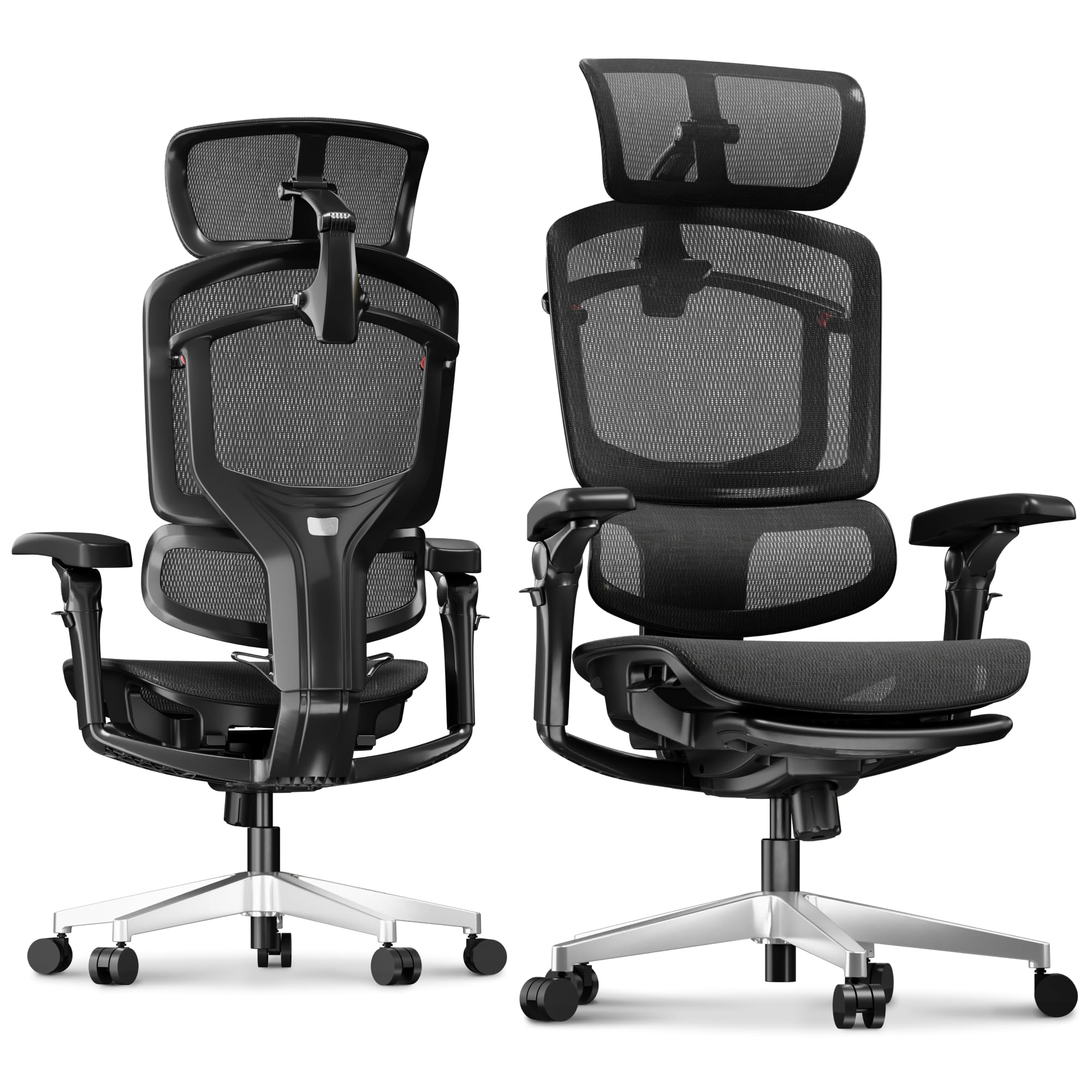
The FLEXISPOT ErgoX-PRO is a premium ergonomic chair that packs a level of adjustability usually reserved for chairs costing much more. Its 5D lumbar support extends fully to track your spine’s curve through different postures, while the 7D linkage armrests move with your body in every direction — height, width, angle, and depth — providing continuous support whether you’re typing, reclining, or gaming. The AeroWeave 5.0 mesh seat delivers excellent breathability and tension, preventing the heat buildup and pressure points that plague foam cushions over long days.
Beyond adjustability, the build quality is genuinely heavy-duty. The reinforced nylon and fiberglass frame paired with a lightweight aluminum base supports up to 551 pounds, making it one of the most inclusive chairs at this tier. The 12-level fine-tuned backrest with spring cushioning offers natural movement without the sharp locking feel of cheaper mechanisms. Three tilt positions — 90, 115, and 135 degrees — give you upright focus, relaxed reading, and full-recline lounging options, and the optional footrest adds real value for break-time decompression.
Customer reviews consistently highlight the improved posture and reduced discomfort during 40-hour work weeks. The 4D headrest doubles as a back cushion for compact setups, a clever design touch that tall users appreciate. Some users note the leg rest could be more practical, and the plastic build lacks the metallic prestige of ultra-premium chairs, but the balance of ergonomic features, cooling mesh, and sheer adjustability makes this the top recommendation for anyone serious about long-duration back and neck relief.
Why it’s great
- 5D lumbar support dynamically tracks spinal movement
- 7D armrests provide full-motion support for any task
- AeroWeave mesh seat stays cool and supportive all day
- 551 lb weight capacity with reinforced frame
Good to know
- Footrest is less practical for frequent use
- Some plastic components feel less premium than all-metal builds
2. Steelcase Leap Office Chair

The Steelcase Leap is a benchmark in the ergonomic seating world, built on decades of workplace research. Its defining innovation is the Natural Glide System, which allows the seat to slide forward and backward as you recline, keeping your feet planted and your lumbar curve stable — a critical feature for preventing the sacral sitting position that aggravates lower back pain. The 3D LiveBack technology uses a flexible backrest that mimics the shape of your spine, contouring independently at different sections to provide tailored support whether you’re leaning forward to type or reclining to read.
Adjustability is deep and precise. The lower back firmness dial lets you dial in exactly how much lumbar pressure you need, a feature most budget chairs ignore entirely. The 4D adjustable arms move in height, width, depth, and pivot, and the seat depth adjustment accommodates different leg lengths without a secondary purchase. The Leap arrives fully assembled — a rare convenience — and the waterfall-edge cushion relieves pressure behind the knees, improving circulation during long sits.
Customer feedback confirms that the Leap eliminates back and neck pain for most users, though a minority find the seat padding thin and the lumbar support too subtle at the default setting. The upholstered fabric can feel scratchy, and the price positions it firmly in the investment tier. That said, for users who have tried and failed with cheaper chairs, the Leap’s adjustability and build quality often translate to the first genuinely pain-free workday they’ve had in years.
Why it’s great
- Natural Glide System keeps feet planted while reclining
- 3D LiveBack conforms to spine’s natural curve
- Lower back firmness dial for custom lumbar pressure
- Fully assembled out of the box
Good to know
- Seat padding is relatively thin for heavier users
- High price point places it as a long-term investment
3. Hbada X7 Smart Ergonomic Chair

The Hbada X7 Smart chair pushes the category forward with automated lumbar tracking that uses a gravity-sensing base to adjust support intensity as you shift. The 6D adjustable waist pillow aligns with your spine’s natural curve, while 8D massage rollers with three-level heating (40–50°C) actively work out muscle tension in your lower back — a feature no other chair in this lineup offers. For users whose pain is compounded by tight muscles, this heat-and-massage combination provides genuine therapeutic value during the workday.
Cooling is handled by a dual-fan system integrated into the 3D high-resilience mesh seat, offering three airflow speeds (Silent, Balanced, Turbo) that enhance breathability by 65% over standard mesh. The 4D ergonomic headrest provides 70° rotation, 55mm sliding, and 45mm height adjustment, so you can fine-tune neck support down to the millimeter. The 720° omnidirectional armrests rotate 360 degrees and extend 110mm, syncing with the 140° recline to support your arms in any seated position.
Assembly is straightforward, and the aircraft-grade aluminum frame with 5-star nylon base handles up to 330 pounds. Some tall users have reported that the stock gas cylinder isn’t tall enough for optimal ergonomics for people over 6 feet, requiring a cylinder swap. The lumbar tracking and massage features are genuinely useful — they don’t feel gimmicky in daily use — and the ventilated seat prevents the sweatiness that can make long mesh sessions uncomfortable. The Hbada X7 is a premium, feature-rich choice for those who want active support rather than passive cushioning.
Why it’s great
- Auto-adjusting lumbar with gravity-sensing base
- 8D heated massage rollers for muscle tension relief
- Dual-fan cooling seat with 3-speed airflow
- 720° armrests sync with recline
Good to know
- Stock gas cylinder may be short for users over 6 feet
- Massage/heat features require power connection
4. Newtral Ergonomic Home Office Chair MagicH003

The Newtral MagicH003 uses an innovative spring-loaded automatic lumbar tracking mechanism that follows your spine’s movement as you shift forward, back, or side to side. Unlike static lumbar pads that work only in one seated posture, this system actively adjusts its contour to match your lumber curve in real time, providing strong, continuous support that reduces fatigue and encourages natural spinal alignment. The lumbar support strength is adjustable via a tension knob, letting you dial in exactly how much pressure you need for your specific pain level.
Beyond lumbar, the chair offers three back height options and a tilt range that locks from 96 to 126 degrees, allowing you to find the perfect recline for focus or relaxation. The adjustable seat depth — a feature often missing at the mid-range tier — ensures proper thigh support for users between 5’5″ and 6’2″. The 7cm high-density sponge cushion with waterproof, flame-retardant fabric provides a plush yet supportive base that resists sagging over months of daily use, and the KGS Class 4 gas lift from Korea adds long-term durability.
Reviews praise the chair’s build quality and the effectiveness of the adaptive lumbar, though some users note that the spring mechanism can be noisy and may pull at your shirt when you lean back. The seat cushion can run warm in hot weather, despite the breathable mesh back. Assembly takes about 20 minutes, and the 3-year warranty plus 7-year limited warranty provides solid peace of mind. For users who need a responsive lumbar system that reacts to their movement, the Newtral is a standout value.
Why it’s great
- Auto-following lumbar tracks movement in real time
- Adjustable seat depth supports different leg lengths
- KGS Class 4 gas lift for reliable height adjustment
- 3-year + 7-year limited warranty
Good to know
- Lumbar spring can make noise when reclining
- Seat cushion can get warm in high temperatures
5. Branch Ergonomic Chair
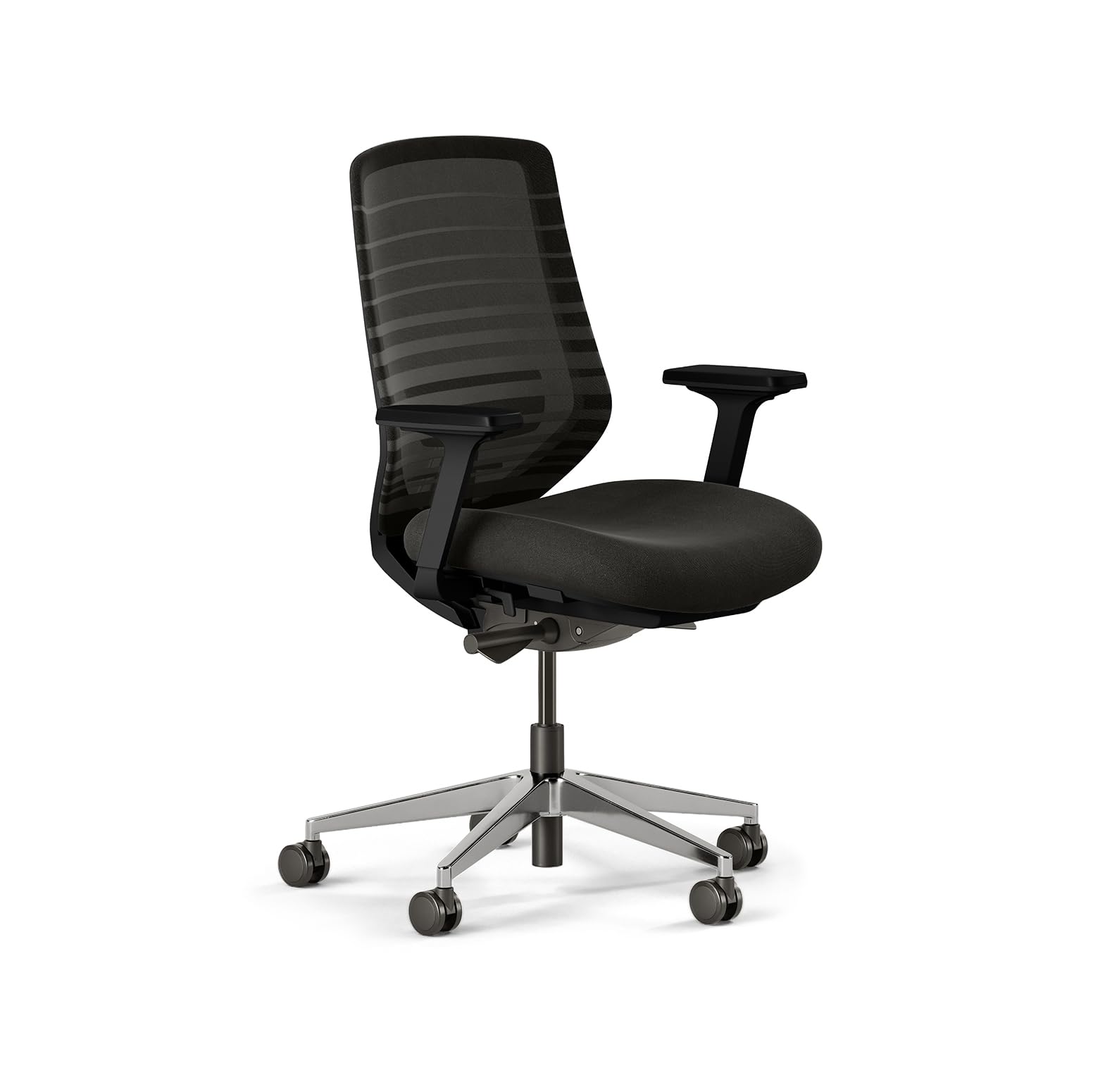
The Branch Ergonomic Chair offers a clean, minimalist approach to pain relief without sacrificing adjustability. Its eight adjustment points cover seat height, seat depth, recline, tilt tension, lumbar position (height and depth), and armrest width and height. The adjustable seat depth is a critical feature for anyone who’s ever felt pressure behind their knees or insufficient thigh support — it allows you to slide the seat pan forward or back to find the perfect fit for your leg length.
The breathable mesh backrest provides excellent airflow, keeping your back cool even during marathon work sessions, while the contoured cushion — firm enough to support your sit bones without sinking — prevents the posterior pelvic tilt that leads to lower back strain. The lumbar support is mild but effective; it’s not as aggressive as some chairs, which makes it ideal for users who find prominent lumbar pads uncomfortable. The smooth-rolling wheels glide quietly on both carpet and hard floors, and the sturdy metal frame (under a plastic shell) delivers a solid, wobble-free seating experience.
Users consistently report that assembly takes about 30 minutes and the chair feels high-quality for its price tier. The chair is particularly well-regarded among petite users — the low seat height accommodates users as short as 5 feet, a rarity in this category. The armrests can slide forward unintentionally if not fully tightened, and the lack of seat tilt adjustment means you can’t angle the seat pan independently of the backrest. For a straightforward, well-built ergonomic chair that covers the essentials without unnecessary complexity, the Branch is an excellent choice.
Why it’s great
- Adjustable seat depth for proper thigh support
- Excellent low seat height for petite users (5’0″)
- Breathable mesh back keeps you cool
- 8 points of adjustment in a minimal design
Good to know
- Armrests can slide forward if not fully tightened
- No independent seat tilt adjustment
6. GABRYLLY Ergonomic Office Chair with Footrest
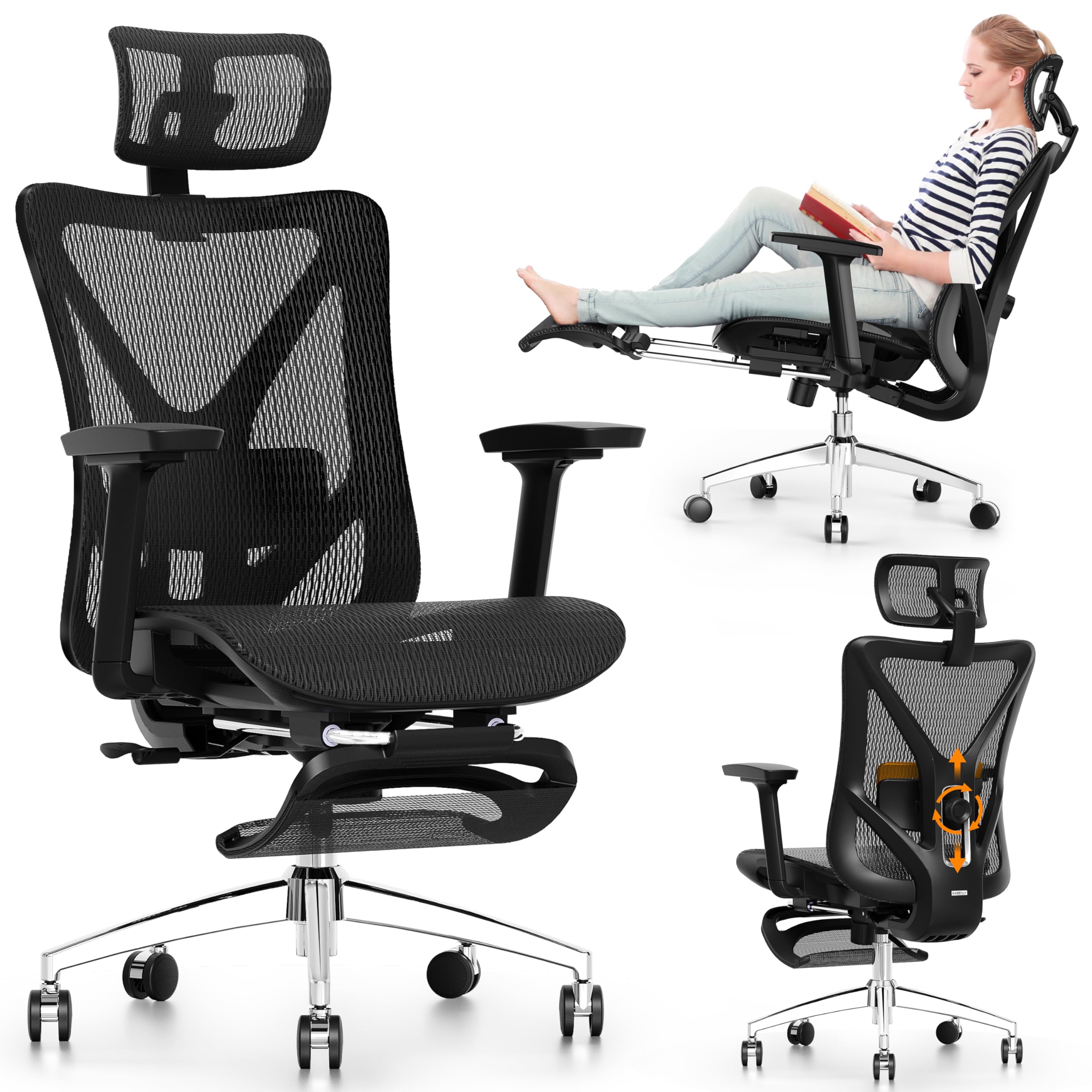
The GABRYLLY chair is purpose-built for users who want to combine work support with nap-capable reclining. Its 2-way adjustable lumbar support provides 3 inches of vertical and 1.6 inches of horizontal adjustment, allowing you to dial in lower back support for different tasks. The 3-position recline (90, 110, and 135 degrees) lets you lock in an upright typing posture, a relaxed reading angle, or a flat-out napping position, and the retractable steel footrest extends 18.1 inches for proper leg support during breaks.
The mesh backrest promotes airflow and keeps your upper body cool, while the 3D adjustable armrests (up/down, front/back, in/out) reduce shoulder strain during typing or gaming. The large mesh headrest offers height, angle, and bracket adjustments for personalized neck support — a crucial feature for anyone with cervical pain. The 27.5-inch large-diameter steel base provides excellent stability, even when the chair is fully reclined or the footrest is extended, and the silent wheels move smoothly across hard floors and carpet alike.
Customer feedback is largely positive, with users praising the sturdy build and all-day comfort. Some reviews note that the armrests shift unintentionally under pressure — the up/down adjustment is solid, but the horizontal movement feels less secure. The mesh material can feel taut and less forgiving for very long sits, and the lumbar support, while adjustable, may be too firm for some. At this price point, the GABRYLLY delivers exceptional value for users who need a recline-and-rest option without sacrificing ergonomic essentials.
Why it’s great
- 135° recline with lockable positions and steel footrest
- 2-way adjustable lumbar for targeted lower back support
- Large steel base provides excellent recline stability
- 3D armrests reduce shoulder and wrist strain
Good to know
- Armrests can shift unintentionally under pressure
- Mesh feels taut; may not suit users who prefer softer seating
7. Sytas Ergonomic Executive Leather Chair
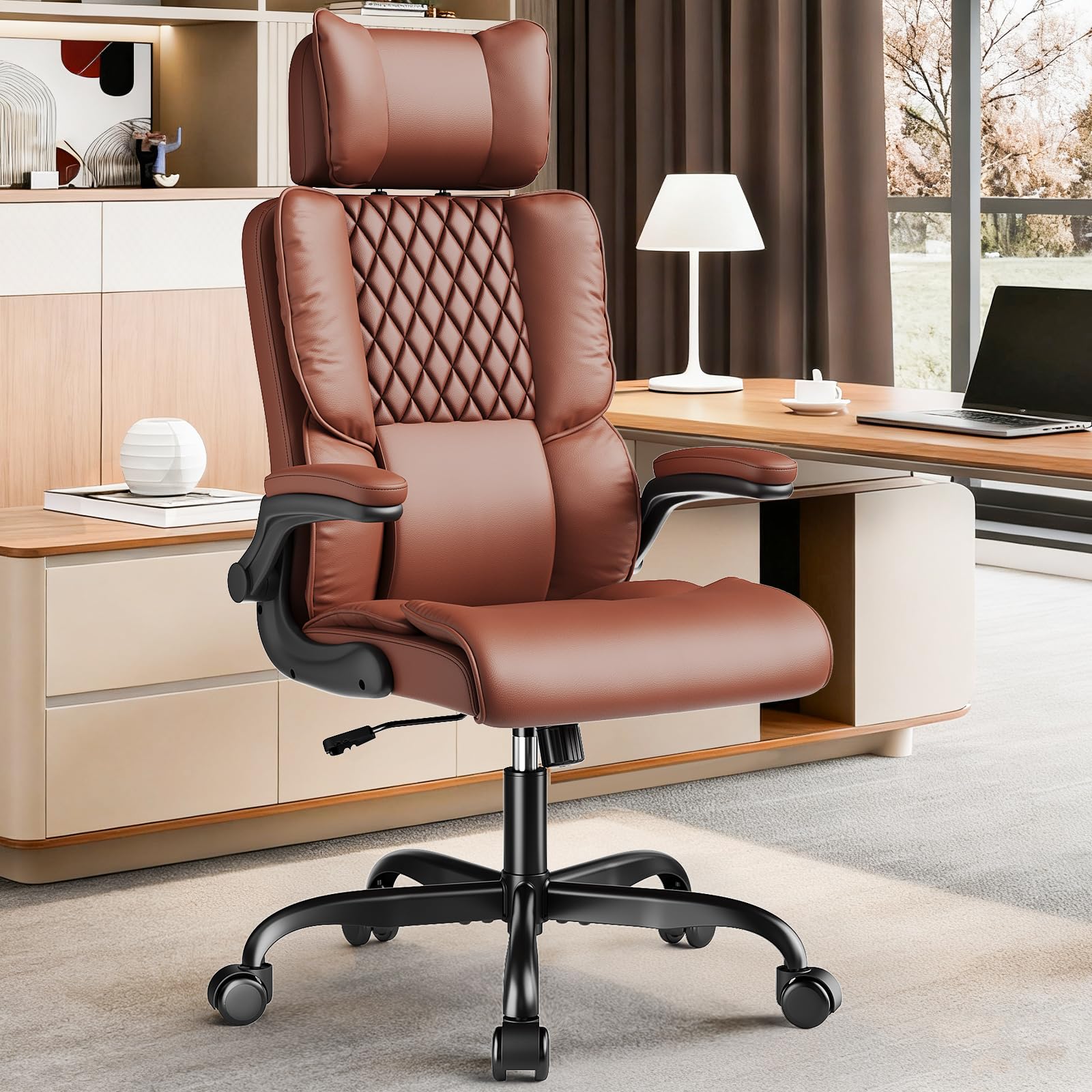
The Sytas Executive chair is designed for users who need a robust frame and generous weight capacity — it supports up to 400 pounds, making it one of the most inclusive options in the mid-range tier. The thickened lumbar cushion with widened wrap-around sponge support actively aligns with your spine, and the diamond-patterned backrest adds visual appeal without sacrificing function. The dual-layer high-resilience PP cotton and memory foam seat cushion prevents thinning and tailbone fatigue, making it suitable for long work sessions.
The 135° tilt rocking function and 3-level adjustable detachable headrest provide the recline range needed to shift spinal load throughout the day. The breathable PU leather resists wear and pet scratches, while the silent rubber casters glide smoothly across any floor without squeaking. The 90-degree flip-up arms allow you to tuck the chair completely under your desk, saving space in compact home offices. Assembly is straightforward and typically takes about 20 minutes.
User reviews consistently note the chair’s style and comfort, with many appreciating the generous weight capacity and the padded seat. A common criticism is that the lumbar support is quite stiff — some users find it uncomfortable except at the lowest setting and add a memory foam cushion for better fit. The metal base is solid, but many of the other components are plastic, which may affect long-term durability. For big and tall users who want an executive aesthetic and can work with a firmer lumbar feel, the Sytas delivers strong value.
Why it’s great
- 400 lb weight capacity with robust metal frame
- Memory foam and cotton seat cushion resists sagging
- Breathable PU leather resists scratches and pet wear
- 90-degree flip-up arms save desk space
Good to know
- Lumbar support is stiff and may need a cushion add-on
- Many components are plastic despite metal base
8. ELABEST Ergonomic Mesh Office Chair T96

The ELABEST T96 is built to BIFMA 5.1 commercial-grade standards, meaning it’s tested for durability in high-use environments like corporate offices and coworking spaces. Its bionic-curve backrest mimics the natural shape of your spine, and the adjustable lumbar support maintains that curve through 8-hour shifts. The synchro-tilt mechanism offers three lockable positions with adjustable tension, allowing you to recline while keeping your feet planted — a setup that actively reduces lower back pressure by distributing your weight across the entire backrest.
The “Golden Triangle” back structure provides stable support for your shoulders and upper back, which is particularly important for users who spend all day typing or coding — it helps prevent the rounded-shoulder posture that leads to upper back and neck tension. The 3D adjustable armrests move in height, width, and angle, reducing strain on your neck and shoulders by keeping your arms properly supported regardless of your desk setup. The ultra-breathable full-mesh seat prevents heat buildup and promotes blood flow to your legs, a significant advantage over foam seats that sag and trap heat over time.
Customer reviews praise the chair’s build quality and comfort, with many comparing it favorably to chairs costing much more. The firm mesh seat is supportive but may feel too firm for users accustomed to plush foam. The armrests can be too wide for users with smaller frames, though customer service has been responsive in providing alternative parts. The recommended user range is roughly 5’5″ to 5’10” and under 200 pounds for optimal ergonomics. For a durable, low-maintenance mesh chair with commercial-grade certification, the ELABEST T96 is a smart investment.
Why it’s great
- BIFMA 5.1 certified for commercial-grade durability
- Bionic-curve backrest aligns with natural spine shape
- “Golden Triangle” design supports shoulders and upper back
- Breathable full-mesh seat prevents heat buildup
Good to know
- Firm mesh may feel too stiff for users who prefer plush seating
- Armrests may be too wide for smaller body frames
9. CASASIO Ergonomic Office Chair 2307H
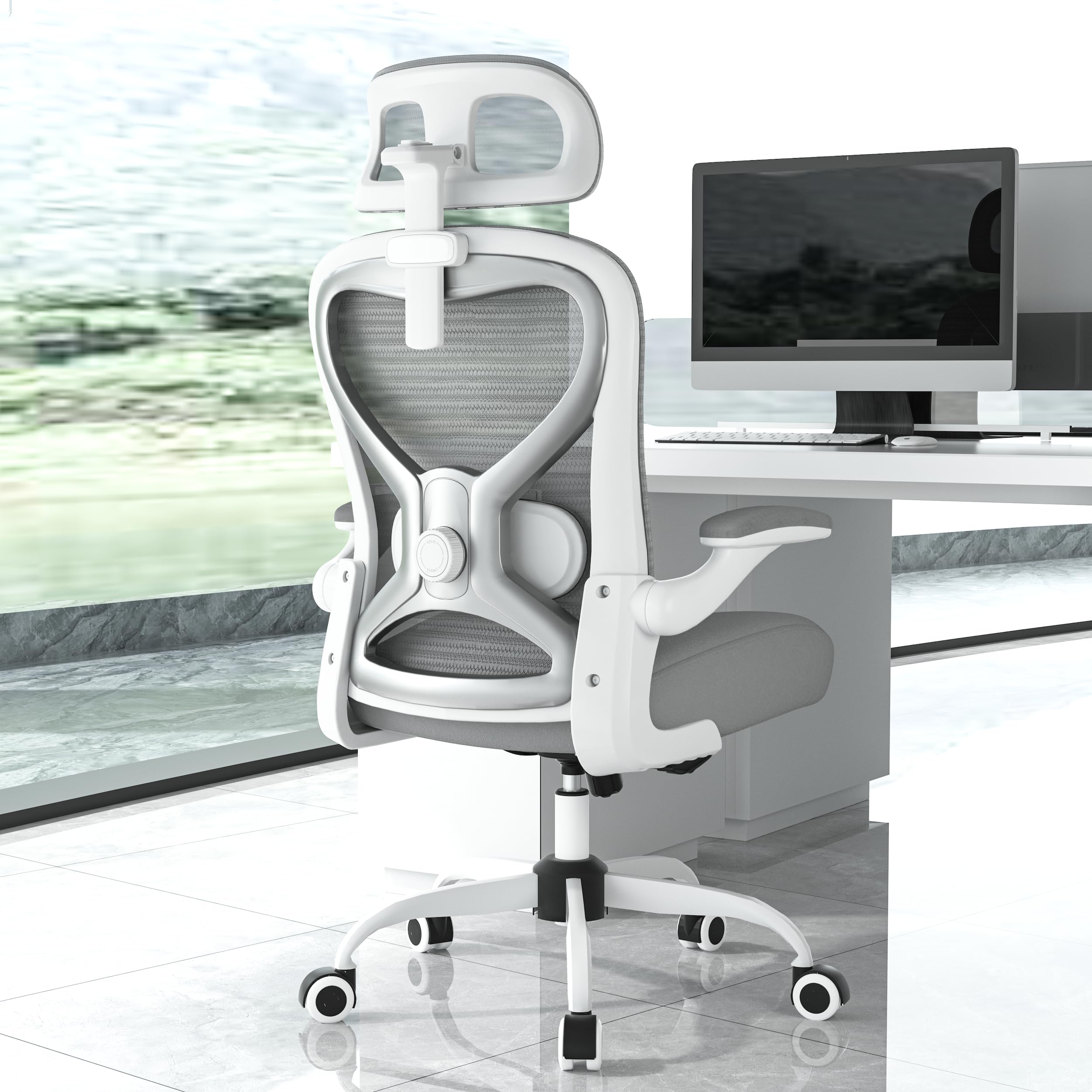
The CASASIO 2307H is an entry-level ergonomic chair that punches above its tier with a virgin foam seat — a material typically found in higher-end models. Virgin foam distributes weight evenly and resists sagging better than recycled foam blends, providing long-lasting softness and resilience even after extended sitting periods. The contoured mesh back aligns with your spine, and the dual-direction adjustable lumbar cushion lets you move support up and down for precise lower back placement, reducing fatigue during long work sessions.
The 3D adjustable headrest offers height, depth, and angle adjustments, cradling your neck and head whether you’re typing, reading, or reclining. This level of headrest adjustability is rare at this price point and directly addresses the neck pain that cheaper chairs ignore. The flip-up armrests let you tuck the chair completely under your desk, ideal for compact home offices. The tilt-and-rock function provides gentle movement that relieves tension and improves blood flow — a feature usually reserved for mid-range models.
Customer feedback highlights the chair’s surprising comfort and sturdy build, with many users noting it feels more premium than its price suggests. The reinforced metal base supports up to 300 pounds, and assembly takes about 15-20 minutes with labeled parts and included tools. The virgin foam cushion, while comfortable, may still compress slightly over years of daily use, and the mesh back, while breathable, lacks the high-tension feel of more expensive mesh chairs. For budget-conscious buyers who refuse to compromise on head and neck support, the CASASIO is an outstanding entry point.
Why it’s great
- Virgin foam seat prevents sagging and distributes weight evenly
- 3D adjustable headrest (height, depth, angle) for neck relief
- Dual-direction adjustable lumbar support
- Tilt-and-rock function relieves tension on a budget
Good to know
- Mesh back lacks the high tension of premium models
- Long-term foam durability may be lower than mid-range options
FAQ
Is a mesh seat or foam seat better for lower back pain?
How much should I spend on a chair for chronic back and neck pain?
Can an ergonomic chair completely eliminate my back and neck pain?
Should I get a headrest if I have neck pain?
Final Thoughts: The Verdict
For most users, the chair for back and neck pain winner is the FLEXISPOT ErgoX-PRO because it combines 5D lumbar tracking, 7D armrests, and a cooling mesh seat at a price that undercuts high-end competitors while matching their adjustability. If you want the auto-tracking lumbar and heated massage that actively works out muscle tension, grab the Hbada X7 Smart. And for a reliable, commercial-grade workhorse that just works every day without fuss, nothing beats the Steelcase Leap.

Mo Maruf
I created WellFizz to bridge the gap between vague wellness advice and actionable solutions. My mission is simple: to decode the research and give you practical tools you can actually use.
Beyond the data, I am a passionate traveler. I believe that stepping away from the screen to explore new environments is essential for mental clarity and physical vitality.