Our readers keep the lights on and my smoothie glass nicely filled. As an Amazon Associate, I earn from qualifying purchases.
Lower back and hip pain can turn a simple desk job into a daily endurance test. The wrong chair amplifies pressure on the lumbar spine and pelvic joints, while the right one actively supports your natural curve and keeps pressure points evenly distributed throughout long work sessions.
I’m Mohammad Maruf — the founder and writer behind WellFizz. My research into ergonomic seating involves cross-referencing clinical biomechanics with real-world user feedback and material durability across dozens of models in the + range.
This guide breaks down the specific ergonomic features — from dynamic lumbar tracking to seat depth adjustability — that truly differentiate a chair for lower back and hip pain from an ordinary desk seat. finding the best chair for lower back and hip pain requires understanding how support structures and adjustability work together for your body.
How To Choose The Best Chair For Lower Back And Hip Pain
Lower back and hip pain often stem from the same root cause: prolonged sitting in a chair that does not accommodate your spinal curve or your thigh length. A chair built for pain relief must address both the lumbar region’s natural lordosis and the hips’ need for stable, even weight distribution. Without these two core functions, no amount of padding or branding will prevent the familiar ache after a few hours.
Multi-Dimensional Lumbar Support
Static lumbar pillows push into your back without regard for your specific spine shape. Effective lumbar support must move in two planes — vertical height to match the curve of your lower spine, and forward/backward depth to fill the gap between your back and the chair. This dual-axis adjustability allows you to dial in support that actually holds your pelvis in a neutral position, reducing hip strain from tilted sitting.
Seat Depth And Cushion Density
When the seat pan is too long, it presses into the back of your knees and forces your hips to slide forward, collapsing your lower back. Adjustable seat depth lets you set the pan so your thighs rest fully supported without pressure behind the knees. Cushion density matters just as much — foam rated at 55D or higher resists compression and prevents the “sinking” sensation that creates hip pressure points. Softer foams feel comfortable initially but collapse within weeks, transferring load directly to the sit bones.
Back Support Structure And Recline Range
A rigid back that does not follow your movement forces your spine to conform to the chair rather than the other way around. Look for a backrest that offers at least three recline positions or a continuous tilt lock. The ability to recline slightly while working shifts load from the lumbar discs to the chair’s frame, providing intermittent relief for both the back and the hips. Chairs with a separate back height adjustment allow taller users to position the lumbar curve exactly at belt level.
Quick Comparison
On smaller screens, swipe sideways to see the full table.
| Model | Category | Best For | Key Spec | Amazon |
|---|---|---|---|---|
| Steelcase Leap | Premium | All-day professional use | Lower back firmness dial + Natural Glide System | Amazon |
| Hbada X7 Smart | Premium | Auto-adaptive lumbar + massage | 3D auto-tracking lumbar with 8D massage and heat | Amazon |
| FLEXISPOT ErgoX Max | Premium | Heavy users needing wide adjustability | 661 lb capacity, 4D adaptive lumbar, 5D armrests | Amazon |
| Branch Verve | Premium | Firm all-day cushioning with contoured back | V-shaped suspended back with integrated spine support | Amazon |
| FLEXISPOT ErgoX | Mid-Range | Budget-friendly ergonomic with footrest | Dynamic lumbar support, 5-level adjustable back, 400 lb max | Amazon |
| Branch Ergonomic | Mid-Range | Petite user with 8 points of adjustment | Eight adjustment points, breathable mesh back, smooth wheels | Amazon |
| ELABEST T23 | Mid-Range | Enhanced airflow with dual-move lumbar | Dual-Stripe AirMesh with 3″ vertical + 1.6″ depth lumbar | Amazon |
| ProtoArc EC200 | Mid-Range | Adjustable seat depth on a budget | 55D high-density foam, 5-position sliding seat (1.97″ travel) | Amazon |
| SmartSeat | Budget | Entry-level value with quiet rolling | 135° recline, 330 lb capacity, 3D PU leather headrest | Amazon |
In‑Depth Reviews
1. Steelcase Leap Office Chair

The Steelcase Leap is the benchmark for lower back and hip pain relief in office seating. Its 3D LiveBack technology flexes with your spine as you move, while the independent lower back firmness dial lets you increase or decrease lumbar resistance without changing the back angle. The Natural Glide System allows the seat to slide forward as you recline, keeping your hips in proper alignment and preventing the pelvic tuck that aggravates hip pain.
Seven points of adjustability cover seat depth, arm height and width, lumbar height and firmness, back tension, and seat height. The foam cushion uses a waterfall edge that reduces pressure behind the knees, a critical detail for hip comfort. The Leap arrives fully assembled, saving you from the standard ergonomic chair build process. Its upholstered solid back provides consistent support across the entire spine, though the chair runs smaller than typical high-back models.
The price positions the Leap among the most expensive options here, but its durability and engineering justify the investment for anyone sitting 40+ hours per week with existing pain. Used and refurbished units from authorized dealers offer a more accessible entry point while retaining the same support architecture.
Why it’s great
- Independent lumbar firmness dial provides adjustable resistance without changing back angle
- Seat glides forward during recline to maintain hip alignment
- Fully assembled out of the box with high-quality materials
- Waterfall seat edge reduces behind-knee pressure for hip comfort
Good to know
- Fits smaller frames best — users above 6’0″ or 250 lbs may find the seat pan narrow
- Premium price makes it a significant investment for home office budgets
- Some reports of inconsistent quality on Amazon-sold units versus authorized dealers
2. Hbada X7 Smart Ergonomic Chair
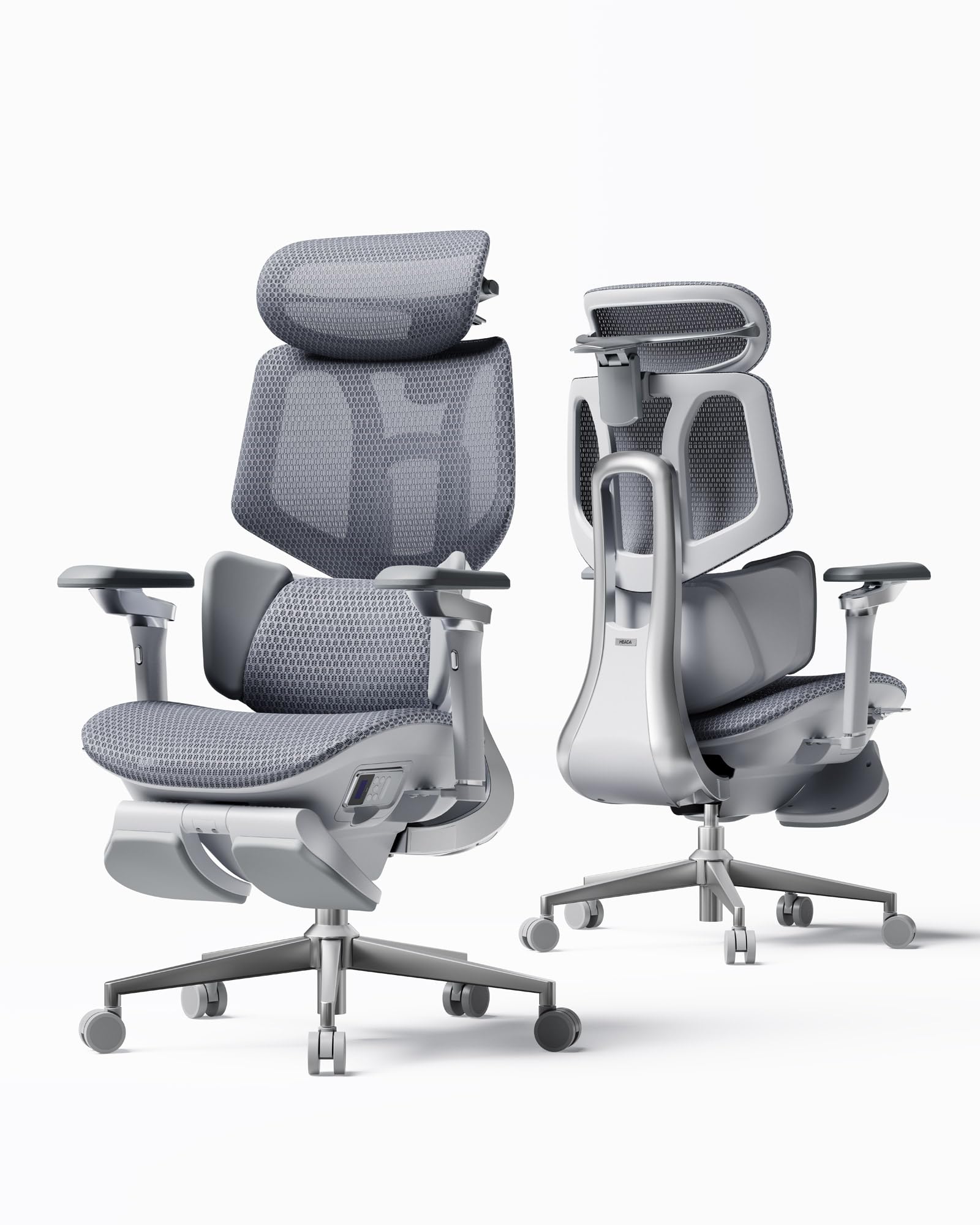
The Hbada X7 brings motorized lumbar intelligence to the pain relief conversation. Its gravity-sensing base detects your seated posture and automatically adjusts lumbar support intensity through 6D waist pillow movements, while the integrated 8D massage rollers with three-level heating (40-50°C) actively work on sore back muscles. For hip pain specifically, the ventilated seat cushion houses dual-fan cooling with three speed settings, preventing the heat and pressure buildup that worsens pelvic discomfort during extended sessions.
The 720° omnidirectional armrests rotate fully and extend 110mm, allowing you to find elbow support that takes weight off your shoulders and upper back. The 140° recline paired with the 4D headrest (70° rotation, 55mm sliding, 45mm height) enables full-body relaxation positions that decompress the lumbar spine. The aircraft-grade aluminum frame and nylon base support up to 330 lbs with quiet-roll casters suitable for all floor types.
At the upper end of the price spectrum, the X7 competes in a different league from manual chairs. Its smart features are not just gimmicks — the auto-tracking lumbar genuinely adapts as you shift from typing to reclining. Tall users above 6 feet may find the included gas cylinder limits optimal seating height, but this is addressable through replacement.
Why it’s great
- Auto-adjusting lumbar support with 6D waist pillow adapts to posture changes
- Massage and heat functions actively relieve lower back muscle fatigue
- Dual-fan cooled seat prevents hip and thigh heat buildup
- 720° armrests provide full upper body unloading during reclined positions
Good to know
- Premium price places it among the highest-cost options
- Standard gas cylinder may not suit users over 6 feet tall
- Smart features require power connection and add complexity
3. FLEXISPOT ErgoX Max Office Chair
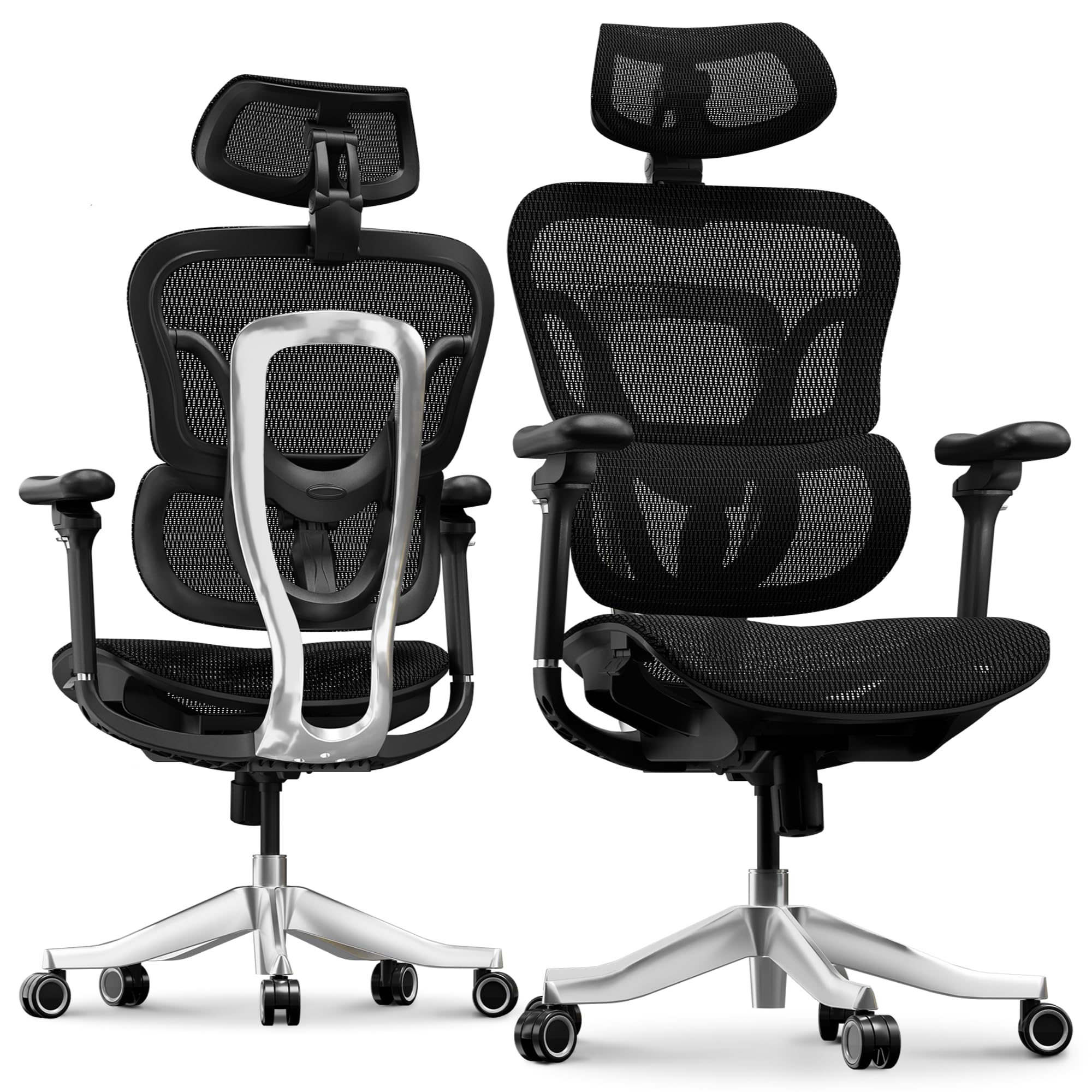
The FLEXISPOT ErgoX Max is engineered for users who need substantial weight capacity without sacrificing ergonomic precision. Its full aluminum alloy back frame and base support up to 661 lbs, making it one of the most robust chairs available for pain relief. The 4D adaptive lumbar support automatically responds to your posture shifts, providing dynamic lower back pressure that reduces fatigue without manual adjustment. For hip pain, the wide mesh seat (21.2-inch backrest width) distributes weight evenly across the pelvic area.
The 5D armrests allow height, width, depth, pivot, and angle adjustments — enough fine-tuning to unload the shoulders and prevent upper body tension from radiating into the lower back. Five-level back height adjustment lets you position the lumbar curve exactly at belt level regardless of your torso length. The electroplated chrome casters glide quietly on hard floors and carpet without marking surfaces. An optional retractable footrest adds a relaxation position that fully decompresses the lumbar spine.
At a mid-premium price point, the ErgoX Max delivers more adjustability and structural capacity than most chairs in its segment. The mesh seat stays cool during long use, and the 4D lumbar adapts smoothly. Some users note that the headrest requires fine-tuning when moving between upright and reclined positions, but overall the chair offers exceptional pain support for larger body types.
Why it’s great
- 661 lb weight capacity with aluminum alloy frame for extreme durability
- 4D adaptive lumbar support adjusts automatically to posture changes
- 5D armrests with full range of motion for shoulder unloading
- Quiet chrome casters suitable for any floor type
Good to know
- Headrest requires adjustment when switching between upright and reclined positions
- Footrest is optional and sold separately
- Mesh seat may not suit users who prefer cushioned foam support
4. Branch Verve Chair

The Branch Verve approaches lower back and hip pain through contoured structural design rather than aggressive lumbar pads. Its V-shaped suspended back is sculpted with integrated spine support that follows your natural curve as you move, providing built-in lumbar alignment without a protruding mechanism. The high-density foam seat delivers firm, consistent support that prevents the hip-sinking sensation common with softer cushions, and its 3D knit back promotes airflow to regulate temperature throughout the day.
Six adjustment points cover seat height, seat depth, tilt tension, tilt lock, lumbar height, and armrest height. The seat cushion is notably firm, designed to maintain its shape over years of use without collapse. Users with hip and joint pain report that the Verve’s contoured seat pan reduces pressure on the sit bones compared to flat-bottom chairs. The futuristic armrest design integrates smoothly with the overall aesthetic, though the arm width is narrower than some competitors at 3 inches.
In the premium tier, the Verve is priced below the Steelcase Leap while offering a more modern silhouette and dedicated spine support channel. The seat does not tilt independently, which some users find creates a slight forward slide sensation. The cushion break-in period can be firm for petite users initially, but the high-density foam rewards long-term durability.
Why it’s great
- V-shaped back with integrated spine support follows natural movement
- High-density foam seat prevents bottoming out and hip pressure
- Contoured seat pan reduces pressure on sit bones
- 3D knit back provides excellent temperature regulation
Good to know
- Armrests are narrow at 3 inches with finicky height adjustment
- Seat does not tilt independently, may cause forward slide sensation
- Firm cushion requires break-in period for users accustomed to soft seating
5. FLEXISPOT ErgoX Ergonomic Chair
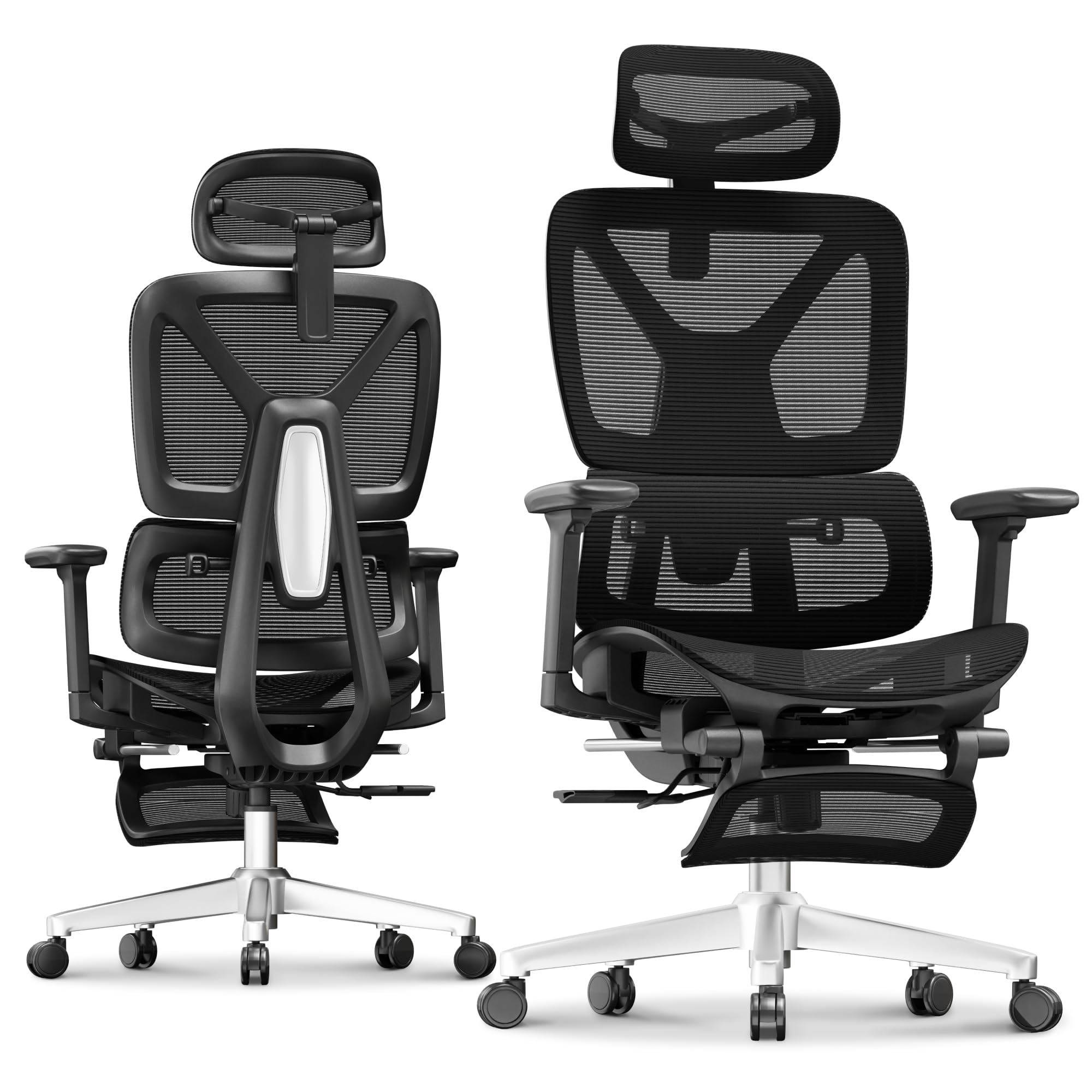
The FLEXISPOT ErgoX line offers serious ergonomic engineering at a more accessible cost than the ErgoX Max. The dynamic lumbar support responds to your movement, providing real-time lower back relief without manual cycling. The 5-level adjustable back lets you fine-tune the lumbar height, while the seat depth adjusts from 17 to 20 inches to accommodate different thigh lengths — a critical factor for hip pain prevention. The 3D adjustable headrest and 3D armrests add upper body support that reduces tension transfer to the lower spine.
Users can choose between a mesh seat for breathable cooling or a cushioned foam seat for plush hip support. The optional retractable footrest allows reclined decompression of the lumbar vertebrae. The class 4 gas lift and reinforced nylon frame support up to 400 lbs, providing stability for larger users. Assembly takes around 30 minutes with clear instructions, and the spare fasteners included in the box signal attention to build quality.
At a mid-range price, the ErgoX competes directly with chairs costing double by offering dynamic lumbar and full adjustability. The mesh seat is recommended for hot climates or users who tend to overheat, while the foam seat suits those needing additional cushioning for hip sensitivity. The non-adjustable height may not fit every user perfectly, and the headrest angle needs tweaking when transitioning between work and recline modes.
Why it’s great
- Dynamic lumbar support adjusts automatically to posture changes
- Seat depth adjustment between 17 and 20 inches accommodates various thigh lengths
- Choice between mesh seat for cooling or foam seat for hip cushioning
- 400 lb weight capacity with class 4 gas lift
Good to know
- Headrest needs adjustment when switching between work and recline positions
- Footrest is optional and adds extra cost
- Non-adjustable height may not suit all body proportions
6. Branch Ergonomic Chair
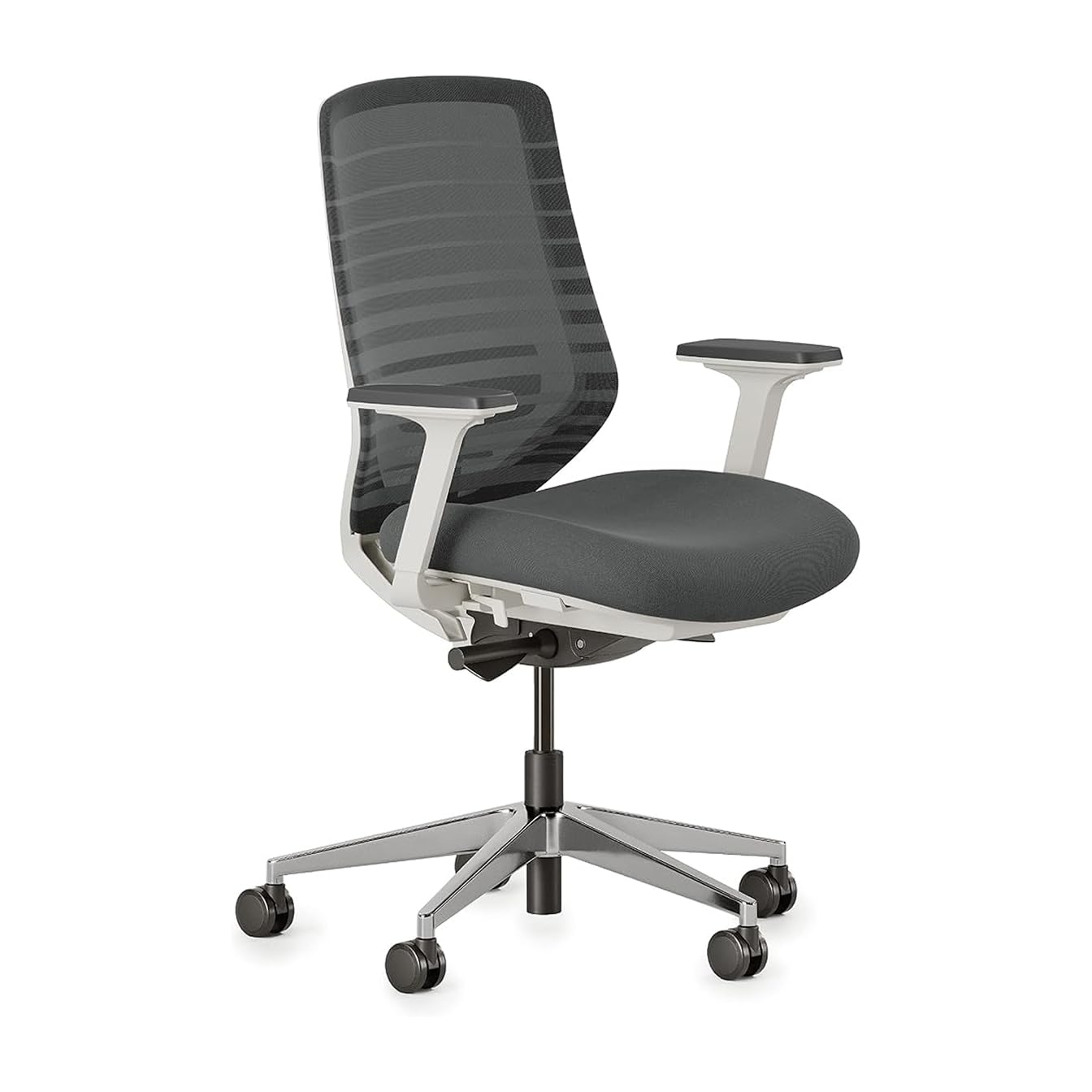
The Branch Ergonomic Chair combines a streamlined design with eight adjustment points, making it a strong contender for users who need precise tailoring for lower back and hip pain. The adjustable lumbar support moves vertically to match your spine’s natural curve, while the seat depth and height adjustments ensure your thighs rest fully on the cushion without pressure points. The breathable mesh backrest prevents heat buildup during extended sessions, which indirectly reduces hip discomfort by keeping the pelvic area cool and dry.
The contoured cushioning is firm enough to support the sit bones without creating pressure ridges. Users between 5’0″ and 5’8″ find the seat height range particularly accommodating, with the lowest setting working well for petite frames. The smooth-rolling wheels work effectively on both carpet and hard floors. Assembly takes approximately 30 minutes with five main bolts, and the metal frame under the plastic shell provides structural stability without excessive weight.
At mid-range pricing, the Branch Ergonomic Chair delivers reliable adjustability without the premium markup of its Verve sibling. The armrests lack the depth of more expensive models, with some users reporting they slide forward too easily. Tall users above 5’10” may find the backrest height limiting for full upper spine support, but for lower back and hip targeting, the adjustments cover the correct zones.
Why it’s great
- Eight adjustment points allow precise ergonomic customization
- Breathable mesh back prevents heat buildup during long sessions
- Contoured cushion supports sit bones without pressure ridges
- Smooth rolling on carpet and hard floors
Good to know
- Armrests may slide forward too easily during use
- Tall users above 5’10” may find backrest height limiting
- Lacks independent seat tilt adjustment
7. ELABEST T23 Ergonomic Mesh Office Chair
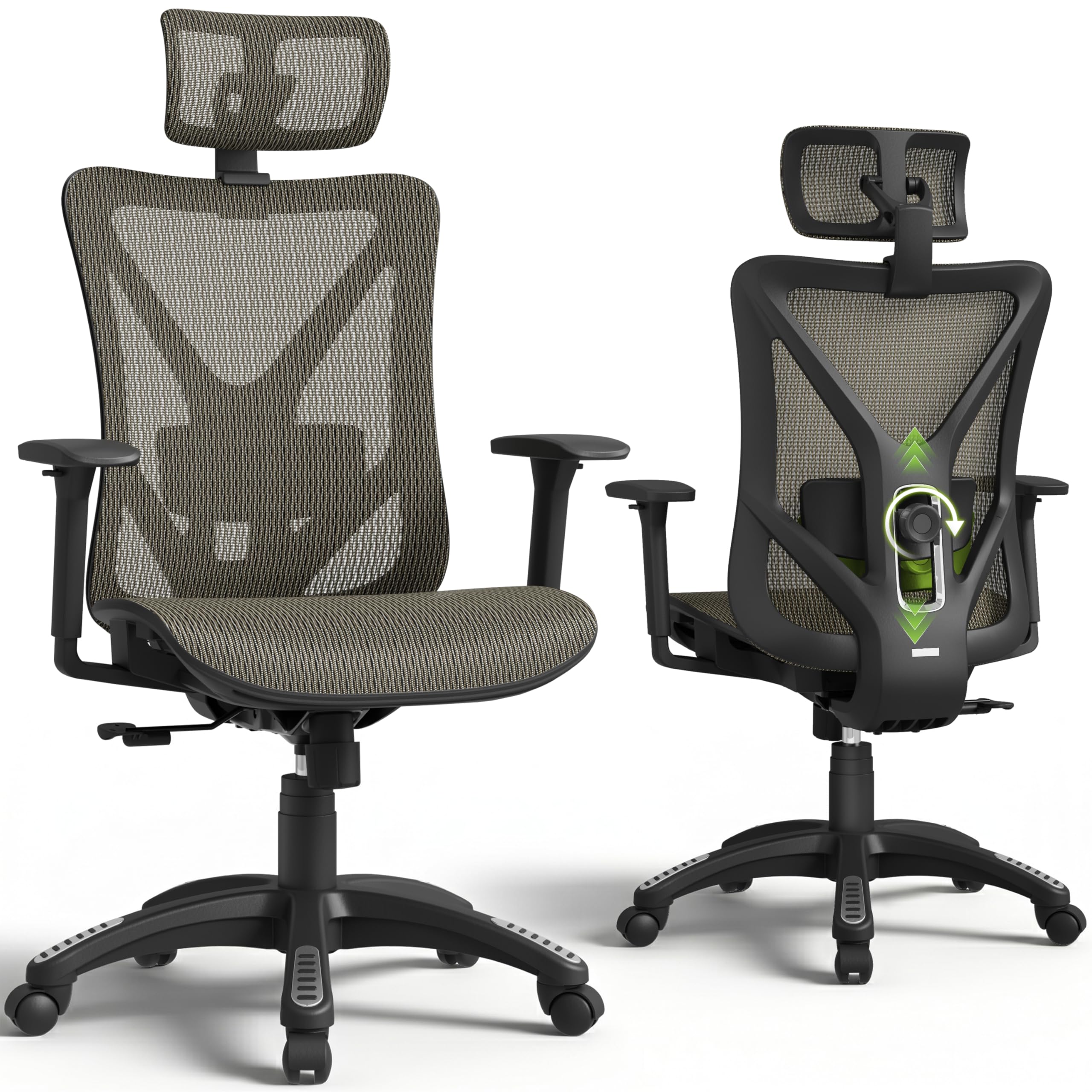
The ELABEST T23 is built around Dual-Stripe AirMesh technology that delivers 38% better airflow and 25% higher elasticity than standard mesh, keeping your back cool while the material stretches to accommodate movement without sagging. Its dual-move adaptive lumbar support offers 3 inches of vertical adjustment and 1.6 inches of forward/backward depth adjustment, giving you the ability to dial in the exact lumbar curve needed for lower back pain relief. The 3D headrest rotates 90 degrees and flips 100 degrees with 2.5 inches of height travel, while the 3D armrests adjust in height, front-back, and panel rotation to unload the shoulders.
The 3-position recline lock lets you set work, reading, and relaxation angles, while the extra-thick 27.5-inch star base and heavy-duty frame support up to 300 lbs. Silent PU hooded casters glide without scratching floors, and the waterfall seat edge promotes thigh circulation — a key feature for hip pain management. Assembly takes around 20 minutes with clear instructions, and the included spare parts indicate attention to long-term maintenance.
At a mid-range price, the T23 punches above its cost with proprietary mesh technology and dual-axis lumbar adjustment. The firm mesh seat provides consistent support without the heat retention of foam, though users accustomed to plush cushioning may find it unforgiving. Best suited for users between 5’5″ and 5’10” and under 200 lbs, the T23 performs well for those prioritizing breathability and lumbar precision.
Why it’s great
- Dual-Stripe AirMesh provides 38% better airflow than standard mesh
- Dual-move lumbar with 3″ vertical and 1.6″ depth adjustment
- Waterfall seat edge promotes thigh circulation for hip comfort
- Silent PU casters protect all floor types without noise
Good to know
- Firm mesh seat may not suit users who prefer padded cushioning
- Best performance for users between 5’5″ and 5’10” under 200 lbs
- Armrests may be too wide for smaller frames
8. ProtoArc EC200 Ergonomic Office Chair
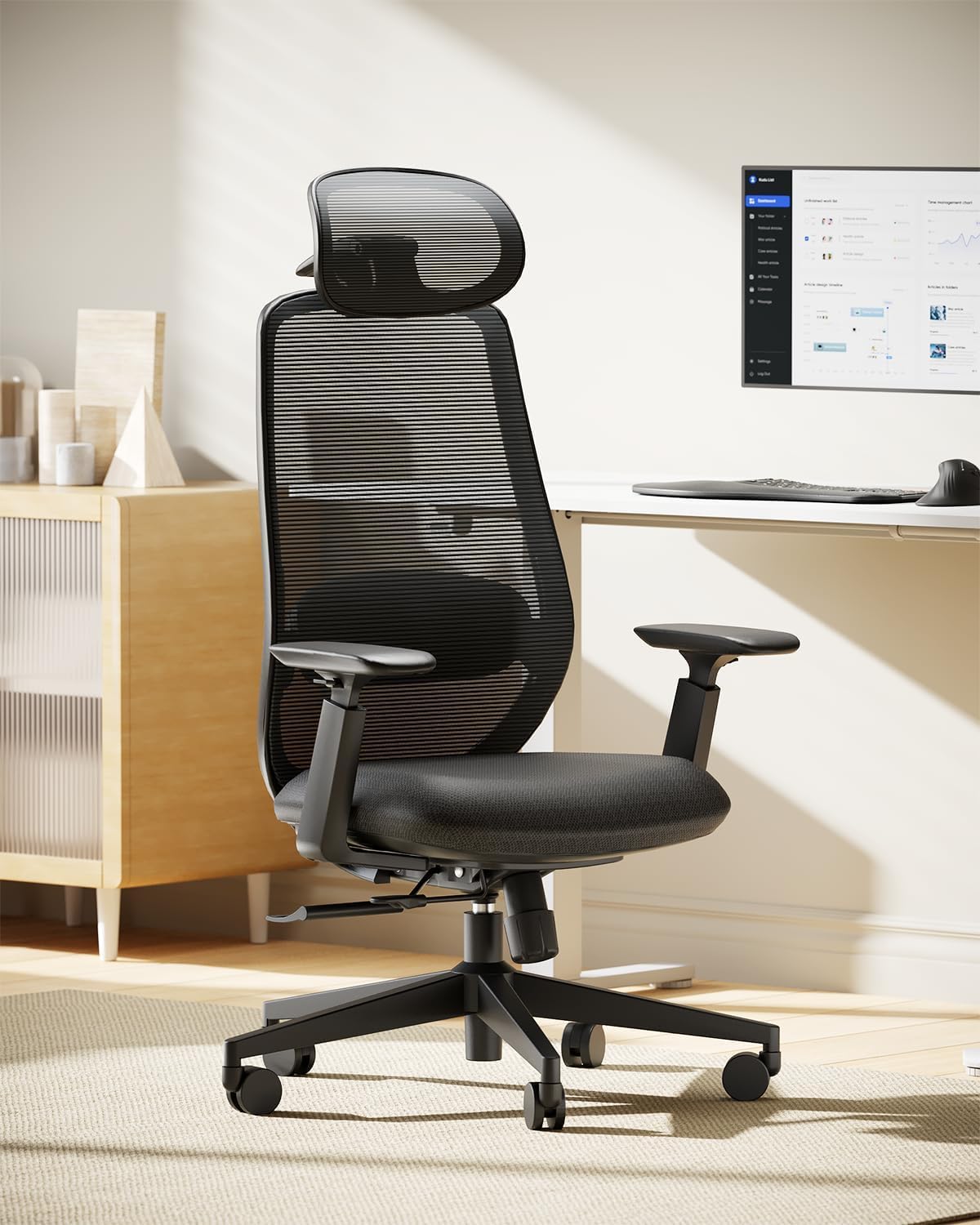
The ProtoArc EC200 is a mid-range contender focused on three-point support — head, back, and lumbar — with a design specifically contoured for users between 5’4″ and 6’0″. The lumbar support adjusts 2.36 inches vertically and 0.8 inches in depth, filling the gap between your lower back and the mesh backrest. The 55D high-density foam cushion resists collapse over time, providing firm support that prevents the hip-sinking sensation associated with softer foams. The 5-position sliding seat offers 1.97 inches of travel with instant lock, allowing you to set the pan length precisely for your thigh.
The 3D wider headrest moves 3.94 inches up and down, extends 2.76 inches in and out, pivots 75 degrees, and rotates 35 degrees to cradle the cervical spine without pushing your head forward. The 4-stage recline adapts between 90 degrees for focused work and 130 degrees for relaxation, with a tilt tension knob to adjust resistance. The mesh back promotes airflow, and the TÜV-tested class 4 gas lift meets BIFMA X5.1 and BS EN 1335 standards for safety and durability.
At a budget-friendly mid-range price, the EC200 brings rare adjustability features — particularly the sliding seat depth — to a cost that undercuts many competitors. The 55D foam is deliberately firm, which may feel hard initially but prevents the premature sagging common in cheaper cushions. Best suited for users up to 220 lbs, the chair delivers reliable support without the premium price tag of the higher-tier models.
Why it’s great
- 5-position sliding seat depth (1.97″ travel) rare in this price range
- 55D high-density foam resists collapse and prevents hip sinking
- Three-point support system aligns head, back, and lumbar
- 4-stage recline from 90° work to 130° relaxation
Good to know
- Firm seat cushion may feel hard during initial use
- Best performance for users up to 220 lbs and under 6’0″
- Lumbar depth adjustment range at 0.8″ is less than some competitors
9. SmartSeat Ergonomic Office Chair
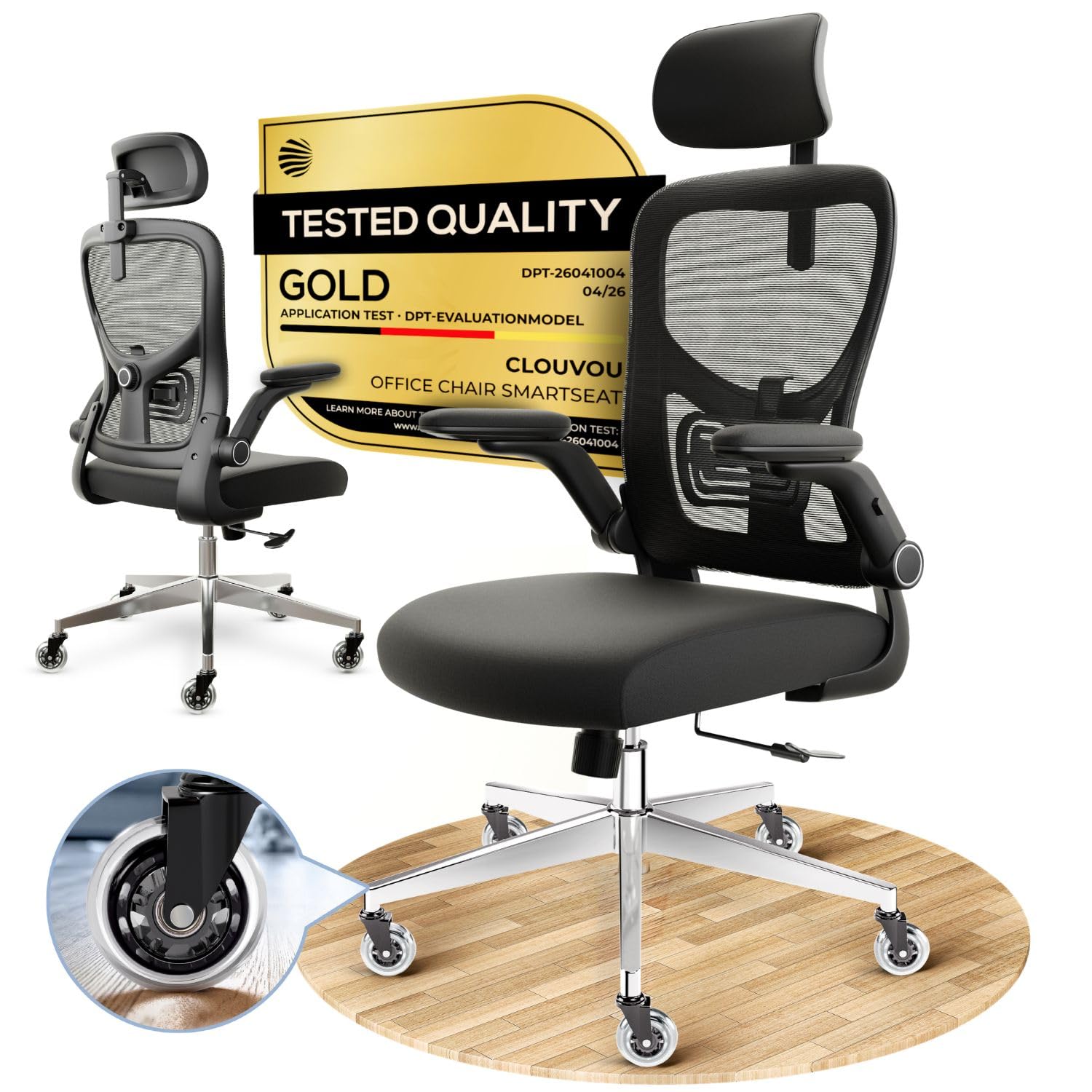
The SmartSeat chair marks the budget entry point for this pain relief guide, offering a 135-degree recline, 330 lb weight capacity, and a 3D PU leather headrest with premium breathable nylon mesh back. Its back-friendly design includes a 3-position backrest tilt and integrated lumbar support, while the 2D flip-up armrests allow you to tuck the chair under a desk when not in use. The ultra-quiet blade wheels deliver silent, smooth rolling on any surface, making it suitable for shared workspaces where noise matters.
The elastic nylon mesh seat provides airflow without the heat retention of solid padding, and the ergonomic shape follows the natural curve of the body. Assembly is straightforward with clear instructions, and the stable polymer frame holds up well under daily use. The armrests are basic but sufficient, and the flip-up feature adds flexibility for users who alternate between sitting and standing setups. The chair’s design is simple and elegant, fitting well in home office or study environments.
At a budget-friendly price, the SmartSeat delivers the essential ergonomic features — recline, lumbar support, and adjustability — without the finer controls of more expensive models. The lumbar support is integrated rather than independently adjustable, which limits customization for specific back curves. Users with severe lower back or hip pain may find the support insufficient for all-day relief, but for intermittent use or as a secondary chair, it offers solid value.
Why it’s great
- 135-degree recline with 3-position backrest tilt
- Ultra-quiet blade wheels glide silently on any floor
- Flip-up armrests enable easy desk storage
- 330 lb capacity with stable polymer frame
Good to know
- Lumbar support is integrated and not independently adjustable
- Basic armrests lack the depth of premium models
- Mesh seat may not provide enough cushioning for all-day hip comfort
FAQ
Should I choose a mesh seat or foam cushion for hip pain?
How does seat depth adjustment affect lower back pain?
Can a chair with built-in massage help with chronic lower back pain?
Is a high back or mid-back chair better for lower back and hip pain?
Final Thoughts: The Verdict
For most users, the best chair for lower back and hip pain winner is the Steelcase Leap because its independent lumbar firmness dial and Natural Glide System actively support the spine and hips through every movement. If you want adaptive smart technology with massage and cooling, grab the Hbada X7 Smart. And for heavy-duty support with extreme weight capacity and 4D lumbar tracking, nothing beats the FLEXISPOT ErgoX Max.

Mo Maruf
I created WellFizz to bridge the gap between vague wellness advice and actionable solutions. My mission is simple: to decode the research and give you practical tools you can actually use.
Beyond the data, I am a passionate traveler. I believe that stepping away from the screen to explore new environments is essential for mental clarity and physical vitality.