Our readers keep the lights on and my smoothie glass nicely filled. As an Amazon Associate, I earn from qualifying purchases.
An eight-millimeter sensor and a one-inch sensor both claim twelve megapixels, but that number hides the real difference—dynamic range, noise floor, and the ability to pull detail from shadows without introducing grain. For photographers who plan to print or grade footage, the size of the silicon inside matters more than any marketing number on the box.
I’m Mohammad Maruf — the founder and writer behind WellFizz. I’ve spent hundreds of hours cross-referencing manufacturer spec sheets, tearing through customer long-term reliability reports, and comparing real-world still frames and video samples across the sensor-size spectrum to build this guide.
After evaluating over a dozen models across 1/1.3-inch, one-inch, Micro 4/3, and full-frame sensor classes, these are the drones that actually deliver on their resolution promises. This is the definitive guide to choosing the best drone for photography sensor quality that money can buy.
How To Choose The Best Drone For Photography Sensor Quality
Sensor quality defines the ceiling of your aerial photography. A drone with a superior sensor captures richer colors, handles high-contrast scenes without blown highlights, and delivers clean images long after the sun sets. Here are the three factors that separate a great photography drone from a mediocre one.
Physical Sensor Size
A 1/1.3-inch sensor collects roughly one-third the light of a one-inch sensor per pixel given the same resolution. For landscape, real estate, and night photography, the one-inch class is the practical entry point. The larger the sensor, the more tonal information you retain in shadows and highlights, and the better your image holds up under sharpening in post.
Bit Depth and Color Science
10-bit color supports over a billion colors compared to 8-bit’s 16.7 million. Drones that shoot 10-bit Dlog-M or similar flat profiles give you room to grade without banding. For photographers who value color grading flexibility, bit depth is as critical as resolution.
Stabilization Method
A three-axis mechanical gimbal provides true horizon leveling and eliminates micro-jitters that no electronic stabilization can fix. EIS (electronic image stabilization) crops into your frame and can introduce warping near the edges during fast movement. For photography, a physical gimbal is mandatory.
Quick Comparison
On smaller screens, swipe sideways to see the full table.
| Model | Category | Best For | Key Spec | Amazon |
|---|---|---|---|---|
| DJI Mavic 2 Pro | Premium | Color Grading & Print | 1-inch CMOS, 10-bit Dlog-M | Amazon |
| Autel EVO 2 Pro V3 | Premium | Low-Light Photography | 1-inch CMOS, 6K HDR | Amazon |
| DJI Mini 5 Pro Fly More Combo Plus | Mid-Range | Travel & Portability | 1-inch CMOS, 4K/60fps HDR | Amazon |
| DJI Mini 4 Pro Bundle | Mid-Range | Omnidirectional Sensing | 1/1.3-inch CMOS, 4K HDR | Amazon |
| DJI Mini 5 Pro | Mid-Range | Beginner Cinematic | 1-inch CMOS, 4K/60fps HDR | Amazon |
| Antigravity A1 Explorer | Mid-Range | 360° Immersive Video | Dual 1-inch Micro-OLED | Amazon |
| DJI Flip Fly More Combo | Mid-Range | Safety & Portability | 1/1.3-inch CMOS, 4K/60fps | Amazon |
| Bingchat AE86 Pro Max | Entry-Level | Payload Release & Night Mode | 48MP, 3-Axis Gimbal | Amazon |
| Bingchat AE Pro Serial | Entry-Level | Obstacle Avoidance | 48MP, 3-Axis Gimbal + EIS | Amazon |
| Potensic ATOM 3 Fly More | Entry-Level | Long Total Flight Time | 1/1.3-inch CMOS, 4K/60fps | Amazon |
| HOVERAir X1 PRO | Entry-Level | Action & Hands-Free Use | 4K/60fps, 2-Axis Gimbal | Amazon |
| DJI Flip | Entry-Level | Beginner Social Sharing | 1/1.3-inch CMOS, 4K/60fps | Amazon |
| K600PRO GPS Drone | Entry-Level | Budget Controller Display | 4K, 3-Axis Gimbal + EIS | Amazon |
In‑Depth Reviews
1. DJI Mavic 2 Pro

The DJI Mavic 2 Pro remains a staple in aerial photography because of its one-inch 20-megapixel CMOS sensor with a Hasselblad color profile. The adjustable aperture (f/2.8 to f/11) gives photographers direct exposure control—impossible on drones with fixed apertures—allowing you to reduce shutter speed without stacking ND filters in ideal light.
The 10-bit Dlog-M color profile captures over a billion colors, which translates to smooth gradients and flexible highlight recovery in post. Users consistently report that real-world flight time hovers around 25 minutes, and the 360-degree obstacle avoidance provides a safety margin when composing complex shots near trees or structures.
For photographers who prioritize color grading latitude and a proven sensor platform, the Mavic 2 Pro still competes with newer models in core image fidelity. The Hasselblad natural color solution produces accurate skin tones right out of the camera, reducing the need for heavy correction in portrait and real estate work.
Why it’s great
- Adjustable aperture gives full exposure control without ND filters
- 10-bit Dlog-M provides excellent color grading flexibility
- Hasselblad color science produces accurate natural tones
Good to know
- Real-world flight time is around 25 minutes
- Older design compared to newer Air series models
2. Autel Robotics EVO 2 Pro V3
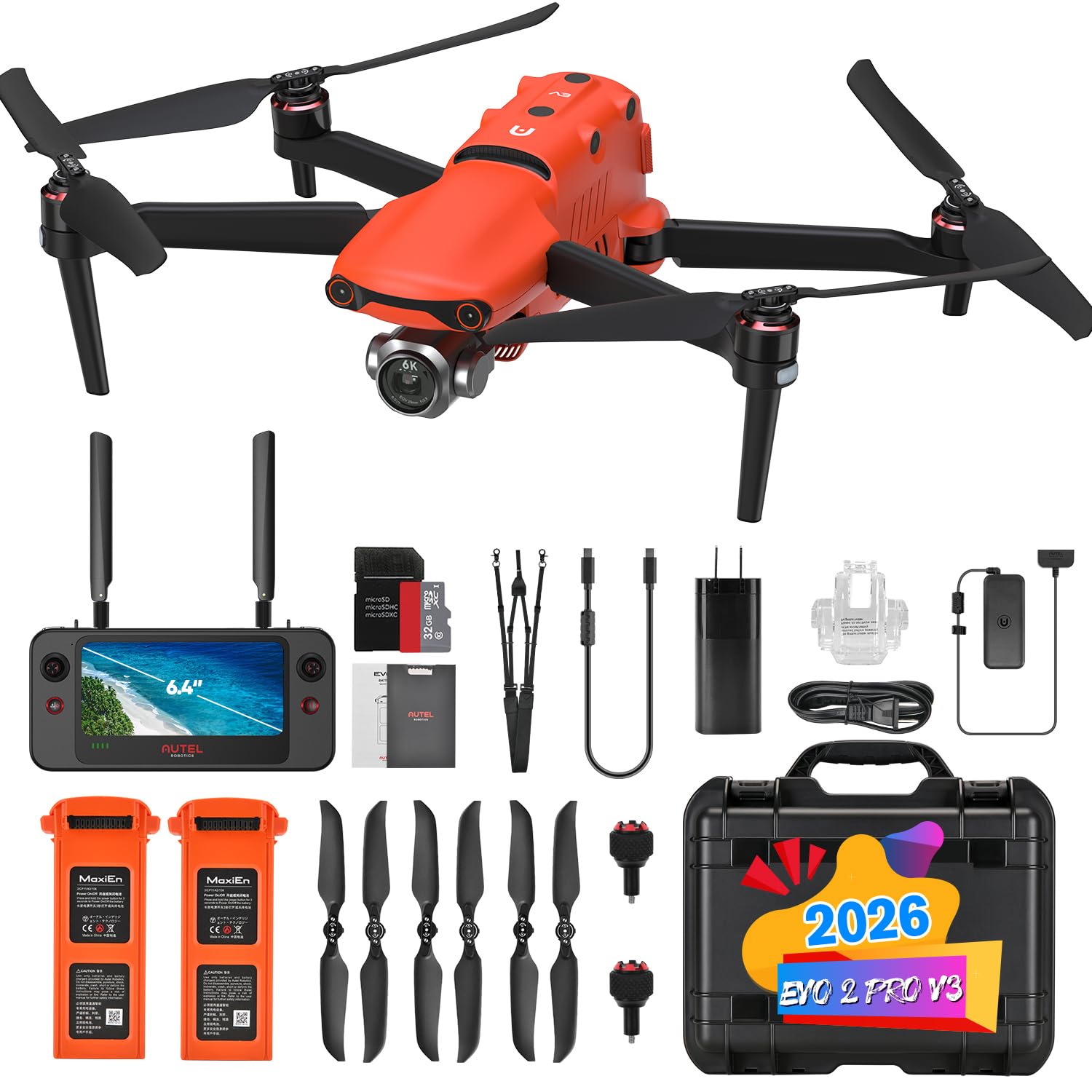
The Autel EVO 2 Pro V3 uses a one-inch 20-megapixel CMOS sensor that captures 6K HDR video with 12-bit DNG photos. The adjustable aperture (f/2.8 to f/11) offers the same exposure flexibility as the Mavic 2 Pro but with higher ISO headroom, making it a strong choice for low-light aerial photography. The Moonlight Algorithm 2.0 system pushes the ISO to 44,000, which is useful for cityscapes and twilight shoots.
It features 360-degree obstacle avoidance with 12 visual sensors, providing robust protection during complex flight paths. The controller has a 6.4-inch OLED screen that remains readable in bright sunlight. The 15-kilometer SkyLink 2.0 transmission range holds a stable 2.7K live feed over long distances.
Users who need to shoot in coastal or rain-prone environments will appreciate the IP43 controller rating and the sturdy aircraft construction. The battery life averages 40 minutes per charge, allowing longer shooting sessions without mid-flight swaps. The larger sensor and higher dynamic range give editors significant flexibility when recovering shadow detail.
Why it’s great
- 6K HDR with 12-bit DNG for exceptional post-production flexibility
- Adjustable aperture from f/2.8 to f/11
- Excellent low-light performance with ISO up to 44,000
Good to know
- Charging batteries may require multiple power cycles to initiate
- Controller interface differs significantly from DJI layout
3. DJI Mini 5 Pro Fly More Combo Plus
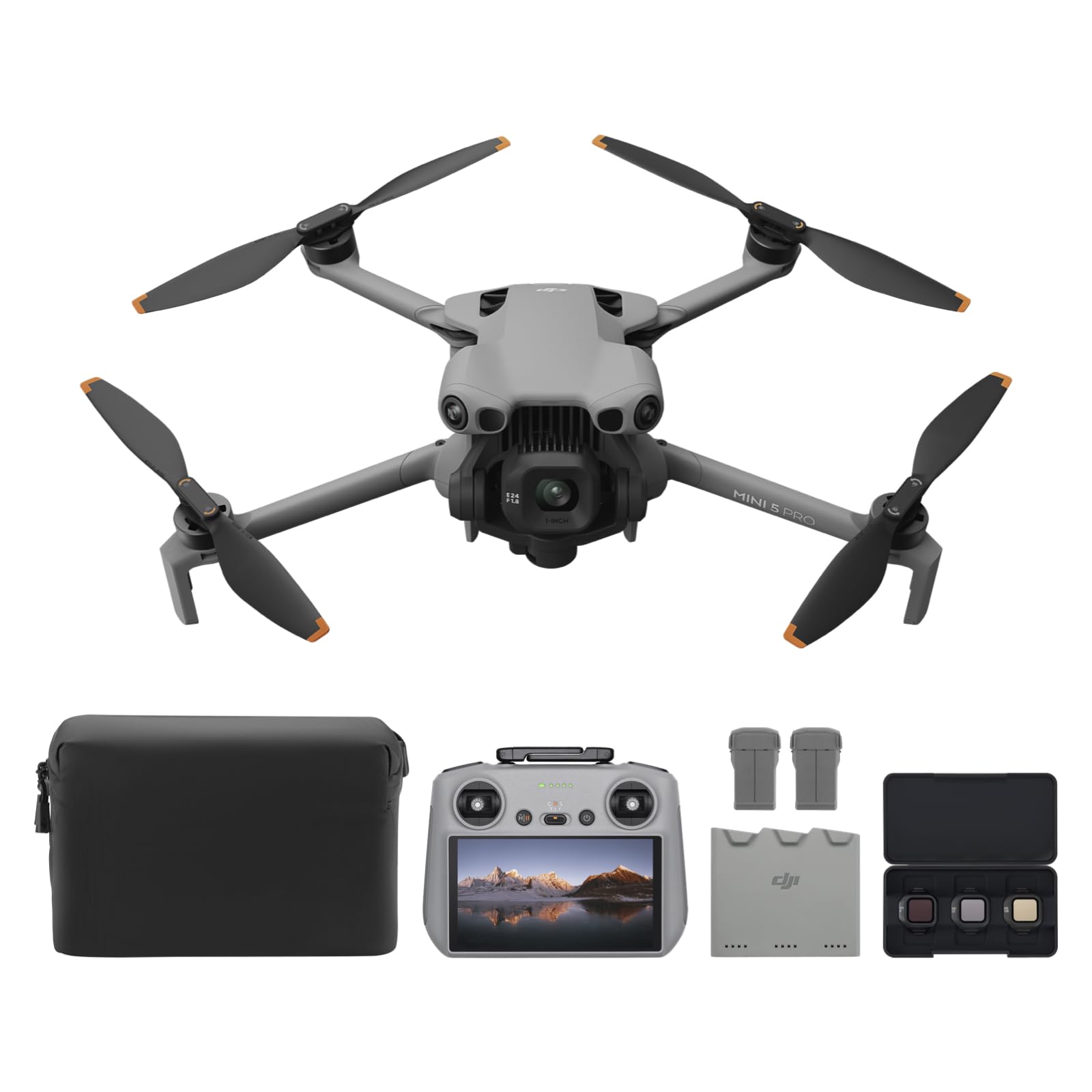
The DJI Mini 5 Pro Fly More Combo Plus packs a one-inch 50-megapixel sensor into a frame that weighs 249 grams. The 4K/60fps HDR video captures subtle tonal transitions, and the 225-degree gimbal rotation allows creative vertical shots that other sub-250g drones struggle to achieve. The 52-minute flight time with the extended battery provides enough endurance for sunrise-to-midday shoots without returning to base.
Omnidirectional obstacle sensing with forward-facing LiDAR and vision sensors makes it safe for less experienced pilots to navigate tight spaces. The 42GB internal storage eliminates the need for a microSD card during shorter shoots, and the 20-kilometer video transmission keeps the feed stable in open terrain. The ActiveTrack 360° mode tracks subjects reliably during cycling or hiking.
The Fly More Combo Plus includes three extended batteries, ND filters, and a charging hub, all in a compact shoulder bag. The larger batteries push the total weight over 250g, requiring FAA registration, but the extra flight time is worth the paperwork for travel photographers covering wide landscapes.
Why it’s great
- One-inch CMOS in a sub-250g platform
- True vertical filming without cropping
- Extended 52-minute flight time with plus batteries
Good to know
- Extended batteries push weight over 250g, requiring FAA registration
- DJI Care Refresh is not available for US customers
4. DJI Mini 4 Pro Fly More Combo Plus Bundle
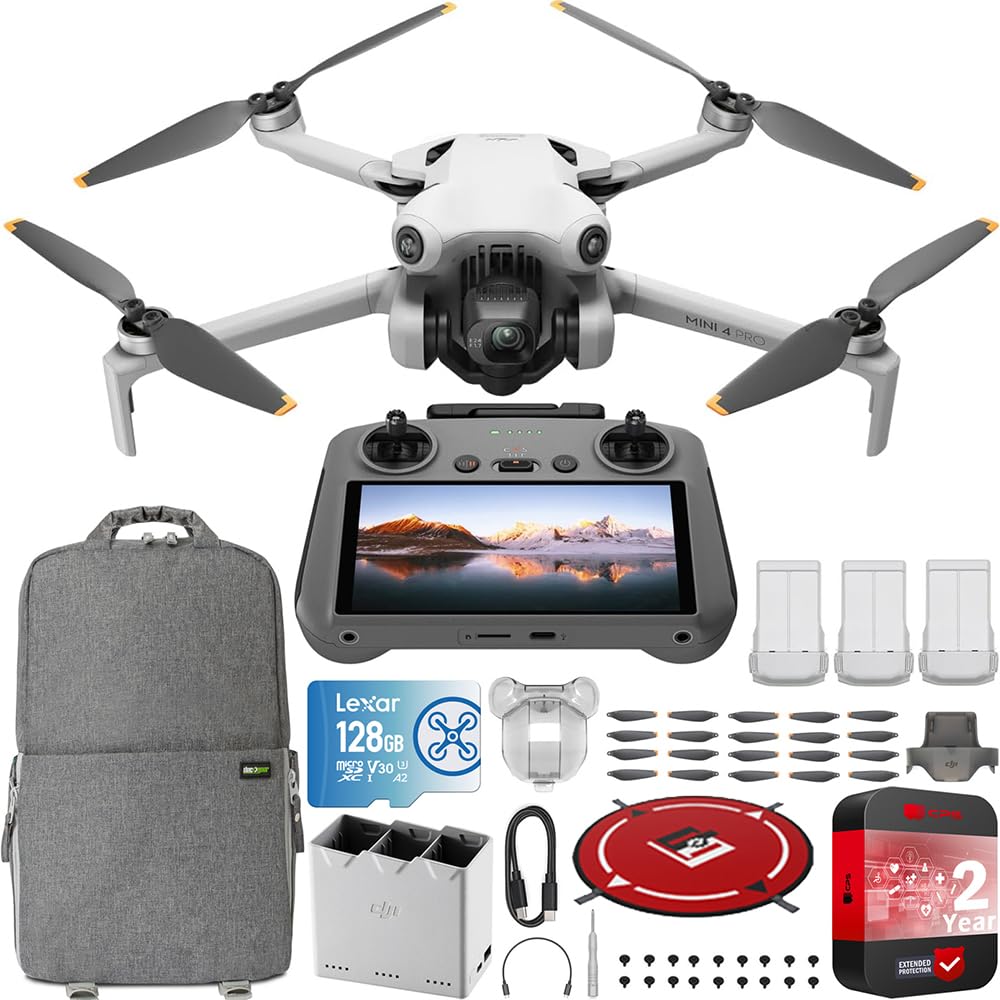
The DJI Mini 4 Pro combines a 1/1.3-inch 48-megapixel sensor with Omnidirectional Obstacle Sensing, tracking obstacles from every angle. The 4K/60fps HDR video looks sharp in well-lit conditions, and the 20-kilometer FHD transmission ensures a stable feed for long-range flights. The 2026 bundle includes extended batteries, a backpack, landing pad, and a 128GB memory card, making it an all-in-one solution for traveling photographers.
The ActiveTrack 360° system keeps subjects centered in the frame, and the lightweight design (under 249g with the standard battery) allows travel without FAA registration in most regions. The vertical video function simplifies social media content creation by shooting directly in portrait orientation without post-processing.
The bundle includes the DJI RC 2 controller with a built-in screen, eliminating phone compatibility issues. The extended batteries in the Fly More Plus combo add about 47 minutes per charge, but they push the weight above the 250g threshold, so check local regulations before using them for travel.
Why it’s great
- Omnidirectional obstacle sensing provides a high safety margin
- Sub-250g with standard battery, no registration needed
- All-in-one bundle with backpack, landing pad, memory card
Good to know
- Smaller 1/1.3-inch sensor limits low-light dynamic range versus one-inch models
- Extended batteries require FAA registration
5. DJI Mini 5 Pro
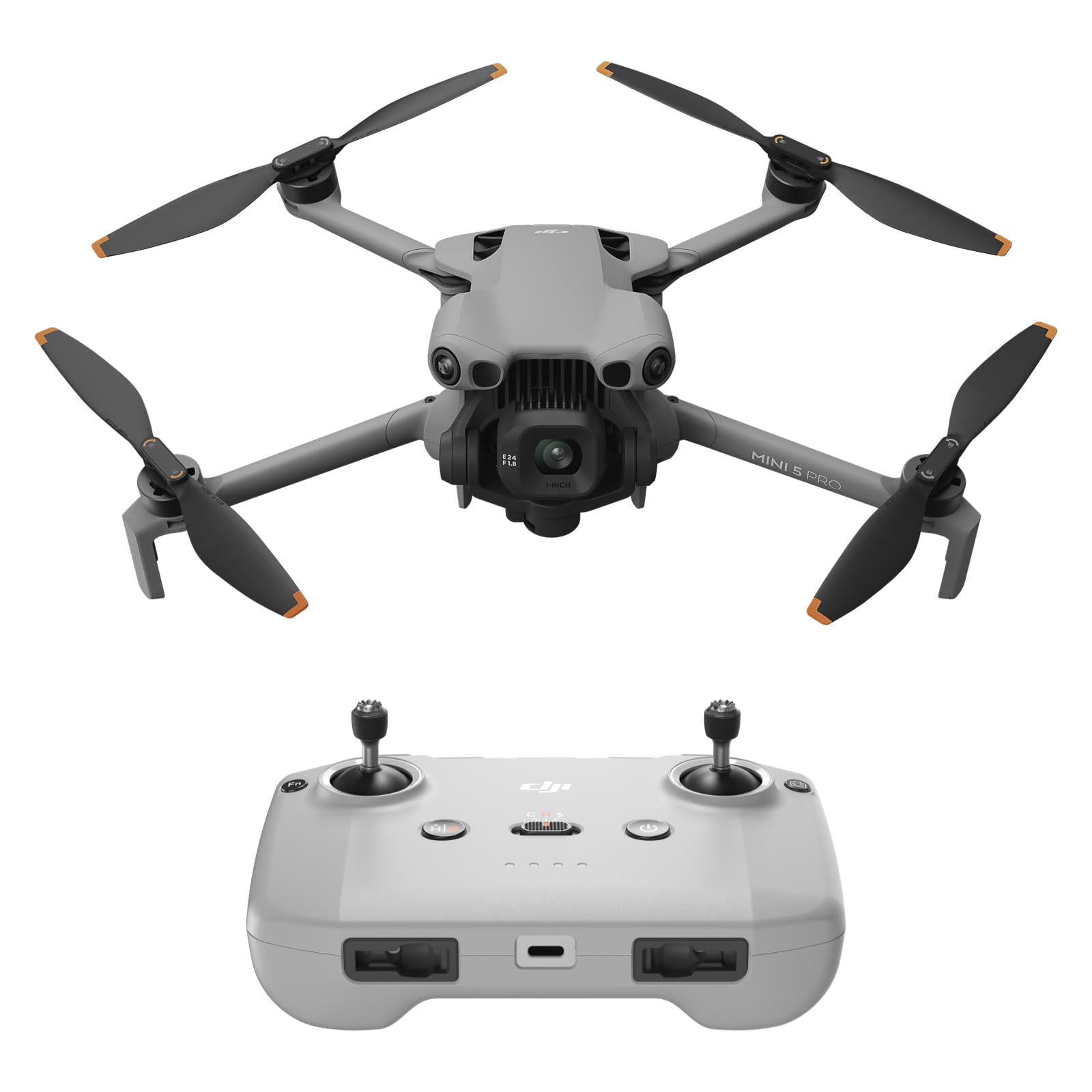
The DJI Mini 5 Pro brings a one-inch 50-megapixel sensor to a 249-gram package, offering professional-grade image quality without registration. The 4K/60fps HDR video provides a dynamic range that competes with larger drones from just a few years ago, and the 225-degree gimbal rotation allows vertical and Dutch-angle shots not possible on fixed-gimbal models.
The Nightscape Omnidirectional Obstacle Sensing uses forward-facing LiDAR and vision sensors to detect obstacles in all directions, making it safer to shoot at dusk and dawn. The 36-minute standard battery gives enough time for most shoots, and the 20-kilometer transmission range keeps the feed stable.
The 42GB internal storage is a practical feature for shooters who prefer to fly without worrying about SD cards. The upgraded ActiveTrack 360° is responsive enough to track cyclists and runners, making it a strong choice for outdoor sports photography. The small size folds down to palm dimensions, fitting easily into a jacket pocket.
Why it’s great
- One-inch CMOS in a 249g frame requires no registration
- 225-degree gimbal enables creative vertical and angled shots
- 42GB internal storage eliminates need for SD card on short shoots
Good to know
- Standard battery provides 36 minutes versus 52 minutes on plus model
- Small sensor still limits performance in very low light
6. Antigravity A1 Explorer Bundle
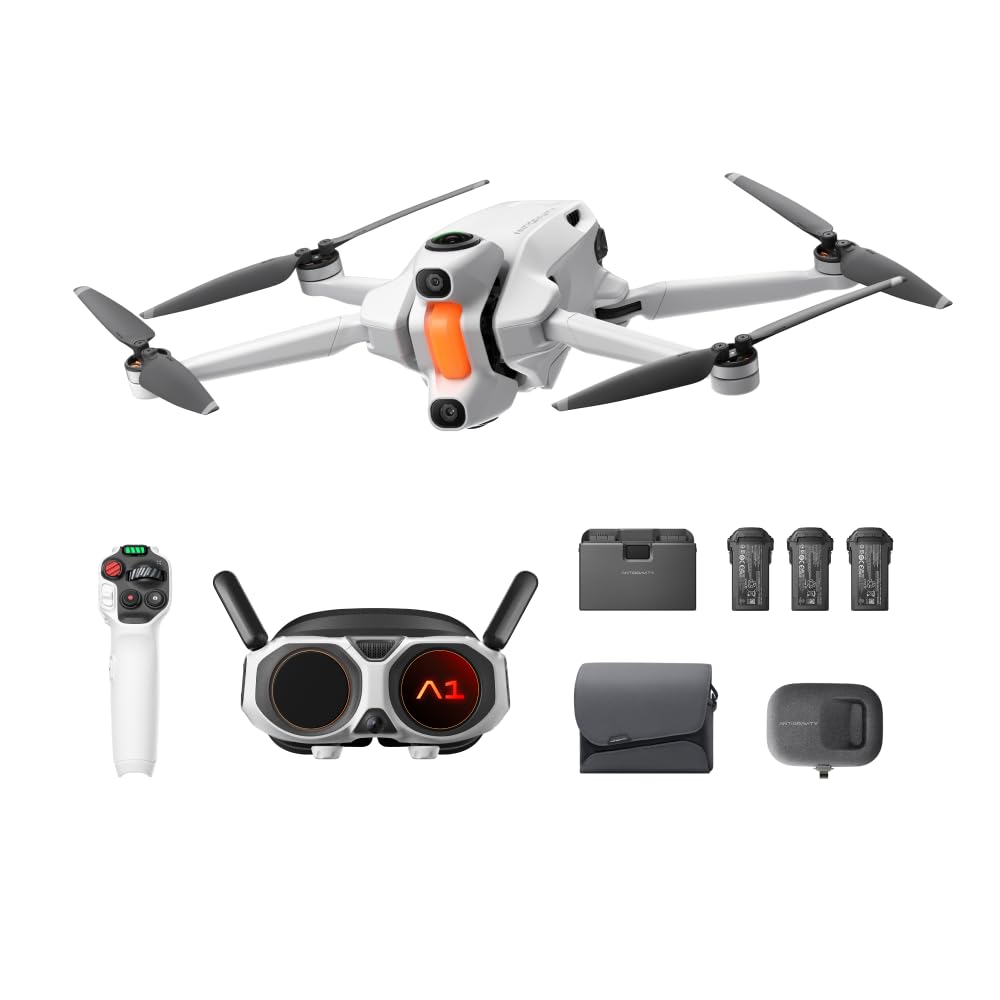
The Antigravity A1 Explorer takes a different approach to sensor quality by using dual one-inch Micro-OLED panels inside its Vision Goggles for an immersive 90-degree field of view. The 360-degree 8K video captures every angle simultaneously, allowing you to reframe your footage after the flight without missing a shot. This workflow is a significant time-saver for photographers who shoot one-take flights over complex scenes.
The 249-gram drone can fly with the standard battery or swap to a high-capacity battery for up to 39 minutes. The FreeMotion mode uses point-to-fly motion control, making it accessible for beginners, while the FPV mode gives experienced pilots wrist-based directional control. The automatic editing software reframes your 360-degree footage into cinematic film clips.
The Omnidirectional Obstacle Avoidance system fuses 360-degree sensing with front and downward binocular vision. The Sky Path feature lets you create automatic flight paths, and the Deep Track mode keeps subjects centered in the frame. The included Vision Goggles and Grip Controller create a complete immersive flying experience that standard camera drones cannot match.
Why it’s great
- 8K 360-degree video allows recomposition in post-production
- Sub-249g with standard battery; up to 39 minutes with extended battery
- All-in-one bundle includes Vision Goggles and Grip Controller
Good to know
- Premium price reflects the 360-degree capture system
- Image quality is not comparable to a dedicated stills camera drone
7. DJI Flip Fly More Combo With RC 2
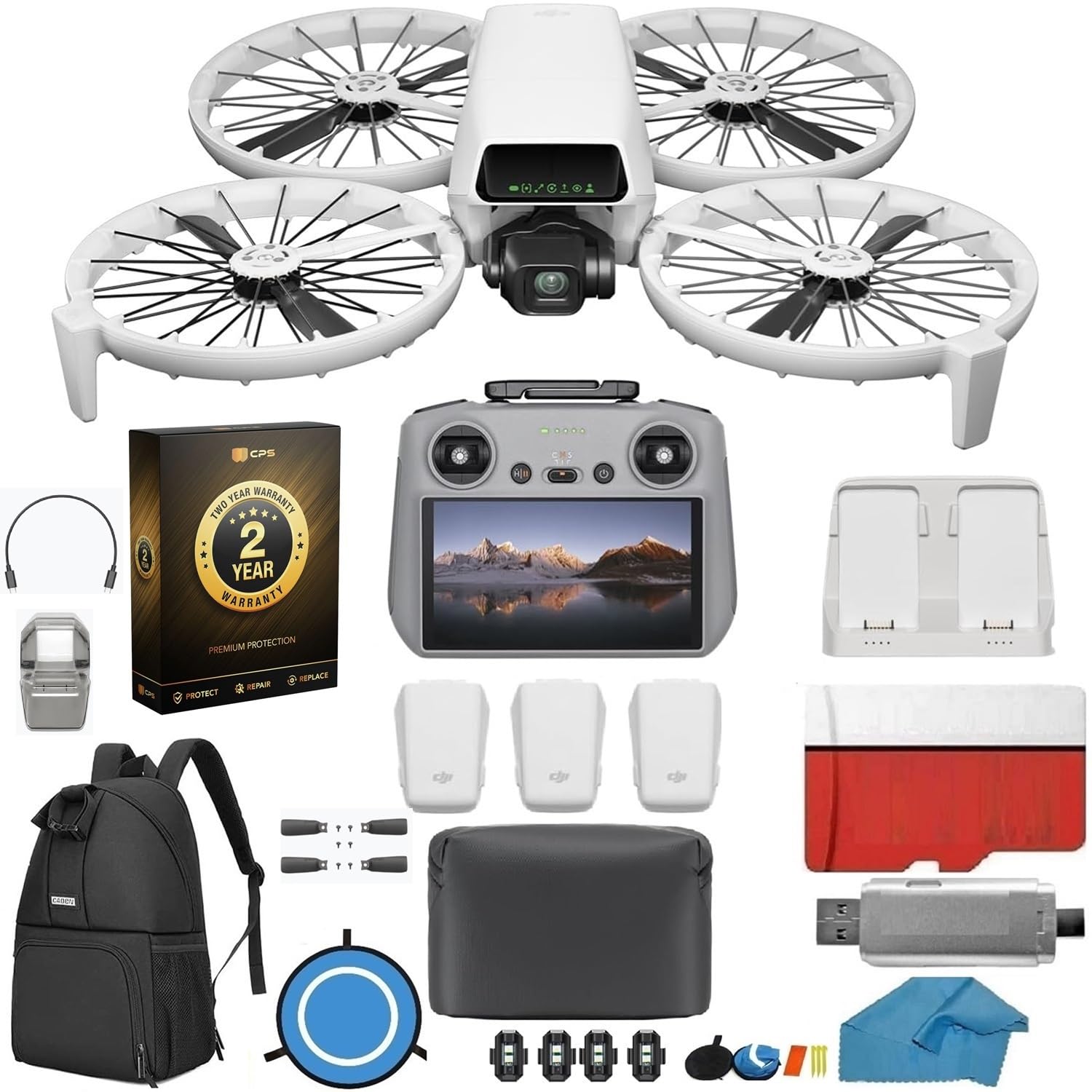
The DJI Flip Fly More Combo includes the DJI Flip drone with the RC 2 remote controller, three batteries, a parallel charging hub, and a bundle of accessories including a 128GB SD card and strobe lights. The Flip’s 1/1.3-inch CMOS sensor captures 4K/60fps HDR video and 48-megapixel stills, and the full-coverage carbon fiber propeller guards protect against crashes while keeping the weight under 249 grams.
The three batteries provide roughly 93 minutes of total flight time, and the parallel charging hub keeps all three batteries ready to go in one charge cycle. The subject tracking feature keeps the subject focused during hikes or parties, acting as an automated cinematographer. The 13-kilometer O4 transmission range provides a stable feed even in moderately dense Wi-Fi environments.
The included strobe lights add visibility for twilight flying, and the 128GB SD card provides over three hours of 4K footage. The RC 2 controller has a bright screen that stays readable in direct sunlight. This bundle is ideal for creators who want a complete kit without buying accessories separately.
Why it’s great
- Full-coverage propeller guards provide crash protection
- Three batteries provide roughly 93 minutes of total flight time
- Comprehensive bundle includes SD card and strobe lights
Good to know
- 1/1.3-inch sensor lacks the dynamic range of one-inch sensors
- Propeller guards slightly reduce top speed in sport mode
8. Bingchat AE86 Pro Max
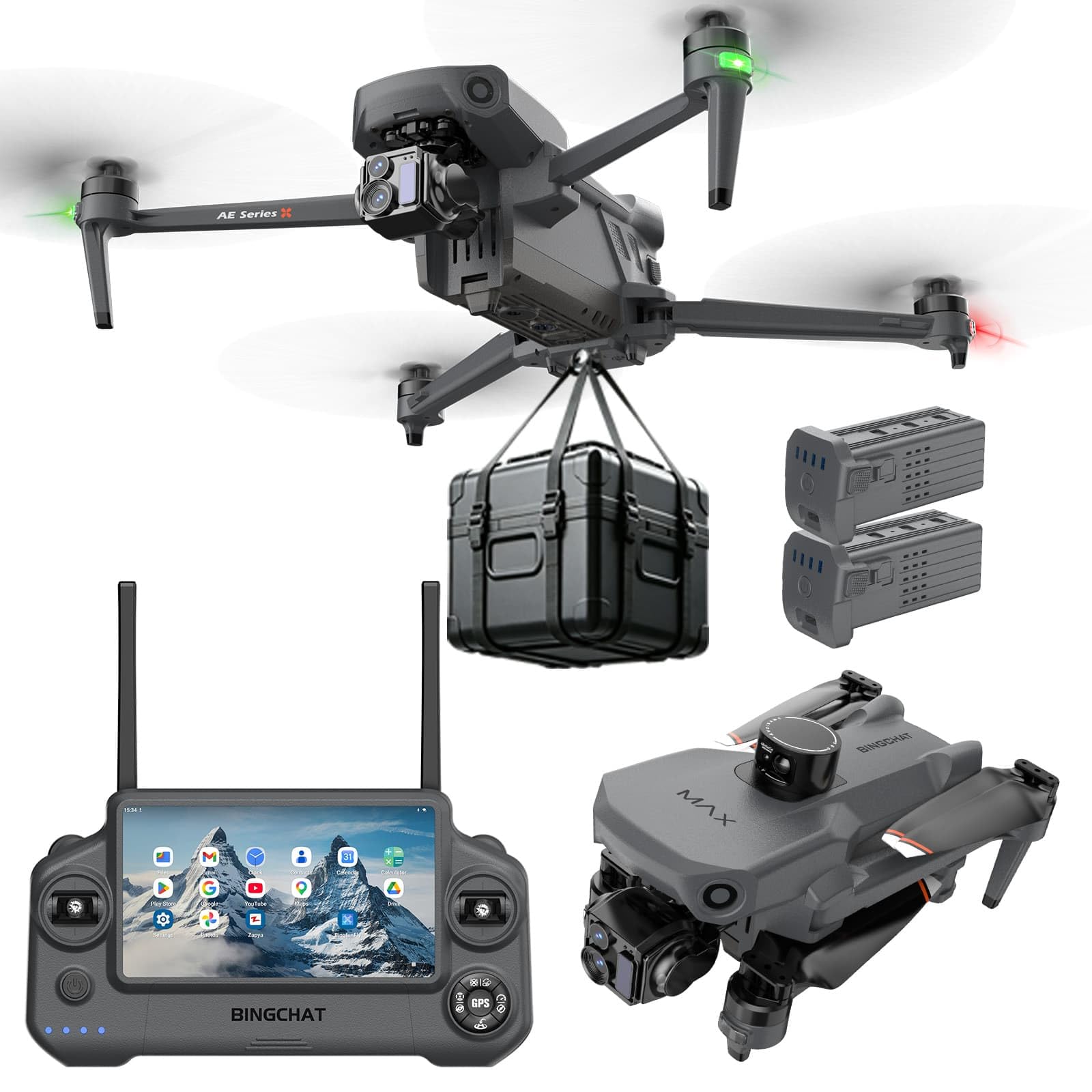
The Bingchat AE86 Pro Max targets users who want a large, feature-rich drone with a built-in tablet controller, 360-degree laser obstacle avoidance, and a payload release function. The 3-axis gimbal with EIS (electronic image stabilization) keeps footage steady during normal flight, and the 110-degree field of view provides a wide perspective that is useful for panoramic landscapes.
The 90-minute total flight time across two batteries allows extended shooting sessions. The 20x digital zoom and bottom camera give you optional framing flexibility, and the fill-light night mode helps capture detail in low-light environments. The Android tablet controller with Google services lets you download third-party apps directly to the controller.
Payload release allows you to drop small items during flight, adding a toy-like functionality not found on camera-focused drones. The FAA Declaration of Compliance ensures you are flying within US regulations. The build quality feels substantial but the gimbal stabilization is not as precise as the three-axis mechanical gimbals on DJI or Autel drones.
Why it’s great
- Large Android tablet controller with Google Play support
- 360-degree laser obstacle avoidance improves flight safety
- Payload release adds unique functionality
Good to know
- Image quality cannot match DJI or Autel for post-production work
- EIS is less reliable than a optical three-axis gimbal
9. Bingchat AE Pro Serial
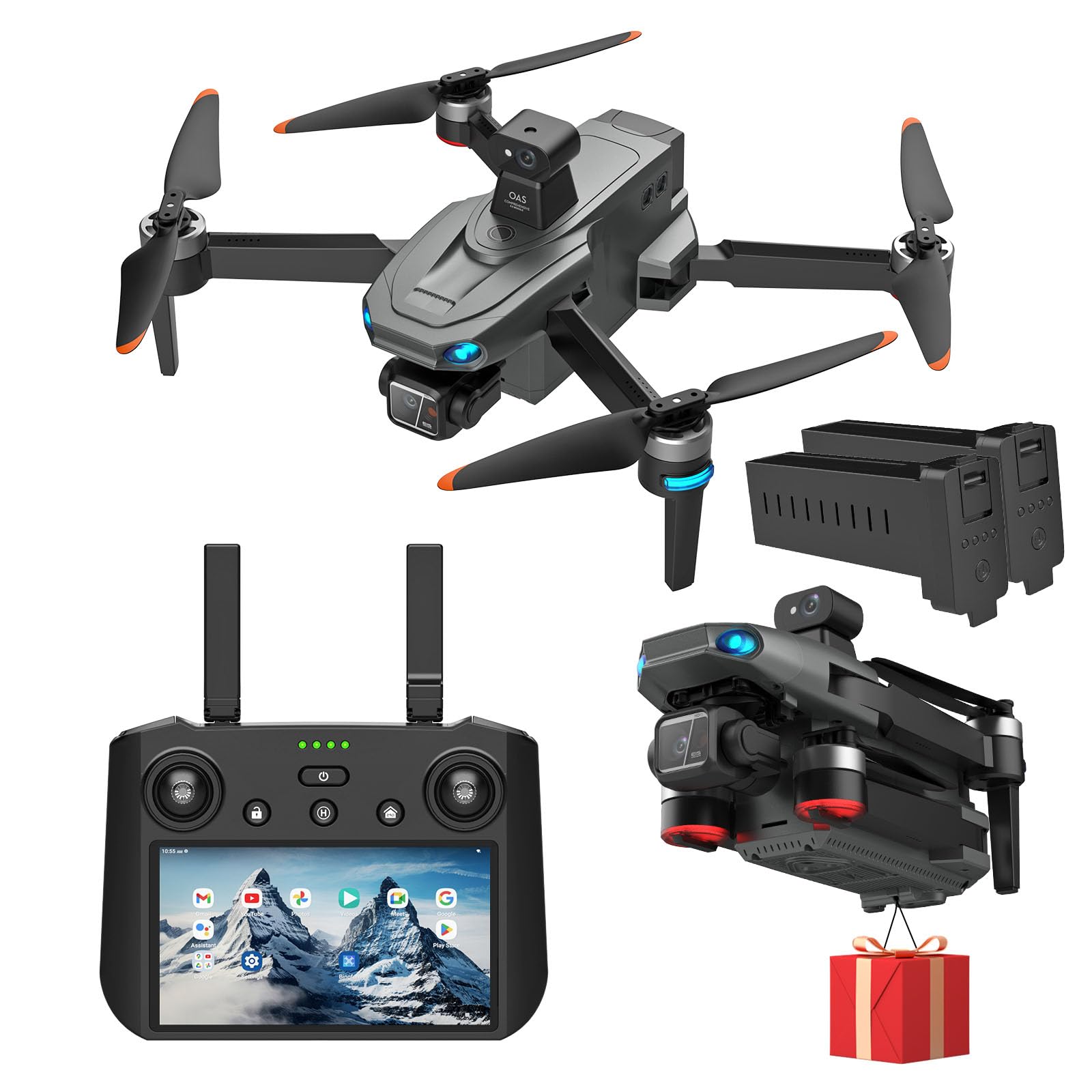
The Bingchat AE Pro Serial drone provides a tablet controller with Google Play, 4K HD recording, GPS Follow Me, and 360-degree obstacle avoidance at a price that undercuts most established mid-range options. The 3-axis gimbal combined with EIS delivers smooth footage in gentle wind conditions, and the 5-mile transmission range holds a stable feed over open terrain.
The two included batteries give a total dynamic flight time of approximately 84 minutes. The tablet controller supports social media apps, allowing you to stream or edit photos directly from the controller without connecting a phone. The payload release function adds a novel element for recreational users who want to drop small items during flight.
The build quality is solid for the price bracket, and users report that the Follow Me mode tracks reliably in open areas. The low-battery auto-return and find-the-drone functions provide peace of mind for newer pilots. For the money, you get a very feature-rich package, but the sensor quality and bit depth are not comparable to the DJI or Autel one-inch sensor models.
Why it’s great
- Tablet controller with Google Play supports social media streaming
- 84 minutes of total flight time from two batteries
- Payload release and GPS Follow Me enhance functionality
Good to know
- Camera quality lacks dynamic range of one-inch sensor drones
- GPS features work best in open environments with clear sky view
10. Potensic ATOM 3 Fly More Combo
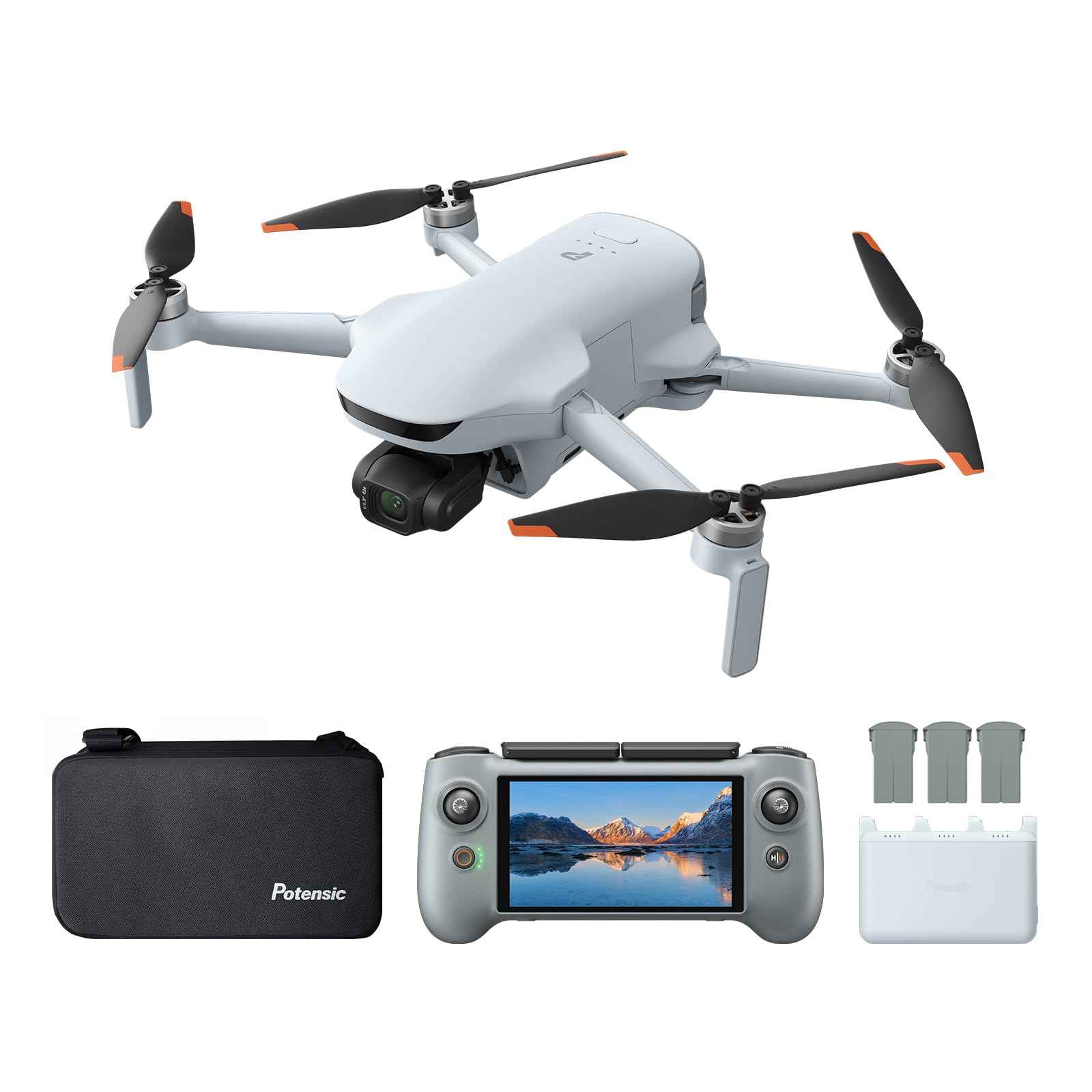
The Potensic ATOM 3 Fly More Combo maximizes shooting time with a total flight capacity of 120 minutes across three batteries. The 1/1.3-inch CMOS sensor captures 4K/60fps HDR video and 50-megapixel photos with P-Log mode for color grading. The three-axis gimbal keeps the horizon level during turns and against moderate winds.
The PixSync 5.0 technology provides a 16-kilometer tri-band transmission range, and the 5.5-inch FHD touchscreen controller with 900 nits brightness remains legible in bright sunlight. The AI Tracking 2.0 system supports low-altitude tracking below 4 meters when using the optional propeller guard, and the QuickShots modes—Drift, Spin Ascend, and Dolly Zoom—add cinematic movement without manual piloting.
Users report that the drone handles 7-mph winds without significant drift and that the customer service team addresses firmware issues quickly. The weight comes in under 249 grams, so no FAA registration is required. The parallel charging hub fast-charges all three batteries in about 90 minutes, making it a practical companion for day-long shoots.
Why it’s great
- 120 minutes of total flight time from three batteries
- 1/1.3-inch CMOS with P-Log for color grading
- Under 249g and no FAA registration required
Good to know
- Sensor size is smaller than one-inch alternatives
- Some users report occasional camera sensor errors
11. HOVERAir X1 PRO

The HOVERAir X1 PRO focuses on hands-free operation for action-oriented photographers. It weighs just 192 grams but captures 4K/60fps footage with a two-axis gimbal and electronic image stabilization. The follow speed reaches 26 mph (42 km/h), making it fast enough to track cyclists and skiers without losing the subject.
The OmniTerrain system allows safe flying over snow, water, and cliffs, and the rear ToF proximity sensor brakes before collisions at speeds up to 1.5 m/s. The ten automated flight modes—Hover, Zoom Out, Follow, Dolly Track, Orbit, and others—let you focus on your activity while the drone captures the footage. The 32GB internal storage supports SD cards up to 1TB.
No controller or smartphone is required; the drone takes off from your hand with a click or voice command. The foldable and fully enclosed design with aerospace-grade HEM propeller guards makes it travel-friendly. The two-axis gimbal cannot match the horizon-locking precision of a three-axis gimbal, but for active sports footage, the trade-off in size and weight is acceptable.
Why it’s great
- Hands-free operation with hand-click and voice control
- Extremely lightweight at 192 grams
- 42 km/h follow speed for tracking fast subjects
Good to know
- Two-axis gimbal cannot match three-axis gimbal horizon stability
- Not suitable for users who want full manual camera control
12. DJI Flip

The DJI Flip is the entry-level drone in DJI’s sub-250g lineup, but it still features a 1/1.3-inch CMOS sensor capable of 4K/60fps HDR video and 48-megapixel stills. The full-coverage carbon fiber propeller guards make it safer to fly in tight spaces and around people, and the 31-minute flight time provides enough endurance for most hobbyist sessions.
The subject tracking mode keeps the subject centered in the frame during hikes or group outings, acting as a personal cinematographer. The 13-kilometer O4 video transmission is stable in open areas, and the palm takeoff and landing features simplify the process for first-time pilots. The 48-megapixel stills are detailed enough for social sharing and small prints.
For photographers who will not color grade or print large, the Flip delivers solid image quality without the complexity of professional models. The onboard storage and simple app interface make transferring photos and videos to a phone quick. The lack of a mechanical gimbal means the footage relies on EIS, which crops into the frame slightly.
Why it’s great
- Full-coverage propeller guards provide crash safety
- Under 249g, no FAA registration required
- Simple palm takeoff and landing for first-time pilots
Good to know
- EIS crops into the frame compared to a mechanical gimbal
- 31-minute flight time is shorter than some competitors
13. K600PRO GPS Drone
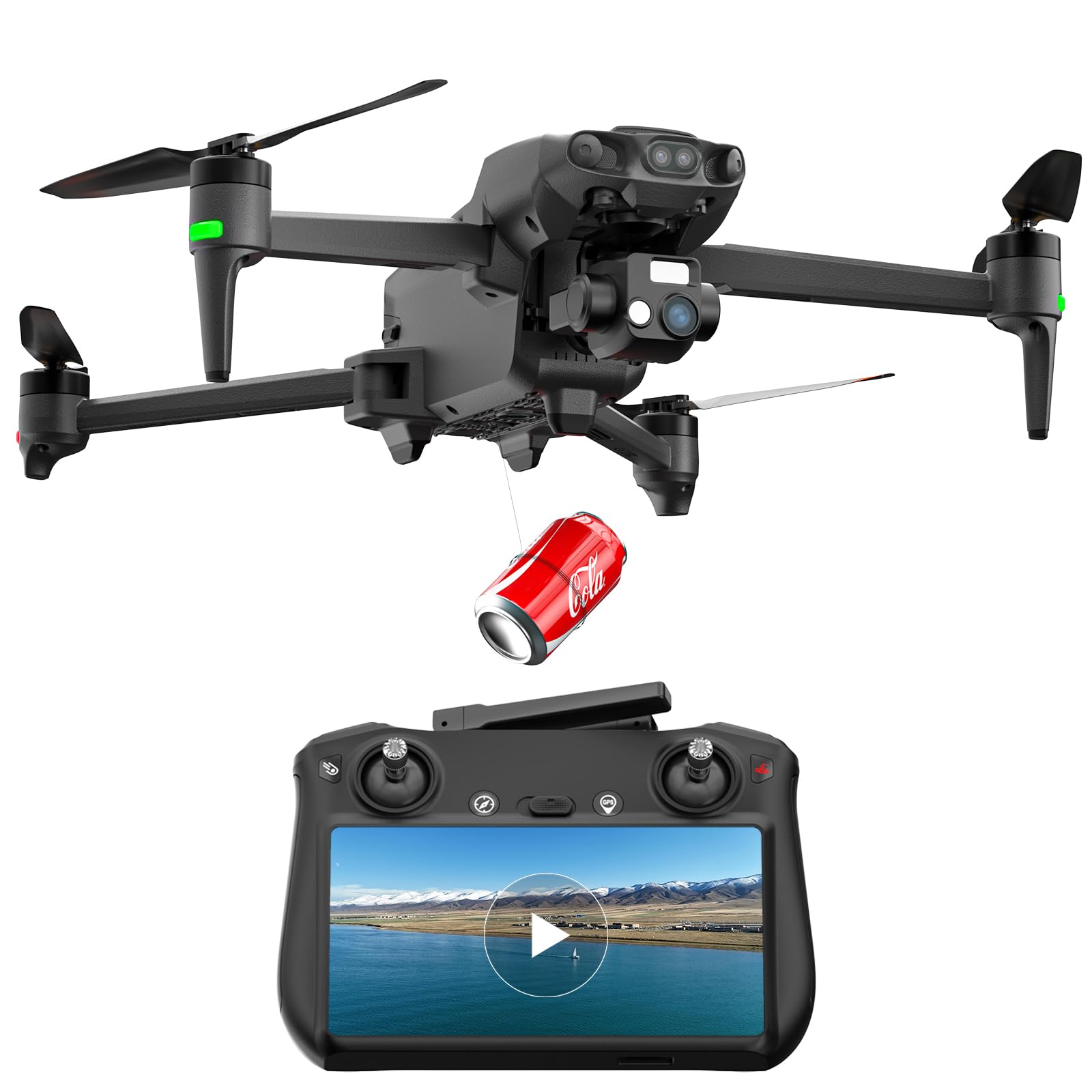
The K600PRO GPS Drone provides a 5.5-inch touchscreen on the controller, eliminating the need to mount a phone. The 4K camera with a three-axis gimbal and EIS keeps footage stable in mild wind, and the 50x zoom allows distant subjects to fill the frame, though digital zoom reduces resolution significantly at full extension.
The GPS Follow Me, Orbit, and Point of Interest modes automate common photography shots. The 55-minute rated flight time (per battery) is ambitious, but real-world endurance is closer to 30 minutes under moderate wind. The brushless motor provides smooth, efficient thrust, and the auto-return function safely brings the drone back home when the battery gets low.
The K600PRO does not offer raw image capture or a color profile as flat as Dlog-M, so post-production flexibility is limited. The digital zoom is useful for framing during flight, but the image quality degrades quickly past 10x. For beginners who want a ready-to-fly kit with a built-in display, it is a balanced entry point into aerial photography.
Why it’s great
- Built-in 5.5-inch touchscreen controller requires no phone
- GPS Follow Me and auto-return enhance ease of use
- 3-axis gimbal provides steady footage in mild conditions
Good to know
- Digital zoom reduces image quality significantly
- No raw profile for flexible post-production editing
FAQ
Does a one-inch sensor make a visible difference in photo quality compared to a 1/1.3-inch sensor?
What does Dlog-M color profile actually do for my photos?
Is mechanical gimbal stabilization better than electronic image stabilization for photos?
Final Thoughts: The Verdict
For most users, the best drone for photography sensor quality winner is the DJI Mavic 2 Pro because its one-inch sensor, adjustable aperture, and 10-bit Dlog-M color profile provide the best balance of image quality, color grading flexibility, and established reliability. If you want the most dynamic range in low light, grab the Autel EVO 2 Pro V3. And for travel photographers who need professional sensor quality in a sub-250g package, nothing beats the DJI Mini 5 Pro Fly More Combo Plus.

Mo Maruf
I created WellFizz to bridge the gap between vague wellness advice and actionable solutions. My mission is simple: to decode the research and give you practical tools you can actually use.
Beyond the data, I am a passionate traveler. I believe that stepping away from the screen to explore new environments is essential for mental clarity and physical vitality.