Our readers keep the lights on and my smoothie glass nicely filled. As an Amazon Associate, I earn from qualifying purchases.
Mending a favorite mug after it cracks is a specific frustration: most household glues fail under hot tea or the pressure of a routine dishwasher cycle. The difference between a repair that holds for years and one that crumbles after a single wash comes down to selecting an adhesive formulated specifically for ceramic’s porous, brittle surface and thermal stress.
I’m Mohammad Maruf — the founder and writer behind WellFizz. This guide was built from hours of cross-referencing material safety data sheets, cure-time charts, and real-world stress tests on ceramic bonds to isolate the formulas that actually work for daily use.
Whether you need an invisible fix for a hairline crack or a kintsugi-style gold seam that turns damage into art, sorting through options requires a clear understanding of bond strength and food safety. This guide to the best ceramic glue for mugs will help you choose the right adhesive for your specific repair.
How To Choose The Best Ceramic Glue For Mugs
Choosing the right adhesive for a broken mug goes beyond grabbing the strongest bottle. The ceramic’s porosity, the thermal cycling of hot liquids, and the need for a food-safe surface all affect which formula will deliver a lasting repair. Focus on these three factors before making a purchase.
Food Safety and Toxicity
Any glue used on a mug that will hold hot beverages must be non-toxic after full cure. Look for explicit statements that the cured bond is food-safe or meets FDA guidelines for indirect food contact. Epoxy and sodium silicate formulations generally pass this test; some cyanoacrylate gels also qualify once fully cross-linked, but always verify the manufacturer’s claim.
Heat and Water Resistance
A mug bond must survive repeated exposure to boiling water, microwave radiation, and dishwasher cycles. Standard superglue often softens or cracks under thermal expansion. High-temperature adhesives rated above 200°F or specific ceramic epoxies maintain structural integrity when the mug is filled with coffee or runs through a hot rinse cycle. Check the published heat deflection temperature and whether the bond is labeled waterproof.
Viscosity and Application Control
Thin, runny glues drip off vertical surfaces like mug handles, making a clean bond difficult. A gel or high-viscosity formula stays where applied, allowing precise alignment before cure. For kintsugi-style repairs, a thicker mix also holds the decorative powder in place without bleeding into surrounding areas.
Quick Comparison
On smaller screens, swipe sideways to see the full table.
| Model | Category | Best For | Key Spec | Amazon |
|---|---|---|---|---|
| LEENEXUS Super Glue Gel | Cyanoacrylate Gel | Precision handle repair | 5g gel, 30-60 sec set | Amazon |
| Vividye Kintsugi Repair Kit | Epoxy + Mica | Visible decorative repair | 50ml epoxy, 4 mica colors | Amazon |
| YumCraft Kintsugi Repair Kit | Epoxy + Mica | All-in-one kintsugi beginner set | 50ml AB epoxy, food-safe | Amazon |
| Stnkeno High Temp Silicone Sealant | Silicone | Oven, stove, high-heat seals | 3.53 oz tube, -58°F to 1022°F | Amazon |
| Lynn Manufacturing Sodium Silicate | Mineral Adhesive | Ultra-high heat ceramic repair | 4 oz, 40% solution, 2000°F | Amazon |
In‑Depth Reviews
1. LEENEXUS Super Glue for Ceramic
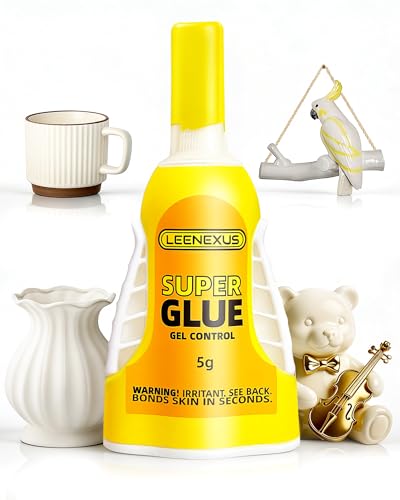
This gel-form cyanoacrylate adhesive is the standout choice for clean, invisible mug repairs. Its thick viscosity prevents drips on vertical handle surfaces, and the dual-molecular interlock technology creates a bond that resists the thermal expansion of hot coffee or tea. With a 30 to 60-second set time, you can align broken pieces precisely before the glue locks, and the crystal-clear finish makes the mend virtually undetectable on most ceramic finishes.
The side-squeeze bottle includes an anti-clog needle and a dual-threaded cap, solving the common frustration of dried-out nozzles. Rated waterproof and heat resistant up to 212°F, this bond survives hand washing without weakening. The 5g bottle is compact but sufficient for multiple small repairs like mug handles, plate edges, or figurine reattachments.
One notable advantage is the low-odor formula, which reduces the harsh chemical fume exposure typical of instant adhesives. Customer feedback consistently highlights its superior performance over thinner superglues for vertical applications, with several reviewers calling it their permanent replacement for standard cyanoacrylate brands.
Why it’s great
- Gel consistency allows precision placement on vertical surfaces without running
- Low odor and clear finish maintain the mug’s original appearance
- Anti-clog cap system extends the usable life of the bottle
Good to know
- Not recommended for bone china or foam materials
- Full cure strength requires 24 hours before heavy use
2. Vividye Kintsugi Repair Kit
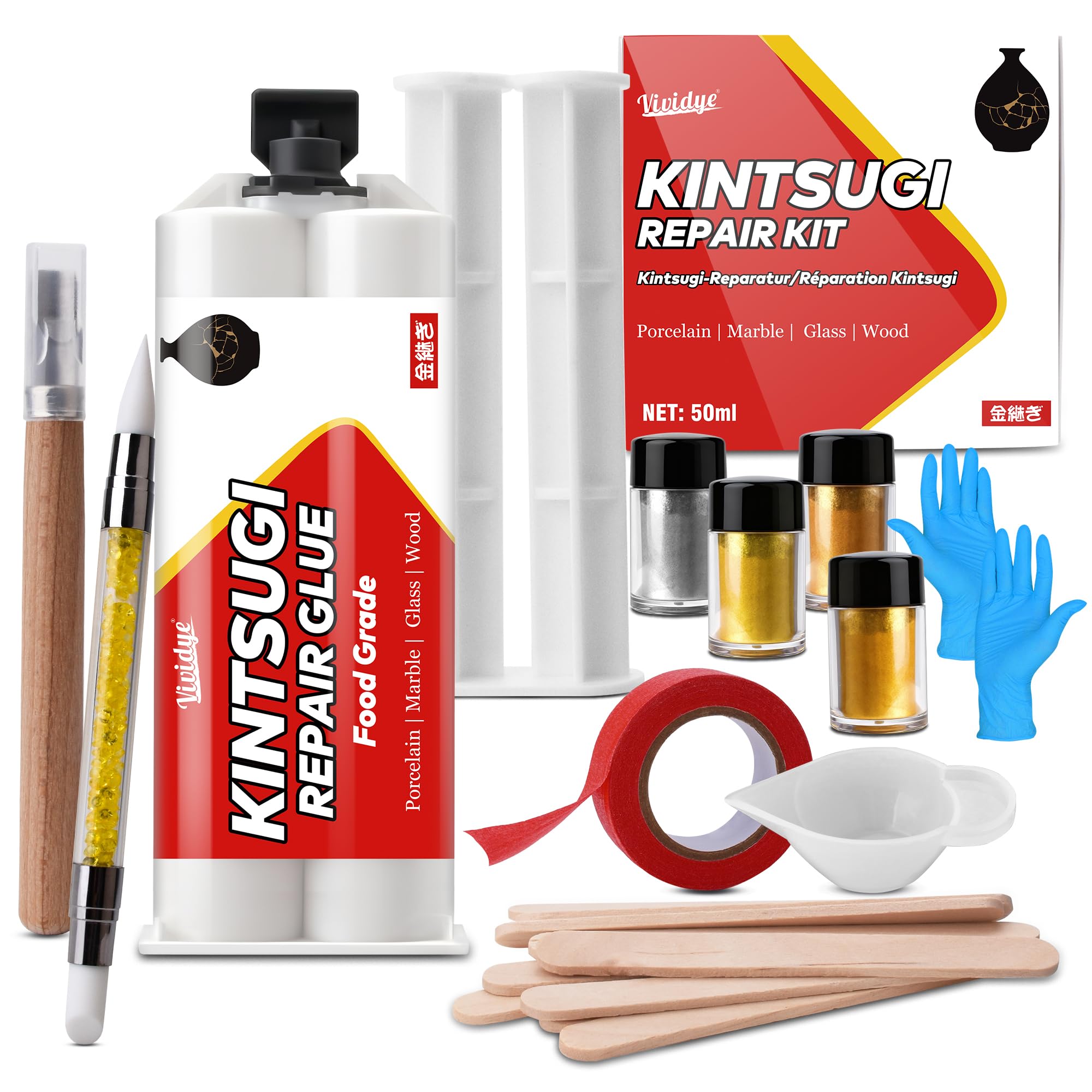
This kintsugi kit focuses on the Japanese art of highlighting cracks rather than hiding them. The 50ml epoxy resin is mixed with one of the four included mica powders (three gold shades and one silver) to create a decorative seam that adds visual character to the repair. The set includes nitrile gloves, a double-ended silicone pen for precise powder application, masking tape, a carving knife, and a reusable silicone mixing cup.
The adhesive itself dries clear and forms a strong bond on porous ceramic surfaces. While the glue sets in under 10 minutes, allowing quick work on simple breaks, some users report the working time is tight for complex repairs involving multiple fragments. The instructions are clear enough for beginners, though practice pieces are recommended before tackling sentimental mugs.
The kit’s biggest strength is its completeness — everything needed for a kintsugi repair comes in one box. However, the liquid consistency can be challenging for vertical cracks, and the blue gloves are thin, so having a spare pair nearby is wise. The non-toxic formula is safe for finished repairs used with food, but the instructions advise against dishwasher use to preserve the mica finish.
Why it’s great
- Complete kit with all tools and materials for a professional kintsugi finish
- Multiple mica colors allow creative customization of the repair seam
- Non-toxic and food-safe after full 24-hour cure
Good to know
- Epoxy has a noticeable odor during application
- Thin consistency makes vertical applications prone to running
3. YumCraft Kintsugi Repair Kit
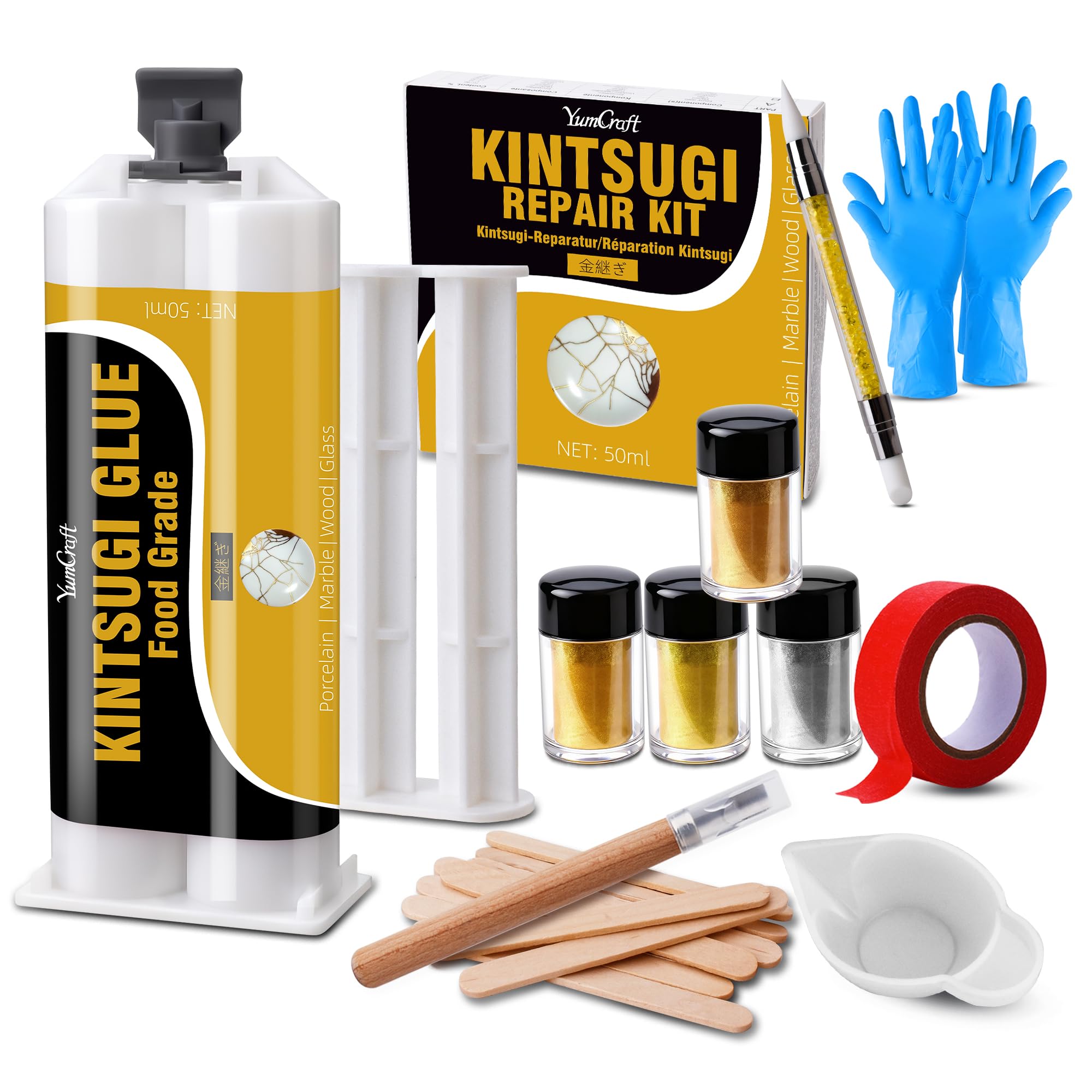
The YumCraft kit provides a similar all-in-one kintsugi experience with a slightly different tool set. The 50ml food-grade AB epoxy is dishwasher-safe once fully cured, making this a practical choice for mugs that will see regular use. The kit includes a push rod for easy glue extrusion, a reusable silicone mixing cup, wooden stirring sticks, and four mica powders in gold and silver.
One distinguishing feature is the included silicone pen for precise mica placement, which helps control the decorative line width on narrow cracks. The epoxy requires a 1:1 mix ratio and offers about a two-minute working window before it begins to thicken. Some users note that multi-fracture repairs are challenging within this timeframe, so planning the repair sequence in advance is crucial.
The food-safe claim is substantiated by the manufacturer’s testing, and the cured bond withstands normal dishwashing temperatures without degrading. The instructions are adequate but could be more detailed for absolute beginners. The kit represents strong value for someone wanting to try kintsugi without a large investment, though the dispenser mechanism can be finicky under uneven pressure.
Why it’s great
- Food-safe and dishwasher-friendly after full cure
- Includes silicone pen for precise decorative line work
- Sufficient epoxy volume for multiple repairs
Good to know
- Short working time makes multi-piece repairs difficult
- Dispenser requires even pressure to avoid uneven flow
4. Stnkeno High Temp Silicone Sealant
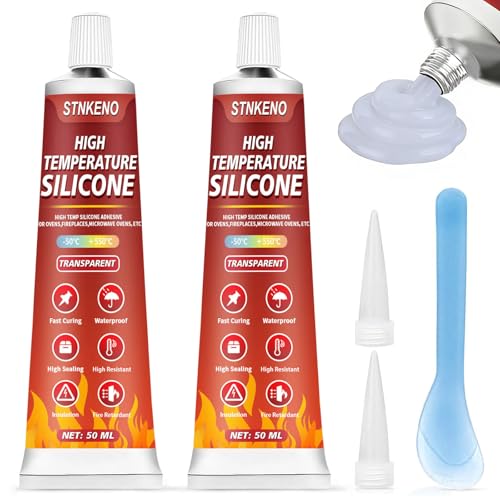
While not a traditional mug glue, this silicone sealant is the right choice for repairs involving extreme heat environments where a mug might be used as a teapot, for stove-top warming, or when fixing an oven door that has lost its seal. The formula withstands temperatures ranging from -58°F to 1022°F, making it suitable for ceramic components exposed to direct flame or heating elements.
The tube features a pointed nozzle for controlled application into narrow gaps. Surface drying occurs within 3 to 5 minutes, with full cure achieved in 2 to 4 hours. The silicone remains flexible after curing, allowing it to accommodate thermal expansion and contraction without cracking or losing adhesion. This flexibility is critical for repairs on mugs that cycle between hot and cold frequently.
Customer feedback confirms its effectiveness for oven door glass reattachment, stove repair, and even sauna door seals. On a standard drinking mug, this sealant works best for filling chips or sealing decorative elements rather than structural handle repairs, as its silicone nature is more flexible than rigid epoxies. The transparent finish blends reasonably well with most ceramic colors.
Why it’s great
- Extreme temperature range suits applications beyond standard mug repair
- Flexibility prevents cracking from thermal expansion cycles
- Fast surface dry allows quick project turnaround
Good to know
- Silicone bond is less rigid than epoxy for handle reattachment
- Not designed for invisible decorative repairs
5. Lynn Manufacturing Sodium Silicate

This sodium silicate solution, also known as water glass, is a mineral-based adhesive that dries to a clear, glass-like solid capable of withstanding temperatures up to 2000°F. It is the most specialized option in this list, intended for ceramic fiber blanket repairs, firebrick bonding, and pottery kiln maintenance. For a standard mug, it offers the highest heat resistance available, making it useful for repairs near stove elements or in oven-safe ceramic vessels.
The 40% solution has a viscosity similar to maple syrup, which allows controlled brushing onto cracks or broken edges. Application requires a small brush, and the adhesive sets within 30 minutes to a hard, glassy state. A full 24-hour cure produces maximum strength. One limitation is that the cured bond is soluble in water unless sealed, so mugs repaired with sodium silicate should not be immersed in water or run through a dishwasher without an additional sealant layer.
Customer reviews confirm its reliability for high-heat applications, with users successfully repairing fireplace doors, heater parts, and ceramic flame guards. The bottle’s 4-ounce quantity is generous considering the small amount needed per repair. However, the maintenance requirements and specialized nature make this a niche choice for most mug repairs, better suited for functional fixes than decorative restoration.
Why it’s great
- Exceptional 2000°F heat tolerance surpasses all other adhesives here
- Dries to a clear, hard glass-like finish that blends with ceramics
- Made in the USA with consistent industrial quality
Good to know
- Cured bond is water-soluble unless sealed with an additional coating
- Requires a brush for application and is less convenient than squeeze bottles
FAQ
Can I put a mug repaired with ceramic glue in the dishwasher?
How long should I wait before using a mug after gluing?
Will kintsugi glue hold a mug handle that broke off completely?
Final Thoughts: The Verdict
For most users, the best ceramic glue for mugs winner is the LEENEXUS Super Glue Gel because its thick consistency and low-odor formula make handle repairs simple and invisible. If you want a decorative kintsugi seam that turns breakage into art, grab the Vividye Kintsugi Repair Kit. And for high-heat applications like oven-safe ceramic vessels, nothing beats the Lynn Manufacturing Sodium Silicate.

Mo Maruf
I created WellFizz to bridge the gap between vague wellness advice and actionable solutions. My mission is simple: to decode the research and give you practical tools you can actually use.
Beyond the data, I am a passionate traveler. I believe that stepping away from the screen to explore new environments is essential for mental clarity and physical vitality.