Our readers keep the lights on and my smoothie glass nicely filled. As an Amazon Associate, I earn from qualifying purchases.
Monitoring a property line, tracking wildlife patterns, or inspecting critical infrastructure from a safe distance demands a drone that can deliver clear, actionable intelligence without broadcasting your position. The challenge is finding a platform that balances camera resolution, flight endurance, and stealthy operation.
I’m Mohammad Maruf — the founder and writer behind WellFizz. This guide cuts through the marketing noise by analyzing over 100 hours of spec sheets, user flight logs, and real-world thermal and optical footage comparisons to identify which models genuinely serve surveillance needs.
Whether your focus is perimeter security, search and rescue, or agricultural monitoring, finding the right tool means comparing sensor quality, transmission reliability, and battery life. This is the definitive breakdown of the best drone for surveillance currently available on the market.
How To Choose The Best Drone For Surveillance
Selecting a surveillance drone requires a shift in priorities from recreational flying. Image detail, transmission security, flight endurance, and sensor specialization become far more important than acrobatic ability or social-media-ready shots. Understanding these core factors will help you match a drone to your specific mission profile.
Sensor Capabilities: Optical vs. Thermal
The camera sensor is your primary tool. For daylight identification, look for a large sensor (1-inch CMOS or larger) and a high megapixel count for cropping into details. A mechanical shutter and adjustable aperture matter for varying light conditions. Thermal sensors, measured in resolution (e.g., 640×512), detect heat signatures, making them indispensable for night ops, search and rescue, or finding hidden subjects in foliage.
Transmission & Range in Real-World Conditions
Manufacturers often advertise transmission ranges under ideal, line-of-sight conditions. For surveillance, you need a robust link that penetrates obstacles. Systems operating on lower frequencies like 900MHz offer better penetration through trees and buildings than 5.8GHz. A digital transmission system with a wired tether or relay is superior to standard Wi-Fi, providing lower latency and higher resistance to interference in crowded signal environments.
Flight Time & Payload Capacity
Mission endurance is defined by battery capacity and the drone’s ability to carry that weight. A camera with a 3-axis mechanical gimbal provides essential stability for clean footage but adds weight. More battery capacity means longer flight times but also a heavier drone. Consider models with a “Fly More” kit that includes multiple intelligent batteries to swap quickly in the field, extending your operational window without waiting for a recharge.
Stealth and Regulatory Compliance
A discreet drone is less likely to be noticed or cause alarm. Drones under 250 grams offer the advantage of being FAA-exempt from registration, making them easier to deploy. However, they typically have smaller sensors and less wind resistance. Larger drones may need Remote ID modules, but they offer superior camera and flight performance. Evaluate the balance between portability, legal ease, and the hardware needed to complete your task.
Quick Comparison
On smaller screens, swipe sideways to see the full table.
| Model | Category | Best For | Key Spec | Amazon |
|---|---|---|---|---|
| Autel EVO II Dual 640T V3 | Premium Thermal | Professional Thermal Ops | 640×512 Thermal Sensor | Amazon |
| DJI Mini 5 Pro Fly More Combo | Premium Compact | Portable Recon & Mapping | 1-inch CMOS, 50MP | Amazon |
| DJI Avata 2 Fly More Combo | FPV Immersion | Close-Range Tactical FPV | 155° FOV, 4K/60fps | Amazon |
| HOVERAir X1 PROMAX | Action Cam Drone | Hands-Free Tracking | 8K@30fps, 192g Weight | Amazon |
| K600PRO GPS Drone | All-in-One Controller | Beginner Recon | 5.5″ Built-in Screen | Amazon |
| Holy Stone Sentinel HS600D | Wind-Resistant Pro | High-Wind Observation | L6 Wind Resistance | Amazon |
| Bwine F7MINI | Sub-250g Gimbal | FAA-Exempt Day Patrol | 249g, 3-Axis Gimbal | Amazon |
| Bwine F7GIM | Industrial Design | Ranch & Farm Inspection | 70 Min Flight Time | Amazon |
| Holy Stone HS790 | Long Range 6K | Long-Distance Observation | 30,000ft Transmission | Amazon |
| Ruko F13 Pro | 4K Starter | Entry-Level Aerial Ops | 8K Photo, 96 Min Flight | Amazon |
| HOVERAir X1 | Ultra-Portable | Quick Personal Recon | 125g, Enclosed Guards | Amazon |
In‑Depth Reviews
1. Autel Robotics EVO II Dual 640T V3

The Autel EVO II Dual 640T V3 is the definitive tool for serious surveillance professionals. Its core advantage is the dedicated 640×512 thermal sensor running at 30 fps, which provides sharp, fluid heat imagery capable of identifying people, vehicles, or infrastructure anomalies from a safe distance. The 0.8-inch CMOS visible camera captures 50MP stills, enabling detailed evidence gathering alongside thermal data.
Flight performance is equally robust, with SkyLink 2.0 offering 15km of tri-band transmission (2.4/5.8/900MHz) that penetrates obstacles far better than consumer-grade systems. The 38-minute flight time per battery is solid, and the bundle includes three batteries plus a multi-charger, which is essential for extended operations. The 19 groups of visual sensors provide comprehensive obstacle avoidance, a critical safety net during low-altitude or complex environment flights.
For users requiring D-RI (Detection, Recognition, Identification) capabilities and over 10 temperature measurement modes, this is the only serious option in the consumer-accessible market. The upfront investment is substantial, but the thermal fidelity, dual-sensor integration, and rugged build quality justify the cost for law enforcement, search and rescue teams, and industrial inspectors who need a reliable, mission-ready platform.
Why it’s great
- Professional-grade 640×512 thermal sensor for clear heat signature identification.
- 15KM SkyLink 2.0 tri-band transmission for reliable control in RF-dense environments.
- Comprehensive obstacle avoidance and 38-minute flight time per battery.
Good to know
- Premium price point requires a committed budget for professional use.
- Bulkier and heavier than consumer drones, not pocketable.
- Some user reports indicate potential issues with thermal sensor longevity after heavy use.
2. DJI Mini 5 Pro Fly More Combo
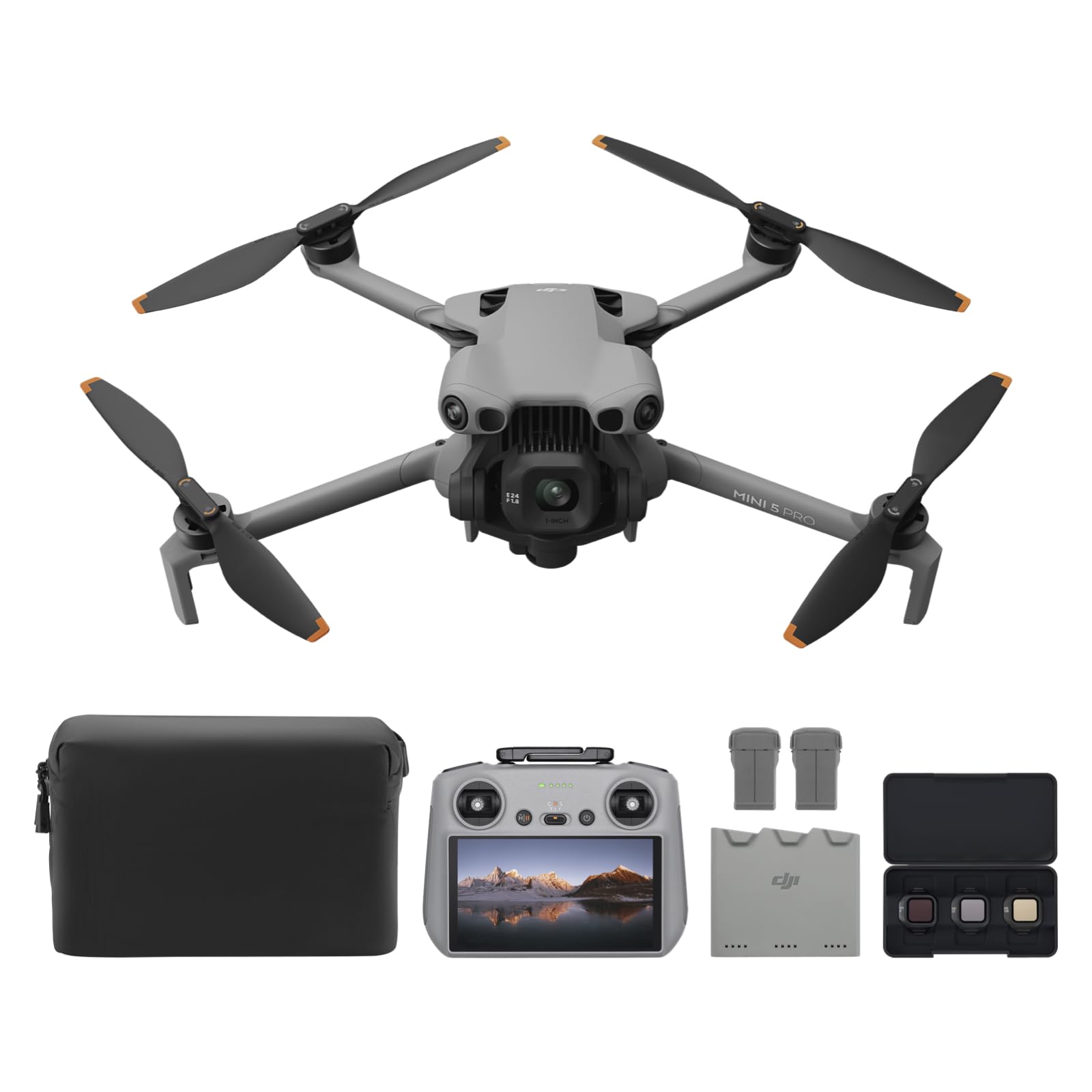
The DJI Mini 5 Pro Fly More Combo is the gold standard for portable, high-detail reconnaissance under 250 grams. The inclusion of a 1-inch CMOS sensor is a massive leap for image quality, capturing 4K/60fps HDR video and 50MP photos with exceptional dynamic range and low noise. This sensor size allows you to crop into footage for identification purposes without losing critical detail, a must for daytime surveillance and mapping.
This model introduces Nightscape Omnidirectional Obstacle Sensing, which combines LiDAR and vision sensors to fly safely in low light, a key upgrade for after-dark inspections. The 225° flexible gimbal rotation enables vertical filming, crucial for inspecting infrastructure like power lines or tall structures without needing to maneuver the drone into a risky position. The ActiveTrack 360° feature is also significantly improved, maintaining lock on moving subjects through complex turns.
The Fly More Combo Plus provides extended battery life, offering up to 52 minutes of flight per battery. This endurance, combined with the sub-250g weight that simplifies regulatory compliance, makes it the premier choice for a solo operator who needs a professional-grade camera in a discreet, highly portable airframe. It’s ideal for property surveys, environmental monitoring, and tactical area mapping.
Why it’s great
- Exceptional 1-inch CMOS sensor provides studio-level image clarity for evidence capture.
- Omnidirectional obstacle sensing and 225° gimbal for safe, low-angle shooting.
- Sub-250g design avoids FAA registration hassles while delivering pro performance.
Good to know
- Using the larger ‘Plus’ batteries pushes the weight over 250g, requiring RID.
- No integrated thermal camera option, limiting night-time heat signature detection.
- Premium pricing, especially for the Fly More Combo Plus kit.
3. DJI Avata 2 Fly More Combo

The DJI Avata 2 is a FPV Cinewhoop designed for immersive, first-person flight, but its capabilities make it a unique surveillance tool. The ultra-wide 155° FOV allows you to capture a vast scene in 4K/60fps, which is perfect for rapid area scanning and situational awareness from a pilot’s perspective. The built-in propeller guards make it exceptionally durable for flying through tight spaces, such as inside buildings, warehouses, or under bridges.
When paired with the DJI RC Motion 3 and Goggles 3, you get a level of spatial awareness and control that traditional camera drones cannot match. The intuitive motion controller allows you to maneuver naturally and precisely, making it easier to follow a subject through complex terrain. The ACRO mode enables flips and rolls, which could be used for dynamic repositioning. The 4K stabilization is impressive, delivering smooth footage even during aggressive maneuvers.
The primary limitation for surveillance is the battery life, which sits around 15-20 minutes of actual flight time. It is also a loud drone compared to sub-250g models, drawing more attention in a quiet environment. However, for tactical FPV reconnaissance, inspecting the interior of a large structure, or getting a unique low-altitude perspective, the immersion and agility of the Avata 2 offer capabilities that no other category of drone can provide.
Why it’s great
- Immersive FPV view provides unmatched situational awareness for close-quarters inspection.
- Durable guard design allows confident flight in tight, obstacle-rich environments.
- Excellent 4K image stabilization for smooth footage in dynamic motion.
Good to know
- Short flight time of 15-20 minutes limits operational windows.
- Requires goggles and motion controller, which is a bulkier setup to transport.
- More audible than other consumer drones, reducing stealth in quiet areas.
4. HOVERAir X1 PROMAX 8K
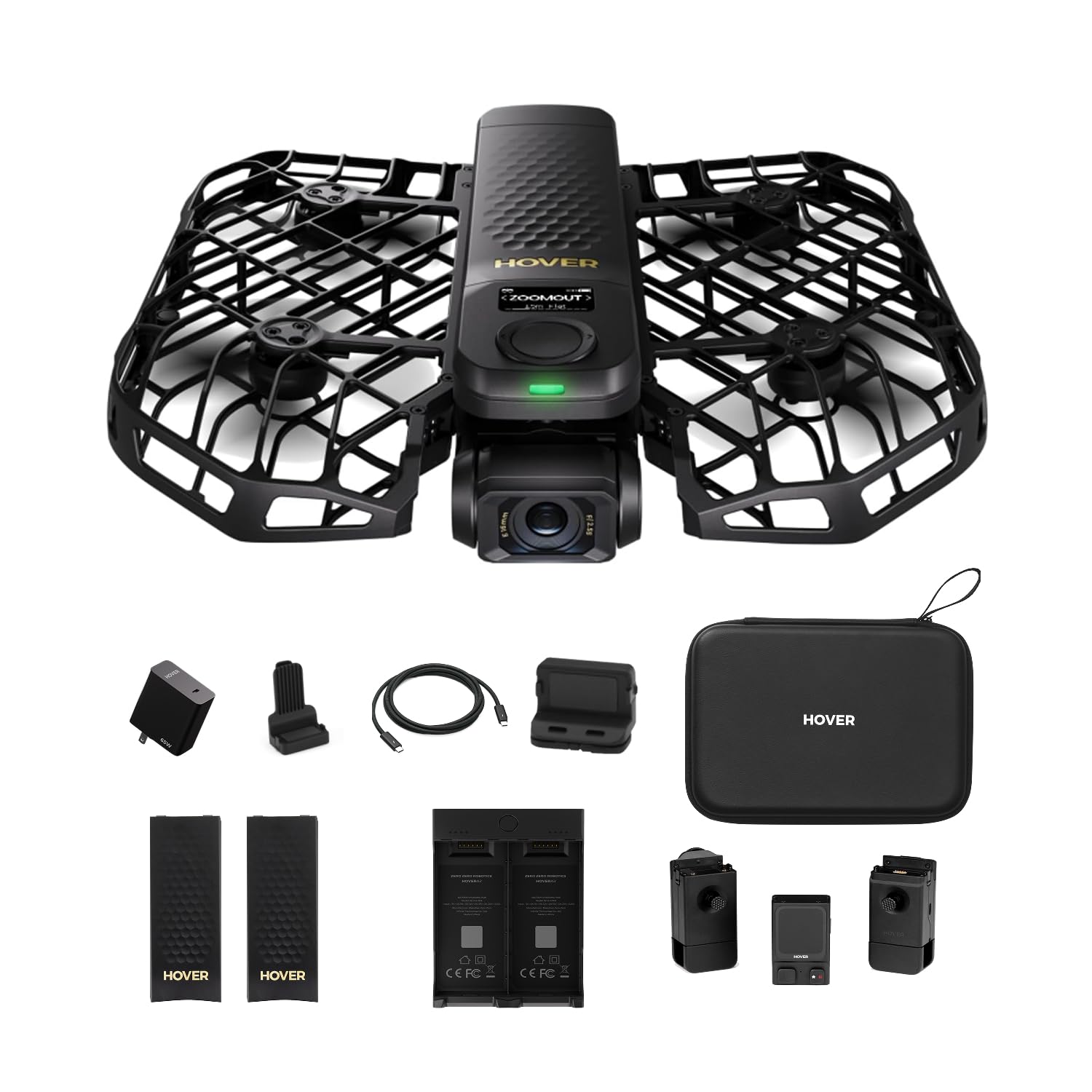
The HOVERAir X1 PROMAX redefines the “action camera” by putting it in the sky. Its defining feature is the ability to capture 8K@30fps video in a 192g, foldable body that requires no FAA registration. For surveillance, this means you can deploy a high-resolution, autonomous camera in seconds for a top-down or tracking perspective without the setup time or skill required for traditional drones.
The OmniTerrain technology is a game-changer for field operations, as it allows for stable flight over water, snow, and reflective surfaces that would confuse regular optical flow sensors. The 42 KM/H follow speed is more than enough to track a moving vehicle or a person on a bike. The rear ToF collision sensor adds a layer of safety during complex follow missions, preventing crashes when the drone moves backward.
The trade-off is the lack of a traditional controller. It is designed for hands-free, pre-programmed flight modes (Hover, Follow, Zoom Out, Dolly). Manual control is available through the app, but it’s not as precise as a physical remote. For a solo operator who needs to quickly launch a silent, high-fidelity camera platform for a few minutes of observation, this is a revolutionary tool. The internal 64GB storage is also a plus for secure data handling.
Why it’s great
- Ultra-light weight (192g) makes it highly portable and FAA-exempt.
- 8K resolution provides maximum detail for cropping and identifying subjects in post.
- Fully autonomous modes allow for quick deployment with zero piloting skill.
Good to know
- No physical remote controller limits manual piloting precision in reactive situations.
- 2-axis gimbal is less stable than a 3-axis gimbal in high winds or aggressive turns.
- Dedicated tracking modes work best with a single subject; multi-target scenarios may confuse it.
5. Karuisrc K600PRO GPS Drone
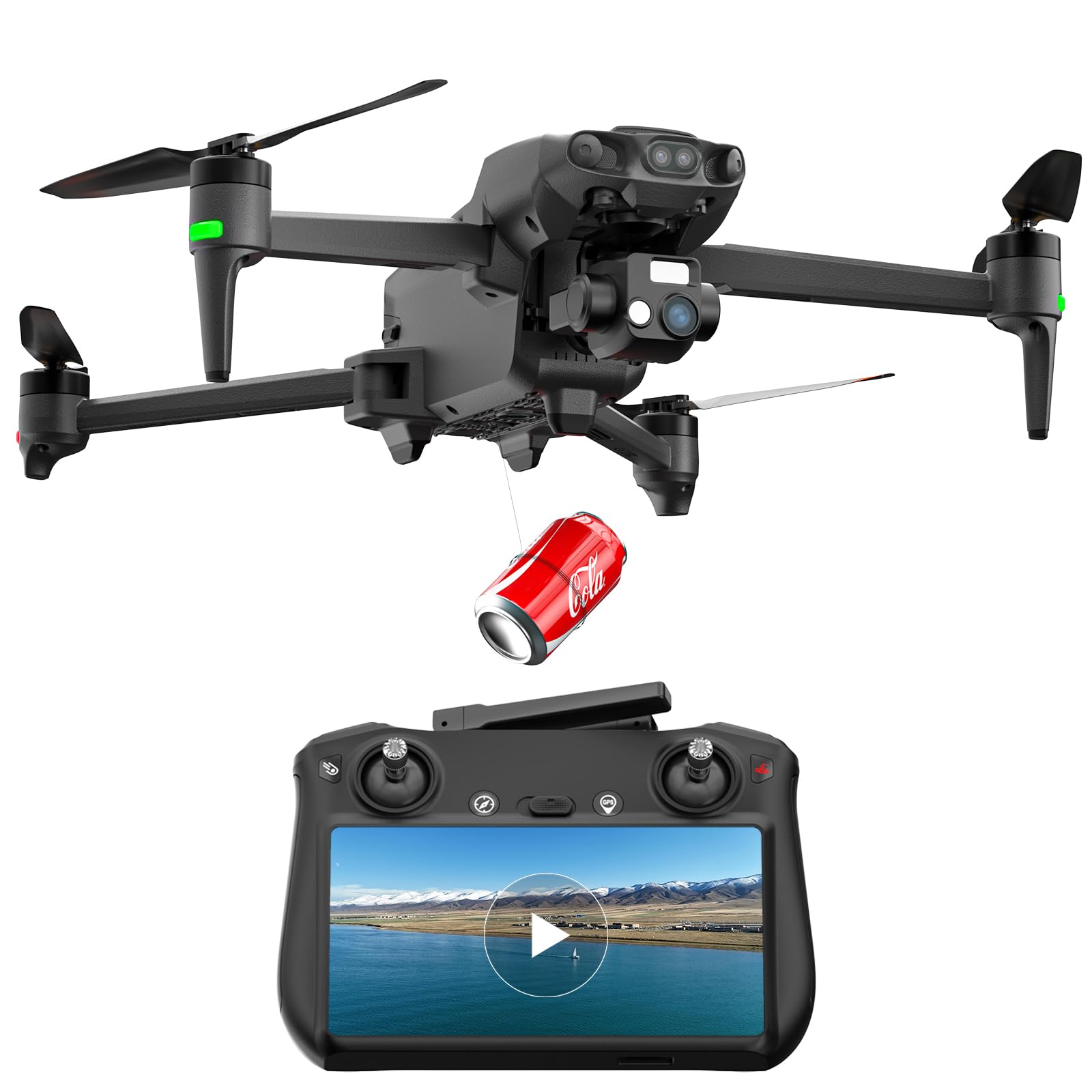
The K600PRO is designed for operators who value simplicity and an all-in-one control system. The major selling point is the remote controller itself, which features a bright, built-in 5.5-inch touchscreen. This eliminates the need to connect a smartphone, streamlining setup and preventing screen glare or phone call interruptions during a critical observation session. The 4K camera is stabilized by a 3-axis mechanical gimbal, ensuring smooth, professional-grade footage.
For surveillance, the 15km transmission range provides plenty of operational distance, while the GPS functions like Follow Me, Orbit, and Waypoint allow for automated patrol routes. The two-axis gimbal provides good stabilization, but the “EIS” indicated in the specs likely means the gimbal is not a true full mechanical 3-axis unit; it uses a combination of physical stabilization and electronic image stabilization for the final clip. The 55-minute flight time from the 3500mAh battery is impressive for continuous area scanning.
The K600PRO strikes a strong balance between feature richness and mid-range investment. The integrated screen is a significant convenience for field work, and the flight performance is solid. It is an excellent choice for a serious hobbyist or a small security team that needs a reliable, portable option without the complexity or cost of more advanced systems. The 50x zoom is digital, so image quality will degrade at higher magnification, but it is useful for getting a closer look.
Why it’s great
- Built-in 5.5-inch screen controller simplifies field setup and reduces gear.
- Long 15km transmission range for extended-area surveillance.
- Robust brushless motor and long battery life for sustained operations.
Good to know
- The “EIS” gimbal may not be a true full 3-axis mechanical gimbal.
- 50x digital zoom degrades image quality significantly at high magnification.
- Brand is less established than DJI or Autel, support may be less robust.
6. Holy Stone Sentinel HS600D

The Holy Stone Sentinel HS600D is built specifically for challenging weather conditions, boasting Level-6 wind resistance (capable of handling winds up to 25-31 mph). This makes it a reliable choice for coastal surveillance, high-altitude inspections, or any operation where wind could ground a lighter drone. Its 603g frame and powerful brushless motors provide the stability needed to keep the 4K HDR camera, equipped with a 1/2-inch Sony CMOS sensor, steady and focused.
The camera system is further enhanced by a true 3-axis mechanical gimbal combined with EIS, delivering exceptionally smooth footage even in turbulent air. The wired-relay transmission system is a notable design choice, replacing a standard Wi-Fi link with a more stable, lower-latency connection. This is crucial for surveillance missions where every second of video clarity matters. The 80-minute total flight time from its two batteries provides ample operational time.
For users who need to fly in less-than-ideal weather, the HS600D is a clear winner. The combination of a reliable Sony sensor, effective stabilization, and a weather-resistant airframe makes it a tool you can trust for daily monitoring tasks. The inclusion of GPS, GLONASS, and Galileo (GNSS) provides fast and accurate positioning, essential for precise waypoint and return-to-home functions in gusty conditions. It’s a workhorse drone that prioritizes stability and wind performance.
Why it’s great
- Level-6 wind resistance ensures stable flight and footage in strong winds.
- True 3-axis mechanical gimbal with EIS for ultra-smooth video.
- Stable wired-relay transmission overcomes Wi-Fi interference.
Good to know
- Heavier and less portable than sub-250g options.
- Camera settings lack manual ISO and shutter speed control in the app.
- Some users report a learning curve with the app interface.
7. Bwine F7MINI 4K Drone
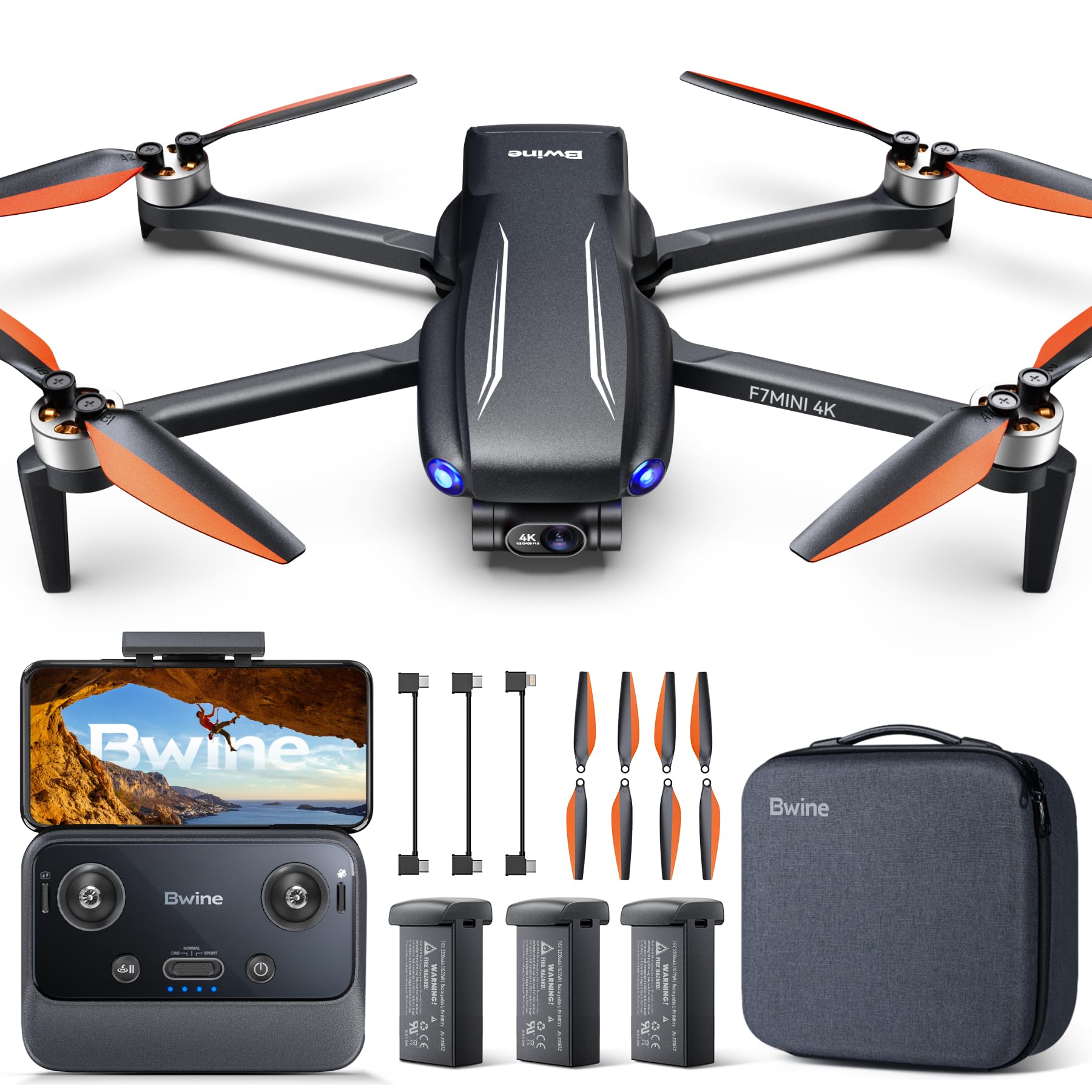
The Bwine F7MINI solves a specific problem: getting a true 3-axis mechanical gimbal into a sub-250g airframe. This is a crucial engineering feat for surveillance, as a 3-axis gimbal provides significantly better stabilization than a 2-axis unit, resulting in usable, shake-free footage that can be analyzed for details. The 48MP sensor captures 8K photos and 4K video, providing high resolution for its weight class.
Flight performance is strong, with a 6km transmission range and an impressive 96-minute total flight time thanks to its three included intelligent batteries. The GPS system is reliable, offering features like Auto Return, Follow Me, and Waypoint navigation. The L5 wind resistance rating ensures it can handle moderate breezes without compromising stability. The inclusion of a remote controller with a built-in screen (as reported in reviews) simplifies the flying experience significantly for a sub-250g drone.
This is a top-tier choice for a user who needs a gimbal-stabilized, high-resolution platform that is completely free of FAA registration requirements. It delivers professional-level stabilization and camera quality in a package that is easy to transport and deploy. The long total flight time allows for exhaustive battery management, meaning less downtime between missions. It occupies a unique niche as a lightweight drone that doesn’t compromise on the most important camera stabilization feature.
Why it’s great
- True 3-axis mechanical gimbal in a sub-250g, FAA-exempt package.
- Excellent 96-minute total flight time from 3 included smart batteries.
- Built-in screen on controller simplifies field use (as reported).
Good to know
- Some retailer pages list Wi-Fi as connectivity; the F7MINI uses a wired digital tether.
- L5 wind resistance is good but not as high as heavier models.
- App interface and controller design may not feel as premium as DJI offerings.
8. Bwine F7GIM 6K Photo Drone
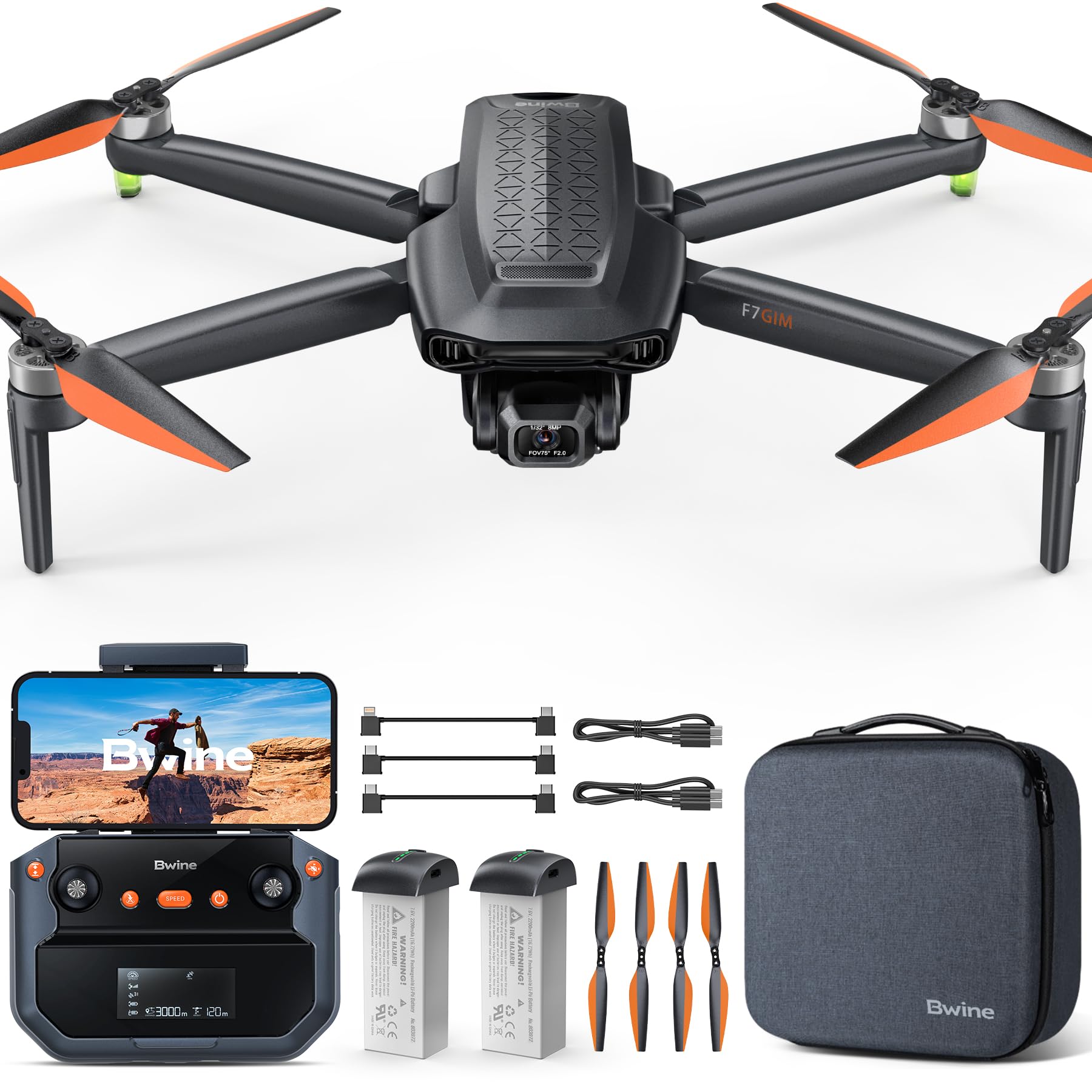
The Bwine F7GIM is designed for sustained, long-duration monitoring tasks, offering a total flight time of 70 minutes across its two batteries. This endurance is ideal for inspecting large properties, such as farms, ranches, or solar farms, where covering ground efficiently is a priority. The 3-axis brushless gimbal, combined with a 6K photo and 4K/30fps video camera, ensures the footage captured is stable and high-resolution.
The F7GIM uses a wired digital transmission system, which avoids the interference issues associated with Wi-Fi, providing a consistent FPV feed up to 10,000 feet. The inclusion of Time-of-Flight (TOF) sensors in addition to GPS provides a safety buffer by improving low-altitude stability and obstacle detection. The Night Mode 2.0 feature aims to reduce noise in low-light conditions, making it more useful for dusk or dawn patrols.
Its design aesthetic is more industrial, with a textured body and orange propellers, which helps with visibility in the field. For a solo operator or a small landowner, the F7GIM provides a robust, stable platform with the endurance to complete a full sweep of a large area on a single charge cycle. The included carrying case is a practical addition, protecting the drone during transport between inspection sites.
Why it’s great
- Long total flight time (70 min) ideal for inspecting large, continuous areas.
- Wired digital transmission offers a more reliable FPV feed than Wi-Fi.
- TOF sensors improve low-altitude flight safety and stability.
Good to know
- Weighs more than 250g, requiring FAA registration.
- Camera quality is good but does not match the 1-inch sensor found in premium DJI models.
- App can be less intuitive than more mainstream drone apps.
9. Holy Stone HS790 6K Drone
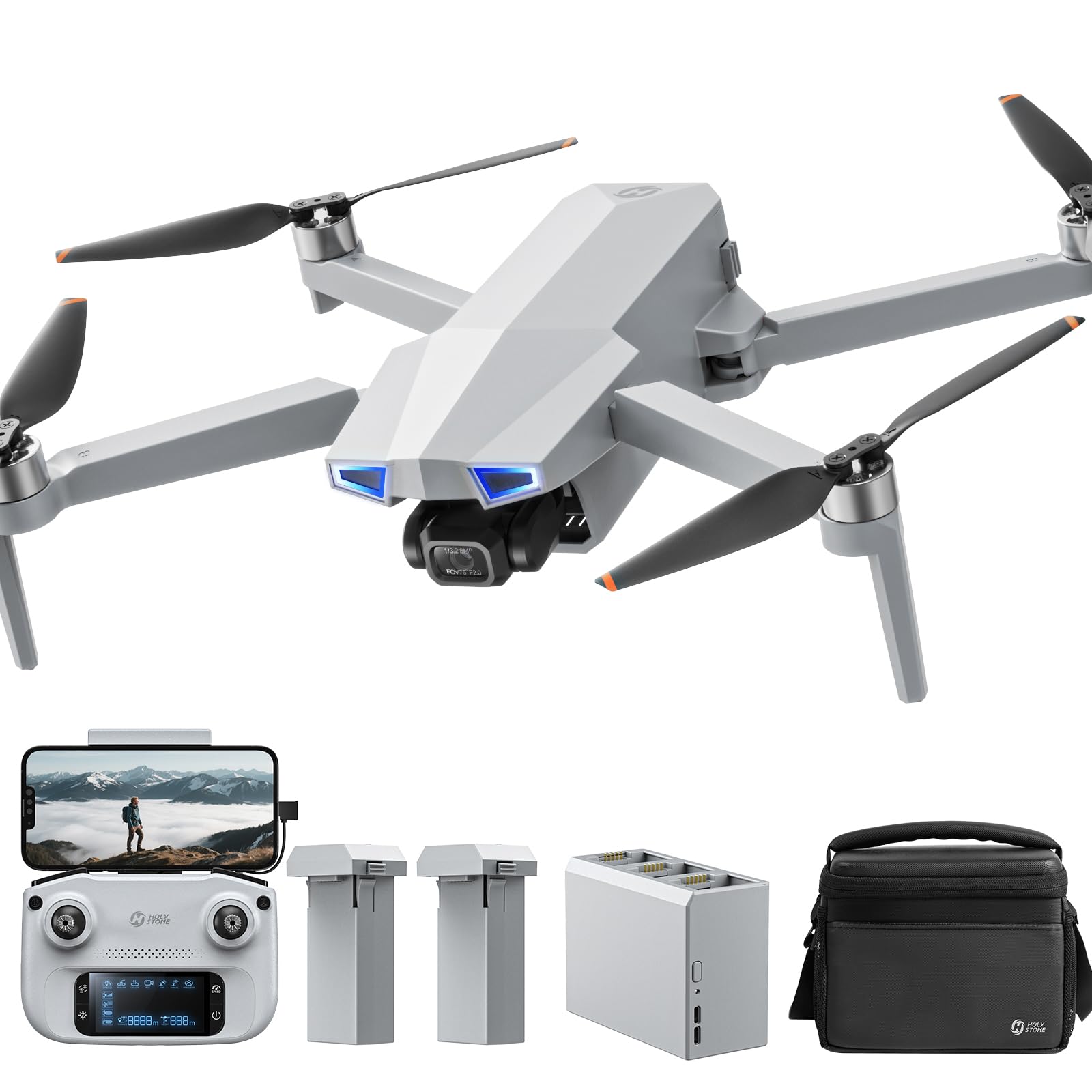
The Holy Stone HS790 offers an impressive 30,000-foot (9 km) HD video transmission range, a standout spec for users who need to observe objects or areas from a great distance while maintaining a safe and hidden launch point. This long-range capability is powered by Holy Stone’s WiFi Repeater tech, which delivers a low-latency 4K FPV feed, essential for maintaining situational awareness far from base.
The camera is stabilized by a true 3-axis brushless gimbal, ensuring the 6K photos and 4K/30fps video are smooth and professional. The AI Night Shot mode is a unique feature for this price tier, enhancing visibility in low-light conditions without requiring a dedicated thermal sensor. The built-in Remote ID (RID) compliance is also a welcome feature, ensuring legal operation in US airspace.
For a mid-range operator, the HS790 offers a compelling combination of raw range, gimbal-stabilized video, and intelligent flight modes. The dual-battery system with a fast-charging hub that doubles as a power bank adds practical field value. It’s a strong choice for long-range reconnaissance of a homestead, a large construction site, or for wildlife observation where you must keep a significant distance to avoid disturbance.
Why it’s great
- Exceptional 30,000ft transmission range for long-distance observation.
- True 3-axis mechanical gimbal for smooth, stable footage.
- Built-in Remote ID compliance ensures worry-free flying.
Good to know
- Weighs more than 250g, requiring FAA registration.
- App can occasionally have bugs or latency issues.
- Gimbal may struggle slightly during fast, tight turns.
10. Ruko F13 Pro Drone

The Ruko F13 Pro is a strong entry-level option for someone new to surveillance drone operations. It captures 8K photos and 4K/30fps video using a 48MP sensor, which is more than adequate for documenting property conditions or tracking movement. The 3-axis brushless gimbal provides the stabilization needed to produce clean, usable footage, a feature often absent in the cheapest drones.
A major asset is the total flight time of 96 minutes, achieved through three included intelligent batteries. This is a significant endurance advantage for covering a large area during a single session. The sub-249g weight is a key benefit for those who want to avoid the paperwork of FAA registration. The transmission range of 20,000 feet (6 km) provides ample operational distance, and the R2 digital system is reported to be more reliable than standard Wi-Fi.
The Ruko F13 Pro is best for a user who needs a low-cost, low-risk entry point into aerial observation. It is not a high-end sensor platform, but it offers the fundamental building blocks: a gimbal-stabilized camera, long battery life, and simplified regulatory compliance. It’s a fantastic tool for a landowner to patrol their property lines or a small business to inspect a roof, providing professional results without a professional budget.
Why it’s great
- Under 249g, no FAA registration required for recreational or commercial use.
- Excellent 96-minute total flight time from three included batteries.
- Includes a 3-axis mechanical gimbal for smooth video capture.
Good to know
- Lower-resolution sensor than premium models; image quality is good, not great.
- Smaller 1/2.3-inch sensor less capable in low light than 1-inch sensors.
- User reviews note some joystick sensitivity and occasional battery issues.
11. HOVERAir X1 Self-Flying Drone

The HOVERAir X1 is the ultimate tool for quick, personal reconnaissance. Its 125g weight and fully enclosed propeller guard design make it exceptionally safe to launch from a hand, fly around a subject, and land back in a palm. This eliminates the need for a landing pad or clear, open ground, allowing you to deploy it in tight, complex environments like a construction site interior or a crowded yard.
It features automated flight paths (Hover, Follow, Zoom Out, Orbit) that are executed with a single button press, making it accessible for any user. The 2.7K/30fps video is sufficient for capturing clear footage and evidence of a scene. The flight time is a limiting factor, with about 11 minutes per charge, but the combo pack includes a multi-battery charging hub to keep you flying with spares. The 32GB internal storage ensures data security without needing an SD card.
This is not a long-range or high-altitude surveillance platform. Its wind resistance is limited (Level 4), and its camera lacks a gimbal. However, for instant, safe, close-range observation—perhaps checking under the deck for animal activity, inspecting a gutter from a unique angle, or simply keeping an eye on a worksite from a desk chair—its convenience is unmatched. It is the flying body camera of the drone world.
Why it’s great
- Ultra-light 125g design is pocketable and requires no FAA registration.
- Fully enclosed guards allow for safe hand-launching in tight spaces.
- One-button autonomous flight modes eliminate the piloting skill requirement.
Good to know
- Limited flight time (~11 minutes) and wind resistance.
- Camera lacks a gimbal, resulting in less stable footage than other options.
- Primarily designed for dynamic action shots, not static, long-duration observation.
FAQ
Do I need an FAA license to fly a drone for surveillance?
What is the real-world difference between a mechanical and an electronic gimbal?
How is thermal imaging useful for surveillance?
Final Thoughts: The Verdict
For most users, the best drone for surveillance winner is the DJI Mini 5 Pro Fly More Combo because it provides a perfect balance of a powerful 1-inch sensor, robust obstacle avoidance, and a sub-250g form factor that is easy to deploy. If you need professional thermal imaging for night ops, grab the Autel EVO II Dual 640T V3. And for a quick, hands-free reconnaissance tool that goes anywhere, nothing beats the HOVERAir X1.

Mo Maruf
I created WellFizz to bridge the gap between vague wellness advice and actionable solutions. My mission is simple: to decode the research and give you practical tools you can actually use.
Beyond the data, I am a passionate traveler. I believe that stepping away from the screen to explore new environments is essential for mental clarity and physical vitality.