Our readers keep the lights on and my smoothie glass nicely filled. As an Amazon Associate, I earn from qualifying purchases.
Finding a milk your toddler will actually drink without triggering a rash, gas, or a full-blown mealtime battle is a puzzle every dairy-free parent knows well. The texture can be too thin, the flavors too beany, or the nutrition simply doesn’t stack up to what growing bodies need. You need options that deliver real creaminess, solid protein, and the right fortification—all without a hint of lactose or casein.
I’m Mohammad Maruf — the founder and writer behind WellFizz. I’ve spent hundreds of hours cross-referencing nutritional labels, analyzing fortification levels, and reading through real parent feedback to pinpoint which plant-based and goat milk formulas actually work for toddlers.
This guide cuts through the aisle of thin, watery alternatives to find the thick, nourishing options worth pouring. Here is your concise, no-fluff breakdown of the best dairy free milk for toddlers, tested by the only critics that matter—tummies and taste buds.
How To Choose The Best Dairy Free Milk For Toddlers
A toddler’s nutritional needs are specific—high fat for brain growth, adequate protein for muscle development, and reliable sources of calcium and Vitamin D. Not every almond or oat carton meets that bar. The key is looking beyond the label’s front and focusing on three critical specs.
Fat & Protein Density
Whole cow’s milk provides about 8 grams of protein and 8 grams of fat per cup. Many plant milks fall dramatically short. Almond milk often delivers only 1 gram of protein. For toddlers, you want an option closer to 3-5 grams of protein per serving. Oat and pea-based milks tend to perform better here. Goat milk formulas are a strong competitor, matching cow milk’s fat profile with a gentler A2 protein structure that is easier on sensitive guts.
Fortification Levels
Dairy free milks must be fortified to compete. Check for at least 30% of the Daily Value for Calcium, 25% for Vitamin D, and a source of DHA (docosahexaenoic acid) for eye and brain development. Some shelf-stable oat and almond brands are calcium-rich but fall short on DHA, while specialized toddler formulas are built around these exact needs.
Ingredient Cleanliness & Additives
Many plant milks rely on gums, carrageenan, and natural flavors to mimic dairy’s mouthfeel. While safe, some toddlers react poorly to certain emulsifiers. The cleanest options are unsweetened and limit additives to a few recognizable ingredients. Goat milk powders avoid thickeners entirely, and brands like Planet Oat use a simple oat base without artificial preservatives.
Quick Comparison
On smaller screens, swipe sideways to see the full table.
| Model | Category | Best For | Key Spec | Amazon |
|---|---|---|---|---|
| Planet Oat Extra Creamy | Premium Oat | Rich texture & no allergens | 2g protein, extra creamy mouthfeel | Amazon |
| Kabrita Junior Goat | Powdered Formula | Sensitive tummies & gut health | 8g protein, A2 protein, prebiotic fiber | Amazon |
| Similac Go & Grow 360 | Sensitive Formula | Lactose sensitivity & complete nutrition | 5 HMOs, DHA, lutein, non-GMO powder | Amazon |
| Planet Oat Original | Mid-Range Oat | Everyday drinking & cereal | Excellent source of calcium, gluten-free | Amazon |
| Silk Unsweet Vanilla Almond | Budget Almond | Low-cal & flavored coffee/cereal | 25 calories per serving, shelf-stable | Amazon |
In‑Depth Reviews
1. Planet Oat Oatmilk, Extra Creamy (Pack of 6)

Planet Oat’s Extra Creamy formula is the plant-based milk that feels most like whole dairy in the glass. It delivers a thick, non-watery mouthfeel that toddlers accustomed to cow’s milk will accept without protest. Each serving contains 2 grams of protein and soluble fiber from oats, making it a solid foundation for cereal, smoothies, or a warm cup before bed.
The ingredient list is refreshingly clean—free from dairy, soy, gluten, peanuts, tree nuts, and artificial additives. This makes it an ideal option for multi-allergy households. The six-pack of shelf-stable 32-ounce cartons means you can stock the pantry and rotate as needed, which is huge for busy mornings.
Reviews consistently praise its versatility and creamy consistency in coffee and hot chocolate. The only catch is its premium price point compared to standard oat milks, and the need to shake well before pouring as the sediment settles. It’s worth the extra cost for the texture alone.
Why it’s great
- Closest mouthfeel to whole dairy, toddler-friendly
- Free from the top 8 allergens, super versatile
- Shelf-stable, easy to store in bulk
Good to know
- Premium tier compared to standard oat milks
- Must shake vigorously before each use
2. Kabrita Junior Goat Milk Powder for Kids (14 oz)
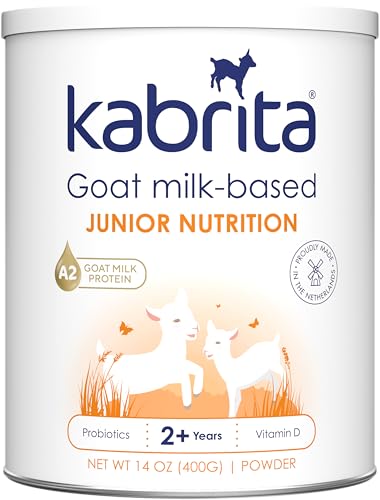
Kabrita Junior is not a plant milk—it’s a goat milk powder specifically formulated for children ages 2 to 7. The critical advantage here is its A2 protein structure, which is naturally easier to digest than the A1 protein found in most cow’s milk. For toddlers with dairy sensitivity but not a true allergy, this is often the bridge back to a creamy, protein-rich drink.
Fortified with Vitamins C, D, and E, calcium, prebiotic inulin, and probiotic Bifidobacterium animalis, it supports both immune function and digestive regularity. The recommended serving provides around 8 grams of protein—matching whole cow’s milk—without the inflammation many toddlers experience.
Parents report that even picky toddlers accept the naturally sweet, mild taste. The powdered format is convenient for travel and portion control. The downside is the higher upfront cost per can, and some toddlers who dislike any “formula” aftertaste may resist the switch initially.
Why it’s great
- A2 protein is gentle on sensitive digestive systems
- High protein content mimics cow milk nutrition
- Added prebiotics and probiotics for gut health
Good to know
- Powder format requires mixing—less convenient than cartons
- Price per serving is higher than plant milks
3. Similac Go & Grow 360 Total Care Sensitive (23.3 oz)

Similac’s Go & Grow 360 is a milk-based sensitive formula, not a plant milk, but it earns its place here because it is explicitly designed for toddlers with lactose sensitivity. The formulation includes 5 different Human Milk Oligosaccharides (HMOs)—a unique prebiotic blend that mimics breast milk’s gut-health benefits—combined with DHA, lutein, and Vitamin E for brain and eye development.
This is the most complete nutritional package on the list, serving as a transition drink rather than a sole nutrition source. It’s non-GMO, free from artificial growth hormones, and contains no palm olein oil. Parents report it reduces gas, fussiness, and bloating in lactose-sensitive toddlers drastically.
The powdered format mixes easily into a smooth drink. The primary drawback is the price—it is the top-tier option here—and the fact that it is a specialized formula, not a direct substitute for sipping milk at mealtime. However, for toddlers needing targeted digestive support, this is the gold standard.
Why it’s great
- 5 HMOs support immune and digestive health uniquely
- Complete DHA, lutein, and Vitamin E for brain and eyes
- Proven to reduce gas and fussiness in sensitive toddlers
Good to know
- Premium price point—a significant monthly cost
- Not a direct milk substitute for sipping; best as a supplement
4. Planet Oat Oatmilk, Original (Pack of 6)

Planet Oat’s Original flavor strikes the perfect middle ground between cost and quality. It offers a smooth, creamy oat milk experience without the heavy price tag of the Extra Creamy variant. It is an excellent source of calcium and naturally free from dairy, gluten, soy, peanuts, and tree nuts, making it a safe choice for households managing multiple allergies.
Toddler-friendly for cereal and warm drinks, this milk has a mild, slightly sweet oat profile that most kids accept readily. The Tetra Pak shelf-stable packaging ensures you can keep a six-pack on hand without refrigeration panic. Parents in reviews note it works great in smoothies and as a baking substitute for cow’s milk.
Where it falls short is protein content—it delivers roughly 1 gram per serving compared to cow milk’s 8 grams. For toddlers who rely on milk for a significant portion of their protein intake, this is a limitation. It is best used as a complementary drink alongside higher-protein foods.
Why it’s great
- Excellent calcium source and allergen-friendly
- Mid-range price makes it sustainable for regular purchase
- Shelf-stable, no refrigeration needed until opened
Good to know
- Low protein content—not a standalone meal replacement
- Mild oat flavor may be too subtle for some toddlers
5. Silk Shelf-Stable Almond Milk, Unsweetened Vanilla (Pack of 6)
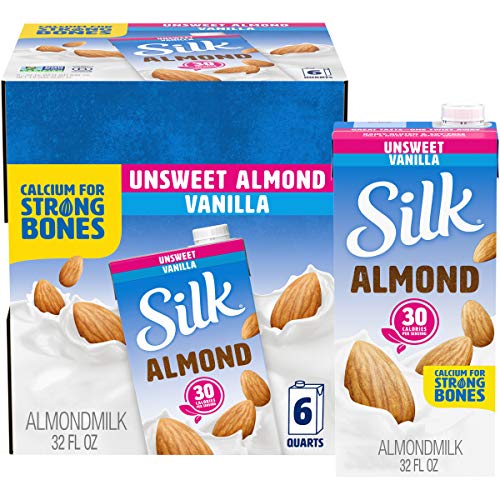
Silk’s Unsweetened Vanilla Almond Milk is the entry-level dairy alternative that’s been a pantry staple for decades. At just 25 calories per serving, it’s incredibly low-calorie—which is both a feature and a limitation for toddlers. The hint of natural vanilla makes it appealing straight from the carton or poured over cereal, and it contains more calcium than dairy milk per serving.
The six-pack of 1-quart shelf-stable cartons provides excellent value for the price. Parents appreciate it for iced coffee and baking, but for toddler nutrition, the protein content is the defining weakness—only about 1 gram per cup. This is best used as a flavored drink or for mixing into smoothies where protein comes from other sources like yogurt or nut butter.
Reviews highlight its smooth texture and consistent taste, though some note the packaging can arrive damaged due to the flimsy bagging in shipping. It is a solid, affordable option for families who want a flavored milk alternative without added sugar, but not a primary nutrition source for growing toddlers.
Why it’s great
- Very low sugar and low calorie, great for diabetics
- Excellent value per ounce in the six-pack
- Subtle vanilla flavor that kids enjoy
Good to know
- Very low protein—not suitable as a toddler’s main milk
- Thinner texture, less creamy than oat or goat options
FAQ
Is oat milk a complete nutritional replacement for cow milk in toddlers?
Can toddlers with a dairy allergy drink goat milk?
How much protein does a toddler need from milk daily?
What does shelf-stable milk mean and is it safe for toddlers?
Final Thoughts: The Verdict
For most toddlers, the best dairy free milk for toddlers winner is the Planet Oat Extra Creamy because its thick, whole-milk-like texture and clean allergen profile make it the easiest swap for dairy. If your toddler has a truly sensitive stomach, grab the Kabrita Junior Goat Milk Powder for its A2 protein and gut-healthy probiotics. And for complete nutritional support during the transition from baby formula, nothing beats the Similac Go & Grow 360 Sensitive with its 5 HMOs and targeted DHA blend.

Mo Maruf
I created WellFizz to bridge the gap between vague wellness advice and actionable solutions. My mission is simple: to decode the research and give you practical tools you can actually use.
Beyond the data, I am a passionate traveler. I believe that stepping away from the screen to explore new environments is essential for mental clarity and physical vitality.