Our readers keep the lights on and my smoothie glass nicely filled. As an Amazon Associate, I earn from qualifying purchases.
Grinding your own grain unlocks fresher flavor, higher nutrient retention, and total control over the final texture of your flour. Whether you’re baking artisan bread, creating custom gluten-free blends, or milling feed for livestock, an electric grain mill transforms whole berries into usable flour in under a minute. The challenge is that most buyers jump into this category focused on motor wattage alone, when the real performance drivers are blade geometry, chamber material, and usable capacity.
I’m Mohammad Maruf — the founder and writer behind WellFizz. I’ve spent countless hours dissecting the engineering choices inside over two dozen electric grain mills, analyzing motor types, safety cutoffs, bearing quality, and the relationship between RPM and heat generation so you don’t have to guess which one actually works for your routine.
This guide breaks down the most reliable models on the market and explains the specs that matter, helping you confidently choose the best electric grain mill for your kitchen or small commercial setup.
How To Choose The Best Electric Grain Mill
Not every mill handles every grain equally. Hard wheat berries, oily spices, and fibrous herbs all place different demands on blade speed, motor torque, and chamber material. Choosing the wrong type means overheating the flour, burning out the motor, or producing an inconsistent grind. Here are the three factors that matter most.
Blade Design and Milling Mechanism
The market splits into two camps: high-speed blade mills (swing-type or upright with triple-blade assemblies) and impact mills that use a spinning rotor to throw grain against a stationary surface. Blade mills, especially those with three-layer blade systems, work well for dry spices, coffee, and medium-fine flour, but they generate more heat and require shorter run cycles (typically 3 minutes on, 5–10 minutes rest). Impact mills, like those from NutriMill and The Kitchen Mill, produce a cooler, more consistent fine flour because the grain is not cut by metal blades—it is shattered by velocity. If your primary goal is fine bread flour for daily baking, an impact mill is the better engineering choice. If you need versatility for herbs, spices, and occasional coffee, a blade mill offers more flexibility.
Motor Power and Run-Duty Cycle
Listed wattage on an electric grain mill can be misleading. A machine rated at 3000W with a 550W actual rated power (the beauty of pulse loads) will grind fine flour in short bursts, but a 1000W continuous-duty motor can run for longer periods without overheating. Pay attention to the interval time specified by the manufacturer. Mills that require a rest period after every 3 minutes of operation are fine for small-batch home use but become frustrating when you need to mill multiple pounds in one session. Commercial models with cast-iron housings and larger disc systems, like the VEVOR unit, are built to run longer because their thermal mass and dual-disc design dissipate heat more effectively. For regular baking of two to three loaves per week, a model with a 3-minute run cycle is acceptable. For larger volumes, upgrade to a continuous-feed impact mill or a disc-style mill.
Chamber Material, Capacity, and Cleanup
The grinding chamber material directly affects food safety and cleaning difficulty. 304 stainless steel is the industry standard for corrosion resistance and easy wiping—you simply brush out residual powder after each use and never submerge the base. Plastic chambers (found on some impact mills) are lighter and quieter but can absorb odors and stain from turmeric or chili. Capacity is the other practical metric: a 300-gram chamber works for single batches of coffee or one loaf of bread, while a 2000-gram chamber lets you grind a week’s worth of flour in one session. However, larger chambers mean heavier units that are harder to store. Also check whether the lid has an open-cover-stop induction switch—this is a critical safety feature that prevents the mill from running if the lid is not properly locked. Models that lack this switch pose a serious injury risk, especially in households with children.
Quick Comparison
On smaller screens, swipe sideways to see the full table.
| Model | Category | Best For | Key Spec | Amazon |
|---|---|---|---|---|
| NutriMill Impact Compact | Impact Mill | Fine bread flour, daily baking | 8-cup hopper, 12-cup canister | Amazon |
| The Kitchen Mill | Impact Mill | Compact fine flour milling | 1000W motor, 24 cups flour in 10 min | Amazon |
| Beautiq 2500g (3600W) | Triple-Blade | Large-batch dry grains, spices | 2500g capacity, 36000 RPM | Amazon |
| VEVOR 3000W | Disc Mill | Wet & dry grinding, feed | Cast-iron body, adjustable thickness | Amazon |
| BI-DTOOL 2000g | High-Speed Blade | High-volume dry grinding | 2000g capacity, 3500W | Amazon |
| CGOLDENWALL 700g | Triple-Blade | Herbs, spices, small grains | 2400W, safety induction switch | Amazon |
| Goldtouch 750g | Triple-Blade | Entry-level family milling | 2800W, 304 stainless steel | Amazon |
| Beautiq 800g | Triple-Blade | Budget-friendly all-purpose grind | 800g capacity, 3000W | Amazon |
| Moongiantgo 300g | Blade Grinder | Small-batch spices, herbs | 300g capacity, 1500W | Amazon |
In‑Depth Reviews
1. NutriMill Impact Compact
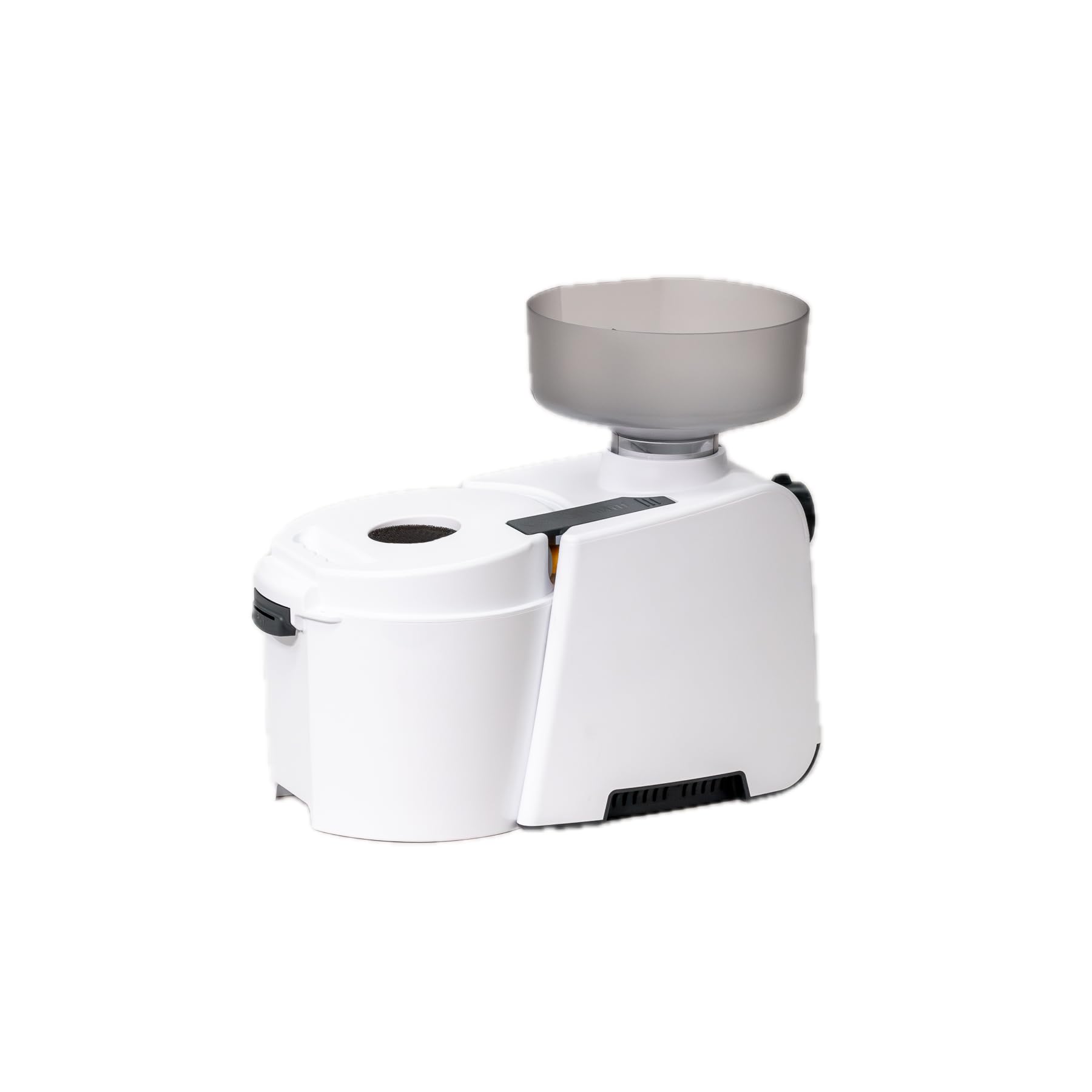
The NutriMill Impact Compact uses a high-speed impact rotor rather than blades, which produces cooler, more consistent fine flour without the risk of overheating the grain’s natural oils. The 1200-watt motor delivers enough torque to process hard red wheat into bread flour in a single pass. The 8-cup hopper and 12-cup flour canister mean you can mill enough for two loaves without refilling, and the patented Cyclone Air Filtration system keeps the milling chamber from clogging during extended runs.
Users consistently report that the fine settings (levels 1 and 2) produce flour indistinguishable from store-bought pastry flour, though some note that the top is tricky to clean because of the crevices around the impact chamber. The design nests together for compact storage, and the single-knob operation makes it accessible even for beginners.
The noise level is moderate compared to blade-style mills—still audible, but the milling cycle is typically under three minutes, so the disruption is short-lived. For anyone committed to daily fresh-flour baking, this mill delivers the most consistent results with the least heat generation.
Why it’s great
- Impact milling creates cooler, more consistent fine flour
- 12-cup flour canister handles large baking sessions
- Cyclone air filtration prevents clogging
Good to know
- Fine settings slow down for very hard grains
- Top is difficult to clean thoroughly
2. The Kitchen Mill

The Kitchen Mill is a compact impact mill assembled in the USA with a 1000-watt motor and a stainless steel milling chamber that never gums, jams, or glazes. It can produce up to 24 cups of flour in under ten minutes — enough for a week’s worth of baking in a single sitting. The transparent mill pan lets you monitor flour output visually, so you never overfill the container.
Users highlight the extremely fine flour texture as a standout feature, especially for gluten-free baking with millet and sorghum. The mill is lightweight at eight pounds and measures just 10 inches wide, making it one of the most space-efficient options on the market. The downside is noise — it is loud enough that ear protection is recommended during use.
The cover is made of clear plastic, and several long-term users report that the attachment mechanism feels less robust than the rest of the unit. The 90-day warranty is shorter than competitors, though the company offers refurbished units at a discount. If you prioritize output speed and fine flour quality in a small footprint, this is a strong choice.
Why it’s great
- 24 cups flour in under 10 minutes
- Stainless steel chamber never gums
- Lightest and most compact impact mill
Good to know
- Loud enough to require ear protection
- Plastic cover feels less durable
3. Beautiq 2500g (3600W)
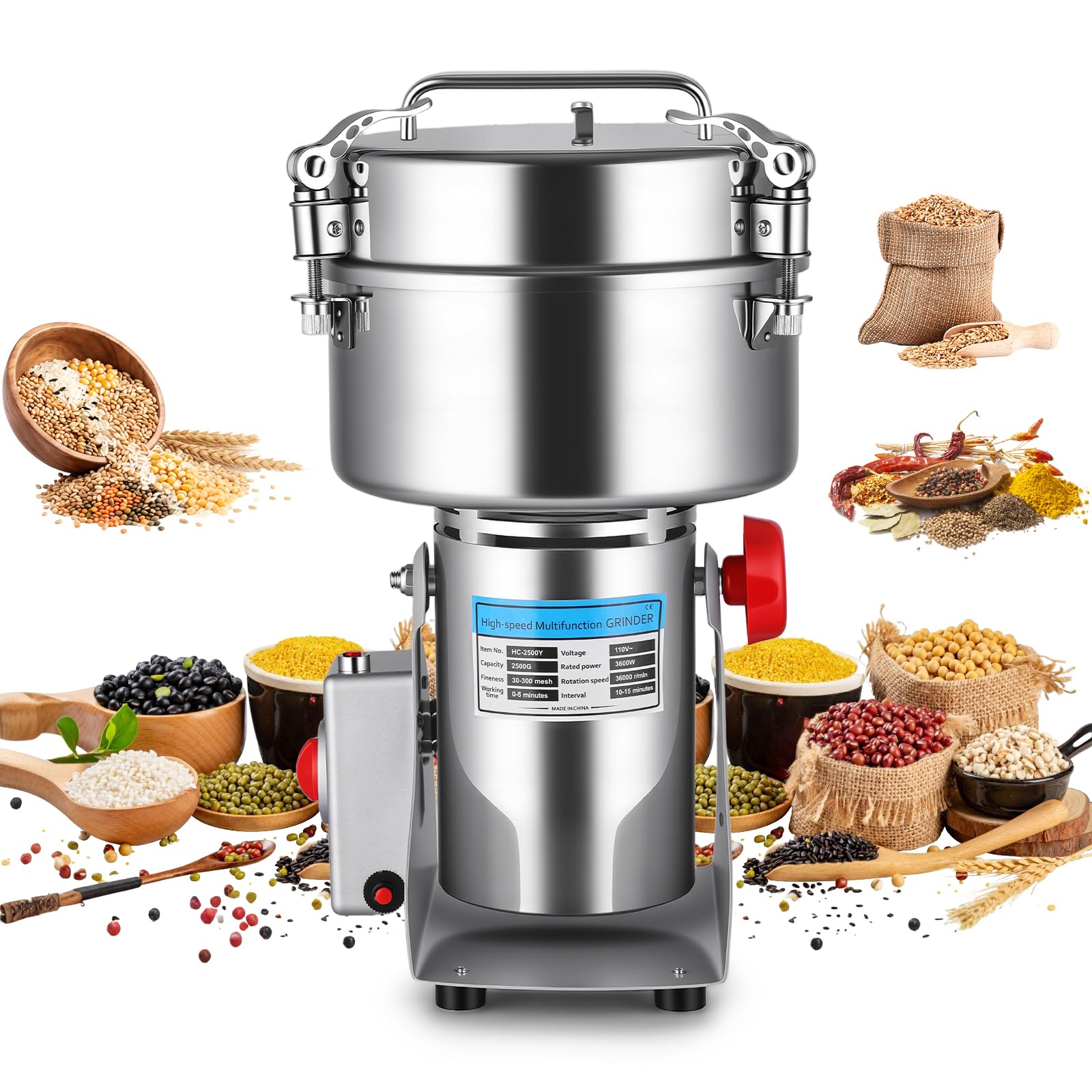
The Beautiq 2500g is a triple-blade mill powered by a 3600W copper motor spinning at 36,000 RPM, delivering flour fineness from 30 to 300 mesh. The 2500-gram stainless steel jar allows you to grind a large batch of wheat, corn, or coffee beans in a single cycle, making it ideal for small commercial settings like coffee shops or high-volume home kitchens. The 270-degree swing arm lets you tilt the unit for easy flour removal without lifting the full weight.
Built-in overload protection and a secure buckle-lock lid provide a solid safety net, and the manufacturer recommends a 3-minute operation window followed by a 5–10 minute cool-down — standard for high-speed blade mills. Users report ultra-fine flour results, especially when using the included sifter to re-grind coarse remnants.
Cleanup requires wiping with a dry cloth only, as the jar is not removable for submersion. The unit is heavy at over sixteen pounds, so countertop storage is more practical than shelf storage. For anyone needing large-capacity milling without the price tag of a commercial disc mill, this is a high-value option.
Why it’s great
- 2500g capacity for large-volume grinding
- Triple-blade system reaches 300 mesh fineness
- 270-degree swing arm simplifies flour retrieval
Good to know
- Heavy at over 16 pounds
- Requires 5–10 min rest after each 3 min cycle
4. VEVOR 3000W Commercial Mill

The VEVOR 3000W is a disc-style mill with two interchangeable milling discs: a cast-iron disc for dry grinding and a white corundum sand disc for wet grinding. This dual-disc system lets you process soaked soybeans and rice into pulp for soy milk and rice cakes, or switch to dry grains for flour and feed. The funnel feeding design ensures a steady, uniform flow of grain into the grinding gap, and the adjustable tension knob lets you control the coarseness of the output.
The 3000W motor and cast-iron body are built for continuous operation — this is not a pulse-style machine. Users who run it for animal feed report consistent results with corn and layer pellets, though pellets larger than 5/16-inch can cause bridging in the hopper. The noise level is surprisingly low for a motor of this power due to the heavy iron dampening vibration.
The main drawback reported is that the wet grinding disc can develop mold in the porous material after a single use, and VEVOR’s replacement discs are not always non-porous. For dry grinding and occasional wet use with thorough drying, this mill offers unmatched versatility for the price range.
Why it’s great
- Dual discs for wet and dry grinding
- Adjustable thickness dial for coarse to fine
- Cast-iron body dampens sound and vibration
Good to know
- Wet disc can develop mold if not dried properly
- Funnel struggles with pellets over 5/16-inch
5. BI-DTOOL 2000g Electric Grain Mill

The BI-DTOOL 2000g packs a 3500W motor and 36,000 RPM into a 2000-gram stainless steel chamber, making it one of the most powerful blade mills in its segment. The safety induction switch halts operation the instant the cover is opened, and the overload protector automatically cuts power if the motor exceeds safe temperature — a crucial feature given the high RPM and extended run potential.
Users report that it grinds two cups of grain to fine powder in roughly two minutes, and the included brush makes cleanup manageable despite the non-removable jar. Several reviewers warn that the blade velocity generates noticeable heat, so short 5-10 second bursts are recommended for heat-sensitive materials like spices to avoid flavor degradation.
There is a concerning report of the unit failing after five uses, including an electrical shock during operation. This appears to be an isolated example, but the lack of accessible customer support information from the manufacturer is a risk factor. For buyers comfortable with the trade-off between power and QC consistency, the throughput is undeniable.
Why it’s great
- 3500W motor grinds 2 cups in ~2 minutes
- Dual safety mechanisms: lid switch and overload cutoff
- Large 2000g capacity for bulk processing
Good to know
- Reports of early failure and shock risk from some units
- Heat buildup requires burst-style operation
6. CGOLDENWALL 700g Safety Upgraded Grinder

The CGOLDENWALL 700g is built around a 2400W motor and a three-layer blade system that grinds dry grains, herbs, and spices to a fineness of 70 to 300 mesh. The open-cover-stop induction switch forces the lid to be fully locked before the motor can start — a critical safety upgrade that prevents accidental blade exposure. The overload protector automatically shuts down the motor during an overheat condition, and replacing the carbon brushes on both sides restores operation.
The 700-gram capacity is a sweet spot for most home kitchens: large enough to grind a full batch of flour for a loaf of bread, but small enough to fit on a counter without dominating the space. Users report that after six months of weekly use, the machine works as new, and the fine grind on spices preserves flavor oils better than cheap blade grinders. The noise level is a common complaint, though consistent with any high-RPM blade mill.
The included spare blades and carbon brushes add long-term value, and the 1-year warranty provides some peace of mind. This mill is best suited for users who prioritize safety features and want a dependable mid-range option for both grains and fibrous herbs.
Why it’s great
- Safety induction switch prevents accidental start
- Comes with spare blades and carbon brushes
- Proven reliability over months of weekly use
Good to know
- Noticeably loud during operation
- Requires grain to cover the middle blade for best results
7. Goldtouch 750g Grain Mill Grinder

The Goldtouch 750g is a triple-blade mill with a 2800W motor and a chamber made from 304 stainless steel. The powder blades, rotating blades, and dust removal blades work together to produce fine flour from wheat, corn, rice, and soybeans. The timer knob lets you adjust grind time from 0 to 5 minutes, which directly controls fineness without any additional settings.
Users praise the mill for turning dried corn into well-refined cornmeal on the first try, and for handling fibrous ingredients like matake mushrooms in about 30 seconds. The compact footprint — 5.8 inches wide and 13.9 inches tall — fits neatly into most cabinet setups. The unit does recommend a 5-10 minute rest after every 3 minutes of operation, which limits it to batch-style rather than continuous milling.
The included mesh sieve and spare blades add useful value, though some entry-level users note that the user manual’s warnings about overheating can feel restrictive. For anyone starting their fresh-milling journey on a modest budget, this model provides a reliable introduction without breaking into the triple-digit premium tier.
Why it’s great
- 304 stainless steel chamber for food safety
- Timer knob provides simple fineness control
- Compact design fits standard cabinets
Good to know
- Requires 5–10 min rest after 3 min operation
- Not suitable for wet, oily, or sticky materials
8. Beautiq 800g Electric Grain Mill Grinder

The Beautiq 800g uses a 3000W motor and a triple-blade design — grinding blade, rotary blade, and powder removal blade — to pulverize dry grains, spices, and herbs into flour ranging from 50 to 300 mesh in under a minute. The machine includes an automatic lid-stop feature and an overload protector that kicks in when the motor exceeds safe temperature. The 800-gram capacity is sufficient for one to two loaves of bread per batch.
Users consistently note that it produces ultra-fine flour easily, especially when the included sifter separates coarse particles for a second pass. The stainless steel construction prevents flavor transfer between different ingredients, and the buckle structure provides a secure seal during operation. Several users mention the noise level as higher than expected, but acknowledge that all blade mills in this power class are loud.
The cleaning instructions require wiping with a moist paper towel only — the motor base cannot be submerged. For the price, this mill offers an impressive power-to-capacity ratio, but the build quality of the lid latches feels less robust than mid-range competitors. It is a solid entry point for beginners who want to experiment with fresh flour without a large financial commitment.
Why it’s great
- Triple-blade system reaches 300 mesh in under 60 seconds
- Automatic lid-stop and overload protection
- Affordable entry into fresh-milled flour
Good to know
- Noticeably loud during operation
- Lid latch feels less durable over time
9. Moongiantgo 300g Grain Mill Grinder

The Moongiantgo 300g is powered by a 1500W copper motor with a three-layer stainless steel blade assembly that spins at 28,000 RPM, grinding dry materials to 50-300 mesh in 30 seconds to 3 minutes. The 300-gram capacity is suited for grinding spices, coffee, and small grain batches — enough for a single loaf or a week’s worth of seasoning. The safety buckle device on both sides of the lid stops the machine immediately when opened, and the overload protector prevents burnout during extended use.
Users highlight the sturdy build quality and the machine’s ability to produce very fine elephant garlic powder and spice blends. The included spare blades, carbon brushes, and cleaning brush add long-term value, and the 1-year warranty covers free replacement parts. The small footprint — 7.3 inches long and 6.3 inches wide — makes it one of the most counter-friendly options available.
The grinding jar is not detachable, so cleaning requires careful brushing rather than rinsing. Multiple users report that the machine is noisy (a consistent theme with all blade mills), but the short grinding cycle makes the noise tolerable. For budget-conscious shoppers who need a reliable grinder for small-batch spices or single-loaf flour, this is a functional and compact choice.
Why it’s great
- Compact size fits easily on any counter
- Includes spare blades, carbon brushes, and brush
- Safety buckle stops motor when lid opens
Good to know
- 300g capacity limits batch size
- Non-removable jar requires careful brush cleaning
FAQ
Can an electric grain mill grind both dry and wet materials?
What does the “mesh” rating mean for flour fineness?
How long should I let the mill rest between batches?
Why does my electric grain mill smell like burning rubber on the first use?
Final Thoughts: The Verdict
For most users, the best electric grain mill winner is the NutriMill Impact Compact because its impact milling technology produces cooler, more consistent fine flour with lower noise and fewer rest-period limitations than blade-style competitors. If you want the largest capacity per dollar for big-batch dry grinding, grab the Beautiq 2500g. And for commercial-grade versatility with wet and dry grinding capability in one machine, nothing beats the VEVOR 3000W Disc Mill.

Mo Maruf
I created WellFizz to bridge the gap between vague wellness advice and actionable solutions. My mission is simple: to decode the research and give you practical tools you can actually use.
Beyond the data, I am a passionate traveler. I believe that stepping away from the screen to explore new environments is essential for mental clarity and physical vitality.