Our readers keep the lights on and my smoothie glass nicely filled. As an Amazon Associate, I earn from qualifying purchases.
A cycling watch that can’t track a 100-mile ride accurately isn’t a cycling watch—it’s a distraction. Between GPS drift that adds phantom miles and battery anxiety that cuts your ride short, the wrong watch undermines every watt you push through the pedals. This guide isolates the metrics that matter for cyclists: dual-frequency GNSS lock speed, barometric altimeter precision for elevation gain, and battery endurance that survives a full week of training without a charge cord.
I’m Mohammad Maruf — the founder and writer behind WellFizz. I’ve spent hundreds of hours analyzing GPS chipset generations, optical HR sensor architectures, and battery optimization algorithms to separate the watches that serve cyclists from the general-purpose wearables that merely pretend.
Every watch here was vetted for real cycling scenarios—group rides, gravel exploring, structured indoor sessions, and race-day tracking. Whether you prioritize battery life or training load metrics, this is the definitive guide to finding your best cycling watch.
How To Choose The Best Cycling Watch
A watch designed for cycling must solve problems specific to the sport: maintaining satellite lock through tree cover, measuring altitude changes accurately, and surviving sweat-drenched summer centuries. Here are the technical priorities to consider before buying.
GPS Accuracy and Satellite Systems
A watch that tracks only one satellite constellation will lose your signal in canyons, under bridges, or during wooded descents. Look for multi-band, multi-constellation support (GPS, GLONASS, Galileo, BeiDou) to maintain a lock when you need it most. Dual-frequency GPS, found on premium models, eliminates the signal reflection errors that inflate distance readings on urban routes.
Battery Life for Long Rides
A watch that dies six hours into a six-hour ride is useless. Evaluate battery life specifically in GPS mode—not smartwatch mode. For century riders and tourers, 20+ hours of continuous GPS tracking is the baseline. Models with a lower-power GPS mode trade some polling frequency for dramatically extended runtime, which is ideal for all-day adventures where second-by-second breadcrumb tracking matters less.
Barometric Altimeter vs. GPS Altitude
GPS-only elevation data drifts wildly on climbs. A barometric altimeter measures pressure changes to deliver accurate ascent and descent readings—essential for cyclists who train to specific elevation gain targets. The best watches combine barometric data with GPS to self-calibrate, producing trail profiles you can trust for route analysis.
Training Load and Recovery Metrics
Cyclists benefit from metrics that track chronic training load, acute load, and recovery time. Features like HRV status and training readiness tell you whether your body is ready to push watts or needs an easy spin day. For structured training, look for a watch that supports external power meter pairing via ANT+ and Bluetooth so you can see real-time wattage on your wrist.
Quick Comparison
On smaller screens, swipe sideways to see the full table.
| Model | Category | Best For | Key Spec | Amazon |
|---|---|---|---|---|
| Garmin Forerunner 970 | Premium | Triathlon & serious training | 15 days smartwatch, 26h GPS | Amazon |
| COROS PACE Pro | Mid-Range | GPS precision & value | 20 days smartwatch, 38h GPS | Amazon |
| Suunto Race 2 | Premium | Endurance & offline maps | 16 days, 55h best GPS mode | Amazon |
| Apple Watch Ultra 3 | Premium | Adventure & ecosystem | 42h normal, 20h GPS LP mode | Amazon |
| Garmin Forerunner 570 | Mid-Range | Running & triathlon coaching | 11 days smartwatch, 18h GPS | Amazon |
| COROS PACE 4 | Mid-Range | Ultralight daily training | 19 days smartwatch, 41h GPS | Amazon |
| Suunto 9 Peak Pro | Mid-Range | Military-grade durability | 40h best GPS, 300h tour mode | Amazon |
| Apple Watch Series 11 | Mid-Range | Health monitoring & daily wear | 24h normal use | Amazon |
| Amazfit Active Max | Budget | Long battery life on a budget | 25 days smartwatch, 5 ATM WR | Amazon |
In‑Depth Reviews
1. Garmin Forerunner 970

The Forerunner 970 represents Garmin’s most refined cycling-centric platform. Its 560mAh battery delivers 26 hours of continuous GPS tracking and 15 days of smartwatch endurance, meaning a week of daily rides and sleep tracking without touching the charger. The titanium bezel and sapphire lens shrug off trail abuse, while the built-in LED flashlight improves visibility during pre-dawn departures—a detail any early-morning cyclist will appreciate.
Navigation is full-color with built-in topographical maps and multi-band GPS that maintains lock through dense tree cover and urban canyon environments. The training readiness score combines HRV status, sleep quality, and recovery data to tell you when your legs are ready for threshold intervals versus a recovery spin. Paired with an external HRM strap, the watch also tracks running economy metrics like vertical oscillation and ground contact time if you cross-train on foot.
The watch supports external power meter pairing via ANT+, letting you see real-time wattage on the display—a non-negotiable for structured cycling workouts. The learning curve is real; Garmin’s menu depth can overwhelm new users, and the stock silicone band is stiff out of the box. But for anyone who treats cycling as a data-driven sport, the Forerunner 970 is the definitive tool.
Why it’s great
- Multi-band GPS locks accurately under heavy tree cover and tall buildings
- Impressive 26-hour GPS battery covers double centuries and multiday tours
- Built-in LED flashlight adds safety for low-visibility morning or evening rides
Good to know
- Complex menu system requires a learning period to navigate
- Stiff silicone band may need replacement for all-day comfort
2. COROS PACE Pro

The COROS PACE Pro disrupts the mid-range segment with a 1.3-inch always-on AMOLED display hitting 1500 nits of brightness—enough to read your speed and distance in full afternoon glare. The new satellite chipset delivers dual-frequency accuracy that rivals watches costing twice as much, keeping your Strava segments honest on winding singletrack and open-road sprints alike.
Battery performance is the headline here: 38 hours of continuous GPS activity tracking and 20 days of daily use, achieved without sacrificing display quality. USB-C charging eliminates proprietary cable clutter, and the included keychain adapter means one cable charges both your watch and phone. The COROS app provides training status, custom workouts, and detailed activity summaries that export cleanly to TrainingPeaks or Strava.
Free global offline maps with turn-by-turn navigation remove the need for a phone on unfamiliar routes. The touchscreen is responsive, though the crown button is the preferred input during sweaty or gloved efforts. With 32GB of storage, you can load music and maps for your entire region. The PACE Pro lacks a barometric altimeter, however, so elevation tracking relies on GPS—a compromise for altitude-focused riders.
Why it’s great
- Dual-frequency GPS accuracy rivals premium watches at a fraction of the cost
- 38-hour GPS battery eliminates charging anxiety for weeklong training blocks
- USB-C charging with keychain adapter reduces cable clutter
Good to know
- No barometric altimeter—elevation data depends on GPS altitude
- Watch face options are more limited than Garmin or Apple
3. Suunto Race 2
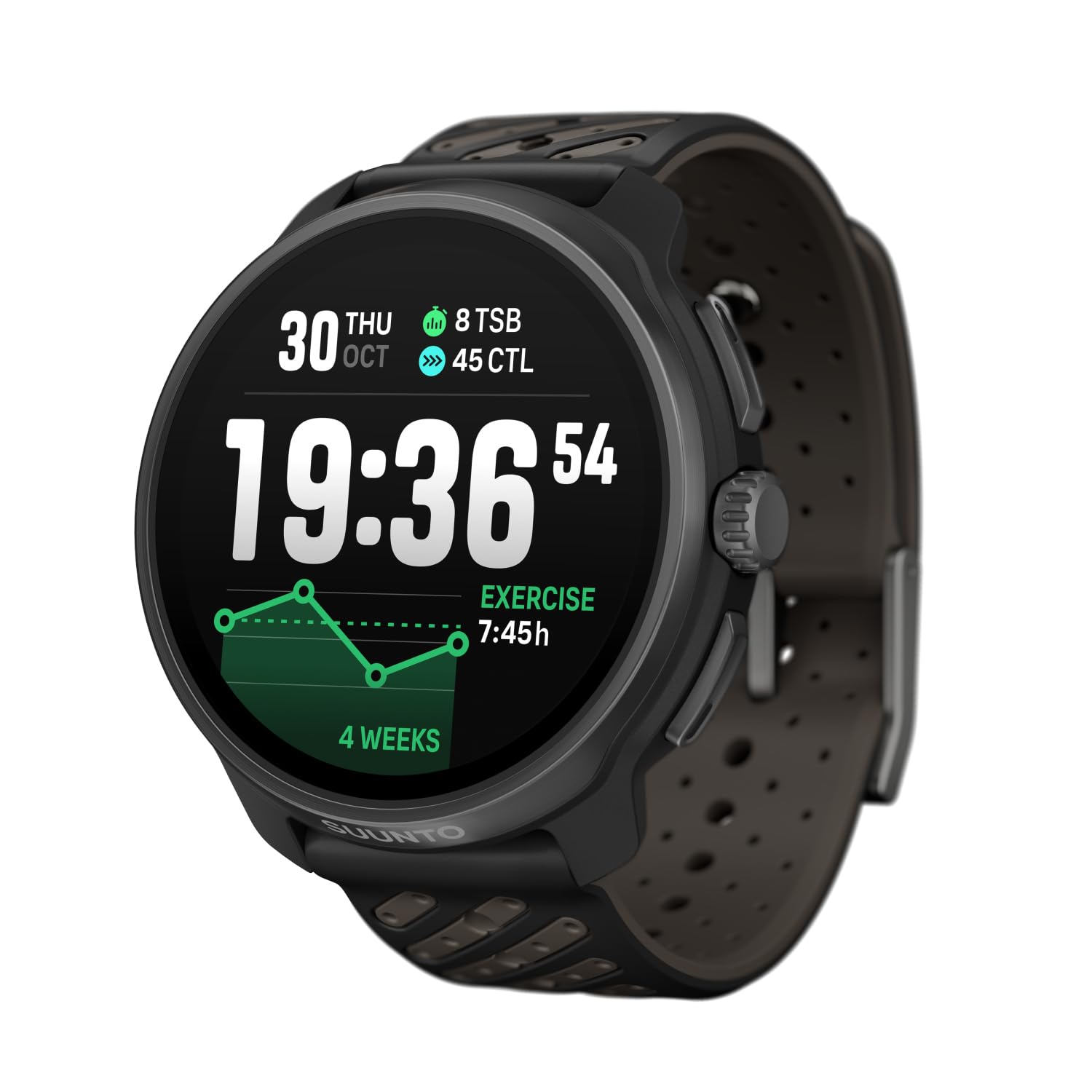
The Suunto Race 2 is engineered specifically for endurance athletes, and its 55-hour best GPS training mode confirms that focus. The 1.5-inch AMOLED touchscreen delivers vivid color maps at 32GB onboard storage—enough to load topographical charts and landscape maps for entire countries. Dual-band GNSS locks quickly in steep canyon terrain, and ClimbGuidance provides real-time ascent and descent data on planned routes.
Heart rate accuracy sees meaningful improvement over the original Race, with optical sensors that track more consistently through high-intensity intervals and long tempo efforts. The titanium case keeps weight down—lighter than the Suunto 9 Peak Pro—while maintaining the water resistance needed for swim-to-bike transitions in triathlon. Suunto Coach delivers evolving training guidance tailored to your goal race distance and current fitness level.
The Suunto app presents data in a simplified interface that avoids the information overload of some competitors. Customizing data screens for cycling is more involved than it should be, and the lack of music playback support is a miss for riders who prefer audio entertainment. But for trail riders and ultra-endurance cyclists who need offline navigation and marathon-range battery life, the Race 2 is a top-tier companion.
Why it’s great
- Huge 32GB storage for global offline topographical maps
- 55-hour GPS battery covers the longest endurance events
- Lightweight titanium design with refined HR sensor accuracy
Good to know
- Data screen customization has a steep setup curve
- No onboard music playback or storage for audio
4. Apple Watch Ultra 3
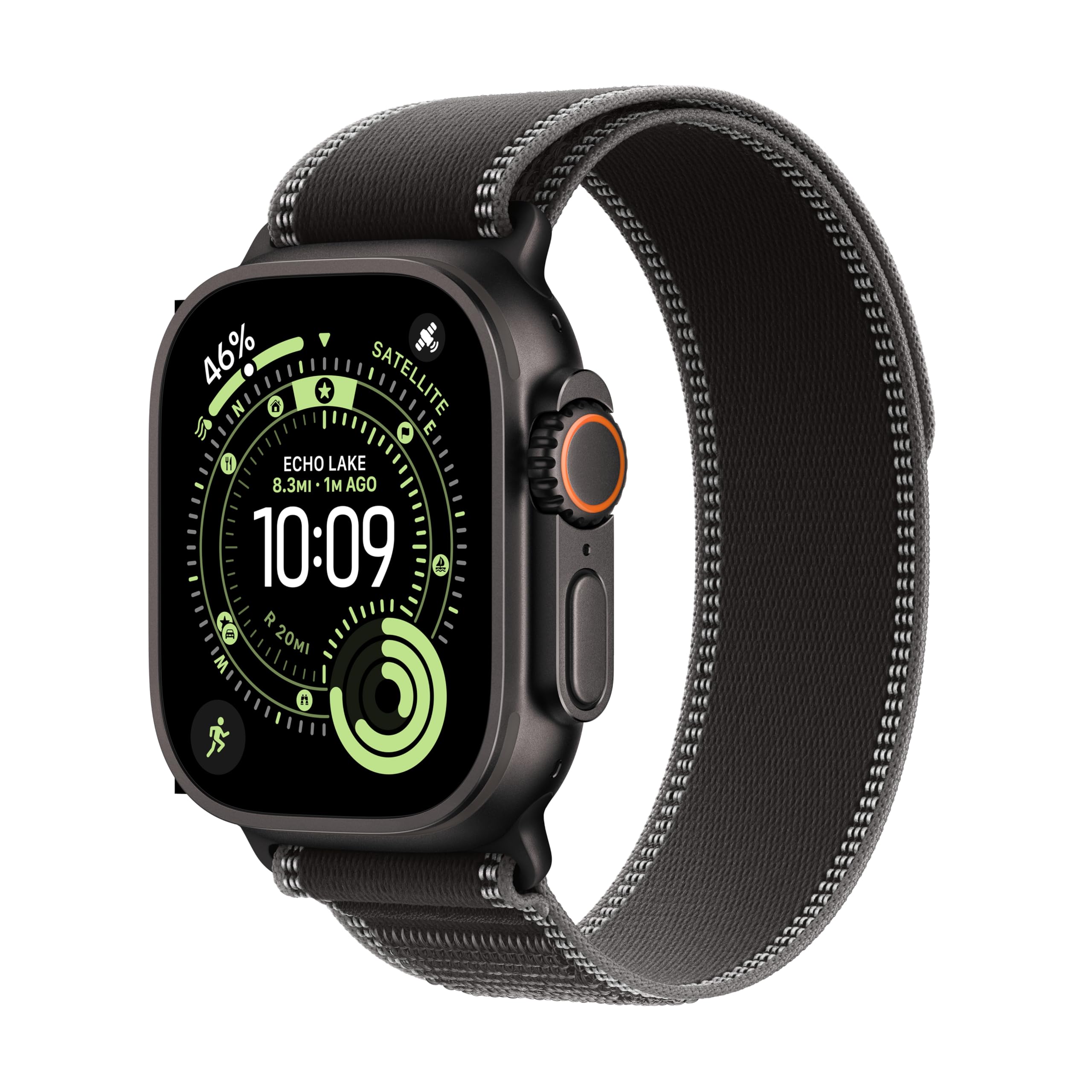
The Apple Watch Ultra 3 brings dual-frequency precision GPS to a rugged titanium chassis rated to 100 meters of water resistance. The 49mm sapphire crystal display is the brightest and most readable of any Apple Watch, with wider viewing angles that make glancing at speed and distance seamless during a sprint. Satellite texting via the built-in cellular modem provides real safety net coverage for solo gravel riders and remote touring.
Battery life reaches 42 hours of normal use and up to 72 hours in Low Power Mode—enough for a weekend bikepacking trip without a charging pack. The customizable Action Button starts a cycling workout instantly, and Workout Buddy powered by Apple Intelligence offers motivation and pacing cues through connected AirPods. Health monitoring is comprehensive: ECG, blood oxygen, sleep apnea detection, and fall/crash detection that can alert emergency services automatically.
The Ultra 3 pairs seamlessly with iPhone but offers limited utility outside Apple’s walled garden. Cycling-specific metrics like power meter pairing and training load analysis are less advanced than Garmin or COROS equivalents. The price point is high, and 42-hour battery—while strong for an Apple Watch—lags behind dedicated sports watches for multi-day events. For the rider who wants a premium everyday wearable that handles serious cycling duties, the Ultra 3 is unmatched in ecosystem depth.
Why it’s great
- Dual-frequency GPS with satellite texting for remote ride safety
- Brightest Apple Watch display with wide-angle readability
- Crash detection and fall alerts provide peace of mind on solo rides
Good to know
- Battery life is shorter than dedicated sports watches in GPS mode
- Limited integration with power meters and cycling-specific platforms
5. Garmin Forerunner 570
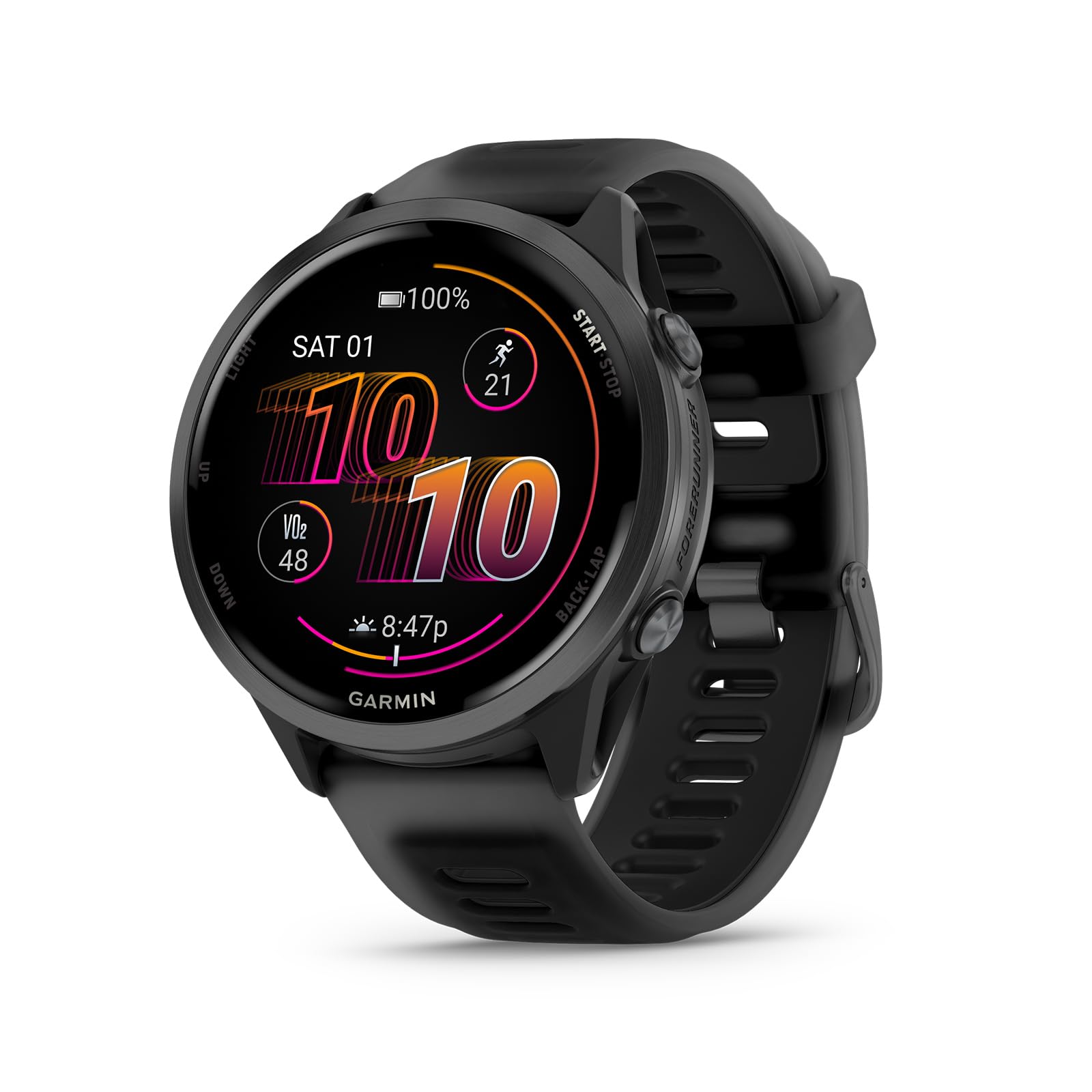
The Forerunner 570 distills Garmin’s most advanced training features into a 47mm package with a brilliant AMOLED touchscreen and button controls. Garmin Coach creates adaptive running and triathlon plans, but the integrated cycling modes—including power meter pairing via ANT+ and multisport auto-transition—make it a capable cycling companion. Training readiness combines HRV status, sleep quality, and recovery data to guide your daily effort.
Battery life is rated at 11 days in smartwatch mode and 18 hours in continuous GPS mode—adequate for daily commutes and weekend club rides, but short of the endurance needed for century-plus adventures. The aluminum bezel is lighter than the titanium 970, and the built-in microphone and speaker let you take phone calls or use your smartphone’s voice assistant without reaching for your pocket.
The morning report delivers an overview of sleep, recovery, training outlook, and weather—helpful for planning your ride before coffee. The main compromise is battery life: 18 hours of GPS limits the 570 to shorter trips unless you carry a charging cable. For cyclists who train primarily in 2-4 hour windows and value Garmin’s ecosystem depth, the 570 offers premium coaching features at a more accessible price point.
Why it’s great
- Garmin Coach provides adaptive training plans for cycling events
- Bright AMOLED display is easy to read in direct sun and low light
- Built-in mic and speaker enable hands-free calls and voice assistant use
Good to know
- 18-hour GPS battery is insufficient for multi-day touring
- Silicone band can feel uncomfortable during long rides
6. COROS PACE 4
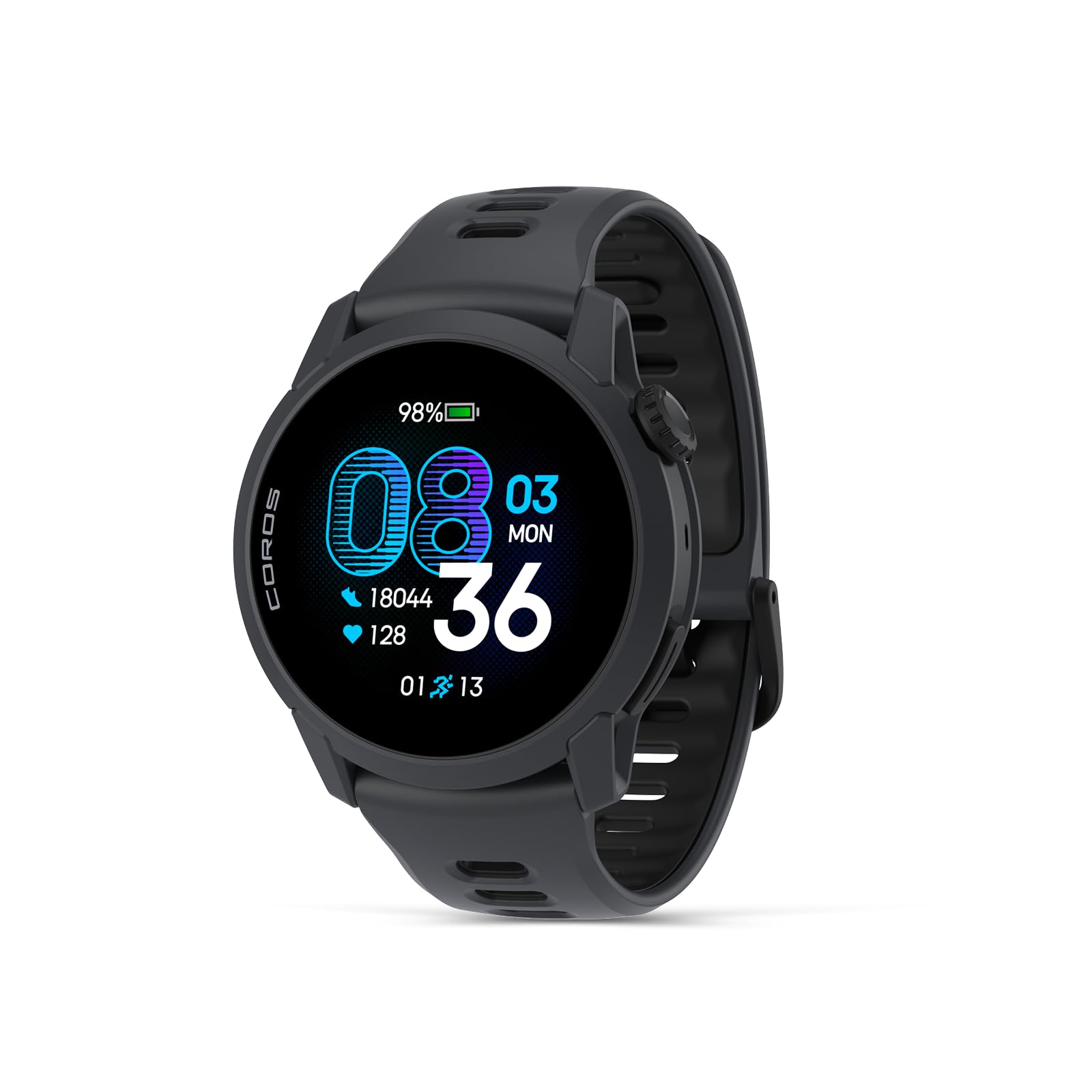
At just 32 grams with the nylon band, the COROS PACE 4 is lighter than a standard cycling glove and disappears on your wrist during high-effort climbs. The 1.2-inch AMOLED touchscreen boasts 164% higher resolution than the PACE 3, with auto-adjusting brightness that stays readable through changing light conditions. GPS accuracy is excellent for the category, and 41 hours of continuous tracking means you can ride through a weekend stage race without pause.
The voice recording tool lets you capture ride notes—where you spotted a road hazard, how your legs felt at mile 60, what wind conditions were like—directly at the completion of an activity. Voice control handles alarms and workout creation without menu diving. The digital crown and two buttons provide reliable input during sweaty or gloved use, and the customizable Action Button offers one-tap access to breadcrumb navigation or media controls.
The PACE 4 lacks onboard music storage and offline mapping, so riders who navigate unfamiliar routes will need their phone. The 4GB storage is enough for basic map cache but not full topographical overlays. For the weight-conscious cyclist who prioritizes accurate tracking and long battery endurance over bells and whistles, the PACE 4 delivers a compelling, minimalist package.
Why it’s great
- Ultralight 32g design reduces wrist fatigue during long rides
- 41-hour GPS battery easily covers stage races and all-day epics
- Voice recording captures ride notes and training reflections hands-free
Good to know
- No onboard music storage or offline topographical mapping
- Smaller 1.2-inch screen may be difficult to read at a glance while sprinting
7. Suunto 9 Peak Pro

The Suunto 9 Peak Pro brings military-grade durability to the cycling watch category, with a titanium and stainless steel case, sapphire glass, and 100-meter water resistance. Handcrafted in Finland, it’s built to survive crashes on rocky descents and full submersion during bike-wash sessions. The MIP display—memory-in-pixel—stays always-on with zero battery drain from constant illumination, a meaningful advantage for riders who want data visible without gesture activation.
GPS accuracy relies on four satellite systems and delivers quick lock times even in steep mountain terrain. Battery performance spans 40 hours in best GPS mode, 70 hours in endurance mode, and a staggering 300 hours in tour mode—ideal for bikepacking trips measured in days, not hours. A 10-minute charge provides two hours of GPS tracking, so you can top off during a coffee stop. The 97 sport modes include dedicated cycling, mountain biking, and gravel profiles.
The MIP display lacks the contrast and color pop of AMOLED panels, making map reading less vibrant. Stairmaster heart rate accuracy is reported as inconsistent, though cycling HR data is more reliable. The 9 Peak Pro is a generation behind the Race 2 in sensor refinement, but the construction quality and tour-mode battery endurance remain unmatched for ultra-endurance cyclists who prioritize toughness above all else.
Why it’s great
- Military-grade titanium and sapphire build survives extreme abuse
- 300-hour tour mode battery supports multi-week bikepacking trips
- 10-minute quick charge gives 2 hours of GPS tracking on a break
Good to know
- MIP display lacks the vibrancy and contrast of modern AMOLED screens
- Heart rate sensor shows inconsistency during certain indoor workouts
8. Apple Watch Series 11
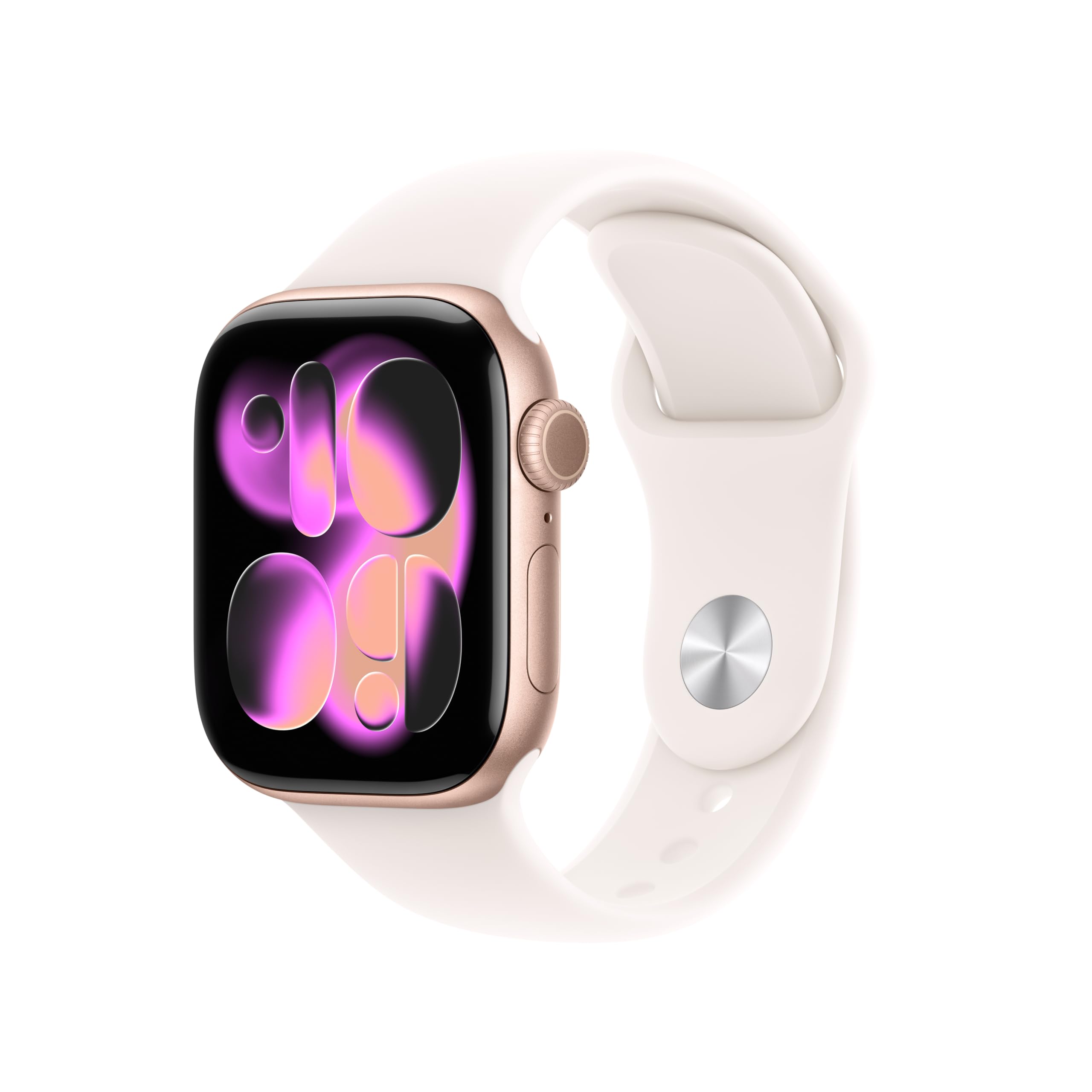
The Apple Watch Series 11 brings advanced health features into a cycling-friendly form factor. The always-on Retina display is twice as scratch-resistant as Series 10, and the 42mm case is light enough for 24/7 wear—including sleep tracking that generates a daily sleep score plus sleep apnea notifications. ECG readings, high/low heart rate alerts, and hypertension notifications provide medical-grade insight that goes beyond what most sports watches offer.
For cyclists, the Series 11 offers dual-frequency GPS, heart rate zones, Pacer, and training load metrics. The battery lasts up to 24 hours, which is enough for a full day of riding and recovery, and fast charging delivers 8 hours of use from a 15-minute top-up. Crash detection automatically contacts emergency services if it detects a severe car or bicycle impact, adding a critical safety net for solo road riders.
The main limitation is battery endurance: 24 hours of normal use means daily charging is mandatory, and continuous GPS tracking will deplete the watch faster during all-day rides. The lack of native ANT+ power meter pairing and limited cycling-specific training analysis puts it behind dedicated sports watches for structured training. For the cyclist who values comprehensive health monitoring and deep iPhone integration over advanced performance metrics, the Series 11 is a compelling daily companion.
Why it’s great
- ECG, sleep apnea, and hypertension detection provide medical-grade insight
- Crash detection with automatic emergency notification adds safety for solo riding
- Fast charging gives 8 hours of use from a 15-minute charge
Good to know
- 24-hour battery requires daily charging, limiting multi-day ride capability
- No ANT+ power meter pairing or advanced cycling training analysis
9. Amazfit Active Max
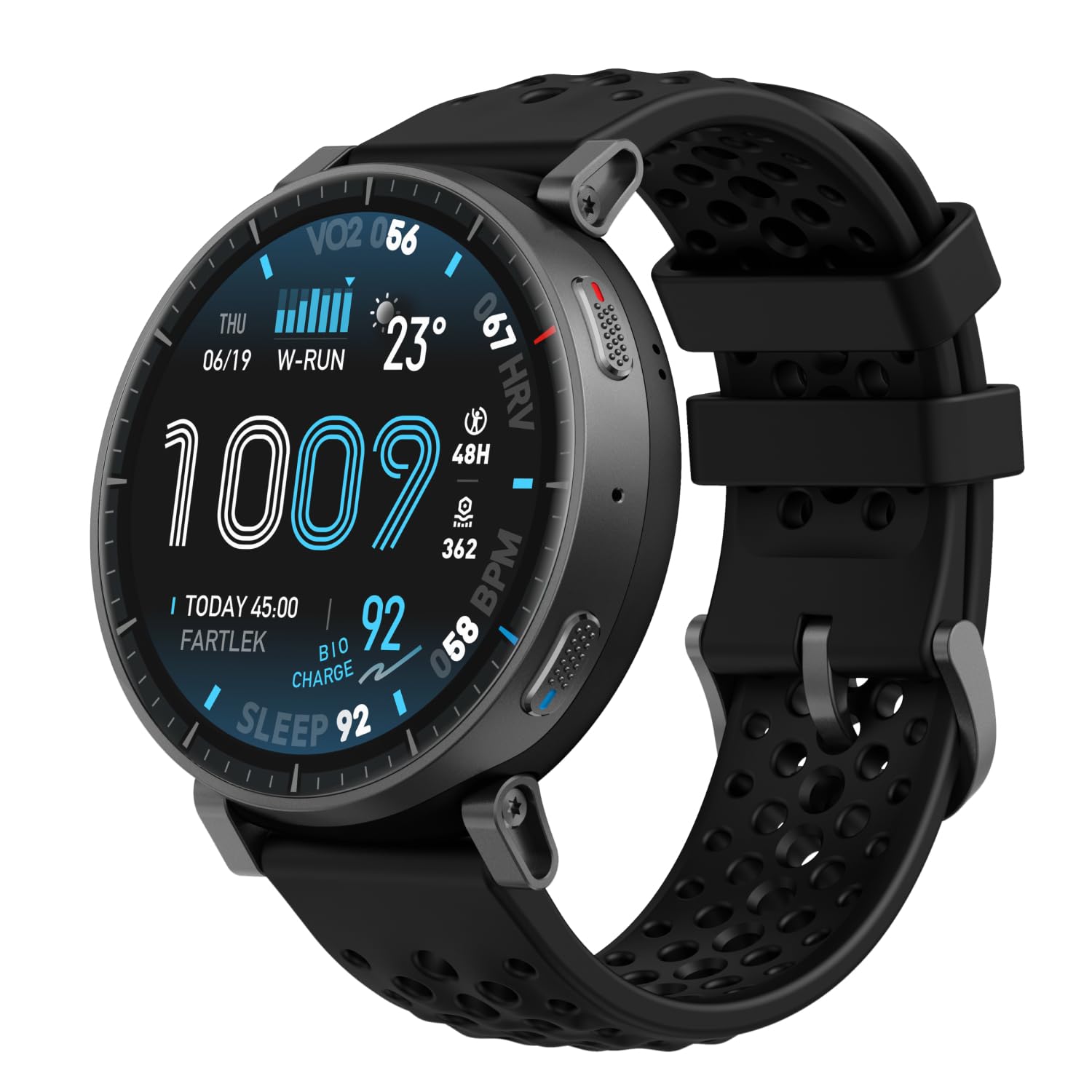
The Amazfit Active Max enters the cycling watch conversation on value: a 1.5-inch 3000-nit AMOLED display, 25-day battery life, and 4GB of onboard storage for music and downloaded maps, all at an aggressive price point. The 5 ATM water resistance means it survives rain, sweat, and pool swims without hesitation, and the five-satellite positioning system provides acceptable tracking accuracy for city cycling and paved trail riding.
The BioCharge energy monitoring score helps pace your training week, and Zepp Coach generates personalized running plans (3K through marathon distance). The Active Max includes 170+ sport modes with dedicated cycling, mountain biking, and indoor cycling profiles. Turn-by-turn navigation using downloaded offline maps is functional, though map rendering lacks the detail of Garmin or Suunto topographical displays. Bluetooth calling and voice reply via Zepp Flow keep you connected without pulling out your phone.
The biggest compromises are in GPS precision—multi-band support is absent, so accuracy degrades under heavy tree cover and in dense urban corridors—and the lack of ANT+ connectivity, which prevents pairing with external power meters or cadence sensors. For the casual cyclist who wants a bright screen, excellent battery life, and broad health tracking without investing in a dedicated sports watch ecosystem, the Active Max delivers exceptional value per watt.
Why it’s great
- 25-day battery life far exceeds any dedicated sports watch in this range
- 3000-nit AMOLED display is the brightest in this category for outdoor readability
- 4GB storage for offline maps and music without phone dependency
Good to know
- No multi-band GPS—accuracy drops under tree cover and in city canyons
- Lacks ANT+ connectivity, so external power meters and cadence sensors won’t pair
FAQ
Do I need multi-band GPS for road cycling?
Can a cycling watch pair with a power meter?
How long should battery life be for cycling?
Is an AMOLED or MIP display better for outdoor riding?
What is a barometric altimeter and why does it matter for climbing?
Final Thoughts: The Verdict
For most cyclists, the best cycling watch winner is the Garmin Forerunner 970 because it combines multi-band GPS accuracy, 26-hour GPS battery, and comprehensive training metrics with a titanium build that handles the demands of road, gravel, and triathlon equally well. If you want the highest GPS battery endurance in a lightweight package, grab the COROS PACE Pro. And for rugged durability paired with 300-hour tour-mode battery life for bikepacking, nothing beats the Suunto 9 Peak Pro.

Mo Maruf
I created WellFizz to bridge the gap between vague wellness advice and actionable solutions. My mission is simple: to decode the research and give you practical tools you can actually use.
Beyond the data, I am a passionate traveler. I believe that stepping away from the screen to explore new environments is essential for mental clarity and physical vitality.