Our readers keep the lights on and my smoothie glass nicely filled. As an Amazon Associate, I earn from qualifying purchases.
The smell of rotting fruit, the inevitability of fruit flies, and the guilt of tossing vegetable peels into a landfill-bound trash bag — these are the daily pains that the best electric kitchen composter can erase completely. This countertop appliance grinds, heats, and dehydrates (or biologically breaks down) food scraps into a manageable, nutrient-rich substance you can actually use in your garden, all without the mess and odor of traditional methods.
I’m Mohammad Maruf — the founder and writer behind WellFizz. After countless hours analyzing the technical specifications, real-world performance data, and user-reported durability of nine distinct models, I’ve separated the machines that truly deliver on their promises from those that leave you with a bucket of burnt-on sludge.
This guide breaks down everything from motor torque and carbon filter life to capacity and noise levels, so you can confidently choose the right electric kitchen composter for your home and lifestyle.
How To Choose The Best Electric Kitchen Composter
Not all electric composters are created equal. Some rapidly dry and grind scraps into a dry, coffee-ground-like material, while others use microbe cultures to produce true compost. The right choice depends on your volume of waste, your tolerance for noise, your garden needs, and how much maintenance you are willing to perform.
Capacity and Motor Power
The size of the bucket, measured in liters, directly dictates how often you need to empty the machine. A 2.5-liter model fits small households processing green trimmings and eggshells, while a 19-liter unit can handle the daily output of a large family. Motor torque and wattage determine the machine’s ability to crush tough items like avocado pits, corn cobs, or small bones without jamming or overheating.
The Odor Control System
An effective carbon filter is the difference between a fresh kitchen and a machine that smells like rotting garbage. Look for models with high-density activated carbon filters and pay attention to the manufacturer’s recommended replacement interval (typically 2 to 6 months). The best units also employ an airtight seal around the lid and a multi-layer filtration system that neutralizes smells before they reach the room.
Dehydration vs. Microbial Composting
The fundamental split in this category is between heat-drying machines that grind and dehydrate scraps into a sterile biomass, and microbial machines that use aerobic bacteria to break waste down into genuine compost. Dehydration units are faster (3-8 hours) and require less daily monitoring, but the output is not true compost — it is a dry, stable base that needs to be mixed into soil to finish breaking down. Microbial models take 24 hours or more but produce a richer, more biologically active compost that can be used directly in garden beds.
Quick Comparison
On smaller screens, swipe sideways to see the full table.
| Model | Category | Best For | Key Spec | Amazon |
|---|---|---|---|---|
| Reencle Gravity 22L | Microbial | Large families & true compost | 22L / 3.3 lbs daily / 24 dB | Amazon |
| GEME 19L | Microbial | Permanent filter & high volume | 19L / 11 lbs daily / 6-8 hour cycle | Amazon |
| Reencle Prime 14L | Microbial | Odor-free microbial composting | 14L / 2.2 lbs daily / 28 dB | Amazon |
| Airthereal Revive R800 | Dehydration | Wi-Fi control & smart tracking | 5L / 90% reduction / 3 modes | Amazon |
| Food Cycler Eco 5 | Dehydration | Tough grinding & large bucket | 5L / Vortech system / 3-year warranty | Amazon |
| Ouaken OK-255 5.5L | Dehydration | Largest dehydration capacity | 5.5L / 5 modes / 45 dB | Amazon |
| Soliddis 4.2L | Dehydration | Value & quiet drying | 4.2L / <45 dB / 900ml carbon filter | Amazon |
| Ouaken 4L | Dehydration | Budget-friendly entry model | 4L / <40 dB / Aluminum alloy blades | Amazon |
| Luma by Newair 2.5L | Dehydration | Compact countertop fit | 2.5L / smart sensor / 55 dB | Amazon |
In‑Depth Reviews
1. Reencle Gravity Electric Composter (22L)
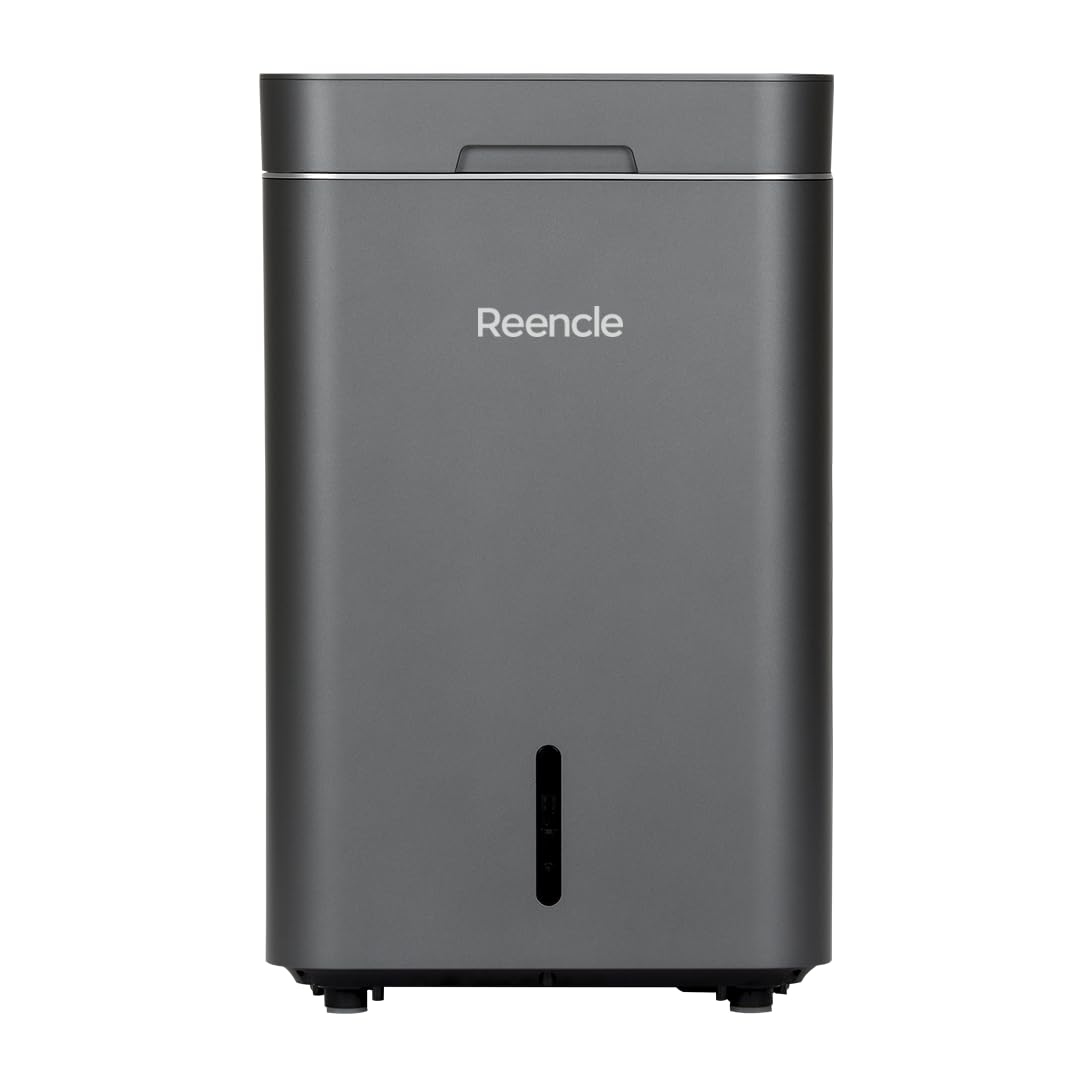
The Reencle Gravity uses patented aerobic microbe technology to break down food scraps into genuine, nutrient-dense compost — not dried biomass. Its 22-liter bucket accepts up to 3.3 pounds of waste daily and processes it in 2 to 24 hours, depending on the load. The whisper-quiet motor runs at just 24 dB, making it the quietest unit on this list by a wide margin.
An integrated 3-layer filter system and airtight seals keep the machine completely odorless during operation. Users report that the output smells like fresh earth or rising bread rather than rotting food. The Gravity also includes weight and time tracking sensors that feed data to a companion app, giving you precise insight into your waste reduction habits.
At 24.9 pounds and over 20 inches tall, this machine demands dedicated counter space, but its capacity means you can go weeks without emptying the bucket. The annual cost of compost starter refills is negligible, and the unit consumes minimal power. For serious gardeners and large households, this is the gold standard.
Why it’s great
- Real microbial composting — not just grinding and drying
- Whisper-quiet 24 dB operation
- Massive 22L capacity handles weeks of waste
- Built-in weight and time tracking with app connectivity
Good to know
- Requires regular compost starter refills to maintain microbe colony health
- Larger footprint — measures over 20 inches tall
- Premium price point reflects the advanced technology
2. GEME Smart 19L Electric Composter

GEME differentiates itself with a permanent built-in filter that never needs replacement, eliminating the recurring expense and hassle of carbon filter swaps. Powered by advanced microbial degradation, it converts up to 11 pounds of food scraps daily into authentic, nutrient-rich organic compost in just 6 to 8 hours — not a dehydrated paste, but real compost teeming with beneficial biology.
The 19-liter bucket accommodates a family of three or more, and the machine operates continuously with an “add-and-go” function: drop in scraps at any time without needing to wait for a cycle to finish. Users confirm it is whisper-quiet and odorless, with an industrial-grade deodorization system that neutralizes smells completely. The unit’s 95% reduction rate means that a full bucket of scraps condenses into just five percent of its original volume.
Some users have reported needing a compost starter refill after about six months of continuous use, and the official refill packets can be difficult to source. The GEME is also heavy at 42 pounds, so it is essentially a permanent fixture on your counter. Still, the combination of a lifetime filter, massive capacity, and fast cycle times makes it an exceptional long-term investment.
Why it’s great
- Permanent filter — zero replacement costs for life
- Massive 19L capacity with 11 lb daily throughput
- Add waste at any time — no waiting for a cycle
- Produces true compost in only 6-8 hours
Good to know
- Very heavy at 42 pounds — not portable
- Compost starter refills can be hard to find
- Represents a significant upfront investment
3. Reencle Prime Electric Composter (14L)
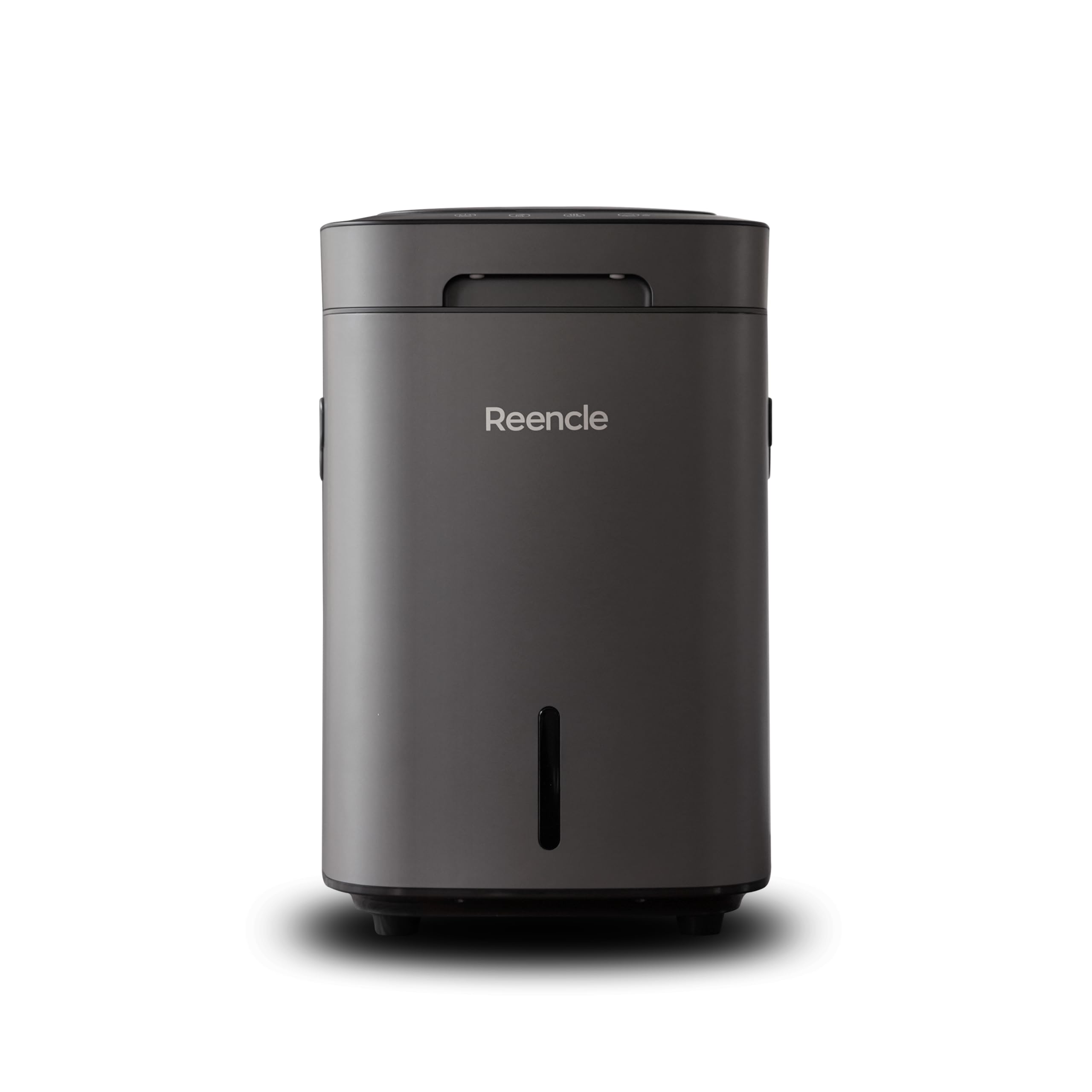
The Reencle Prime is the smaller sibling of the Gravity, sharing the same patented microbe-based aerobic composting system. It processes 2.2 pounds of food scraps daily inside a 14-liter bucket, making it a better fit for households of two to three people. The noise level is rated at 28 dB — barely audible — and the 3-layer filter ensures odor-free operation even during the most active decomposition phase.
Setup is straightforward: add the included compost starter pack, plug it in, and begin feeding scraps. Users report that within 24 hours, even tough items like banana peels and avocado skins are completely broken down into crumbly, garden-ready compost. The machine’s design — compact, square footprint — tucks neatly into a corner without dominating the countertop.
One trade-off is that, like all microbial models, the Prime requires periodic monitoring of moisture levels and filter condition to maintain peak performance. The output is genuine compost rather than dried grindings, which is a significant advantage for those actively gardening. For anyone who wants real compost but does not generate enough waste to justify the 22-liter Gravity, the Prime is the ideal middle ground.
Why it’s great
- Real microbial composting process
- Near-silent 28 dB operation
- Odor-free with multi-layer filtration
- Compact design fits standard countertops
Good to know
- Requires regular moisture and filter monitoring
- Slower 24-hour cycle compared to dehydration models
- Compost starter refills are an ongoing cost
4. Airthereal Revive R800 5L Smart WiFi Composter
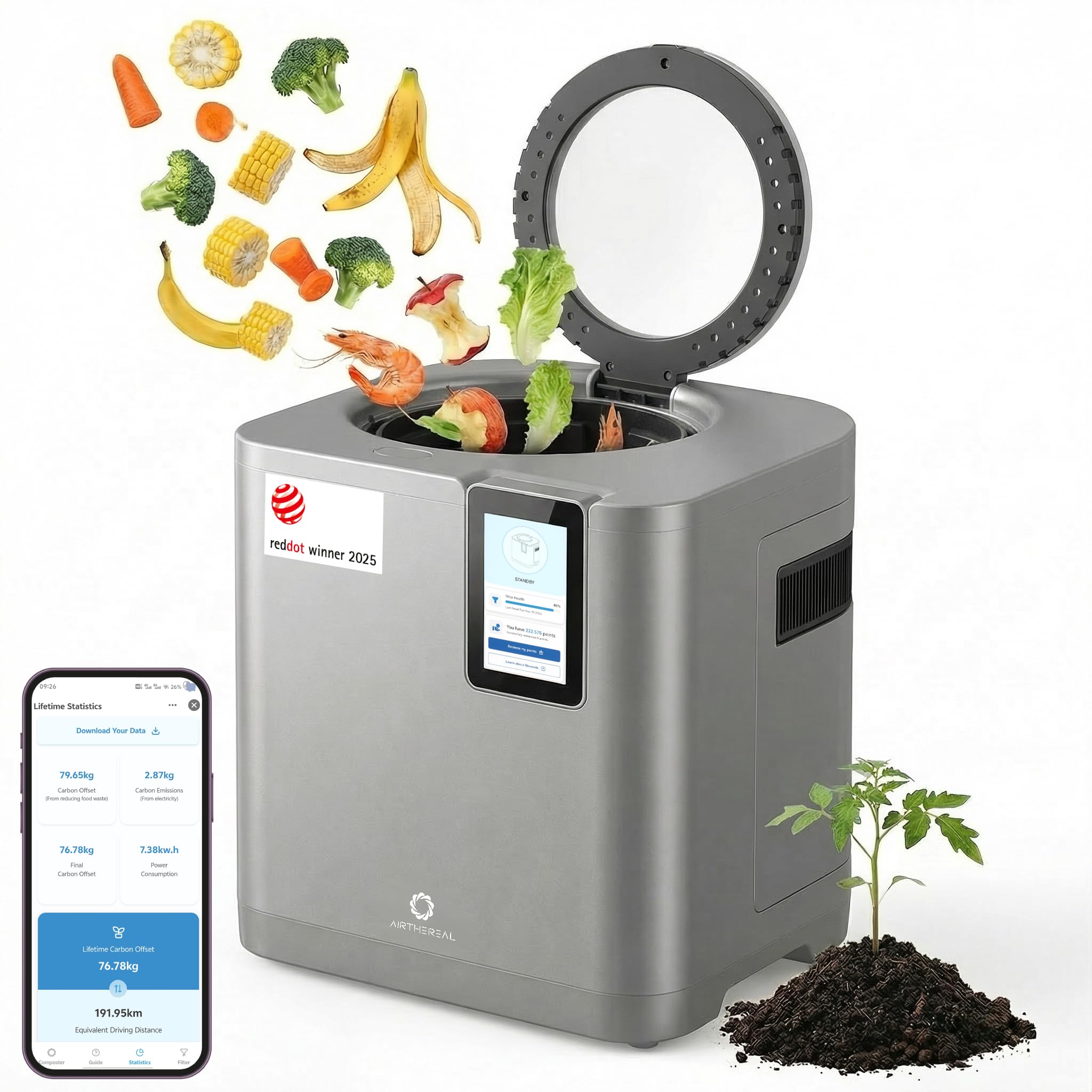
The Airthereal Revive R800 is the only model on this list with native Wi-Fi connectivity, allowing you to monitor composting progress and track your carbon footprint in real time through a smartphone app. The 5-liter capacity makes it suitable for medium-sized households, and the machine offers three distinct modes: Eco Pre-Compost, Bio Compost, and Self-Clean, giving you control over the final output’s texture and moisture content.
A biodegradable carbon filter traps odors effectively, and the machine’s metal-and-plastic construction feels solid on the counter. The R800 earned the 2025 Red Dot Award for its blend of sustainable function and modern design. Users consistently praise its quiet operation and the speed of the Eco Pre-Compost mode, which can reduce waste volume by 90 percent in just a few hours.
A small but notable number of users have reported jamming and overheating errors when processing fibrous materials like banana peels or avocado skins without adding drier matter. The manufacturer recommends balancing wet scraps with dry material and not filling the bucket more than half full to avoid these issues. When used correctly, the R800 delivers consistent, odorless results with the added convenience of app-based tracking.
Why it’s great
- Wi-Fi connectivity for remote monitoring and carbon tracking
- Three versatile processing modes
- Red Dot Award-winning design
- Biodegradable carbon filter for odor control
Good to know
- Can jam if not balanced with dry materials
- Heating errors reported with wet-heavy loads
- Filter replacements required every few months
5. Food Cycler Eco 5
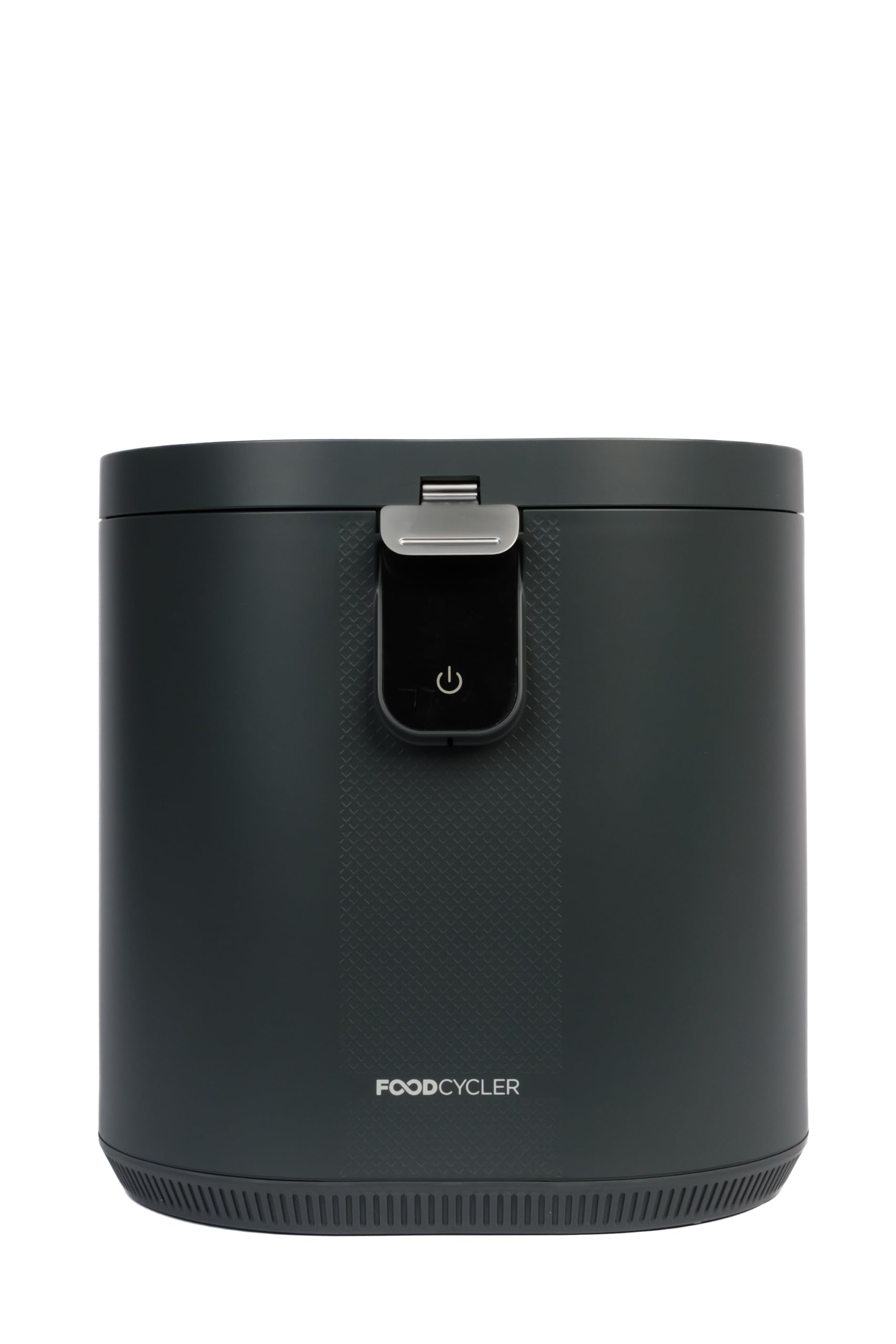
The Food Cycler Eco 5 uses a patented Vortech grinding system that can pulverize items many competitors struggle with: fruit pits, small bones, corn cobs, and fibrous vegetable scraps. The 5-liter bucket is among the largest in the dehydration category, and the machine reduces waste volume by up to 90 percent within an 8-hour cycle. The result is a dry, sterile, coffee-ground-like biomass that can be mixed into garden soil or used as a slow-release fertilizer base.
Users consistently note that the Eco 5 is quieter than the Lomi it replaced for many customers, and the refillable carbon cartridge design makes filter swaps quick and mess-free. The machine includes a one-touch start button, and the three-year limited warranty offers better long-term protection than most competitors in its range. The bucket and lid are removable for easy loading, though some users wish the bucket itself were available as a separate spare part.
Grapes and other high-sugar fruits can produce a slightly wetter final product, so some trial and error is required to find the right moisture balance. The 8-hour cycle is fixed and cannot be shortened. For the price, the combination of grinding power, capacity, and warranty length makes the Eco 5 an outstanding value proposition.
Why it’s great
- Powerful Vortech grinding handles pits and bones
- Large 5L bucket reduces trash volume dramatically
- Three-year limited warranty for long-term peace of mind
- Quieter and easier to maintain than many competitors
Good to know
- 8-hour cycle is fixed — no shorter option
- High-sugar scraps can produce damp output
- Spare buckets are not sold separately
6. Ouaken OK-255 5.5L Electric Composter
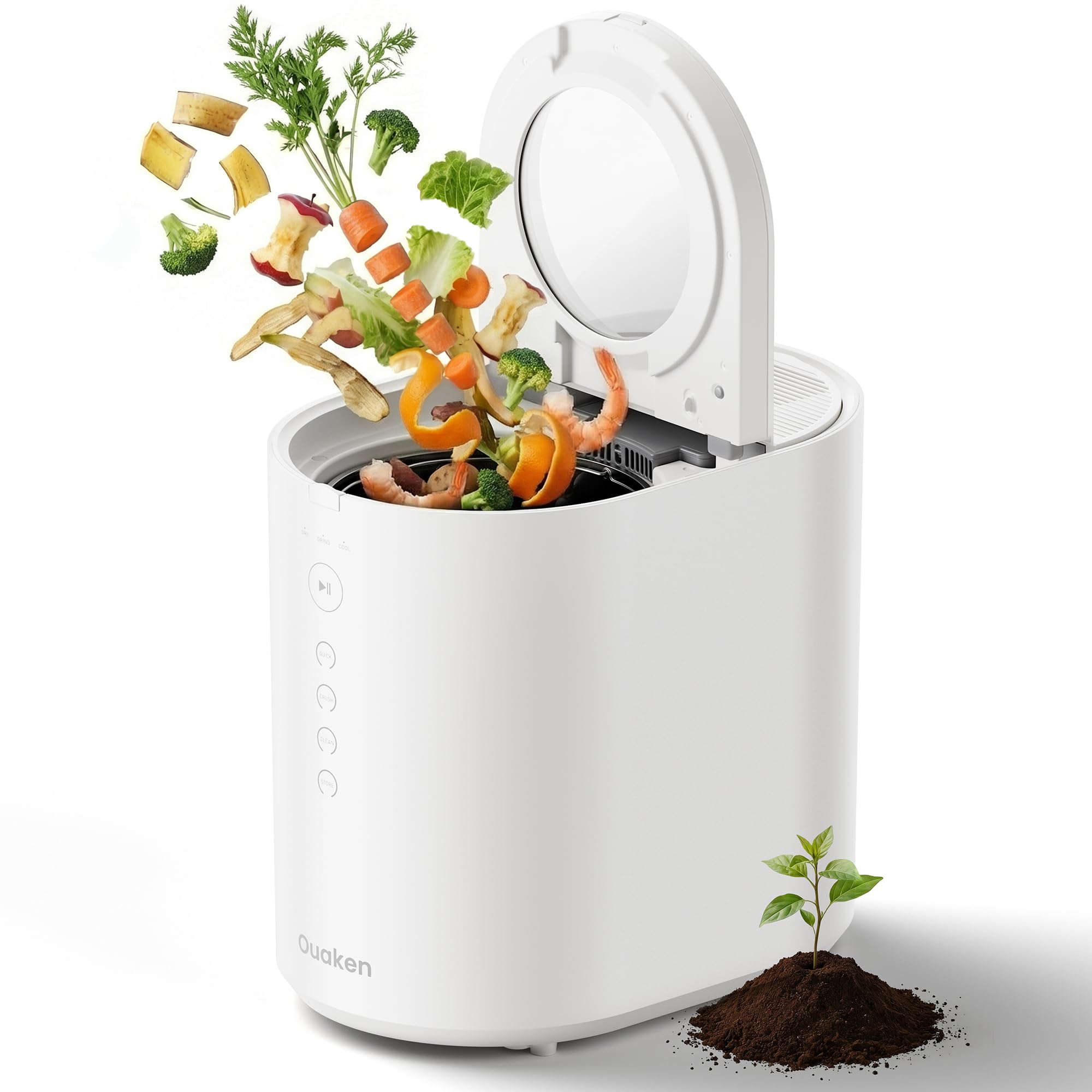
The Ouaken OK-255 offers the largest bucket capacity in the dehydration category at 5.5 liters, along with five distinct operating modes: Standard, Quick, Crush, Clean, and Store. It uses high-temperature drying and high-torque blades to reduce food waste volume by up to 90 percent in just a few hours. The noise level is rated below 45 dB, which is unobtrusive enough to run overnight on a kitchen counter.
An upgraded carbon filter with higher iodine value — paired with a new moisture collection tray and bottom ventilation — keeps odors suppressed and prevents condensation from damaging internal components. Users report that the final product is consistently dry and crumbly, and the slide-out bucket makes emptying and cleaning straightforward. The machine’s flatter, oval profile sits more stably on narrow countertops compared to boxier designs.
A family of five reported that the 5.5-liter capacity allowed them to reduce trash pickup frequency from daily to every two to three days. However, the 8-hour cycle time means you cannot run multiple batches back-to-back if you generate waste faster than the machine can process it. The unit also draws roughly 500 watts during operation, so it is a noticeable load on a shared kitchen circuit.
Why it’s great
- Largest dehydration bucket at 5.5 liters
- Five versatile operating modes for different needs
- Enhanced odor control with moisture management
- Quiet operation at under 45 dB
Good to know
- 500W power draw is noticeable on shared circuits
- 8-hour cycle limits back-to-batch processing
- Flipped lid may obstruct access in tight spaces
7. Soliddis 4.2L Electric Composter
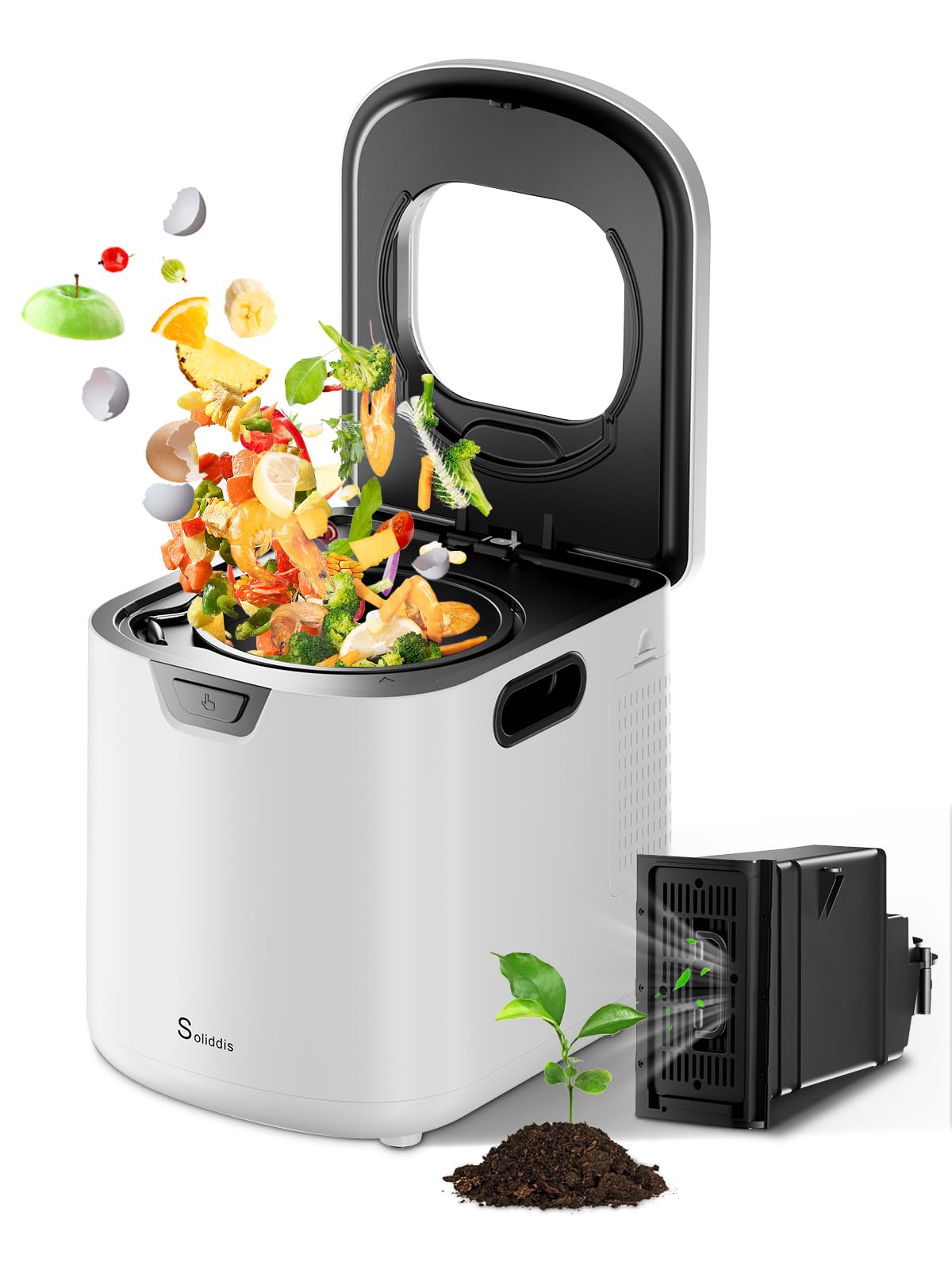
The Soliddis 4.2-liter unit focuses fast, energy-efficient crushing and drying rather than prolonged fermentation. This “Crush and Dry” approach uses a premium 900ml carbon filter — significantly larger than many competitors — to neutralize odors during the cycle. The machine operates below 45 dB, making it one of the quietest dehydration units available, and its compact rectangular footprint fits neatly on standard countertops.
Users highlight the straightforward setup and the ability to adjust cycle times manually based on the load. The self-cleaning function eliminates the need to scrub the bucket after every batch, and the detachable inner pot is dishwasher safe for deeper cleaning. The 4.2-liter capacity handles a typical day’s worth of scraps for a family of four, and the volume reduction is consistent at around 90 percent.
A few users have noted that the bucket handle can detach unexpectedly if the bucket is overloaded or tilted during removal. The machine also requires that the bucket be completely emptied between cycles — leaving dried material in the bucket while adding fresh scraps can cause clumping and motor strain. For the price, the Soliddis offers a strong balance of capacity, noise control, and filter quality.
Why it’s great
- Large 900ml carbon filter for superior odor absorption
- Very quiet operation below 45 dB
- Self-cleaning function reduces maintenance
- Compact, counter-friendly footprint
Good to know
- Bucket handle can detach unexpectedly
- Must empty bucket completely between cycles
- Cycle time adjustment requires manual input
8. Ouaken 4L Electric Composter

The Ouaken 4L model is the entry-level workhorse of this list, offering solid build quality and reliable performance at a more accessible price point. It uses a low-speed, high-torque motor paired with aluminum alloy blades that grind food scraps efficiently without excessive noise — the unit operates below 40 dB, making it the quietest dehydration model reviewed here. Its 4-liter capacity is adequate for a small household or a couple who cooks frequently.
The machine features three modes: Crush, Ferment, and Clean. Crush mode focuses on volume reduction with minimal energy usage, while Ferment mode runs a longer cycle to create a richer pre-compost. Users report consistent results and praise the machine’s sturdy construction, the viewing glass lid for monitoring progress, and the fact that the detachable bucket is dishwasher safe. The carbon filter provides up to five months of odor control before needing replacement.
Some long-term users noted that the blades can come loose after eight months of regular use, though the manufacturer’s customer service team replaced the inner bucket under warranty in those cases. The machine also requires that the bucket be completely emptied between cycles to prevent clumping and motor damage. For a budget-conscious entry into electric composting, this model delivers impressive value with minimal compromise on core performance.
Why it’s great
- Quietest dehydration model at under 40 dB
- Solid aluminum alloy blades for durable grinding
- Dishwasher-safe bucket for easy cleaning
- Carbon filter lasts up to 5 months
Good to know
- Blade assembly may loosen over several months of use
- Must empty bucket fully between cycles
- 4L capacity may be small for larger families
9. Luma by Newair 2.5L Electric Composter

The Luma by Newair is the most compact unit in this roundup, with a 2.5-liter capacity that fits easily on small countertops or under upper cabinets. Despite its size, it packs a smart sensor that automatically adjusts the cycle time based on the moisture and density of the load, typically finishing in 3 to 6 hours. The transparent glass lid with interior LED lighting lets you watch the transformation without losing heat or releasing odors.
Powered aluminum alloy blades reduce waste volume by up to 90 percent, and the activated carbon filter keeps the process odor-free. The removable bucket has a nonstick aluminum coating and is dishwasher safe for effortless cleaning. Users consistently describe the Luma as quiet enough to run while watching television or sleeping, and the clear-view window is a practical feature that competitors often omit.
The small bucket means you will be emptying it daily if you cook heavily, and some users report that the carbon filter needs replacement every 300 hours of operation — about every three to four months of moderate use. The 55 dB noise rating is slightly higher than other models here, though still within a comfortable range for a kitchen appliance. For singles, couples, or apartment dwellers who want to dip their toes into composting without sacrificing counter space, the Luma is an excellent fit.
Why it’s great
- Most compact footprint — fits tight countertops
- Smart sensor auto-adjusts cycle time for efficiency
- Clear glass lid with interior LED for real-time monitoring
- Nonstick, dishwasher-safe bucket for easy cleanup
Good to know
- 2.5L capacity requires daily emptying for heavy cooks
- Carbon filter costs around and lasts ~300 hours
- Noise level at 55 dB is louder than some competitors
FAQ
Can I put meat and dairy in an electric composter?
How often do I need to replace the carbon filter?
What is the difference between crushed biomass and real compost?
Can electric composters handle citrus peels and onion skins?
Do these machines use a lot of electricity?
Final Thoughts: The Verdict
For most users, the electric kitchen composter winner is the Reencle Gravity 22L because it combines the largest capacity with genuine microbial composting, whisper-quiet operation, and smart tracking features that make waste reduction measurable. If you want a permanent filter and the ability to process up to 11 pounds of waste daily without ever buying a replacement cartridge, grab the GEME Smart 19L. And for budget-conscious shoppers who still demand quiet performance and reliable dehydration, the Ouaken 4L is the entry point that punches well above its weight class.

Mo Maruf
I created WellFizz to bridge the gap between vague wellness advice and actionable solutions. My mission is simple: to decode the research and give you practical tools you can actually use.
Beyond the data, I am a passionate traveler. I believe that stepping away from the screen to explore new environments is essential for mental clarity and physical vitality.