Our readers keep the lights on and my smoothie glass nicely filled. As an Amazon Associate, I earn from qualifying purchases.
That thin metal pot on your stove is robbing your braised meats of their soul. A donabe—the hand-thrown Japanese clay vessel—transforms a simple stew into a deeply savory, tender experience by circulating steam inside its porous walls. Unlike enameled cast iron, this ancient earthenware breathes, letting moisture escape at a controlled rate that concentrates flavors rather than drowning them.
I’m Mohammad Maruf — the founder and writer behind WellFizz. I’ve spent dozens of hours combing through Japanese ceramic specifications, thermal shock ratings, and Banko Ware tradition to find the donabe pots that genuinely perform across gas, electric, and oven cooking.
With sizes ranging from single-serving rice pots to 4-5 person stew vessels, the best donabe pot for your kitchen depends on how you intend to use it—whether for perfect steamed rice, family-style hot pot, or slow-simmered soups.
How To Choose The Best Donabe Pots
Selecting a donabe means understanding clay origin, interior finish, and capacity. A 30 fl oz pot works for single rice servings, but you’ll need a 2-liter or larger vessel for family hot pot or braised meats. The two main styles are fully glazed (easy cleaning, less moisture evaporation) and partially unglazed (traditional, better steam regulation). Banko Ware from Mie Prefecture offers the highest thermal shock resistance among Japanese earthenware traditions.
Size and serving math
Donabe capacity is often listed in “go”—a traditional Japanese unit where 1 go equals about 180 ml. A 6-go pot cooks roughly 3 cups of rice and serves 2-3 people for soup or stew. For hot pot with multiple ingredients, go up to 9-go (about 3.2 liters) for 4-5 people. Single-serving pots around 1-2 go are ideal for quick rice or personal soups.
Glazed vs. unglazed interior
Fully glazed interiors resist sticking and make cleanup faster, but they reduce the porous exchange that gives donabe its famous heat retention and flavor concentration. Unglazed interiors absorb and release moisture slowly, producing fluffier rice and richer broths. Many premium donabes use a glazed body with an unglazed lid rim—a balanced compromise.
Burner compatibility
Authentic donabes are designed for direct flame (gas stoves) and ovens, but they are not induction compatible unless specified. Electric coil and ceramic glass cooktops require careful use—never slide the pot, and always start on low heat. Thermal shock is the real enemy: allow the pot to cool gradually before washing, and never place a hot donabe on a cold or wet surface.
Quick Comparison
On smaller screens, swipe sideways to see the full table.
| Model | Category | Best For | Key Spec | Amazon |
|---|---|---|---|---|
| Ginpo Chrysanthemum Double Lid Rice Pot | Premium Rice Pot | Perfect rice, 2-3 servings | 1.8L capacity, double lid design | Amazon |
| Ginpo Banko Ware Deep Pot No. 8 | Mid-Range Deep Pot | Stews and soups, 2-3 people | 2.2L capacity, Mishima pattern | Amazon |
| Ginpo Banko Ware Hanamishima No. 9 | Family Sized | Hot pot, 4-5 people | 3.2L capacity, large diameter | Amazon |
| lake tian Ceramic Cooking Pot 2.1QT | Entry-Level Glazed | Slow cooking, small families | 2L capacity, non-stick glazed | Amazon |
| TIKUSAN Banko Ware Hot Pot 6 go | Authentic Banko | Traditional single-person meals | 30 fl oz, unglazed interior | Amazon |
| lake tian Flower Pattern 3.4QT | Large Capacity | Bibimbap, steaming, stock | 3.4L, dishwasher safe | Amazon |
| Ginpo Chrysanthemum No. 6 Lapis | Single Serving | Microwave meals, 1 cup rice | 0.89L, vibrant glaze | Amazon |
In‑Depth Reviews
1. Ginpo Pottery Chrysanthemum Double Lid Rice Pot (3 Cook/Lapis)

This is the donabe that makes you question why you ever used a plastic rice cooker. The double-lid system—an inner lid that traps steam directly above the grains and an outer lid that seals the rim—creates a microclimate that produces evenly cooked, separate grains with a slightly chewy bite that Japanese rice enthusiasts chase. The 1.8-liter capacity handles 2-3 cups of uncooked rice, making it ideal for small households or meal prep.
The Lapis glaze is a deep, translucent blue that looks almost liquid under kitchen light. The body is genuine Ginpo Banko Ware from Mie Prefecture, a pottery tradition that has been refining heat-retention clay bodies since 1932. The unglazed rim on the inner lid allows some steam absorption, preventing condensation from dripping back onto the rice and making it mushy.
Users report that mastering the heat cycle takes a few tries—medium-high until steam escapes the lid vent, then low for ten minutes, followed by a twenty-minute rest. The pot produces rice that rivals a induction cooker, and it doubles well for congee or steamed vegetables. The only complaint is that the water level markings inside the pot are difficult to read against the blue glaze.
Why it’s great
- Double lid prevents boil-over and ensures fluffy rice
- Authentic Banko Ware with exceptional heat retention
- Beautiful translucent Lapis finish
Good to know
- No instruction manual included
- Water level markings hard to see
2. Ginpo Banko Ware Hanamishima Deep Pot No. 9

This is the donabe you set in the center of the dinner table for shabu-shabu, nabemono, or a braised chicken stew that keeps bubbling long after the flame is off. At 3.2 liters (the 9-go size), it comfortably serves four to five people. The diameter is wide enough to accommodate whole vegetables and slices of meat without crowding, and the deep walls prevent the broth from splashing over the rim.
The Hanamishima pattern features a traditional Mishima inlay—carved red clay filled with white slip—that creates a crackled floral design. The exterior is hand-painted, so each pot has slight variations in the pattern that make it feel individual. The interior is fully glazed, which simplifies cleaning after a messy hot pot session, though some users report food can stick to the bottom if the heat is too high initially.
Heat retention is the standout feature here: the thick ceramic walls keep the broth simmering for 10-15 minutes after you turn off the stove, which means your dinner stays hot even during leisurely conversation. The pot is compatible with gas and oven use, but not induction. A few reviewers noted small pinholes appearing after several months of use—a known risk with handmade pottery that most Ginpo users accept as part of the character.
Why it’s great
- Excellent heat retention for table-side hot pot
- Beautiful traditional Mishima pattern
- Large enough for family meals
Good to know
- Food can stick on high heat
- Some quality variation in handmade glazing
3. Ginpo Banko Ware Deep Pot No. 8 (Mishima)

If you need a mid-size donabe that splits the difference between a personal rice pot and a family hot pot, this No. 8 from Ginpo is the Goldilocks option. At 2.2 liters, it handles enough beef stew or miso soup base for two to three people, yet it is still compact enough to store in a cabinet without dominating the shelf. The 10.7-inch diameter gives you a generous surface area for browning aromatics before adding liquid.
The Mishima gray clay body has an unglazed exterior that develops a subtle patina over time, while the interior is glazed for practical cleaning. This pot requires the standard donabe seasoning ritual—boil a rice water mixture before first use—to seal any microscopic pores. Once seasoned, it resists staining well and distributes heat evenly across the bottom without the hotspot that thinner ceramic pots produce.
Users appreciate the sturdiness: at nearly 2 kilograms, the thick walls feel substantial and unlikely to crack from normal thermal cycling. The pot has a rustic, earthy look that suits both traditional Japanese table settings and modern farmhouse kitchens. A few early users reported charring on the bottom exterior after several uses, which is common with direct-flame donabes and does not affect cooking performance.
Why it’s great
- Perfect 2-3 person capacity
- Good balance of glazed interior and unglazed exterior
- Solid, durable construction
Good to know
- Requires seasoning before first use
- Bottom may darken over time on gas flame
4. lake tian Ceramic Cooking Pot (2.1QT)
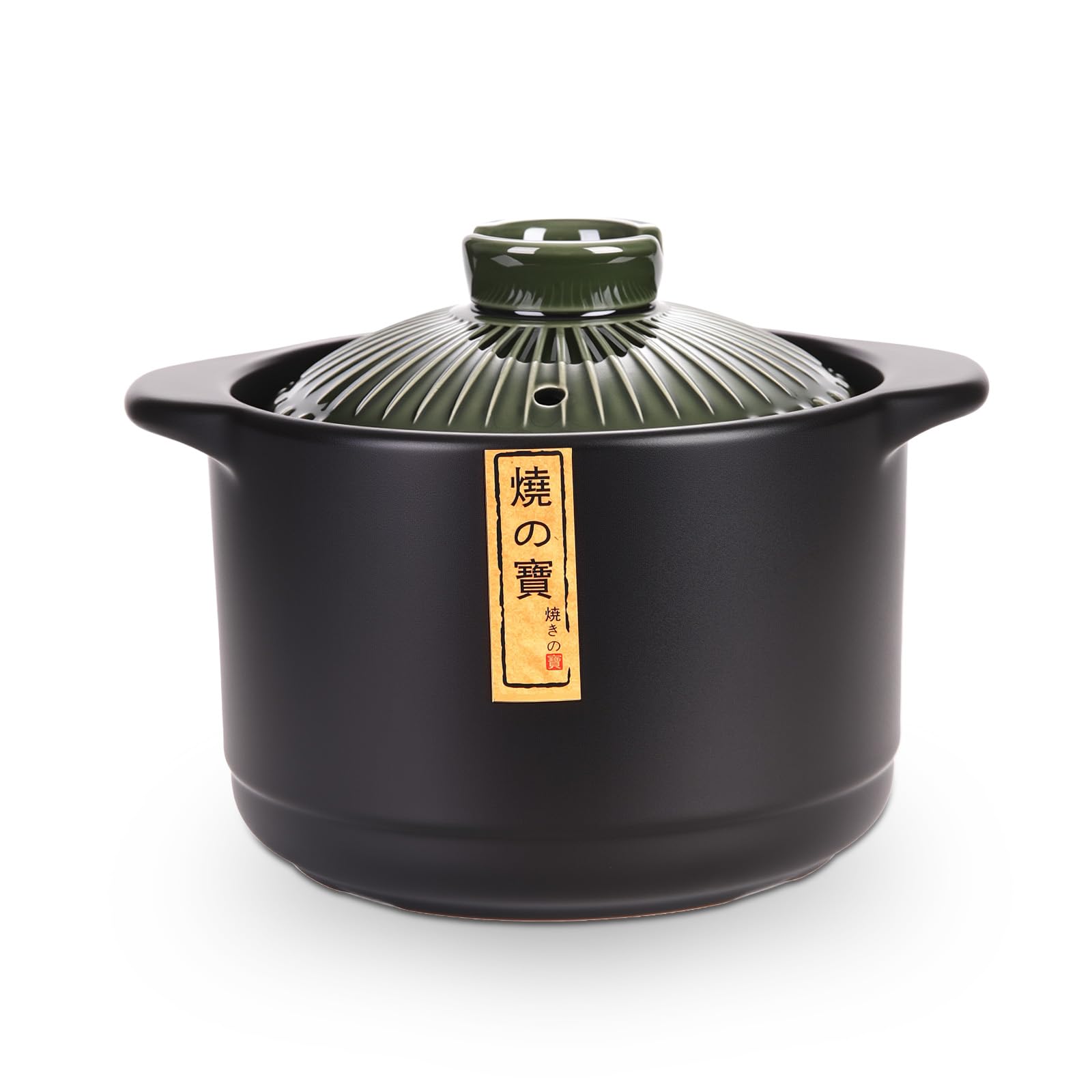
This entry-level donabe-style pot from lake tian offers a fully glazed, non-stick interior that is much easier to clean than traditional unglazed clay. The 2.1-quart capacity is comfortable for solo cooking or small couples, and the green glaze is vibrant enough to go straight from stove to table. The lid has a raised inner rim and a steam vent that prevents boil-overs while locking in moisture for braised dishes.
While it is not authentic Banko Ware, the ceramic body is lead-free and fired at high temperature for decent thermal shock resistance. Users have successfully used it on gas stoves, campfire grills, and ovens without cracking—though one report of cracking after limited use suggests quality control varies. The smooth glazed surface means rice does not stick as aggressively as in unglazed donabes, making this a practical choice for someone new to earthenware cooking.
The pot retains heat well enough to keep food warm for about 30 minutes after the stove is off, which is shorter than premium Banko Ware but still useful for serving. Reviewers who used it for hot pot on a campfire found that the soot cleaned off with some effort and the ceramic survived the open flame without damage. For the price, this is the most accessible way to test whether donabe cooking fits your routine.
Why it’s great
- Non-stick glazed interior for easy cleanup
- Versatile on gas, electric, oven, and campfire
- Good introductory price point
Good to know
- Not authentic Japanese Banko Ware
- Reported cracking in a small number of units
5. TIKUSAN Banko Ware Hot Pot (6 go)

TIKUSAN is a recognized Banko Ware brand that produces donabes with the traditional porous clay body that Japanese home cooks prize for rice and nimono (simmered dishes). The 6-go size (30 fl oz) is a classic single-person format, ideal for cooking one cup of rice or a small portion of miso soup with tofu and seaweed. The unglazed interior absorbs water during cooking and releases steam at a steady rate, producing rice with separate grains and a subtle nutty aroma that glazed pots cannot replicate.
The gray clay is lightweight relative to Ginpo’s thicker vessels—just under a kilogram—making it easy to lift and pour. The exterior has a painted finish with a simple, understated design that feels more utilitarian than decorative. It is oven-safe and direct-flame compatible, but it is not induction-friendly. The lid fits snugly without wobbling, a detail that matters for maintaining even steam pressure inside.
Reviewers consistently praise the rice quality, with several saying it makes “the perfect rice” on the first try. The fully glazed exterior prevents soot buildup on gas stoves, and the smooth rim makes cleaning straightforward despite the unglazed interior. The main limitation is capacity: at 30 fl oz, it is strictly for one or two light servings, and it will not work for larger stews or hot pot gatherings.
Why it’s great
- Authentic unglazed Banko clay for superior rice texture
- Lightweight and easy to handle
- Glazed exterior resists soot
Good to know
- Small capacity limits use to single servings
- Gas stove only—not induction compatible
6. lake tian Flower Pattern Ceramic Pot (3.4QT)
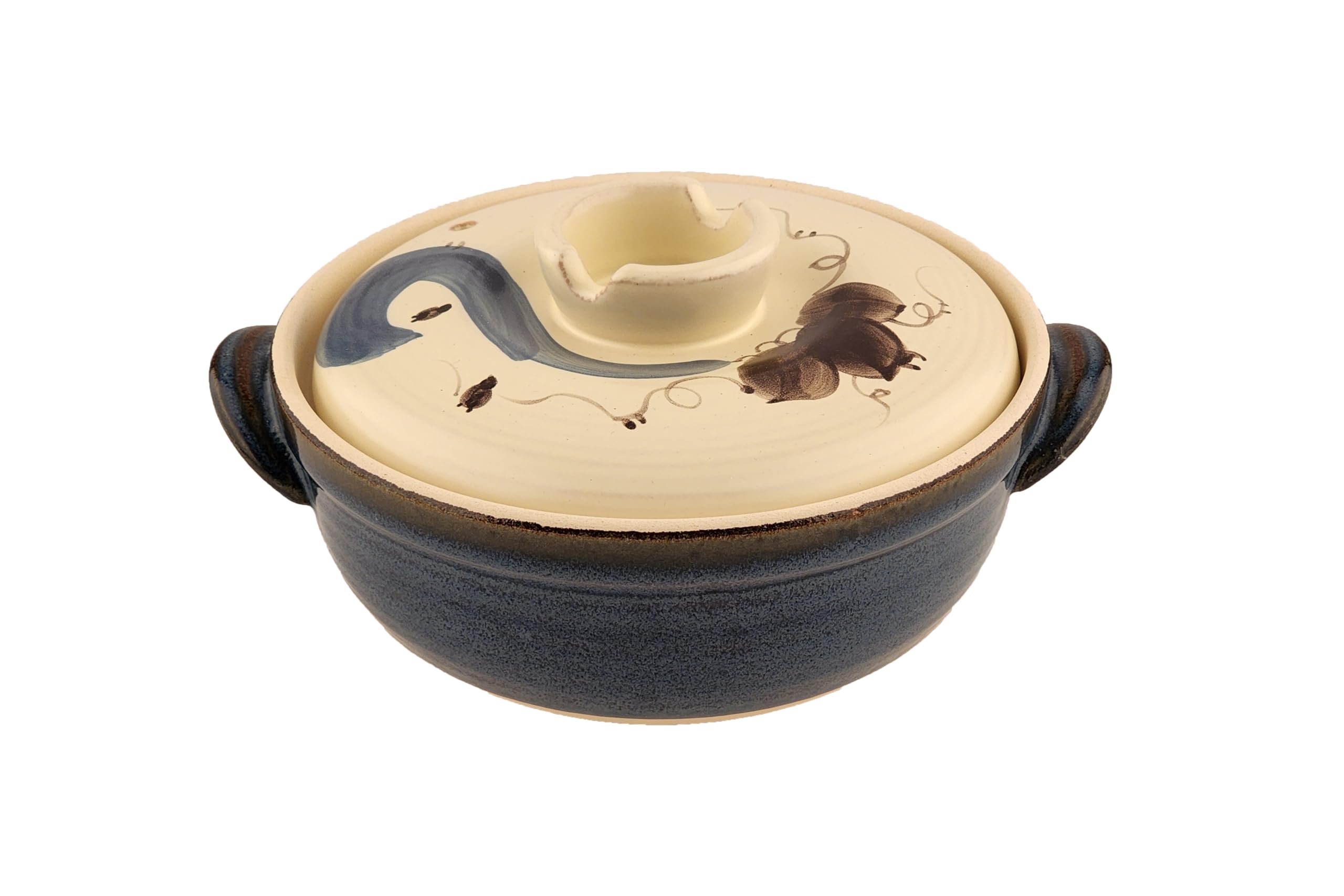
This is the largest donabe-style pot in the lineup, with a 3.4-liter capacity that rivals Ginpo’s No. 9 size at a lower entry cost. The flower pattern painted on the white ceramic body is cheerful and stylized, making it a conversation piece on the dining table. The lid features a stainless steel knob that stays cool enough to grip without a towel, a thoughtful detail for table-side serving.
The ceramic is fully glazed and marketed as dishwasher safe, which is rare for earthenware and a major convenience for anyone who cooks frequently. It works on gas, electric, glass, ceramic, and halogen stoves, plus it is oven and refrigerator safe. The interior surface is smooth and resists staining from tomato-based sauces, though the non-stick claim is modest—oil or broth is still needed to prevent sticking on high heat.
User feedback highlights the size as the primary advantage: it fits whole chickens for braising, large batches of pho broth, and generous portions of bibimbap that sizzle when served. The heat retention is good but not as long-lasting as thick-walled Ginpo pots, meaning food will start cooling after about 20 minutes off the heat. The main trade-off is that the painted exterior pattern may fade or scratch with frequent dishwasher cycles, so hand washing is recommended to preserve the finish.
Why it’s great
- Very large capacity for big batches
- Dishwasher safe for easy cleaning
- Neutral white base fits any table setting
Good to know
- Pattern may fade with machine washing
- Shorter heat retention than premium clay pots
7. Ginpo Chrysanthemum No. 6 Lapis (Single Person)

This tiny chrysanthemum donabe is designed for one person who wants a quick, delicious rice experience without committing to a full-sized pot. At 0.89 liters, it cooks exactly one cup of rice using a simple method: add water to the fill line, bring to a boil, and shut off the heat when steam appears. The Lapis blue glaze is so saturated it looks almost wet, earning it the nickname “the deep-sea pot” among Japanese home cooks.
The No. 6 size is also microwave-safe, which is unusual for traditional earthenware and opens up a faster cooking route for frozen meals or reheating leftovers. The lead-free ceramic is produced by Ginpo, a brand with nearly a century of Banko Ware expertise. The walls are thinner than the larger Ginpo models, so thermal shock resistance is slightly lower—you must let the pot cool before washing.
Users who bought this for solo living love that it replaces both a rice cooker and a small soup pot. One reviewer has been using it for two years without any cracks or glaze damage. The pot is also small enough to eat from directly, reducing dishwashing. The main downside is the limited utility: you cannot cook a stew for two or braise a full chicken breast in a vessel this size, so it is strictly a single-serving appliance.
Why it’s great
- Perfect single serving size for rice or soup
- Microwave-safe for quick meals
- Stunning Lapis blue color
Good to know
- Very limited capacity—solo use only
- Thinner walls require careful handling
FAQ
Can I use a donabe on an induction cooktop?
How do I season my donabe before first use?
Why does my donabe food taste better than in a metal pot?
Final Thoughts: The Verdict
For most users, the best donabe pot winner is the Ginpo Chrysanthemum Double Lid Rice Pot because the double-lid system delivers consistently superior rice while the Banko Ware construction handles years of regular use. If you want a larger vessel for family hot pot, grab the Ginpo Hanamishima No. 9. And for a budget-friendly introduction to donabe cooking, nothing beats the lake tian 2.1QT Ceramic Cooking Pot.

Mo Maruf
I created WellFizz to bridge the gap between vague wellness advice and actionable solutions. My mission is simple: to decode the research and give you practical tools you can actually use.
Beyond the data, I am a passionate traveler. I believe that stepping away from the screen to explore new environments is essential for mental clarity and physical vitality.