Our readers keep the lights on and my smoothie glass nicely filled. As an Amazon Associate, I earn from qualifying purchases.
A cycling headlight does two things: lets you see the road ahead and makes sure drivers see you. The difference between a cheap blinky light and a serious beam is night and day — literally. A poorly designed beam can wash out your depth perception, blind oncoming traffic, or leave you in the dark halfway through your ride. The right one cuts through fog, rain, and pitch-black trails with a focused, predictable pattern.
I’m Mohammad Maruf — the founder and writer behind WellFizz. For this guide, I analyzed over 2,000 customer reviews and cross-referenced technical specs like lumen output, beam distance, IPX ratings, and battery chemistry to separate real performers from flashy marketing.
Whether you commute through city streets or hammer singletrack after sunset, choosing the right best cycling headlight means finding the balance between raw brightness, beam control, battery runtime, and mounting versatility that matches your specific rides.
How To Choose The Best Cycling Headlight
Most riders start by asking “how many lumens?” but the real question is “how well does that lumen hit the road?” A cheap 1000-lumen light with a floody, uncontrolled beam will blind oncoming drivers and wash out trail details. A well-designed 500-lumen light with a sharp cutoff or focused spot gives you better usable vision and keeps you courteous to others. Before you click buy, understand what the numbers actually mean for your riding style.
Lumen Output vs. Beam Pattern
Lumens measure total light output, but beam distance (measured in meters or feet) tells you how far that light reaches before it fades. For urban commuting, 300 to 600 lumens with a wide, even flood is usually enough. For unlit trails or high-speed road riding, look for 800 lumens or more with a focused hotspot. A headlight with an anti-glare cutoff — a sharp horizontal line in the beam — prevents you from dazzling drivers while still lighting your path.
Water Resistance and Build Quality
IPX ratings matter if you ride year-round. IPX4 handles splashes, IPX6 resists heavy rain, and IPX7 lets you submerge the light briefly. Aluminum housings dissipate heat much better than plastic, which matters at high lumen outputs where thermal throttling can drop brightness after ten minutes. Check the charging port cover: a tight rubber flap is the first line of defense against water damage.
Mounting and Daytime Visibility
Look for a mount that matches your handlebar diameter (31.8mm is standard, but aero bars may need shims). Garmin-compatible mounts let you stack your headlight under a cycling computer for a clean cockpit. Daytime flash modes — bright pulsing patterns visible from half a mile away — are proven to reduce collision risk in broad daylight. If you ride multi-surface, a quick-detach mount lets you move the light between bikes in seconds.
Battery Runtime and Charging Port
Runtime depends heavily on the selected mode. A light that runs 1.5 hours on high but lasts 15 hours on flash is fine for commuters who recharge nightly but risky for endurance riders. USB-C charging is a big upgrade over micro-USB — faster, more durable, and often allows reverse charging to top off your phone. Built-in battery indicators (green/yellow/red or blinking) are worth seeking out so you never start a ride guessing power levels.
Quick Comparison
On smaller screens, swipe sideways to see the full table.
| Model | Category | Best For | Key Spec | Amazon |
|---|---|---|---|---|
| Cygolite Dash Pro 600 | Mid-Range | Commuter & Road | 600 Lumens / IP64 / 95g | Amazon |
| Magicshine RN 1200 | Premium | Trail & Unlit Roads | 1200 Lumens / IPX7 / 4000mAh | Amazon |
| RAVEMEN FR500 | Mid-Range | Daytime Flashing Visibility | 500 Lumens / 270° Side Vis / IPX6 | Amazon |
| NiteRider Lumina Dual 2000 | Premium | MTB & Enduro | 2000 Lumens / Dual LED / IP64 | Amazon |
| Magicshine HORI1300S | Premium | Road with Low Beam Cutoff | 1300 Lumens / Dual Beam / IPX6 | Amazon |
| OLIGHT RN 400 | Value | Urban Commuting | 400 Lumens / IPX7 / USB-C | Amazon |
| BrightRoad 850 | Value | Helmet Mount Night Riding | 850 Lumens / IPX1 / 650ft Range | Amazon |
In‑Depth Reviews
1. Cygolite Dash Pro 600
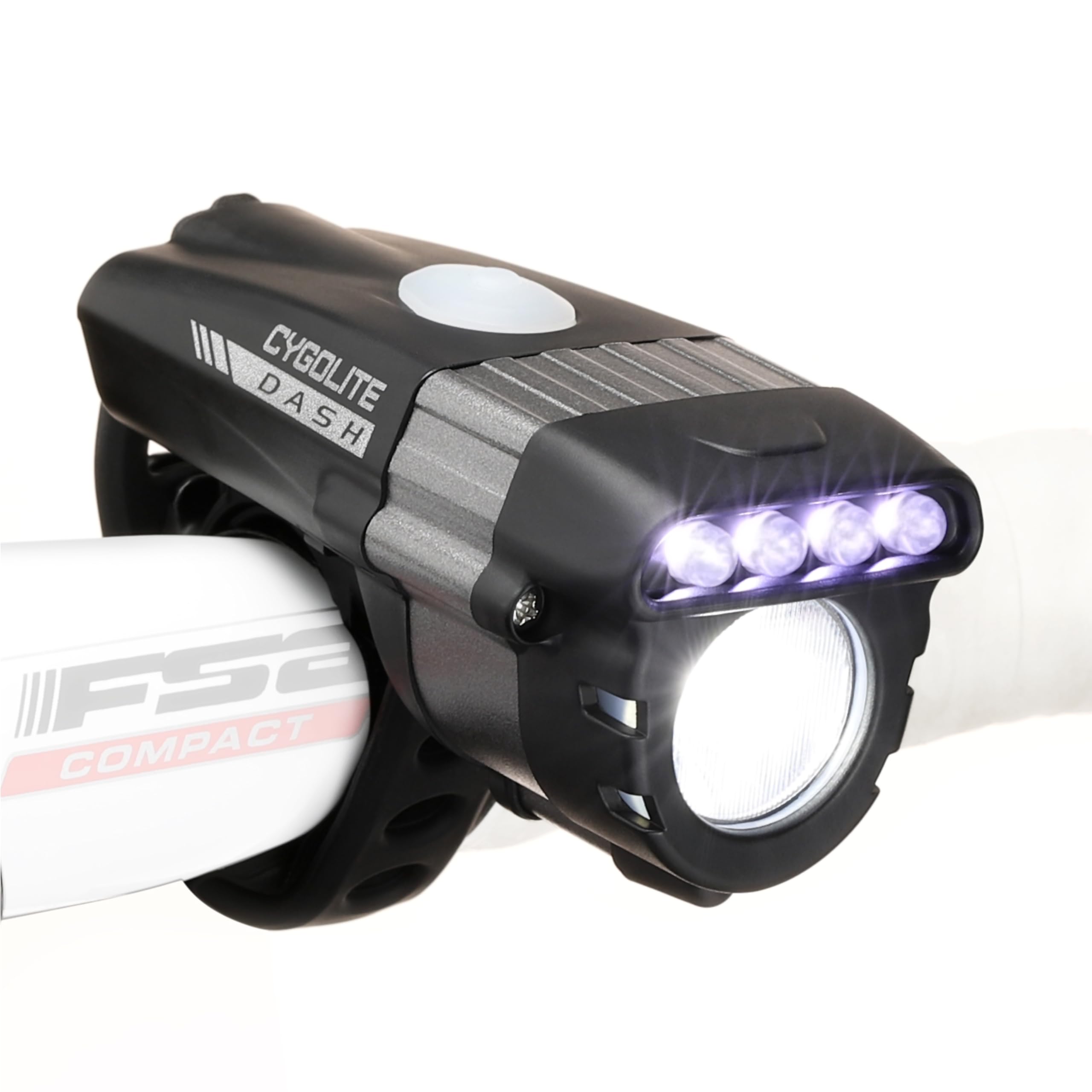
Cygolite has been engineering bike lights in America since 1991, and the Dash Pro 600 shows decades of real-world refinement. It delivers 600 lumens through a wide, long-range enhanced cycling optic with 8 total modes — 5 for night and 3 for daytime. The Steady Pulse mode is a standout: it overlays a pulsing alert onto a constant beam, so you stay visible without the disorienting full-flash effect that annoys other trail users.
The Versatite flexible rubber mount is one of the most tool-free, adjustable systems available. It wraps securely around standard bars, aero bars, and even oddly shaped frames. At only 95 grams and IP64 water resistant, this light is light enough to pocket and rugged enough for year-round commutes. The low battery indicator and micro-USB charging are functional, though USB-C would be a welcome future upgrade.
Real-world runtime on the dual steady-plus-flash mode exceeds 3 hours, and the Day Lightning flash mode is visible from nearly a mile away. Multiple long-term reviewers report 4+ years of daily use with no drop in battery performance or mount failure. For the rider who wants one light that does everything from pre-dawn training to late-night errands, this is the most balanced pick available.
Why it’s great
- Steady Pulse mode combines visibility with constant illumination
- Tool-free flexible mount fits almost any handlebar shape
- Proven 4+ year lifespan from multiple verified owners
Good to know
- Micro-USB instead of modern USB-C
- Not bright enough for fast off-road descents
2. Magicshine RN 1200

The Magicshine RN 1200 is a serious piece of kit for riders who need to see — not just be seen. Its CREE LED pushes 1200 lumens with a measured beam throw of 165 meters, verified by users who tested it against premium competitors. The anti-glare design diffuses the top portion of the beam, so you light up the road without cooking the retinas of oncoming cyclists. The 4000mAh internal battery delivers up to 7 hours on lower settings and a genuine 2.5 hours on full blast.
USB-C charging is a strong feature here, and the RN 1200 can reverse-charge your smartphone at up to 15W — a life-saver on long bikepacking trips. The IPX7 waterproof rating means full submersion survival, backed by a one-piece alloy casing that handles rain, snow, and freezing temps without issue. One reviewer noted it worked flawlessly through subzero winters and monsoons alike. The included Garmin-compatible mount uses a hex-key-secured base that stays rock-solid, though it lacks tool-free adjustability.
Where this light truly shines is unlit backroads and fast singletrack. The beam is a neutral color temperature with soft edges — no harsh blue tint — and the three power settings (300, 600, 1200 lumens) plus two flash modes give you fine control over battery conservation. At 172 grams it’s heavier than a commuter light, but that weight is pure battery capacity and thermal mass. For the price-to-performance ratio, this is the benchmark in the sub-1500 lumen category.
Why it’s great
- True 165m beam throw verified by users
- USB-C reverse charging powers your phone
- IPX7 fully submersible in heavy rain
Good to know
- No tool-free mount adjustment once installed
- Heavier than typical road-only lights
3. RAVEMEN FR500

The RAVEMEN FR500 was engineered specifically for daytime running visibility and clean cockpit integration. Its 500 lumens are split into 3 flashing modes optimized for sunlight penetration, plus 3 solid modes for night riding. The 270-degree viewing angle uses side-facing cutouts to keep you visible at intersections — a critical safety upgrade over lights that only shine forward. Users consistently report being spotted by drivers from half a mile away even in bright noon sun.
Compatibility is the FR500’s superpower. It mounts directly to Garmin/Wahoo computers out of the box, letting you stack the light under your cycling computer for a streamlined setup. An included parts swap also makes it Wahoo-compatible, and a tether provides backup security against bumps. The aluminum alloy bottom with 6 air guide grooves dissipates heat effectively, preventing performance throttling during extended high-mode use. At 101 grams, it’s light enough to forget it’s there.
The auto on/off feature uses a vibration sensor to wake the light when you start moving and shut it off after five minutes of inactivity — saving battery and eliminating the “did I leave my light on?” panic. IPX6 waterproofing handles heavy downpours as long as the USB-C port rubber flap is sealed. For the daytime commuter or road rider who prioritizes being seen and wants a clean computer-integrated setup, this is a brilliantly focused tool.
Why it’s great
- Garmin/Wahoo out-front mount compatibility
- 270-degree side visibility at intersections
- Vibration auto on/off saves battery every ride
Good to know
- 500 lumens is modest for dark trail riding
- Out-front mount sold separately
4. NiteRider Lumina Dual 2000
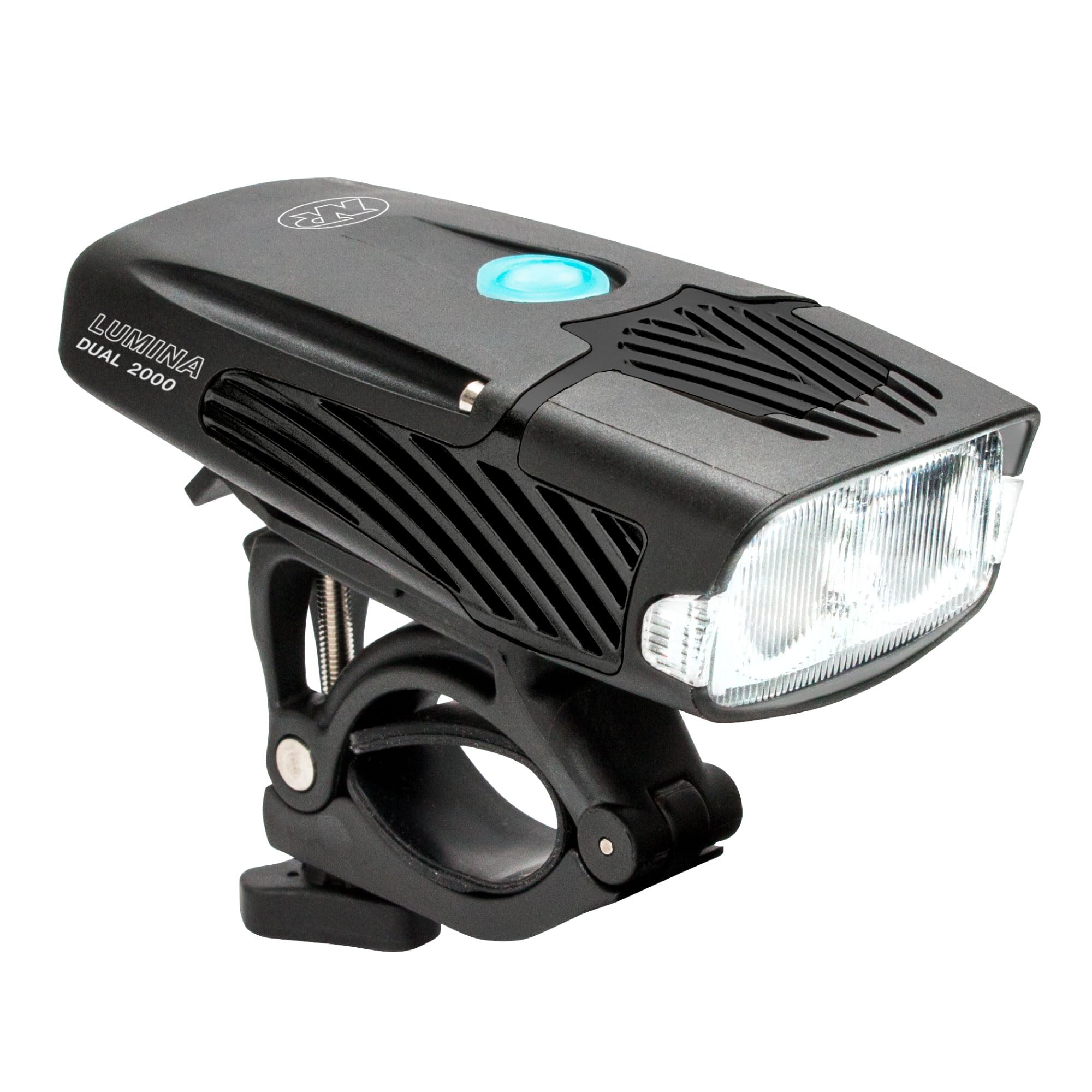
The NiteRider Lumina Dual 2000 is the heavyweight champion of this lineup. Its dual LED design pushes 2000 lumens across an ultra-wide beam that illuminates the full width of a mountain bike trail, including peripheral hazards like roots and rocks. This isn’t a light for casual commuters — it’s for enduro racers, night XC riders, and anyone who needs to see every detail at 25 mph. The DuPont fiberglass-reinforced nylon housing with an aluminum heatsink manages the thermal load from sustained high output without throttling.
The 7 modes include 5 brightness levels and 2 flash patterns, all accessible through a single button designed for gloved fingers. Integrated side lighting panels improve cross-traffic visibility, addressing a common blind spot in high-power bar lights. The tool-free thumb-screw quick-release mount works with bars up to 35mm and is rock-solid over rough terrain. A travel lock mode prevents accidental activation in your bag — hold the power button for 8-10 seconds to unlock it before first use.
Battery life on the dimmest 100-lumen setting stretches impressively, but on the full 2000-lumen boost mode you’ll get roughly the duration of a fast group ride. The backlit power button glows blue on Boost and red below 20% charge. Some users report the battery losing capacity after one season of frequent high-power use, which is a trade-off for the extreme output. For riders who demand maximum trail illumination and have the budget to match, this is the most capable bar light in the group.
Why it’s great
- 2000 lumens with wide beam covers full trail width
- Side lighting panels improve intersection safety
- Reinforced nylon/aluminum build handles extreme terrain
Good to know
- Premium price for top-tier output
- Some reports of battery degradation after heavy use
5. Magicshine HORI1300S
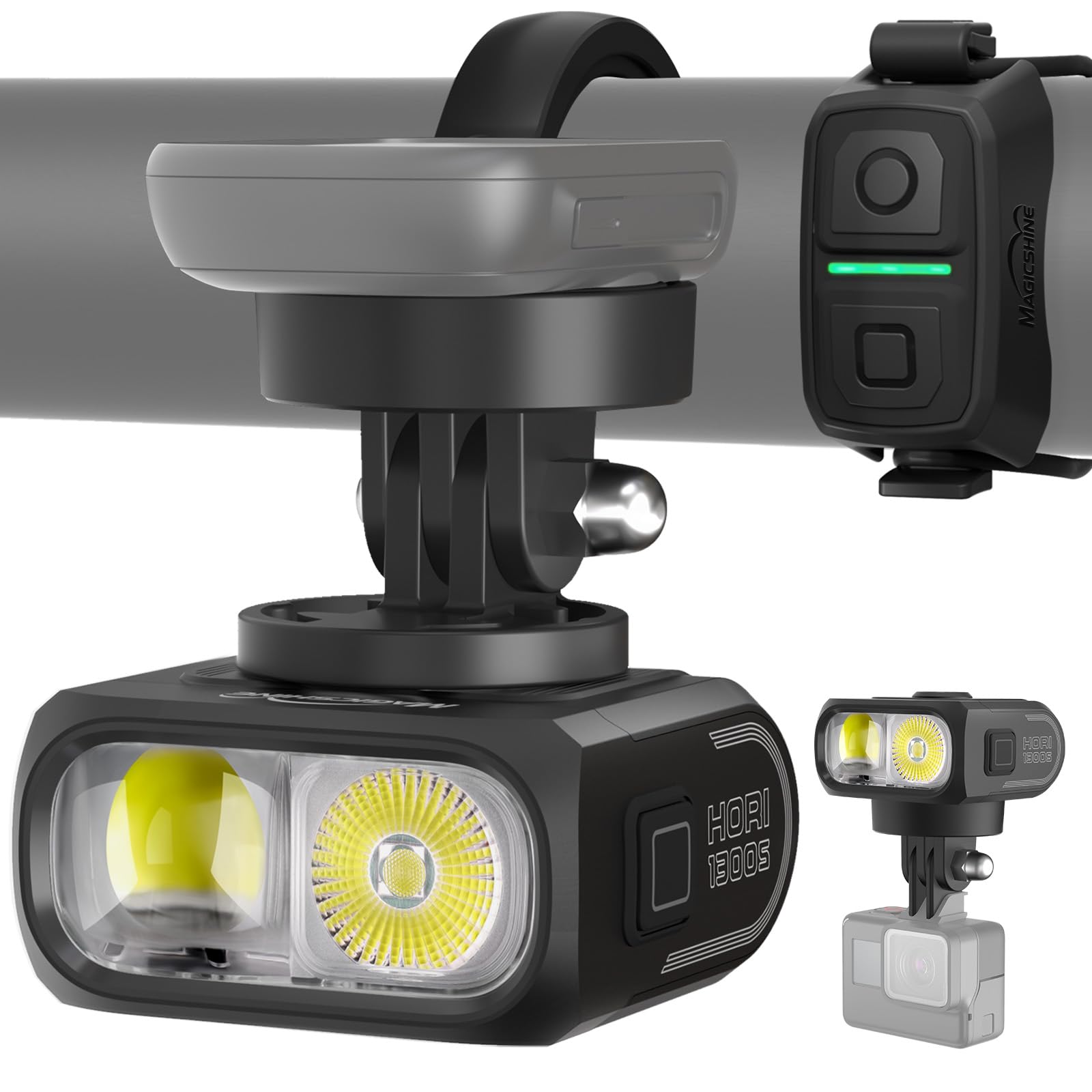
The Magicshine HORI1300S solves the anti-glare problem better than any other light here. It uses dual optics to produce both a high beam (max 1300 lumens) for dark, empty roads and a dedicated low beam with a sharp horizontal cutoff line that prevents blinding oncoming traffic. This is rare in the cycling headlight world — most lights just offer brightness levels, not actual beam pattern switching. The low beam is genuinely courteous in urban settings while still lighting the road well enough for confident riding.
The dual mount design is clever: it uses a GoPro-style interface that lets you stack the light and a Garmin/Wahoo computer above or below your handlebar, saving real estate and creating a clean pro-level look. The optional FTR LightSync remote (included) lets you toggle high/low beam and control a compatible taillight with one click from your handlebar. Vibration sensors automatically power the light on when you move and off after 5 minutes of inactivity — toggle this feature through the Magicshine app.
The build is a compact aluminum body measuring just under 2 inches long, with IPX6 waterproofing and a 3200mAh battery. Runtime on full high beam is under 2 hours, which matches the intensity of the output — plan for recharging after any substantial night ride. Some users note the side visibility could be better, and the “Garmin compatible” marketing is mount-only, not smart data integration. For the road rider who prioritizes beam courtesy, this is the most advanced and rider-friendly option available.
Why it’s great
- True high/low beam with sharp cutoff line
- FTR LightSync remote controls front and rear lights
- Compact GoPro-style dual mount saves handlebar space
Good to know
- Under 2 hours runtime on full high beam
- Side visibility could be wider
6. OLIGHT RN 400

OLIGHT is known for flashlights, and the RN 400 brings that same attention to build quality into a compact cycling headlight. The 400-lumen output is aimed squarely at urban commuting and daylight running, not midnight singletrack. The anti-glare lens design pushes the beam downward, which effectively avoids blinding pedestrians and motorists — a thoughtful touch for city riding. The IPX7 waterproof rating means it can survive full submersion, so sudden downpours are no concern.
The standout feature here is the built-in lock function: hold the button for 3 seconds to lock the light before tossing it in a bag, preventing accidental activation and battery drain. The quick-detach mount uses a Garmin-style interface and includes silicone straps for multiple bar diameters. The battery indicator at standby mode shows green (21-100%), red (11-20%), or flashing red (1-10%) — giving you accurate intel before you roll out. USB-C fast charging reduces downtime significantly compared to older micro-USB lights in this price tier.
At only 85 grams and 2.8 inches long, the RN 400 is one of the most compact lights in this guide. It can also be helmet-mounted or mounted under a camera using the same base, adding versatility. The trade-off is modest total output and a single setting button that takes some practice to navigate. For the budget-conscious commuter who wants a durable, waterproof, USB-C light that just works, the RN 400 is a smart, no-drama choice.
Why it’s great
- IPX7 waterproof for all-weather commuting
- Built-in lock prevents bag activation
- USB-C fast charging at a budget price
Good to know
- 400 lumens is low for unlit roads or trails
- One-button interface takes practice to master
7. BrightRoad 850
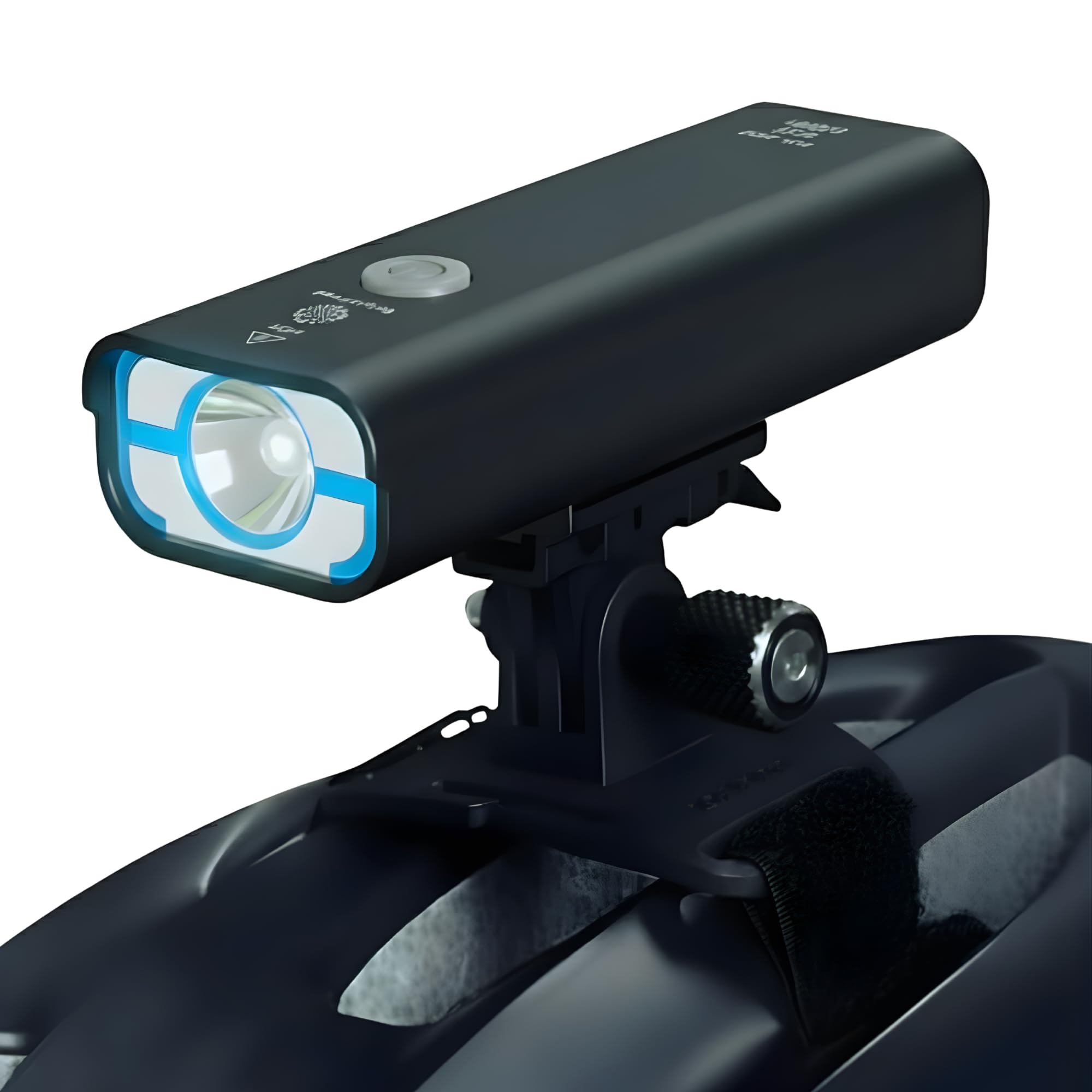
The BrightRoad 850 delivers impressive brightness for its price point, pushing 850 lumens with a claimed 650-foot beam distance. It’s designed primarily for helmet mounting, with a 100-degree adjustable bracket and anti-slip pad that keeps the light stable even on bumpy terrain. The 85-degree floodlight beam pattern is wide enough for trail riding, though the IPX1 rating (drip-proof only) means you’ll want to keep it dry in heavy rain. At this price, it fills a specific niche: budget-conscious night riders who want helmet-mounted illumination without spending premium dollars.
The 7 modes — including high, medium, low, and multiple strobe patterns — give you flexibility across different conditions. The strobe mode is particularly effective for catching driver attention on road sections. USB fast charging claims up to 20 hours of runtime on the lowest flash mode, though real-world high-beam runtime is closer to 90 minutes. A smart battery indicator with a clear charging status display removes the guesswork from power management.
The biggest concern reported by long-term users is the micro-USB charging port failing after 6-8 months of regular use — a weak point shared by several budget lights in this generation. The included plastic strap mount also has durability questions for off-road use. Despite these notes, the BrightRoad 850 is a genuine value for the lumen-per-dollar ratio, especially if you need a bright helmet spot for occasional night rides. Just budget for a potential replacement port or upgrade within the first year if you ride frequently.
Why it’s great
- 850 lumens at a very accessible price point
- 100-degree adjustable helmet mount with anti-slip pad
- Multiple strobe modes improve daytime visibility
Good to know
- IPX1 is not suitable for heavy rain riding
- Micro-USB port is a known failure point
FAQ
Is 400 lumens enough for a cycling headlight?
Can I use a cycling headlight in the daytime?
What does anti-glare mean in a bike light?
Final Thoughts: The Verdict
For most users, the best cycling headlight winner is the Cygolite Dash Pro 600 because it delivers the most versatile balance of brightness, beam control, mount reliability, and long-term durability at a fair price. If you need serious trail visibility and USB-C charging with power bank capability, grab the Magicshine RN 1200. And for daytime commuters who want seamless Garmin integration and auto on/off convenience, nothing beats the RAVEMEN FR500.

Mo Maruf
I created WellFizz to bridge the gap between vague wellness advice and actionable solutions. My mission is simple: to decode the research and give you practical tools you can actually use.
Beyond the data, I am a passionate traveler. I believe that stepping away from the screen to explore new environments is essential for mental clarity and physical vitality.