Our readers keep the lights on and my smoothie glass nicely filled. As an Amazon Associate, I earn from qualifying purchases.
Standard electric bikes lose their nerve the moment the pavement tilts upward. A motor that lacks the torque to sustain climbing speed on a 15% grade transforms an enjoyable commute into a frustrating push. The best hill‑climbing ebikes are defined not by their advertised top speed, but by the sustained torque delivery at low RPM, battery voltage sag under load, and the thermal management that keeps the motor from cutting out halfway up an ascent.
I’m Mohammad Maruf — the founder and writer behind WellFizz. My research for this guide involved analyzing over 1,500 customer reviews across 13 distinct models, cross‑referencing every claimed peak wattage figure against real‑world riding reports, and identifying the specific motor and battery configurations that deliver consistent climbing performance on gradients above 20%.
This guide examines the specific motor types, battery voltage platforms, and torque numbers that matter most when selecting the best ebike for hills. Every product below has been evaluated for its real‑world climbing behavior, not just its marketing spec sheet.
How To Choose The Best Ebike For Hills
Selecting an ebike that can reliably climb steep hills requires looking beyond cosmetic features and focusing on the powertrain. The motor, battery, and controller work together as a system. A weak link in any of these three components will leave you walking your bike up the last quarter of a hill.
Sustained Torque vs. Peak Torque
Many manufacturers advertise a peak torque figure achieved in a split second. What matters for hill climbing is sustained torque — the motor’s ability to maintain that twisting force as the motor heats up over a 30‑second or 60‑second climb. A motor that delivers 80 Nm continuously will outperform one that peaks at 120 Nm for only two seconds before thermal throttling.
Battery Voltage and Sag Resistance
A 48V battery drops to around 44V under heavy load. A 52V battery stays closer to 50V, and a 60V platform maintains even higher voltage under equivalent demand. Higher voltage means the motor controller can deliver more power without exceeding current limits. On a long hill, that extra voltage headroom prevents the bike from slowing as the battery drains.
Dual Motors and All‑Wheel Drive
Dual‑motor configurations deliver torque to both wheels simultaneously, effectively doubling the traction surface on loose gravel, wet pavement, or soft dirt. AWD also spreads the heat load across two motors, reducing the risk of thermal cutoff during extended climbs. For riders facing sustained grades above 25%, a dual‑motor setup is often the difference between powering through and stalling out.
Mid‑Drive vs. Hub Motor for Steep Terrain
Mid‑drive motors leverage the bike’s gears, allowing the motor to spin at its most efficient RPM while the gearing multiplies torque to the rear wheel. Hub motors lack this mechanical advantage, which is why mid‑drive systems generally offer superior climbing efficiency on the steepest grades. Hub motors, however, are simpler and more robust for mixed terrain where thermal load is less extreme.
Quick Comparison
On smaller screens, swipe sideways to see the full table.
| Model | Category | Best For | Key Spec | Amazon |
|---|---|---|---|---|
| Yozma IN10 Pro | Premium | Steep trails, off‑road | 5500W peak mid‑drive, 60V 27Ah battery | Amazon |
| FREESKY 3500W Bafang | Premium | Long‑range climbing | 3500W Bafang motor, 35Ah Samsung/LG cells | Amazon |
| ANDSKY Apex50 AWD | Premium | AWD traction, sand/snow | 9000W peak dual motor, 220 Nm torque | Amazon |
| GAMVIRE 8000W Peak | Premium | High‑speed climbing | 8000W peak AWD, 52V 32Ah battery | Amazon |
| E·Bycco EB7 Pro | Premium | Certified safety, UL2849 | 6000W peak dual motor, 52V 32Ah UL certified | Amazon |
| ECOCOGY EB7 Pro | Premium | All‑terrain reliability | 6000W burst dual motor, full suspension | Amazon |
| PHILODO Falcon 60V | Mid‑Range | Budget dual‑motor | 60V 32Ah battery, dual motor | Amazon |
| BIGUODIR Y3 | Mid‑Range | Extreme torque, 210 Nm | 5000W peak dual motor, 52V 30Ah | Amazon |
| HiKNiGHT H6 Pro | Mid‑Range | Affordable AWD | 4000W peak dual motor, aluminum frame | Amazon |
| EcoE 9000W | Mid‑Range | 60V platform | 9000W peak dual motor, 60V 32Ah | Amazon |
| FREESKY Wildcat Ultra | Mid‑Range | Samsung battery safety | 3000W peak motor, 25Ah Samsung cells | Amazon |
| Aipas M1 Pro | Mid‑Range | Step‑thru, easy mounting | 1800W peak motor, 48V 17.5Ah, 110 Nm | Amazon |
| Jasion EB5 MAX | Budget | Entry‑level climbing | 2000W peak motor, 48V 15Ah 720Wh | Amazon |
In‑Depth Reviews
1. Yozma IN10 Pro
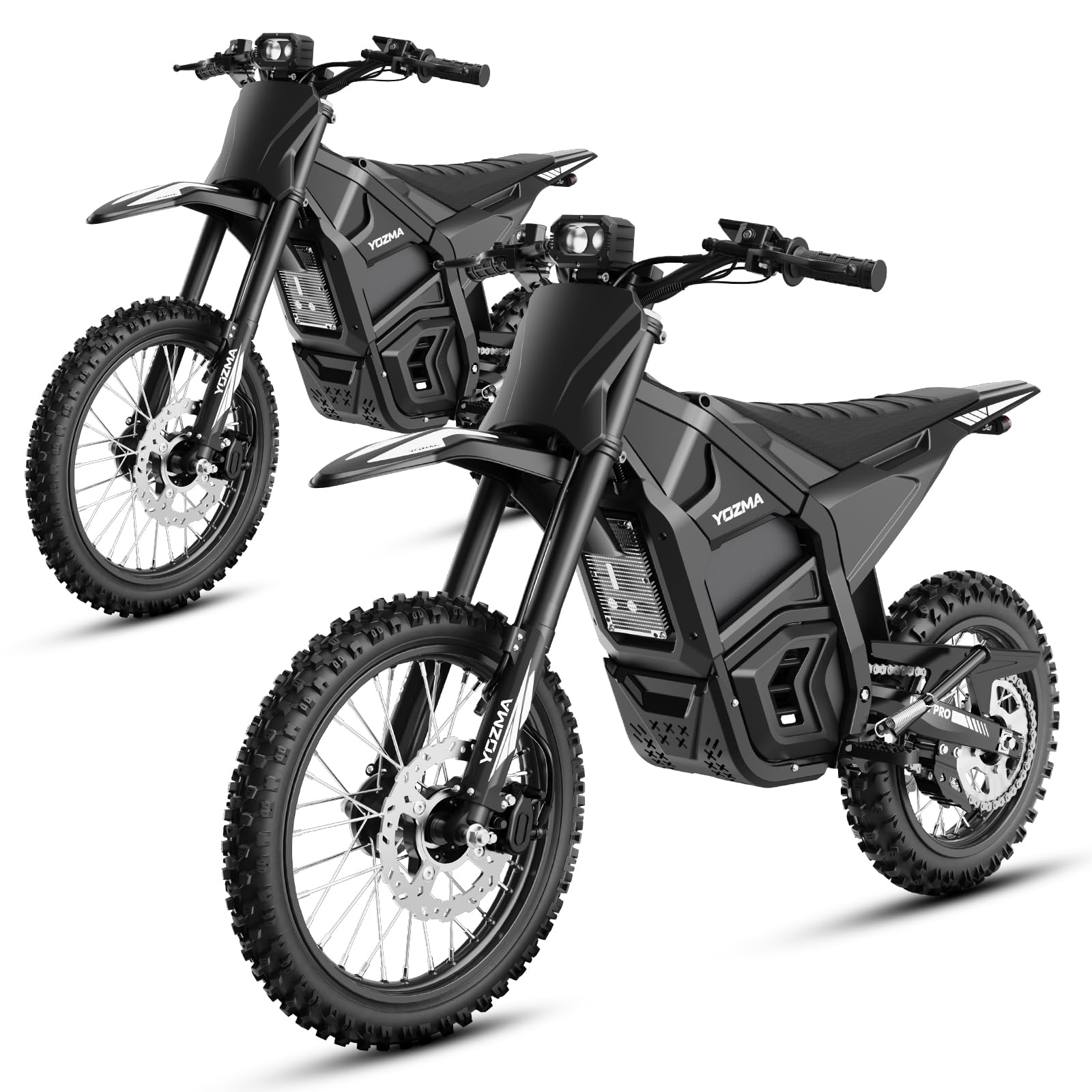
The Yozma IN10 Pro is the only mid‑drive motor on this list, and it uses that advantage ruthlessly. The 5500W peak mid‑drive spins through the bike’s gearing, which means the motor stays in its efficient RPM window while the 7‑speed drivetrain multiplies torque to the rear wheel. Riders report climbing hills that stall hub‑motor bikes with higher peak wattage figures. The 60V 27Ah battery platform provides voltage headroom that prevents the sag that robs power on long inclines.
The front 17‑inch and rear 14‑inch off‑road tires are a departure from the standard 26‑inch fat tire design. This setup lowers the center of gravity and improves cornering stability on loose terrain, but it also means the bike sits lower and feels more like a dirt motorcycle than a traditional ebike. The inverted front forks and nitrogen‑charged rear shock absorb significant impact, making rough descents controllable at speed.
Assembly requires installing both the bike and battery separately, and the two‑parcel shipping can cause confusion. Some customers report the battery arrives days after the bike. Overall fit and finish are solid, but the carbon steel frame adds heft — this is not a bike you want to carry up stairs. For riders facing 30‑plus‑percent grades regularly, the mid‑drive mechanical advantage makes the IN10 Pro the most capable climber in this guide.
Why it’s great
- Mid‑drive motor uses gearing for superior climbing efficiency
- 60V battery resists voltage sag under sustained load
- Inverted front forks and nitrogen shock absorb big hits
Good to know
- Carbon steel frame is heavy at over 80 lbs
- Battery and bike ship in separate parcels
- Not suitable for riders under 5’8”
2. FREESKY 3500W Bafang Motor Swift Horse Ultra
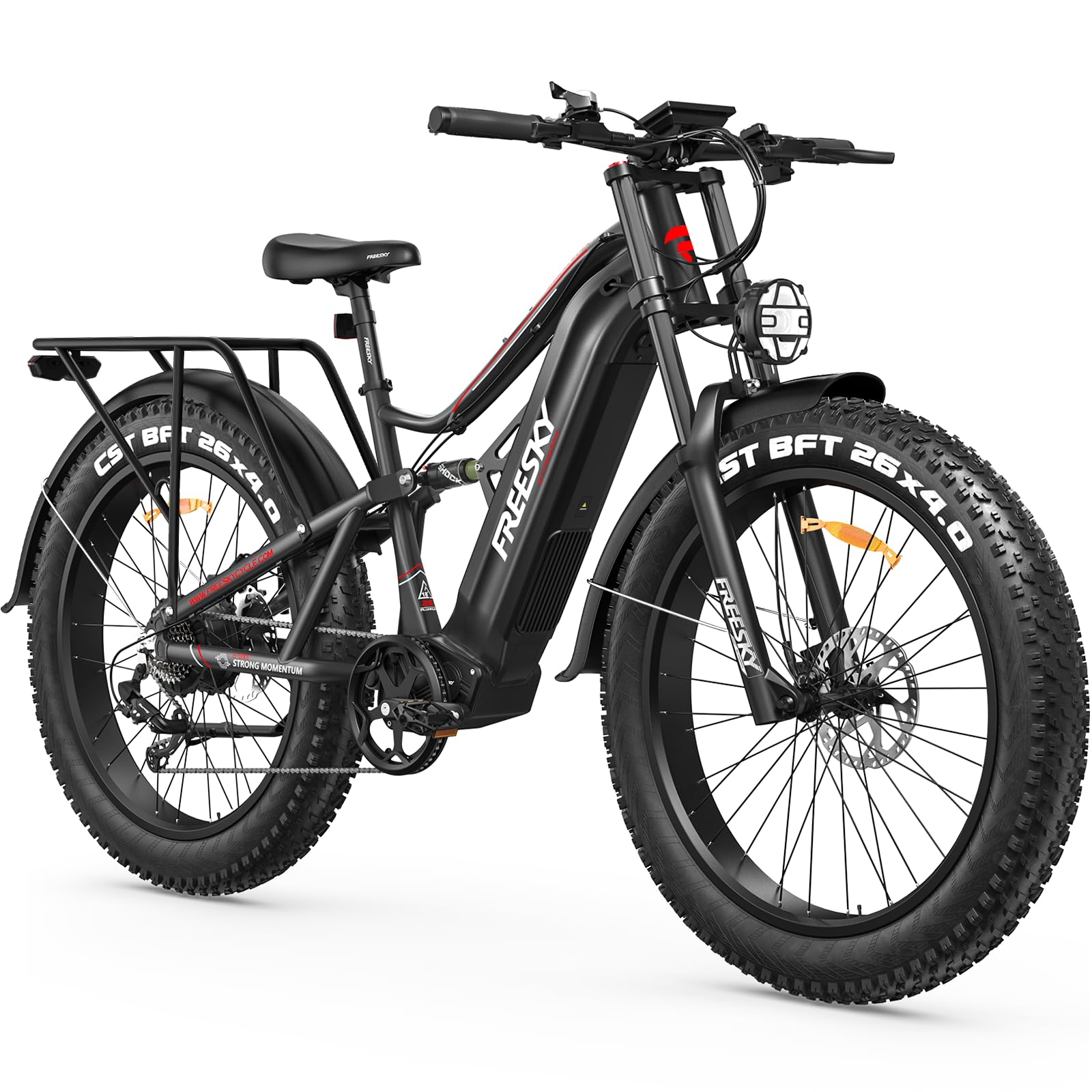
The FREESKY Swift Horse Ultra pairs a peak 3500W Bafang motor with a massive 48V 35Ah battery built from Samsung or LG cells. That battery capacity is the largest in this guide, and it translates directly to sustained hill‑climbing range — customers report riding 85 miles with 34 percent battery remaining. The motor delivers 140 Nm of torque, and the Bafang brand carries reliability cachet among ebike enthusiasts who prioritize consistent power delivery over peak marketing numbers.
The frame uses double‑crown front suspension and a rear shock that together absorb 70 percent of trail vibration, according to the manufacturer. The 4‑piston hydraulic disc brakes provide stopping force that matches the motor’s power output, which is critical when descending a steep grade after a climb. The HD color display remains readable in direct sunlight, and the swipe‑to‑lock system adds theft deterrence without a physical key.
At 1329 dollars, this bike sits at the upper end of mid‑range pricing, but the Samsung/LG battery cells and UL 2849 certification by TÜV justify the cost. The 6061 aluminum frame keeps weight manageable compared to steel‑framed competitors. One customer noted the unlocked PAS mode reaches 38 mph, but the throttle is capped at 20 mph — a deliberate safety measure that protects the battery from sustained full‑throttle drain on climbs.
Why it’s great
- 35Ah Samsung/LG battery delivers industry‑leading range
- UL 2849 certified by TÜV for electrical safety
- Bafang motor with 140 Nm torque climbs 40‑degree slopes
Good to know
- Throttle limited to 20 mph; PAS requires unlock code
- 5’8” riders find mounting tight
- Heavy build at over 75 lbs
3. ANDSKY Apex50 Dual Motor
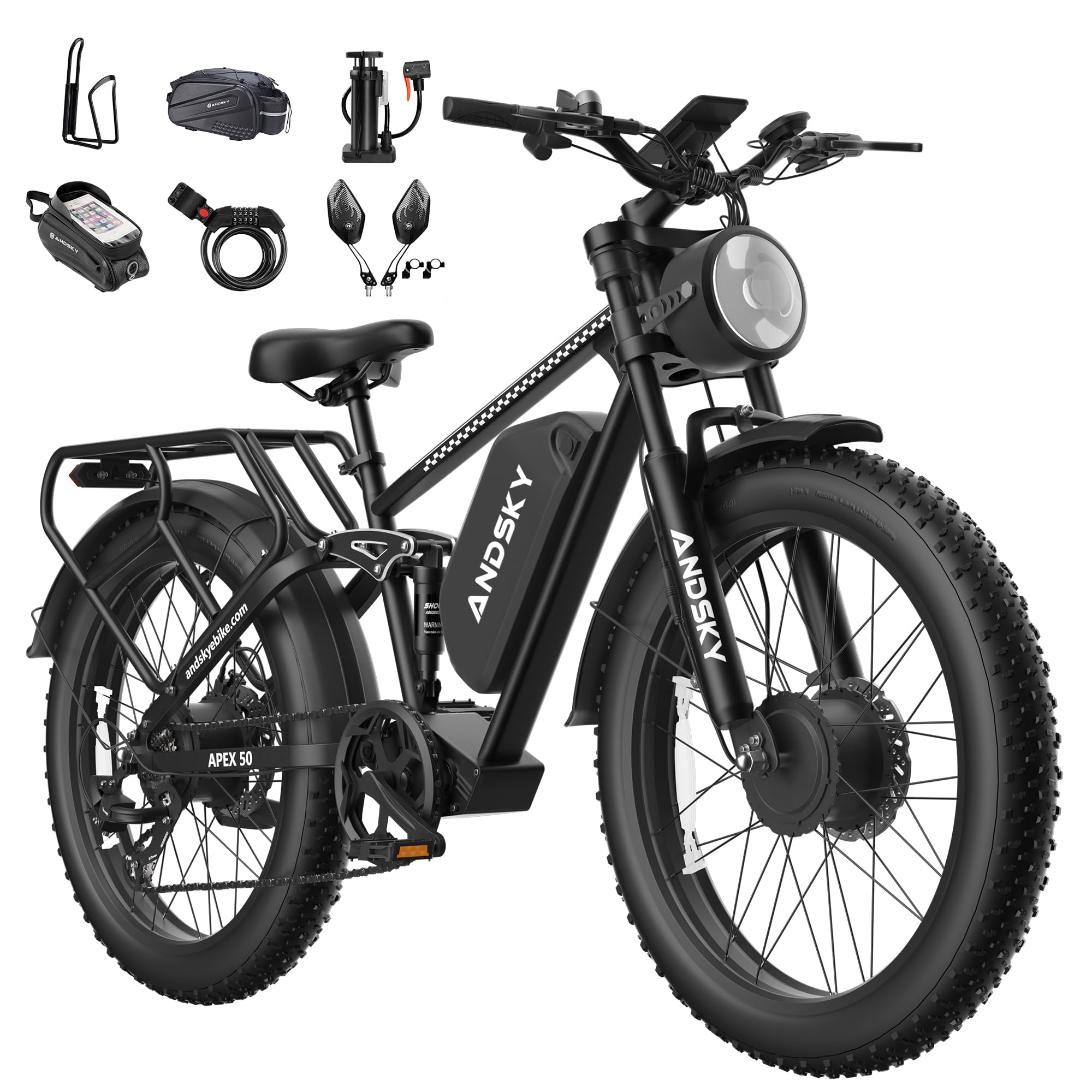
The ANDSKY Apex50 uses a true all‑wheel‑drive dual‑motor system that powers both wheels simultaneously for superior traction on loose surfaces. The 9000W peak power figure draws attention, but what matters for climbing is the 220 Nm of torque delivered through both hubs — that is among the highest sustained torque specifications in this guide. Riders report the bike handles 40‑percent grades without the front wheel losing contact, thanks to the balanced torque split.
The frame incorporates both a front suspension fork and a mid‑mounted shock absorber. This racing‑grade mid‑shock reduces the rear wheel hop that plagues many dual‑motor bikes when the rear motor applies sudden torque on uneven ground. The dual‑piston forged hydraulic brakes provide 30 percent more effective stopping surface than standard disc brakes, which matters when carrying momentum down a steep descent.
Customers praise the included accessory bundle — rack bag, phone holder, bottle holder, pump, and lock — but two reviewers noted the bags are poorly designed and useless. One reviewer reported the bike is 98 pounds with the battery, making it dangerous to maneuver on uneven ground for shorter riders. The 5’11” minimum height recommendation is accurate; riders below that will struggle with flat‑footing at stops on inclines.
Why it’s great
- True AWD with front and rear motor torque split
- 220 Nm torque handles 40‑percent grades
- Mid‑mounted shock reduces wheel hop under power
Good to know
- Weighs 98 lbs; difficult to lift or maneuver
- Included accessory bags are low quality
- Requires 5’11” rider height minimum
4. GAMVIRE 8000W Peak Dual Motor
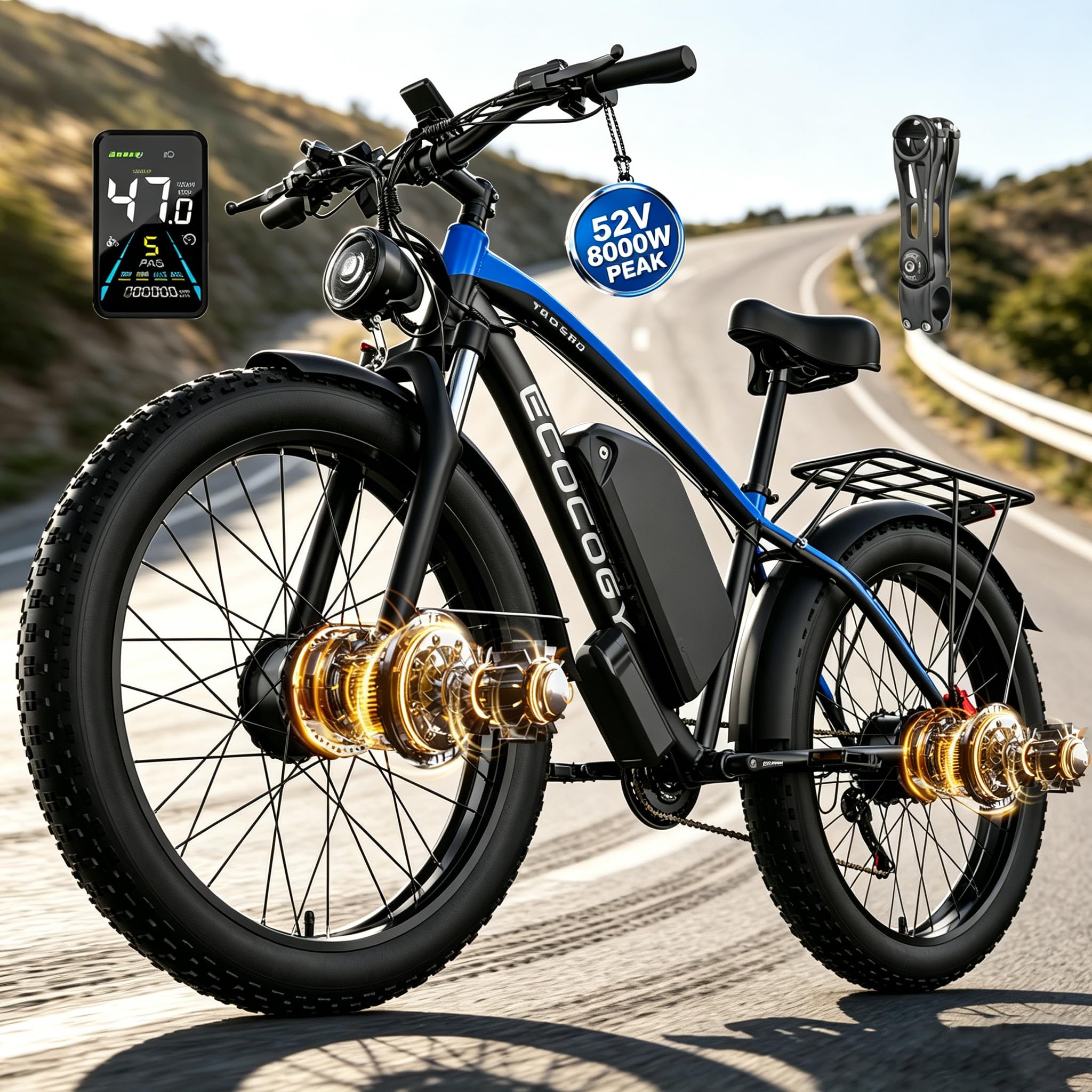
The GAMVIRE 8000W Peak AWD ebike pushes the speed envelope without sacrificing climbing ability. The dual‑motor system delivers power to both wheels, and reviewers consistently note that the bike climbs a 35‑degree levee easily in dual‑motor mode, whereas single‑motor mode stalls on the same grade. The 52V 32Ah battery with 1664 Wh capacity provides enough energy for 30 to 65 miles in dual‑motor mode, depending on throttle use.
The hydraulic disc brakes offer the responsive stopping power needed after a high‑speed descent. The lockable, adjustable dual‑shoulder front suspension fork absorbs trail chatter, and the 26‑inch by 4‑inch fat tires maintain grip on sand, gravel, and wet pavement. The 5‑level pedal assist system allows the rider to dial in power output: Level 1 caps at 8 mph for low‑effort cruising, while Level 5 unlocks the full 45–50 mph top speed.
One year after purchase, a reviewer reports the bike has held up to heavy use, though the rear rack broke under an 80‑pound load. The batteries also struggle in sub‑freezing temperatures, which is common with lithium‑ion packs but worth noting for winter climbers. The included phone holder is too small for large phones, and the iPhone 15 Pro Max pops out during rough riding.
Why it’s great
- Dual motor climbs 35‑degree grades reliably
- 5‑level PAS with top speed of 45–50 mph
- Hydraulic disc brakes stop predictably at high speed
Good to know
- Rear rack failed under 80‑lb load
- Battery range drops significantly below 32°F
- Phone holder does not secure large phones
5. E·Bycco EB7 Pro
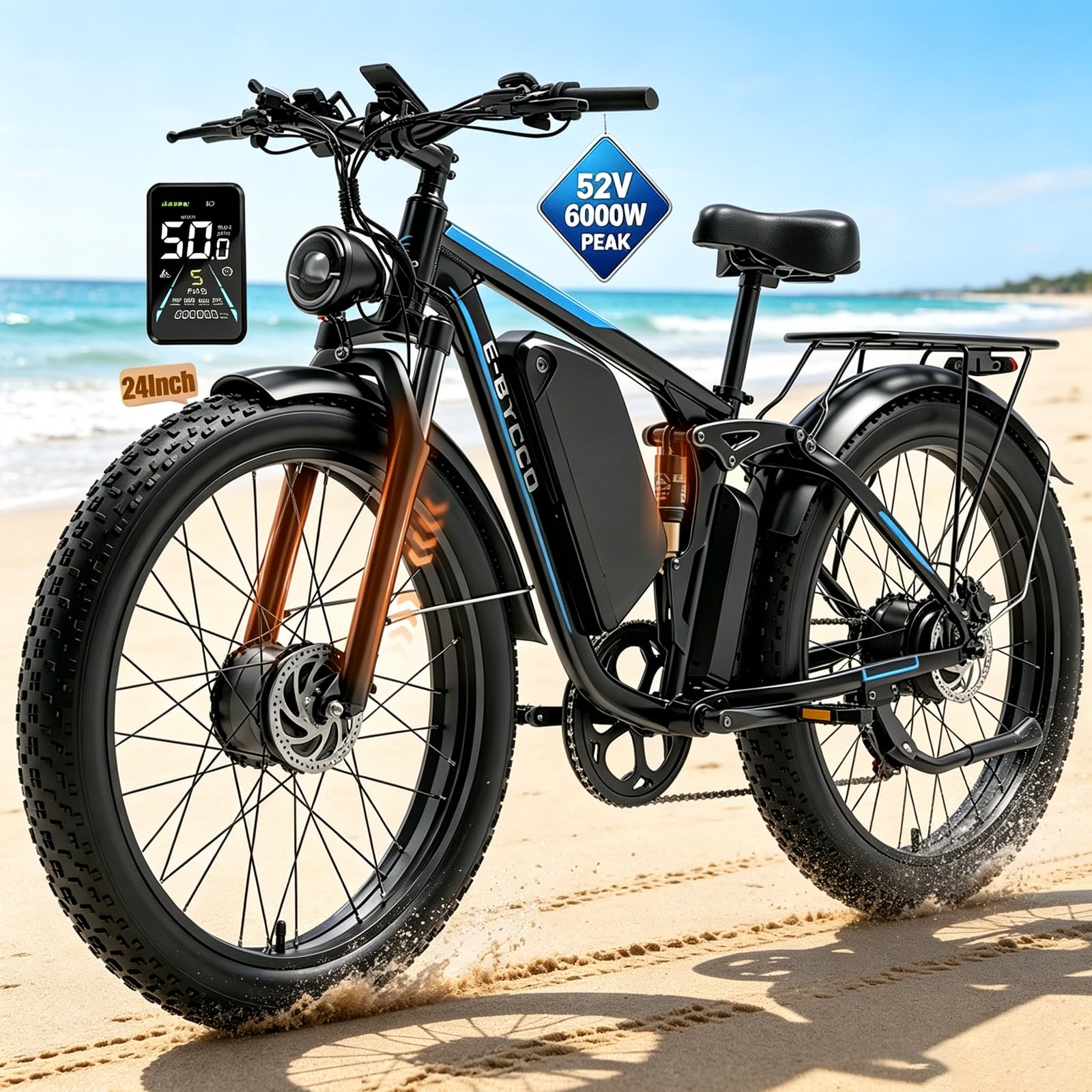
The E·Bycco EB7 Pro combines a 6000W peak dual‑motor system with genuine UL 2849 and UL 2271 certification by TÜV SÜD. This means the entire electrical system and battery have passed safety testing for overcharge, over‑discharge, and short‑circuit protection — an important consideration for riders who push their bikes hard on steep terrain where thermal stress peaks. The 52V 32Ah battery delivers 30 to 60 miles in pure electric mode and 60 to 100 miles in pedal‑assist mode.
The 24‑inch by 4‑inch fat tires provide a lower standover height than 26‑inch models, which helps shorter riders plant their feet at stops on hills. The lockable hydraulic front fork and high‑rebound rear shock absorb road vibration, and the 7‑speed Shimano drivetrain allows fine‑tuning of pedal cadence. Customers report the dual motors deliver 40 mph on flat ground and handle moderate 12‑percent grades at 23 mph in dual‑motor mode.
One customer noted the bike weighs approximately 150 pounds — this is an outlier claim, but the EB7 Pro is certainly heavy. The assembly takes about 75 minutes, and some reviewers mention the included instructions lack clarity on pedal assist speed limits. One early review reported a defective front motor, but the company replaced it quickly. Overall, the EB7 Pro earns marks for certified safety and real‑world hill performance.
Why it’s great
- UL 2849 and UL 2271 certified by TÜV SÜD
- 52V 32Ah battery with IP65 waterproof rating
- Dual motors maintain 23 mph on 12‑percent grade
Good to know
- Very heavy; requires muscle to load into a vehicle
- Instructions lack detail on PAS speed limits
- Some units arrive with minor assembly defects
6. ECOCOGY EB7 Pro
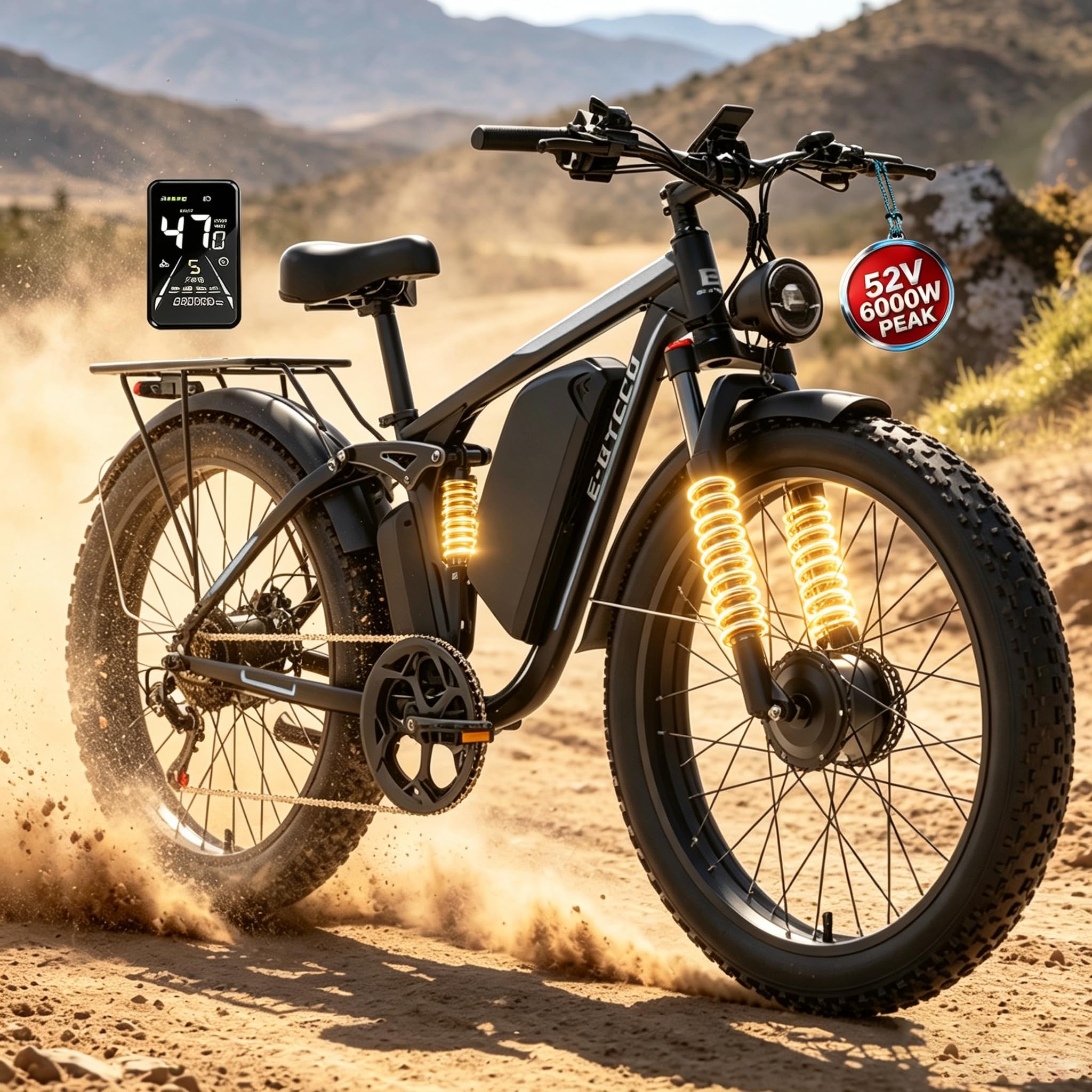
The ECOCOGY EB7 Pro uses the same dual‑motor AWD architecture as the E·Bycco but with a 6000W burst rating and a 52V 32Ah battery. Riders report the bike pulls a 317‑pound combined load — 215‑pound rider, 30‑pound trailer, and 72‑pound dog — with only 30 percent battery consumption over 20 miles in PAS 3–4. That kind of real‑world payload efficiency is rare and indicates well‑tuned controller mapping.
The 24‑inch by 4‑inch fat tires paired with full suspension make this bike feel planted on sand, snow, and gravel. The Shimano 7‑speed drivetrain integrates with the motor’s cadence sensor smoothly, avoiding the jerky engagement that some hub‑motor bikes exhibit. The hydraulic disc brakes provide consistent modulation, though one reviewer reported the rear disc developed a wobble after a few rides.
Customer service gets high marks: a defective controller was replaced quickly, and the company responded within hours to troubleshooting requests. The 90‑percent pre‑assembly means most riders can be on the road within 30 minutes. One downside is the battery degradation that occurred after 4–5 months of heavy use — range dropped from 20 miles to 5 miles before stabilizing. Adding FlatOut tire sealant is recommended to prevent punctures.
Why it’s great
- Tows 317 lbs with only 30% battery drain over 20 miles
- Shimano 7‑speed drivetrain integrates smoothly
- Responsive customer service for defect replacement
Good to know
- Battery capacity may degrade noticeably in first 6 months
- Rear disc brake can develop wobble
- Large frame not suitable for riders under 5’6”
7. PHILODO Falcon 60V
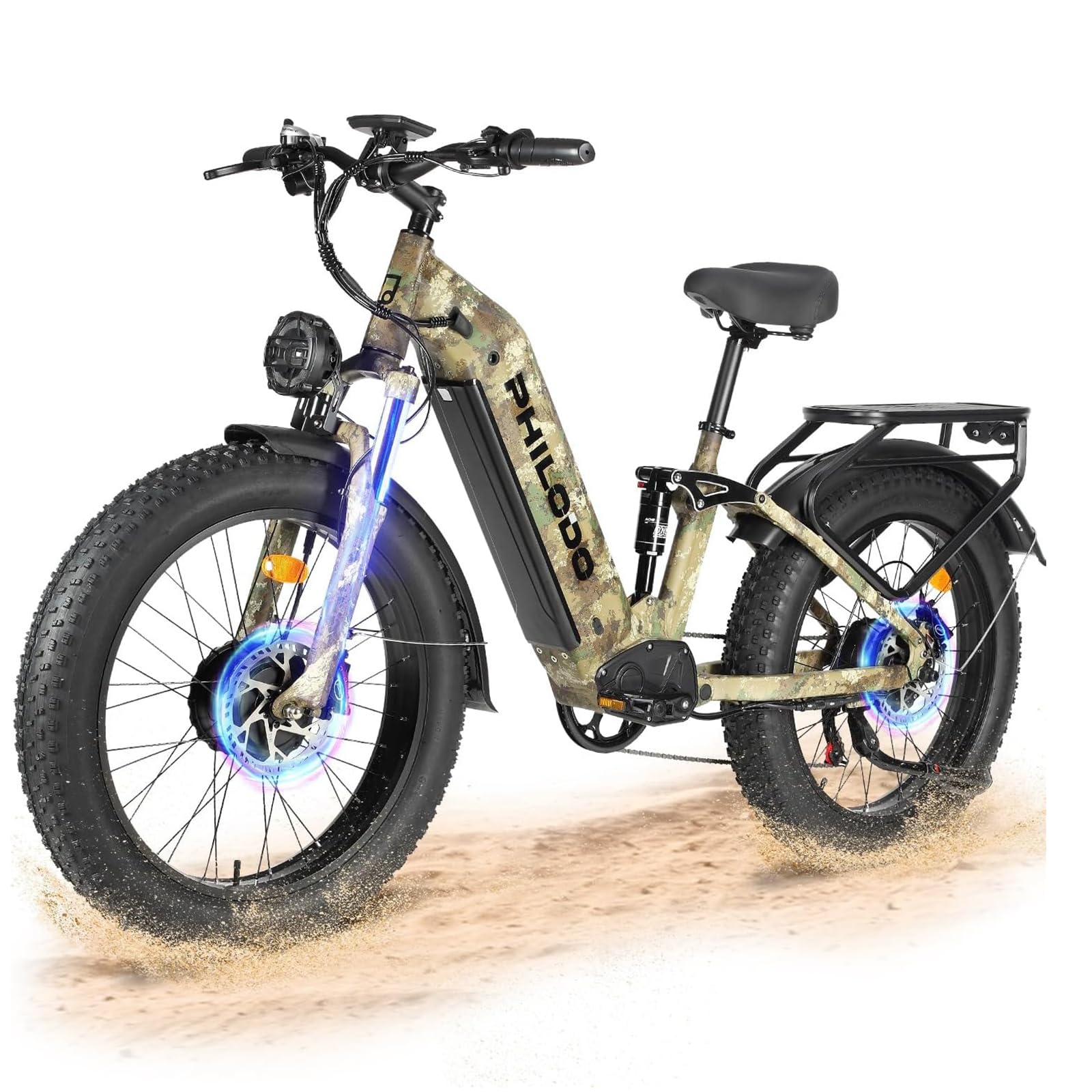
The PHILODO Falcon brings a 60V platform to the dual‑motor segment at a price that undercuts most competitors with similar voltage. The 60V 32Ah battery delivers up to 100 miles in PAS mode and 50 miles in full electric mode, and the higher voltage reduces sag compared to 48V systems during sustained climbs. Riders report that the Falcon “climbs any hill” without hesitation, and one customer’s grandson has used his for two years without major issues.
The lockable and adjustable front fork combined with a rear air shock provides a plush ride on technical terrain. The 6‑mode controller lets riders switch between dual‑motor and single‑motor operation, which preserves battery life when full AWD isn’t needed. The aluminum frame keeps weight manageable for a dual‑motor bike, though it remains hefty at around 75 pounds.
Customer service receives mixed reviews: initial support was unresponsive for a bent rim, but after escalation a new representative arranged a quick replacement. The throttle was limited to 15 mph on one unit, but a video tutorial resolved the issue in minutes. The brakes and wheels require careful pre‑ride inspection — one rider found the headset loose out of the box. For budget‑conscious riders who need genuine hill‑climbing power, the Falcon represents the strongest value in this guide.
Why it’s great
- 60V platform resists voltage sag on long climbs
- Dual motor with single‑mode option for range
- Best value for 60V dual‑motor performance
Good to know
- Customer support slow for initial contact
- Throttle may arrive limited; requires configuration
- Headset should be tightened before first ride
8. BIGUODIR Y3 Dual Motor
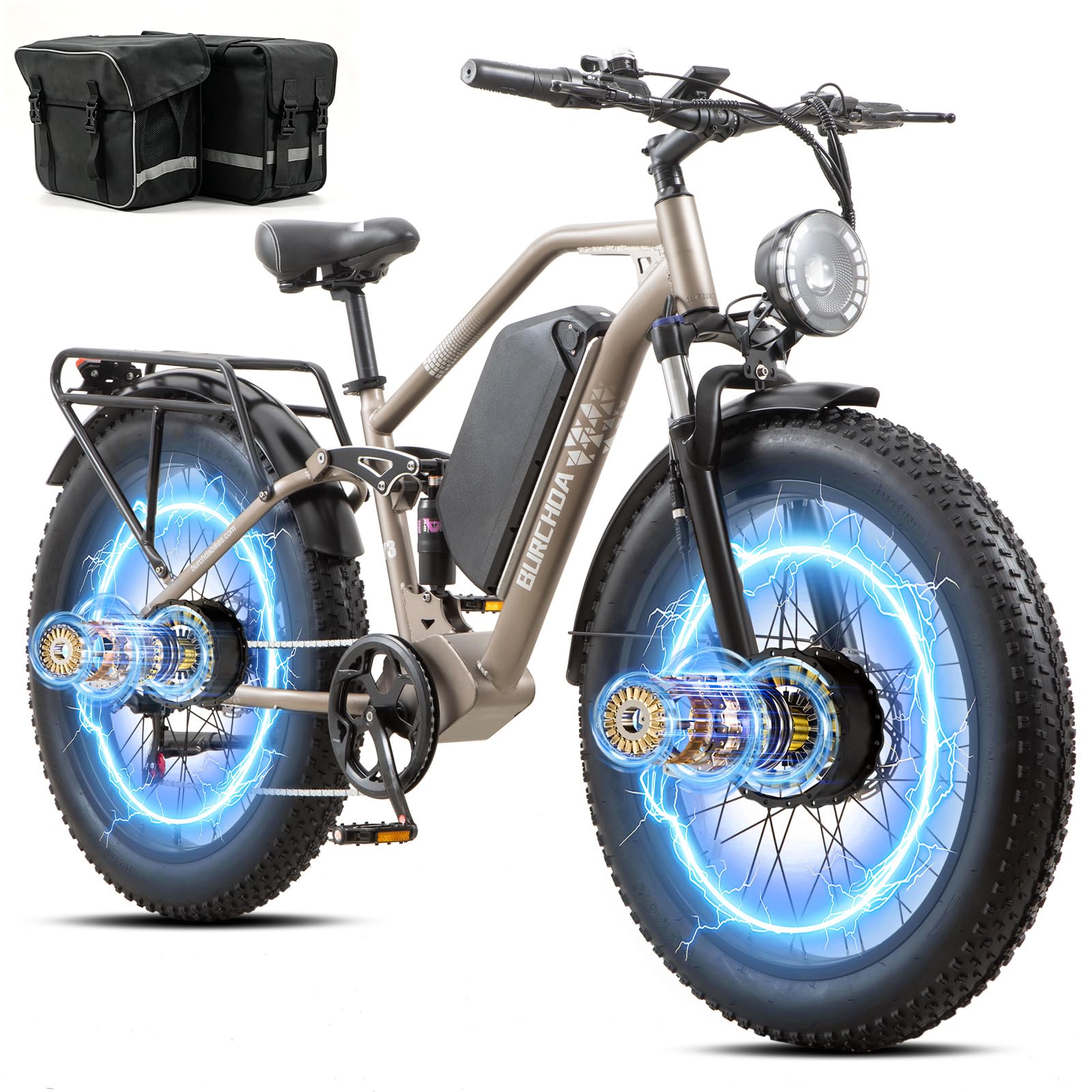
The Y3 from BIGUODIR delivers 210 Nm of peak torque, which is the second‑highest number in this guide and translates directly to aggressive hill‑climbing capability. The 6061 aluminum frame keeps weight lower than steel‑framed competitors, and the full suspension setup with 26‑inch by 4‑inch fat tires provides stability on loose dirt and snow. The 52V 30Ah battery supports up to 90 miles in single‑motor mode or sustained high‑output riding in dual‑motor mode.
Riders describe the Y3 as a “mini electric motorcycle” that is both big and comfortable, but the seat drew criticism for being uncomfortable on longer rides. The bike is massive and requires a minimum rider height of 5’11”. Owners report speeds of 29 mph at 160 pounds, with stable handling at that speed. The dual 180mm hydraulic disc brakes provide confident stopping power even when descending steep grades with the 450‑pound maximum payload.
The included accessories — rear rack basket, rear rack bag, rearview mirror, and air pump — add genuine value. One reviewer noted the tail light is hidden by the rear rack bag, which is a safety concern for night riding. Assembly is straightforward at 95 percent pre‑built, and the company provides lifetime technical support. The Y3 is not suitable for short riders, but for those who fit, it is a torque‑focused climbing machine.
Why it’s great
- 210 Nm peak torque handles steep grades aggressively
- 6061 aluminum frame for reduced weight
- Full accessory package included out of the box
Good to know
- Stock seat causes discomfort on long rides
- Requires 5’11” minimum rider height
- Tail light obscured by rear rack bag
9. HiKNiGHT H6 Pro
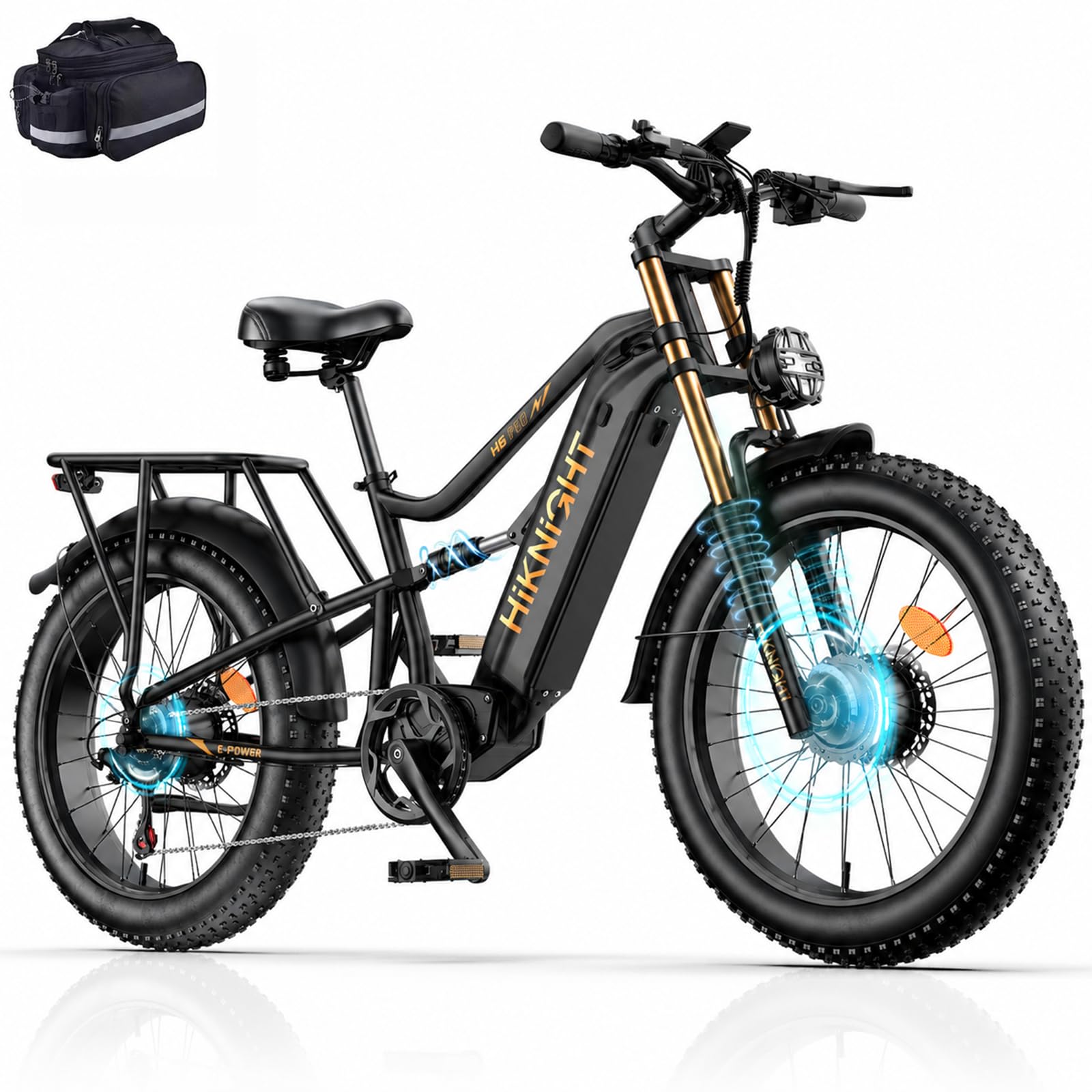
The HiKNiGHT H6 Pro brings true dual‑motor AWD to a more accessible price point without cutting corners on the frame. The 4000W peak motor system delivers enough torque to conquer 35‑degree slopes, and the one‑click switch between single and dual motors allows riders to reserve battery for the steepest sections. The 52V 20Ah removable battery provides 40 miles in pure electric mode and 90 miles with pedal assist.
The adjustable handlebar stem and extra‑large, thickened seat are direct responses to common ebike comfort complaints. The widened seat reduces hip pressure on long climbs, and the stem adjustment accommodates different torso lengths without forcing a forward lean. The 24‑inch by 4‑inch fat tires provide a lower standover height than 26‑inch models, making this a better fit for shorter riders.
At around 80 pounds, the H6 Pro is heavy but manageable with a ramp for loading. The included accessory pack is generous: bike bag, adjustable stem, large saddle, spare brake pads, lock, tire pump, phone holder, turn signal taillight, and tool kit. Some units arrived with a missing seat clamp part or bent charger, but the company replaced these within a week. The dual motors make hills feel flat, and one reviewer clocked 36–38 mph on pavement.
Why it’s great
- Affordable entry into dual‑motor AWD climbing
- Adjustable stem and oversized seat improve comfort
- Generous accessory package included
Good to know
- Heavy at 80 lbs; requires ramp for loading
- Minor assembly defects reported (missing parts)
- Not US road legal at full speed
10. EcoE 9000W Dual Motor

The EcoE 9000W model uses a 60V 32Ah battery with a claimed 9000W peak dual‑motor output. The 60V platform provides significant voltage headroom for hill climbing, and the 32Ah capacity supports 35 to 80 miles of range depending on terrain and riding mode. The 6061 aluminum alloy frame keeps weight lower than steel alternatives, and the 600‑lumen LED headlight provides adequate illumination for night rides.
Riders report excellent torque and hill‑climbing performance, with one reviewer noting the bike reaches 35 mph (not the advertised 52 mph) and handles steep inclines without hesitation. The front and rear disc brakes provide safe stopping, and the full suspension absorbs trail roughness effectively. The SHIMANO 7‑speed drivetrain allows gear selection to match the motor’s power band.
Customer reviews are polarized: some praise the bike as the best of three they’ve owned, while others call it a scam, alleging the battery delivers only 14 miles of range and the top speed is 30 mph. One reviewer reported a broken screen on arrival and a battery failure after three months. The range discrepancy likely stems from using dual‑motor throttle mode on steep terrain, which drains the battery rapidly. For riders who verify the specifications before purchase, the EcoE offers raw power at a competitive price, but buyer caution is warranted.
Why it’s great
- 60V 32Ah battery resists voltage sag on hills
- 6061 aluminum frame balances strength and weight
- Powerful dual‑motor acceleration on steep grades
Good to know
- Real top speed lower than advertised 52 mph
- Battery range drops sharply in dual‑motor mode
- Mixed customer support experiences
11. FREESKY Wildcat Ultra
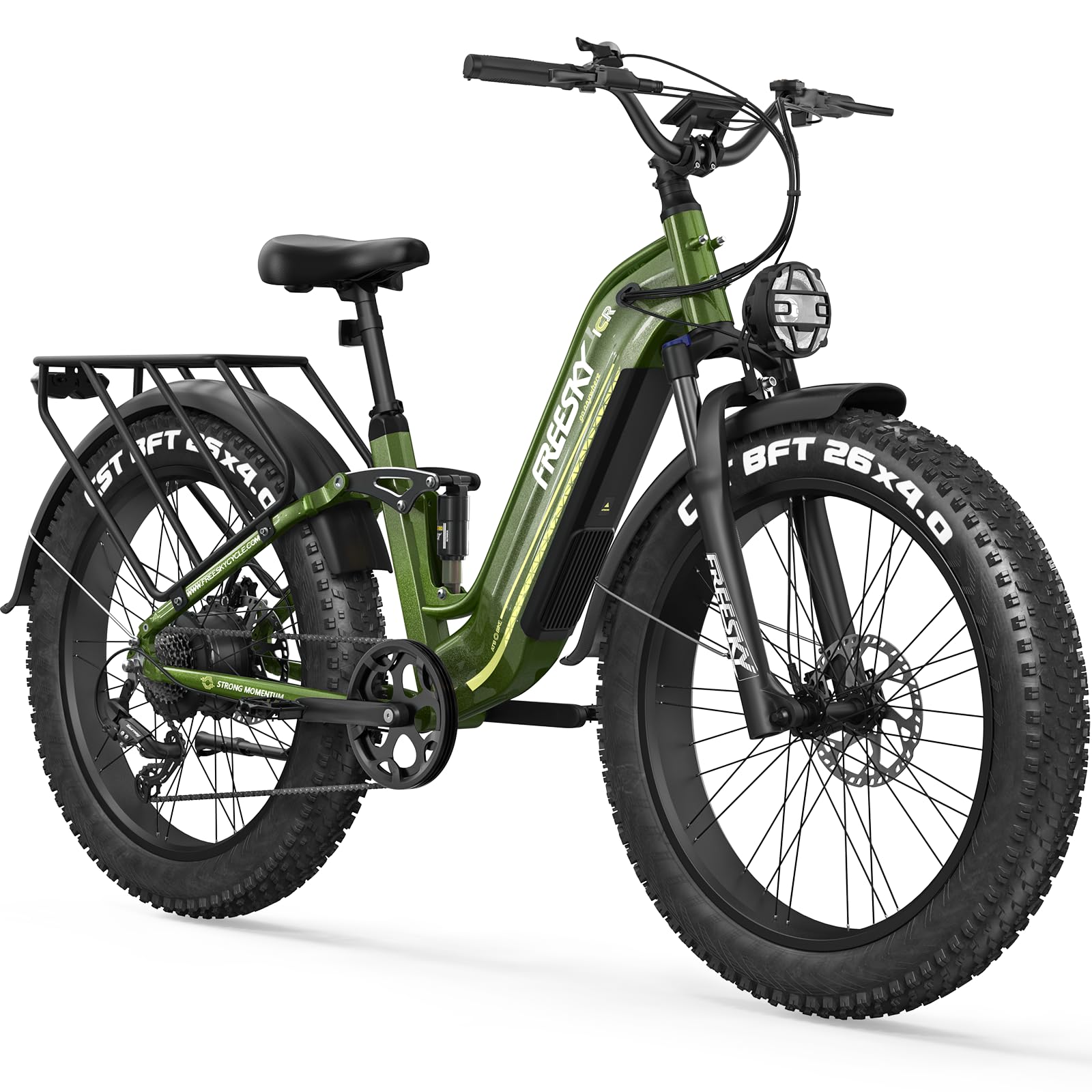
The FREESKY Wildcat Ultra uses a 3000W peak motor paired with a 25Ah battery built from Samsung cells. The Samsung cells are UL 2271 certified by TÜV, and the entire bike carries UL 2849 certification — a safety combination that is rare at this price point. The motor delivers enough torque to handle 40‑degree slopes, and riders report it climbs hills that would stall lower‑torque hub motors.
The step‑through frame design makes mounting and dismounting easy for seniors and riders with limited mobility, which is unusual for a bike with this level of power. The full suspension system with hydraulic shocks absorbs 85 percent of trail bumps, according to the manufacturer. The LCD display is the largest in its class, and the NFC keyless start system adds modern convenience.
Customers report the bike is comfortable on long rides and has a battery life that lasts a week before the first charge, with an estimated range of 60 to 80 miles. The price undercuts comparable Himiway models by roughly half. Some units arrive with cosmetic scratches, and the motor torque is sufficient but not overwhelming — top speed reaches 20–25 mph rather than the 37 mph upper limit. For riders who prioritize safety certification and a step‑through frame over raw speed, the Wildcat Ultra is a strong choice.
Why it’s great
- UL 2849 and UL 2271 certified with Samsung cells
- Step‑through frame for easy mounting
- Excellent real‑world range of 60–80 miles
Good to know
- Real top speed lower than advertised 37 mph
- Some units arrive with cosmetic scratches
- Not as torquey as dual‑motor competitors
12. Aipas M1 Pro
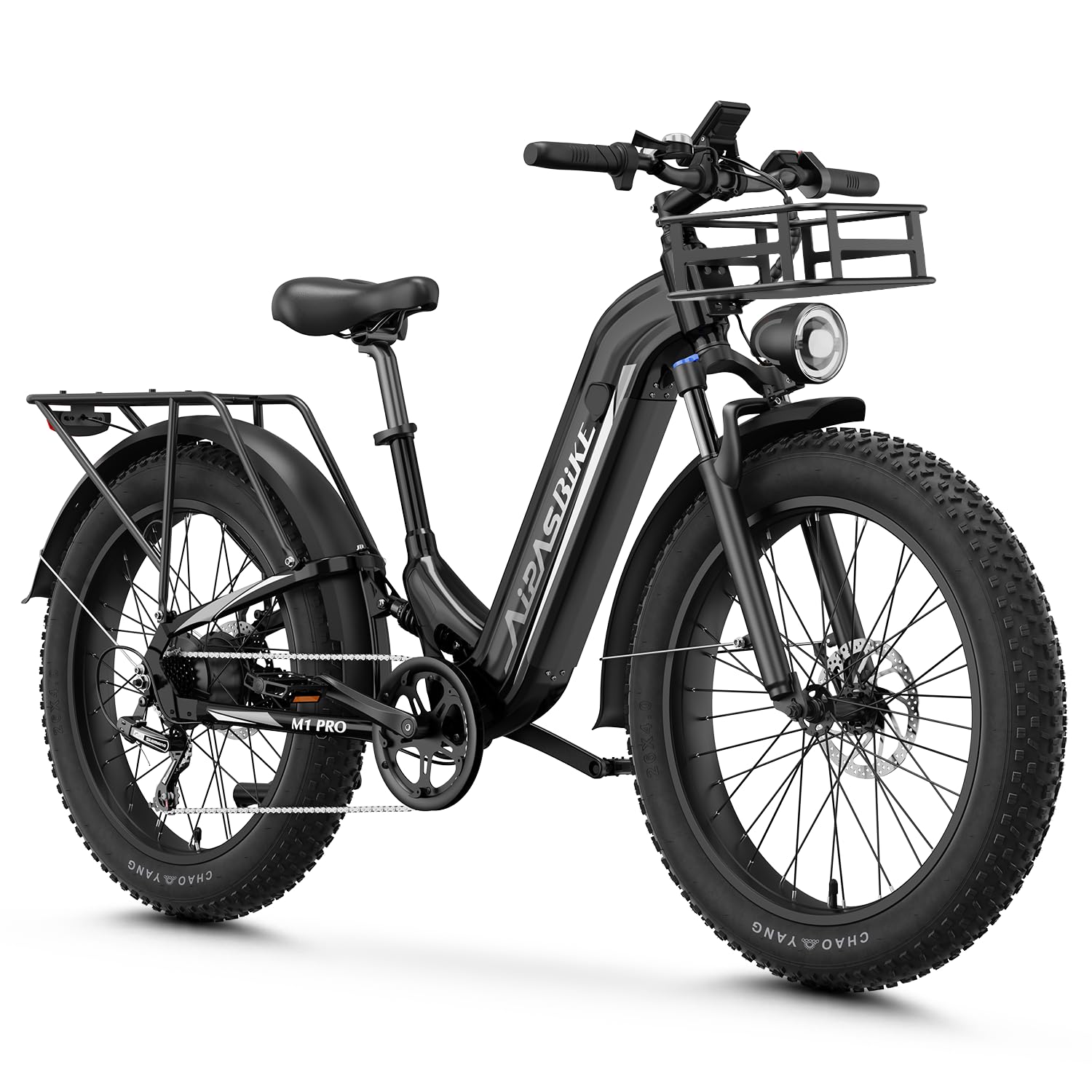
The Aipas M1 Pro uses an 1800W peak motor with 110 Nm of torque, which is sufficient for moderate hills and fits riders who need a step‑through frame for easier access. The 48V 17.5Ah battery delivers 25 to 85 miles of range, and the motor can climb grades up to 23 degrees. Riders describe the bike as “built like a tank” and stable on rough terrain, with easy assembly taking about 30 minutes.
The dual suspension system — lockable front fork and rear shock — provides a smooth ride on gravel and dirt. The 26‑inch by 4‑inch fat tires enhance grip, and the 180mm mechanical disc brakes offer adequate stopping power for the bike’s speed range. The LCD display shows speed, distance, battery level, and mode, and the USB charging port allows phone charging on the go.
One reviewer noted that at 5’7”, their feet barely touch the ground, so riders below that height may struggle. The bike is heavy for a single‑motor model, and some users found the throttle power surprising — they recommend starting slow to learn the handling. The step‑through design and comfortable saddle make it a popular choice for seniors who want to eliminate the struggle of hill climbing without navigating the complexity of a dual‑motor system.
Why it’s great
- Step‑through frame and comfortable saddle for easy use
- Dual suspension absorbs trail bumps effectively
- 5 riding modes adapt to varied terrain
Good to know
- Not suitable for riders under 5’7”
- Heavy for a single‑motor bike
- Mechanical brakes, not hydraulic
13. Jasion EB5 MAX
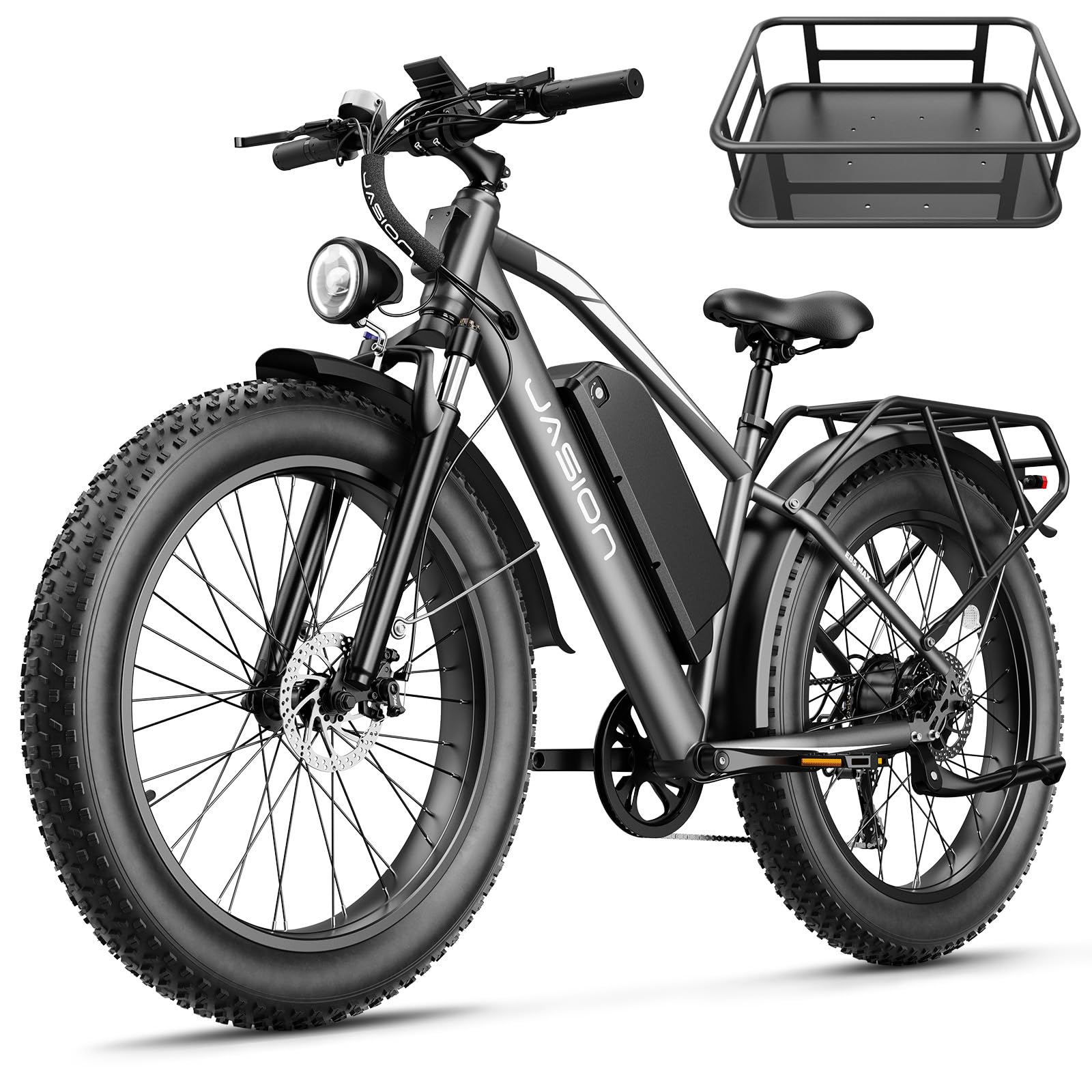
The Jasion EB5 MAX is the most budget‑friendly option in this guide, yet it delivers a 2000W peak motor and a 48V 15Ah 720Wh battery. The motor provides enough power for moderate hills, with a top speed of 28 mph. The 26‑inch by 4‑inch puncture‑resistant fat tires provide grip on sand, mud, and gravel, and the lockable suspension fork absorbs shocks during trail rides.
The 720Wh battery delivers up to 65 miles on pedal assist and 35 miles on throttle, which is competitive for the price tier. The bright front and rear lights improve visibility in low‑light conditions, and the pre‑installed fenders keep mud off the rider. The password‑protected dashboard adds basic theft deterrence, and the cruise control feature reduces hand fatigue on long flat sections.
Customer feedback highlights two concerns: tires lose 8 psi overnight, and the front tire vibrates at 15 mph. Both issues are common in budget fat‑tire bikes and can be mitigated with tire sealant and careful bead seating. The bike is large and heavy, so smaller riders should verify fit before purchasing. One reviewer received a defective battery and reported poor seller support. For riders who want to test hill‑climbing electric power without a large investment, the EB5 MAX offers a functional entry point, but the quality control variance is a risk.
Why it’s great
- 2000W peak motor at a budget price point
- 720Wh battery provides decent range for the class
- Password‑protected dashboard deters theft
Good to know
- Tires lose air overnight; require sealant
- Front wheel vibrates at 15 mph
- Quality control and customer support are inconsistent
FAQ
How much torque do I need to climb a 20 percent grade on an ebike?
Will a 48V ebike with 80 Nm climb a steep hill?
Why do dual‑motor ebikes climb better than single‑motor bikes?
Are mid‑drive motors better than hub motors for hills?
How does rider weight affect hill‑climbing performance on an ebike?
Final Thoughts: The Verdict
For most riders seeking the best ebike for hills, the best all‑around climber is the Aipas M1 Pro because its step‑through frame and 110 Nm of torque make steep hills accessible without overwhelming complexity. If you need extreme torque for the steepest grades, grab the Yozma IN10 Pro for its mid‑drive mechanical advantage. And for riders who want dual‑motor AWD traction on loose terrain at a value price, nothing beats the PHILODO Falcon 60V.

Mo Maruf
I created WellFizz to bridge the gap between vague wellness advice and actionable solutions. My mission is simple: to decode the research and give you practical tools you can actually use.
Beyond the data, I am a passionate traveler. I believe that stepping away from the screen to explore new environments is essential for mental clarity and physical vitality.