Our readers keep the lights on and my smoothie glass nicely filled. As an Amazon Associate, I earn from qualifying purchases.
Dragging a heavily knurled barbell up your shins doesn’t have to leave you bleeding after every set. The right pair of deadlift socks changes that equation — providing a dense barrier between your skin and the steel so you can pull with full aggression. These socks must stay put, cover the entire shin, and resist wear from repetitive contact without adding so much bulk that they interfere with your stance or shoe feel.
I’m Mohammad Maruf — the founder and writer behind WellFizz. I’ve spent many hours analyzing the specifications, user feedback, and material constructions of gym-specific leg wear to identify which pairs actually deliver on their promise of lasting shin protection.
This guide breaks down the options that solve the real problem of barbell abrasion and support heavy pulling technique. If you’re searching for the best deadlift socks, you need a pair that combines adequate height, snug fit, and enough durability to outlast your training cycle.
How To Choose The Best Deadlift Socks
Not every tall sock is suitable for heavy pulls. The wrong pair slips down mid-rep, bunches around the ankle, or offers too little padding to stop knurling marks. Here are the three factors that separate a useful deadlift sock from a laundry bin casualty.
Sock Height and Stay-Put Design
Your deadlift socks must reach at least to the bottom of your kneecap when standing. If the scrunch relaxes and the sock drops below the mid-shin, the barbell will contact bare skin on every rep. Look for socks with reinforced cuffs, silicone grippers, or compression bands at the top. Tube socks that rely solely on elastic thread tend to slide down after the first workout.
Padding Thickness and Material
The ideal deadlift sock provides enough cushion to absorb knurling pressure without making your shoes feel tight or creating a bulky fold at the ankle. A mid-weight cotton-polyester blend or performance knit with a terry footbed works well. Extremely thin dress-sock material won’t stop abrasion, while thick winter sock padding can throw off your foot position and heel stability.
Durability Under Repetitive Contact
Deadlifting puts concentrated wear on the front of the shin area. A sock that shows pilling or thinning after a few sessions is not built for this application. Check reviews specifically for “shin protection” and “rope climb” feedback — those details reveal whether the fabric can survive dragging contact session after session.
Quick Comparison
On smaller screens, swipe sideways to see the full table.
| Model | Category | Best For | Key Spec | Amazon |
|---|---|---|---|---|
| MOXY Socks Powerful Power Skull | Premium | Dedicated deadlift and CrossFit athletes | Knee-high length with vented arch | Amazon |
| Bear Grips Deadlift Shin Guards | Premium | Maximum shin padding and rope climbs | 5mm neoprene padding with stirrup | Amazon |
| Under Armour Magnetico Over the Calf | Mid-Range | Compression fit with fast-drying fabric | Compression knit oval calf fit | Amazon |
| TCK Prosport Tube Socks | Budget | Over-the-calf coverage for wide calves | Cotton-poly blend with reinforced toe | Amazon |
| Scrunch Football Socks 2 Pack | Budget | Extra-long scrunch style with light padding | Terry footbed with cushioned heel | Amazon |
In‑Depth Reviews
1. MOXY Socks Powerful Power Skull Deadlift Knee-High Socks

MOXY built these socks specifically for the demands of the gym floor. The knee-high cut reaches the bottom of your kneecap comfortably, so the barbell never touches bare skin even on a conventional pull. Users report that the fabric shows no wear after months of CrossFit workouts that include both deadlifts and rope climbs — a strong sign that the stitching and fiber density can handle repeated abrasion.
The compression level around the calf locks the sock in place without cutting off circulation. Reviewers with size 10.5 women’s feet and 71-inch tall frames both note that the fit stays secure during dynamic drills and HIIT sessions. Vented arch panels help prevent overheating, which matters when you are working through multiple heavy sets in a warm gym.
While the skull graphic may lean toward one aesthetic, the construction underneath is serious. The high thread count and dense weave produce a barrier that absorbs knurling pressure rather than letting it transfer straight to your skin. For lifters who need one pair that pulls triple duty for deadlifts, rope climbs, and general training, this is the most versatile option on the list.
Why it’s great
- Reinforced shin area resists wear from barbell contact
- Compression fit prevents mid-rep sliding
- Vented arch keeps feet from overheating
Good to know
- Skull design may not appeal to minimalists
- Color options are limited compared to tube socks
2. Bear Grips Deadlift Shin Guards

This product is not a sock in the traditional sense — it is a padded sleeve designed to sit over your calf and shin. The 5mm neoprene padding is significantly thicker than the roughly 1mm found in typical compression sleeves, and that extra material makes a real difference when you are pulling from the floor. Users report being able to drag the bar against their shins without flinching, which often improves bar path and reduces wasted energy.
The elastic stirrup that wraps under the foot anchors the guard in place, so it does not ride up during the lift. A silicone band at the top adds another layer of security. Multiple reviewers mention that the fit feels skin-tight and unnoticeable during the workout, which is the ideal scenario — protection without distraction. The guards also work well for rope climbs, box jumps, and any activity where shin contact is a concern.
Bear Grips ships these in sizes XS through XL, so both men and women can find their fit by measuring the widest part of the calf. The neoprene construction does trap more heat than a knit sock, so consider that if you train in a very hot environment. Some early reports mention potential stitching wear at the opening, so hand washing is recommended to preserve longevity.
Why it’s great
- 5mm padding eliminates shin scrapes from knurling
- Elastic foot harness prevents ride-up during pulls
- Stretchy calf fit accommodates a wide size range
Good to know
- Neoprene material traps heat more than knit socks
- Stitching around the opening may loosen over time
3. Under Armour Unisex Adult Magnetico Over the Calf Socks
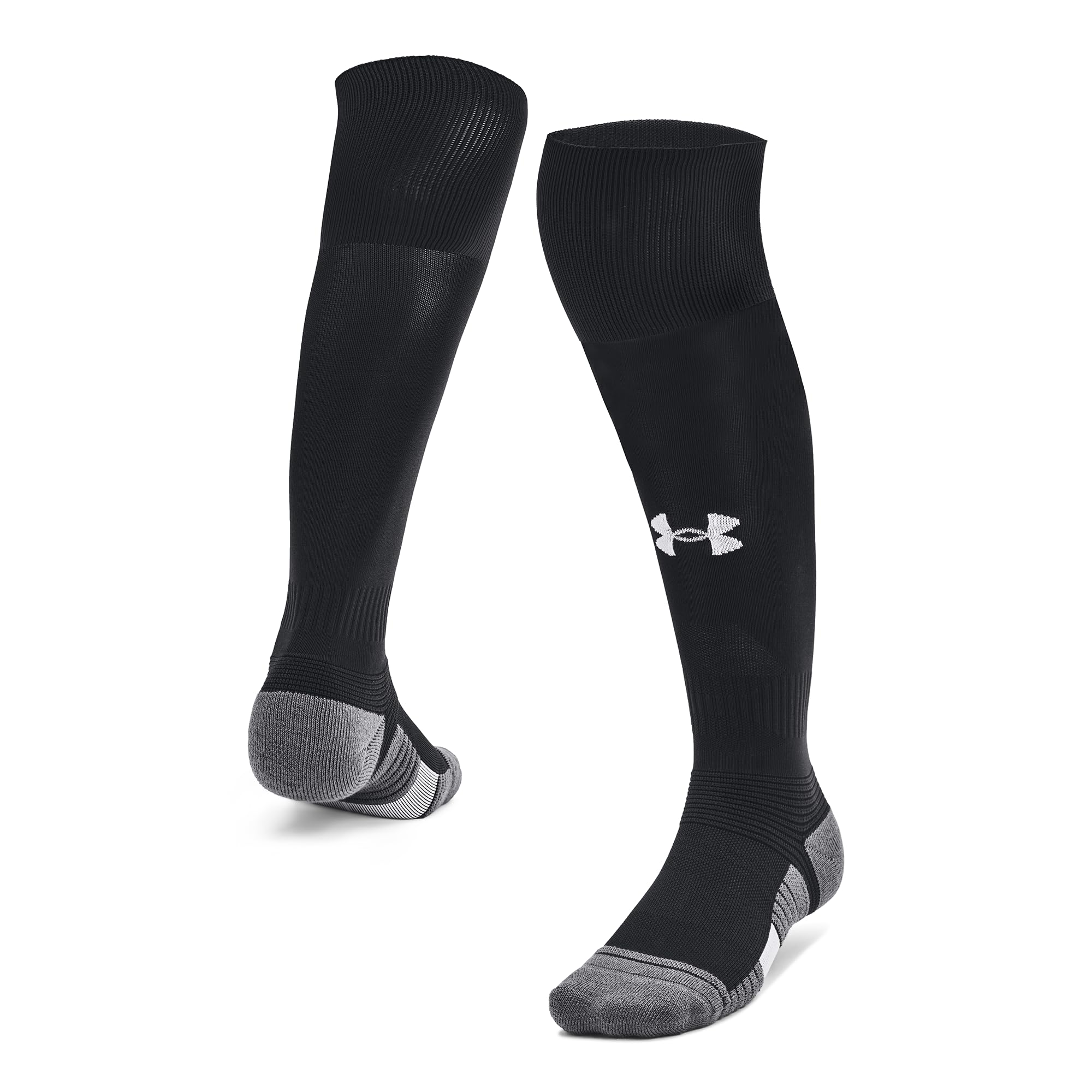
Under Armour brings its textile expertise to the over-the-calf category with the Magnetico sock. The compression knit is tight around the calf and ankle, providing a locked-in sensation that keeps the fabric from bunching inside your shoe. This is a thin sock compared to the cotton-heavy tube options, so it fits easily inside lifting shoes without adding bulk around the heel or midfoot.
The material is fast-drying and odor-resistant, which matters for lifters who train multiple days in a row and want gear that does not stay damp. Reviewers note that the sock stays warm in winter conditions and comfortable during longer sessions. Hockey and skating users also approve of the thin profile and non-slip characteristics, confirming that the sock stays put under active movement.
One drawback reported across multiple reviews is bleeding of the red dye after several washes, which can stain shoe interiors. Hand washing is recommended to preserve the color and fabric structure. For lifters who want a snug, low-bulk sock that reaches the lower calf and dries quickly, the Magnetico is a solid mid-range pick, though the shin padding is minimal compared to dedicated deadlift socks.
Why it’s great
- Compression fit eliminates bunching and sliding
- Fast-drying fabric stays fresh between sessions
- Thin profile fits well inside lifting shoes
Good to know
- Dye bleed can stain light-colored shoe interiors
- Minimal shin padding compared to padded sleeves
4. TCK Prosport Tube Socks
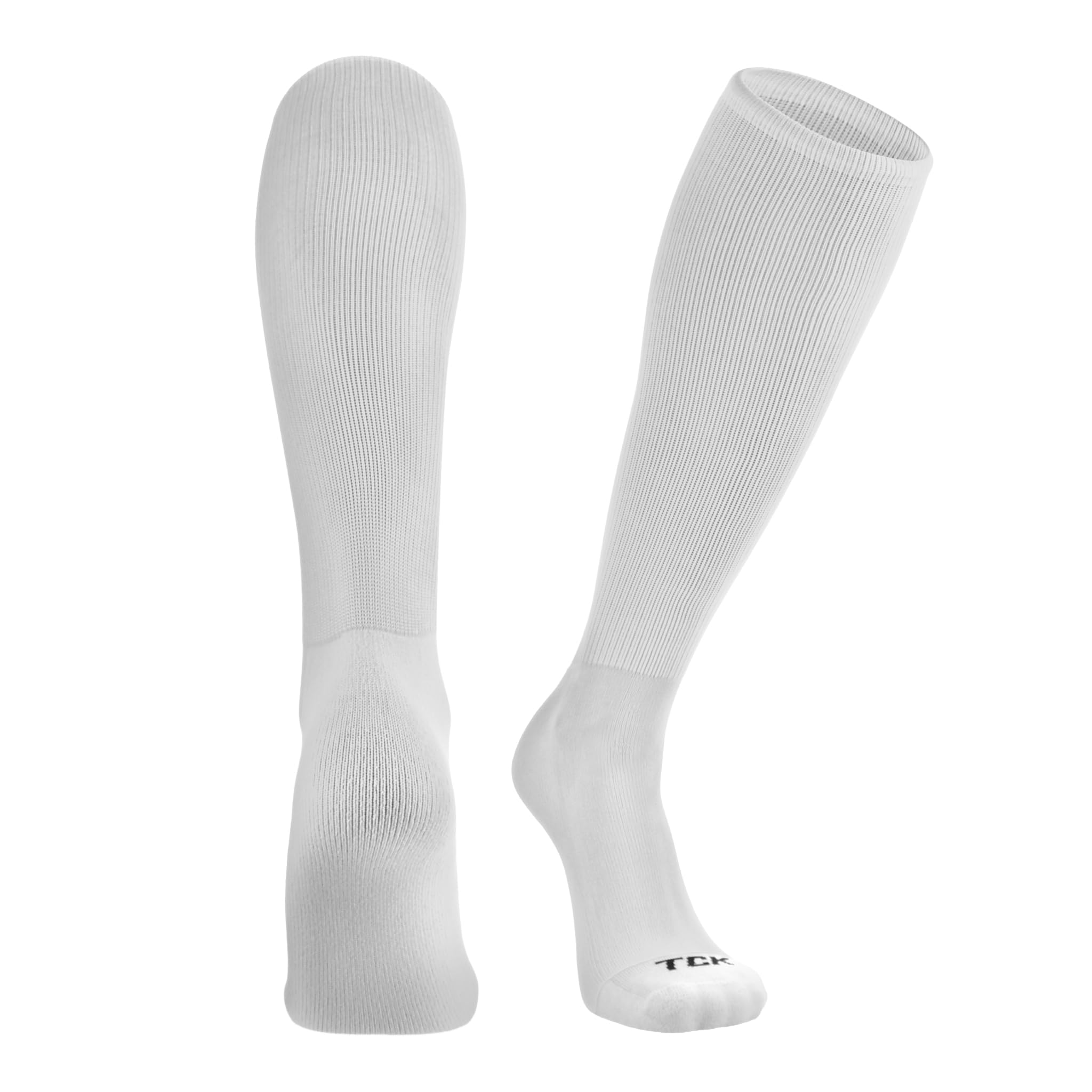
TCK Prosport tube socks are a classic over-the-calf design that many lifters turn to as an affordable entry point. The cotton-polyester blend offers a soft hand feel and provides reasonable coverage for the shin area. A notable advantage of this model is that multiple reviewers with plus-sized calves confirm that the sock stretches to fit comfortably — a detail that many compression-style socks do not accommodate.
The reinforced toe and heel areas hold up well to regular washing, and teams report using these across an entire season without early failure. The socks are available in many color variations, which is useful for athletes who need to match uniform requirements. The tube-style construction means there is no dedicated left or right shape, but the fabric adapts to the foot over the first wear.
Where these socks fall short for dedicated deadlift use is the lack of targeted shin padding. The knit is dense enough to provide some barrier, but lifters pulling heavy or with aggressive knurling may find that the material does not fully prevent bruising. The elastic at the top of the cuff can also lose tension over time, allowing the sock to slide down during dynamic movement. For general use and lighter deadlift work, however, they are a functional and budget-friendly option.
Why it’s great
- Stretchy fabric fits plus-sized calves comfortably
- Reinforced toe and heel improve long-term durability
- Wide color selection for team sports
Good to know
- No dedicated shin padding for heavy knurling contact
- Top elastic can loosen and cause sliding over time
5. Scrunch Football Socks 2 Pack
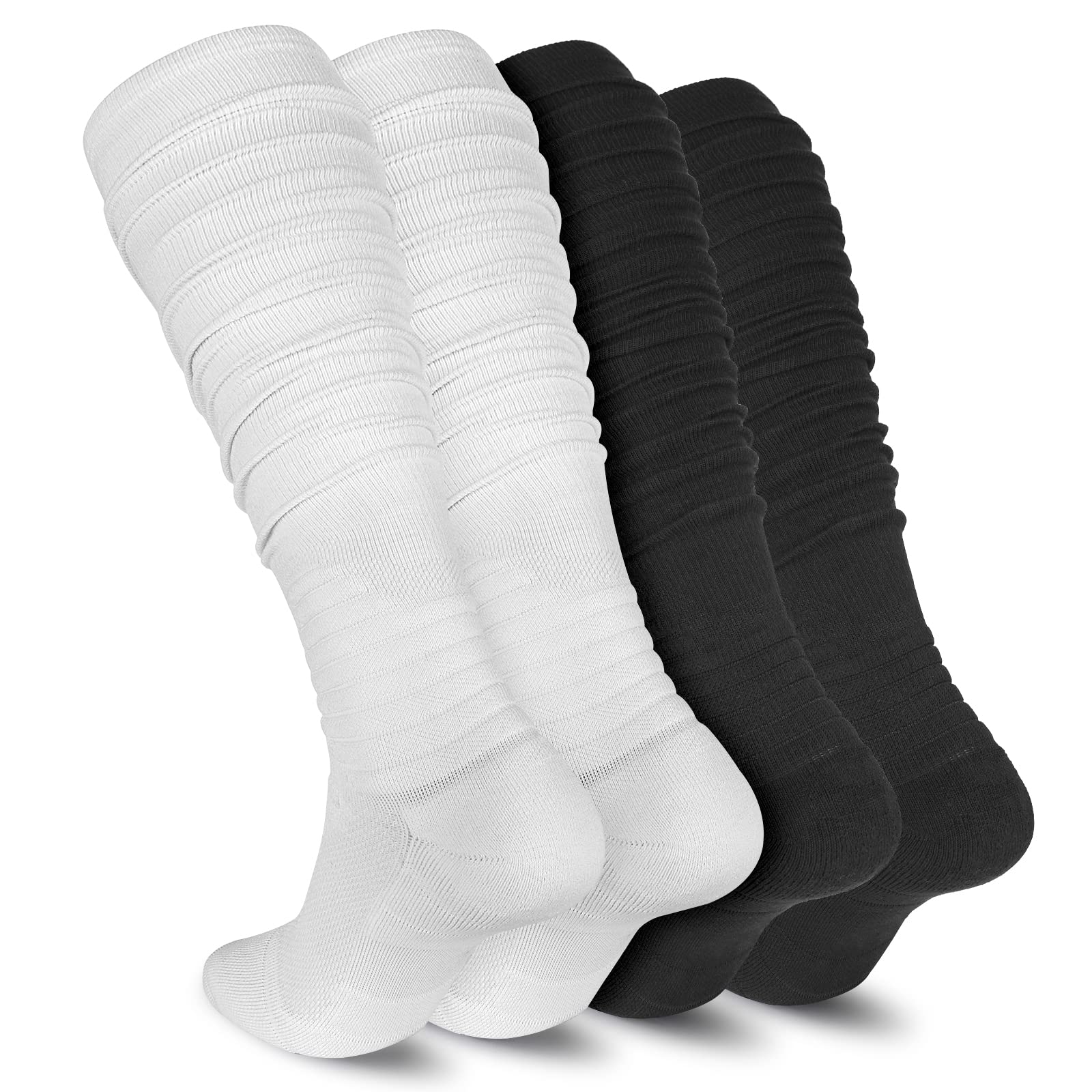
These football socks offer an extra-long scrunch design that pulls up well above the calf. The terry footbed provides cushion under the foot, which can help with comfort during longer training sessions. The thick fabric also keeps feet warm and dry during cold-weather training, a consideration for athletes who pull in unheated gyms or outdoor fields.
Fit is true to size, and the overall construction feels durable through the first handful of wears. Reviewers note good moisture management during play and a comfortable feel when worn with cleats or training shoes. The price point for a two-pack is aggressive, making this an attractive option for lifters who want backup pairs without a large upfront investment.
The main limitation for deadlift-specific use is that the scrunch fabric tends to relax and loosen after repeated games or sessions. Several users report that after a few uses the scrunch does not stay tight, which can cause the sock to shift position during a pull. The shin coverage is adequate for lighter deadlifts, but lifters pulling near-max weights may find that the fabric offers less abrasion resistance than purpose-built gym socks.
Why it’s great
- Two-pack provides backup pairs for heavy training weeks
- Terry footbed cushions the foot during long sessions
- Extra-long length reaches above the calf
Good to know
- Scrunch elastic relaxes after a few uses
- Fabric does not provide heavy shin padding
FAQ
Can I use regular knee-high tube socks for deadlifting?
What is the difference between deadlift socks and shin guards?
How often should I replace deadlift socks?
Final Thoughts: The Verdict
For most users, the best deadlift socks winner is the MOXY Socks Powerful Power Skull because it combines knee-high coverage, durable shin protection, and a compression fit that stays locked in through heavy pulls and dynamic warm-ups. If you want maximum padding and do not mind a sleeve-style product, grab the Bear Grips Deadlift Shin Guards. And for a budget-friendly entry option that fits wider calves, nothing beats the TCK Prosport Tube Socks.

Mo Maruf
I created WellFizz to bridge the gap between vague wellness advice and actionable solutions. My mission is simple: to decode the research and give you practical tools you can actually use.
Beyond the data, I am a passionate traveler. I believe that stepping away from the screen to explore new environments is essential for mental clarity and physical vitality.