Our readers keep the lights on and my smoothie glass nicely filled. As an Amazon Associate, I earn from qualifying purchases.
Finding a decaffeinated green tea that doesn’t taste like watered-down grass clippings is the real challenge. Most options strip away both the caffeine and the character, leaving you with a cup that’s more disappointment than refreshment. The best ones, however, use gentle decaffeination methods and quality leaf stock to preserve that delicate, slightly vegetal sweetness you actually want.
I’m Mohammad Maruf — the founder and writer behind WellFizz. I’ve spent hundreds of hours studying the nuances of tea processing, from the CO2 decaffeination method to the impact of leaf origin on final cup quality, to build this guide on the most reliable options available.
Whether you’re avoiding caffeine for health reasons, evening rituals, or simply prefer a gentler brew, these selections represent the top-tier choices for anyone searching for the best decaffeinated green tea that actually delivers on taste.
How To Choose The Best Decaffeinated Green Tea
Selecting the right decaf green tea requires looking past the brand name and understanding a few key factors that determine whether you’ll enjoy the cup or end up disappointed. The decaffeination method, leaf quality, and flavor profile are the three pillars to evaluate.
Decaffeination Method: The Flavor Gatekeeper
The process used to remove caffeine has the single biggest impact on taste. Ethyl acetate (often derived from fruit) retains more flavor compounds but can leave a faint solvent note. CO2 decaffeination is gentler and preserves the tea’s natural character without chemical residue. The least refined method uses hot water, which strips flavor along with caffeine. For the truest green tea experience, seek out brands that specify their method, especially CO2 or natural ethyl acetate.
Leaf Origin and Quality
Green tea from China tends to be pan-fired, producing a slightly toasty, nutty character that stands up well to decaffeination. Japanese greens, steamed and more vegetal, are more fragile and can become flat when decaffeinated. The leaf size also matters — whole-leaf or large broken-leaf bags steep more evenly than the dusty fannings found in cheap commodity teas. Higher leaf grades produce a smoother cup with less bitterness.
Added Flavors vs. Pure Leaf
Many decaf green teas use natural flavors to compensate for flavor loss during decaffeination. Some of these additions, like ginger, peach, or citrus, can create a genuinely pleasant cup. Others rely on artificial-tasting compounds that mask the tea’s shortcomings. If you prefer a pure, unadulterated green tea taste, look for single-origin or organic options that skip the flavor additives entirely.
Quick Comparison
On smaller screens, swipe sideways to see the full table.
| Model | Category | Best For | Key Spec | Amazon |
|---|---|---|---|---|
| Twinings Decaf Green | Premium | Classic smooth daily cup | 100 individually wrapped bags | Amazon |
| Bigelow Organic Decaf Green | Premium | Bulk organic iced & hot tea | 240 bags, USDA Organic, foil pouches | Amazon |
| Republic of Tea Ginger Peach | Mid-Range | Flavored, non-grassy taste | 50 bags, natural ginger & peach | Amazon |
| Yogi Pure Green Decaf | Mid-Range | Organic with compostable bags | 96 bags, USDA Organic, Non-GMO | Amazon |
| Salada Decaf Green | Budget | Affordable bulk iced tea | 240 bags, naturally decaffeinated | Amazon |
In‑Depth Reviews
1. Twinings Decaffeinated Green Tea
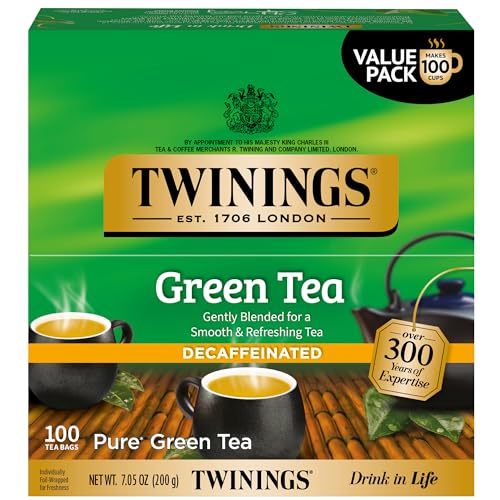
Twinings delivers a decaf green tea that tastes almost indistinguishable from its caffeinated counterpart. The liquor brews a bright honey-yellow color with a clean, fresh aroma that avoids the stale or flat notes common in this category. Customer reviews consistently mention the smooth, non-grassy finish, making it a reliable choice for both new converts and long-time green tea drinkers.
Each tea bag comes individually wrapped in foil, preserving the leaf’s essential oils and protecting against moisture and odor absorption. This packaging detail matters more than most buyers realize — without it, decaf green tea can quickly go stale, tasting cardboard-like within weeks of opening. The 100-count pack offers a strong value for daily drinking without sacrificing quality.
Drinkers who find other decaf greens too thin or bitter will appreciate the balanced body here. The decaffeination process retains enough of the leaf’s natural character to make this a genuine alternative to regular green tea, not just a substitute you tolerate. It steeps well both hot and iced without turning astringent.
Why it’s great
- Foil-wrapped individual bags lock in freshness and flavor
- Smooth, non-astringent profile works for hot or iced brewing
- Generous 100-count provides excellent per-cup value
Good to know
- Outer packaging can arrive damaged during shipping
- Flavor is classic, not adventurous — may bore those wanting fruit notes
2. Bigelow Organic Decaffeinated Green Tea
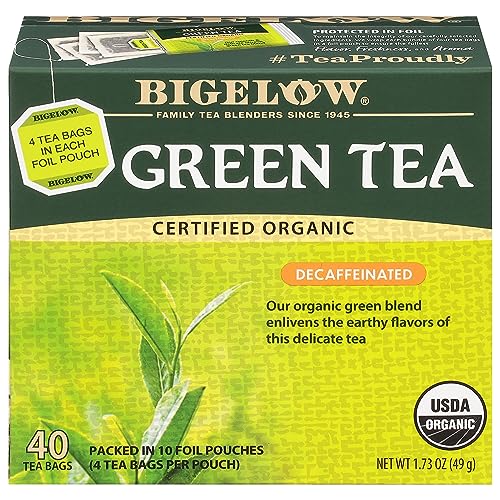
Bigelow’s organic decaf green tea stands out as the most practical solution for households that go through tea quickly. The 240-bag count (packaged in 6 boxes of 40, each containing foil-wrapped pouches) is designed for high-volume drinking, and the tea itself delivers a smooth, delicate profile that reviewers describe as not too harsh or grassy. It handles a longer steep without turning bitter, a useful tolerance for busy mornings.
The USDA Organic certification here is meaningful — it ensures the leaves were grown without synthetic pesticides, which can concentrate in the leaf and affect the final cup. Bigelow blends and packages the tea in the USA, which means fresher product turnover compared to imported bulk options. Many long-time users report using 6 bags per pitcher for iced tea, confirming its versatility beyond hot steeping.
While the flavor is mild rather than complex, that restraint is exactly what makes it work as a daily driver. It doesn’t fight with food or overwhelm the palate, and the lack of artificial sweeteners or flavors means the green tea character, though subtle, remains clean and authentic. For organic decaf at this scale, the consistency is hard to beat.
Why it’s great
- USDA Organic leaves provide a clean, pesticide-free cup
- Foil pouches inside each box preserve freshness after opening
- Large 240-bag count is ideal for families or daily iced tea brewing
Good to know
- Mild flavor may lack depth for those who prefer bold green tea
- Some users find the bags smaller than standard tea bags
3. The Republic of Tea Decaf Ginger Peach Green Tea
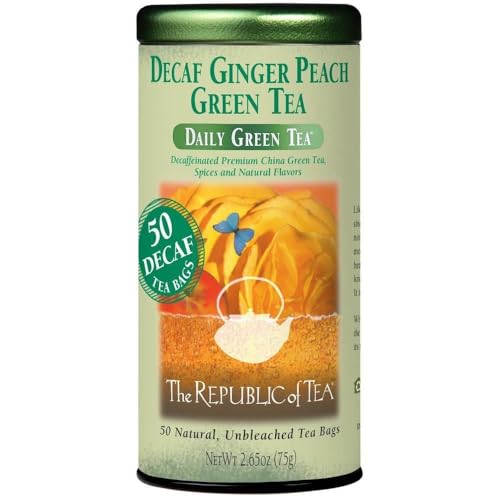
If you find pure decaf green tea too one-dimensional, Republic of Tea’s Ginger Peach blend offers a flavorful escape that still respects the base leaf. The fresh peach notes are complemented by a mild, zesty ginger warmth — neither flavor dominates, creating a balanced cup that works equally well hot on a cool day or iced as a refreshing afternoon drink. Customers describe the taste as smooth and naturally sweet without any artificial aftertaste.
The decaffeinated China green tea base is solid enough to support the added flavors without turning muddy. Republic of Tea sources its leaves from China, where pan-firing gives the green tea a slightly toasty backbone that pairs well with fruit and spice additions. The tin packaging is sturdy and resealable, keeping the bags fresher than cardboard boxes over the course of 50 cups.
One important caveat: if you’re a purist who wants unflavored green tea, this isn’t your pick. But for anyone who wants a decaf option that actually tastes like something interesting — and doesn’t fall into the weak or watery trap — this blend delivers consistently. It’s also gluten-free, sugar-free, and carb-free, fitting into most dietary preferences without issue.
Why it’s great
- Well-balanced natural ginger and peach flavors avoid artificial taste
- Sturdy tin packaging stores neatly and keeps tea fresher longer
- Non-grassy base works great for both hot and iced preparation
Good to know
- Not suitable for those wanting a pure, unflavored green tea
- Some regular drinkers note the decaf version is less bright than the caffeinated original
4. Yogi Tea Pure Green Decaf
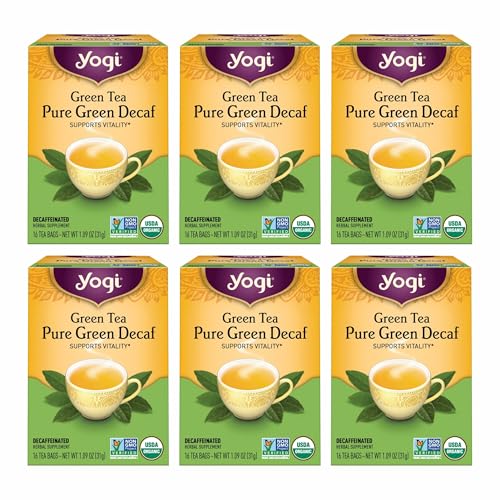
Yogi’s Pure Green Decaf earns its place for drinkers who prioritize clean ingredients and environmental packaging without compromising on tea strength. The 6-pack contains 96 total tea bags, each oxygen-bleached and compostable, addressing a growing concern among tea drinkers about microplastics leaching from conventional polypropylene-sealed bags. Multiple customer reviews highlight this plastic-free design as a decisive factor in their purchase.
The flavor profile is distinctly bolder and more full-bodied than most decaf green teas. This comes from Yogi’s sourcing of larger leaf pieces rather than dusty fannings, and the decaffeination process preserves enough of the leaf’s natural compounds to produce a cup with actual depth. It’s certified USDA Organic, Non-GMO Project Verified, vegan, kosher, and gluten-free, covering nearly every dietary certification a buyer might need.
The one practical issue that reoccurs in reviews concerns the small metal staple used to secure the tea bag string to the tag. While not a dealbreaker for most, it’s worth noting if you plan to compost the used bags — you’ll need to remove the staple first. The tea itself, however, delivers a satisfying, robust decaf experience that stands out in a category where thinness is the norm.
Why it’s great
- Compostable, oxygen-bleached tea bags contain no plastic
- Full-bodied decaf profile is noticeably richer than competitors
- Multiple organic and dietary certifications ensure clean ingredients
Good to know
- Small metal staple on each bag string prevents full compostability
- Boldness may overwhelm those used to milder decaf teas
5. Salada Decaffeinated Green Tea

Salada’s decaffeinated green tea represents the most accessible entry point for bulk buyers who want a clean, no-fuss cup at a low per-serving cost. The 6-pack contains 240 individually wrapped bags, and the decaffeination process uses only natural spring water and effervescence — no chemical solvents — which is a strong point for purity-minded drinkers on a tighter budget. The resulting brew is smooth with a delicate natural sweetness that reviewers consistently praise.
Where Salada differs from the premium options is in the depth of flavor. The water-based decaffeination method, while clean, does strip more of the volatile flavor compounds, producing a lighter cup that may not satisfy those seeking a robust green tea character. It’s a trade-off: you get zero-calorie, solvent-free tea bags at a very friendly bulk price, but the taste dials back toward the mild side.
Long-time users report using Salada for iced tea pitchers, where the lighter profile actually becomes an advantage — it doesn’t turn cloudy or overly astringent when chilled. The tea bags are individually wrapped, maintaining freshness through the full 240-count run. For households that go through tea quickly and prioritize value over complexity, this is a practical and reliable option.
Why it’s great
- Naturally decaffeinated using only spring water and effervescence
- 240-count bulk pack offers the strongest value in the guide
- Mild, smooth profile excels for iced tea without astringency
Good to know
- Water-based decaf process results in a lighter, less complex flavor
- Not certified organic — grown with conventional farming methods
FAQ
Does decaffeinated green tea still contain any caffeine?
What is the best decaffeination method for preserving flavor?
Is decaf green tea as healthy as regular green tea?
Final Thoughts: The Verdict
For most users, the best decaffeinated green tea winner is the Twinings Decaffeinated Green Tea because it delivers the closest flavor experience to regular green tea, with individually wrapped bags that ensure freshness in every cup. If you want organic tea in bulk for the whole household, grab the Bigelow Organic Decaf Green. And for a naturally sweet, flavored option that eliminates the grassy notes some drinkers dislike, nothing beats the Republic of Tea Ginger Peach.

Mo Maruf
I created WellFizz to bridge the gap between vague wellness advice and actionable solutions. My mission is simple: to decode the research and give you practical tools you can actually use.
Beyond the data, I am a passionate traveler. I believe that stepping away from the screen to explore new environments is essential for mental clarity and physical vitality.