Our readers keep the lights on and my smoothie glass nicely filled. As an Amazon Associate, I earn from qualifying purchases.
Linen sheets breathe differently than cotton, and that fabric structure changes everything about how you should wash them. Standard detergents packed with optical brighteners, enzymes, and heavy fragrances can cling to the loose weave of linen, leaving a stiff, chalky feel that defeats the purpose of buying stonewashed flax in the first place.
I’m Mohammad Maruf — the founder and writer behind WellFizz. I’ve spent hundreds of hours analyzing ingredient lists, customer feedback, and washing machine compatibility to isolate exactly which detergent formulations preserve the soft hand-feel and natural luster of linen.
The right formula dissolves fully in cold water, leaves no tacky residue, and skips the brighteners that dull flax fibers over time. After cross-referencing dozens of options, I built this guide to the best detergent for linen sheets.
How To Choose The Best Detergent For Linen Sheets
Linen is a natural bast fiber with a hollow core structure that absorbs moisture rapidly but also traps detergent residues more stubbornly than tightly woven cotton. Selecting the wrong wash product can lead to a gray buildup, a scratchy hand feel, and a musty odor that no fabric softener can fix.
Enzyme Load and Fiber Compatibility
Many modern detergents rely on protease and cellulase enzymes to break down protein stains and smooth cotton fibers. Linen, however, has a different cellulose structure. High levels of cellulase can weaken flax fibers over repeated washes, leading to fraying and thinning. Look for formulations that list enzymes near the bottom of the ingredient deck, or choose an enzyme-free formula if you wash delicate linen items frequently.
Cold-Water Solubility and Residue
Linen wrinkles less when washed in cold water, but not all detergents dissolve completely at low temperatures. Partially dissolved powder or liquid leaves a gray film that sticks to the open weave of linen and stiffens the fabric. Sheet detergents, which rely on a thin water-soluble film, generally perform better here because there is no surfactant clump that can survive a cold cycle. Always check that the detergent has verified cold-water dissolution in reviews or spec sheets.
Optical Brighteners and pH Neutrality
Optical brighteners coat fibers with fluorescent chemicals to trick the eye into seeing whiter whites. On linen, these brighteners attach unevenly to the uneven fiber surface, creating patchy discoloration after several washes. A pH-neutral detergent — ideally between 6.5 and 7.5 — preserves the natural off-white color of flax without chemical yellowing or graying.
Quick Comparison
On smaller screens, swipe sideways to see the full table.
| Model | Category | Best For | Key Spec | Amazon |
|---|---|---|---|---|
| Lazy Coconuts | Premium | Unscented, sensitive-skin linen | Sulfate-free, fragrance-free | Amazon |
| Eco Roots | Premium | Fresh scent with no residue | 64 loads per box; biodegradable | Amazon |
| Miss Mouth’s | Mid-Range | Baby linen and sensitive skin | Pediatrician and dermatologist tested | Amazon |
| Earth Breeze | Mid-Range | Travel-friendly eco wash | Hypoallergenic; no optical brighteners | Amazon |
| Raw Basics | Budget | Zero-waste, scent-free daily loads | 100 loads; enzymatic stain lifting | Amazon |
In-Depth Reviews
1. Lazy Coconuts Laundry Detergent Sheets

Lazy Coconuts strips down the ingredient list to plant-based surfactants with zero sulfates, fragrances, or optical brighteners — exactly what linen sheets need to stay soft and breathable. The ultra-concentrated sheets dissolve completely in cold water, leaving no sticky film that would otherwise stiffen the flax weave. Users report no skin irritation after washing pillowcases and duvet covers with this formulation, even on the most sensitive skin.
The carbon-negative packaging adds genuine eco-credibility, but the real value for linen owners is the low residue profile. Because the sheets contain no sodium lauryl sulfate or sodium laureth sulfate, the fibers don’t accumulate that waxy coating that makes linen feel like cardboard after a few washes. It also works for hand-washing delicates, making it a versatile pick for travel or small loads of heirloom linen napkins.
One reviewer noted that stain lifting is weaker than heavy-duty liquid detergents, so heavily soiled linen may require a pre-treat step. But for regular maintenance washes — which is what linen sheets need most — this formula preserves the fabric’s natural drape cycle after cycle.
Why it’s great
- Completely fragrance and sulfate free — no coating on linen fibers
- Dissolves fully in cold water, preventing gray residue
- Carbon-negative packaging aligns with eco-conscious linen care
Good to know
- Weaker stain lifting on heavy soiling; pre-treat needed for set-in stains
- Sheets can stick together in humid conditions if not stored dry
2. Eco Roots Laundry Detergent Sheets
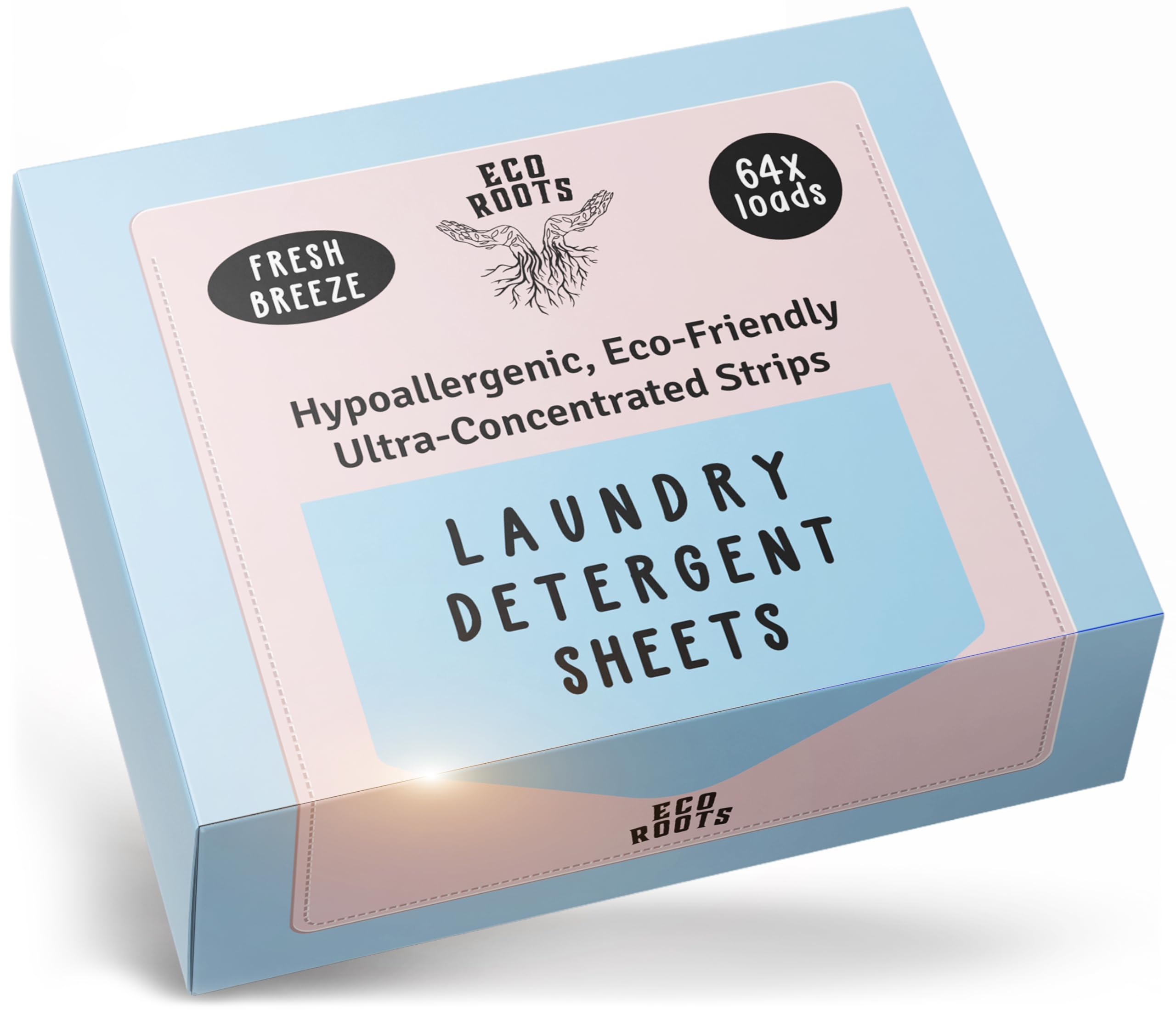
Eco Roots delivers a light sea-breeze scent that does not cling to linen fibers after drying, which is the most common complaint from users who want fresh-smelling sheets without a perfume haze. The sheet dissolves completely in cold water — a critical detail for linen since hot water shrinks and wrinkles the fabric. Customers consistently confirm that there is no sticky residue left behind, even in front-load machines with minimal water.
The 64-load count per box gives roughly 32 full-sheet washes for a king-size linen set. The formulation uses plant-based surfactants that suspend dirt and odor molecules in the wash water rather than redepositing them onto fibers. One reviewer who tested it on extremely dirty work clothes found it outperformed their usual liquid detergent, suggesting the enzymatic action is robust enough for linen that encounters body oils or sweat.
A few buyers noted that the Fresh Breeze scent, while light, is not truly fragrance-free. If you prefer absolutely zero scent on your linen, skip this one. But for linen sheet owners who want a barely-there fresh note without residue, this is the best balance.
Why it’s great
- Dissolves completely in cold water — no gray residue on flax fibers
- Light fresh scent that fades after drying, avoiding perfume buildup
- Excellent stain lifting on body oils and sweat
Good to know
- Scented formulation — not suitable for those seeking a fragrance-free option
- Uses more product per load than expected if washing heavily soiled items
3. Miss Mouth’s Laundry Detergent Sheets

Miss Mouth’s was originally designed as a baby detergent, and that pedigree matters for linen sheets used by people with eczema, allergies, or chemical sensitivities. Pediatrician and dermatologist testing means the formula is stripped of the common irritants — dyes, phthalates, parabens — that can trigger contact reactions when the skin rubs against linen pillowcases all night. Users report zero residue on fabrics and no worsening of eczema after switching.
The sheets work well in both cold and warm cycles, dissolving fully without clumping. For linen sheets, this prevents the scratchy patch that occurs when partially dissolved surfactant dries onto the fabric. Parents also mention that the sheets remove 99% of toddler stains, which translates to strong performance on the sweat and body oil that build up on bedding over time.
One limitation: the box contains 60 loads, but heavy soiling requires a full sheet, making the per-load cost higher than bulk liquid detergents. And while the sheets are unscented, some users reported a mild natural smell from the plant-based ingredients that fades completely after drying.
Why it’s great
- Pediatrician and dermatologist tested — safe for eczema-prone skin
- Dissolves in cold water, leaving no residue on linen fibers
- Removes body oils and everyday stains effectively without brighteners
Good to know
- Per-load cost is higher than some liquid alternatives
- Heavy stains may require a pre-treat with the companion stain treater
4. Earth Breeze Laundry Detergent Sheets
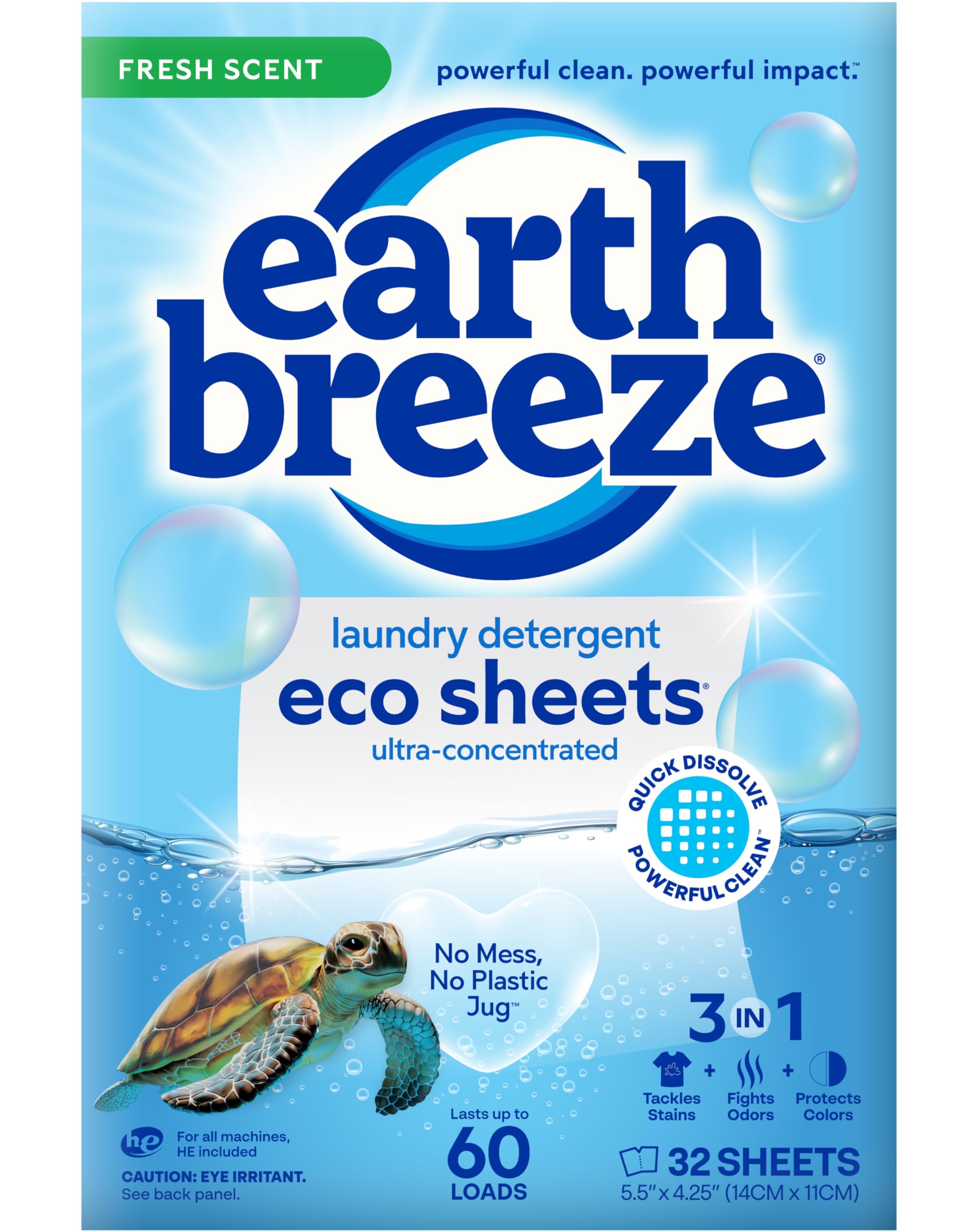
Earth Breeze built a strong reputation on eco-friendly credentials, but for linen sheets, the key detail is that the formula contains no optical brighteners. Those chemicals, common in mass-market detergents, attach unevenly to the thick and thin fibers of linen and leave a patchy discoloration after repeated washes. Earth Breeze avoids that entirely, preserving the natural flax color and softness.
The sheets are dermatologist-tested and hypoallergenic, meaning they work well for linen users who experience skin irritation from synthetic fragrances or preservatives. Users consistently report that the fresh scent is light and does not linger heavily on fabrics. The premeasured sheets also eliminate the risk of overdosing — a common mistake that leaves soap film embedded in the linen weave.
One drawback: the load count of 60 is based on full sheets, but the manufacturer suggests using half a sheet for small loads. In practice, linen duvet covers and king sheets require a full sheet, making the per-load cost slightly higher than budget liquid detergents. The sheets are also thin, so they can tear if handled roughly when wet.
Why it’s great
- Zero optical brighteners — no uneven discoloration on flax fibers
- Hypoallergenic and dermatologist-tested — safe for sensitive skin
- Light fresh scent that doesn’t linger and overpower linen
Good to know
- Per-load cost higher than bulk liquid detergents
- Sheets are thin and can tear if handled roughly when wet
5. Raw Basics Unscented Laundry Detergent Sheets

Raw Basics offers the most loads per dollar in this guide, but the value extends beyond price. The unscented formulation contains no perfume chemicals that could irritate skin or leave a synthetic scent on linen. Instead, it relies on enzymatic technology to lift dirt and body oils from fabric fibers. That enzyme profile is effective on sweat stains — a common issue with bedding — but users should note that high enzyme levels can be hard on linen if used every wash cycle.
The sheets dissolve well in cold water, according to customer feedback, and leave no visible residue. The packaging is plastic-free and recyclable, which aligns with the environmental considerations many linen owners prioritize. For light-duty weekly washes of linen sheets, this is an economical choice that does the job without damaging the fabric.
One consistent complaint: the sheets can stick together in humid conditions. If you live in a damp environment, store them in an airtight container to prevent the sheets from fusing into a single clump. Also, a few users found the ingredient list vague, making it difficult to verify the enzyme concentration and surfactant types.
Why it’s great
- Most economical option — 100 loads per box reduces per-wash cost
- Fragrance-free with zero perfume residue on linen
- Plastic-free, recyclable packaging fits eco-conscious routines
Good to know
- Enzyme formulation can weaken flax fibers if used every wash
- Sheets stick together in humidity above 30% without dry storage
FAQ
Can I use regular powdered detergent on linen sheets?
Why does my linen feel stiff after washing with liquid detergent?
Does fabric softener damage linen sheets?
Final Thoughts: The Verdict
For most users, the best detergent for linen sheets winner is the Lazy Coconuts Laundry Detergent Sheets because it combines zero-residue cold-water dissolution with a completely fragrance-free, sulfate-free formula that protects the natural flax weave. If you want a barely-there fresh scent without fabric damage, grab the Eco Roots Laundry Detergent Sheets. And for the most economical unscented option suitable for light weekly washes, the Raw Basics Unscented Sheets deliver reliable cleaning without breaking your budget.

Mo Maruf
I created WellFizz to bridge the gap between vague wellness advice and actionable solutions. My mission is simple: to decode the research and give you practical tools you can actually use.
Beyond the data, I am a passionate traveler. I believe that stepping away from the screen to explore new environments is essential for mental clarity and physical vitality.