Our readers keep the lights on and my smoothie glass nicely filled. As an Amazon Associate, I earn from qualifying purchases.
A backpack that shifts, sags, or traps heat will ruin any ride — whether you are grinding uphill on a mountain bike, splitting lanes on a motorcycle commute, or spinning through city traffic. The difference between a great day on two wheels and a miserable one often comes down to how well your pack stays planted, how evenly it distributes weight, and whether you can reach your water without breaking rhythm. Finding the right one means balancing fit, storage, hydration capacity, and ventilation against the specific demands of your riding style.
I’m Mohammad Maruf — the founder and writer behind WellFizz. I have spent hundreds of hours analyzing hydration pack volume-to-weight ratios, harness geometries, back panel ventilation channel depths, and material denier counts to separate the genuinely ride-worthy packs from the ones that look good on a shelf but fail on the pavement or trail.
This guide distills that research into a focused selection of models that earned their place through real-world performance data and rider feedback, making it the definitive best cycling backpack resource you need before you buy.
How To Choose The Best Cycling Backpack
A cycling backpack is not just a smaller backpack — it is an entirely different ergonomic system. Your torso leans forward, your shoulders rotate, and your lower back bears the load. Choosing the wrong shape or harness design will produce shoulder strain, lower-back fatigue, and a bag that swings side to side every time you pedal hard. Here are the make-or-break factors to consider.
Reservoir Capacity Versus Cargo Volume
The single biggest mistake riders make is confusing total bag liters with water capacity. A 12-liter pack might only hold a 2.5-liter bladder, leaving the rest for tools, layers, and food. For rides under two hours, a 2.0-liter reservoir with 8 liters of cargo is plenty. For all-day epics or bike-packing, you need 3.0 liters of water and at least 12 to 20 liters of storage. Always check the bladder size included — some premium packs ship with upgraded reservoirs that have larger fill openings and faster flow rates.
Harness Geometry and Load Distribution
A generic school backpack has vertical shoulder straps that pull straight down. A cycling-specific pack uses a dropped-lumbar or winged-shoulder design that wraps the load around your ribcage and rests on your sit bones. This keeps the center of gravity low and forward, so the pack moves with your torso instead of bouncing off your back. Look for sternum straps with integrated magnetic tube clips, padded hip belts that actually transfer weight, and harnesses with multiple adjustment points to dial the fit to your exact torso length.
Back Panel Ventilation
Every rider sweats, but the wrong back panel turns your pack into a heat trap. The most effective designs use air-channeled foam with deep vertical grooves — at least 10 to 15 millimeters deep — that create a constant gap between your back and the pack. Mesh suspended over a rigid frame also works well for airflow. Avoid flat foam backs with thin fabric covers; they press directly against your spine and block all ventilation on climbs or humid days.
Material Denier and Weather Resistance
Cycling packs take constant abuse from vibration against the bike, scraping against branches, and exposure to road grit. A 210-denier nylon face fabric is fine for light commuter duty, but serious packs use 450-denier ripstop recycled polyester or 420D nylon with 1000D Cordura reinforcements on high-wear zones like the base and harness attachment points. A built-in rain cover (or at least a durable water-repellent coating) is essential if you ride in unpredictable conditions.
Quick Comparison
On smaller screens, swipe sideways to see the full table.
| Model | Category | Best For | Key Spec | Amazon |
|---|---|---|---|---|
| CamelBak M.U.L.E. 12 | Hydration Pack | All-day mountain biking | 100 oz Crux reservoir / 9L cargo | Amazon |
| Osprey Raptor 10L | Hydration Pack | Rough singletrack stability | 2.5L Hydraulics LT reservoir | Amazon |
| USWE Outlander 3L | Hydration Pack | Enduro / extreme bounce-free | 2.0L bladder / NDM harness | Amazon |
| Osprey Escapist 25L | Biking Backpack | Bike-to-hike transitions | 25L / dropped-lumbar fit | Amazon |
| Kriega R20 | Backpack | Motorcycle / commuter carry | 20L / Quadloc-Lite harness | Amazon |
| Dakine Session 8L | Hydration Pack | Light day rides / hiking | 2L reservoir / 450D rPET shell | Amazon |
| Riderbag Hi Viz 35L | Commuter Backpack | Night visibility / daily commute | 35L / reflective panels | Amazon |
In‑Depth Reviews
1. CamelBak M.U.L.E. 12 Mountain Bike Hydration Pack

The CamelBak M.U.L.E. has defined the mountain bike hydration pack category for years, and the latest revision refines the formula with a redesigned ergonomic fit and an upgraded 100-ounce Crux reservoir that delivers significantly more water per sip than previous generations. The Air Support back panel uses body-mapped ventilation channels that reduce heat buildup noticeably on long climbs compared to flat-foam competitors. Four pockets organize your tool roll, snacks, phone, and a light jacket without feeling cluttered.
The magnetic tube management system keeps the drink tube docked against the sternum strap so you can grab it one-handed without looking down — a small detail that becomes essential when you are clipped in and picking a line through rock gardens. The integrated tool organization and stretch overflow pocket handle trail essentials, and the removable waist strap gives you the option to run it lighter for shorter rides. At 12 liters total cargo capacity with a 3-liter reservoir compartment, it strikes the ideal balance between all-day endurance and compact profile.
Some riders note that the shoulder straps feel slightly undersized when the pack is fully loaded with 100 ounces of water plus gear, and the bladder compartment can be awkward to refill without fully removing the reservoir. But for genuine trail performance, this pack delivers the best mix of hydration efficiency, stability, and storage organization in the mid-size category.
Why it’s great
- Crux reservoir delivers noticeably more water per sip than standard bladders
- Air Support panel keeps airflow moving during sustained climbs
- Magnetic tube dock makes hands-free sipping effortless
Good to know
- Shoulder straps can feel narrow under max load
- Bladder refill requires removing it from the compartment
2. Osprey Raptor 10L Men’s Biking Backpack
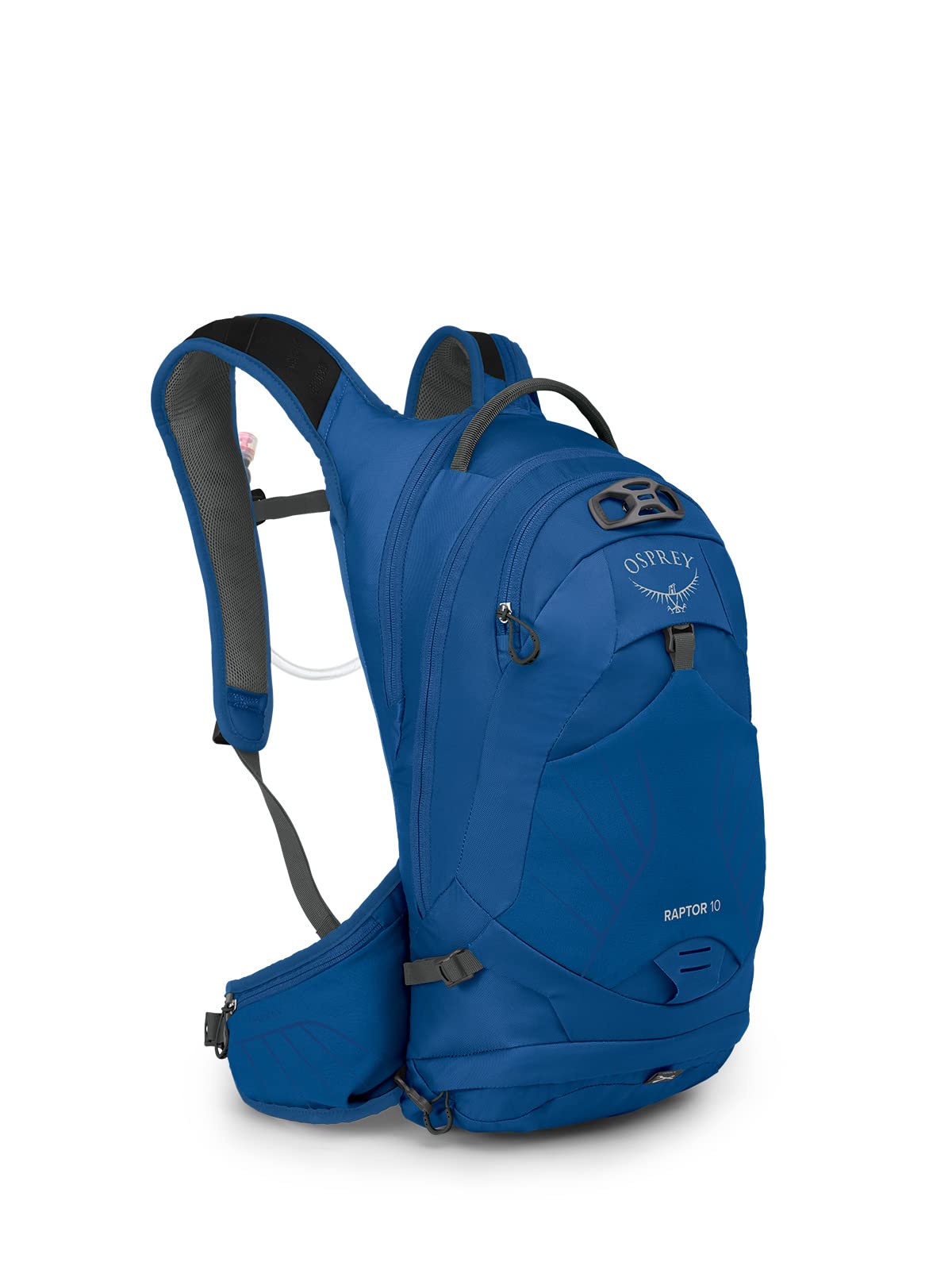
Osprey’s Raptor 10L is engineered specifically for aggressive mountain bike riding where stability matters more than sheer cargo capacity. The bike-specific winged shoulder harness and air-mesh wrap hipbelt lock the pack onto your torso so securely that you can drop into a steep descent without feeling the bag shift at all. The included Hydraulics LT 2.5-liter reservoir has a quick-zip access panel and a magnetic bite valve attachment that clips cleanly onto the sternum strap — no floppy tube ends slapping your frame.
The LidLock helmet attachment lets you clip your helmet to the pack when you dismount, and the included tool roll keeps Allen keys, tire levers, and a mini pump organized inside the main compartment. The scratch-free heat-embossed slash pocket on top is ideal for sunglasses or a phone without worrying about screen scratches. Three total pockets keep the layout simple — no endless zippers to fumble with when you are sweaty and tired.
At 10 liters total volume with the bladder installed, this is a focused day-ride pack rather than an all-day cargo hauler. The hipbelt pockets are small and the reservoir compartment could be easier to access for refills on the go. But if your priority is a pack that disappears on your back through berms and rock gardens, the Raptor’s harness system is among the best available.
Why it’s great
- Winged harness and hipbelt eliminate bounce on rough terrain
- LidLock helmet attachment is fast and secure
- Included tool roll keeps essentials organized
Good to know
- Only 10L total volume limits gear for long days
- Bladder compartment could open wider for refills
3. USWE Outlander Hydration Pack with Water Bladder
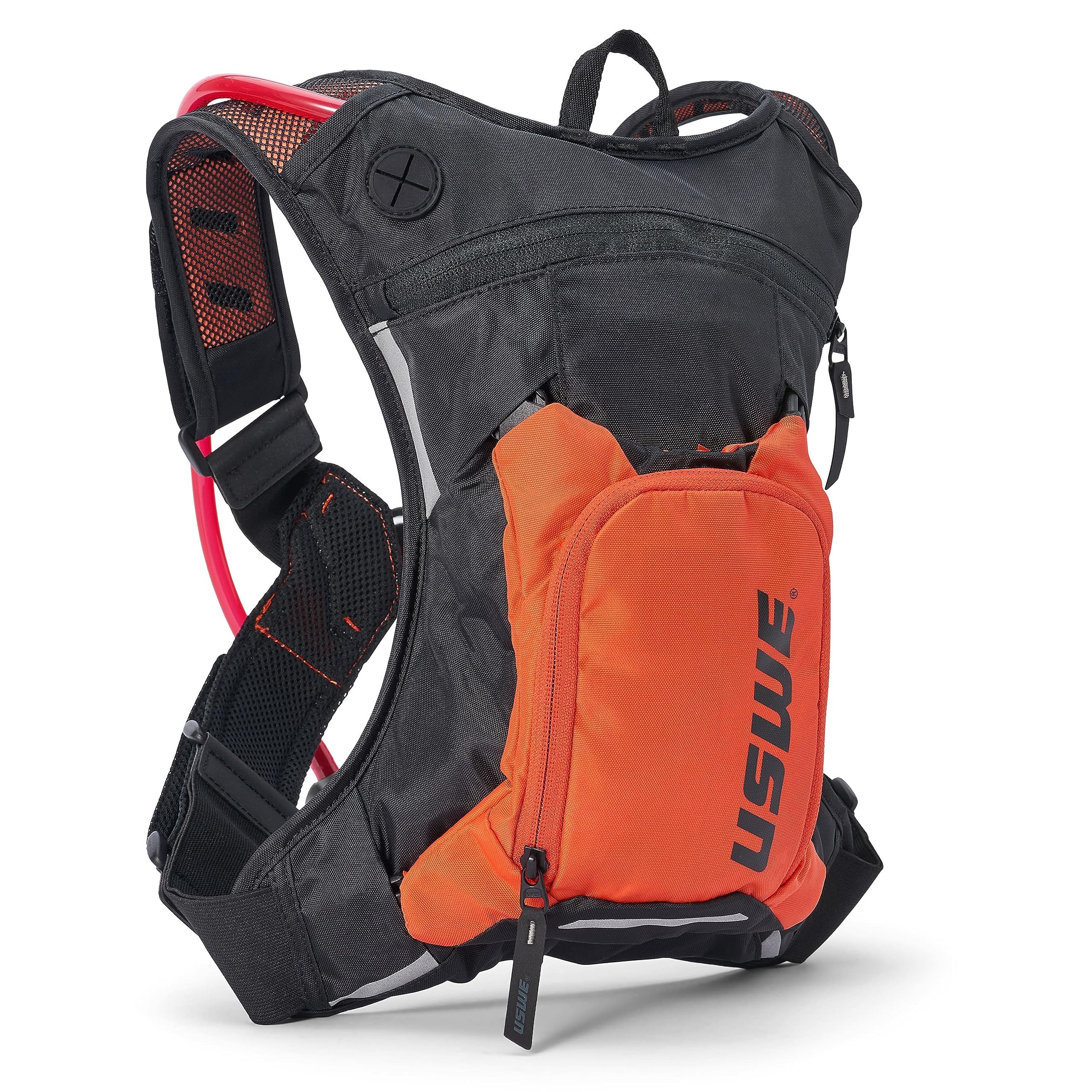
The USWE Outlander takes a different approach to stability with its patented NDM (No Dance Movement) 1.66 harness system. Instead of relying on wide shoulder straps, the NDM uses a four-point suspension that wraps around your ribcage and locks the pack so tight against your back that it genuinely does not move — even when you are jumping logs or charging through whoop sections on a dirt bike. The 2.0-liter Elite hydration bladder has a slider opening that makes cleaning and drying simple, plus a plug-and-play tube coupling for easy disconnect.
The main compartment is compact at 3 liters total storage, so this is purpose-built for riders who carry only the essentials: a few tools, a snack, keys, and a phone. The detachable organizer pocket keeps your multi-tool and tire levers from rattling around, and the water-resistant phone pocket protects against spray. The air-vented back panel with wave-profile pads provides surprisingly good airflow for such a tight-fitting pack.
The trade-off for that rock-solid stability is limited cargo space and a bladder compartment that can be fiddly to fill without removing the reservoir entirely. Riders who need to carry a jacket and lunch for full-day epics will want a larger pack. But for aggressive enduro riding, moto, or any situation where you absolutely cannot tolerate bag sway, the Outlander is in a league of its own.
Why it’s great
- NDM harness eliminates all bag movement during aggressive riding
- Elite bladder has easy-clean slider opening
- Detachable organizer pocket for tools
Good to know
- Only 3L total storage — minimalists only
- Bladder refill requires removal from pack
4. Osprey Escapist 25L Biking Backpack

When a ride turns into a hike, or when you need to carry a full change of clothes, extra layers, and a real lunch, the Osprey Escapist 25L bridges the gap between a cycling hydration pack and a proper daypack. The dropped-lumbar fit centers the weight on your sit bones rather than your shoulders, so even at 25 liters fully packed, the load stays stable when you lean forward on the bike. The split upper back panel allows an aggressive riding posture without the bag riding up your neck.
Organization is this pack’s standout feature: expansive hipbelt pockets with zippered access, fast-access stash pockets on the sides, a large front stretch shove-it pocket for a jacket, and a lower sleeping bag compartment with an internal divider — useful for separating wet gear from dry. The included high-visibility raincover and reflective material under the pack keep you visible in low light. LidLock helmet attachment and a blinky light loop round out the bike-specific touches.
The complexity of all those pockets and suspension features adds weight compared to simpler packs, and some users find the hipbelt zippers difficult to operate one-handed. But if you regularly transition from bike to trail on foot, or you need one pack that handles both your commute and weekend adventures, the Escapist’s versatility is hard to beat.
Why it’s great
- Dropped-lumbar fit keeps heavy loads stable on bike
- Expansive hipbelt pockets and side stash pockets
- Includes raincover and reflective visibility features
Good to know
- Heavier and more complex than simpler day packs
- Hipbelt zippers are stiff to operate one-handed
5. Kriega R20 Backpack

Kriega built the R20 for riders who spend hours in a tuck position and need a pack that does not create drag or pressure points. The Quadloc-Lite harness system distributes weight from the shoulders across the chest and torso, so the load feels neutral even when you are leaning into a windscreen at highway speeds. The 20-liter capacity hits a sweet spot for daily commutes and light overnight trips — enough for a laptop, a change of clothes, and a few tools, without the bulk of a full touring pack.
Construction is the most durable in this lineup: 420D nylon rip-stop throughout with 1000D Cordura reinforcements on the base and harness contact points. The zipped side-front pocket gives quick access to goggles or a multi-tool, and the inner sleeve fits either a hydration reservoir or a back protector — a rare dual-purpose feature that motorcyclists specifically look for. Reflective panels on the harness and rear print boost visibility at night.
The contoured shape that makes the bag so aerodynamic also reduces usable internal cube space compared to a boxy backpack of the same liter rating. The lack of a double zipper on the main compartment annoys some users, and the price places it firmly at the premium end. However, for all-day motorcycle comfort and build quality that withstands thousands of miles, the R20 justifies every bit of its cost.
Why it’s great
- Quadloc-Lite harness eliminates shoulder fatigue on long rides
- 1000D Cordura base is built to withstand years of abuse
- Inner sleeve fits back protector or hydration bladder
Good to know
- Contoured shape reduces usable internal volume
- Main compartment uses single zipper rather than double
6. Dakine Session Bike Hydration Backpack – 8 Liter
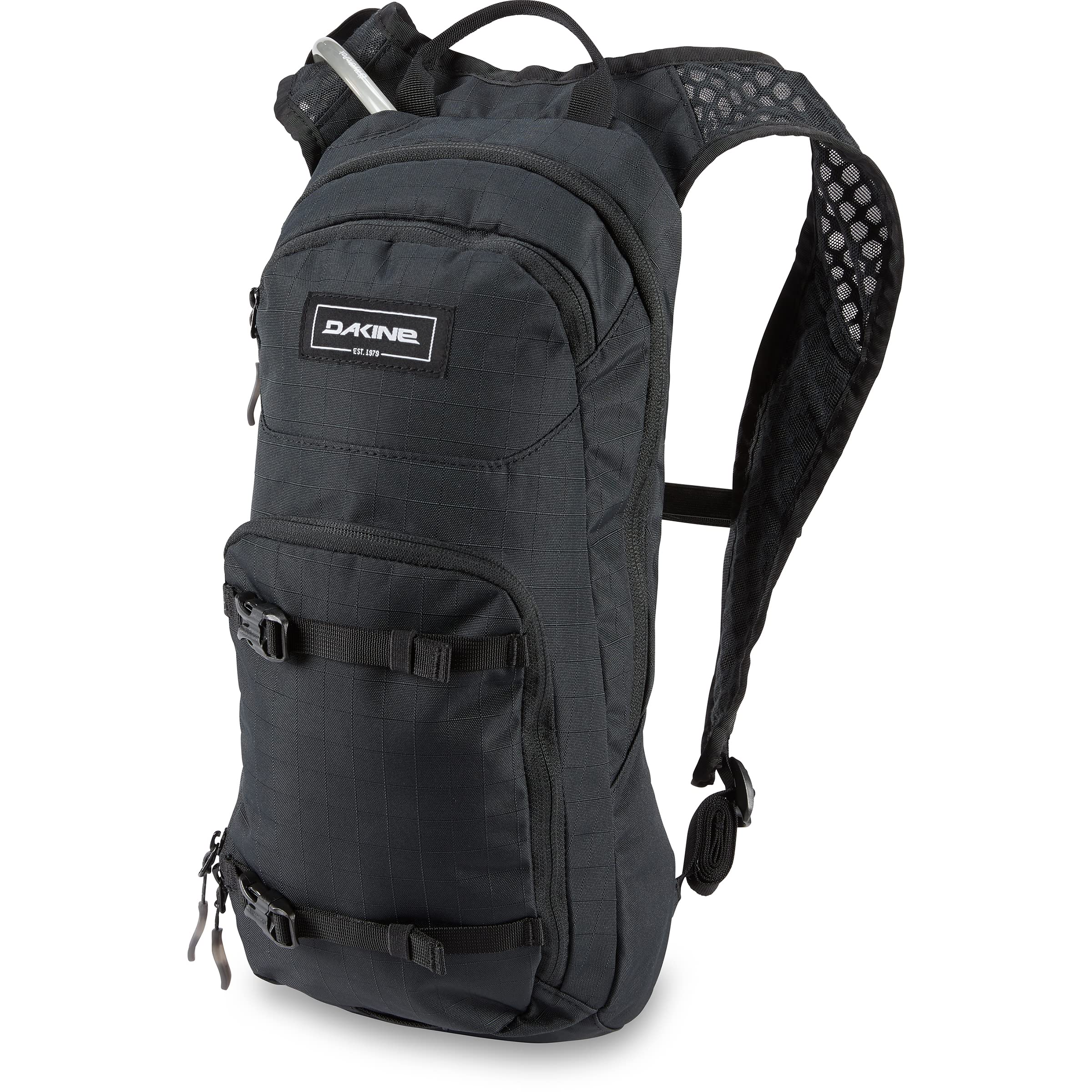
The Dakine Session 8L is a straightforward, lightweight hydration pack that delivers reliable performance for casual trail rides, hikes, and snowboarding days without the premium price tag of the specialty brands. The 450-denier ripstop recycled polyester (rPET) exterior is rugged enough for rocky trails while being more sustainable than virgin synthetics. The included 2-liter Hydrapak reservoir with a Phaser bite valve provides clean-tasting water free of the plastic aftertaste that some lower-end bladders impart.
Organization is well-considered for an 8-liter pack: a fleece-lined pocket protects sunglasses or a phone from scratches, internal organizer pockets keep small items separated, and external attachment straps let you lash a jacket or helmet when not in use. The breathable Air Flow back panel and shoulder straps help manage sweat during moderate exertion, and the integrated rescue whistle on the sternum strap adds a layer of safety for backcountry use.
The main compartment gets tight when the bladder is full, leaving limited space for a jacket plus snacks. The top pocket is too small for most modern phones in a case, and the non-removable waist straps can whip around when not fastened. But for riders who want a clean, minimal pack for rides under two hours at a reasonable cost, the Session punches above its weight class.
Why it’s great
- Rugged 450D recycled polyester construction
- Fleece-lined pocket protects phone and sunglasses
- 2L Hydrapak reservoir has no plastic taste
Good to know
- Main compartment is tight when bladder is full
- Top pocket too small for large phones with cases
7. Reflective Motorcycle Backpack – Hi Viz EDC Commuter Bag for Riders
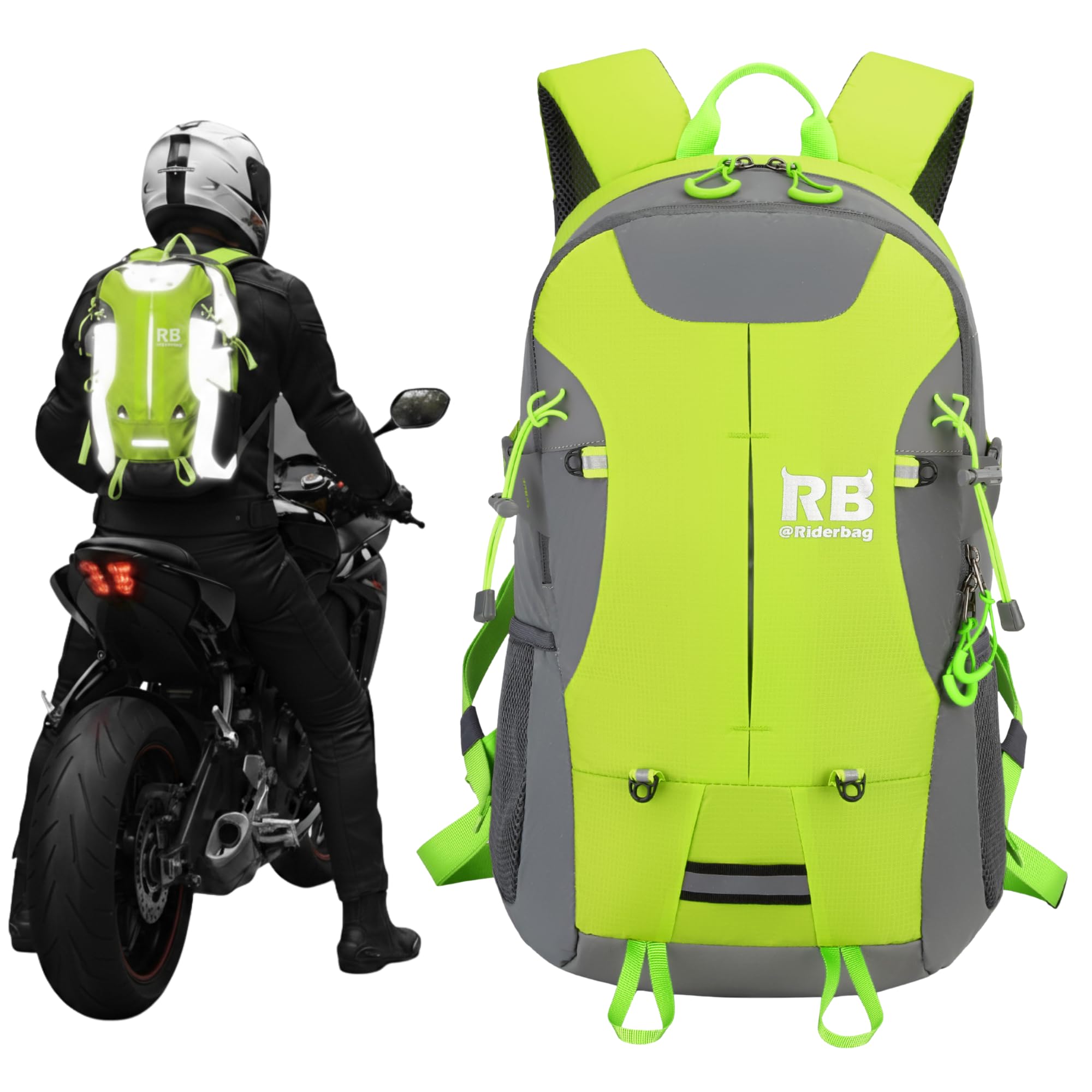
This Riderbag pack puts visibility above all else, with large high-visibility reflective panels that make you unmistakable to motorists in both daylight and nighttime conditions. At 35 liters, it offers the largest cargo capacity in this guide — enough to carry a 17-inch laptop, notebooks, a full change of clothes, and groceries, making it a genuine everyday carry option for cycling and scooter commuters. The built-in external helmet net lets you carry your helmet hands-free after you dismount.
The ventilated back padding and ergonomic shoulder straps are comfortable for long commutes, and the chest buckle helps relieve shoulder pressure by distributing weight across the torso. Two side water bottle pockets keep hydration accessible without a hydration bladder. The included waterproof cover and removable compass clip add utility for riders who face unpredictable weather or navigate unfamiliar routes.
The shoulder straps lack end stops and can loosen gradually during use, requiring periodic re-tightening. The internal space, while generous, feels slightly smaller than the 35-liter rating suggests due to the contoured shape. But for night riders who prioritize safety above all other considerations and need a pack that doubles as a daily commuter bag, this is the most visible option available.
Why it’s great
- Highly reflective panels provide exceptional night visibility
- 35L capacity fits laptop, clothes, and gear
- Includes waterproof cover and helmet net
Good to know
- Shoulder straps loosen over time during use
- Internal volume feels less than 35L due to shape
FAQ
How do I prevent my cycling backpack from bouncing while riding?
How many liters of water do I need for a full day on the trail?
Can I use a regular hiking backpack for cycling?
Final Thoughts: The Verdict
For most riders, the best cycling backpack winner is the CamelBak M.U.L.E. 12 because it delivers the best balance of hydration capacity, cargo organization, back panel ventilation, and trail-tested stability at a price that matches mid-range budgets. If you require absolute bounce-free performance for aggressive enduro or moto riding, grab the USWE Outlander. And for riders who need a large-capacity pack that transitions seamlessly from a bike commute to a day hike, nothing beats the Osprey Escapist 25L.

Mo Maruf
I created WellFizz to bridge the gap between vague wellness advice and actionable solutions. My mission is simple: to decode the research and give you practical tools you can actually use.
Beyond the data, I am a passionate traveler. I believe that stepping away from the screen to explore new environments is essential for mental clarity and physical vitality.