Our readers keep the lights on and my smoothie glass nicely filled. As an Amazon Associate, I earn from qualifying purchases.
Finding a baby formula that doesn’t trigger colic, reflux, or bloody stools can feel like a desperate guessing game. When cow’s milk protein is the culprit, you need a solution that provides complete nutrition without the dairy — and that choice comes down to soy isolate versus advanced amino acid formulations.
I’m Mohammad Maruf — the founder and writer behind WellFizz. I’ve spent dozens of hours analyzing ingredient panels, clinical studies on hypoallergenic tolerance, and real parent feedback to identify which formulas actually deliver on their dairy-free claims.
Whether your infant has a confirmed cow milk protein allergy or your family follows a plant-based diet, this guide walks you through the best options to keep your baby thriving. My goal is to help you confidently choose the right dairy free formula for your little one’s specific needs and sensitivity level.
How To Choose The Best Dairy Free Formula
Selecting the right dairy free formula depends entirely on your baby’s reaction to cow’s milk protein. Not all dairy free options are created equal — some are designed for mild sensitivities while others are for severe, life-threatening allergies. Here are the critical factors to evaluate.
Understand the Protein Source: Soy vs. Amino Acid
Soy-based formulas like Similac Soy Isomil use soy protein isolate, which is naturally dairy and lactose-free. They work well for babies with a simple cow’s milk intolerance who show no soy allergy themselves. Amino acid-based formulas like Neocate and Alfamino break proteins down to their simplest form — these are essential for babies with severe cow milk protein allergy (CMPA), multiple food allergies, or malabsorption issues.
Check for Complete Nutritional Support
A dairy free formula must be nutritionally complete to support normal growth in the first year. Look for added DHA and ARA for brain and eye development, calcium without palm olein oil (which can hinder absorption), and nucleotides to support the immune system. Prebiotic and probiotic blends, like the Syneo in Neocate Syneo Junior, also help maintain digestive health when dairy is removed from the diet.
Consider the Form and Feeding Volume
Ready-to-feed liquid formulas offer convenience and sterile preparation but come at a higher cost per ounce. Powder formulas are more economical for long-term use and easier to store in bulk. If your baby has severe sensitivities, you may need to avoid powders that require mixing with water that could introduce contaminants — in those cases, liquid concentrates or ready-to-feed bottles are the safer bet.
Quick Comparison
On smaller screens, swipe sideways to see the full table.
| Model | Category | Best For | Key Spec | Amazon |
|---|---|---|---|---|
| Nutricia Neocate Infant | Amino Acid | Severe CMPA & reflux | 100% amino acids; 14.1 oz can | Amazon |
| Alfamino Infant Formula | Amino Acid | Severe malabsorption & premies | MCT fat blend; 14.1 oz can | Amazon |
| Similac Soy Isomil (RTF) | Soy-Based | Mild cow protein intolerance | Ready-to-feed; 1 Qt pack of 4 | Amazon |
| Similac Soy Isomil (Powder) | Soy-Based | Budget-friendly bulk feeding | 30.8 oz powder; pack of 4 | Amazon |
| Neocate Syneo Junior | Amino Acid | Toddlers 1+ with allergies | Syneo prebiotic/probiotic; 14.1 oz | Amazon |
In-Depth Reviews
1. Nutricia Neocate Infant
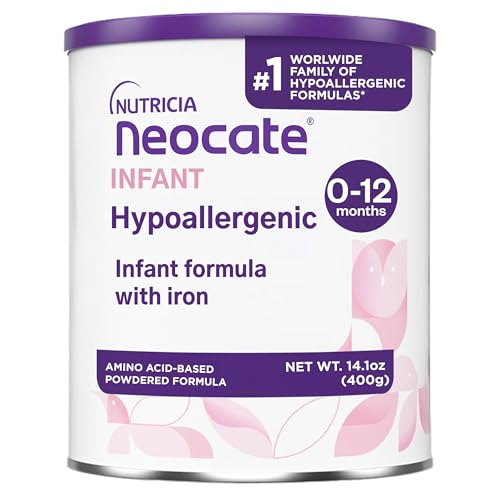
Neocate Infant is the gold standard for babies with severe cow milk protein allergy (CMPA) who cannot tolerate any intact proteins. It is a 100% amino acid-based formula, meaning the protein is broken down into its simplest form so the digestive system cannot recognize it as a potential allergen. Parents consistently report that symptoms like reflux, bloody stools, and severe colic resolve in as little as three days after switching to Neocate.
This formula includes DHA and ARA to support brain and eye development, plus nucleotides to help fortify the immune system. It contains no artificial colors, flavors, or sweeteners, and it is lactose-free by design. Clinically, it supports normal growth — one reviewer noted their son stayed at the 70th percentile for height and weight after eight months of exclusive Neocate feeding.
The main drawback is cost; a 14.1-ounce can is expensive, and babies with severe allergies often go through it quickly. Some parents also mention that the fine powder can clog bottle nipples if not mixed thoroughly with warm water. However, for the most sensitive infants, Neocate is often the only option that works without triggering a reaction.
Why it’s great
- Clinically shown to relieve CMPA symptoms in 3 days
- 100% amino acid-based, safe for even the most severe allergies
- Complete nutrition includes DHA, ARA, and nucleotides
Good to know
- Expensive per can compared to soy-based options
- Powder can clog nipples if not mixed at proper temperature
2. Alfamino Infant Formula
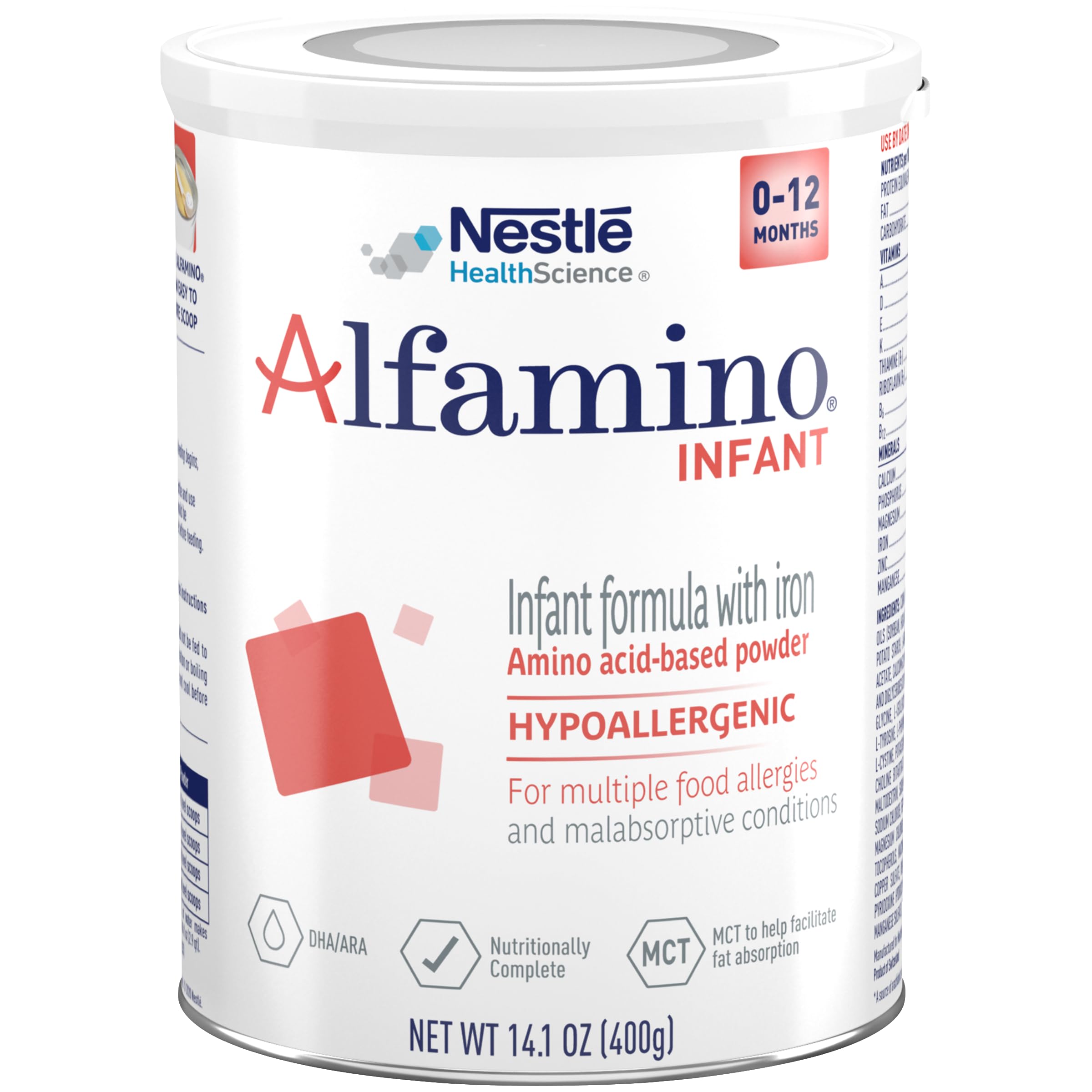
Alfamino from Nestlé Health Science is another amino acid-based formula that stands out because of its unique fat profile. It contains medium-chain triglycerides (MCTs), which are easier for infants with fat malabsorption to digest and absorb. This makes Alfamino a strong choice for premature babies or infants with gastrointestinal damage who need rapid weight gain without dairy or intact proteins.
Parents of babies with NEC (necrotizing enterocolitis) history report that Alfamino tastes better than some competitors, which increases feeding acceptance and frequency. It resolved bloody stools, severe colic, and reflux in babies who had failed on multiple other hypoallergenic formulas. The formula is lactose-free, gluten-free, and designed for infants 0–12 months under medical supervision.
One downside is that the powder can leave a mild residue after mixing, and some babies initially dislike the taste compared to standard formulas. Pediatricians often recommend adding prune juice or probiotics to prevent constipation, which can be a side effect of amino acid-based diets. Also, Alfamino must be stored properly away from heat to prevent the powder from clumping or degrading.
Why it’s great
- MCT fat blend supports absorption in sensitive digestive systems
- Effective for severe reflux and malabsorption issues
- Better taste acceptance than some competing amino acid formulas
Good to know
- May require probiotics or prune juice to prevent constipation
- Susceptible to heat damage during shipping and storage
3. Similac Soy Isomil Ready to Feed

Similac Soy Isomil is the most recognized soy-based infant formula in hospitals, and this ready-to-feed quart pack is ideal for newborns transitioning off milk-based formulas. It uses soy protein isolate as the protein source and contains no lactose or dairy. It also includes DHA, lutein, and prebiotics to support brain, eye, and digestive health — without palm olein oil, which can interfere with calcium absorption.
Parents report that fussiness and gas normalize quickly after switching from a standard milk-based formula. The ready-to-feed format eliminates any mixing errors and provides sterile feeding, which is particularly important for newborns or immunocompromised infants. The pack of four quarts offers a substantial supply without taking up much fridge space.
The trade-off is that ready-to-feed is more expensive per ounce than powder, and some babies who are also sensitive to soy protein may still react. If your baby has confirmed CMPA that also triggers a soy allergy (common in up to 40% of CMPA infants), you will need to step up to an amino acid formula. For simple cow protein intolerance, this is a cost-effective and convenient first-line option.
Why it’s great
- Convenient ready-to-feed, no mixing or measuring needed
- Contains DHA, lutein, and prebiotics for complete nutrition
- No palm olein oil for better calcium absorption
Good to know
- More expensive per ounce than powder formulas
- Not suitable for babies with concurrent soy allergy
4. Similac Soy Isomil Powder

For families who have confirmed that soy protein works well for their baby and want to minimize the cost per serving, the Similac Soy Isomil powder in the 30.8-ounce multi-pack is the most economical route. Each can makes a large volume of prepared formula, and the Subscribe & Save option on Amazon can drive the effective cost down significantly — one reviewer noted they essentially got a free can with their subscription.
The powder mixes easily without clumping, and the formula includes the same DHA and lutein found in the ready-to-feed version. It also contains prebiotics for digestive health and no palm olein oil. Parents who use the MySimilac app can scan QR codes on the packaging to earn reward points, which adds value over time.
The main consideration is storage space — four large cans take up significant pantry room, and once opened, the powder must be used within a month. This multi-pack is best for babies who are confirmed to tolerate soy and are feeding exclusively on formula, as the volume will be consumed before the expiration date. Always confirm soy tolerance with your pediatrician before committing to a bulk purchase.
Why it’s great
- Lowest cost per serving among dairy free options
- Subscribe & Save discounts make bulk buying worthwhile
- Easy to mix with no clumping issues
Good to know
- Requires significant pantry storage space
- Opened cans must be used within 30 days
5. Neocate Syneo Junior
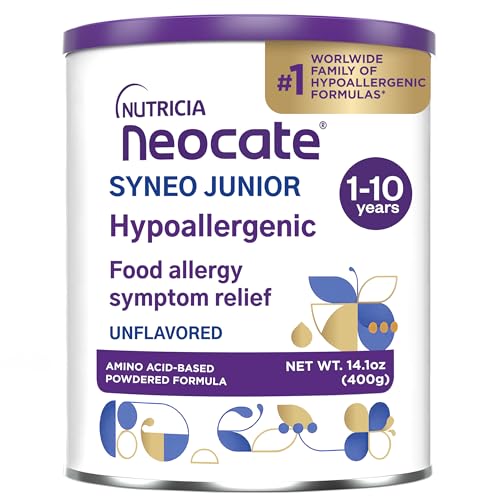
Neocate Syneo Junior is designed for children one year and older who still need a hypoallergenic, dairy-free amino acid formula. What sets it apart is its Syneo blend — a combination of prebiotic fibers and live probiotics that actively support digestive health. This is particularly helpful for toddlers who struggle with constipation as a side effect of amino acid-based nutrition.
Parents of children with severe MCAS (mast cell activation syndrome) and autism spectrum disorders report that this formula has been life-changing, providing a reliable source of complete nutrition when few other foods are tolerated. It comes in unflavored, vanilla, strawberry, and chocolate options, making the transition from infant formula to a toddler drink smoother. The unflavored version mixes well in room-temperature water but does not dissolve properly in cold liquids.
Priced at a premium level, Neocate Syneo Junior is one of the most expensive options on the list. Amazon shipping can be inconsistent — some parents report delays that create critical gaps in supply. Additionally, the product is intended for children 1+ years, so it should not be used as the sole source of nutrition for infants under 12 months without medical guidance.
Why it’s great
- Syneo prebiotic/probiotic blend promotes digestive regularity
- Multiple flavor options for picky toddlers
- Clinically shown to relieve allergy symptoms quickly
Good to know
- Very expensive compared to other toddler formulas
- Shipping delays from Amazon can cause supply issues
FAQ
How quickly will a dairy free formula stop my baby’s colic or reflux?
Can I use a toddler dairy free formula like Neocate Syneo Junior for my infant?
What is the difference between ready-to-feed and powder dairy free formula?
Final Thoughts: The Verdict
For most babies with confirmed cow milk protein allergy, the dairy free formula winner is the Nutricia Neocate Infant because it is 100% amino acid-based, clinically proven to resolve severe symptoms in days, and includes DHA/ARA for complete nutrition. If your baby has severe malabsorption or needs rapid weight gain, grab the Alfamino Infant Formula for its MCT fat blend. And for a mild cow protein intolerance without soy sensitivity, nothing beats the convenience and value of the Similac Soy Isomil Ready to Feed.

Mo Maruf
I created WellFizz to bridge the gap between vague wellness advice and actionable solutions. My mission is simple: to decode the research and give you practical tools you can actually use.
Beyond the data, I am a passionate traveler. I believe that stepping away from the screen to explore new environments is essential for mental clarity and physical vitality.