Our readers keep the lights on and my smoothie glass nicely filled. As an Amazon Associate, I earn from qualifying purchases.
Kitchen sink clogs don’t just smell foul—they shut down meal prep, attract fruit flies, and force you to cancel plans in favor of wrestling with trapped food fats and hair that a plunger only pushes deeper. The difference between a good pour and a dangerous chemical reaction comes down to the specific formulation designed for the exact grease-heavy, food-particle-laden blockage in your drainpipe.
I’m Mohammad Maruf — the founder and writer behind WellFizz. I’ve spent countless hours dissecting the chemical makeup, safety data sheets, and real-world user experiences of the most popular crystal and liquid drain openers to understand which ones actually dissolve the kind of solidified grease and soap scum that choke a kitchen sink trap.
After analyzing dozens of professional-strength and household-grade options, this guide cuts through the confusion to reveal the very best a drain cleaner for kitchen sink needs to deliver before you reach for a harsh bottle that could damage your plumbing.
How To Choose The Best Drain Cleaner For Kitchen Sink
Kitchen sink blockages are unique—they’re almost always grease, food particles, and soap scum fused together into a waxy substance that liquid plumbers can’t touch. You need a formula that chemically breaks down fat molecules (saponification) rather than just dissolving hair.
Formula Type: Crystal vs. Gel vs. Liquid
Crystal drain openers like Roebic Heavy Duty Crystal are 100% lye—they sink through standing water and react with the grease directly. Gels like Drano Max Gel are thicker, cling to vertical pipes, and are safer for slower-acting maintenance. Standard liquids are best for mild clogs and regular upkeep. Match the formula to the severity of the blockage.
Pipe and Component Safety
Not all chemicals are equal. Some formulas will eat through aluminum, lead, or galvanized steel pipes—common in older homes. If you have a garbage disposal, avoid crystal lye because the exothermic reaction is too aggressive. Always check if the bottle explicitly states “safe for PVC” or “safe for septic systems” before pouring.
Activation Method
Most chemical drain cleaners need water to activate the reaction. Some require cold water to slow the reaction, others require hot water to accelerate it. Hot-water-activated formulas like Thrift T-100 work in under 60 seconds when flushed with boiling water, but they must be used correctly—adding cold water first can cause the crystals to harden and worsen the clog.
Quick Comparison
On smaller screens, swipe sideways to see the full table.
| Model | Category | Best For | Key Spec | Amazon |
|---|---|---|---|---|
| Thrift T-100 | Hot-Water Crystal | Grease traps and septic systems | Non-acid, 1 lb per bottle (2-pack) | Amazon |
| Drano Max Gel | Thick Gel | Standing water and slow drains | 80 oz 2-pack, starts in 7 min | Amazon |
| Nu Calgon Drain Solve | Non-Fuming Liquid | PVC pipes and condensate lines | 1 quart, no rotten egg odor | Amazon |
| Roebic Heavy Duty Crystal | 100% Lye Crystal | Recalcitrant grease buildup | 2 lbs, professional strength | Amazon |
| Roebic Liquid Drain Cleaner | Economical Liquid | Regular maintenance and mild clogs | 32 fl oz, safe for plastic pipes | Amazon |
In‑Depth Reviews
1. Thrift T-100 Odorless Drain Cleaner (2-Pack)
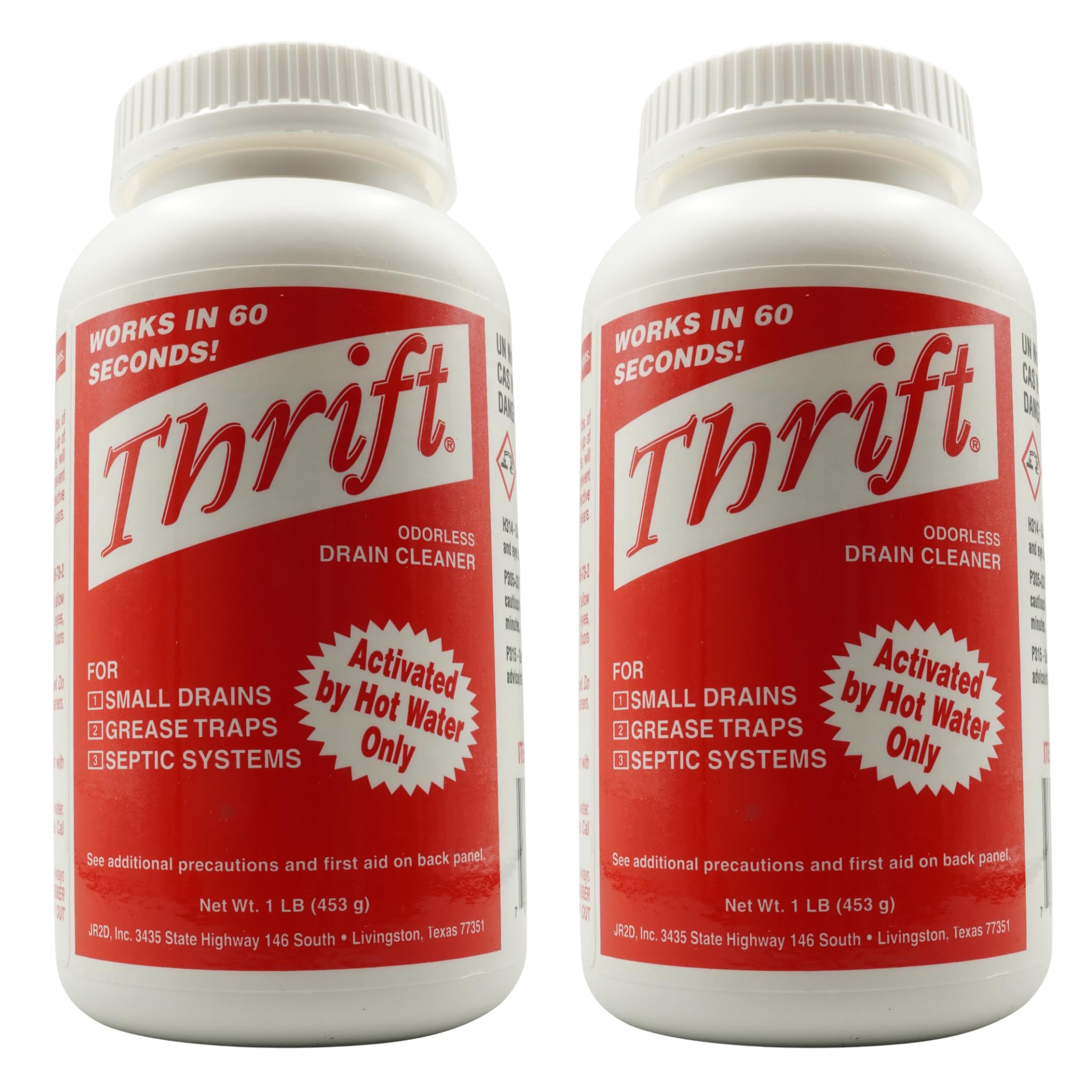
The Thrift T-100 stands apart because it’s a dry crystal formula designed to be activated by hot water—pour the crystals directly into the drain, then flush with boiling water. The reaction liquefies grease, hair, and soap scum within 60 seconds, making it one of the fastest acting options for kitchen sink blockages caused by solidified cooking fats.
Its non-acid base means it won’t harm porcelain, chrome trim, PVC, or metal pipes when used correctly. The two-pack provides enough volume for three to four full treatments, and plumbers frequently recommend it as a first-line defense for grease traps and septic systems. Users report clearing slow drains in five minutes with zero chemical odor.
Keep in mind this formula is not intended for standing water clogs—you need to remove standing water before applying the crystals. Also, it contains sodium hydroxide, so gloves and eye protection are mandatory.
Why it’s great
- Clears grease in under 60 seconds with hot water activation
- Non-acid formula is safe for septic systems and metal pipes
- Odorless during use—no rotten egg or bleach smell
Good to know
- Requires standing water to be removed before application
- Sodium hydroxide poses chemical burn risk if mishandled
- May need regular 90-day treatment for chronic sludge buildup
2. Drano Max Gel Drain Clog Remover (2-Pack, 80 oz)
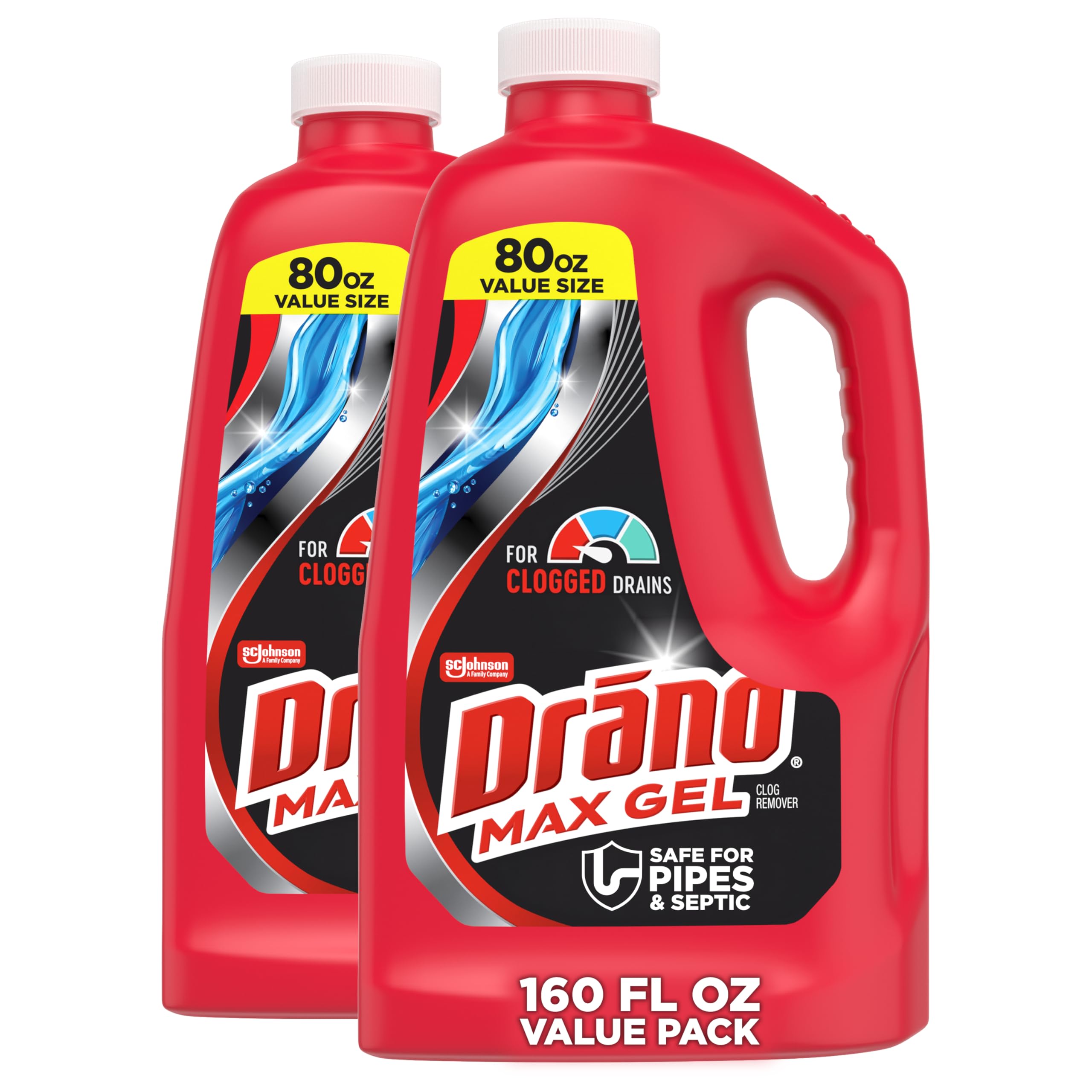
Drano Max Gel is the go-to choice when you have standing water in the sink because its thick gel formula sinks directly through the water to the clog rather than floating on top. It starts working within seven minutes and only requires 15–30 minutes of dwell time before a hot water flush—far faster than many liquid alternatives.
The 80-ounce two-pack offers excellent value for households with multiple drains. Users consistently report that it cuts through hair and grease in a single application, and the included pipe-protection ingredient helps prevent corrosion over time. This makes it one of the safest chemical choices for regular kitchen sink maintenance.
Be aware that Drano Max Gel may require a second application for very old, hardened blockages. It also generates fumes during the reaction, so proper ventilation is necessary. If you have a garbage disposal, avoid using excessive amounts.
Why it’s great
- Thick gel pours through standing water directly to the clog
- Starts working in 7 minutes with 15–30 minute total wait time
- Includes anti-corrosion ingredient to protect pipes over time
Good to know
- Not suitable for aluminum or galvanized pipes
- Requires ventilation during use—strong chemical fumes
- May not break through fully hardened grease on first try
3. Nu Calgon 4165-24 Drain Solve (1 Quart)

Nu Calgon Drain Solve is the professional-grade option that produces no offensive odor—no rotten egg, no bleach, no fuming reaction. It’s non-fuming and formulated to generate gentle heat when mixed with water, which helps loosen clogs without the violent chemical eruptions you get with lye-based products. This makes it a favorite for AC condensate lines, but it works just as well on kitchen sink sludge.
Unlike cheaper drain cleaners, Drain Solve pours through standing water and cuts through grease and organic matter quietly. It’s septic safe and contains no harsh accelerants, so you can use it in homes with septic systems without damaging the bacterial balance. Users note that it cleared two-year-old blockages in condensate lines on the first try.
The main trade-off: this is a smaller quart bottle at a premium price point compared to generic brands. It’s best for targeted maintenance rather than large-scale unclogging. Also, it’s labeled for professional use, so some homeowners may find the instructions less consumer-friendly.
Why it’s great
- Non-fuming formula produces no unpleasant drain cleaner odor
- Gentle exothermic reaction won’t damage PVC pipes
- Septic safe and effective on organic matter and grease
Good to know
- Quart size is small for large kitchen sink clogs
- Premium pricing per ounce compared to gel alternatives
- Professional packaging may lack detailed consumer instructions
4. Roebic Heavy Duty Crystal Drain Opener (2 lbs)

Roebic Heavy Duty Crystal is pure sodium hydroxide—100% lye with no fillers or gels. This is the nuclear option for kitchen sinks that have years of solidified grease and food particle sediment. When poured directly into the drain and followed with water, it creates a powerful exothermic reaction that melts organic blockages on contact.
Plumbers use this stuff for chronic clogs that snaking and other chemicals have failed to clear. Users report that it saved them hundreds of dollars in plumbing bills after multiple applications of weaker products had no effect. The two-pound container provides multiple treatments for deep cleanings.
The danger here is real—accidental skin contact can cause severe chemical burns that take months to heal. You must wear full protective gear (gloves, goggles, long sleeves) and never use it in toilets, garbage disposals, or aluminum/lead/zinc pipes. This is strictly for heavy organic clogs in metal or plastic kitchen drain lines.
Why it’s great
- 100% lye formula dissolves the toughest grease and sediment
- Professional strength effective where gels and liquids fail
- Cost-effective for multiple deep-cleaning treatments
Good to know
- Extremely hazardous—can cause severe chemical burns
- Not safe for garbage disposals, toilets, or aluminum pipes
- Does not work through standing water—requires dry application
5. Roebic Liquid Drain Cleaner (32 fl oz)
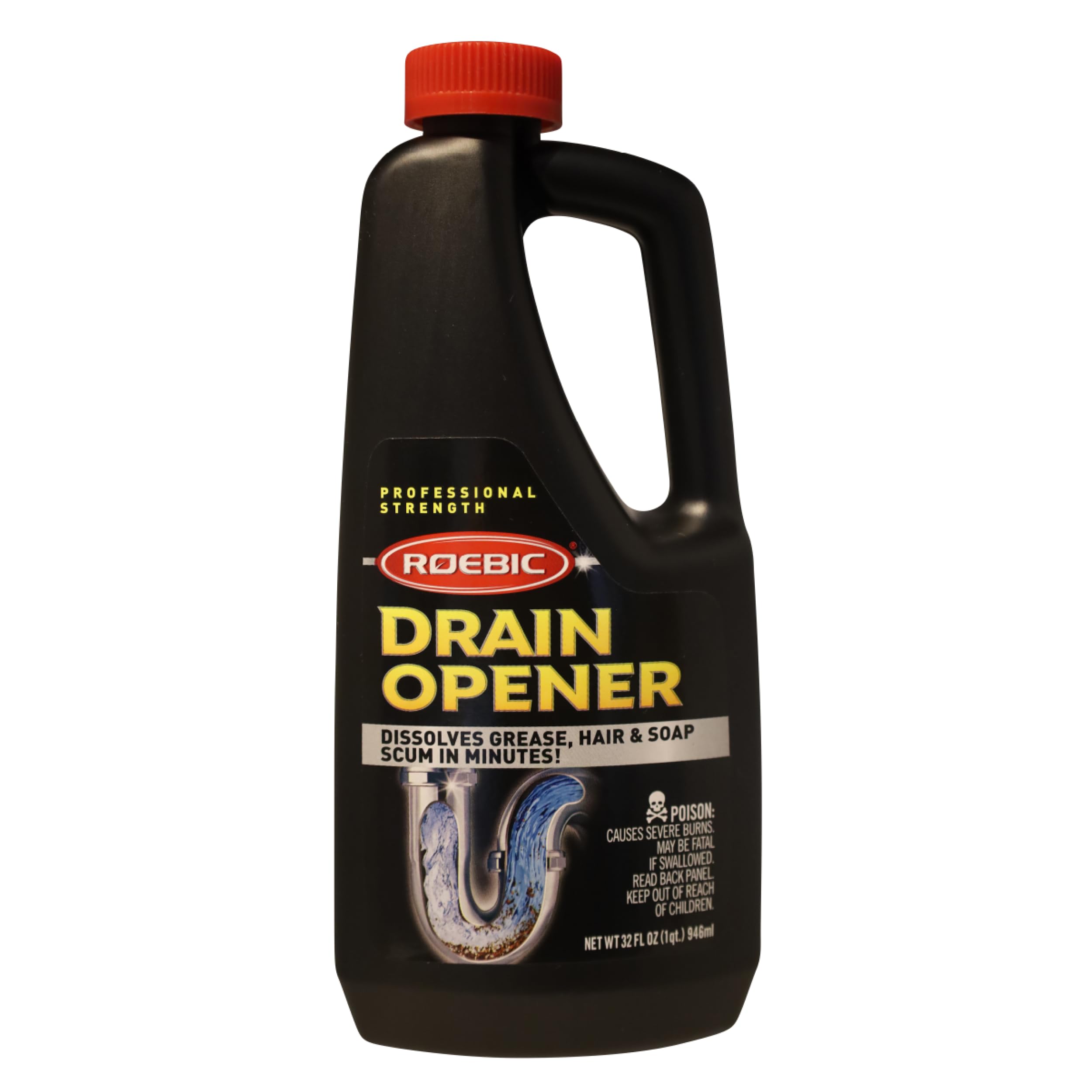
Roebic Liquid Drain Cleaner is the budget-friendly entry-level option that still delivers professional-strength results. It targets grease, hair, food, and soap scum in kitchen sinks and is safe for plastic pipes—a critical detail for modern plumbing. The 32-ounce quart is small enough for apartment dwellers but potent enough for moderate clogs.
The application is simple: pour half the bottle slowly into the drain, wait 15 minutes, and flush with hot water. Repeat if necessary. Users with chronic hair and grease buildup in their kitchen sinks have found this to be a cheap alternative to calling a plumber, especially for regular monthly maintenance.
The trade-off is that this is a liquid, not a gel or crystal, so it may not cut through fully solidified clogs on the first attempt. It also cannot be used in aluminum sinks or garbage disposals. For very old or severe blockages, you’ll likely need the crystal formula instead.
Why it’s great
- Affordable entry-level price for occasional kitchen sink clogs
- Safe to use on plastic pipes and standard PVC plumbing
- Simple pour-and-wait routine with 15-minute dwell time
Good to know
- Not suitable for aluminum sinks or garbage disposals
- Liquid formula may not dissolve hardened blockages
- Requires careful handling—skin contact can still cause burns
FAQ
Can I use a crystal drain cleaner in a kitchen sink with a garbage disposal?
How do I know if my pipes are safe for sodium hydroxide drain cleaners?
What’s the difference between hot-water-activated and cold-water-activated drain cleaners?
How often should I use a chemical drain cleaner for maintenance?
Final Thoughts: The Verdict
For most users, the best drain cleaner for kitchen sink winner is the Thrift T-100 because it combines the fastest grease dissolution (60 seconds) with a non-acid formula that’s safe for septic systems and all common pipe materials. If you need a gel that works through standing water with zero odor, grab the Drano Max Gel. And for the toughest solidified grease clogs that nothing else touches, the Roebic Heavy Duty Crystal is your last-resort chemical option before calling a plumber.

Mo Maruf
I created WellFizz to bridge the gap between vague wellness advice and actionable solutions. My mission is simple: to decode the research and give you practical tools you can actually use.
Beyond the data, I am a passionate traveler. I believe that stepping away from the screen to explore new environments is essential for mental clarity and physical vitality.