Our readers keep the lights on and my smoothie glass nicely filled. As an Amazon Associate, I earn from qualifying purchases.
That sharp, burning sensation beneath the metatarsal heads after an hour in heels or a day on your feet is not something you have to accept. The right pad redirects pressure away from the nerve-dense ball of the foot, letting you stand, walk, and dance without that familiar ache.
I’m Mohammad Maruf — the founder and writer behind WellFizz. I’ve spent many hours studying metatarsal pad materials, adhesive engineering, and real-user feedback to identify which cushions actually redistribute weight off sensitive forefoot bones.
This guide breaks down the five most effective models on the market so you can find the perfect cushion for balls of feet that matches your shoe type and activity level.
How To Choose The Best Cushion For Balls Of Feet
Selecting a forefoot cushion involves more than grabbing the first gel pad you see. Fit, thickness, material breathability, and adhesive strength all determine whether the pad stays in place and actually offloads pressure during a full day of wear.
Material: Gel vs. Wool Felt
Gel cushions absorb shear and impact well, making them a solid choice for high-heel dancing or running. Wool felt pads, often around 1/4 inch thick, provide a firmer, more structured offload that podiatrists often recommend for Morton’s neuroma and metatarsalgia. Felt does not compress as much as gel under sustained weight, so it maintains its pressure-redistributing shape longer.
Adhesion and Reusability
Stick-on pads that attach to the shoe or foot must survive moisture and movement. Some adhesives degrade after a few wears, while others remain tacky for weeks. Toe-sleeve wraps eliminate adhesive concerns entirely by sliding over the forefoot, but they add volume that may crowd the toe box. Decide whether you need disposability for hygiene or multi-day reuse for value.
Thickness and Shoe Compatibility
A pad that is too thick will cramp narrow pumps or dress shoes, while a pad that is too thin may not relieve pressure under heavy impact. Measure the available vertical space inside your go-to shoes before committing. Some manufacturers recommend sizing up one shoe size when using their thicker cushions.
Quick Comparison
On smaller screens, swipe sideways to see the full table.
| Model | Category | Best For | Key Spec | Amazon |
|---|---|---|---|---|
| PediFix Pedi-gel | Gel Pad | High heels & dance shoes | Self-adhesive reusable gel | Amazon |
| Brison Metatarsal Pads | Toe Sleeve | Running & high-impact wear | Enlarged gel + fabric sleeve | Amazon |
| Wellsfoot Felt Pads | Wool Felt | Neuroma & daily walking | 1/4 in. thick, 18-pack | Amazon |
| ZAIWOO Forefoot Pads | Gel + Fabric | Dress heels & narrow feet | Suede fabric top, 4-pack | Amazon |
| Temiart Felt Pads | Wool Felt | Budget & multi-shoe rotation | 1/4 in. thick, 18-pack | Amazon |
In‑Depth Reviews
1. PediFix Pedi-gel Ball-of-foot Pad

PediFix has been a trusted name in foot care for decades, and this gel pad lives up to that reputation with a simple, effective design. The translucent gel cushion adheres directly to the skin, allowing you to swap between different shoes throughout the day without losing the pad. Podiatrists frequently recommend this model for sesamoiditis and metatarsalgia because the gel absorbs shock without adding bulk that would crowd narrow dress shoes.
Real users report instant relief during long shifts on concrete floors and hours of dance practice. The adhesive activates with body heat, so after each use you can rinse the pad with warm water and let it air dry, restoring tackiness for the next wear. Many reviewers noted that a single pair lasted through three weeks of daily use before needing replacement.
The main trade-off is that the adhesive can weaken faster in very sweaty conditions or when the pad is exposed to strappy sandals without fabric backing. Some users found the stickiness degraded after the pad got folded inside a purse. Still, for the reliable offload and podiatrist backing, this pad earns the top spot.
Why it’s great
- Durable gel that stays comfortable for hours
- Sticks to skin, letting you change shoes freely
- Washable and reusable for multiple wears
Good to know
- Adhesive weakens in high sweat or heat
- May not provide enough padding for severe neuroma pain
2. Brison Metatarsal Pads Ball of Foot Cushion

Brison takes a different approach with a patented toe-sleeve design that wraps around the forefoot, eliminating any reliance on adhesive. This is a major advantage for athletes, runners, and anyone whose feet sweat heavily during activity. The enlarged gel cushion sits under the metatarsal heads while the breathable fabric sleeve holds everything in place, providing shock absorption that stays put through running, workouts, or long walks.
Users with larger feet (men’s 12–14, women’s 14–16) report that the extended toe sleeve improves alignment and prevents the pad from migrating. The SEBS material is washable and reusable, making it a hygienic choice for daily wear. Many reviewers with bunions and neuroma noted that the sleeve did not cut off circulation like some competitors, and the cushion provided immediate relief from stabbing pain.
The major catch is fit. Because the sleeve adds volume, Brison recommends going up a shoe size to avoid crowding. Some users found the small size too large for narrow feet, and the sleeve can feel snug in the toe box of tight dress shoes. This is best suited for athletic shoes, casual sneakers, or boots where extra space exists.
Why it’s great
- No adhesive means reliable hold in sweaty conditions
- Thick gel cushion absorbs high-impact forces
- Reusable SEBS material is easy to clean
Good to know
- Adds significant volume; may require larger shoes
- Sizing can be tricky for narrow or very small feet
3. Wellsfoot Felt Metatarsal Pads

When a podiatrist recommends pads, they often point to wool felt because its firm structure does not compress flat under body weight like soft gel can. At 1/4 inch thick, these Wellsfoot pads provide a stable offload that reduces pressure on the metatarsal heads without absorbing all the shock into the gel. The 18-count value pack means you can place fresh pads in multiple pairs of shoes or replace them regularly for hygiene.
Users with Morton’s neuroma and chronic metatarsalgia report that the felt pads, when positioned just behind the second and third metatarsal heads, drastically reduce the pinched-nerve sensation. The adhesive is strong enough to stick to the shoe liner for days without migrating, though removal can leave residue on some insoles. Several reviewers found that sticking the pad to their foot under a sock allowed precise placement and prevented shifting.
The primary drawback is that felt pads are single-use once removed — you cannot reposition them without losing adhesion. Also, the 1/4-inch height may feel bulky in very shallow flats or high heels. But for walking shoes, work boots, and sneakers, this remains the most recommended material for active neuroma relief.
Why it’s great
- Firm wool felt maintains shape under pressure
- Large pack supplies multiple shoes
- Strong adhesive stays in place all day
Good to know
- Cannot reposition once applied
- 1/4-inch thickness may crowd low-profile shoes
4. ZAIWOO Metatarsal Pads Women
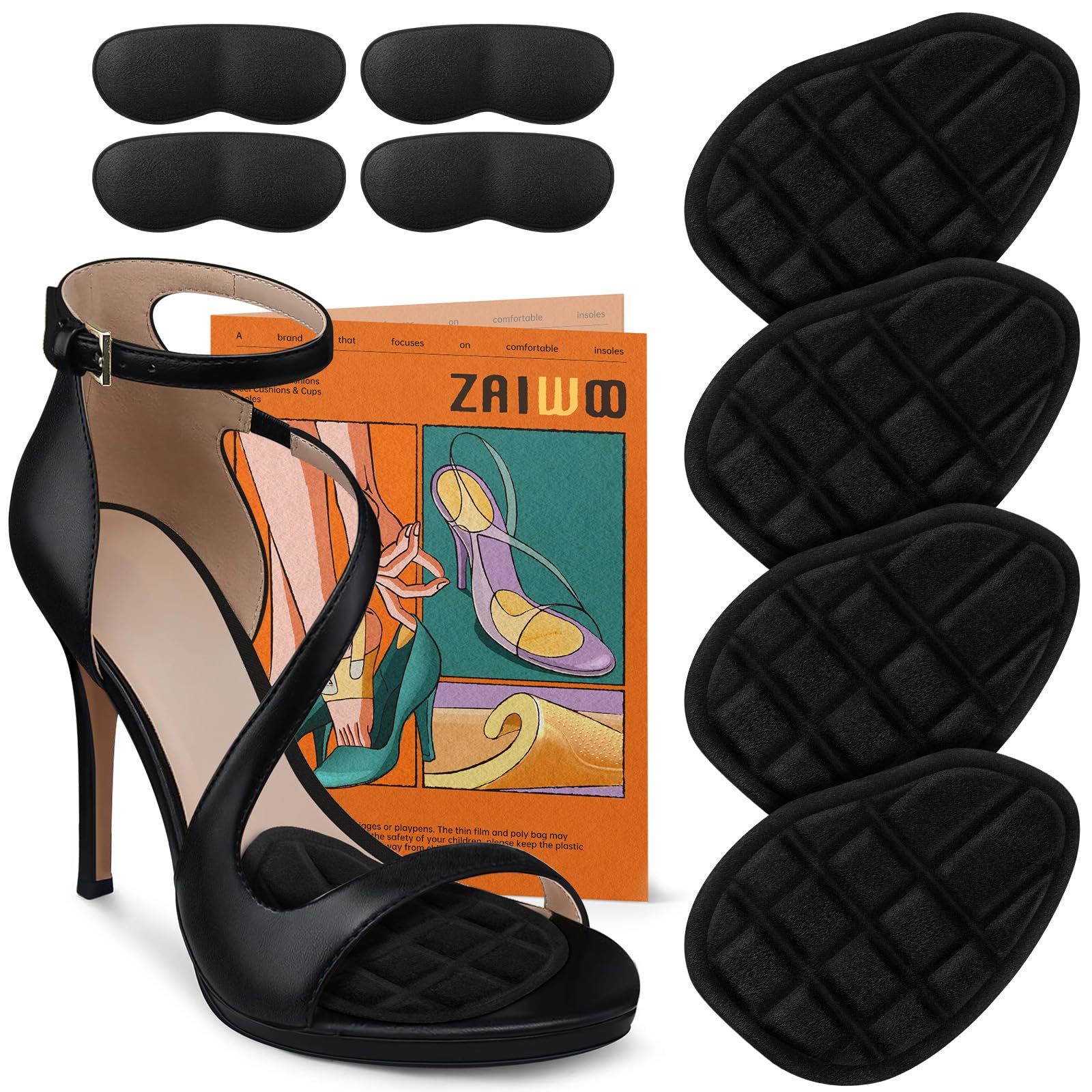
ZAIWOO combines a soft suede fabric top with a gel core, creating a cushion that feels gentle against bare feet even inside strappy sandals. The square-shaped pad is specifically contoured for the forefoot and includes a grid pattern on the gel side that grips the shoe liner, preventing forward sliding common with other stick-on pads. This set also includes two heel grips, making it a complete solution for high-heel discomfort.
Reviewers with narrow feet report that these pads effectively push the heel back into the shoe while cushioning the ball, which reduces the slipping that can cause blisters and calluses. The breathable suede fabric is a welcome feature for warm events where sweaty feet would normally degrade a plastic-backed pad. Multiple users confirmed the pads stayed secure through a full evening of dancing and partying at a wedding.
The gel is on the thinner side, which works well in tight pumps but may not provide enough cushion for someone with severe metatarsalgia or a high body weight. A few users described the padding as thin and wished for more thickness. If your primary need is light relief and slippage prevention in heels, this is a great choice. For heavy-duty shock absorption, consider a thicker felt pad.
Why it’s great
- Suede surface stays comfortable against bare skin
- Grid design prevents forward sliding in heels
- Includes heel grips for complete foot comfort
Good to know
- Thin gel may not satisfy severe pain needs
- Adhesive may loosen after repeated washing
5. Temiart Felt Metatarsal Foot Pads
Temiart offers essentially the same felt pad formula as the Wellsfoot option but at a slightly lower price point, making it the most economical entry into wool felt cushioning. At 1/4 inch thick with 18 pads per pack, you can afford to experiment with placement, swap them between shoes, and replace them often without worrying about cost. The bulk format is ideal for someone who needs pads in multiple locations — office shoes, gym bag, and car.
Users dealing with Morton’s neuroma confirmed that these pads took pressure off the affected toes and allowed pain-free walking in work boots. The adhesive sticks firmly to shoe inserts and liners, though some reviewers found that the pads flattened more quickly than expected under heavy use. A common workaround is to place the pad slightly higher (closer to the arch) than the recommended spot, which many found provided even better relief.
The main complaints center on adhesion durability. A few users reported the pads shifting during a full work day, especially when the bottom of the foot became sweaty. Baby powder can help keep the adhesive zone dry, but you may need to replace these more frequently than premium alternatives. For the cost per pad, this is still a solid budget-friendly choice for forefoot pain relief.
Why it’s great
- Very low cost per pair with 18 pads per pack
- Felt provides firm, structured pressure offload
- Good for distributing across multiple shoe pairs
Good to know
- Adhesive may shift in sweaty conditions
- Felt can flatten faster than premium counterparts
FAQ
Where exactly should I place a ball-of-foot cushion for metatarsalgia?
Can I wear felt metatarsal pads in high heels?
How often should I replace ball-of-foot cushions?
Final Thoughts: The Verdict
For most users, the cushion for balls of feet winner is the PediFix Pedi-gel because it combines proven podiatrist design with a reusable gel that keeps working across multiple shoe types. If you want adhesive-free security during high-impact activity, grab the Brison Metatarsal Pads. And for the structured, firm offload that neuroma patients need, nothing beats the Wellsfoot Felt Pads.

Mo Maruf
I created WellFizz to bridge the gap between vague wellness advice and actionable solutions. My mission is simple: to decode the research and give you practical tools you can actually use.
Beyond the data, I am a passionate traveler. I believe that stepping away from the screen to explore new environments is essential for mental clarity and physical vitality.