Our readers keep the lights on and my smoothie glass nicely filled. As an Amazon Associate, I earn from qualifying purchases.
The hunt for a cycling helmet when you have a larger head circumference often ends in frustration: straps dig in, the shell sits high on the crown, and that one-size-fits-most promise leaves you with pressure points after ten minutes on the saddle. Standard medium shells are built for heads in the 54–58cm range, leaving riders at 61cm and above with fewer safe, comfortable options that actually cover the occipital bone.
I’m Mohammad Maruf — the founder and writer behind WellFizz. I’ve spent countless hours analyzing shell geometries, retention systems, and safety certifications across over forty helmet models to find which ones genuinely accommodate cranial volumes beyond the norm without forcing a trade-off in ventilation or crash protection.
Whether you ride mountain single-track or commute through city traffic, this guide isolates the helmets that prove a large head does not have to mean a compromised fit. Read on for the definitive best cycling helmet for big heads based on real-world specs and verified buyer feedback.
How To Choose The Best Cycling Helmet For Big Heads
Not every helmet labeled “L/XL” actually fits a 62cm or 63cm head. The real test lies in the retention system’s range, the internal shape (round versus oval), and the depth of the rear occipital coverage. A helmet that sits too high leaves the back of the skull exposed; one that is too round pinches the temples.
True Circumference Range
Ignore the generic “one size fits most” marketing. Look for the explicit measurement — 59–63cm or 61–65cm. A dial that extends past 60cm of usable circumference is the first gatekeeper. Brands like Giro and Smith provide exact size charts; use a soft tailor’s tape at the widest part of your brow line before ordering.
Retention System Depth
A larger head demands a retention ring that cradles the occipital bone low on the skull, not just tightens around the crown. Helmet models with a wraparound cage (like Giro’s Roc Loc 5 or Smith’s V-120 adjuster) allow vertical tilt adjustment so the helmet sits level rather than tipped back.
Shell Geometry and Padding
Some helmets use a single EPS foam mold across multiple sizes, which creates a “hot spot” for big heads because the foam is thickest at the apex. Look for multi-density foam or a deeper interior channel system that keeps the helmet’s center of gravity low. Removable, washable pads also let you fine-tune for oval head shapes without buying a different model.
Quick Comparison
On smaller screens, swipe sideways to see the full table.
| Model | Category | Best For | Key Spec | Amazon |
|---|---|---|---|---|
| Smith Engage MIPS | Mountain | Trail riders needing deep rear coverage | Zonal Koroyd coverage, 20 vents | Amazon |
| POC Kortal | Mountain/Enduro | Extended temple and back-of-head protection | 63cm max circumference | Amazon |
| Giro Radix MIPS | Dirt/City | Adjustable visor and goggle storage | Roc Loc 5 fit system | Amazon |
| Thousand Heritage 2.0 | Commute/Skate | Stylish low-profile for oval heads | PopLock anti-theft channel | Amazon |
| Giro Register II MIPS | Road/Commute | Budget-friendly MIPS with wide fit | Universal Fit, 280g weight | Amazon |
| KALI PROTECTIVES Chakra Solo | Trail/City | Lightweight unit with break-away visor | 292g, Composite Fusion shell | Amazon |
| LAZER Tempo KinetiCore | Road/Entry | Entry-level rotational protection | TurnSys dial, LED-compatible | Amazon |
In‑Depth Reviews
1. Smith Engage MIPS

Smith layered Koroyd material across the critical impact zones, which allows the Engage to remain lightweight (around 370g in size L/XL) while providing more coverage depth at the rear than typical trail helmets. The MIPS system sits flush against the EPS liner, and the V-120 adjuster lets you tilt the entire shell forward or backward — a crucial feature for big heads where the helmet wants to ride up at the back. The 20 fixed vents keep air moving even at slow climbing speeds, and the Ionic+ lining resists odor during multi-hour rides.
Multiple users with head circumferences near 61cm report that the L/XL fits without pressure points, and the two-position visor lifts high enough to stash goggle straps. The single-layer webbing reduces bulk around the ears, which helps if you wear sunglasses with thicker temples. The magnetic buckle clicks shut quickly but some riders find it too easy to unclip accidentally when grabbing the chin strap.
Smith’s build quality holds up to repeated trail use: the ABS outer shell resists scuffs against branches, and the Koroyd columns absorb hard impacts without transferring force to the skull. If you run hot on climbs, the fixed venting pulls more air than many adjustable-vent helmets, though you lose the ability to close vents in cold rain.
Why it’s great
- Deep occipital coverage prevents mushroom-head look
- Koroyd + MIPS dual-layer protection in a lightweight build
- V-120 adjuster allows fore/aft tilt for perfect skull alignment
Good to know
- Fixed vents cannot be closed for cold weather rides
- Magnetic buckle may unclip under certain chin strap angles
- Color finishes appear slightly faded compared to marketing images
2. POC Kortal

POC engineered the Kortal specifically for mountain biking and enduro, which means the shell wraps lower around the temples and the occipital region than most road helmets. The size XL accommodates up to 63cm of head circumference, and the adjustable visor has a dedicated goggle clip that keeps straps off the crown. The EPS liner uses a multi-density construction that is thicker at the rear to prevent the helmet from tilting forward on descents.
Riders who complained about other helmets pinching their temporal bones find that the Kortal’s slightly rounder interior shape spreads clamping force evenly. The retention dial is large enough to operate with gloves on and clicks through a wide range. One common note: the helmet adds visual bulk to the head — the phrase “makes your head look huge” appears in feedback — but functionally the 440g weight is competitive for a full-coverage MTB shell.
Ventilation is adequate for trail riding but not as aggressive as the Smith Engage; you get steady airflow rather than a gale. The POC branding is subtle, and the Uranium Black Matte finish hides scratches well. Given the price point, buyers are paying for the extended safety zone at the back of the skull and the robust build that survives multi-season abuse.
Why it’s great
- Extended temple and rear coverage for enduro riders
- True XL sizing up to 63cm with no pinching
- Goggle clip and adjustable visor work seamlessly together
Good to know
- Bulky profile may appear oversized on smaller frames
- Ventilation is adequate but not class-leading
- Size up from your usual if you are between sizes
3. Giro Radix MIPS
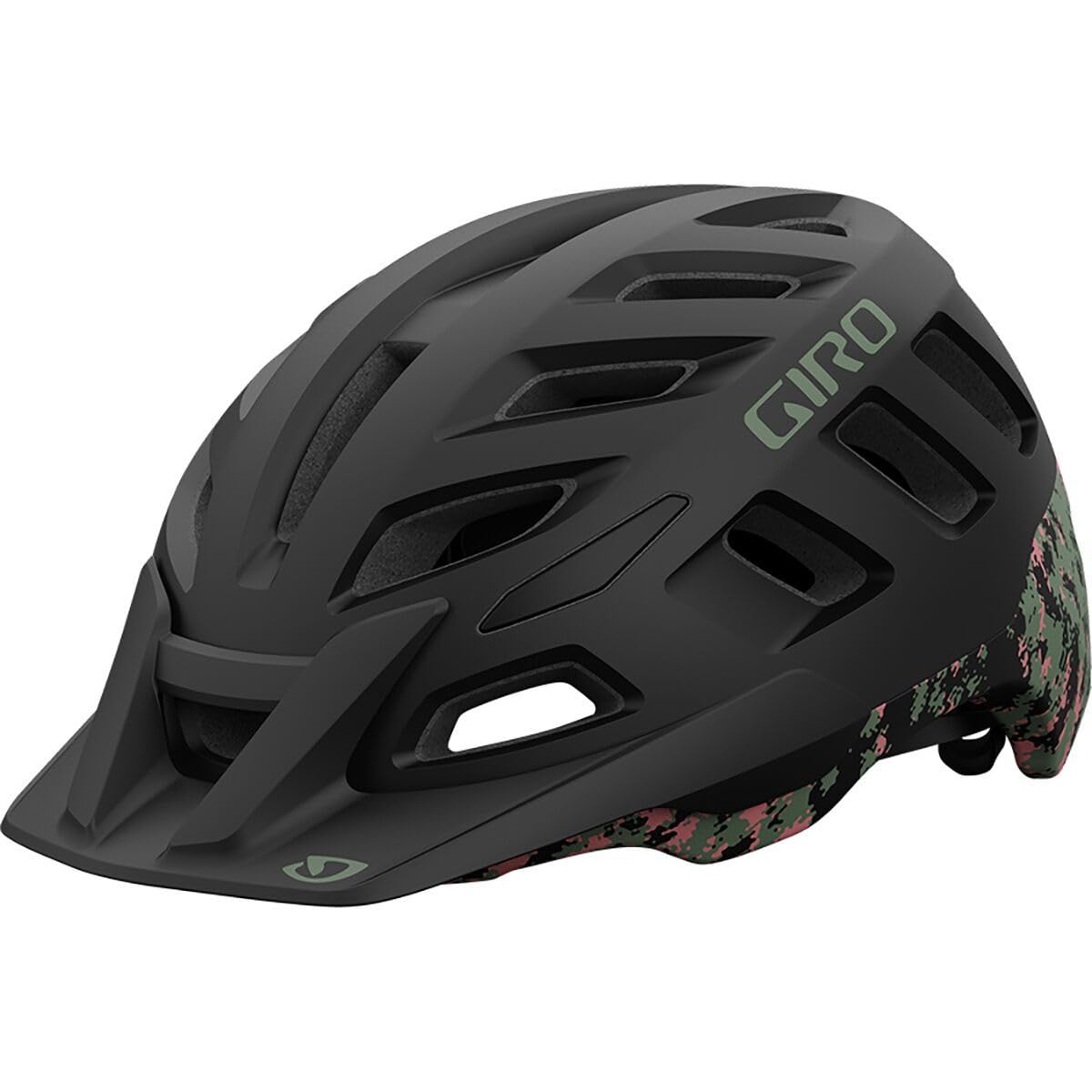
The Giro Radix MIPS uses the same Roc Loc 5 retention system found on Giro’s premium mountain helmets, which gives the rider independent control over fit tension and fore-aft tilt. For big heads, this means you can dial in the vertical angle so the front edge rests just above the brow rather than hovering too high. The hardshell with in-mold Hardbody lower wrap adds durability without the extra weight that a full hard-shell would bring to a 1.5-pound package.
The P.O.V. visor moves through indexed steps — three riding positions plus a high goggle-storage slot — all adjustable with one hand while moving. The internal channeling works with Giro’s Wind Tunnel system, which feels effective on hot days even if you have a larger cranium that generates more heat. A few riders note that the Y-connectors on the straps sit well away from the ears, and the MIPS liner integrates smoothly without adding internal bulk that would squeeze a 62cm head.
The Radix runs slightly shallower at the rear than dedicated enduro lids like the POC Kortal, so it suits cross-country and all-mountain riders more than pure downhill. If you like to wear a thin skull cap in cold weather, sizing up is recommended because the interior EPS is molded closely to the shell shape.
Why it’s great
- Roc Loc 5 offers fine-tuned tilt for proper skull alignment
- P.O.V. visor adjusts without removing gloves
- MIPS integrated into the fit system for seamless comfort
Good to know
- Rear coverage is not as deep as enduro-specific helmets
- May need zip ties to secure goggle guides permanently
- Difficult to find discounted colors at times
4. Thousand Heritage 2.0

The Thousand Heritage 2.0 stands out for its low-profile retro aesthetic that does not scream “cycling gear,” making it a top choice for commuters who value style alongside function. Its shape is notably more oval than round, which fits riders with longer front-to-back head dimensions that often struggle with helmets that pinch at the temples. The Dial Fit System tightens smoothly and locks securely, and the included leather interior padding helps the helmet conform to head contours without adding hot spots.
Ventilation is a pleasant surprise for a helmet this compact: the internal channeling creates a “mini air conditioner” effect, as one reviewer described, even in 90°F Florida heat. The PopLock channel on the rear allows you to thread a U-lock through for secure bike-parking, and the magnetic buckle is satisfying to snap one-handed. Keep in mind that the size Medium (58-61cm) is the largest option, so riders with heads above 62cm should try it first or check if the helmet runs large.
The Heritage 2.0 is CPSC and EN 1078 certified but does not include MIPS or equivalent rotational management, which is a trade-off for its svelte look. The fixed visor rim provides sun shade for the eyes without the adjustability of mountain bike visors, and the rear reflector slot is a nice touch for low-light commuting.
Why it’s great
- Oval shape ideal for longer heads that dislike temple pinch
- PopLock lets you secure helmet with your bike lock
- Excellent airflow for a low-profile commuter design
Good to know
- No MIPS rotational protection system
- Maximum size Medium fits up to 61cm only
- Magnetic clasp can be tricky until you learn the angle
5. Giro Register II MIPS
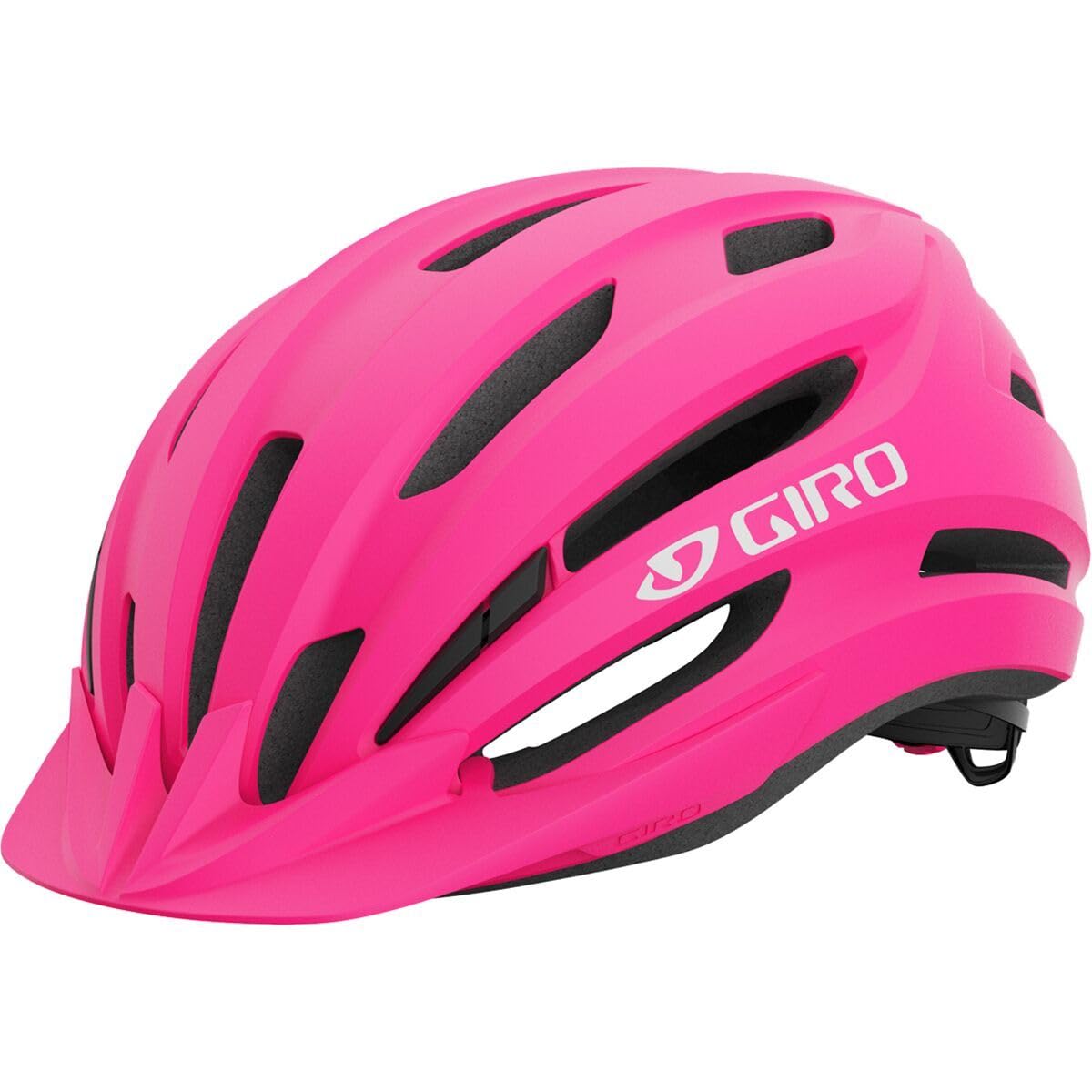
At just under 280g, the Register II MIPS is one of the lightest helmets in this guide, and it achieves that weight while keeping the MIPS slip-plane liner and Giro’s reliable two-piece hardshell construction. The “Universal Fit” shell shape is designed to accommodate a wider range of head shapes straight out of the box, with an easily adjustable dial at the rear that provides a secure hold without needing to swap pads. The in-mold Hardbody lower wrap reinforces the EPS foam against daily wear without adding grams.
Buyers with large heads specifically note that the fit is “very accommodating” compared to other brands, and the MIPS layer does not create a tight squeeze at the temples. The 20 vents channel air effectively across the scalp, making it a solid choice for road cyclists who ride in hot climates. The visor is integrated and non-adjustable, which is fine for road use but less ideal for mountain bikers who want to block sun at steep angles.
The Roc Loc dial, while smooth, has been reported to feel slightly fragile after two to three years of daily use — a trade-off for the ultra-light build. The Register II lacks the vertical tilt adjustment of the pricier Giro Radix, so the fit angle is determined entirely by the pad thickness and dial tension.
Why it’s great
- Extremely light at 280g without sacrificing MIPS protection
- Universal Fit shell works for both round and oval head shapes
- Excellent value for a MIPS-equipped road helmet
Good to know
- Roc Loc dial may wear out after 2-3 years
- Visor is fixed and not adjustable for mountain biking
- Shell is slightly large-looking for smaller riders
6. KALI PROTECTIVES Chakra Solo
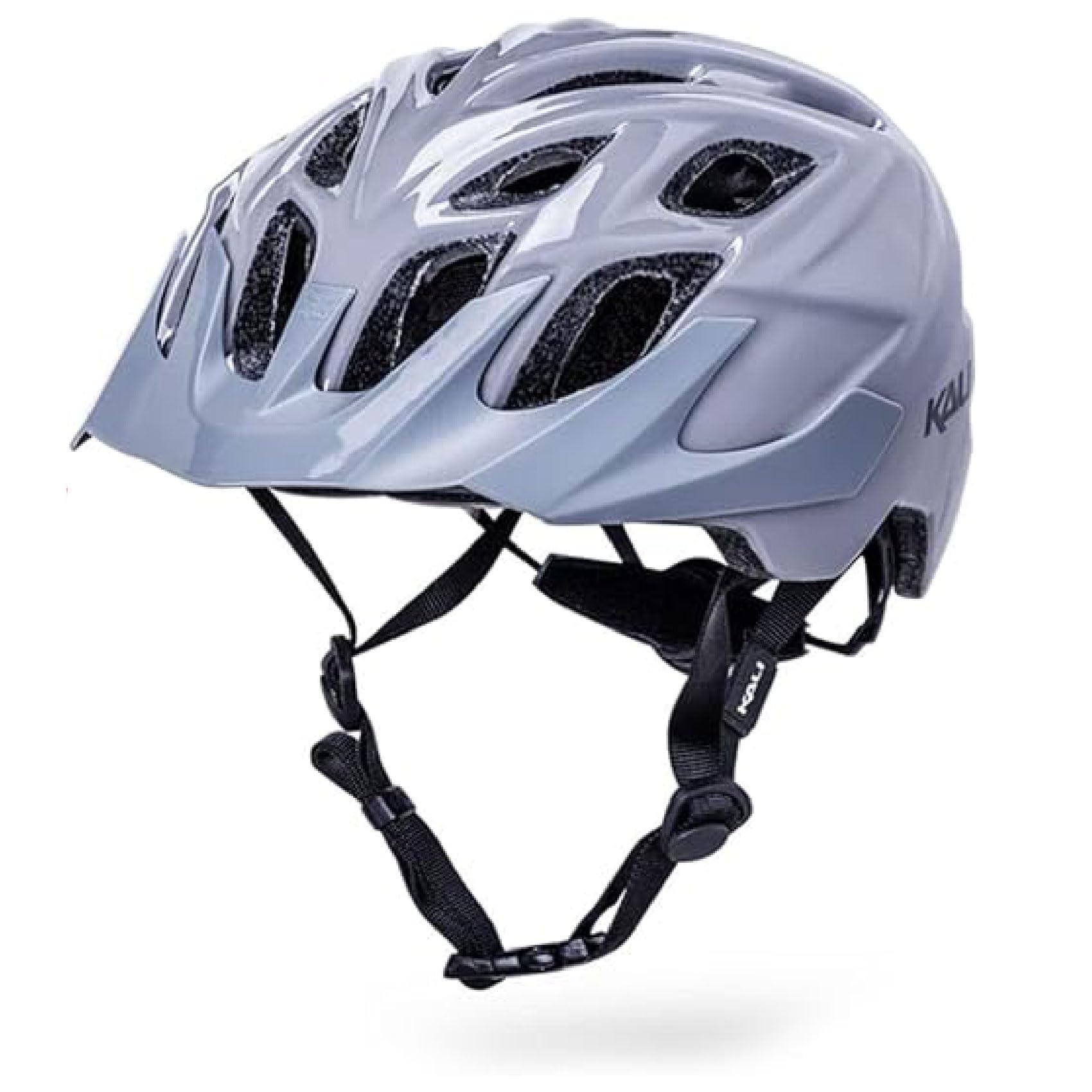
The Chakra Solo uses Kali’s Composite Fusion process that fuses the polycarbonate shell directly to the EPS foam, resulting in a helmet that weighs only 292 grams while maintaining impact energy absorption comparable to heavier shells. For big-headed riders, the reduced mass at the crown means less neck fatigue on long climbs. The dial closure system provides a snug hold without excessive clamping force, and the adjustable slider at the Y-section keeps the straps from shifting.
A break-away visor is included — useful for mountain trail debris without risking neck injury in a crash. The padding is removable and machine-washable, which helps control odor after sweaty sessions. Some users with sensitive scalps report minor irritation from the rear pad, but the overall consensus is that the helmet fits a large head comfortably straight out of the box. The internal shape is slightly round, favoring those with wider skull profiles over narrow ovals.
Ventilation is handled by 21 ports, and the airflow is sufficient for moderate trail riding but not as robust as Giro’s Wind Tunnel designs. The lower price point positions the Chakra Solo as a solid entry-level trail option, though the Single-piece composite construction means there is no sacrificial layer like MIPS for rotational impact — only the fusion-bonded EPS/PC shell.
Why it’s great
- Sub-300g weight reduces neck load on long days
- Composite Fusion construction boosts impact absorption
- Removable, washable padding for odor control
Good to know
- No MIPS or dedicated rotational management system
- Round internal shape may not suit oval head shapes
- Rear pad can irritate sensitive scalps after hours of use
7. LAZER Tempo KinetiCore
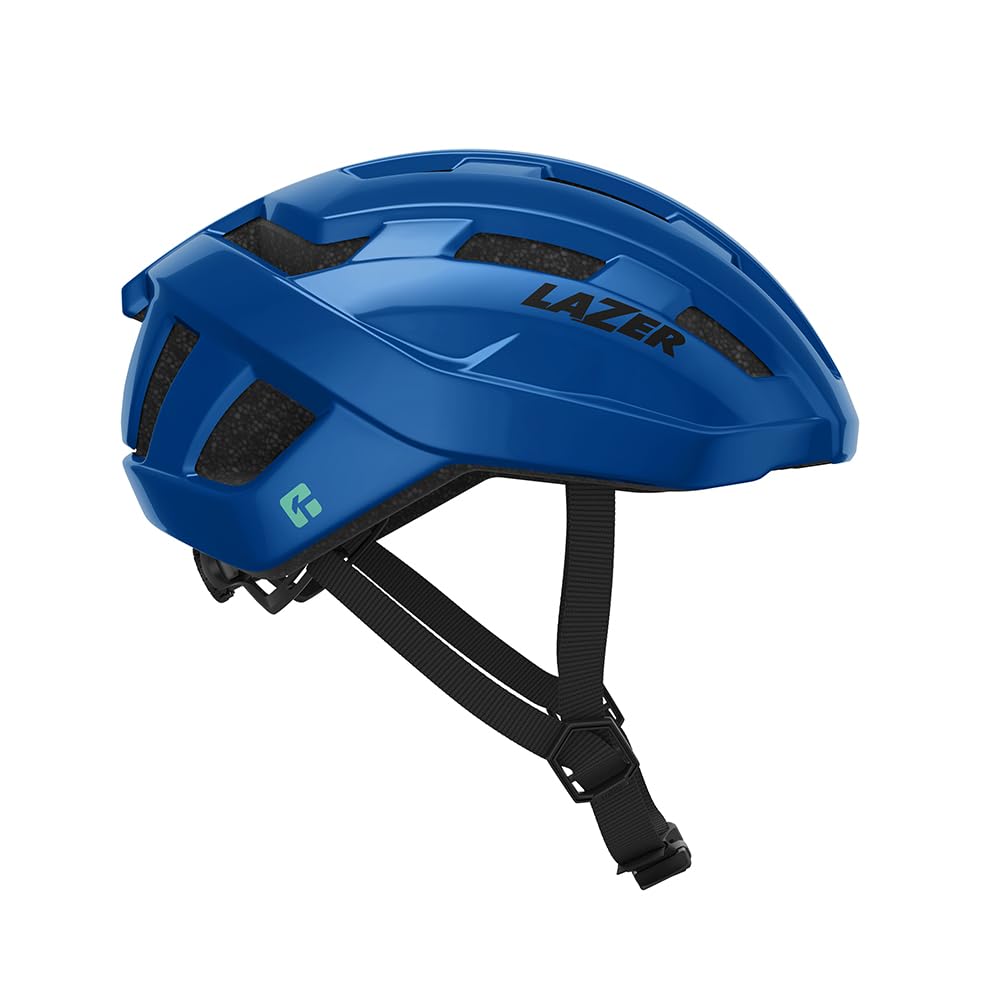
LAZER’s Tempo KinetiCore removes the need for a separate MIPS layer by integrating crushable EPS cones into the helmet liner itself, which manage rotational forces during angled impacts while keeping weight down to 475g. The TurnSys adjustment dial is large and clicks into place easily, accommodating head sizes up to around 61cm comfortably. For riders at the top end of the size range, the internal shape leans oval, which helps avoid temple pressure.
The helmet includes a Universal Lazer LED light mount on the rear, boosting visibility in low light without needing aftermarket clips. Ventilation scores high marks from users who ride in 90°F heat, thanks to deep internal air channels that flush hot air out the rear exhaust ports. The polycarbonate outer shell meets CPSC and CE EN 1078 standards, and the KinetiCore system is rated by Virginia Tech’s helmet testing protocol.
Feedback for big-headed riders is mostly positive, but a few note that if your head is on the rounder side, the oval interior can create slight pressure at the front and rear without discomfort at the temples. The fixed visor is minimalist and integrated, offering basic sun shade rather than full goggle accommodation. For the price, the KinetiCore technology provides a genuine alternative to entry-level MIPS helmets without the added cost.
Why it’s great
- KinetiCore offers rotational protection without extra MIPS weight
- TurnSys dial is glove-friendly and provides secure hold
- LED light compatible out of the box for night visibility
Good to know
- Oval internal shape may not suit round-headed riders
- Fixed visor lacks adjustability for goggle storage
- All sizes run somewhat shallow in rear coverage
FAQ
How do I measure my head circumference for a cycling helmet?
Will a mountain bike helmet fit my big head better than a road helmet?
Do I need MIPS for commuting on a big head?
Final Thoughts: The Verdict
For most users, the best cycling helmet for big heads winner is the Smith Engage MIPS because it combines deep occipital coverage, zonal Koroyd impact absorption, and the V-120 tilt adjustment that lets you customize the fit for a 62cm+ head without pressure points. If you want the most comprehensive rear and temple protection for enduro riding, grab the POC Kortal. And for a budget-friendly MIPS option that weighs only 280g and fits a wide range of head shapes, nothing beats the Giro Register II MIPS.

Mo Maruf
I created WellFizz to bridge the gap between vague wellness advice and actionable solutions. My mission is simple: to decode the research and give you practical tools you can actually use.
Beyond the data, I am a passionate traveler. I believe that stepping away from the screen to explore new environments is essential for mental clarity and physical vitality.