Our readers keep the lights on and my smoothie glass nicely filled. As an Amazon Associate, I earn from qualifying purchases.
Protecting your baby’s developing ears from loud environments — whether it’s a monster truck rally, a Fourth of July fireworks display, or a long-haul flight — is a non-negotiable part of early parenting. The wrong pair of earmuffs can slip off, pinch a sensitive head, or fail to block enough sound, leaving your child distressed and at risk for hearing damage.
I’m Mohammad Maruf — the founder and writer behind WellFizz. My approach to this guide was to dig deep into real customer feedback, official certification data (ANSI, CE, SNR, and NRR ratings), and the specific fit requirements for infants and toddlers to separate the truly protective earmuffs from the merely decorative ones.
After sifting through hundreds of verified purchase reports and cross-referencing safety certifications, I’ve assembled the definitive guide to the best ear protection for babies on the market today.
How To Choose The Best Ear Protection For Babies
Selecting infant hearing protection goes beyond picking the cutest color. You need to evaluate three core factors: the noise reduction rating, the physical fit and comfort, and the quality of the materials against your baby’s delicate skin. Earmuffs that score poorly on any one of these will end up discarded in the diaper bag or, worse, removed by a fussy baby.
Noise Reduction Ratings (NRR vs SNR)
The NRR (North American standard) and SNR (European standard) tell you how many decibels the earmuffs can subtract from ambient noise. For babies, a minimum NRR of 22 dB is recommended for environments like concerts or lawnmowers. The highest-rated pair in this guide, the BANZ Baby Earmuffs, delivers an impressive NRR of 31 dB, which is enough to make a jet engine sound like a household fan.
Fit, Weight, and Pressure on the Fontanel
A baby’s skull has soft spots (fontanels) that remain open for months after birth. Heavy or tight-fitting earmuffs can cause discomfort or even pressure pain. Look for low-profile designs with wide, padded headbands and soft foam-filled ear cups that distribute weight evenly. Models like the Alpine Muffy Baby are specifically engineered to avoid any hard parts contacting the top of the head.
Adjustability and Growth Range
Babies grow fast, and buying a new pair every three months is impractical. The best earmuffs feature telescoping headbands that adjust to head circumferences from about 15 inches up to 20 inches. Some offer a dual-system with both a headband and an elastic strap for newborns. The JLab JBuddies, for example, can even fit some adults, giving you years of use from a single investment.
Quick Comparison
On smaller screens, swipe sideways to see the full table.
| Model | Category | Best For | Key Spec | Amazon |
|---|---|---|---|---|
| BANZ Baby Earmuffs & Sunglasses | Premium | Maximum protection for outdoor events | NRR 31 dB | Amazon |
| Alpine Muffy Baby | Premium | Newborns and sensitive sleepers | SNR 23 dB | Amazon |
| JLab JBuddies Protect | Mid-Range | Multi-age families (infant to adult) | Fits 0 to adult | Amazon |
| 2-in-1 Baby Ear Muffs | Mid-Range | Travel with newborns (1-36 months) | 2 headbands included | Amazon |
| ZIPZ Baby & Toddler Earmuffs | Budget-Friendly | Toddler shows with interchangeable shells | ANSI certified | Amazon |
In‑Depth Reviews
1. BANZ Baby Earmuffs Infant and Toddler Hearing Protection
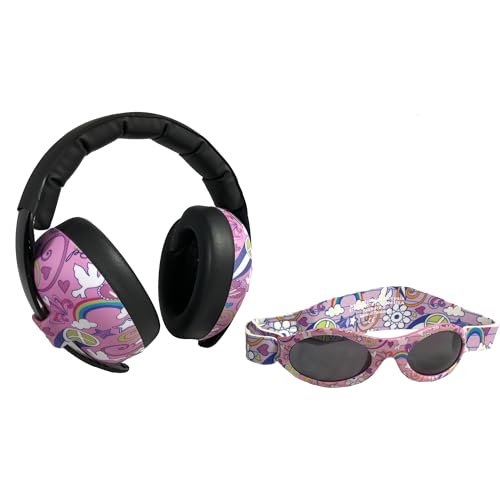
The BANZ Baby Earmuffs deliver the highest noise reduction rating in this entire guide — an industry-leading NRR of 31 dB. That level of attenuation means a baby can nap through a tractor pull or a Blue Angels flyover without flinching, as confirmed by multiple verified reviews of real-world use at loud outdoor events. The low-profile design sits close to the head, which reduces leverage and keeps the earmuffs from being easily knocked off by a mobile toddler.
This set is packaged with matching Adventure BANZ sunglasses (Category 3 UV protection), making it a complete travel kit for sunny days. The neoprene strap and embedded rubber nose bridge on the sunglasses are durable, though some parents noted the glasses can leave red marks on larger-faced babies. The headphones themselves feature super-soft padding that parents consistently describe as comfortable for extended wear, even on sensitive infants as young as four months old.
The biggest trade-off is the size range — several reviews mention that by eight months, babies with large heads are already on the maximum extension, suggesting the “up to 24 months” claim can be optimistic for big infants. No carrying case is included, so you will need a separate pouch for travel. But for families who prioritize raw decibel reduction, especially for extreme noise events like airshows or motorsports, this is the most effective shield you can buy.
Why it’s great
- Highest NRR (31 dB) in our roundup — unmatched noise blocking.
- Includes premium baby sunglasses with 100% UV protection.
- Low-profile, non-bulky design reduces accidental knock-offs.
Good to know
- May reach maximum fit adjustment before the stated age limit for large-headed babies.
- No carrying pouch included for travel storage.
- Sunglasses can leave red marks on the nose bridge with extended wear.
2. Alpine Muffy Baby Ear Protection for Babies and Toddlers
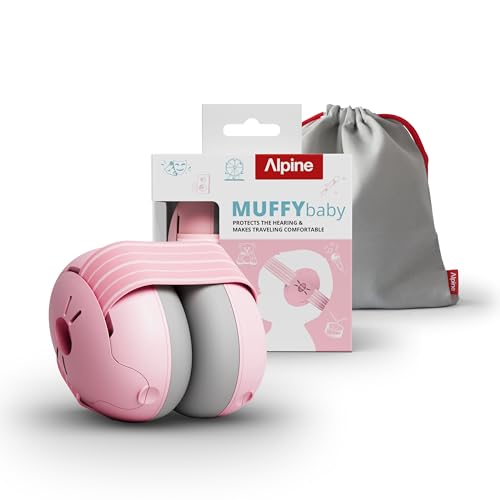
The Alpine Muffy Baby stands out for its meticulous safety engineering — the ear cups are constructed with multiple layers of noise-reducing foam and soft padding, and the design intentionally avoids any hard parts that could press on a baby’s soft fontanel. The adjustable headband fits head circumferences from 15.4 to 19.7 inches, covering newborns up to about four years old. Parents report that even four-month-olds wear them comfortably for entire flights and sleep sessions without trying to pull them off.
Certified to both CE and ANSI standards with a 23 dB SNR rating, these earmuffs are not the absolute highest in attenuation, but they offer a balanced profile that muffles loud environmental noise while still allowing a parent’s voice or a nearby conversation to be vaguely audible — a useful feature for maintaining calm during travel. The anti-slip headband stays put even during active head-turning, and the carrying pouch is included. The brand’s Dutch design legacy of 25 years in hearing protection is evident in the thoughtful, high-quality materials.
There is a minor assembly hurdle: the side panels are initially difficult to open (one reviewer needed a key and a tutorial video). The fit can also be finicky — the earmuffs tend to slip off if the baby is lying on their back, making them better suited for upright activities like stroller rides and car travel rather than crib naps. But for gentle, pressure-free protection that parents trust on sensitive newborn heads from day one, this is the premium choice.
Why it’s great
- No hard parts near the fontanel — designed specifically for infant skull sensitivity.
- Grows with baby from newborn to 4 years with a generous 4-inch adjustment range.
- Anti-slip headband stays secure during active movement.
Good to know
- Initial assembly of the side panels can be frustrating and require tools.
- Earmuffs may slip off easily when the baby is lying on their back.
- 23 dB SNR is adequate but not the highest noise reduction available.
3. JLab JBuddies Protect Earmuffs

The JLab JBuddies Protect is a unicorn in the baby accessories space: a pair of hearing protection earmuffs that fits everyone from a toddler to a full-grown adult. Multiple verified reviews confirm that these headphones are comfortable for toddlers at concerts and also fit the parents who try them on, thanks to a generously adjustable telescoping headband. The build quality is noticeably sturdier than the typical budget pair, withstanding being thrown around by toddlers without any damage.
These earmuffs pack down surprisingly small for their size range, making them a go-to for diaper bags and travel backpacks. They are particularly well-suited for neurodivergent children with sound sensitivities — one family bought four pairs to keep in different locations because their five-year-old found them so comforting. The earcups are padded with a soft foam that doesn’t cause overheating or pressure points, which is a common complaint with stiffer, budget-priced alternatives.
The trade-off for the universal fit is that the design is less specialized for newborns — there is no extra-soft strap system for babies under six months, and the NRR is not advertised as high as the BANZ unit (most users estimate it around 22-25 dB based on comfort at concerts and band events). If you need a single pair of earmuffs that can be shared across siblings of different ages or even used by an adult in a pinch, the versatility of the JLab JBuddies is unmatched.
Why it’s great
- Adjustable to fit toddlers, older children, and adults — extreme versatility.
- Sturdy construction survives rough handling by active toddlers.
- Compact foldable design packs easily into a travel bag.
Good to know
- No published NRR or SNR rating — attenuation is based on user experience, not certified data.
- Less specialized fit for newborns under six months without a dedicated strap.
- Not the highest noise reduction; best for moderate-level noise environments.
4. 2-in-1 Baby Ear Muffs Noise Protection

This 2-in-1 set from a specialist baby brand solves the trickiest problem with infant earmuffs: getting a secure seal on a tiny head. The package includes two headband options — a traditional adjustable headband and an elastic strap that wraps under the chin or around the back of the head — allowing you to choose the configuration that stays put best on your particular baby. The foam ear cups are lightweight (the entire unit weighs just 8 ounces) and pack flat into the included carrying bag.
Verified reviews highlight the comfort factor heavily — a six-month-old wore them through an entire Disney trip without trying to remove them, and a two-month-old fit comfortably where adult ear protection was too large. The noise reduction is sufficient for common loud environments like sporting events, loud music at church, and fireworks. The brand claims the ear muffs work for head circumferences up to the 99th percentile, which is reassuring for parents of large-headed babies who are often left out of standard sizing.
The downside is that the elastic headband can be finicky to put on a squirming baby — it requires a two-person job or a bit of practice. Some parents found the elastic strap more annoying than helpful and simply used the traditional headband alone. Additionally, there is no official NRR or SNR certification printed on the packaging, so you are trusting user experience reports rather than standardized lab testing for the actual decibel reduction.
Why it’s great
- Two headband options (traditional + elastic strap) for the best possible fit on tiny heads.
- Ultra-lightweight at 8 ounces, ideal for travel and long wear.
- Accommodates 99th percentile head sizes without requiring maximum extension.
Good to know
- Elastic strap can be annoying to attach and may require a helper.
- No formal NRR or SNR certification listed on the product.
- Noise reduction performance is based on user reports, not standardised lab data.
5. ZIPZ Baby & Toddler Earmuffs
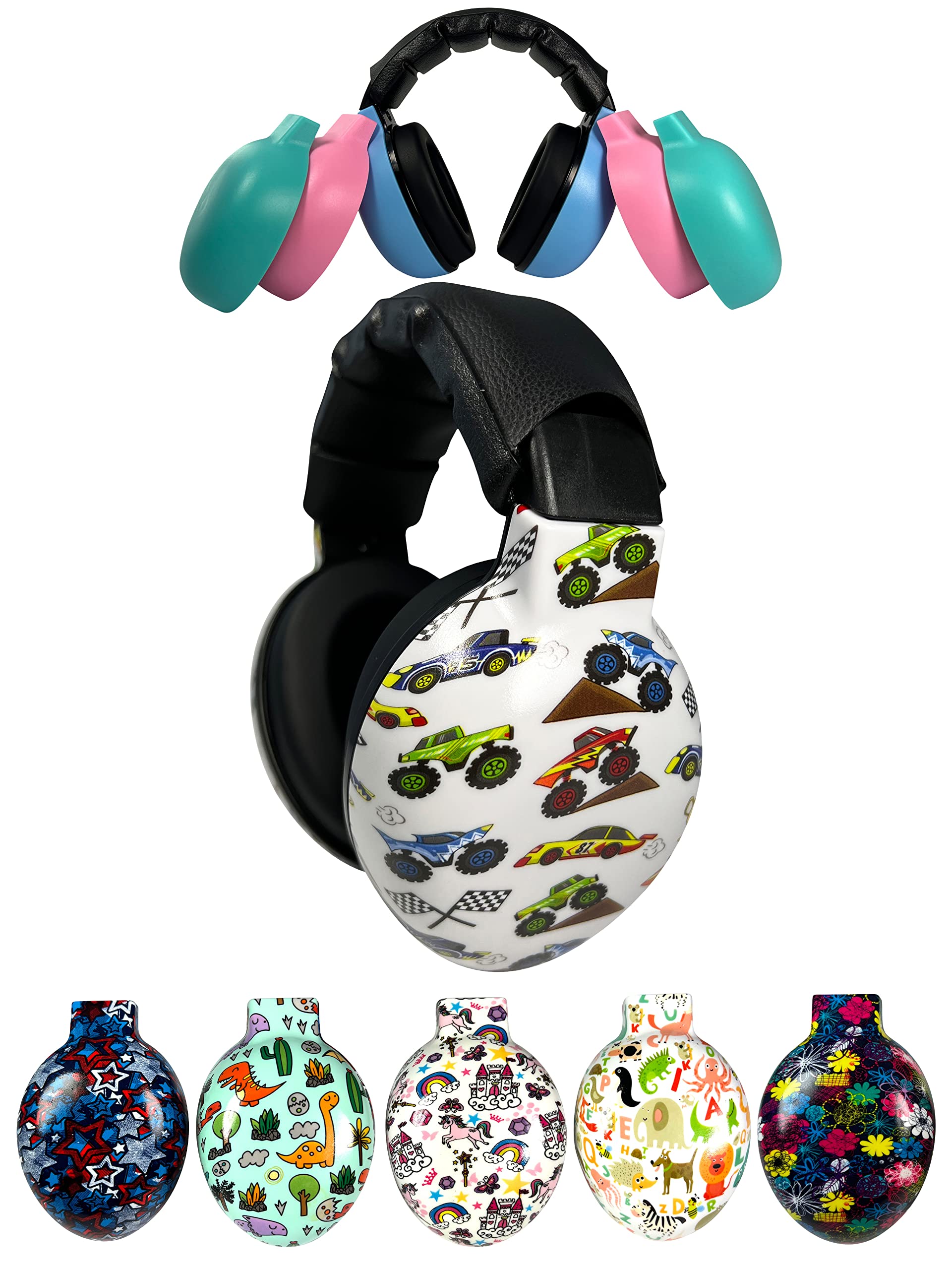
The ZIPZ Baby & Toddler Earmuffs are the most visually engaging option on this list, featuring interchangeable outer shells with fun designs like race cars and monster trucks. For toddlers who resist standard plain-colored earmuffs, the novelty of a themed shell can mean the difference between a tantrum and willing acceptance. Verified reviews confirm exactly this — one two-year-old who was initially hesitant at a monster truck rally happily asked for his “headphones” after the loud vehicles started up.
These earmuffs are ANSI-certified, providing a baseline assurance of effective noise reduction. The headband is easy to adjust and fits toddlers from about one year up to four years. The padding is adequate for short-to-medium duration wear, and several parents noted that the earmuffs were perfect for loud children’s shows without causing overheating or discomfort. The design is also affordable enough that losing a shell or two is not a financial catastrophe.
The main complaint across multiple reviews is that the decorative shells can come off too easily. One parent lost the monster truck covers during a show, and another reported that only pink shells arrived despite the listing showing multiple colors. The build quality feels lighter than the premium BANZ or Alpine units, which makes sense given the budget-friendly position. For parents who need a fun, functional, and certified pair for occasional toddler events without breaking the bank, the ZIPZ is a smart pick.
Why it’s great
- Interchangeable themed shells that make toddlers excited to wear hearing protection.
- ANSI-certified, providing verified noise reduction performance.
- Affordable entry point — great for first-time buyers or as a backup pair.
Good to know
- Decorative covers can detach and be lost during active use.
- Lighter build quality compared to premium competitors.
- May not include all advertised shell colors; color availability can be inconsistent.
FAQ
Can my newborn wear ear protection earmuffs?
What is the difference between NRR and SNR for baby earmuffs?
How do I know if the earmuffs fit my baby correctly?
Final Thoughts: The Verdict
For most users, the best ear protection for babies winner is the BANZ Baby Earmuffs because it offers the highest certified noise reduction (NRR 31 dB) in a comfortable, low-profile package that comes with bonus UV-protective sunglasses. If you want a gentler, fontanel-safe design that grows with your baby from newborn through four years, grab the Alpine Muffy Baby. And for the ultimate value and versatility — a single pair of earmuffs that fits everyone from infants to adults — nothing beats the JLab JBuddies Protect.

Mo Maruf
I created WellFizz to bridge the gap between vague wellness advice and actionable solutions. My mission is simple: to decode the research and give you practical tools you can actually use.
Beyond the data, I am a passionate traveler. I believe that stepping away from the screen to explore new environments is essential for mental clarity and physical vitality.