Our readers keep the lights on and my smoothie glass nicely filled. As an Amazon Associate, I earn from qualifying purchases.
That heavy, bloated feeling after a meal isn’t just uncomfortable—it’s a signal that your digestive system needs support. Whether it’s occasional gas, irregularity, or a general lack of energy tied to gut health, the right supplement can restore balance without requiring a complete diet overhaul. The market is flooded with options, but not all deliver on their promises, making it essential to separate effective formulations from marketing fluff.
I’m Mohammad Maruf — the founder and writer behind WellFizz. I’ve spent countless hours analyzing the formulations, CFU counts, enzyme activity levels, and third-party testing standards of digestive aids to build this guide around what actually works for real people.
After cross-referencing lab reports and thousands of verified user experiences, I’ve narrowed the field to five standout products that define the current standard for the best digestive aid you can buy for consistent daily relief.
How To Choose The Best Digestive Aid
Selecting a digestive supplement requires a clear understanding of what your body actually needs. Probiotics, prebiotics, and digestive enzymes serve different functions, and picking the wrong type wastes money and delays relief. Here’s what to evaluate before you buy.
Strain Diversity vs. CFU Count
A product boasting 100 billion CFUs is impressive only if those strains can survive stomach acid. Look for multiple strains—Lactobacillus, Bifidobacterium, and Bacillus coagulans—as they colonize different areas of the digestive tract. A blend of 10 to 30 strains generally offers broader support than a single strain with sky-high CFUs that may not reach the intestines alive.
Delivery Mechanism and Survivability
Acid-resistant capsules, enteric coatings, or delayed-release technologies dramatically improve the odds that live cultures reach your gut. Refrigeration requirements often signal fragile strains, whereas shelf-stable spore-forming bacteria like Bacillus subtilis can handle storage at room temperature without degrading.
Probiotics vs. Digestive Enzymes
Probiotics repopulate gut bacteria for long-term microbiome balance, while enzymes break down fats, proteins, and carbohydrates during digestion. If you experience bloating immediately after meals, enzymes may provide faster relief. For chronic irregularity or immune support, probiotics are typically the better foundation.
Quick Comparison
On smaller screens, swipe sideways to see the full table.
| Model | Category | Best For | Key Spec | Amazon |
|---|---|---|---|---|
| Physician’s CHOICE Probiotics 60B | Probiotic + Prebiotic | All-around gut health & regularity | 60B CFU, 10 strains, organic prebiotics | Amazon |
| MaryRuth’s Organic Probiotic Gummies | Probiotic Gummy | Gentle daily support, picky eaters | 5B CFU, USDA Organic, vegan pectin | Amazon |
| Integrative Therapeutics Similase | Digestive Enzyme | Post-meal bloating & heavy meal relief | Broad-pH enzyme blend, vegan | Amazon |
| Nature Target Probiotics 100B | Multifunctional Probiotic | High CFU diversity & colon cleanse | 100B CFU, 30 strains, prebiotic fiber | Amazon |
| Nature’s Nutrition Probiotic Gummies | Probiotic Gummy | Fast-acting gas & bloating relief | 6 unique strains, orange flavor, 120 count | Amazon |
In‑Depth Reviews
1. Physician’s CHOICE Probiotics 60 Billion CFU

Physician’s CHOICE strikes the hardest-to-find balance between potency and practicality. Each capsule delivers 60 billion CFUs across ten clinically studied strains, paired with organic prebiotics that feed the beneficial bacteria already living in your gut. The acid-resistant capsule technology ensures the majority of those 60 billion survive the stomach environment and colonize the intestines where they matter most.
Users consistently report a reduction in bloating within the first week and improved bowel regularity after about a month. The non-refrigerated bottle simplifies daily use, and the one-capsule serving size makes it easy to remember. For those managing post-gallbladder issues or chronic constipation, this formula has shown remarkable results when paired with a fiber supplement taken at a separate time of day.
Third-party testing for purity and potency adds a layer of trust that many budget probiotics lack. The price falls solidly in the mid-range tier, but the combination of strain diversity, survivability engineering, and clinical backing creates a value proposition that outperforms cheaper alternatives over a full month of use.
Why it’s great
- Acid-resistant capsules maximize live delivery to the gut
- Organic prebiotics feed both the supplement strains and native microbiome
- Backed by third-party purity testing and physician-reviewed research
Good to know
- Higher price per bottle than entry-level probiotic options
- Some users may need a second capsule for stronger digestive issues
2. MaryRuth’s USDA Organic Probiotic Gummies

MaryRuth’s stands apart with its USDA Organic certification and a 5 billion CFU dose of Bacillus subtilis, a spore-forming strain known for exceptional survivability through stomach acid. The strawberry-flavored gummy form eliminates the swallowing difficulty some people have with capsules, making it particularly suitable for those who find pills unpleasant or who have gluten allergies requiring additive-free formulations.
Clinical research on Bacillus subtilis supports its role in alleviating occasional gastrointestinal irregularity and promoting healthy stool consistency, which matches the verified user feedback.
The serving size of two gummies delivers a more modest CFU count compared to capsule-based competitors, but the strain choice prioritizes reliability over raw numbers. The Clean Label Project Certified and B Corp status reinforce the brand’s commitment to purity, which justifies the premium pricing for buyers who prioritize organic sourcing and transparency.
Why it’s great
- USDA Organic certification ensures no synthetic pesticides or GMOs
- Vegan pectin base avoids gelatin and artificial colors
- Spore-forming Bacillus subtilis survives stomach acid without enteric coating
Good to know
- Lower CFU count may not suit those with severe microbiome imbalances
- Two-gummy serving can be cumbersome for capsule users
3. Integrative Therapeutics Similase Digestive Enzymes
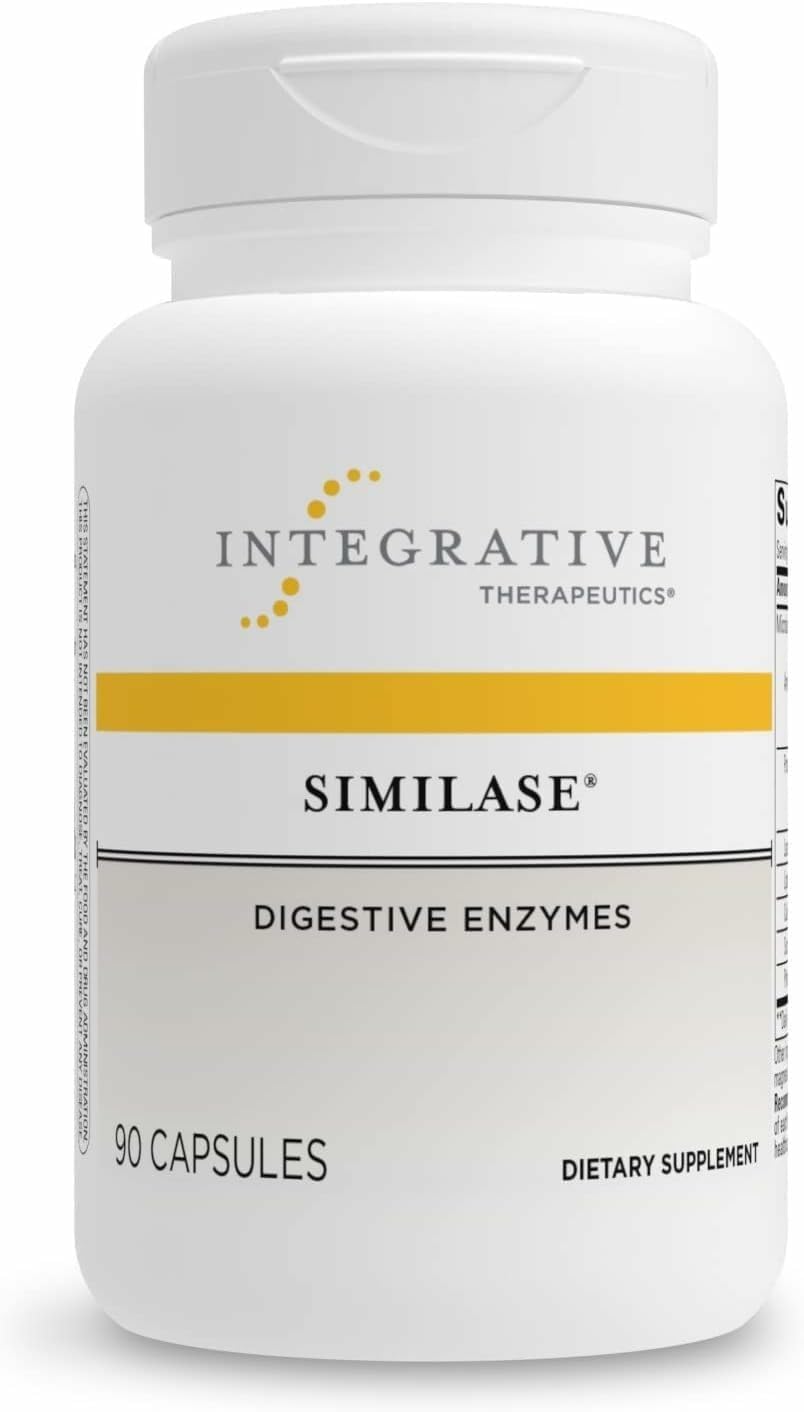
Similase is not a probiotic—it is a comprehensive digestive enzyme blend designed to break down fats, proteins, carbohydrates, and dairy components on the spot. The unique broad-pH formulation means these enzymes remain active throughout the entire digestive tract, from the acidic stomach to the alkaline small intestine, which is a rarity among enzyme supplements.
Users with conditions like diverticulitis, post-inflammatory sensitivity, or difficulty digesting raw vegetables have reported immediate relief after taking one or two capsules before or up to 30 minutes after a meal. The vegan sourcing makes it suitable for plant-based diets, and the doctor-recommended reputation of Integrative Therapeutics adds clinical credibility that consumer brands often lack.
This product is best positioned as a companion to, not a replacement for, a probiotic routine. For someone experiencing sharp cramping or bloating immediately after eating high-fat or heavy meals, Similase provides near-instant functional support while probiotics work on long-term microbiome balance.
Why it’s great
- Active across the full digestive pH spectrum for complete coverage
- Clinician-trusted brand with over 25 years of market presence
- Fast relief for post-meal discomfort without requiring daily build-up
Good to know
- Not a probiotic—will not repopulate gut bacteria long-term
- May not be suitable for those with active stomach ulcers without medical guidance
4. Nature Target Probiotics 100B for Women & Men

Nature Target packs an enormous 100 billion CFUs and 30 distinct strains into a single enteric-coated capsule, creating one of the most diverse probiotic profiles available at a budget-friendly price point. The proprietary colon cleanse blend adds green tea, capsaicin, and apple cider vinegar extracts, while the fruit and vegetable complex aims to provide antioxidant support alongside the probiotic core.
Verified reviews highlight two patterns: immediate bloating reduction within two to three days for some users, and noticeable negative effects when stopping the supplement, including return of brain fog and skin breakouts. The 45-day supply per bottle translates to a lower daily cost than most competitors, making it accessible for those who want high CFU counts without the typical premium markup.
The enteric coating is designed to survive stomach acid and release contents in the intestines, though the sheer number of strains means some users with sensitive guts may need to start with one capsule instead of the recommended two to avoid initial gas adjustment. The vegan, gluten-free, and non-GMO formulation covers most dietary restrictions.
Why it’s great
- Highest CFU count and strain diversity in this lineup
- Enteric coating improves survivability through stomach acid
- 45-day supply per bottle lowers the per-serving cost significantly
Good to know
- 30 strains can cause initial bloating in sensitive digestive systems
- Colon cleanse additives may not suit users wanting a pure probiotic
5. Nature’s Nutrition Probiotic Gummies for Digestive Health

Nature’s Nutrition delivers probiotic support in a convenient gummy form that eliminates the need for water or pill-swallowing. Each serving provides six unique strains focused on easing gas, bloating, and constipation, with an orange flavor that masks the earthy taste often associated with live cultures. The 120-count bottle offers a generous two-month supply at an entry-level price point.
User reviews emphasize fast relief—many report noticeable improvement in gas and indigestion within days. The gummy texture is soft and easy to chew, which makes this a strong option for travelers or people who struggle with capsule fatigue. The inclusion of prebiotic fiber in the same gummy supports the live cultures and adds a gentle regularity boost.
The lower CFU concentration and absence of enteric coating mean a portion of the probiotics may not survive stomach acid, but for mild digestive maintenance rather than therapeutic correction, this trade-off is acceptable. Those with severe chronic issues should look toward the higher-potency capsule options in this guide.
Why it’s great
- Great-tasting gummy format eliminates swallowing difficulties
- High bottle count provides over two months of daily servings
- Combines probiotics with prebiotic fiber for synergistic effect
Good to know
- No enteric coating reduces CFU survival rate through digestion
- 6-strain profile is less diverse than competing capsule options
FAQ
Should I take probiotics with or without food for best digestion?
How long does it take for a digestive aid to stop bloating?
Can I take a probiotic and a digestive enzyme together?
Final Thoughts: The Verdict
For most users, the best digestive aid winner is the Physician’s CHOICE Probiotics 60B because it combines a potent 60 billion CFU dose with organic prebiotics and acid-resistant capsules at a fair mid-range price. If you want a clean-label option that tastes good and fits strict dietary needs, grab the MaryRuth’s Organic Probiotic Gummies. And for immediate relief from heavy meal discomfort, nothing beats the Integrative Therapeutics Similase digestive enzymes.

Mo Maruf
I created WellFizz to bridge the gap between vague wellness advice and actionable solutions. My mission is simple: to decode the research and give you practical tools you can actually use.
Beyond the data, I am a passionate traveler. I believe that stepping away from the screen to explore new environments is essential for mental clarity and physical vitality.