Our readers keep the lights on and my smoothie glass nicely filled. As an Amazon Associate, I earn from qualifying purchases.
Choosing the wrong kibble for a Labrador puppy is often the first mistake new owners make — the wrong calcium or protein ratio can disrupt controlled growth, leading to joint stress later in life. Getting it right from the start is the single most important decision you’ll make for your pup’s long-term structural health.
I’m Mohammad Maruf — the founder and writer behind WellFizz. This guide is built on hundreds of hours comparing ingredient panels, veterinary nutrition guidelines, and real-world feeding outcomes for large-breed puppy formulas.
Whether you’re raising a field-bred or show-line Lab, what follows is a detailed breakdown of the top-rated formulas to help you find the absolute best dog food for lab puppies for your specific situation.
How To Choose The Best Dog Food for Lab Puppies
Labrador puppies grow fast, but their skeletal development lags behind. A formula tailored for large breeds modulates calcium and phosphorus to avoid orthopedic issues while still delivering enough protein for steady muscle gain.
Calcium and Phosphorus Balance
For large-breed puppies, calcium should fall between 0.8% and 1.2% on a dry-matter basis. Excess calcium disrupts endochondral ossification, increasing the risk of hip dysplasia and osteochondrosis. The best formulas keep these minerals tightly controlled.
Source of Animal Protein
Look for whole meat or deboned meat as the first ingredient — chicken, lamb, or salmon — rather than by-product meal. High-quality animal protein supplies the amino acid profile Lab puppies need without the filler content that dilutes nutrient density.
DHA for Cognitive and Vision Development
Docosahexaenoic acid, an omega-3 fatty acid naturally present in fish oil and mother’s milk, directly supports retinal and brain development. A puppy formula with guaranteed DHA levels helps your Lab train with better focus and retention.
Kibble Size and Caloric Density
Large-breed puppy kibble is physically bigger to encourage chewing and slow intake, reducing gulping and bloat risk. Caloric density should be moderate — around 350 to 400 kcal per cup — to prevent accelerated growth that outpaces skeletal maturity.
Quick Comparison
On smaller screens, swipe sideways to see the full table.
| Model | Category | Best For | Key Spec | Amazon |
|---|---|---|---|---|
| Purina Pro Plan Sport Development | High Protein | Active/Working Labs | 30% Protein / 18% Fat | Amazon |
| Hill’s Science Diet Puppy Large Breed | Veterinary Diet | Controlled Growth | Balanced calcium (1.0% DM) | Amazon |
| Blue Buffalo Life Protection Large Breed | Premium Kibble | Immune System Support | LifeSource Bits, DHA & ARA | Amazon |
| Nutro Max Large Breed Puppy | Clean Ingredient | Non-GMO / Sensitive Digestion | Non-GMO, no corn/wheat/soy | Amazon |
| Royal Canin Puppy Canned | Wet Supplement | Picky Eaters / Mixer | Paté texture, immune complex | Amazon |
In‑Depth Reviews
1. Purina Pro Plan Sport Development Large Breed 30/18
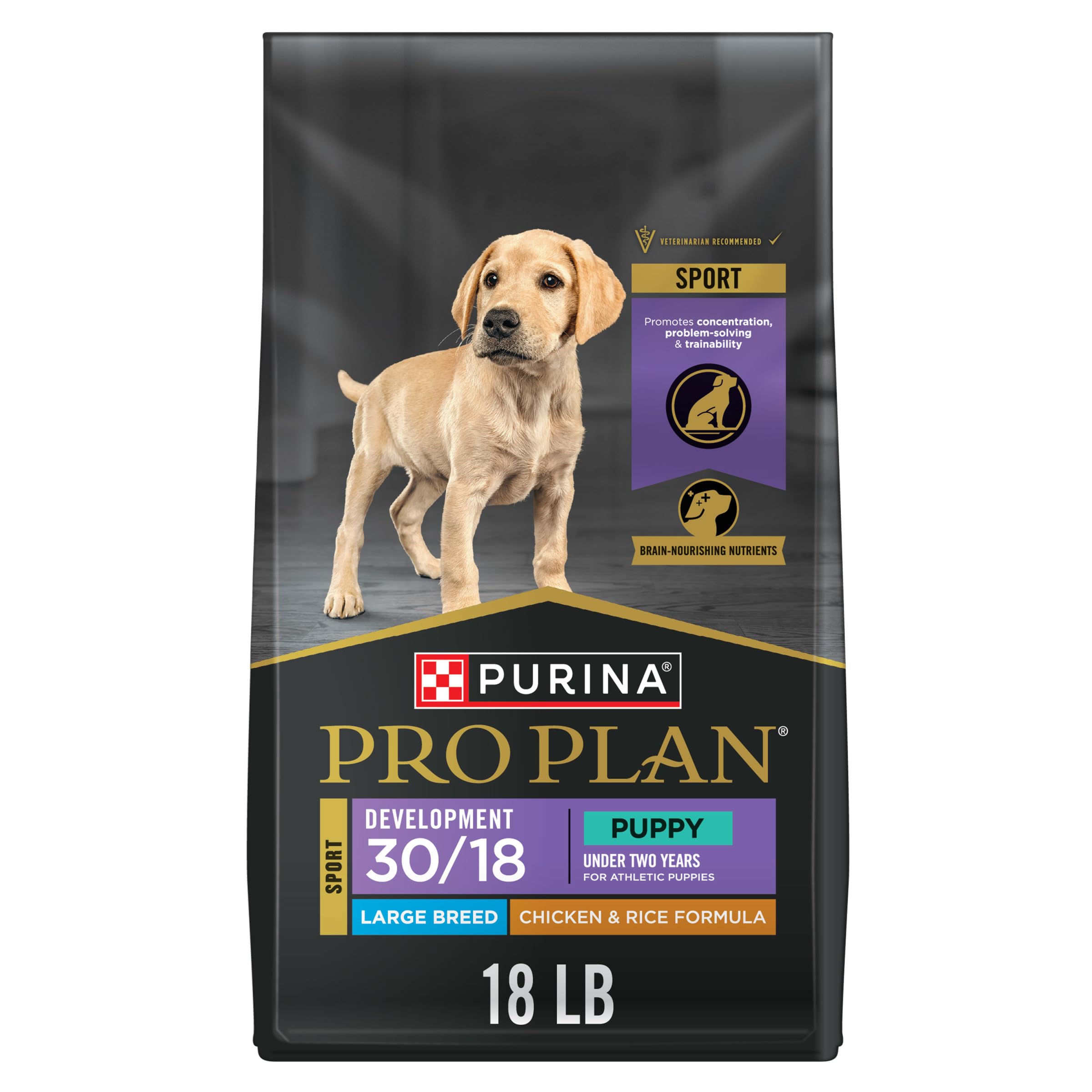
Real chicken is the first ingredient, delivering 30% protein and 18% fat — a profile that fuels athletic large-breed puppies without pushing growth beyond what joints can handle. The formula includes added glucosamine for cartilage support and precisely calibrated calcium and phosphorus levels to reinforce bone density during the rapid-development window.
DHA from fish oil supports trainability and cognitive focus, a detail appreciated by owners training field Labs. Multiple verified reviews from Labrador owners note firm, regular stool consistency and sustained energy without the hyperactive spikes seen with lower-quality kibble. The 18-pound bag size is practical for mixed feeding schedules.
The higher protein and fat content makes this a better fit for active working lines or puppies with higher caloric demands. For couch-potato Lab puppies, the caloric density may require careful portion control to prevent excessive weight gain during the growth phase.
Why it’s great
- High-quality chicken as #1 ingredient
- Glucosamine for joint development
- Proven results with Labrador digestion
Good to know
- Rich formula — not ideal for low-activity pups
- Premium tier pricing on a per-bag basis
2. Hill’s Science Diet Puppy Large Breed Dry Dog Food
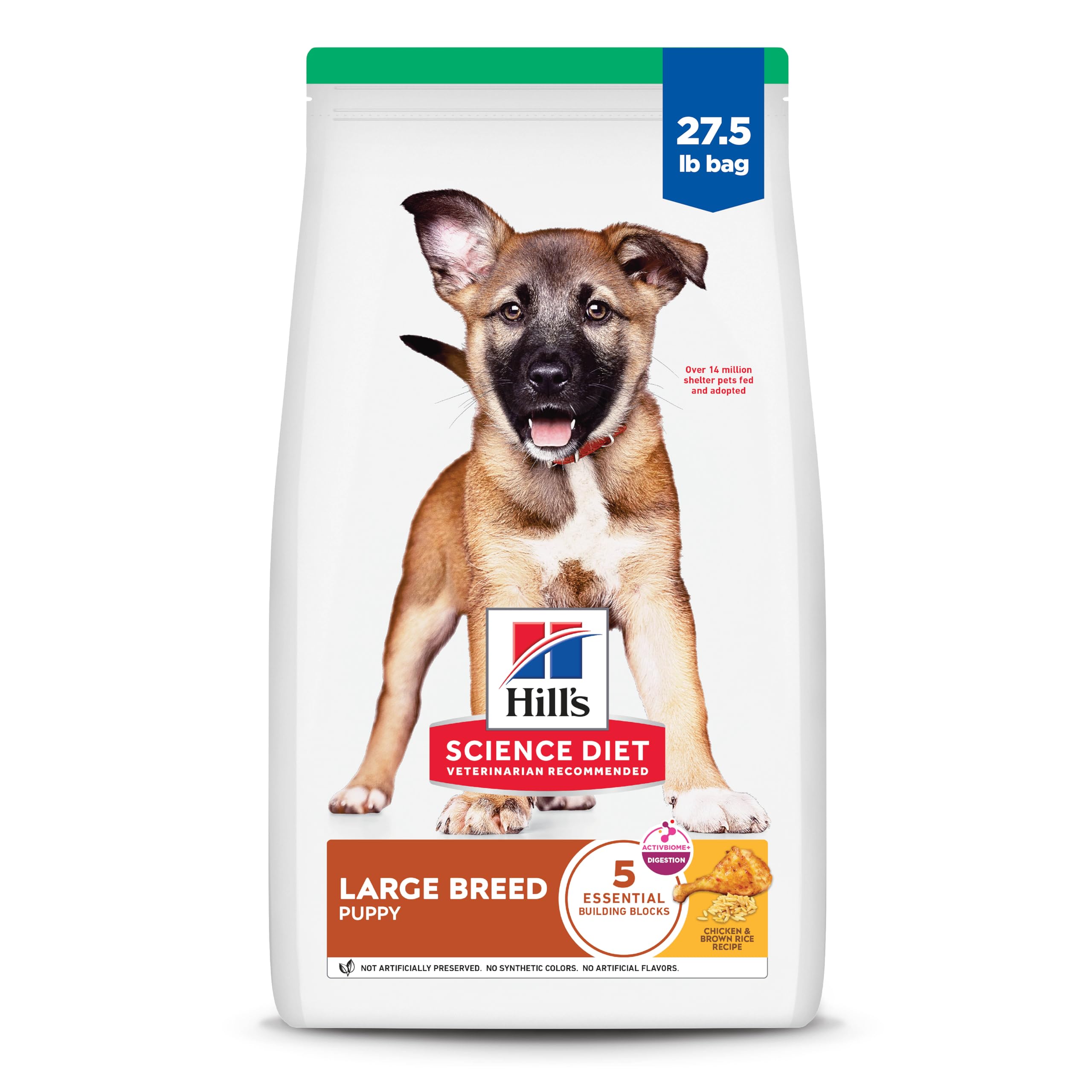
Hill’s Science Diet is the number-one brand recommended by US veterinarians, and this large-breed puppy formula exemplifies why. The calcium is dialed in at roughly 1.0% on a dry-matter basis — right in the sweet spot for Labrador skeletal development — alongside phosphorus at 0.8% for proper bone mineralization without risking OCD.
Natural chicken and brown rice provide digestible protein and fiber, while DHA from fish oil supports eye and brain development during the critical first year. The kibble size is generous enough to encourage chewing, which slows gulping and reduces bloat risk in deep-chested breeds like the Lab.
Owners consistently report excellent stool quality and glossy coats. A few reviewers noted the need to follow a vet’s recommended feeding amounts rather than the bag chart to avoid overfeeding in less active lines. The 27.5-pound bag offers solid value given the veterinary backing.
Why it’s great
- Veterinarian-recommended brand
- Controlled calcium for safe bone growth
- Natural ingredients, no artificial preservatives
Good to know
- Bag guidelines may overfeed some pups
- Higher price per pound than generic options
3. Blue Buffalo Life Protection Formula Large Breed Puppy

Blue Buffalo opens with real chicken and includes exclusive LifeSource Bits — cold-formed antioxidant clusters that preserve vitamin and mineral potency. The DHA and ARA levels mirror the fatty acid profile found in mother’s milk, supporting neural development and retinal health in growing Labs.
The formula is free from poultry by-product meal, corn, wheat, and soy, making it a clean choice for puppies with food sensitivities. Hypoallergenic properties are further reinforced by natural prebiotic fiber from barley and oatmeal, which promotes firm stool and reduces flatulence common in large-breed puppies.
Owners of Lab and Labradoodle puppies report strong coats and normal bowel movements after transitioning from competing brands, though some noted the kibble can be slightly harder than softer formulas, so ensure fresh water is always available. The 30-pound bag offers good value for a high-ingredient-quality recipe.
Why it’s great
- No poultry by-product meal, corn, wheat, or soy
- Cold-formed antioxidants in every bag
- High DHA for brain and eye development
Good to know
- Kibble density may require more water intake
- Previous recall history; monitor for updates
4. Nutro Max Large Breed Puppy Dry Dog Food
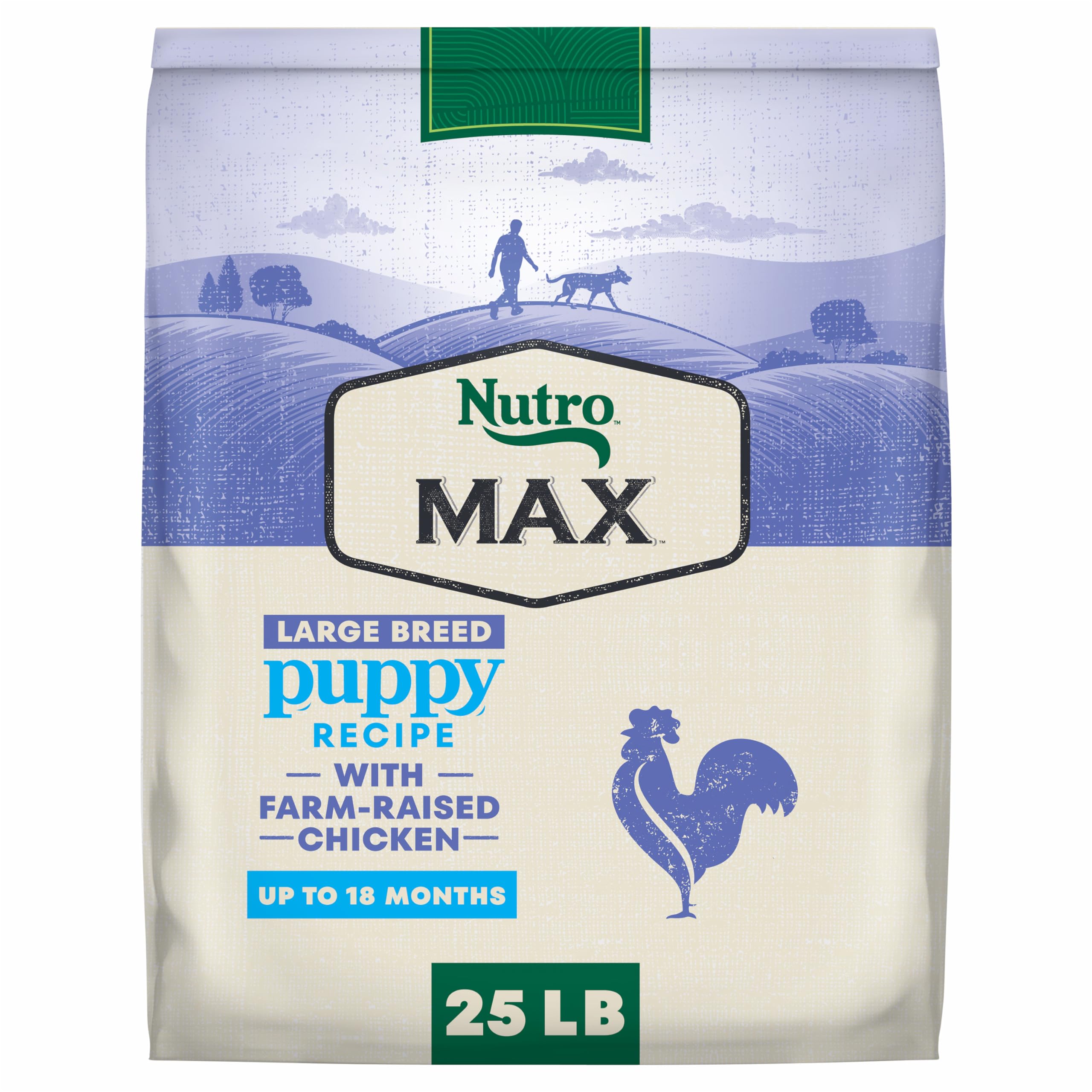
Nutro Max uses farm-raised chicken as the primary protein and sources natural glucosamine and chondroitin to support the developing joints of large-breed puppies. The DHA content promotes brain development, making it a solid pick for owners focused on early training and obedience work.
The ingredient list is refreshingly short for this tier — non-GMO and free from chicken by-product meal, corn, wheat, and soy. Multiple owners with large and giant breeds (Great Danes, Airedales, Pyrenean Mastiffs) reported that this food was gentle on sensitive stomachs with no gas or diarrhea during the transition period.
Customers note that the 25-pound bag size is convenient for households with a single puppy, though some felt the price point was high for regular feeding. For owners committed to a clean-ingredient diet without paying premium-tier prices for the name, this strikes a sharp value proposition.
Why it’s great
- Non-GMO and corn/wheat/soy free
- Natural glucosamine and chondroitin
- Gentle on sensitive stomachs
Good to know
- Pricing can feel steep for the bag weight
- Not widely available in bulk sizes
5. Royal Canin Canine Health Nutrition Puppy Canned Dog Food
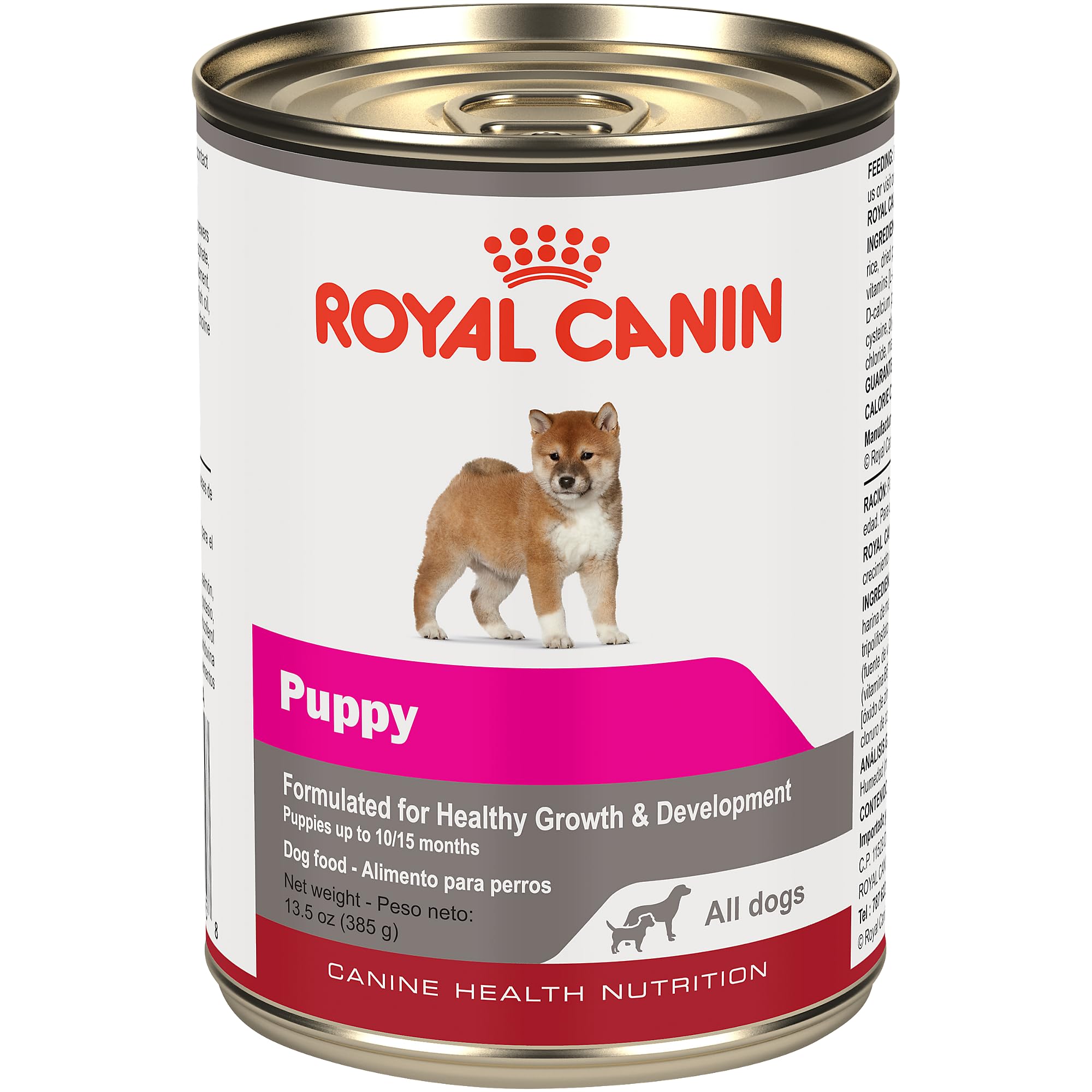
Royal Canin’s canned puppy formula is a highly palatable paté that works as a complete meal or a topper for picky eaters. The recipe incorporates beet pulp and fish oil for digestive health, while the antioxidant complex supports the developing immune system of puppies up to 10-15 months old.
This wet food is useful when transitioning a Lab puppy from milk to solids, or when a puppy refuses dry kibble due to teething sensitivity. The 13.5-ounce can size allows for flexible portioning, and many owners reported mixing it with Royal Canin dry kibble with excellent appetite response.
The low moisture content relative to other wet foods helps maintain stool firmness. A handful of reviews noted that some picky breeds (Shih Tzu, Husky) also loved it, which speaks to the palatability across different breed preferences. For Labs specifically, it’s a reliable backup for hydration management and weight maintenance.
Why it’s great
- Excellent palatability for picky eaters
- Antioxidant immune support complex
- Convenient pack of 12 for bulk feeding
Good to know
- Wet food requires refrigeration after opening
- Higher cost per feeding than dry kibble alone
FAQ
How much protein does a Labrador puppy need daily?
When should I switch my Lab puppy to adult food?
Is grain-free food safe for Lab puppies?
How do I transition my Lab puppy to a new food?
Can I feed both dry kibble and wet food to my Lab puppy?
Final Thoughts: The Verdict
For most owners, the absolute best dog food for lab puppies is the Purina Pro Plan Sport Development Large Breed 30/18 because it balances high-quality animal protein with joint-supporting glucosamine and controlled calcium levels. If you want veterinary endorsement and a precisely modulated mineral profile for safe skeletal growth, grab the Hill’s Science Diet Puppy Large Breed. And for picky eaters or teething-sensitive Labs that need a moisture-rich, highly palatable option, nothing beats the Royal Canin Puppy Canned Food as a meal topper.

Mo Maruf
I created WellFizz to bridge the gap between vague wellness advice and actionable solutions. My mission is simple: to decode the research and give you practical tools you can actually use.
Beyond the data, I am a passionate traveler. I believe that stepping away from the screen to explore new environments is essential for mental clarity and physical vitality.