Our readers keep the lights on and my smoothie glass nicely filled. As an Amazon Associate, I earn from qualifying purchases.
That dull ache in your arches after a long shift or the sharp heel pain that greets you every morning — it’s a direct message from your feet that the thin foam inside your shoes has given up. The right cushioned shoe insert doesn’t just feel soft; it absorbs impact, repositions your foot, and stabilises your entire stride, turning a punishing day on concrete into something manageable.
I’m Mohammad Maruf — the founder and writer behind WellFizz. I’ve spent hundreds of hours poring over biomechanics research, analysing foam densities, arch profiles, and heel-cup depths across dozens of models to separate genuine structural support from mere marketing fluff.
Your search for the best cushioned shoe inserts ends with a clear winner that provides both plush impact absorption and rigid arch structure, no matter how many hours you stand.
How To Choose The Best Cushioned Shoe Inserts
The cushioned shoe insert market is crowded with products that feel great in the box but flatten within weeks. To make a smart buy, you need to look past the squish and focus on four key factors that determine whether an insert will support or disappoint you over months of daily use.
Arch Support Profile
Your arch type — low, neutral, or high — dictates the shape of support you need. A flat-footed person requires a structured, rigid arch cradle to prevent overpronation, while someone with high arches needs a deeper curve to fill the gap and reduce strain on the plantar fascia. Avoid universal “one-height” designs; look for models that specify their arch height or offer multiple profiles.
Material Density and Cushioning Layers
Not all foam is equal. EVA foam is lightweight and flexible but compresses over time. PU foam is denser and returns to shape longer, making it better for heavier individuals. Ortholite foam adds antimicrobial properties and breathability. The best inserts use a dual-layer approach: a rigid base for structure and a softer top layer for impact absorption without collapsing.
Heel Cup Depth and Stability
A shallow heel cup allows your foot to slide laterally, which forces your calf and knee muscles to compensate and increases fatigue. A deep “U-shaped” heel cup locks the calcaneus (heel bone) in place, absorbing shock efficiently and maintaining alignment through each step. Look for cups that are at least 8–10mm deep for true stability.
Weight Capacity and Durability
If you weigh over 200 pounds, budget-friendly foam-only inserts will flatten within a month, losing all cushioning and support. Premium options use TPU shells or rigid arch frames that resist deformation under heavy load. Check whether the manufacturer lists a suggested weight range — a sign that the insert is engineered for real extended use, not just a soft first impression.
Quick Comparison
On smaller screens, swipe sideways to see the full table.
| Model | Category | Best For | Key Spec | Amazon |
|---|---|---|---|---|
| BestHalo Heavy Duty | Premium | Heavy users 220+ lbs | EVA + gel cushioning | Amazon |
| Professional PORON Heavy Duty | Premium | High-impact activities | Dual PORON + PU layers | Amazon |
| Cloudflo Plantar Fasciitis | Mid-Range | All-day standing / flat feet | Rigid TPU + thick Ortholite | Amazon |
| Walkhero Arch Support | Mid-Range | Work boots / long shifts | Rigid arch shell + EVA/foam | Amazon |
| Uvaluefeet Memory Foam | Budget | Light cushioned daily wear | Memory foam + PU base | Amazon |
In‑Depth Reviews
1. BestHalo Heavy Duty Plantar Fasciitis Insoles
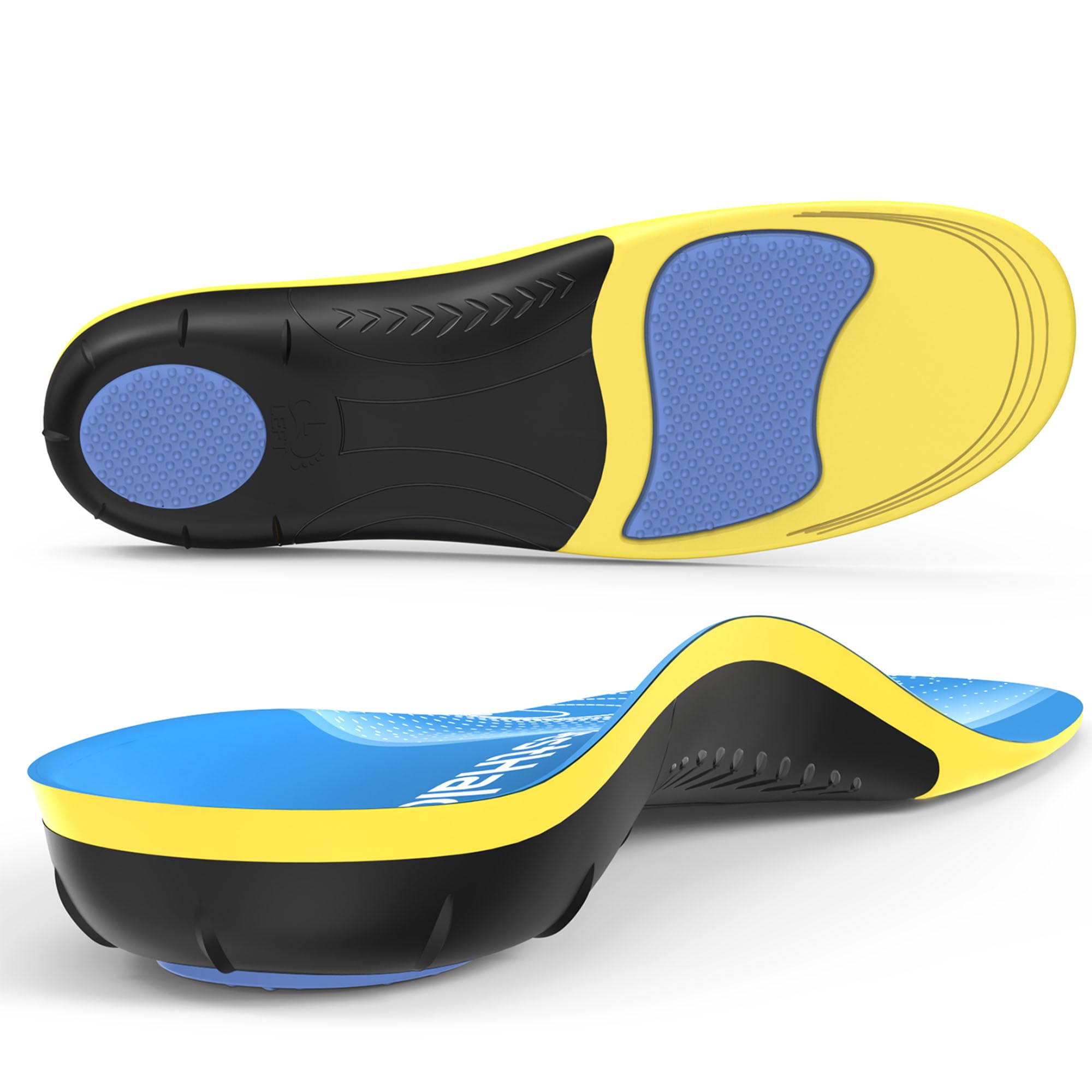
Engineered with a biomechanical high-arch design, the BestHalo insert combines a firm structured arch shell with a premium EVA foam and gel cushioning layer. This dual-material approach delivers the high-level support needed by users over 220 pounds while still absorbing shock from pavement and concrete. The deep heel cup locks your calcaneus in place, reducing overpronation and supination during standing tasks or long walks.
Real users report immediate relief from plantar fasciitis heel pain and a noticeable reduction in foot-to-hip pain after surgery recovery. The trim-to-fit sizing adapts to work boots, sneakers, and casual footwear without bunching or sliding. Some users with very low arches found the profile too pronounced, but for those needing high arch support, it eliminates pressure points where cheaper inserts fail.
The gradual break-in period — starting at two to three hours daily — allows your foot to adjust to the rigid support without causing new aches. After a week of adjustment, most wearers report zero fatigue during 10-hour shifts on hard floors. The durability of the gel portion prevents the flattening that plagues all-foam competitors within the first month.
Why it’s great
- Rigid high arch support for heavy users
- Gel cushion layer retains shape long-term
- Stabilises gait and reduces hip/knee strain
Good to know
- May feel too high for flat-footed users
- Requires a break-in period of 3–7 days
2. Professional Heavy Duty Support PORON Insoles
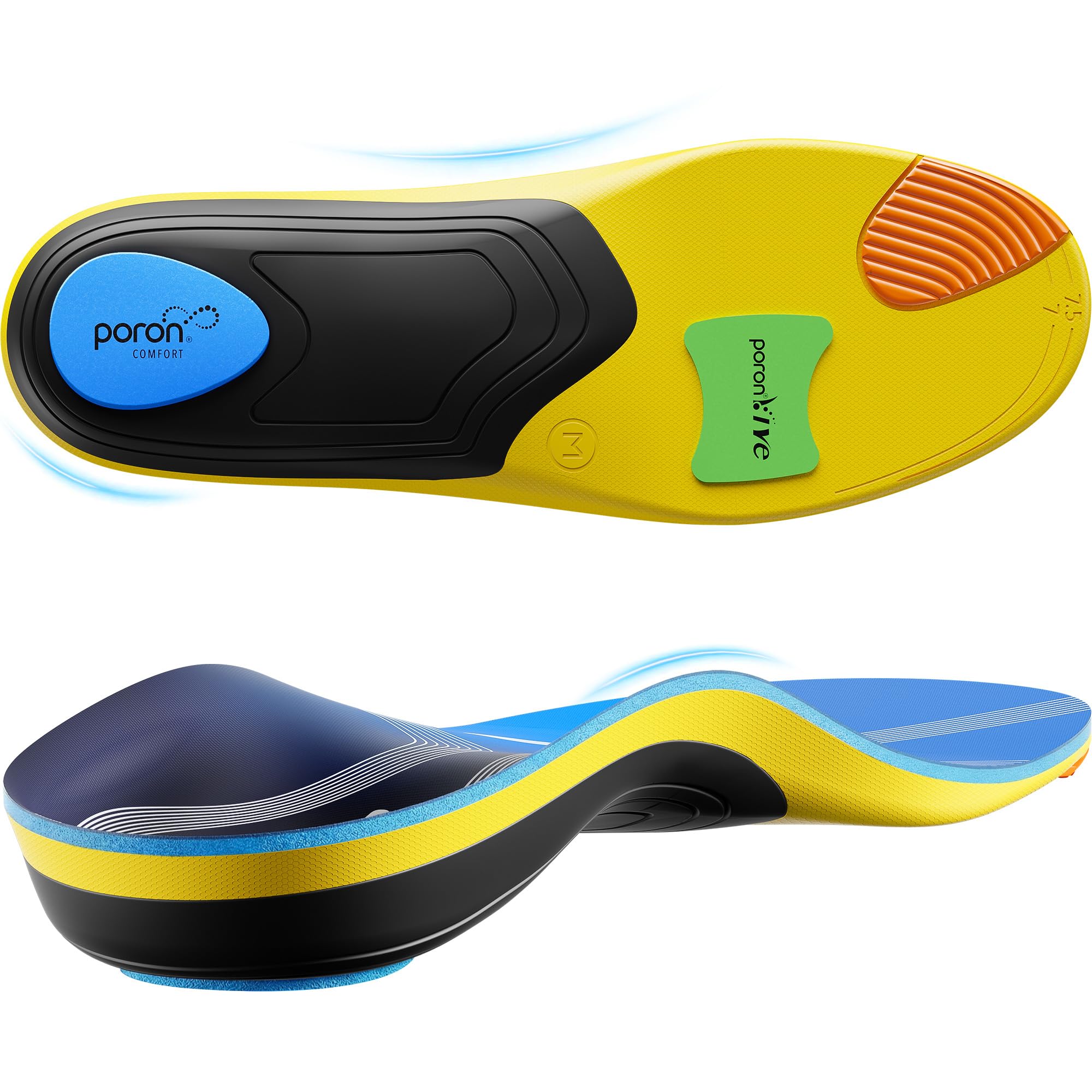
This insert stands apart by using US-sourced PORON foam in a double-layer configuration, a material known for retaining 95% of its shock-absorbing properties even after repeated compression. The “Golden Triangle” three-point ergonomic design places support simultaneously under the forefoot, arch, and heel, distributing body weight more evenly than traditional single-zone cushions. A full PU bottom layer adds a firm, fatigue-resistant foundation that doesn’t soften over time.
Customer feedback from warehouse and construction environments confirms that the deep U-shaped heel cup effectively prevents side slippage in work boots, while the medium arch profile suits both flat-footed and neutral-footed users. One reviewer noted complete heel pain relief within a single day of use in steel-toe boots. The foam density is high enough that extended walking feels supported rather than mushy.
At 8.15 ounces per pair, it’s one of the heavier inserts on this list, a direct consequence of the dense PORON and PU layers. Some users with low-back shoes found the stack height too thick, requiring a half-size looser lace. The antimicrobial top fabric wicks moisture well, preventing odor build-up after repeated shifts.
Why it’s great
- Double PORON foam for exceptional durability
- Three-point weight distribution reduces joint stress
- Fast relief for plantar fasciitis heel pain
Good to know
- Thick build may crowd low-profile shoes
- Heavier than standard foam inserts
3. Cloudflo Plantar Fasciitis Insoles
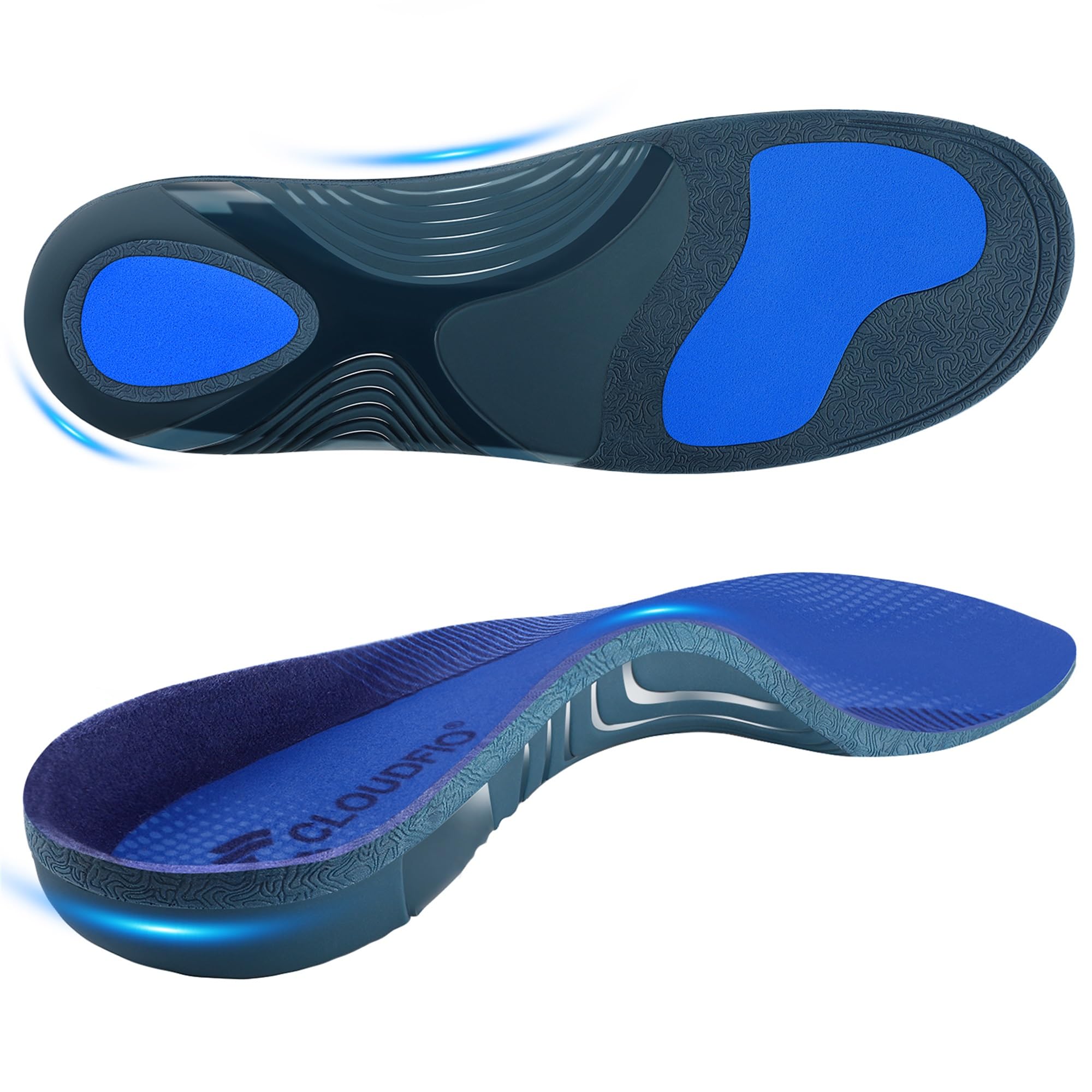
The Cloudflo insole uses a rigid TPU material for its arch support shell, which maintains its structural curve under repeated loading far better than softer thermoplastic alternatives. Combined with a thick Ortholite cushioning layer in the forefoot and a PU pad in the heel, it provides both deep arch engagement and high-rebound shock absorption. This makes it suitable for users weighing over 220 pounds who need long-term compression resistance.
User reports consistently highlight the firm, corrective arch support that keeps the foot in a neutral position, drastically reducing morning heel pain and discomfort after long standing sessions. Many nurses and retail workers wear them for full 10-hour shifts on concrete without needing to sit. The breathable velvet top layer manages moisture effectively, and the insert doesn’t slide inside sneakers or work boots.
While the rigid TPU provides excellent structural support, a small number of users accustomed to soft insoles initially found it too aggressive. The proper adaptation period is one to two weeks of gradual wear. The trim-to-fit lines are clearly marked, making size customization simple for shoes as small as women’s 5 and as large as men’s 14.
Why it’s great
- Rigid TPU arch resists flattening under heavy load
- Thick Ortholite heel pad for high impact absorption
- Excellent for neutral-to-low arches with plantar fasciitis
Good to know
- Initial firmness may feel uncomfortable to new users
- Not ideal for shoes with very low heel volume
4. Walkhero Arch Support Inserts
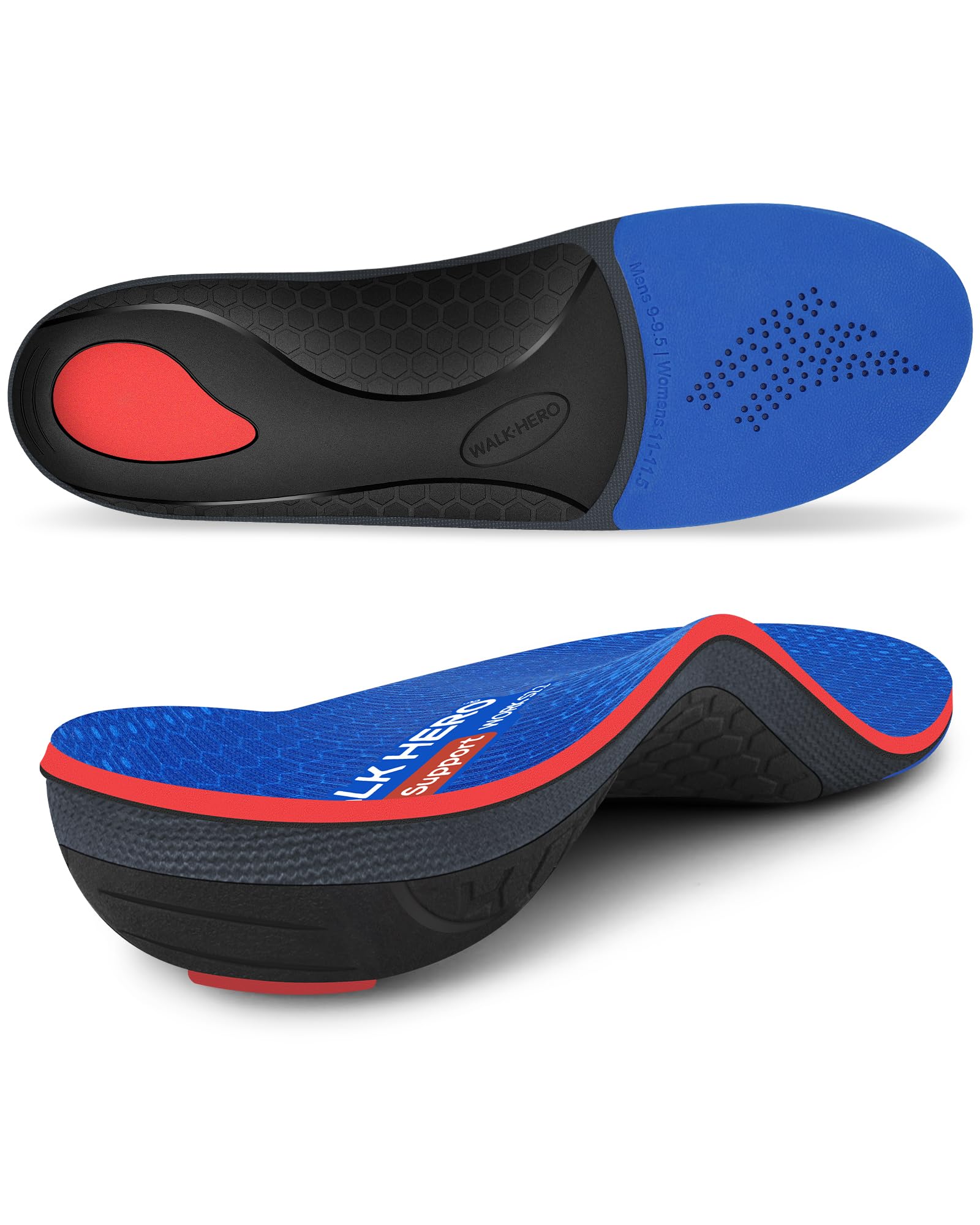
Walkhero’s insert pairs a rigid biomechanical arch shell with a full-length EVA and foam footbed, delivering two distinct layers of cushioning. The forefoot EVA and separate heel pads work to distribute impact and return energy with each step, reducing overall muscle fatigue during long, stationary work shifts. Users in construction, healthcare, and hospitality report that this combination eliminates the sharp heel pain that layered gel insoles often fail to address.
The design includes a notably deep heel cup that cradles the calcaneus to improve stability on uneven floors. With over 5 million users, the brand has refined the sizing system to twelve standard options, meaning most buyers can select their exact size without trimming. Customer feedback from hikers putting 5-mile days into unsupportive boots confirms the arch support effectively eliminated knee and hip pain.
The trade-off for the rigid structure is a slightly bulkier profile that works best in roomier footwear — leather boots, athletic sneakers, and casual shoes with removable insoles. Users with narrow dress shoes or tight loafers may find the extra thickness crowds the toe box. The recommended two-week gradual break-in period is essential to let the foot’s soft tissue adapt to the firm arch cradle.
Why it’s great
- Rigid arch shell stable for long standing tasks
- Dual-layer EVA and foam for impact return
- Deep heel cup reduces lateral sliding
Good to know
- Thick profile may not fit low-volume dress shoes
- Requires gradual break-in over 1–2 weeks
5. Uvaluefeet Memory Foam Work Boot Insoles

These entry-level insoles rely on a soft memory foam top layer that conforms to the exact shape of your foot over time, creating a personalized cradle. The bottom layer is made of PU material designed to absorb shock from hard surfaces, making them an affordable upgrade from stock insoles for light to moderate use. The fabric upper is breathable and odor-resistant, helping keep feet dry during daily wear.
Reviewers — including a 305-pound user who had tried multiple competitors — praise the long-term durability of the memory foam, reporting that it didn’t collapse after weeks of heavy use in trail running shoes. The neutral arch support is best suited for people with normal arches who want general fatigue reduction rather than corrective orthotic features. Heel bounce is notably improved compared to basic flat insoles, especially for standing and walking.
Because the design lacks a rigid arch shell or deep heel cup, it won’t provide the structural correction needed for flat feet, overpronation, or chronic plantar fasciitis. The cushioning is also less dense than premium options, so very heavy users or those on concrete floors for 12-hour shifts may compress the foam faster than expected. For light everyday use, it delivers solid value at an accessible price.
Why it’s great
- Memory foam molds to the foot for custom comfort
- PU bottom layer adds real shock absorption
- Breathable fabric prevents moisture and odor
Good to know
- No rigid arch support for foot conditions
- Heel cup is shallow — minimal lateral stability
FAQ
How long does it take to break in a rigid arch support insert?
Can I use cushioned shoe inserts in boots with removable insoles?
Final Thoughts: The Verdict
For most users, the best cushioned shoe inserts winner is the BestHalo Heavy Duty because it combines high-arch structural support with gel cushioning that doesn’t flatten under heavy loads. If you want dual-layer PORON foam and three-point ergonomic stability, grab the Professional PORON Heavy Duty. And for a value-driven option with rigid TPU support and Ortholite comfort, nothing beats the Cloudflo Plantar Fasciitis Insoles.

Mo Maruf
I created WellFizz to bridge the gap between vague wellness advice and actionable solutions. My mission is simple: to decode the research and give you practical tools you can actually use.
Beyond the data, I am a passionate traveler. I believe that stepping away from the screen to explore new environments is essential for mental clarity and physical vitality.