Our readers keep the lights on and my smoothie glass nicely filled. As an Amazon Associate, I earn from qualifying purchases.
Your legs feel heavy, your ankles swell, and that flight or long shift is only going to make it worse. Standard socks do nothing to prevent the blood pooling that leads to deep vein thrombosis, leaving you with discomfort and real health risk. The right medical-grade compression sock changes that by applying precise graduated pressure to keep your circulation moving from ankle to knee.
I’m Mohammad Maruf — the founder and writer behind WellFizz. I’ve spent countless hours analyzing customer feedback, material specifications, and compression performance data to separate supportive therapy from fashion accessories in this category.
This guide provides a deep look at the top performers in the market to help you find the best dvt compression socks that match your specific calf size, daily demands, and sensitivity needs.
How To Choose The Best DVT Compression Socks
Choosing the wrong level of compression or the wrong size is the most common mistake in this category. A sock that is too tight can restrict blood flow rather than promote it. One that is too loose provides no therapeutic benefit. The three factors below are non-negotiable for selecting a sock that actually prevents deep vein thrombosis.
Compression Level: 20-30 mmHg is the Gold Standard for DVT Prevention
Socks rated 15-20 mmHg are considered “light” compression and are generally suited for minor swelling or tired legs from prolonged sitting. For genuine DVT prevention and management of moderate to severe edema or varicose veins, medical professionals consistently recommend 20-30 mmHg. This is the level that provides enough gradient pressure to accelerate venous return without being painful or causing a tourniquet effect at the top band. All products on this list operate in the 20-30 mmHg range unless otherwise noted.
Graduated Pressure and Fit Profile
Graduated compression means the pressure is highest at the ankle (around 100%) and decreases as the sock moves up the leg (to roughly 70% at the calf). Check the product’s specific compression profile against your calf circumference, not just your shoe size. Many high-quality socks offer extended sizing for wide calves. The top band should stay up without digging in — if you see red lines that take 20 minutes to fade, the calf circumference measurement is wrong.
Fabric and Construction
The material determines breathability, moisture management, and how well the sock retains its elasticity over months of daily washing. Nylon/spandex blends (80/20) offer high durability and consistent compression but can be less breathable in hot conditions. Wool blends (like those used in the Sockwell Micro Grade) manage moisture and odor well. Regardless of the material, the toe seam must be flat to avoid irritation, and the heel pocket needs to be anatomically shaped to prevent bunching.
Quick Comparison
On smaller screens, swipe sideways to see the full table.
| Model | Category | Best For | Key Spec | Amazon |
|---|---|---|---|---|
| SB SOX Compression Socks | Mid-Range | All‑day wear & wide calf | 20-30 mmHg graduated, 80/20 Nylon/Spandex | Amazon |
| Medical Compression Socks 3‑Pack | Mid-Range | Budget multi‑pack & travel | 20-30 mmHg, flat toe seam | Amazon |
| Sockwell Women’s Micro Grade | Premium | Breathable wool & hiking | Wool blend, moisture‑wicking | Amazon |
| Dr. Motion Graduated 4‑Pack | Premium | Style versatility & post‑surgery | Microfiber, machine washable | Amazon |
| JOBST Relief Knee High | Premium | Physician‑grade & medical compliance | 20-30 mmHg, open‑toe option | Amazon |
In‑Depth Reviews
1. SB SOX Compression Socks (20-30mmHg)

The SB SOX Compression Socks deliver the most balanced combination of medical-grade performance, sizing inclusivity, and proven longevity in this entire list. With a 20-30 mmHg graduated profile built from an 80/20 nylon/spandex blend, these socks provide consistent ankle-to-calf pressure that reduces blood pooling and swelling effectively. The reinforced heel and toe areas add durability where most socks fail first, while the cushioned foot pad maintains comfort during 10+ hour standing sessions.
Size selection is a standout feature here. The brand offers five distinct size bands covering calf circumferences from 11 inches up to 24 inches, with a clear upsizing guideline for wide feet. Customer measurements confirm that selecting the correct calf size eliminates the “red line” irritation that plagues many alternatives. The top band stays put without a tourniquet effect, a critical requirement for safe DVT prevention during long flights or overnight shifts.
Long-term wear reviews report zero loss of elasticity after six years of intermittent use when air-dried — a remarkable lifespan for a sub-premium-priced sock. The only cautions are the hand-wash-only care instruction and the fact that pilling appears cosmetically over time without affecting performance. For most users looking for a single pair that handles everything from air travel to chronic edema, this is the strongest pick.
Why it’s great
- Five size options including XX-Large for 24″ calves
- Multiple customer reports of 5+ years of elasticity retention
- Reinforced heel/toe padding for all-day comfort
Good to know
- Hand wash only; machine washing shortens lifespan
- Some pilling reported after extended use (cosmetic only)
- Size guide must be followed carefully for sensitive skin
2. Medical Compression Socks 20-30 mmHg (3-Pack)
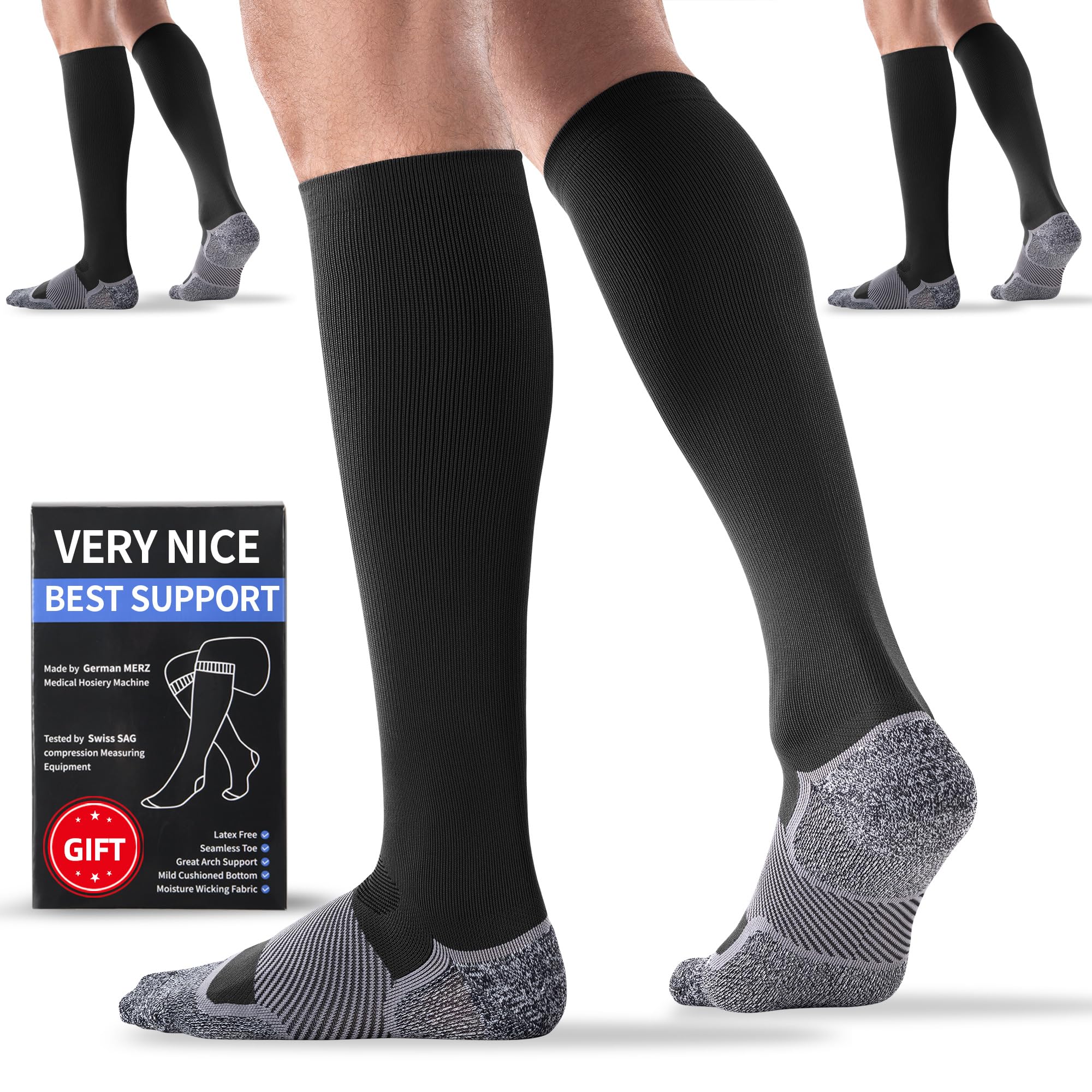
The 3-pack from Bbfrey addresses the single biggest practical complaint about compression socks: needing a clean pair every day. Each sock delivers the same 20-30 mmHg graduated pressure that DVT prevention requires, with the critical addition of a flat toe seam to prevent irritation on sensitive toes. Multiple customer reviews confirm that the compression profile remains effective through 11+ hour shifts without slipping, making these a legitimate option for nurses and retail workers.
The construction quality punches above its price tier. The padded foot feels like a regular athletic sock — a rare trait among medical-grade compression garments — and the arch support adds stability during movement. The graduated design is clearly felt: strongest at the ankle and calf, with a visible loosening at the upper band. This band stays in place without digging in or leaving bruising marks, a common failure point in sub- multi-packs.
The main limitation is aesthetic range; color and pattern options are limited compared to premium brands. But for travel, heavy daily rotation, or situations where durability matters more than appearance, the value advantage is undeniable. One caveat: the size range may not accommodate the widest calves. Measure your calf circumference carefully rather than relying on shoe size alone, as the size chart is fairly standard without the extended range of the SB SOX.
Why it’s great
- Three pairs at a mid-range price point reduces per-wear cost
- Flat toe seam prevents irritation for sensitive feet
- Padded foot and arch support for all-day standing or walking
Good to know
- Limited color/pattern selection
- Calf sizing is standard, not extended for very wide legs
- Relatively new brand with less long-term data on elasticity retention
3. Sockwell Women’s Micro Grade
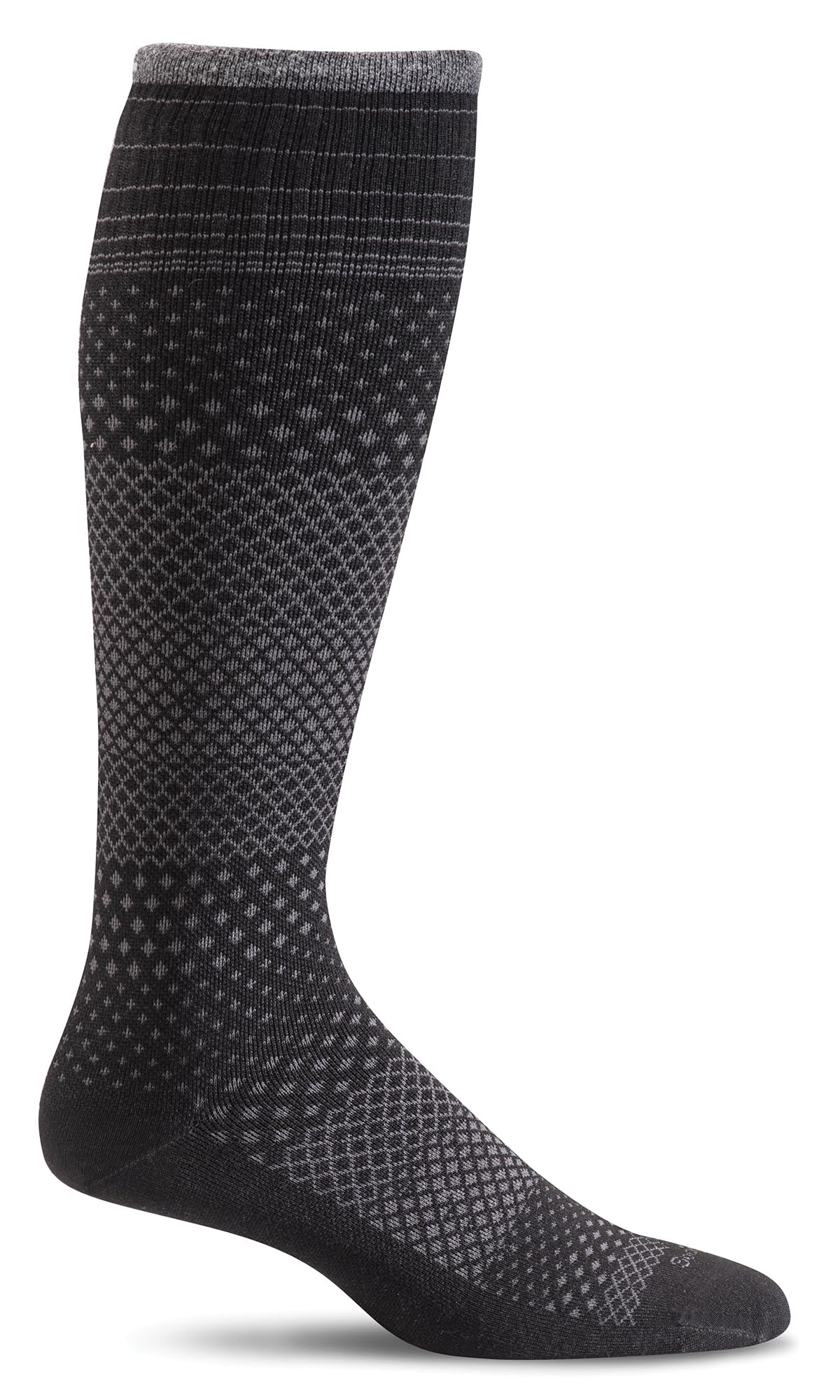
Sockwell has built its reputation on breathable wool blends that outperform synthetic competitors in temperature regulation. The Micro Grade incorporates a fine-gauge merino wool that wicks moisture efficiently, preventing the clammy feeling that nylon-heavy compression socks create in hot climates or during physical activity. Customers who wore these during desert hikes and through entire summer shifts reported no heat buildup and no odor retention — a serious advantage for active wearers.
The compression profile is graduated with a reinforced arch band that provides extra mid-foot support, which multiple long-haul fliers and hikers confirmed reduces foot fatigue on uneven terrain. The seamless toe design prevents rubbing, and the fabric is thin enough to fit comfortably inside standard hiking boots or dress shoes. Color and pattern variety is notably high, making these one of the few compression socks that don’t look strictly medical.
The tradeoff is that the calf compression at the top band is milder than what some users expect for DVT-level prevention. Customers with larger calves have noted that the S/M size can feel too short. Measuring calf circumference against the brand’s specific size chart is essential. At a premium price per pair, the cost justifies its performance for those whose primary discomfort is heat, moisture, or texture — but budget-conscious buyers may find better value in the multi-pack options for sheer mileage.
Why it’s great
- Merino wool blend breathes in heat and wicks moisture effectively
- Seamless toe and thin fabric fit inside boots and dress shoes
- Wide variety of colors and patterns reduces the medical look
Good to know
- Calf compression is mild compared to 20-30 mmHg nylon options
- Premium price per pair — no multi-pack savings
- Limited sizing may not fit very tall or very wide calves
4. Dr. Motion Graduated Compression Knee High 4-Pack
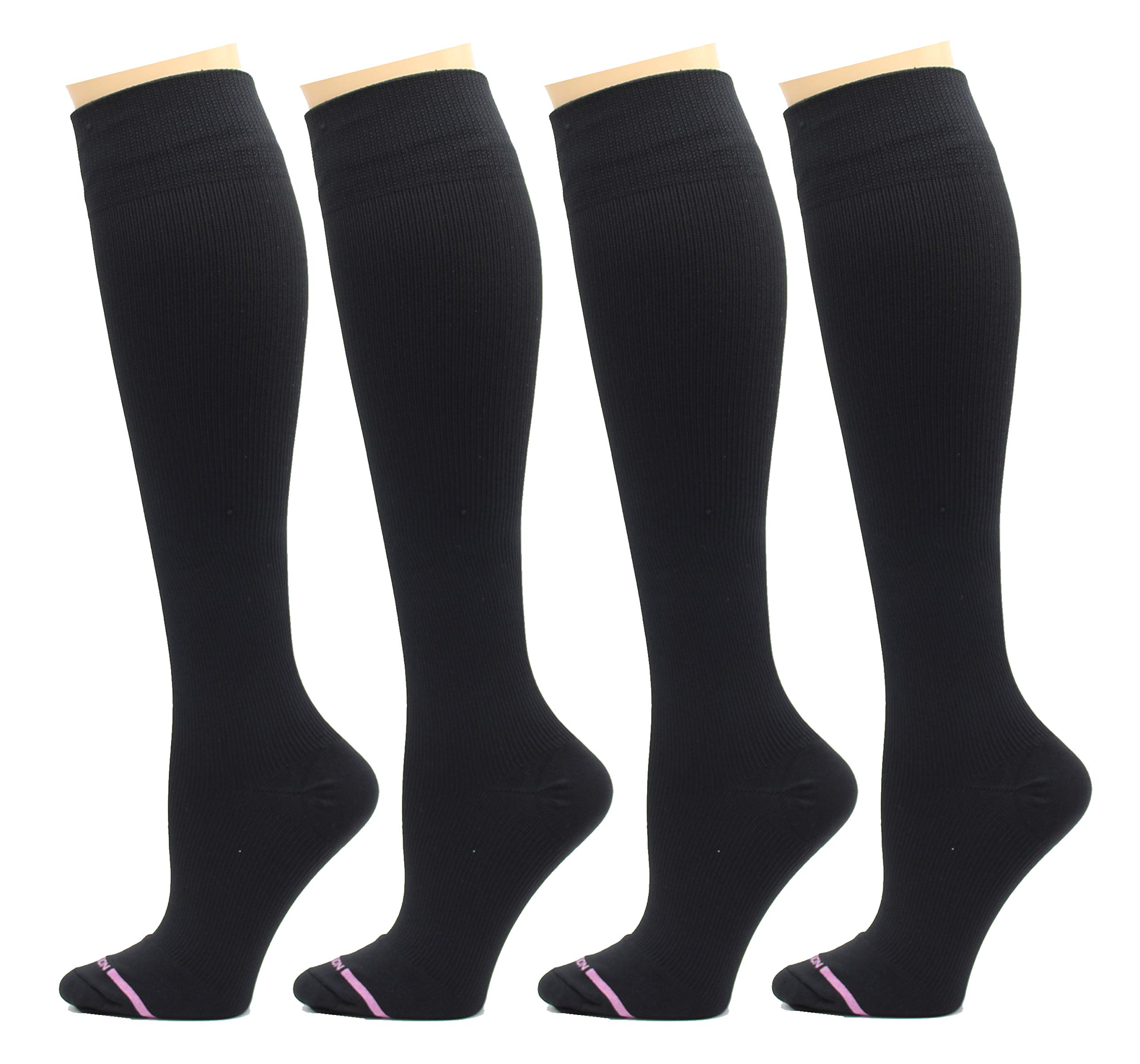
The Dr. Motion 4-pack splits the difference between fashion and function. Each pair offers a graduated compression profile that works for varicose vein management and general circulation support, with a fit that customers describe as “snug but comfortable all day.” The 4-pair count at a premium price provides a rotation-friendly wardrobe solution, especially for those who need to transition from business casual to travel without swapping socks.
The microfiber construction is noticeably lighter than typical medical hosiery — several post-surgery patients reported finding these more comfortable than the TENS stockings provided after knee operations. The fabric washes well in a lingerie bag on a delicate cycle and holds its shape when hung dry, though it runs warm in summer conditions. Patterns include polka-dots, stripes, and triangles, which adds a visual variety that standard black compression socks lack.
The compression level is moderate rather than full medical-grade — several reviews describe them as “light-moderate” pressure rather than the 20-30 mmHg gold standard. For users whose DVT risk is low and who primarily need relief from tired legs and mild swelling during travel or office work, this is a comfortable option. But for clinically diagnosed chronic venous insufficiency or moderate edema, the pressure profile may not be aggressive enough to fully control symptoms.
Why it’s great
- 4 pairs in a single purchase for daily rotation
- Pattern options make business-casual compression possible
- Machine-washable and more comfortable than hospital-grade stockings
Good to know
- Compression is lighter than true medical 20-30 mmHg socks
- Can feel warm in summer heat
- Best for low-risk users or general circulation support, not severe edema
5. JOBST Relief Knee High 20-30 mmHg Compression Stockings

JOBST is the number one physician-recommended compression brand in the US, and the Relief Knee High is the entry-level medical garment from that lineup. Designed with a true 20-30 mmHg gradient profile, these stockings provide the precise level of pressure required for DVT prevention, moderate to severe varicosis, and post-thrombotic syndrome. The open-toe design is a meaningful differentiator — it allows for toe mobility, easier inspection of circulation, and a fit that accommodates different foot lengths without the toe seam causing irritation.
The material is remarkably thin and breathable compared to budget options, which matters when you are wearing them for 12+ hours daily. Customers who switched from bandages or lower-grade compression confirm that the ankle compression is noticeably stronger — some even recommend sizing up for comfort. The large full-calf option accommodates wider legs without the fabric rolling, and the unisex sizing works for both men and women when measured correctly.
The premium price reflects the medical-grade construction and the detailed size chart that many podiatrists and vascular clinics use for fitting. However, the thin fabric can be warm in summer, and the appearance has a purely clinical aesthetic — no patterns or color variety. For patients who require a specific prescription-level compression and are willing to trade style for exact therapeutic pressure, JOBST remains the benchmark. The fit must be dialed in through measurement; customers who guess their size often report the top band digging into the back of the knee.
Why it’s great
- Number one physician-recommended brand for graduated compression
- Open-toe design allows mobility, ventilation, and better fit variety
- True 20-30 mmHg profile with excellent breathability for long wear
Good to know
- High price per pair compared to retail compression socks
- Thin fabric may require gentle handling for longevity
- Limited aesthetic options; purely clinical appearance
FAQ
How tight should DVT compression socks feel on the first wear?
Can I wear 20-30 mmHg compression socks to bed for DVT prevention?
How do I measure my calf correctly to find the right size?
Final Thoughts: The Verdict
For most users, the best dvt compression socks winner is the SB SOX Compression Socks because they deliver the strongest combination of proven 20-30 mmHg graduated compression, the widest size range (up to 24-inch calves), and verified long-term durability that outlasts most competitors. If you prioritize breathable natural fabric for hiking or hot climates, grab the Sockwell Micro Grade. And for a medical-grade, physician-recommended solution with an open-toe design that fits into a clinical compression plan, nothing beats the JOBST Relief Knee High.

Mo Maruf
I created WellFizz to bridge the gap between vague wellness advice and actionable solutions. My mission is simple: to decode the research and give you practical tools you can actually use.
Beyond the data, I am a passionate traveler. I believe that stepping away from the screen to explore new environments is essential for mental clarity and physical vitality.