Our readers keep the lights on and my smoothie glass nicely filled. As an Amazon Associate, I earn from qualifying purchases.
You turn on the tap and wonder what’s actually in that glass. Municipal chlorine, aging pipe sediment, trace heavy metals — the reality of tap water varies block by block. A dedicated filter removes these uncertainties, turning your kitchen faucet or countertop into a reliable source of clean, great-tasting hydration without the single-use plastic guilt.
I’m Mohammad Maruf — the founder and writer behind WellFizz. I’ve spent countless hours researching water quality standards, filtration media types, and the real-world performance of dozens of systems to pinpoint the ones that deliver measurable results.
This guide breaks down the best options for every kitchen setup, from instant-dispense electric pitchers to high-capacity under-sink units that serve your whole household. Read on for the definitive roundup of the best drinking water filter for your home.
How To Choose The Best Drinking Water Filter
Picking the right filter starts with knowing what’s in your water. A simple tap water quality report from your utility or a home test kit reveals the contaminants present — chlorine, lead, sediment, or total dissolved solids. That data dictates the filtration stage count you need.
Filtration Stages and Contaminant Reduction
Basic carbon block filters handle chlorine taste and odor. Multi-stage systems with ion exchange or KDF media target heavy metals and scale. Reverse osmosis (RO) systems strip everything — including beneficial minerals — but adding a remineralization stage restores balance. Check for NSF/ANSI certifications specific to the contaminants you care about, such as NSF 53 for lead reduction or NSF 401 for emerging compounds like PFOA/PFOS.
Flow Rate and Daily Convenience
A pitcher that trickles out 0.8 liters per minute feels slow when filling a water bottle for work. Under-sink units can push 1.6 gallons per minute, filling an eight-ounce glass in two to three seconds. Countertop dispensers with electric pumps offer instant-on convenience but require periodic charging. Match the flow rate to your household’s peak demand — multiple refills during meal prep or a single drinking glass at a time.
Installation and Space Trade-Offs
Freestanding pitchers and dispensers need only counter space and fit inside most refrigerator shelves. Under-sink systems require cabinet clearance and a dedicated faucet hole or a diverter valve on the existing faucet. Countertop units screw onto the aerator thread of your kitchen faucet — zero permanent modification but they occupy sink-edge real estate. Renters often prefer the landlord-friendly simplicity of a pitcher or a direct-connect under-sink model that leaves no trace upon removal.
Quick Comparison
On smaller screens, swipe sideways to see the full table.
| Model | Category | Best For | Key Spec | Amazon |
|---|---|---|---|---|
| SimPure V7 | Under-Sink | Permanent installation with high flow | 20,000 gallon / 12-month life | Amazon |
| Waterdrop T3-T RO | Under-Sink RO | Maximum contaminant removal | 220 GPD flow rate | Amazon |
| Waterdrop ED01W | Electric Pitcher | Instant-dispense countertop convenience | 200-gallon / 3-month filter life | Amazon |
| ZeroWater 32-Cup | Dispenser | Lowest TDS for purified taste | Built-in TDS meter | Amazon |
| OEMIRY Countertop | Countertop | Alkaline water on tap | 8,000 gallon / 12-month life | Amazon |
| Brita 10-Cup | Pitcher | Basic taste improvement | 10-cup / 2-month filter | Amazon |
| Homewerks Faucet | Faucet | Dedicated filtered water spout | 2.2 GPM flow rate | Amazon |
In‑Depth Reviews
1. SimPure V7 Under Sink Water Filter

The SimPure V7 strikes the best balance of permanent installation convenience and long-term value. Its 5-stage composite filter uses double sediment membranes, KDF-55, and double-activated carbon blocks to achieve 0.5-micron accuracy — reducing lead, chlorine, and bad tastes while retaining beneficial minerals. The entire housing is food-grade 304 stainless steel, which resists the cracking and chemical leaching common in plastic under-sink units.
Installation takes about three minutes with a direct connection to your cold water line — no drilling, no plumber. The slim profile measures just 3.6 inches in diameter, leaving most of your under-sink cabinet free for storage. Flow rate hits 1.6 gallons per minute, filling a standard glass in two to three seconds without any pressure drop.
Each filter cartridge lasts up to 12 months or 20,000 gallons, which makes the long-term cost per gallon exceptionally low. Users consistently report a noticeable improvement in water taste and clarity within the first glass. The stainless steel build also means no plastic aging or UV degradation over years of service.
Why it’s great
- All-metal construction eliminates plastic concerns
- 20,000-gallon filter life reduces replacement frequency
- Tool-free installation fits standard 3/8″ and 1/2″ lines
Good to know
- Does not reduce TDS — retains minerals in water
- Requires under-sink cabinet space and cold water line access
2. Waterdrop T3-T Reverse Osmosis System
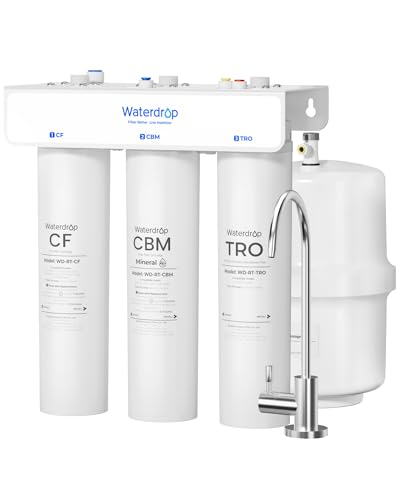
For households that want the absolute highest level of contaminant reduction, the Waterdrop T3-T delivers 7-stage reverse osmosis filtration without needing a dedicated electrical outlet. It produces 220 gallons per day — drastically faster than traditional 75-GPD RO units — and fills five 16.9-ounce bottles in about one minute. The system includes a remineralization cartridge that adds potassium, calcium, sodium, and magnesium back into the purified water, preventing the flat taste that stripped RO water often has.
The compact footprint measures 12.6 by 6.1 by 14.69 inches and saves up to 40 percent more under-sink space than tank-based RO systems. A 2:1 pure-to-drain ratio wastes less water than conventional RO units, which can send three to four gallons to drain for every gallon filtered. NFC technology lets you tap your phone for filter replacement reminders, and the all-in-one filter design swaps in three seconds without housing disassembly.
Three separate filters handle different stages: the CF filter lasts up to six months, the CBM up to 12 months, and the TRO up to 24 months, keeping annual maintenance manageable. Users report excellent taste improvement and peace of mind regarding PFAS, heavy metals, and chlorine. Keep in mind that faucet installation requires drilling a hole in the countertop if one doesn’t already exist.
Why it’s great
- Remineralization restores beneficial minerals after RO filtration
- Fast 220 GPD production rate with 2:1 efficient drain ratio
- Smart NFC reminders simplify filter change scheduling
Good to know
- Requires countertop hole for dedicated faucet
- Multiple filter replacements at different intervals need tracking
3. Waterdrop ED01W Electric Water Filter Pitcher
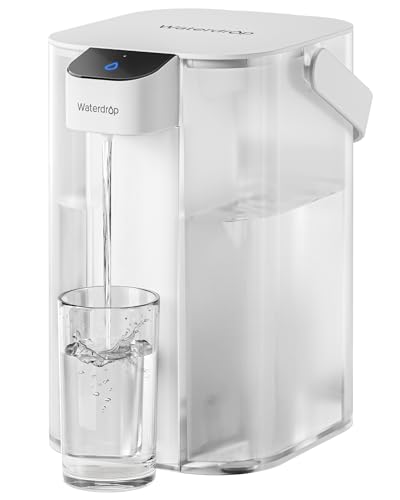
The Waterdrop ED01W eliminates the biggest frustration of traditional pitchers: waiting. A rechargeable electric pump delivers filtered water in one second via a one-touch dispense button. Its 0.5-micron premium carbon block filter reduces over 45 contaminants — including 99.6 percent of lead, plus chlorine, microplastics, mercury, and benzene — and is NSF/ANSI certified under standards 42, 53, 401, and 372. This system does not lower TDS, so it retains natural minerals while removing harmful impurities.
The 15-cup capacity holds 200 gallons of filter life, which translates to roughly three months of use before needing a replacement. A built-in rechargeable battery lasts up to 30 days on a full charge via USB-C, letting you move the pitcher from kitchen counter to office desk without hunting for an outlet. The design is compact enough for small apartments and coffee station tops, and the clear filter replacement indicators show both battery level and remaining filter life.
Users consistently praise the easy setup and the taste improvement, with several noting the water snob in the household finally approves. Some units experienced pump issues after extended use, but the customer service team responded by overnighting replacements after a quick video check. For households that want instant clean water without permanent installation, this electric pitcher is the most convenient option available.
Why it’s great
- One-second dispense eliminates waiting time
- 30-day rechargeable battery for cordless placement anywhere
- NSF/ANSI certified against 45+ contaminants
Good to know
- Does not reduce TDS — retains minerals
- Electric pump may need warranty service over time
4. ZeroWater 32-Cup 5-Stage Water Filter Dispenser

The ZeroWater 32-Cup dispenser is the go-to choice for anyone who wants to see the difference in numbers. Its integrated TDS meter gives an instant readout of total dissolved solids before pouring, and the 5-stage ion exchange filter can take tap water from 500 ppm down to 0 ppm — a result visible within seconds. The IAPMO certification covers reduction of lead, chromium, PFOA/PFOS, and mercury, and the BPA-free plastic construction keeps material safety in check.
At 7.5 liters of capacity, this dispenser holds more than most pitchers and features a sliding hatch design that prevents spills during refills. The filtration action is thorough but can be noticeably slower than carbon-block pitchers because the dense ion exchange media physically traps dissolved solids. Replacement filters cost more than standard carbon filters, and in areas with very high TDS (300–400 ppm), filter life can drop to as little as 2.5 weeks, making annual operating costs climb significantly.
Users who have switched from Brita or Pur report a dramatic taste improvement — water that tastes “almost sweet” according to some. The trade-off is that removing all minerals can leave the water feeling flat, so some buyers add mineral drops for balance. If your priority is measurable purity and you have moderate TDS tap water, this dispenser delivers results you can see and taste.
Why it’s great
- Built-in TDS meter shows real-time purity levels
- 5-stage ion exchange removes virtually all dissolved solids
- IAPMO certified for lead, chromium, and PFOA/PFOS reduction
Good to know
- Filter life is short in high-TDS water areas
- Slow flow rate compared to carbon-block filters
5. OEMIRY Countertop Water Filter

The OEMIRY countertop filter brings alkaline multi-stage filtration to your kitchen without any permanent changes. It screws directly onto most standard faucet aerators using the included adapters and twists to switch between unfiltered tap water and filtered water. The filtration reduces up to 99 percent of chlorine and effectively lowers fluoride and heavy metals while retaining beneficial minerals like potassium, calcium, sodium, and magnesium — which means it does not reduce TDS values.
Flow rate reaches 1.6 gallons per minute, filling an eight-ounce cup in two to three seconds. Each filter cartridge lasts up to 12 months or 8,000 gallons, making it one of the most cost-per-gallon efficient systems on this list. The compact housing is made from environmentally friendly ABS material and measures just under 5 inches in diameter, so it occupies minimal counter space. No electricity or drain connection is required, and it produces zero waste water during operation.
Users in areas with catchment water and old pipe sediment report significant taste and clarity improvements. Some buyers note the absence of a drip tray and a slight delay when stopping water flow, but these are minor considerations against the long filter life and space-saving footprint. It’s an ideal solution for renters, RVs, or anyone who wants alkaline water without committing to under-sink plumbing.
Why it’s great
- 8,000-gallon filter lasts up to 12 months
- Alkaline filtration retains beneficial minerals
- No drilling, no electricity, no wastewater
Good to know
- Not compatible with pull-out, spray, or sensor faucets
- Does not reduce TDS — mineral content remains unchanged
6. Brita Large 10-Cup Water Filter Pitcher
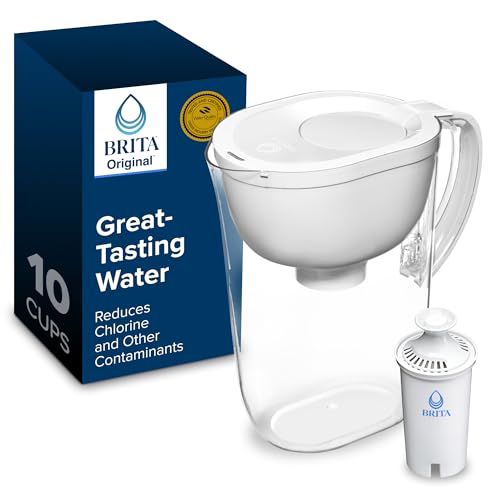
The Brita 10-Cup pitcher is the entry-level standard for improving municipal tap water taste. Its NSF/ANSI-certified filter reduces chlorine taste and odor, plus zinc, copper, mercury, and cadmium. The BPA-free plastic construction keeps things simple, and the easy-fill locking lid prevents spills during refills. At 10 cups, it holds enough water to fill a standard coffee maker or three 24-ounce reusable bottles in one batch.
This pitcher fits easily on refrigerator shelves thanks to its space-efficient design, measuring 10.94 inches deep and 5.59 inches wide. The standard filter lasts two months or 40 gallons before needing replacement, and Brita’s Longlast+ option extends that to six months or 120 gallons. Users consistently note that brewed coffee tastes noticeably better after switching to filtered water from this pitcher.
The main limitation is basic filtration — it removes chlorine and some metals but does not address lead, PFOA/PFOS, or sediment at the same level as multi-stage systems. The handle ergonomics are improved from previous generations, and the new inset cap design fixes the leaky reservoir issue that plagued older models. For households on a tight budget or those with already decent tap water, this remains a reliable, low-cost starting point.
Why it’s great
- Low upfront cost with widely available replacement filters
- Fits standard refrigerator shelves
- NSF/ANSI certified for chlorine taste and odor reduction
Good to know
- Limited contaminant reduction compared to multi-stage systems
- Can be heavy when full — handle carefully
7. Homewerks Worldwide Drinking Water Faucet

The Homewerks faucet is not a filter itself but a dedicated spout designed to pair with an under-sink filtration system. Its low-arc chrome body delivers a 2.2 gallons per minute flow rate — more than enough for rapid glass filling without splashing. The single lever handle offers smooth temperature and flow control, and the brass and plastic construction holds up well under daily use in both home and light commercial settings.
Installation requires a single hole in the countertop or sink deck and a standard 3/8-inch connection to your filter system’s output line. The chrome finish resists fingerprints and wipes clean easily, maintaining a polished look alongside your main kitchen faucet. Users in food service environments — dipping wells, coffee bars — report the faucet stays sturdy with no wear after months of regular use.
Pairing this faucet with a dedicated under-sink filter keeps your main faucet free for dishwashing while providing a separate, clearly marked stream for drinking and cooking. The low-arc profile is a deliberate choice to prevent splashing in shallow sinks. If your primary filter system lacks a dedicated faucet, this is a corrosion-resistant, reliable partner that completes the setup.
Why it’s great
- Smooth lever operation with minimal splash-back
- Chrome finish resists corrosion and cleans easily
- Compatible with most under-sink filter systems
Good to know
- Faucet only — does not include filtration media
- Requires a single-hole countertop or sink mount
FAQ
Do I need a filter that reduces TDS or one that keeps minerals in the water?
How often should I replace my drinking water filter cartridge?
What contaminants do NSF/ANSI certifications actually cover?
Final Thoughts: The Verdict
For most users, the best drinking water filter winner is the SimPure V7 because it combines high 0.5-micron filtration with a 20,000-gallon stainless steel build and tool-free installation at a mid-range investment. If you want maximum contaminant removal including TDS reduction and remineralization, grab the Waterdrop T3-T RO system. And for instant countertop convenience without permanent installation, nothing beats the Waterdrop ED01W electric pitcher.

Mo Maruf
I created WellFizz to bridge the gap between vague wellness advice and actionable solutions. My mission is simple: to decode the research and give you practical tools you can actually use.
Beyond the data, I am a passionate traveler. I believe that stepping away from the screen to explore new environments is essential for mental clarity and physical vitality.