Our readers keep the lights on and my smoothie glass nicely filled. As an Amazon Associate, I earn from qualifying purchases.
The struggle of keeping fresh produce on hand without it wilting, sprouting, or rotting within a week is a constant kitchen battle. Dehydrated foods solve this by locking in peak nutrition and flavor at a fraction of the weight and volume, whether you are packing for a 10-day trek, bulking up a pantry, or prepping an emergency kit that could last decades.
I’m Mohammad Maruf — the founder and writer behind WellFizz. I’ve spent hundreds of hours dissecting the shelf stability, rehydration ratios, and ingredient integrity of dozens of dehydrated food systems to build this specific guide.
Whether you need lightweight backpacking dinners or a 25-year emergency stash, this guide reviews the top contenders for the best dehydrated foods to keep your meals ready and nutritious for any situation.
How To Choose The Best Dehydrated Foods
Selecting the right dehydrated food goes beyond just picking a brand you recognize. You need to match the preservation method, serving density, and intended use case to your specific lifestyle—whether you are a weekend warrior, a full-time prepper, or a parent looking for pantry staples that won’t expire.
Preservation Method: Freeze-Dried vs. Air-Dried
Freeze-drying (lyophilization) removes 98-99% of water by freezing the food and sublimating the ice under a vacuum. The result is a porous, lightweight texture that rehydrates in minutes and retains near-original shape and flavor. Air-drying uses heat to evaporate moisture, yielding a denser, chewier product that often requires longer soaking times and may lose more subtle flavor compounds. For backpacking and emergency kits where every ounce and minute counts, freeze-dried meals usually win—but air-dried vegetables and beans excel in soups and stews where longer cooking time is already built in.
Shelf Life and Storage Conditions
Manufacturers often quote shelf lives of 25 or even 30 years, but these numbers rely on a cool, dry environment below 70°F and sealed oxygen-absorbing packaging. Products stored in garages subject to temperature swings or in high-humidity basements will degrade faster. Check the packaging date and the specific technology used: pouches with internal oxygen absorbers and Mylar layers provide the longest window for true long-term storage. If you are buying for immediate camping trips, a shorter shelf life is fine and often comes at a lower price per serving.
Calorie Density and Serving Accuracy
Not all “servings” are created equal. Some packages list 30 servings where a single serving is only 100-150 calories—sufficient for a side dish but woefully inadequate as a meal under exertion. For backpacking weight-watching, look for pouches that deliver at least 400-600 calories per 100 grams of dry weight. For emergency home storage, prioritize total calorie count per bucket over serving count, and calculate how many days the kit will actually sustain one adult at a moderate 1,800-2,200 calories per day.
Quick Comparison
On smaller screens, swipe sideways to see the full table.
| Model | Category | Best For | Key Spec | Amazon |
|---|---|---|---|---|
| Mountain House 3-Day Kit | Freeze-Dried | First-time emergency prep | 30-Year Shelf Life | Amazon |
| Harmony House Backpacking Kit | Air-Dried | Custom trail meals | 70 Servings / 4.5 lbs | Amazon |
| Harmony House Veggie Sampler | Air-Dried | Trying diverse vegetables | 15 Pouch Variety | Amazon |
| Its Delish Deluxe Soup Mix | Air-Dried | Pantry soup base | 4 lb Jug / 64 oz | Amazon |
| Ready Hour Black Bean Burger | Dehydrated Mix | Vegan survival protein | 25-Year Shelf Life | Amazon |
| 2026 Inspection MRE Case | MRE / Freeze-Dried | High-calorie field rations | 24 Meals / 10-Year Shelf Life | Amazon |
| ReadyWise 360-Serving Kit | Freeze-Dried | Full household emergency | 360 Servings / 3 Buckets | Amazon |
In‑Depth Reviews
1. Mountain House Emergency Meal Assortment Kit
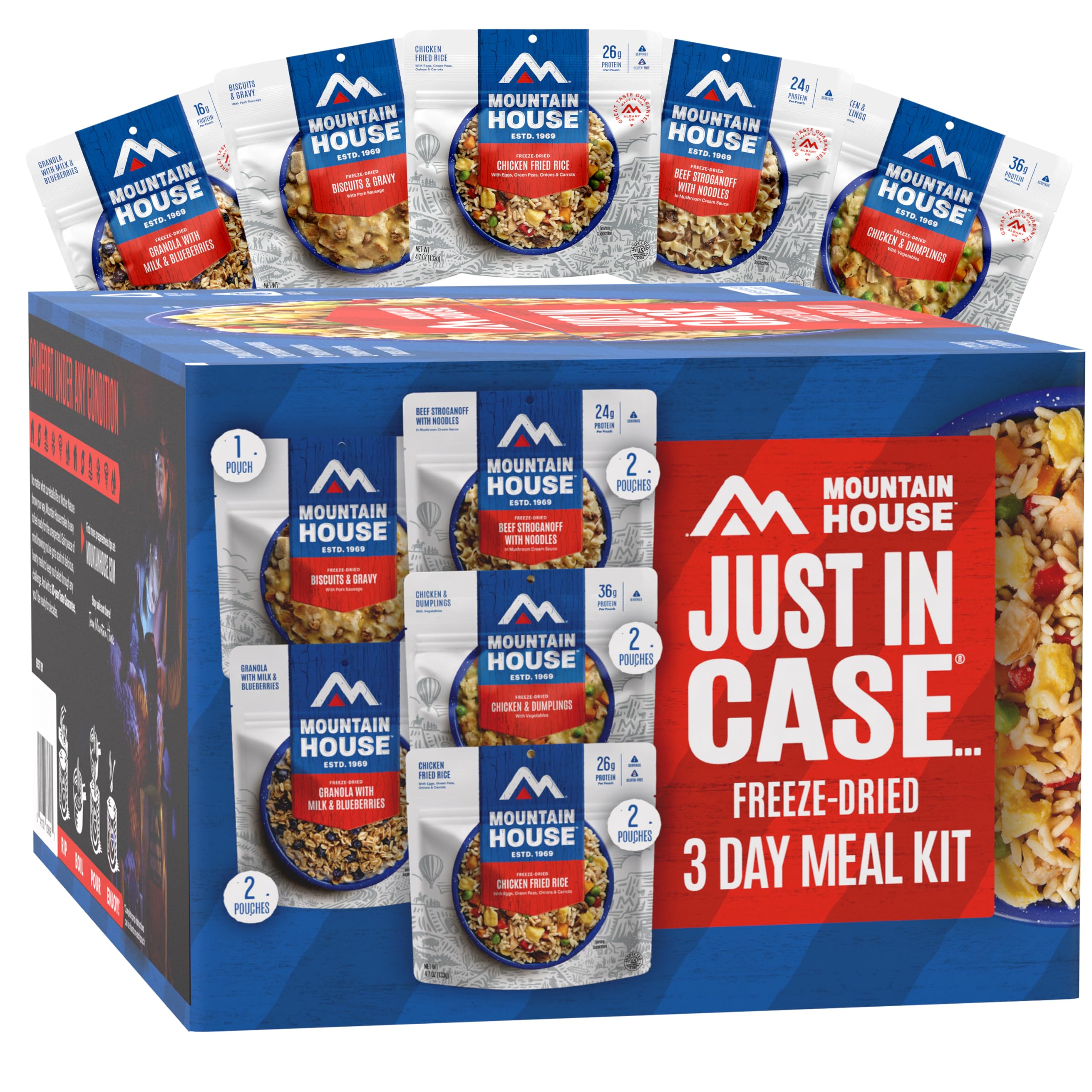
Mountain House owns the longest proven shelf life in the industry at 30 years backed by a taste guarantee, and this 9-pouch assortment is the most accessible entry into that level of preparedness. The freeze-dried process preserves texture and flavor far better than air-drying, so meals like Beef Stroganoff with Noodles and Chicken Fried Rice rehydrate in under 10 minutes with just hot water—no simmering required. At 1,706 calories per day across three meals, it provides a realistic short-term emergency caloric floor for one adult.
Reviewers consistently highlight how well the bag-in-pouch design contains messes and how lightweight the 3.6-pound kit is for stashing in a car or bug-out bag. The biggest gripe comes from the Biscuits & Gravy pouch, which divides opinion; some love its comfort-food density, while others find it too salty. A common pro tip is to use slightly less water than the instructions call for and let the pouch rest an extra minute to avoid a soupy texture.
For anyone building their first emergency stash or needing reliable trail meals without the guesswork of blending individual ingredients, this kit delivers proven freeze-dry technology and a 30-year window you can actually trust.
Why it’s great
- Industry-leading 30-year taste guarantee adds real peace of mind for emergency storage.
- Quick 10-minute rehydration with hot water works without a stove if needed.
- Lightweight 3.6-pound kit easily fits in a backpack or trunk.
Good to know
- Calorie density is moderate for active backpacking; you may want an extra snack pouch.
- The Biscuits & Gravy pouch is a love-it-or-hate-it item in the assortment.
2. Harmony House Backpacking Kit
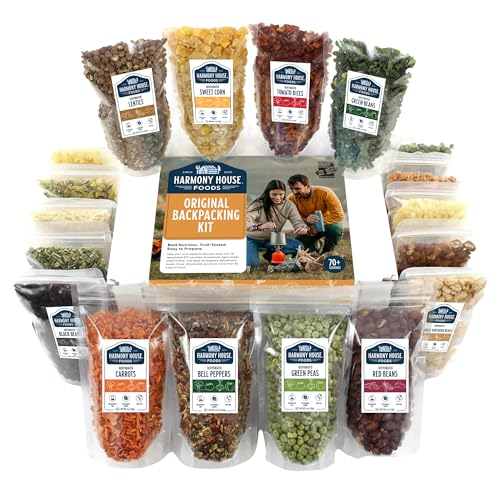
This air-dried vegetable, bean, and lentil kit earned Backpacker Magazine’s Editor’s Choice award because it solves a specific problem: how to add real, whole-food nutrition to trail meals without carrying wet weight or chemical preservatives. With 18 individual resealable pouches inside one 4.5-pound bundle, you get over 70 servings of single-ingredient vegetables and legumes that you can mix and match to build custom bowls—Mexican, Italian, Creole, ramen-style—without being locked into a brand’s flavor profile.
The air-drying process leaves the vegetables with a denser, chewier texture than freeze-dried options, which means heartier pieces like peas and green beans benefit from a longer soak—reviewers recommend 15-20 minutes instead of the suggested 10. Cabbage, bell peppers, carrots, and onions rehydrate beautifully and retain strong aroma, while the black beans and red lentils add valuable plant-based protein. The kit contains no additives, no preservatives, and is certified gluten-free and Kosher OU.
If you prefer to control your own seasoning and avoid the high sodium typical of pre-portioned adventure meals, this kit gives you a versatile, unprocessed base. It is also ideal for households that want to keep small amounts of varied veggies on hand without buying whole bunches that spoil.
Why it’s great
- Versatile single-ingredient pouches let you create diverse meals without flavored additives.
- Lightweight at 4.5 lbs for 70 servings—excellent calorie-to-weight ratio for backpacking.
- Backpacker Magazine Editor’s Choice winner confirms field-proven quality.
Good to know
- Air-dried texture requires longer rehydration than freeze-dried competitors.
- No seasoning included—you must bring your own spices and broth base.
3. Harmony House Dehydrated Vegetable Sampler
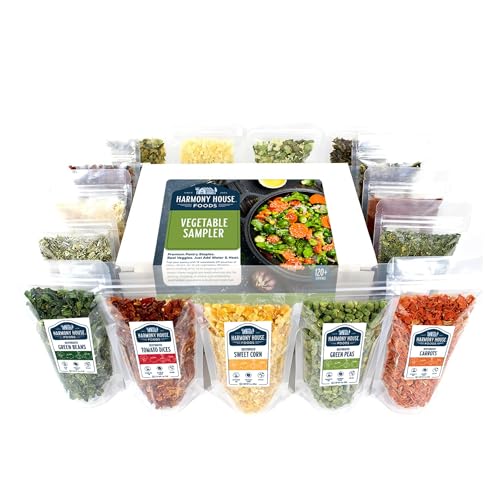
This 15-pouch sampler is the ideal starting point for anyone new to dehydrated vegetables. It contains individual zip-pouches of broccoli, cabbage, carrots, celery, corn, green beans, jalapeños, leeks, onions, peas, bell peppers, potatoes, spinach, and tomatoes—all non-GMO, gluten-free, and Kosher OU. The yield of 40 total cups (10 quarts) when rehydrated makes it a practical bulk option for campers, preppers, and home cooks alike.
Reviewers on the John Muir Trail report that these veggies kept them feeling healthier than freeze-dried carb-heavy meals, with the tomato powder being a standout favorite for adding depth to ramen and soups. A repeated caution: the jalapeño pouch includes seeds and is extremely spicy—use sparingly unless you want serious heat. Carrots take the longest to rehydrate; overnight soaking in cold water works best, while quicker vegetables like spinach and bell peppers reconstitute in minutes.
If you want to test a wide range of dehydrated produce before committing to a larger bulk system, or if you need lightweight vegetables to supplement existing emergency food, this variety pack provides an affordable, low-risk way to build experience with rehydration timing and texture expectations.
Why it’s great
- 15 unique vegetable pouches let you discover personal favorites before buying bulk.
- Non-GMO, gluten-free, and Kosher certification covers most dietary restrictions.
- Lightweight and yields 40 cups—excellent for adding variety to backpacking meals.
Good to know
- Jalapeño pouch is very hot with seeds included—pay attention during cooking.
- Carrots and denser vegetables benefit from overnight soaking for best texture.
4. Its Delish Deluxe Dried Vegetable Soup Mix

This 4-pound restaurant-gallon jug of pre-mixed dried vegetables focuses on a core five-ingredient blend: carrot, onion, celery, bell pepper, and tomato. It is designed for high-volume kitchen use—stews, casseroles, soups, scrambled eggs, and ramen—rather than for ultra-light backpacking. The plastic jug with a handle makes daily scoop-and-store access far easier than fumbling with multiple pouches, and the resealable lid keeps moisture out for years of pantry storage.
Reviewers appreciate the finely diced pieces that soften quickly in boiling liquids; many parents use it to hide vegetables in kid-friendly meals like marinara sauce or meatloaf because the small bits go unnoticed. The blend contains no MSG, no additives, and is certified Kosher OU, so it fits clean dietary requirements. The primary criticism is that at this price point, the per-pound cost is higher than buying bulk singles—but you pay for the convenience of a pre-mixed, ready-to-pour blend.
For home cooks who need a constant, no-prep vegetable base for daily cooking, or for emergency planners who want a sealed jug to supplement freeze-dried entrées, this is the most practical dehydrated vegetable solution in terms of access speed and portion control.
Why it’s great
- Pre-mixed five-vegetable blend eliminates guesswork for soups and stews.
- Restaurant jug with handle is easy to store and pour for regular use.
- Finely diced pieces rehydrate quickly and blend seamlessly into cooked dishes.
Good to know
- Higher per-pound cost compared to buying individual vegetable types in bulk.
- Air-dried texture means longer simmer times than freeze-dried alternatives.
5. Ready Hour Black Bean Burger Mix
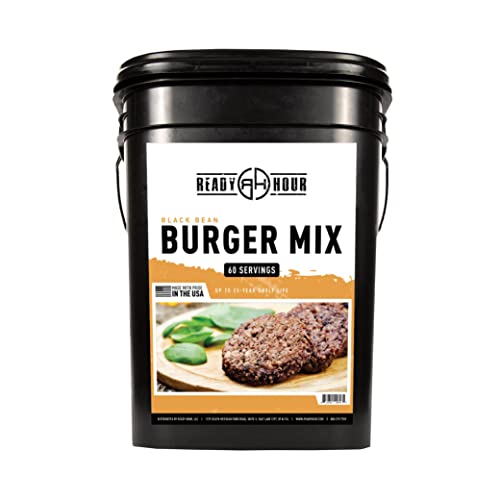
Ready Hour addresses a gap in most emergency food supplies: a plant-based protein that actually tastes good. The black bean burger mix combines black beans, rice, and oats into a dry powder that you rehydrate and shape into patties, delivering a savory, slightly smoky flavor that meat-eaters in customer reviews genuinely enjoy. Each resealable pouch provides 6 servings, with the full bucket containing 10 pouches for 60 total servings—all non-perishable for 25 years in a cool, dry spot.
The quadruple-wrapped pouching system protects against oxygen and moisture better than standard single-layer packaging, and the bucket itself is flood-safe with a carry handle for easy transport. Nutritionally, black beans provide 15 grams of protein per cup, making this a solid source of sustained energy without the sodium load found in many pre-seasoned entrées. The main criticism is portion size: some users find the patties on the smaller side, and the mix benefits from added water or vegetable broth to adjust texture.
If you are vegan, vegetarian, or simply want a non-perishable protein alternative that tastes craveable enough to eat before an emergency even happens, this is the most palatable long-term storage black bean burger mix on the market.
Why it’s great
- Plant-based protein with 25-year shelf life—rare for a non-MRE protein option.
- Strong flavor profile appeals even to meat-eaters according to verified reviews.
- Quadruple-wrapped pouching ensures long-term freshness against moisture.
Good to know
- Bucket footprint is slightly smaller than standard stackable containers.
- Patties come out on the smaller side; you may want two per meal for hunger satisfaction.
6. 2026 Inspection MRE Case – 24 Meals
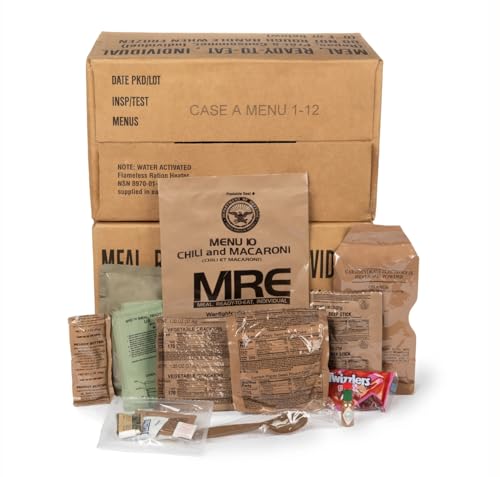
This 24-meal MRE case from Betterbundle offers the highest calorie density in the roundup—each Meal Ready-to-Eat provides 1,000-1,300 calories, making it the best option for sustained high-output environments like hunting, construction, or long field assignments. The 2026 inspection date means these were packed and sealed recently, giving a full 10-year shelf life from that inspection mark. Each case includes a variety of menus with entrées, sides, desserts, accessory packs, and flameless ration heaters that require only a measured amount of water to activate.
Customer feedback praises the value at roughly -4 per meal, with entrées like pizza slices and beef stroganoff receiving surprisingly positive reviews for MRE quality. The accessory packs add variety—jalapeno cashews, beef sticks, Combos, and coffee—which helps break the monotony of eating from pouches. Some consignments have been missing coffee packets or included out-of-date Reese’s pieces that caused minor stomach issues, so inspecting each pouch upon arrival is recommended.
For anyone needing shelf-stable, no-cook, high-calorie rations for mobile use, this case hits a sweet spot between military-grade durability and consumer-friendly pricing.
Why it’s great
- 1,000-1,300 calories per pouch provides genuine energy for heavy physical exertion.
- Flameless heaters make hot meals possible without a stove or fire.
- Excellent per-meal price point for the quantity and quality included.
Good to know
- Some pouches may arrive missing coffee or with out-of-date snacks—inspect contents.
- High sodium and sugar levels make these unsuitable as a sole daily diet long-term.
7. ReadyWise Emergency Food Supply – 360 Servings

The ReadyWise 360-serving kit is the highest-capacity option here, spread across three stackable buckets that each contain about 120 servings of freeze-dried and dehydrated entrées and breakfast items. The lineup includes Cheesy Macaroni, Lasagna, Pasta Alfredo, and a Brown Sugar & Maple Multi Grain Cereal with syrup, covering comfort-food staples that rehydrate with just boiling water. The split bucket lid doubles as a serving tray, a practical design touch that keeps the prep process tidy during power outages or campsite cooking.
Reviews consistently note that taste is decent but not gourmet, and that the advertised serving counts can be misleading for calorie planning—each serving typically runs only 200-250 calories, meaning a single adult needs two servings per meal to reach even a modest 1,800-calorie daily target. The 25-year shelf life is genuinely useful for rotation-free long-term storage, though the buckets are heavy at 62 pounds total, making them stationary pantry items rather than mobile survival gear.
For families or households wanting a turnkey solution to cover one person for about a month without needing to piece together multiple brands, the ReadyWise bucket system offers the simplest path to comprehensive emergency food storage in a sealed, stackable format.
Why it’s great
- 360 servings spread across three sealed buckets for complete household coverage.
- 25-year shelf life in Mylar pouches with oxygen absorbers ensures long dormancy.
- Split lid doubles as serving tray—a thoughtful convenience feature.
Good to know
- Serving size yields only 200-250 calories—plan on doubling portions for realistic meals.
- Heavy 62-pound total weight makes storage location a permanent decision.
FAQ
How do I calculate the real number of days a dehydrated food kit will last me?
Why do some dried vegetables require overnight soaking while others rehydrate in minutes?
Can I use dehydrated foods past their printed shelf life dates safely?
Final Thoughts: The Verdict
For most users, the best dehydrated foods winner is the Mountain House 3-Day Kit because it combines the industry’s longest 30-year shelf life with genuinely good-tasting freeze-dried meals that rehydrate in under 10 minutes. If you want a versatile, whole-vegetable base for custom trail cooking, grab the Harmony House Backpacking Kit. And for a full household emergency supply that covers weeks of breakfasts and dinners, nothing beats the ReadyWise 360-Serving Bucket Kit.

Mo Maruf
I created WellFizz to bridge the gap between vague wellness advice and actionable solutions. My mission is simple: to decode the research and give you practical tools you can actually use.
Beyond the data, I am a passionate traveler. I believe that stepping away from the screen to explore new environments is essential for mental clarity and physical vitality.