Our readers keep the lights on and my smoothie glass nicely filled. As an Amazon Associate, I earn from qualifying purchases.
Straining to catch every syllable in a conversation, missing the punchline of a joke, or turning the TV volume up to a level that bothers everyone else in the room—these are the daily frustrations that drive the search for a better listening solution. Earbuds designed for the hearing impaired are no longer simple amplifiers; they are precision tools that separate speech from noise, enhance critical frequencies, and in some cases, provide clinically validated hearing support.
I’m Mohammad Maruf — the founder and writer behind WellFizz. This guide is built from hundreds of hours spent cross-referencing user reviews, technical datasheets, and real-world complaint patterns across seven leading models to identify which earbuds actually deliver on their promise of clearer hearing.
Whether you need open-ear awareness for safety, Bluetooth streaming for TV dialogue, or an OTC hearing aid with smartphone control, this analysis of the best earbuds for hearing impaired will help you choose the model that fits your specific hearing needs and daily routine.
How To Choose The Best Earbuds For Hearing Impaired
Choosing the right pair requires matching your specific hearing profile to the device’s core architecture. Not every earbud labeled “hearing aid” or “amplifier” works for every degree of loss, and the wrong choice can leave you with a box of buzzing static rather than clearer conversation.
Gain, Frequency Bands, and Your Hearing Loss Profile
The maximum gain measured in decibels (dB) determines how much the earbud can boost incoming sound. A 36 dB gain, common in basic amplifiers, works for mild hearing loss but falls short for moderate or severe loss. Models offering 50 dB gain or multiple frequency programs—high, low, mid, and wide—let you tailor the boost to your specific audiometric curve. If your hearing loss is concentrated in the high-frequency range where speech consonants live, a device with adjustable frequency bands is essential.
Battery Life and Power Source
Removable zinc-air batteries, like the P675 cells used in many behind-the-ear amplifiers, offer exceptional longevity—up to 500 hours per battery—but require periodic replacement. Rechargeable lithium-ion packs in charging cases provide convenience and eliminate the cost of disposables, though their runtime per charge ranges from 6 to 20 hours depending on the model and whether noise reduction is active. Buyers who forget to charge devices or who use earbuds all day often prefer the disposable route, while tech-savvy users lean toward rechargeable systems with visual charge indicators.
Open-Ear Awareness vs. In-Ear Isolation
An open-ear design that sits outside the ear canal preserves your ability to hear ambient sounds—important for safety during walks, workouts, or TV watching where you need to hear doorbells or conversations from others in the room. In-ear designs that create a full seal offer better noise isolation and higher gain but can feel isolating or uncomfortable for all-day wear. The choice depends on whether your priority is situational awareness or maximum amplification.
Quick Comparison
On smaller screens, swipe sideways to see the full table.
| Model | Category | Best For | Key Spec | Amazon |
|---|---|---|---|---|
| Apple AirPods Pro 2 | Premium TWS | Clinically validated hearing aid feature + music | H2 chip with audiogram-based hearing test | Amazon |
| SHOKZ OpenFit Pro | Open-Ear TWS | All-day comfort with open-ear noise reduction | 50-hour total battery with wireless charging | Amazon |
| ELEHEAR-Beyond | OTC Hearing Aid | AI-powered speech enhancement for moderate loss | 50 dB max gain, 100-hour total battery | Amazon |
| AXIL XCOR PRO | Hearing Protection | Shooting and loud environment protection + enhancement | 85 dB compression threshold, IPX5-rated | Amazon |
| Avantree Medley Air | TV Listening | TV dialogue clarity with optical passthrough | Open-ear design, 8-hour battery, 100m range | Amazon |
| BIBIED Digital Rechargeable | In-Ear Amplifier | Budget-friendly rechargeable for mild loss | 2-channel digital, 30-hour runtime per charge | Amazon |
| Kituwant Hearing Amplifier | BTE Amplifier | Long disposable battery life for seniors | 500-hour zinc-air battery, 36 dB gain | Amazon |
In‑Depth Reviews
1. Apple AirPods Pro 2
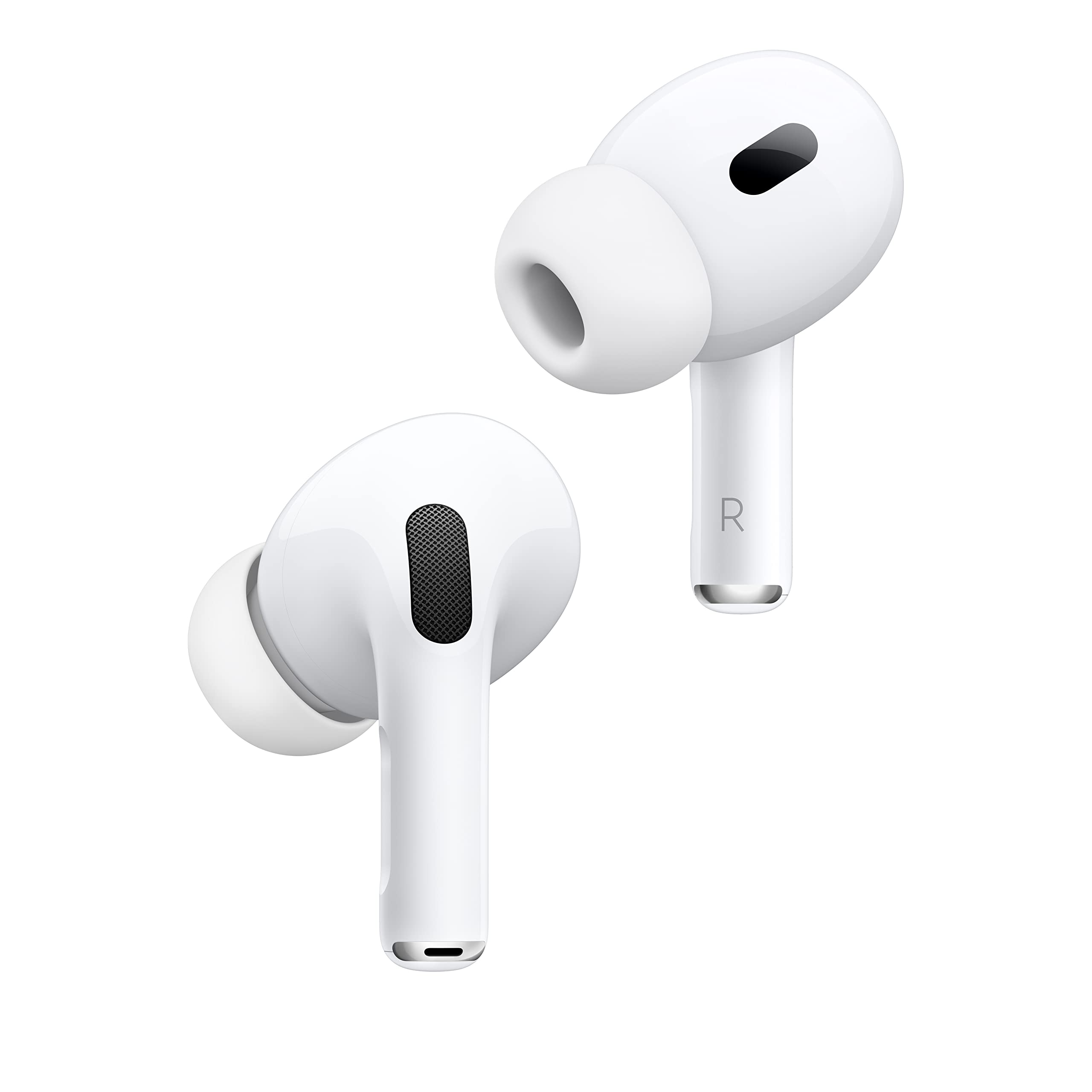
The AirPods Pro 2 represent a genuine breakthrough for the hearing impaired because they include the world’s first all-in-one hearing health experience: a clinically validated Hearing Test that builds a personal audiogram, a clinical-grade Hearing Aid feature, and active Hearing Protection that limits exposure to loud impulses. The H2 chip drives Active Noise Cancellation that removes up to 2x more background noise than the previous generation, while Transparency mode and Adaptive Audio seamlessly blend isolation with ambient awareness. Users with mild to moderate loss have reported that the hearing aid function outperforms commercial aids costing several times more, especially in noisy environments like cars or crowded rooms.
The low-distortion, custom-built driver delivers crisp highs and full bass for music and calls, and Voice Isolation dramatically improves phone call clarity in loud conditions. Conversation Awareness automatically lowers media volume when someone speaks to you, so you never miss a word. The four-pair silicone tip set (XS to L) creates an acoustic seal that keeps the earbuds secure, though some users with unusually shaped canals may need to experiment to find the right fit. Battery life reaches 6 hours with ANC active, and the MagSafe charging case provides 30 total hours along with Precision Finding via a built-in speaker.
Setup and feature configuration initially feel dense—the hearing aid function requires an iOS device to run the audiogram test—but once calibrated, the experience is seamless. The IP54 dust, sweat, and water resistance rating makes them suitable for workouts and outdoor use. For the hearing impaired who also want a premium music earbud, this is the single device that does both jobs without compromise.
Why it’s great
- Clinically validated Hearing Test and Hearing Aid feature built into a premium TWS earbud
- Exceptional ANC and Transparency modes adapt to any environment
- Excellent sound quality for music, calls, and spatial audio with Dolby Atmos
Good to know
- Full hearing health features require an iOS device and the latest iOS version
- Ear tips may not fit all ear shapes perfectly; try the included XS size for smaller canals
- Battery life at 6 hours with ANC is adequate but not class-leading
2. SHOKZ OpenFit Pro
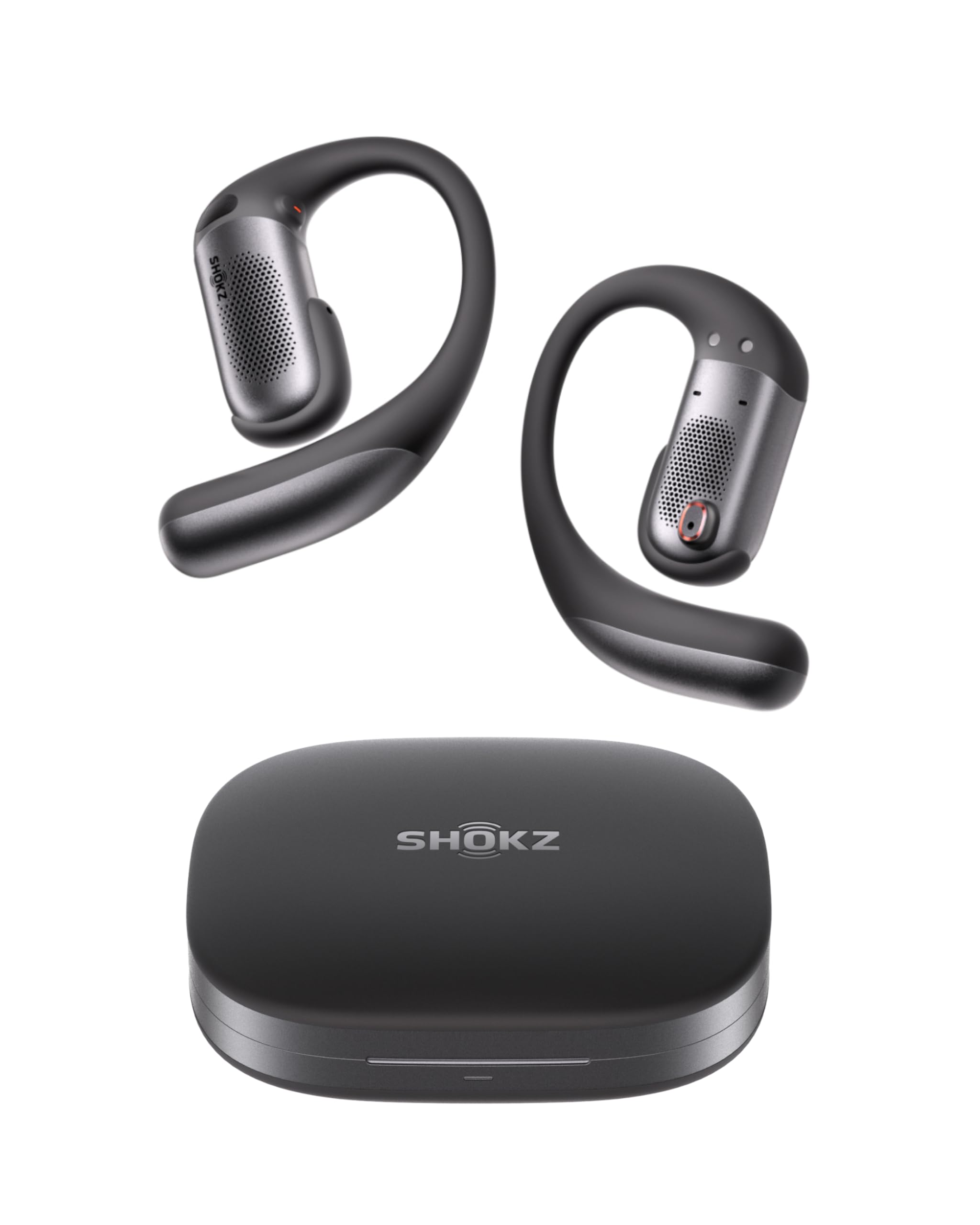
The SHOKZ OpenFit Pro redefines what an earbud for the hearing impaired can feel like. Its open-ear design sits entirely outside the ear canal, held in place by flexible nickel-titanium alloy ear hooks wrapped in Ultra-Soft Silicone 2.0. This architecture preserves full situational awareness—you hear traffic, doorbells, and conversations around you without removing the earbuds—while the DirectPitch 3.0 technology minimizes sound leakage. The 11 × 20 mm dual-diaphragm driver, powered by Shokz SuperBoost, delivers rich, balanced audio with deep bass, optimized for Dolby Atmos with head tracking. For hearing impaired users who find in-ear seals uncomfortable or claustrophobic, the OpenFit Pro is a revelation.
The innovative Open-Ear Noise Reduction is the first of its kind in a Shokz product, using an ear-adaptive algorithm to analyze ambient noise in real time and reduce distractions without sealing the ear. Five EQ presets plus two custom profiles let you tailor the sound for speech clarity, workouts, or quiet listening. The triple-mic system with AI voice recognition cuts background noise by up to 99.4%, making phone calls exceptionally clear even in windy conditions up to 25 km/h. Physical buttons provide reliable control even with wet hands—a welcome alternative to finicky touch panels.
Battery life reaches 12 hours on a single charge with noise reduction off, and the charging case extends total playtime to 50 hours. A 10-minute quick charge delivers 4 hours of use, and wireless charging adds convenience. The IP55 rating shrugs off sweat and rain. Some users note the earbuds feel slightly chunky, and the residual static noise when no audio is playing can be a minor annoyance. For all-day comfort and environmental awareness, this is the premier open-ear choice.
Why it’s great
- Incredibly lightweight and comfortable for all-day wear without ear canal pressure
- Open-Ear Noise Reduction reduces distractions while maintaining natural awareness
- Excellent battery life and wireless charging case
Good to know
- Open-ear design means less bass and gain compared to in-ear models
- Residual static noise may be noticeable in quiet environments
- Some users find the ear hooks slightly small for larger ears
3. ELEHEAR-Beyond

The ELEHEAR-Beyond is an over-the-counter hearing aid that blurs the line between medical device and consumer electronics. Powered by VocClear AI Technology, it delivers a maximum gain of 50 dB with 24 dB of noise attenuation, making it suitable for individuals with mild to moderate hearing loss. The Receiver-in-the-Canal design keeps the device barely visible, while the lightweight contour shape and soft materials conform to the ear’s unique anatomy for comfortable all-day wear. Multiple dome sizes are included to ensure a proper acoustic seal—a critical factor that users of competing budget aids often struggle with.
The companion ELEHEAR smart app, available for iOS and Android, offers deep customization: per-ear volume and tone adjustment, AI translation, serene sound relief for tinnitus, and telephone speech enhancement. An in-app hearing test can generate a custom compensation curve that tailors the device to your specific loss pattern. Bluetooth 5.3 connectivity allows direct streaming of music and calls, though audio quality for music is adequate rather than superb—the primary mission is speech clarity. The rechargeable batteries provide 20 hours of runtime on a single charge, and the charging case holds an additional 4 full charges for a total of 100 hours, eliminating battery anxiety.
Users with severe hearing loss have reported that the ELEHEAR-Beyond outperformed prescription aids costing thousands of dollars, particularly in background noise control. Some complaints involve intermittent Bluetooth connectivity and a buzzing sensation with certain instruments like guitar, suggesting the noise cancellation algorithm occasionally struggles with tonal music. The ElePro remote care service connects users with an audiologist for adjustments, adding a layer of support rarely found at this tier. For a true OTC hearing aid with app-driven customization and long battery life, this is the leader.
Why it’s great
- 50 dB gain with AI speech enhancement for moderate hearing loss
- Comprehensive app with hearing test, custom EQ, and tinnitus relief
- 100-hour total battery eliminates daily charging concerns
Good to know
- Music streaming quality is adequate but not Hi-Fi; speech is the focus
- Some users report Bluetooth pairing quirks and occasional buzzing with live instruments
- Not recommended for severe or profound hearing loss without audiologist consultation
4. AXIL XCOR PRO
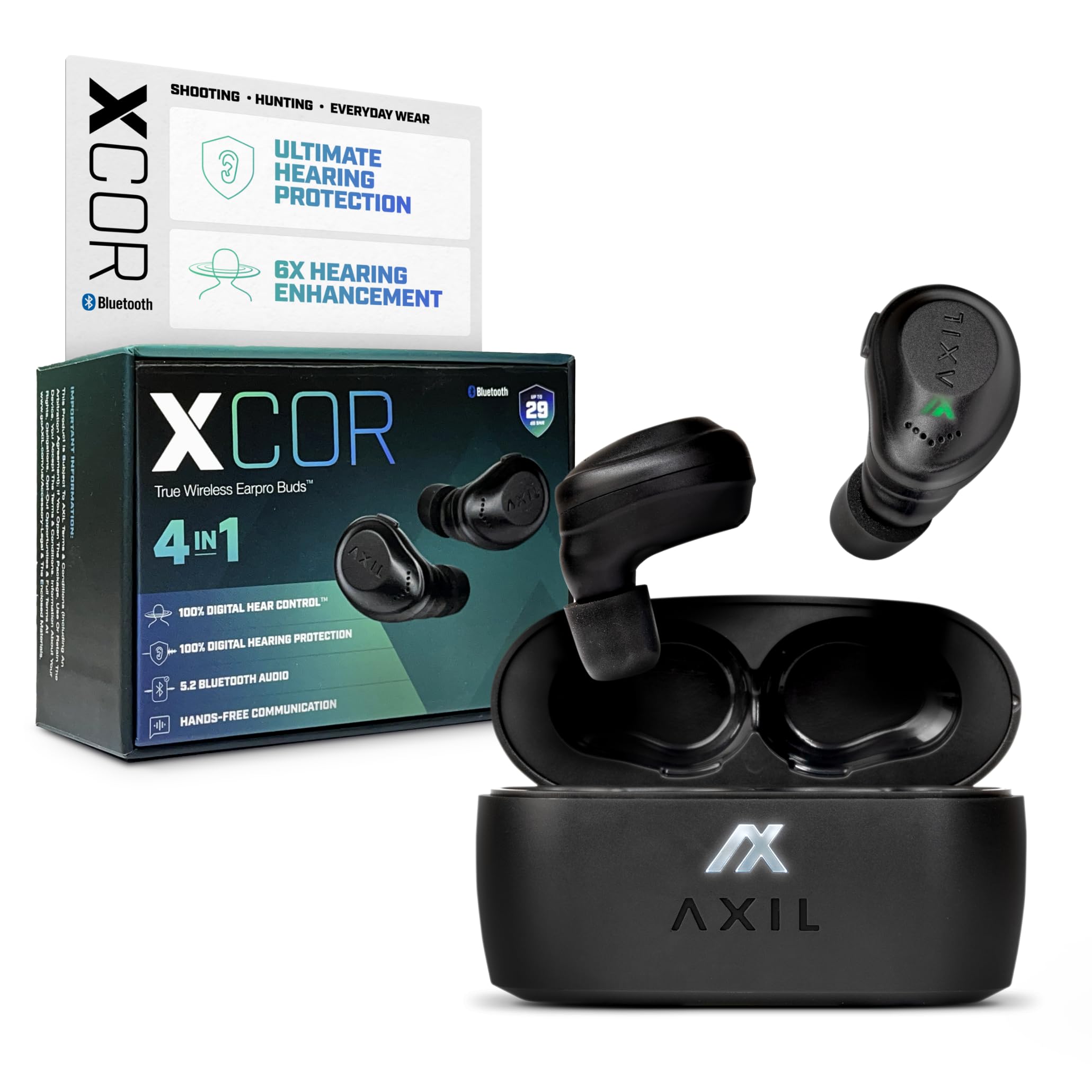
The AXIL XCOR PRO is built for environments where hearing protection is as critical as hearing enhancement. Its digital compression algorithm does not simply cut off loud sounds—it compresses noises above 85 dB, such as gunfire or power tools, allowing you to hear conversation and ambient sounds while preventing damage from damaging impulses. This makes the XCOR PRO a dual-purpose device for shooters, construction workers, and anyone exposed to intermittent loud noise who also needs to hear speech clearly. The true wireless form factor with touch controls eliminates the bulk of traditional electronic ear muffs.
Bluetooth 5.2 handles hands-free calls and music streaming, though the audio signature is tuned for function rather than fidelity—bass is polite, and the mids can sound slightly metallic during pass-through mode. The hearing enhancement mode boosts ambient sounds seamlessly, and users report that the compression kicks in smoothly without the jarring cutoff of competing products. Battery life reaches 12 hours on a single charge, and the IPX5 rating resists sweat and rain, holding up during intense physical activity. The included charging case provides additional charges on the go.
Some users find the smallest foam tips still too large for comfort, requiring moisture for insertion. The sound pass-through can introduce an artificial “radio” quality to environmental sounds, and the low battery alerts are annoyingly persistent. The XCOR PRO also shows its limitations in construction or warehouse settings where continuous background noise is high. For its intended niche—hearing protection with enhancement for shooting and outdoor sports—it performs excellently, but it is not a general-purpose hearing aid for quiet indoor conversation. A specialized tool for a specific job.
Why it’s great
- Digital compression protects hearing from loud impulses without cutting out completely
- Comfortable and secure fit for active use, including with cheek weld for shooting
- 12-hour battery life and IPX5 weather resistance
Good to know
- Pass-through audio can sound artificial or metallic
- Foam tips may be uncomfortable for some ear shapes; moisture needed for insertion
- Music quality is decent but not comparable to dedicated music earbuds
5. Avantree Medley Air

The Avantree Medley Air solves one specific problem better than any other earbud on this list: TV dialogue clarity without isolating you from your environment. The open-ear design leaves your ear canals unobstructed, so you can hear a partner’s question or a doorbell while following the show. The included Bluetooth transmitter and charging dock combo connects to your TV’s optical (TOSLINK) or AUX 3.5mm output and streams audio to the earbuds with minimal latency. An optical passthrough allows other household members to continue using the soundbar or speakers while you listen personally—a feature that HDMI ARC users should note is not supported.
The audio profile is tuned specifically to enhance speech frequencies, making news anchors, movie dialogue, and conversational scenes easier to follow without raising the TV’s master volume. This is a critical advantage for hearing impaired viewers whose family may prefer lower TV volumes. The earbuds themselves are lightweight and rest gently on the ears, though some users report that the fixed ear hooks feel too short, causing pressure when leaning back against a chair or pillow. Battery life hits 8 hours per charge, and the dock simultaneously charges the earbuds while staying connected to the TV, so they are always ready.
Setup is straightforward for TVs with optical or AUX ports, but buyers must confirm their TV has an available optical output before purchase—HDMI-only TVs are incompatible. Some users with profound hearing loss found the maximum volume insufficient even with the earbuds at full gain, and exchanged the unit for an over-ear model. For moderate hearing loss focused on TV dialogue, the Medley Air delivers an elegant, user-friendly solution that the whole household can appreciate.
Why it’s great
- Open-ear design allows full environmental awareness while watching TV
- Optical passthrough lets others hear the soundbar while you listen privately
- Simple plug-and-play setup with no app or Wi-Fi required
Good to know
- Requires TV with optical or AUX output; HDMI-only TVs are not compatible
- Ear hooks may feel tight or uncomfortable when reclining
- Maximum volume may be insufficient for users with profound hearing loss
6. BIBIED Digital Rechargeable
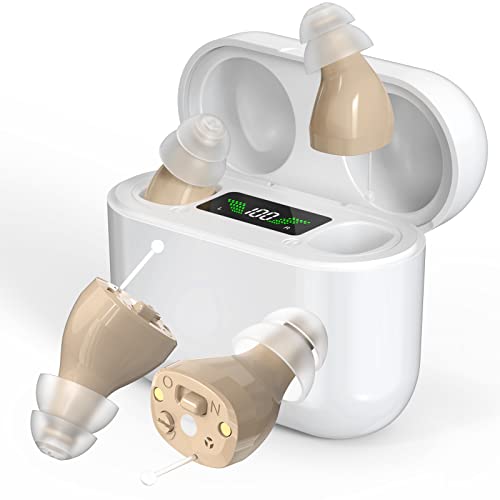
The BIBIED Digital Rechargeable hearing aid earbuds bring serious performance to the budget tier by focusing on the two specs that matter most for mild to moderate hearing loss: a 2-channel digital chip that handles background noise separation, and a rechargeable system that delivers 30 hours of runtime from the charging case. The invisible in-ear design uses ergonomically shaped plastic housings that sit discreetly in the ear canal, with multiple dome sizes included to achieve the proper seal. A power display on the charging case shows remaining battery percentage, preventing the anxiety of a dead device mid-day.
Audio sensitivity reaches 34 dB, which is sufficient for mild hearing loss but will not satisfy those with moderate-to-severe impairment. The button control system adjusts volume across several levels, though the lack of a companion app means you cannot fine-tune frequency response curves. Users praise the battery life, noting that a full charge lasts several days of regular use, and the charging case’s display eliminates guesswork. The included cleaning tools and multiple ear tips are generous additions for the price.
A recurring complaint centers on the protruding earbud length—some users find the tips too long, causing the earbuds to fall out unless pressed in constantly. Whistling can occur if the wrong dome size is chosen, but this is true of any in-ear hearing aid. The charging case display has been reported to fail after months of use, leaving users to guess at charge status. For a budget-friendly entry into digital hearing amplification with the convenience of rechargeable batteries, the BIBIED delivers solid value if you nail the fit.
Why it’s great
- Affordable entry point with digital 2-channel processing and rechargeable case
- Excellent battery life with visual charge display on the case
- Includes multiple dome sizes and cleaning tools for proper fit and maintenance
Good to know
- Earbud length may protrude too much for some ears, causing them to fall out
- Charging case display can fail over time, removing charge status visibility
- Limited to mild hearing loss; insufficient gain for moderate-to-severe impairment
7. Kituwant BTE Amplifier

The Kituwant Behind-the-Ear amplifier is the most straightforward device in this roundup: a rotating ear hook with a plastic body that houses a P675 zinc-air battery rated for 500 hours of use. With 36 dB of gain and four frequency programs (High, Low, Mid, and Wide), it provides basic tonal adjustment for mild hearing loss at a fraction of the cost of digital alternatives. The battery compartment accepts a standard 620mAh zinc-air cell, and replacement batteries are inexpensive and widely available—a genuine advantage over sealed rechargeable units when the battery eventually dies years down the line.
Customer reviews are split roughly down the middle. Users with mild hearing loss who have dexterity challenges (tremors, arthritis) appreciate the simple on/off switch and large volume dial, reporting that the device improves their ability to engage in conversation. However, a significant minority report constant background hiss, ineffective frequency programs, and the fundamental limitation that the device is an amplifier, not a hearing aid—it makes all sounds louder (keyboard clicks, refrigerator hums) without intelligently separating speech from noise. The 36 dB gain cap means it will not help users with moderate or severe loss.
The included cleaning brush and two starter batteries are thoughtful touches, and the beige color tries to be discreet, though the plastic build feels utilitarian. The four frequency programs offer some flexibility, but users in complex acoustic environments like restaurants will likely find the hissing unacceptable. For seniors with mild loss in quiet settings who want a disposable battery solution with zero charging fuss, the Kituwant does the job. For anyone needing clearer speech in noise, look to the digital or AI-powered models higher up this list.
Why it’s great
- Removable zinc-air batteries last 500 hours and are easy to replace
- Simple physical controls ideal for users with dexterity challenges
- Four frequency programs provide basic tonal adjustment for quiet environments
Good to know
- Constant background hiss reported in quiet and noisy settings
- 36 dB gain insufficient for moderate or severe hearing loss
- Amplifier design makes all sounds louder without speech-noise separation
FAQ
How do I know if 36 dB gain is enough for my hearing loss?
Can I use open-ear earbuds like the SHOKZ OpenFit Pro in place of hearing aids?
Do hearing impaired earbuds work with Bluetooth for phone calls?
Which style is better for someone with arthritis in their hands?
Final Thoughts: The Verdict
For most users, the earbuds for hearing impaired winner is the Apple AirPods Pro 2 because it combines clinically validated hearing aid functionality with premium ANC and music quality in one seamless device. If you need open-ear comfort for all-day wear and environmental awareness, grab the SHOKZ OpenFit Pro. And for a dedicated OTC hearing aid with AI-powered speech enhancement and 100 hours of total battery, nothing beats the ELEHEAR-Beyond.

Mo Maruf
I created WellFizz to bridge the gap between vague wellness advice and actionable solutions. My mission is simple: to decode the research and give you practical tools you can actually use.
Beyond the data, I am a passionate traveler. I believe that stepping away from the screen to explore new environments is essential for mental clarity and physical vitality.