Our readers keep the lights on and my smoothie glass nicely filled. As an Amazon Associate, I earn from qualifying purchases.
Dusting blinds is the chore everyone avoids until the slats are visibly caked, and then it becomes a frustrating battle with cloths that just redistribute the grime. A specialized tool is the only way to capture and remove dust from every slat simultaneously, turning a dreaded weekend task into a quick weekly routine.
I’m Mohammad Maruf — the founder and writer behind WellFizz. I’ve spent over one hundred hours analyzing the construction, materials, and real-world feedback on blind-dusting tools to identify which designs actually trap particles instead of scattering them.
This guide evaluates the top models by their ability to clean multiple slats at once, trap dust effectively, and endure repeated washing. Whether you need a microfiber wand, a feather duster, or a multi-finger scrubber, you will find the best duster for blinds for your home here.
How To Choose The Best Duster For Blinds
The right duster for blinds balances the material’s ability to trap dust with a design that fits between slats. You need a tool that maximizes contact with both the top and bottom of each slat in a single pass.
Head Material: Microfiber vs Feather vs Cotton
Microfiber is the dominant choice because its split fibers create static electricity that attracts and holds dust, rather than pushing it into the air. Feather dusters rely on natural oils and soft bristles to brush dust away, which works best for quick touch-ups on delicate surfaces but can scatter particles. Cotton sleeves are absorbent and work well for wet cleaning or scrubbing stubborn grime.
Number of Cleaning Fingers or Slat Coverage
Multi-finger designs (seven fingers) can clean six slats at once, dramatically reducing cleaning time on wide blinds. Single-head wands with a wide, flat microfiber pad cover a large area but may require two passes to hit the top and bottom of each slat. The ideal choice depends on the width of your blinds and your tolerance for repetitive motion.
Handle Ergonomics and Weight
Blind cleaning often involves reaching up or across windows, so a lightweight tool with a comfortable, non-slip grip prevents hand fatigue. Longer handles provide extra reach for high windows, while compact wands offer better control in tight spaces like mini blinds or air conditioner vents.
Quick Comparison
On smaller screens, swipe sideways to see the full table.
| Model | Category | Best For | Key Spec | Amazon |
|---|---|---|---|---|
| OXO Good Grips Microfiber Hand Duster | Microfiber Wand | Overall blind cleaning & allergy trapping | 18-inch reach, machine-washable head | Amazon |
| Casabella Blinds Cleaner | Microfiber + Nylon Brush | Detail cleaning & stubborn spots | 10-inch length, 3-slat coverage per pass | Amazon |
| HAOHOMIO 4 Pack Window Blind Cleaner | 7-Finger Microfiber Set | Speed cleaning & multi-room organization | 7-finger brush cleans 6 slats at once | Amazon |
| Lycbayn Genuine Ostrich Feather Duster | Feather Duster | Light touch-ups & delicate surfaces | 16-inch genuine ostrich feather head | Amazon |
| Weogot 10 Pcs Venetian Blind Cleaner Set | Multi-Tool Kit | Comprehensive cleaning: blinds, vents, tracks | 10-piece set with 2 multi-finger brushes | Amazon |
In‑Depth Reviews
1. OXO Good Grips Microfiber Hand Duster

The OXO Good Grips Microfiber Hand Duster is the benchmark for microfiber wand design. Its 18-inch length provides excellent reach for standard window heights, and the flat, tongue-shaped microfiber head slides perfectly between slats to capture dust from both the top and bottom surface. The high-density microfiber holds onto particles electrostatically rather than pushing them into the air, which makes it a strong choice for allergy households.
The slim profile allows easy maneuvering around light fixtures and into tight corners, while the soft, comfortable grip reduces hand strain during longer sessions. The head unsnaps from the handle for machine washing, and after a wash cycle it regains its dust-attracting charge without shedding fibers. Reviewers consistently note that it outperforms disposable dusters and cheap plastic-bristle alternatives.
One trade-off is that the single wide head requires a second pass to hit the top and bottom of each slat individually if your blinds are particularly dusty. But for regular upkeep, a single pass across the length of the blinds leaves surfaces noticeably cleaner. This is the tool most likely to replace every other duster in your cleaning caddy.
Why it’s great
- Electrostatic microfiber traps dust without chemicals or scattering
- Reusable, washable head reduces waste compared to disposable dusters
- Ergonomic non-slip grip is comfortable for extended window sessions
Good to know
- Single flat head may require two passes on heavily soiled blinds
- Some initial lint shedding on first use before washing
2. Casabella Blinds Cleaner
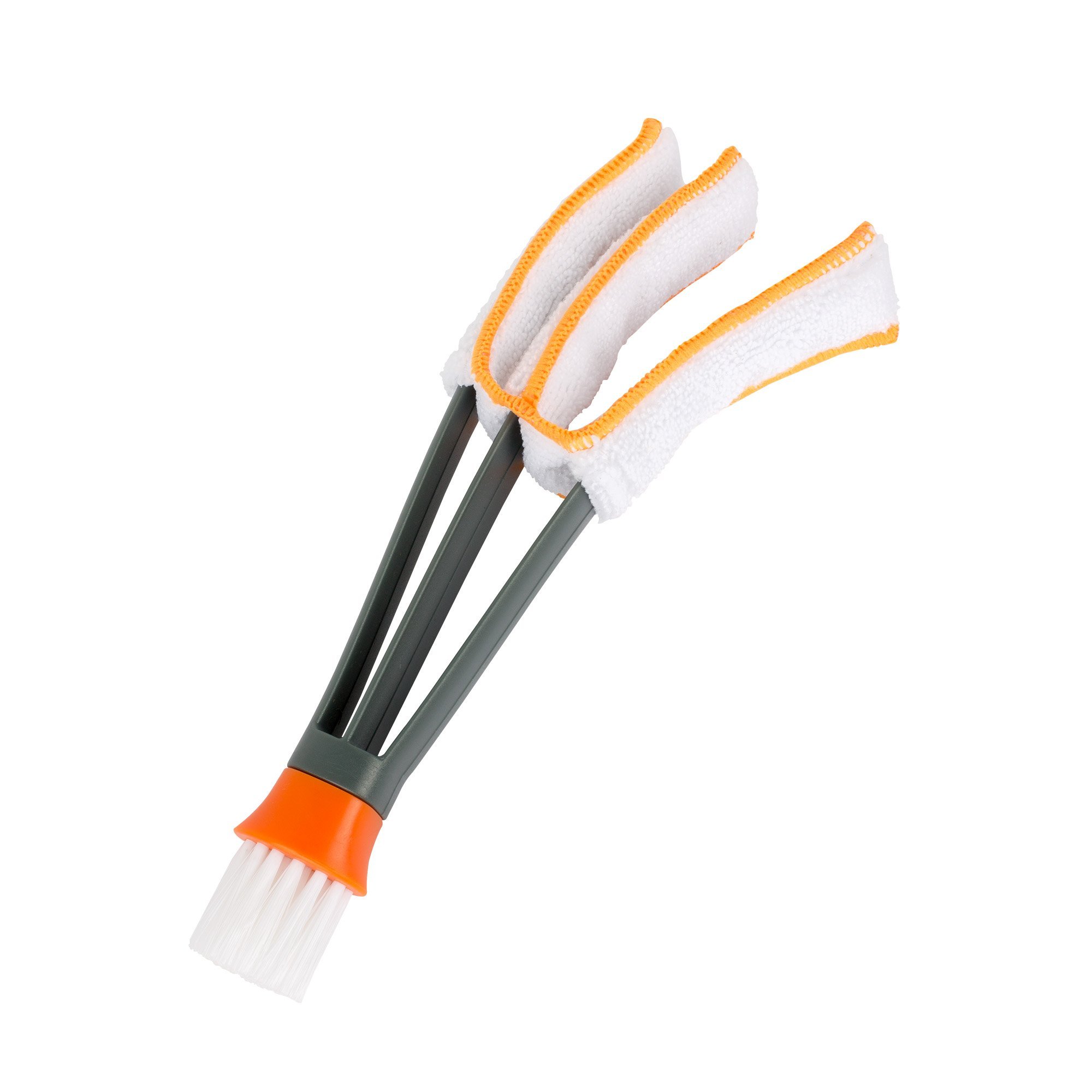
The Casabella Blinds Cleaner combines a microfiber cleaning pad with a nylon brush on the opposite end, giving you two tools in one compact head. The microfiber side is split into three cleaning fingers that can cover up to three horizontal slats per pass, while the brush end is designed for detailing brackets, cords, and tight corners that the pad cannot reach.
At 10 inches long, this tool is shorter than a wand but extremely easy to control on mini blinds and plantation shutters. The microfiber material attracts and holds dust effectively, and the entire pad is machine washable for reuse. Reviewers who tested it on urban soot and metal mini blinds reported significant dust removal without scratching the slats.
The main limitation is coverage: three slats per pass means more trips across the window compared to seven-finger alternatives. Some users also note that the pad does not always pull every trace of dust from the slat edges on the first swipe. However, the integrated brush makes this the most versatile tool for tackling blind hardware and tight crevices.
Why it’s great
- Dual-ended design: microfiber pad plus nylon detailing brush
- Compact and precise for mini blinds and shutters
- Machine-washable microfiber holds up through multiple cycles
Good to know
- Cleans only three slats per pass, slower on wide windows
- May require a second pass for heavily caked-on dust
3. HAOHOMIO 4 Pack Window Blind Cleaner Duster Tool
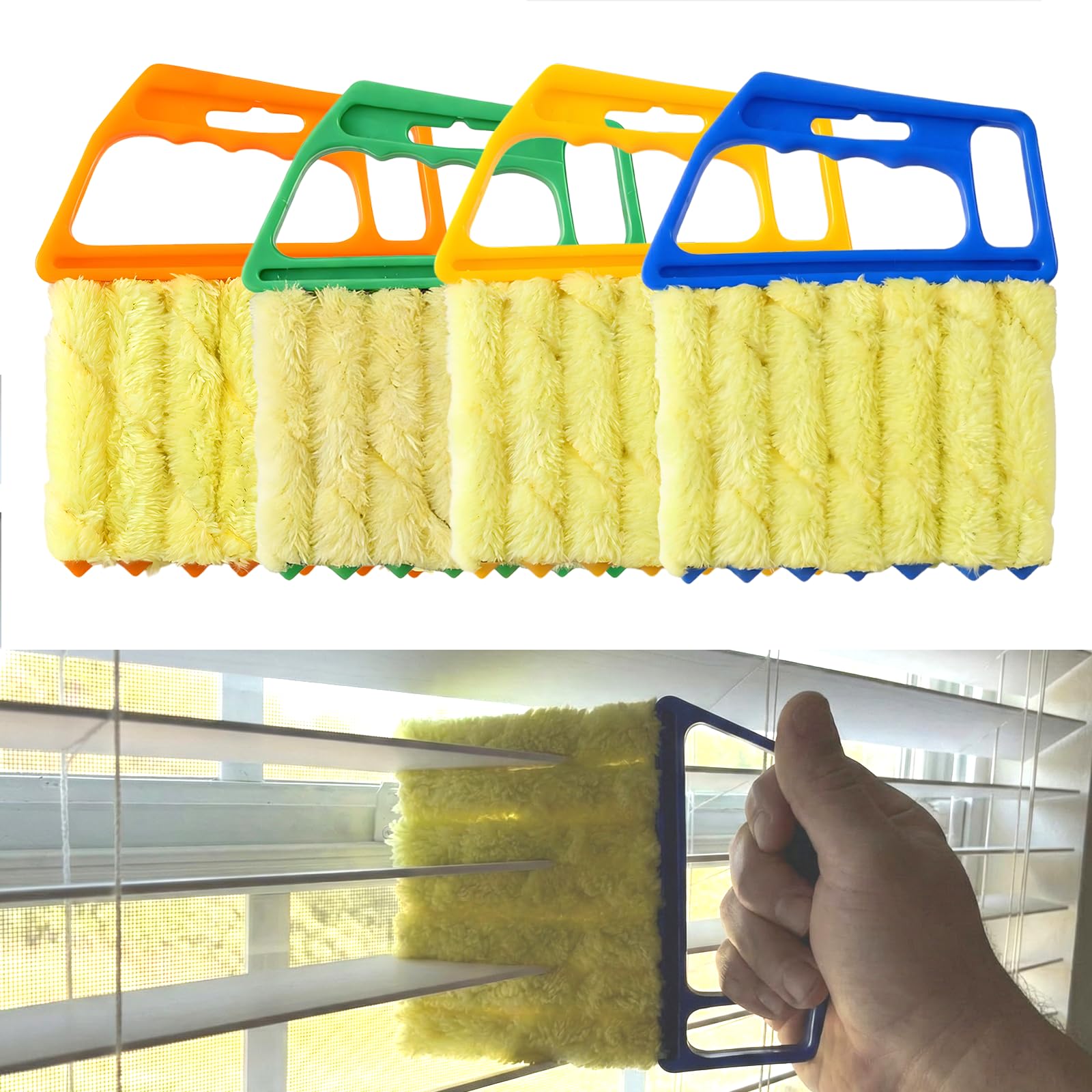
The HAOHOMIO 4 Pack is built for speed, using a seven-finger design that cleans six slats simultaneously. Each finger slides between slats while the microfiber sleeves trap dust from both the top and bottom edges in one pass. For a living room with standard horizontal blinds, this tool cuts the cleaning time in half compared to a single-head wand.
The set includes four color-coded brushes, which is genuinely useful for households that want to assign one brush to the kitchen, one to the bathroom, and so on. The high-density microfiber sleeves detach easily for machine washing and are soft enough to avoid scratching wood or vinyl slats. The ergonomic handle is lightweight and comfortable for overhead work.
A few reviewers report that getting the blind between the fingers takes a little practice, and the tool can feel bulkier than a wand for narrow or vertical blinds. The microfiber sleeves also attract pet hair effectively, which is a plus for homes with shedding animals. If your priority is cleaning as many slats as possible in the shortest time, this is the strongest performer.
Why it’s great
- Seven-finger brush cleans six slats per pass for maximum speed
- Four color-coded brushes allow room-specific use
- Washable microfiber sleeves trap dust and pet hair effectively
Good to know
- Requires a bit of practice to align slats between fingers
- Bulkier profile may not suit very narrow or vertical blinds
4. Lycbayn Genuine Ostrich Feather Duster
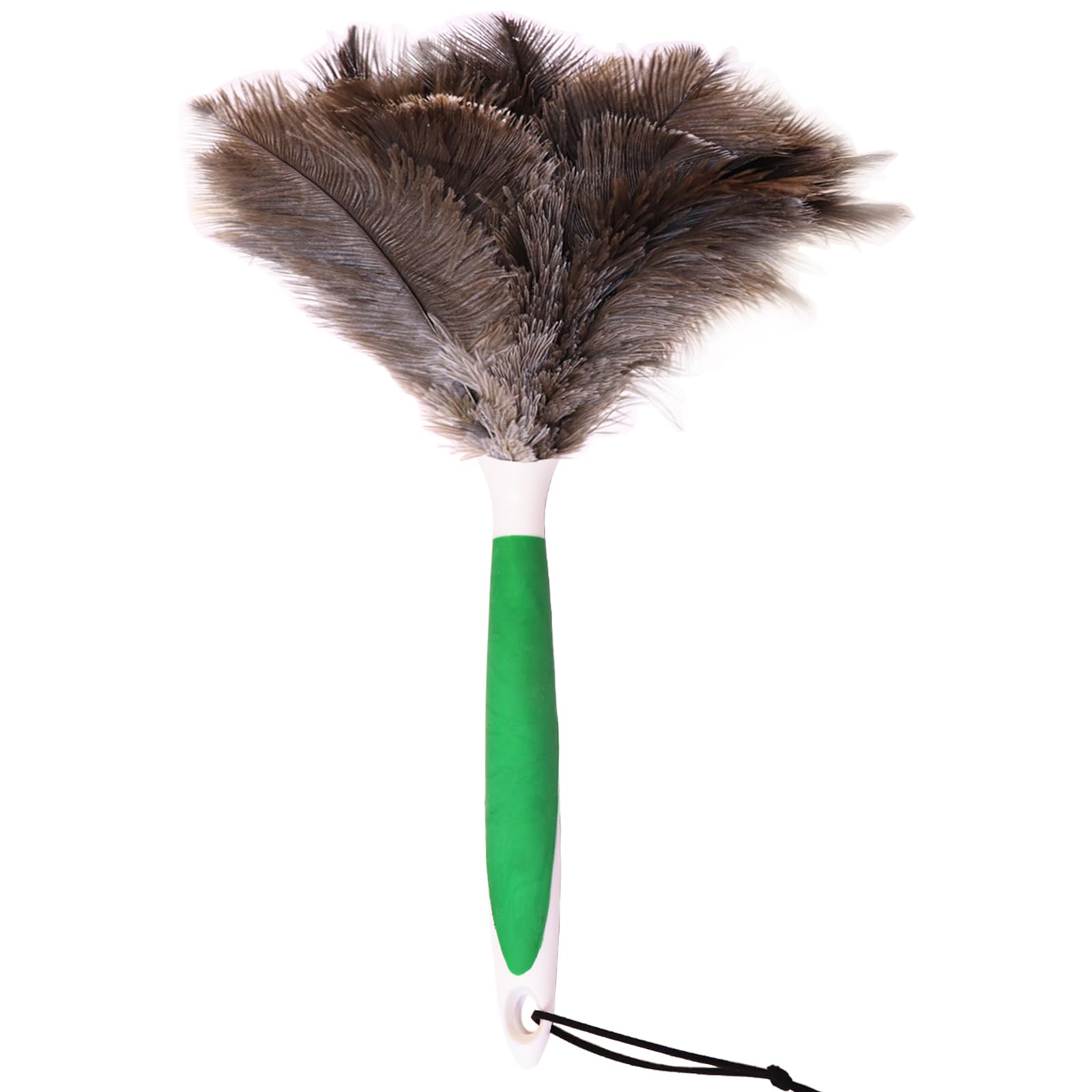
The Lycbayn Genuine Ostrich Feather Duster offers a classic approach to blind cleaning. The naturally shed soft feathers create a fluffy head that glides over slats without scratching, making it ideal for delicate surfaces like painted wood shutters or vintage mini blinds. The 16-inch handle provides a balanced reach for most window setups, and the tool weighs just under four ounces, virtually eliminating fatigue.
Unlike a synthetic feather duster, the genuine ostrich barbs have natural oil that helps attract and hold dust rather than simply brushing it off. To clean it, you simply shake it outdoors or rinse it gently with warm water and let it air dry. Reviewers praise its softness and effectiveness on electronics and collectibles, in addition to window treatments.
The trade-off is that feather dusters are more suited for light, regular maintenance than for deep cleaning heavily soiled slats. They can also scatter some particles into the air if used too aggressively. For a quick weekly touch-up that preserves the finish of your blinds, this feather duster is a reliably soft and effective choice.
Why it’s great
- Genuine ostrich feathers are soft and naturally trap dust
- Ultra-lightweight design reduces arm fatigue
- Easy to clean: shake outside or rinse with warm water
Good to know
- Best for light dusting, not deep cleaning of caked-on grime
- Feathers can shed a bit and may scatter dust if used forcefully
5. Weogot 10 Pcs Venetian Blind Cleaner Duster Tool Set

The Weogot 10 Pcs Set is a comprehensive kit designed for households that need to clean not just blinds but also window tracks, air conditioner vents, sliding door grooves, and ceiling fans. It includes two seven-finger Venetian blind brushes with washable microfiber sleeves, which offer the same multi-slat cleaning speed as dedicated blind dusters.
The set also contains a track cleaning sponge brush, several groove gap brushes, and an adjustable microfiber feather duster for broader surface dusting. The two different blind brush sizes (seven-finger and a smaller three-finger style) allow you to switch between standard horizontal slats and narrow vertical blinds. The ABS handles are lightweight but feel sturdy enough for repeated use.
Because this is a kit, the individual tools are smaller than a dedicated standalone blind duster, and some users find the slender handles less comfortable for extended sessions. The brushes do an adequate job on light to moderate dust, but overly heavy grime may require more elbow grease. For anyone who wants a single purchase that solves multiple hard-to-reach cleaning challenges, this kit delivers remarkable versatility.
Why it’s great
- Ten-piece set covers blinds, tracks, vents, and grooves
- Two sizes of blind brushes accommodate standard and narrow slats
- Washable microfiber sleeves are reusable and machine-friendly
Good to know
- Individual tools are smaller; handles may feel thin after long use
- Less effective on heavily caked-on grime without additional scrubbing
FAQ
Can I use a feather duster on all types of blinds?
How often should I wash microfiber duster sleeves?
Final Thoughts: The Verdict
For most users, the best duster for blinds winner is the OXO Good Grips Microfiber Hand Duster because its electrostatic microfiber traps dust effectively, its 18-inch reach suits most windows, and the washable design eliminates ongoing waste. If you want maximum cleaning speed, grab the HAOHOMIO 4 Pack and cover six slats per pass. And for a gentle, lightweight solution that protects delicate finishes, nothing beats the Lycbayn Ostrich Feather Duster.

Mo Maruf
I created WellFizz to bridge the gap between vague wellness advice and actionable solutions. My mission is simple: to decode the research and give you practical tools you can actually use.
Beyond the data, I am a passionate traveler. I believe that stepping away from the screen to explore new environments is essential for mental clarity and physical vitality.