Our readers keep the lights on and my smoothie glass nicely filled. As an Amazon Associate, I earn from qualifying purchases.
The wrong cutting board turns meat prep into a frustrating cycle of deep knife scars, stubborn bacterial absorption, and countertop slippage that can compromise both your blade and your food safety. Choosing the right material for raw meat requires balancing hardness, porosity, weight, and the specific hygiene demands that proteins bring to your kitchen workflow.
I’m Mohammad Maruf — the founder and writer behind WellFizz. I’ve spent hundreds of hours analyzing material composition, density testing results, sanitation protocols, and user-reported long-term performance across plastic, wood, bamboo, and TPU cutting boards used for meat.
After researching dozens of models across every relevant material category, I’ve narrowed the field to the strongest options. This guide breaks down what makes each material suited — or unsuited — for raw meat, so you can buy with confidence. Use it to find your ideal cutting board material for meat.
How To Choose The Best Cutting Board Material For Meat
Raw meat introduces three specific problems that a generic cutting board doesn’t handle well: deep groove formation from heavy chopping, rapid bacterial colonization on porous surfaces, and juices that pool without a proper containment system. Matching the board material to these challenges makes the difference between a board that lasts a few months and one that serves you safely for years.
Porosity and Sanitation
Non-porous materials like high-density polypropylene (HDPP), polyethylene (PE), and thermoplastic polyurethane (TPU) do not absorb meat juices into their structure, making them easier to sanitize between uses. Wood, especially end-grain, has natural antimicrobial properties but requires thorough hand-washing and periodic oiling to prevent deep bacterial penetration from proteins. If you value dishwasher sanitation, choose HDPP or TPU over bamboo or maple.
Knife Scar Depth and Blade Impact
Harder materials like glass or thin bamboo accelerate blade dulling because the cutting surface doesn’t give. Edge-grain wood and TPU offer a forgiving surface that preserves edge sharpness longer. HDPP is slightly harder than TPU but significantly softer than glass, striking a workable middle ground for heavy meat chopping. Deep scars on plastic boards create bacterial harbors, so a material that resists permanent gouging matters for raw meat use.
Juice Management and Board Stability
Meat releases blood and moisture during slicing. A board with a deep juice groove or built-in reservoir prevents countertop contamination. Larger boards — 18 by 12 inches and up — provide enough surface area to contain the mess. Weight also matters: boards under 3 pounds slide when you apply lateral pressure while carving. Heavier boards, especially those 6 pounds and above, stay planted without a wet towel underneath.
Quick Comparison
On smaller screens, swipe sideways to see the full table.
| Model | Category | Best For | Key Spec | Amazon |
|---|---|---|---|---|
| Thirteen Chefs 18×12 HDPP | HDPP Plastic | Dishwasher-safe daily meat prep | 18x12x0.75 inch, 5 lb, HDPP | Amazon |
| CHEFEAT TPU Cutting Board | TPU | Flexible, knife-friendly, foldable use | 17.3×12.6×0.14 inch, TPU | Amazon |
| MAYALEAD BBQ Prep Tub | Plastic Tub | Marinating, shredding, and transporting meat | 19x14x1.5 inch, collapsible tub | Amazon |
| CURTA 24×18 Red PE | PE Plastic | Commercial raw meat stations (HACCP red) | 24x18x0.5 inch, 5+ lb, PE | Amazon |
| FANICHI End Grain Wood | End-Grain Wood | Heavy butchering and dual-sided prep/serving | 20x15x1.5 inch, 10 lb, end-grain | Amazon |
| Greener Chef 24×18 Bamboo | Bamboo | Large turkey carving with pour spout | 24x18x0.75 inch, 6.8 lb, bamboo | Amazon |
| WoodForChef Maple | Edge-Grain Maple | Premium knife-friendly edge-grain use | 16x12x1.5 inch, 8 lb, maple | Amazon |
In‑Depth Reviews
1. Thirteen Chefs 18×12 HDPP Cutting Board

This board uses high-density polypropylene (HDPP), which offers superior heat tolerance compared to standard polyethylene. At 18 by 12 inches and 5 pounds, it stays firmly in place during heavy meat chopping but remains small enough to fit in standard home dishwashers. The black color follows HACCP guidelines for cooked meats during BBQ prep, though it works equally well for raw proteins.
The 3/4-inch thickness resists warping even after repeated high-temperature dishwasher cycles. Users consistently report no bowing or edge lifting after months of use. The textured surface helps grip food during slicing, though it can slide slightly on very smooth countertops if you apply aggressive lateral pressure.
One consideration: plastic cutting boards, including HDPP, will accumulate knife scars over time with serrated blades or cleavers. Those deep grooves can trap bacteria if not scrubbed thoroughly. For raw meat prep, this board performs best when you reserve it specifically for animal proteins and sanitize it after every use.
Why it’s great
- Dishwasher-safe up to 200°F for thorough sanitation
- Warp-resistant 3/4-inch HDPP construction
- HACCP color-coding fits meat-specific workflows
Good to know
- Plastic surface dulls knives faster than wood or TPU
- Deep scars from heavy cleavers can harbor bacteria
- Slides on polished granite or quartz countertops
2. CHEFEAT TPU Cutting Board
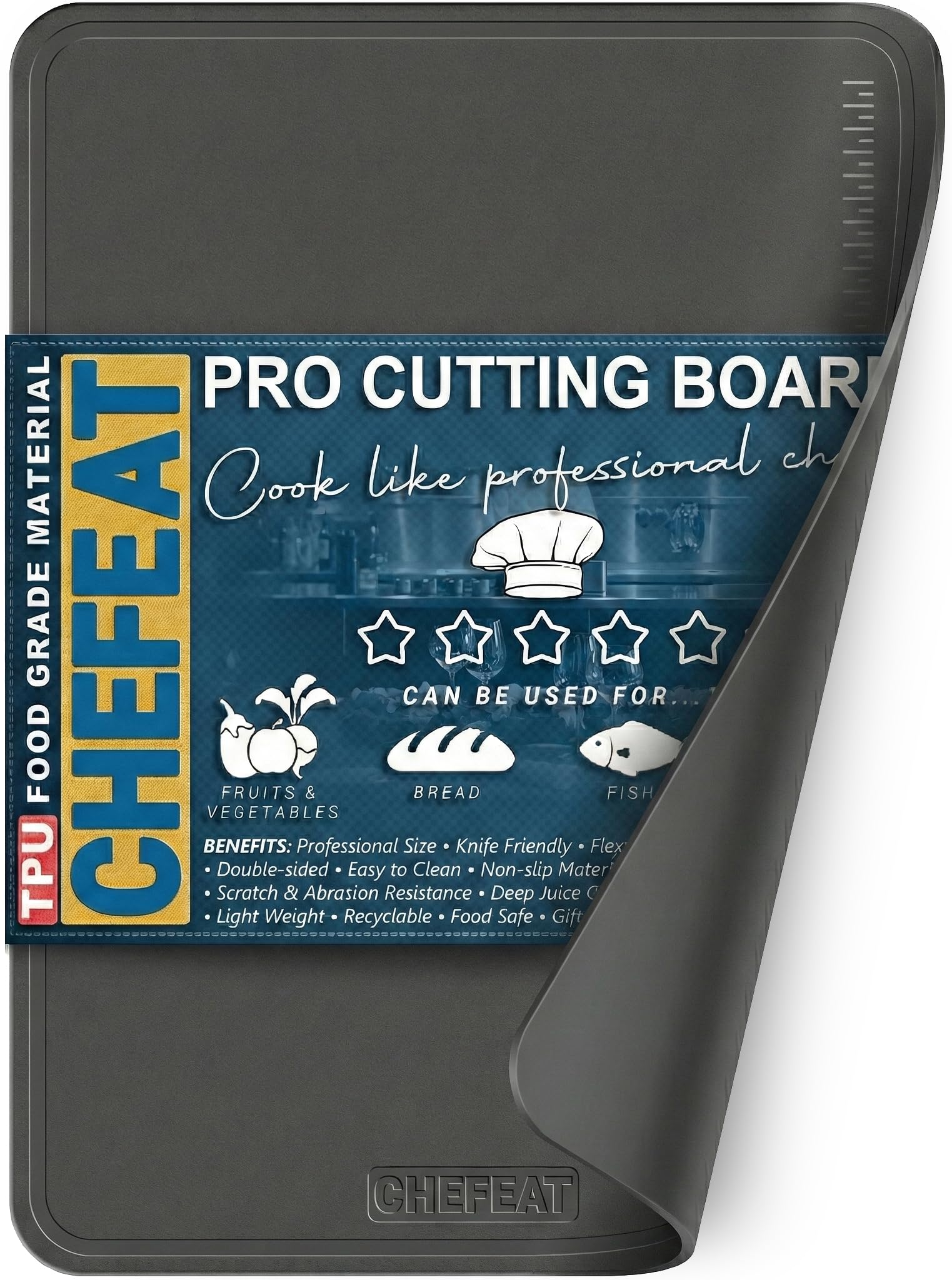
Thermoplastic polyurethane (TPU) is a relatively new cutting board material that bridges the gap between rigid plastic and flexible silicone. This CHEFEAT board is 0.14 inch thick — thicker than typical silicone mats — which allows it to resist deep cutting marks while remaining flexible enough to fold into a funnel for transferring chopped meat into a pan.
The closed-cell TPU structure does not absorb meat odors or colors, a common complaint with standard poly boards after a few weeks of raw chicken prep. Users report near-zero visible scratches after months of daily use. The double-sided design lets you use one side for produce and the other for raw meat, though the juice groove is relatively shallow and may overflow with larger cuts of meat.
At 1.2 pounds, this board is lightweight and slides on wet countertops more easily than heavier options. The thin profile also means it rests flush against the counter without rocking, but some buyers found the dimensions slightly smaller than the advertised “extra large” footprint. For knife longevity and easy storage, this is a strong mid-range pick.
Why it’s great
- Self-healing TPU surface resists deep knife scars
- Does not absorb meat odors or stains
- Dishwasher safe and folds for space-saving storage
Good to know
- Lightweight and slides easily on smooth counters
- Shallow juice groove cannot contain large meat drippings
- Actual dimensions run smaller than some competing boards
3. MAYALEAD BBQ Prep Tub with Shredder Claws
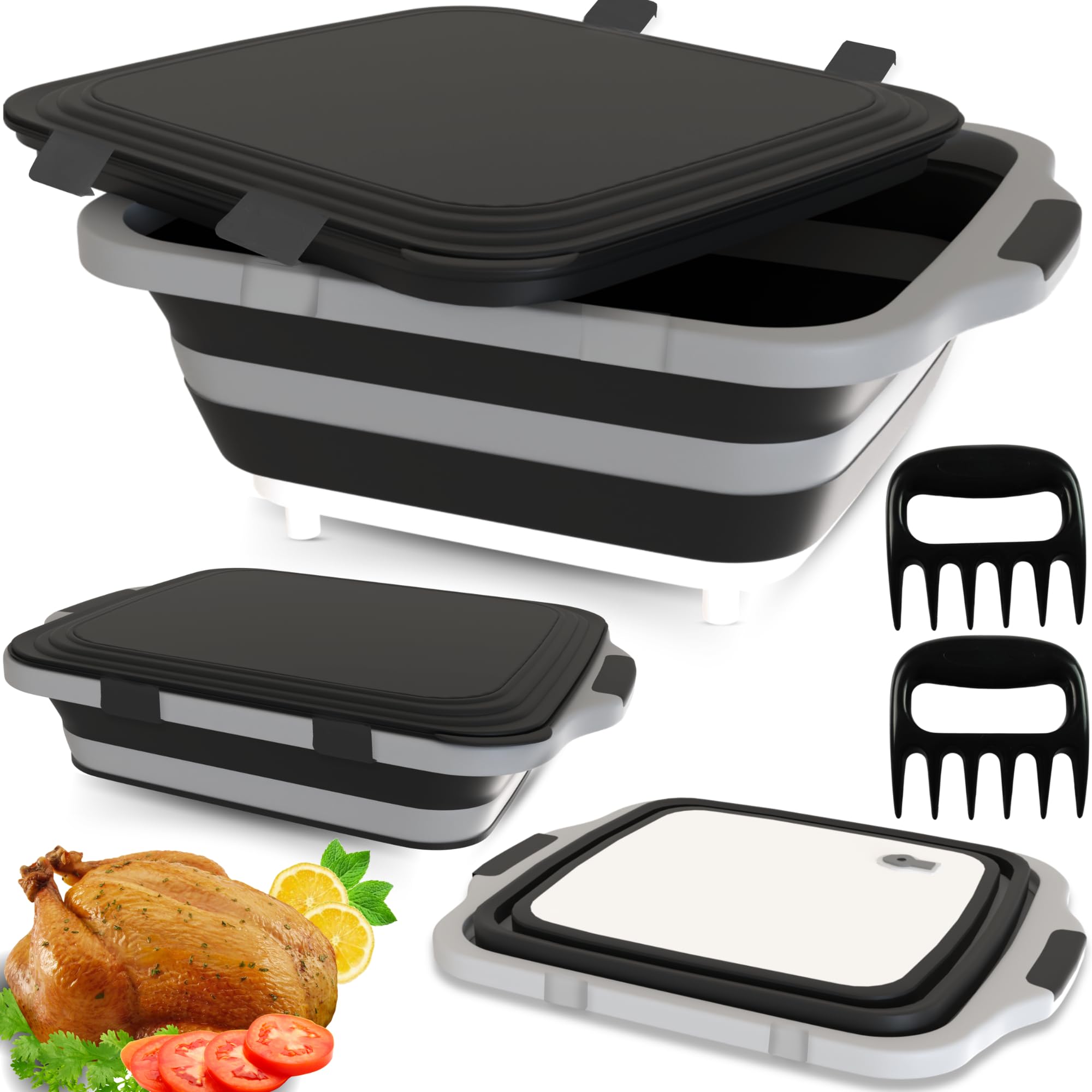
This is not a standard cutting board — it is a collapsible prep system that combines a cutting surface, a locking lid, a colander, and a pair of meat shredder claws in a single unit. The tub measures 19 by 14 inches when expanded and folds flat for storage, making it a practical choice for grill masters who need to season, transport, shred, and serve meat from one container.
The lid locks onto the tub, allowing you to marinate meats and then refrigerate or transport them without spills. The built-in colander drains excess liquid, and the claws handle pulled pork or brisket shredding. Users report that the system eliminates countertop mess during seasoning sessions and simplifies cleanup since everything is BPA-free plastic and dishwasher safe.
For straight chopping and slicing, the cutting surface is thin plastic and flexes slightly under pressure. This is not the board for precision knife work or heavy cleaver use. It is designed for the full BBQ workflow — from raw meat prep through cooking to serving — and excels in that specific role.
Why it’s great
- Collapsible design saves cabinet space
- Locking lid and colander ideal for marinades
- Includes meat shredder claws for pulled meats
Good to know
- Thin plastic cutting surface flexes during heavy chopping
- Not suited for long-term sharp knife work
4. CURTA 24×18 Red PE Cutting Board

This 24 by 18 inch polyethylene board is NSF-listed, meaning it has passed independent certification for commercial sanitation standards. The red color coding follows HACCP protocols that designate red boards exclusively for raw meat preparation, reducing cross-contamination risk in busy kitchens. At half an inch thick, it sits lower than the Thirteen Chefs board but offers more total cutting area for large meat primals.
The anti-slip design keeps the board stable during heavy knife work. Users with culinary backgrounds note that the surface matches the feel of professional kitchen boards they used during their careers. The high-density polyethylene resists moisture absorption and cleans easily with soap and bleach solutions, though its size prevents it from fitting in most home dishwashers.
The trade-off for the extra surface area is the half-inch thickness, which is less substantial than the three-quarter-inch HDPP board. Some users report slight warping around the edges after repeated exposure to hot water in three-compartment sinks. For home use, this board is best for those who regularly handle large cuts of meat and have the storage space for a 24-inch board.
Why it’s great
- NSF-listed for commercial-grade sanitation
- HACCP red color coding prevents cross-contamination
- Extra-large 24×18 surface handles full primal cuts
Good to know
- Too large for home dishwashers
- Half-inch thickness may warp with high-heat washing
5. FANICHI End Grain Wood Cutting Board

End-grain wood construction arranges the wood fibers vertically, similar to a butcher’s block, which absorbs knife impact without permanently scarring the surface. This FANICHI board weighs 10 pounds and measures 20 by 15 by 1.5 inches, providing the kind of stability that makes heavy meat butchery feel controlled and safe. The front side features a carved juice groove, and the reverse side includes built-in compartments for holding diced herbs or minced garlic.
The natural wood has inherent antimicrobial properties, though users note that initial seasoning is necessary — the board arrives dry and benefits from a thorough mineral oil treatment before first use. Once properly oiled, the surface resists stain absorption from raw meat juices and cleans easily with warm water and mild soap. The unique grain patterns make every board one of a kind.
Wood requires hand-washing only; dishwashing will warp and crack the fibers. Some users found the board heavy enough to double as a serving tray for bread and cheese, but that weight also makes it cumbersome to lift and carry during cleanup. For anyone committed to wood care, this end-grain board offers the best knife-friendliness in this lineup.
Why it’s great
- End-grain fibers preserve knife sharpness
- Dual-sided with juice groove and built-in compartments
- Heavy 10-pound weight prevents any counter slip
Good to know
- Hand-wash only; wood warps in dishwashers
- Requires regular mineral oil maintenance
- Heavy and awkward to move for some users
6. Greener Chef 24×18 Bamboo Carving Board
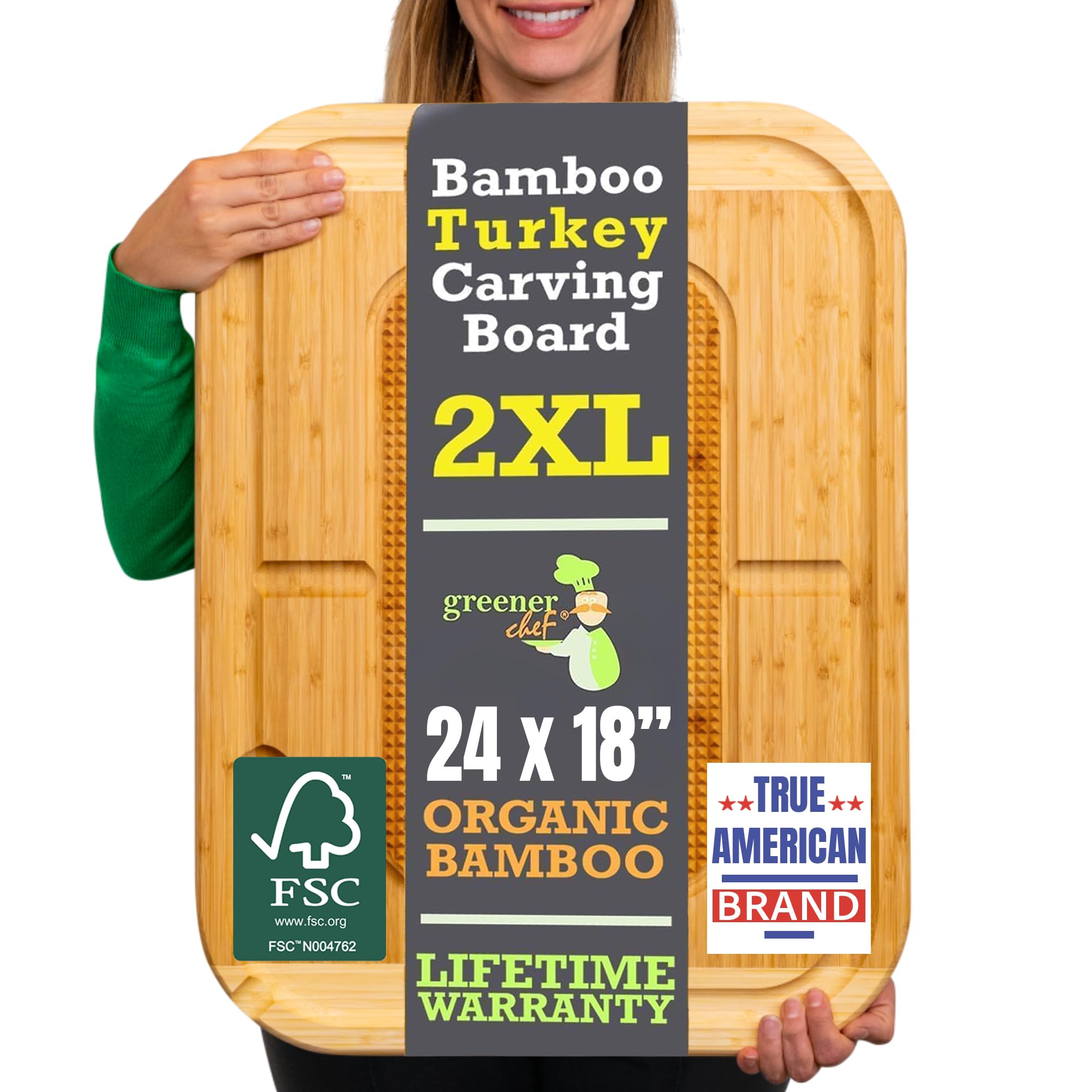
This bamboo board is built specifically for large meat carving tasks — turkeys, briskets, prime rib roasts. At 24 by 18 inches, it provides enough real estate to handle a 25-pound bird. The integrated meat-holding spikes on one side keep roasts from sliding while you carve, and the deep juice groove channels drippings into a corner reservoir with a pour spout, making gravy preparation cleaner.
Bamboo is harder than most domestic hardwoods, which means it resists deep knife scarring but also dulls blades slightly faster than edge-grain maple or end-grain wood. The two-tone design and lightweight 6.8-pound body make it easier to lift and serve from compared to a similar-sized wood board. The diamond-grip pattern holds meat securely but can shred cellulose sponges during cleaning.
The non-porous bamboo surface does not absorb meat odors as readily as traditional wood, and the board ships with a lifetime replacement warranty — a strong vote of confidence from the manufacturer. Users love the well-designed juice collection system, though some wish the pour spout had a wider opening for thicker gravies. This is a category-specific specialist for holiday cooks and BBQ enthusiasts.
Why it’s great
- Meat-holding spikes keep roasts steady during carving
- Corner juice reservoir with pour spout for gravy
- Lifetime replacement warranty
Good to know
- Bamboo is harder on knife edges than maple
- Diamond grip texture shreds sponges during cleaning
7. WoodForChef Canadian Maple Cutting Board

Canadian hard maple is one of the most respected cutting board materials for its balance of hardness, knife friendliness, and resistance to moisture penetration. This WoodForChef board measures 16 by 12 by 1.5 inches and weighs 8 pounds, giving it a dense, solid feel that keeps it planted during aggressive chopping. The edge-grain construction exposes the wood fibers perpendicular to the blade, which offers better knife edge retention than face-grain or bamboo.
The board arrives pre-seasoned with mineral oil and beeswax, so it is ready for immediate use — a notable advantage over raw wood boards that require multiple oil coats before first contact with meat. The deep juice groove along one side catches drippings effectively, and the reversible design lets you use the flat side for vegetables and the grooved side for proteins. FSC certification ensures the maple was responsibly harvested.
Some users report that the surface develops minor knife scratches over time, which is normal for edge-grain wood but can be sanded out if desired. The board is hand-wash only, and users note that applying oil every few weeks maintains the rich color and prevents the wood from drying out. For home cooks who want a premium wood board without the bulk of an end-grain block, this maple board delivers a refined experience.
Why it’s great
- Pre-seasoned and ready to use out of box
- FSC-certified Canadian maple reduces environmental impact
- Deep juice groove contains meat drippings effectively
Good to know
- Requires periodic hand-oiling to prevent drying
- Minor knife scratches accumulate on edge-grain surface
- Hand-wash only; dishwashing damages the wood
FAQ
Is plastic or wood safer for raw meat cutting?
Can I use the same board for meat and vegetables?
How often should I oil a wood cutting board used for meat?
Final Thoughts: The Verdict
For most users, the cutting board material for meat winner is the Thirteen Chefs 18×12 HDPP board because it combines dishwasher-safe sanitation, warp-resistant thickness, and a reasonable weight that stays put during cutting — all at a price that makes it an easy everyday tool for home cooks and grill enthusiasts. If you want a knife-friendly flexible surface that stores in a drawer, grab the CHEFEAT TPU board. And for large turkey carving with a smart juice collection system, nothing beats the Greener Chef 24×18 bamboo board.

Mo Maruf
I created WellFizz to bridge the gap between vague wellness advice and actionable solutions. My mission is simple: to decode the research and give you practical tools you can actually use.
Beyond the data, I am a passionate traveler. I believe that stepping away from the screen to explore new environments is essential for mental clarity and physical vitality.