Our readers keep the lights on and my smoothie glass nicely filled. As an Amazon Associate, I earn from qualifying purchases.
A cycle backpack isn’t just a bag you wear on a bike — it’s the bridge between your gear and your momentum. The wrong one shifts weight mid-corner, traps heat against your spine, or forces you to stop and rummage for a tool. The right one disappears onto your body, distributing water weight and trail essentials so evenly you forget it’s there, leaving your hands free and your center of gravity low.
I’m Mohammad Maruf — the founder and writer behind WellFizz. I’ve spent hundreds of hours analyzing hydration reservoir flow rates, harness geometry, back-panel ventilation channeling, and volume-to-weight ratios in this specific category to separate cargo carriables from true riding packs.
This guide breaks down the specs that matter for anyone shopping for the best cycle backpacks, from magnetic tube retention to tool-roll access, so you can match your ride style to the right platform.
How To Choose The Best Cycle Backpacks
Selecting the right pack means matching capacity, suspension, and hydration features to your specific riding discipline. A trail rider needs a stable waist belt and low center of gravity; a commuter needs weatherproofing and a quick-release lid; a bikepacker needs tool organization and volume without bulk. Here are the three critical decision points.
Hydration Capacity and Bladder Quality
For rides under two hours, a 1.5-liter reservoir may suffice, but most active cyclists gravitate toward 2- to 3-liter bladders. Look for leak-resistant TPU construction, wide-mouth openings for ice loading, and quick-disconnect hose fittings. Magnetic bite-valve clips keep the tube within reach without flapping. A bladder that allows full interior drying prevents mold — a feature often overlooked at the budget tier.
Suspension and Ventilation
Body-mapped foam channels or trampoline-style mesh back panels reduce sweat buildup and improve airflow. For aggressive descending or long climbs, a bike-specific winged harness and load-lifter straps prevent the pack from shifting side to side during hard cornering. The sternum strap should be adjustable vertically to avoid pressure on the throat.
Storage Access While Riding
Zippered hipbelt pockets let you reach snacks or tools without stopping. A dedicated tool roll or integrated organization panel keeps multi-tools, tire levers, and tubes from rattling. Helmet carry loops and stretch overflow pockets add versatility for post-ride gear stowage. On commuter packs, a padded laptop sleeve and rain cover are wise additions.
Quick Comparison
On smaller screens, swipe sideways to see the full table.
| Model | Category | Best For | Key Spec | Amazon |
|---|---|---|---|---|
| CamelBak M.U.L.E. 12 | Hydration Pack | All-day mountain biking | 100 oz / 3L Crux reservoir | Amazon |
| Osprey Raptor 14 | MTB Backpack | Rough trail & tool organization | 14L cargo + 2.5L Hydraulics LT reservoir | Amazon |
| Salomon Trailblazer 20 | Daypack Hybrid | Hike-to-ride versatility | 20L, YKK zippers, 3D padded back | Amazon |
| KEMIMOTO Helmet Pack 35L | Commuter Helmet Bag | Full-face helmet + daily gear | 35L with expandable hidden net | Amazon |
| KEMIMOTO Helmet Pack 20L | Compact Helmet Bag | Modular helmet & laptop | 20L, fits 15-inch laptop | Amazon |
| RAINSMORE 4-in-1 15L | Multi-Mode Pannier | E-bike commuting & errands | 15L, converts to backpack | Amazon |
| TNYSPORT 2-Pack Hydration | Budget Twin Pack | Casual cycling & family use | 2x 2L bladders, only 0.37 lb | Amazon |
In‑Depth Reviews
1. CamelBak M.U.L.E. 12 Mountain Bike Hydration Pack

The CamelBak M.U.L.E. has been the trail standard for years, and this latest iteration refines the fit with a body-mapped Air Support back panel that channels airflow across the lumbar region. The 100-ounce Crux reservoir delivers noticeably higher flow per sip than previous generations — no more chewing the bite valve for a mouthful — and the quick-connect system makes bladder removal and refilling simple.
The 12L cargo capacity is split between a padded tool organizer, stretch overflow pocket, and zippered hipbelt pouches that keep phone, keys, and trail snacks accessible without slowing down. Magnetic tube management keeps the hose locked to the sternum strap, so it doesn’t swing into your spokes in rough terrain. The pack feels planted even when fully loaded on descents.
Riders who push all-day epics will appreciate the removable waist strap for extra stability and the ability to shove a lightweight shell into the stretch front pocket. The only tradeoff is that the bladder compartment doesn’t unzip fully, making thorough drying slightly tedious after a wet ride.
Why it’s great
- High-flow Crux reservoir with reliable leak-resistant TPU
- Ventilated back panel stays noticeably cooler
- Magnetic tube clip works flawlessly in motion
Good to know
- Bladder compartment design makes interior drying trickier
- Shoulder strap durability could be improved over long seasons
2. Osprey Raptor 14L Men’s Mountain Biking Backpack
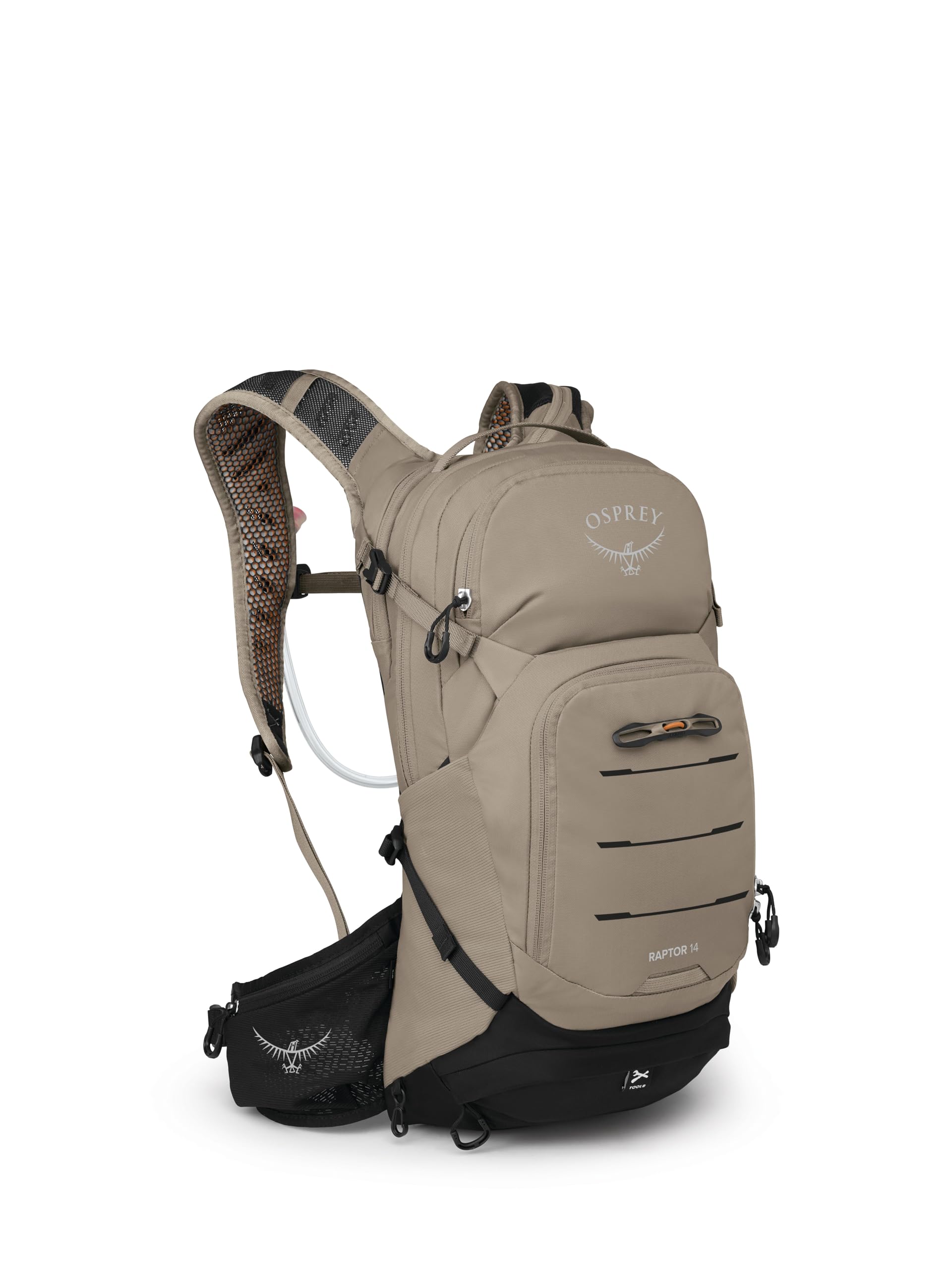
The Osprey Raptor 14L is built around the idea that trail-side repairs should happen without unpacking. The bottom-mounted tool roll unclips and opens completely flat, giving you immediate access to wrenches, chain tools, tire levers, and tubes while the rest of your gear stays untouched. The Hydraulics LT 2.5-liter reservoir sits in a dedicated sleeve with a quick-disconnect hose and a magnetic bite-valve clip that rivals the CamelBak system.
The bike-specific winged harness and airmesh wrap hipbelt lock the load to your hips — ideal for aggressive descending where weight shift can ruin a line. Stretch mesh zippered hipbelt pockets are large enough for most phones and a bar. The lid-lock compatible helmet attachment and unobtrusive carry loops add utility without adding bulk.
Where the Raptor really shines is organization: internal zip pockets for sunglasses, a stash pocket for a pump, and a front panel that keeps tech gear separated from dirty tools. The only weak point is the side-entry pocket — its narrow opening makes retrieving a large phone or first-aid kit awkward.
Why it’s great
- Bottom tool roll is a genuinely useful repair-access innovation
- Winged hipbelt provides rock-solid stability on rough descents
- Excellent internal organization with non-rattling zipper pulls
Good to know
- Side-entry pocket opening is too tight for large phones
- Reservoir capacity smaller than CamelBak M.U.L.E.
3. Salomon Unisex Trailblazer 20
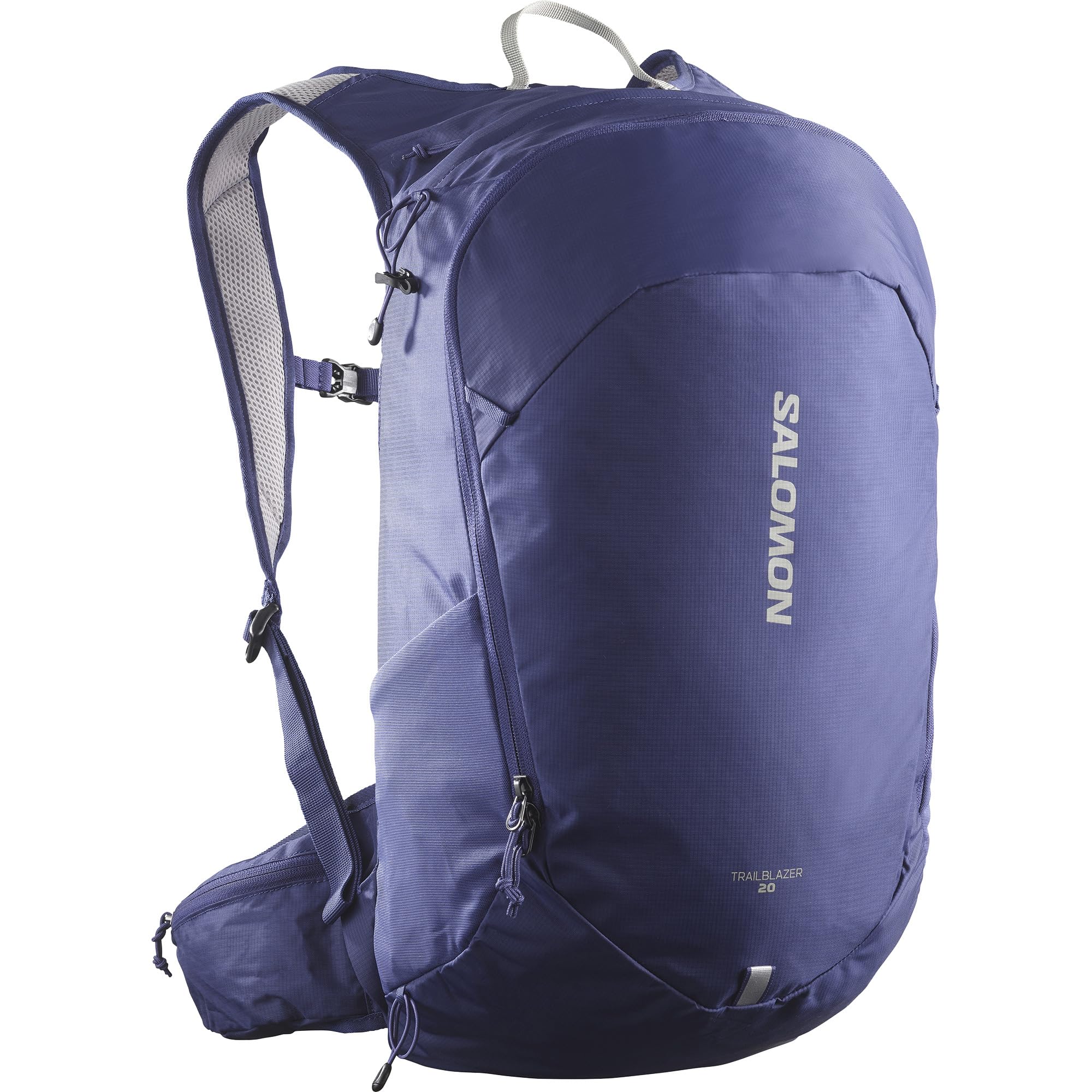
The Salomon Trailblazer 20 splits the difference between a dedicated cycling hydration pack and a day-hiking backpack. The 3D padded back system uses perforated foam to create a cooling airflow channel, and the 3D light harness shoulder straps disperse weight evenly across the chest. At only 15.3 ounces, it’s the lightest pack in this comparison for its volume — a benefit on long climbs where every gram counts.
Storage-wise, the reservoir sleeve fits a 2-liter bladder (not included), and the main compartment includes a hanging sleeve for a laptop or hydration sleeve. The stretch side pockets hold bottles securely, and the top pocket has a built-in key clip. Trekking pole holders and external loops add versatility for multi-sport missions.
The PFC-free polyamide fabric and premium YKK zippers signal Salomon’s commitment to durability and eco-conscious construction. That said, the back panel has been downsized in recent iterations — what was previously a structured foam frame is now softer, which some riders find less supportive under heavier loads.
Why it’s great
- Extremely lightweight at 15.3 ounces
- Ventilated back panel reduces sweat buildup
- YKK zippers and PFC-free materials
Good to know
- Back panel has less structure than previous Salomon models
- Hydration bladder not included
4. KEMIMOTO Motorcycle Helmet Backpack 35L
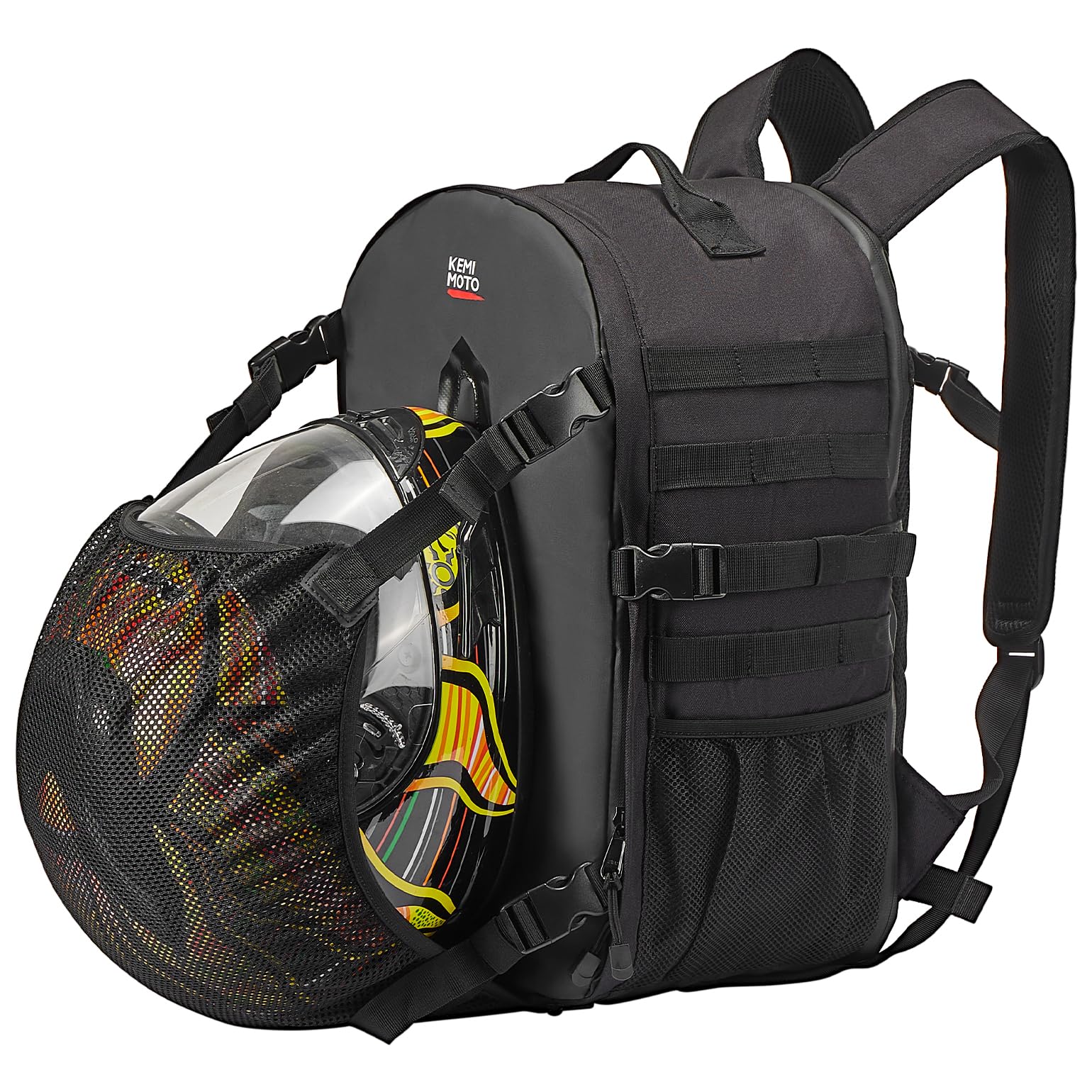
The 35-liter KEMIMOTO backpack solves a specific problem: carrying a full-face helmet without bulky external straps flapping in the wind. The hidden mesh net expands to accommodate the helmet and tucks away when unused, keeping the pack’s profile clean and aerodynamic. The dedicated helmet compartment includes padding that protects the visor and shell from scratches during transport.
Organization is well thought out for commuters: a padded laptop pocket fits a 15-inch machine, an internal zippered mesh pocket stores documents, and stretch side pockets hold a water bottle or gloves. The shoulder straps are padded and breathable, with upper and lower compression straps that stabilize the load at highway speeds.
Customer feedback on the 20-liter sibling flagged occasional zipper catching issues — a concern that appears less frequently on the 35-liter version, but worth inspecting before committing. For riders who need to transition from bike to office with helmet storage integrated, this pack delivers deep volume and motorcycle-specific design at a solid value point.
Why it’s great
- Expandable hidden net securely stores full-face helmet
- 35L capacity fits gear plus daily essentials
- Padded, breathable shoulder straps for all-day carry
Good to know
- Some zipper consistency concerns reported on smaller model
- Not designed for off-trail or aggressive mountain biking
5. KEMIMOTO Motorcycle Helmet Backpack 20L

The 20-liter KEMIMOTO helmet backpack scales down the design for riders with modular or smaller full-face helmets. The same expandable hidden net system works here, keeping the helmet secure without adding aerodynamic drag. This version also includes an internal laptop sleeve and a front zipper pocket with organizational slots for pens, cards, and a phone.
Stability during riding is aided by upper and lower compression straps, plus two mesh cup holders on the sides and multiple carabiner attachment points on the harness. The pack sits close to the back, reducing wobble during quick lane changes. For daily commuting where you need to carry a change of clothes, lunch, and a helmet, the 20-liter volume hits a sweet spot between minimal and capacious.
Like its larger sibling, the 20L version shares the same durable water-resistant materials and reinforced stitching. However, reports of the zipper catching on the edge appear in some reviews, so buyers should test the closure mechanism upon arrival. As a mid-range pick, it works best for the motorcyclist who doesn’t need 35L but wants dedicated helmet storage in a clean package.
Why it’s great
- Hidden net securely holds modular and full-face helmets
- Fits a 15-inch laptop with padded protection
- Multiple attachment points and compression straps
Good to know
- Zipper can snag on edge material
- Not waterproof without additional rain cover
6. RAINSMORE 15L 4-in-1 Bike Rear Rack Bag
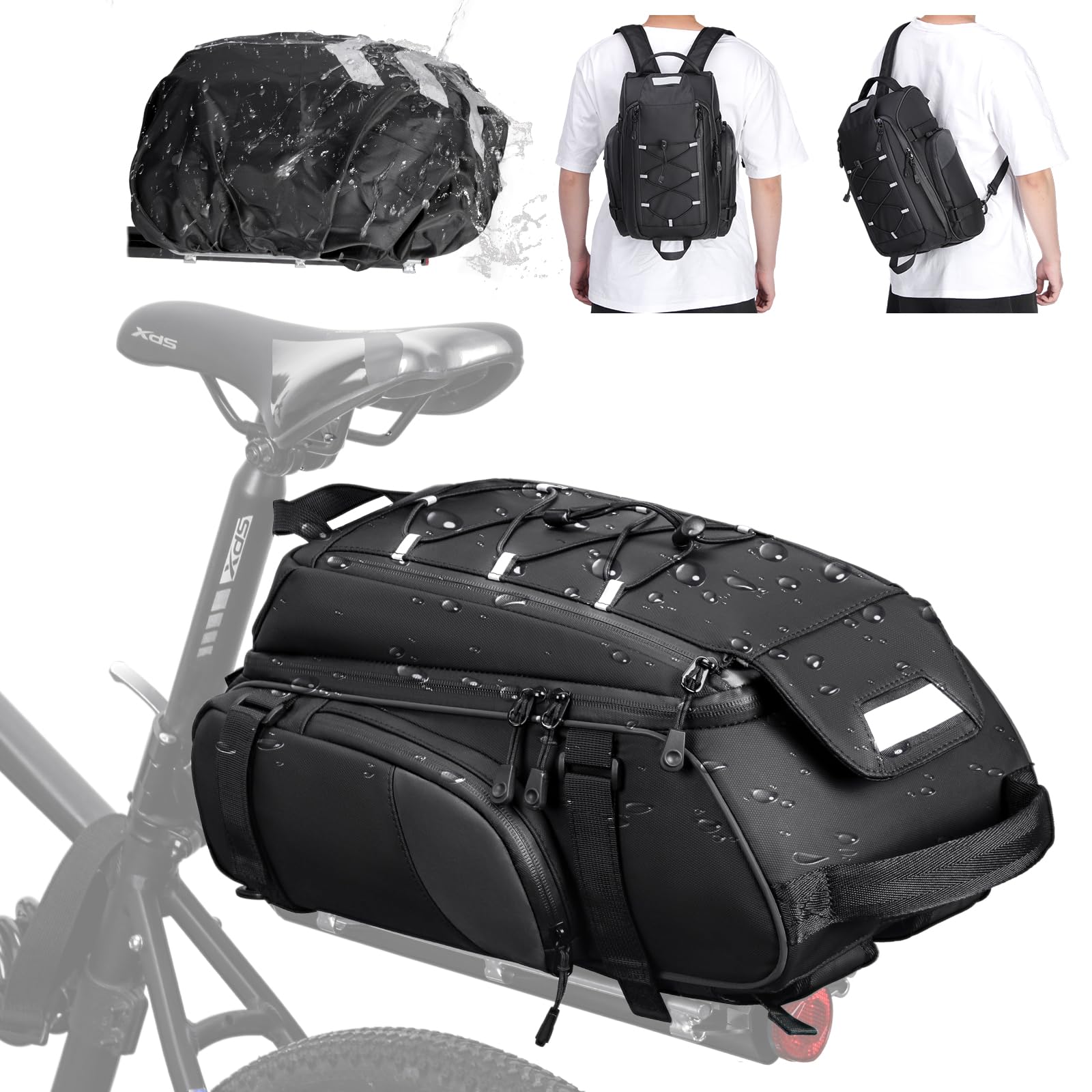
The RAINSMORE 4-in-1 bag is a rack-mount pannier that transforms into a backpack via zippered, adjustable shoulder straps. The 600D oxford fabric with PU waterproof coating handles light rain, and the included rain cover provides a second barrier for downpours — making it a strong commuter choice in wet climates. The 15-liter main cavity includes mesh pockets and elastic bands for organizing gear, plus an external adjustable elastic rope for wet gloves or a towel.
Installation is quick: five adhesive straps wrap around the rear rack without tools, and the thickened sponge interlayer dampens vibration to protect camera gear or electronics. Reflective strips along the exterior and a rear-light strap improve visibility in low light — a practical safety touch for evening rides on city streets.
The conversion system is smooth, but the straps, when stowed, add a little bulk to the bag’s profile. It’s not a replacement for a serious trail pack, but for e-bike commuters who want one bag that lives on the rack during the ride and converts to a carry bag once they arrive, the RAINSMORE delivers.
Why it’s great
- Converts from rear rack pannier to backpack in seconds
- PU waterproof coating with extra rain cover included
- Reflective strips and rear-light strap for night safety
Good to know
- Backpack straps add a bit of bulk when stowed
- Not suitable for aggressive off-road or full-suspension use
7. TNYSPORT 2-Pack Hydration Backpack with 2L Bladders
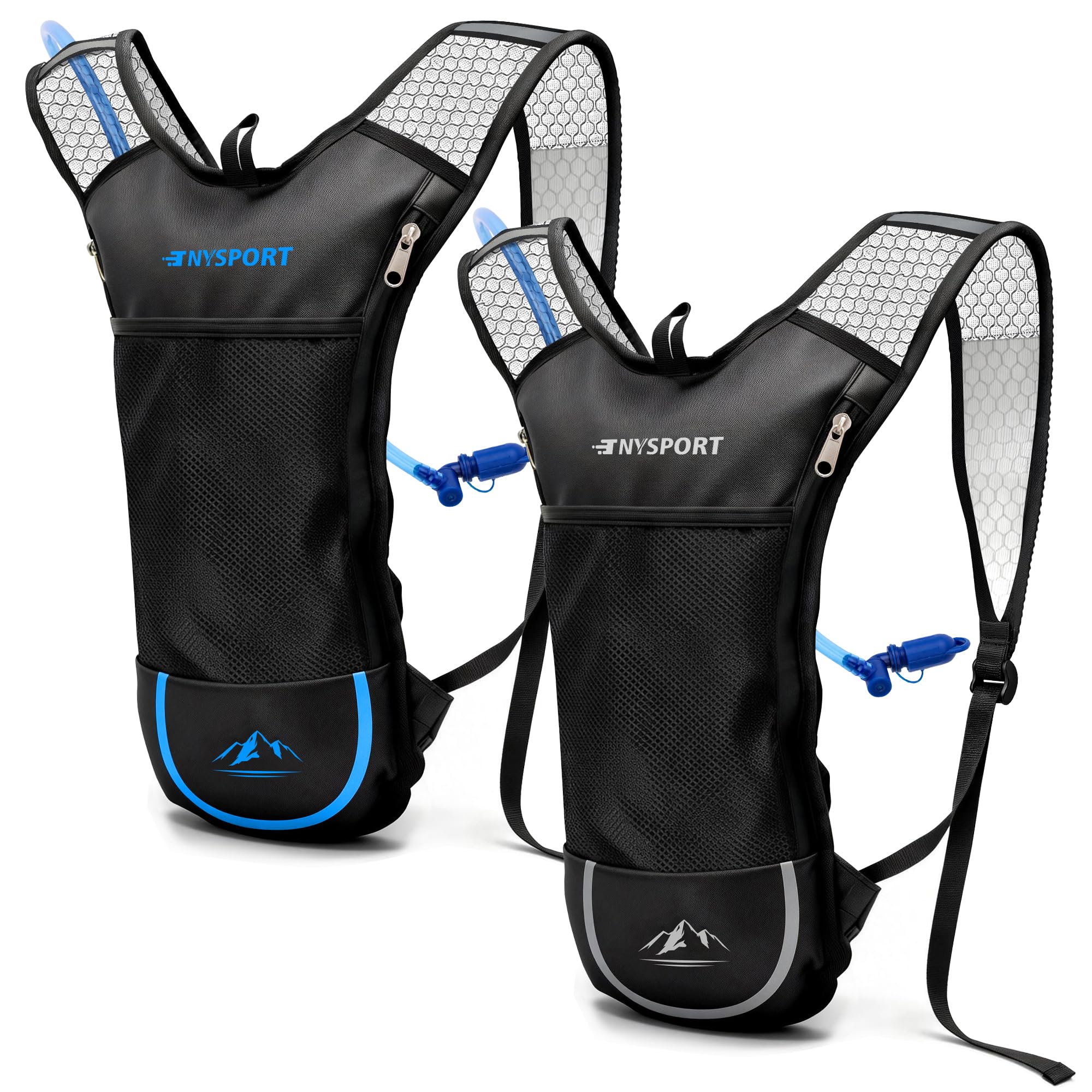
The TNYSPORT twin pack delivers two complete hydration setups — pack and bladder — making it an obvious pick for couples, riding partners, or families who hit the trail together. Each pack weighs just 0.37 pound empty, so the weight penalty is minimal even before adding water. The 2-liter TPU bladder uses a leak-resistant seal and a wide-mouth opening for easy filling and ice loading.
The three-layer pocket design separates the bladder from personal items like a phone, wallet, or energy snacks. An outer mesh pocket offers quick access to smaller items without unzipping the main compartment. The breathable mesh back panel and adjustable chest straps provide a decent fit for shorter rides or casual gravel paths. Riders report the pack is comfortable for 5K runs and moderate hikes.
At this entry-level price, you do sacrifice insulation — the bladder warms quickly in direct sun, and the water flow is less robust than a dedicated mountain-bike reservoir. The tube’s internal diameter makes thorough cleaning more challenging. Still, for budget-conscious riders who need two functional hydration packs and aren’t pushing long alpine days, the TNYSPORT set is hard to beat in value per ride.
Why it’s great
- Two complete sets for shared use at a single-unit price
- Ultra-lightweight frame minimizes carry fatigue
- Leak-resistant 2L bladder with wide-mouth opening
Good to know
- Poor thermal insulation causes water to warm quickly
- Water flow less powerful than premium reservoirs
FAQ
How much water should I carry for a full day of mountain biking?
Can a cycle backpack double as a daily commuter bag?
Why do mountain bike specific packs have winged hipbelts?
Final Thoughts: The Verdict
For most riders, the best cycle backpacks winner is the CamelBak M.U.L.E. 12 because it balances high-flow hydration, stable ventilation, and tool-friendly storage at a premium that matches its trail-tested reputation. If you want dedicated tool organization without unpacking, grab the Osprey Raptor 14. And for a lightweight, do-it-all hybrid that works on the trail and in town, nothing beats the Salomon Trailblazer 20.

Mo Maruf
I created WellFizz to bridge the gap between vague wellness advice and actionable solutions. My mission is simple: to decode the research and give you practical tools you can actually use.
Beyond the data, I am a passionate traveler. I believe that stepping away from the screen to explore new environments is essential for mental clarity and physical vitality.