Our readers keep the lights on and my smoothie glass nicely filled. As an Amazon Associate, I earn from qualifying purchases.
A cat’s digestive system runs on a delicate balance of enzymes and microbes that processed food often strips away. When that balance breaks, you see the signs — loose stools, vomiting after meals, a dull coat, or that distinct litter-box odor that lingers no matter how often you scoop. The right enzyme and probiotic support doesn’t just mask symptoms; it restores the gut’s natural ability to break down food and absorb nutrients.
I’m Mohammad Maruf — the founder and writer behind WellFizz. I’ve spent countless hours cross-referencing veterinary formulations, strain viability data, and real-world owner feedback to isolate the supplements that actually perform inside a cat’s acidic digestive tract.
A well-formulated probiotic should survive stomach acid, deliver measurable CFU counts, and include targeted enzymes for protein and fat digestion. That’s what separates a shelf ornament from a genuine best digestive enzymes for cats supplement you can trust daily.
How To Choose The Best Digestive Enzymes For Cats
Digestive enzymes are specific proteins that catalyze the breakdown of food into absorbable components. Cats, as obligate carnivores, rely heavily on proteases for breaking down animal protein and lipases for fat digestion. When choosing a supplement, consider three factors: enzyme diversity, probiotic strain viability in acidic environments, and the presence of prebiotic fiber to feed beneficial bacteria.
Strain Survivability Through Stomach Acid
Not all probiotics survive the journey through a cat’s highly acidic stomach. Look for strains like Bacillus coagulans and Pediococcus acidilactici — both have demonstrated resistance to low pH environments. A supplement that lists these strains with a guaranteed CFU count at the time of manufacture ensures living organisms reach the intestines where they do their work.
Enzyme Diversity for Obligate Carnivores
Your cat’s pancreas naturally produces certain enzymes, but stress, age, and chronic illness can reduce output. A complete digestive enzyme blend should include protease (for protein), lipase (for fat), and amylase (for carbohydrates). Some formulations also include cellulase to break down plant fiber, which can be useful if your cat eats kibble containing grains or vegetables.
Prebiotic Fiber and L-Glutamine for Gut Lining
The intestinal lining relies on L-Glutamine as its primary fuel source, helping repair damaged gut walls in cats with chronic diarrhea or inflammatory bowel disease. Prebiotic fibers like inulin feed the good bacteria already present in the gut, creating a self-sustaining cycle of digestive health. A product that combines all three — enzymes, probiotics, and prebiotics — offers the most comprehensive support.
Quick Comparison
On smaller screens, swipe sideways to see the full table.
| Model | Category | Best For | Key Spec | Amazon |
|---|---|---|---|---|
| maxxidigest+ 7oz | Premium/Large Size | Chronic GI & IBD cats | Pediococcus acidilactici + enzymes | Amazon |
| Rx Zyme Powder | Veterinary Formula | Multi-pet households | 120g unflavored powder | Amazon |
| Purina Pro Plan Multi Care | Brand Trust | Immune + digestive maintenance | Bacillus coagulans 2×10^8 CFU | Amazon |
| Proflora Probiotic | Entry-Level Choice | Sensitive stomach starters | Lactobacillus acidophilus + prebiotic | Amazon |
| maxxidigest+ 3.2oz | Mid-Range | Single cat / travel size | Advanced digestive enzymes | Amazon |
In‑Depth Reviews
1. maxxipaws maxxidigest+ 7oz

The larger 7oz size of maxxidigest+ delivers the same advanced probiotic strain (Pediococcus acidilactici) that has been shown to survive the acidic feline stomach and arrive alive in the intestines. Combined with digestive enzymes and L-Glutamine for gut lining repair, this is the most comprehensive single-bottle solution for cats with long-term digestive dysfunction.
Owner reviews consistently describe dramatic turnarounds: cats with chronic diarrhea for years finally forming solid stools within days, elderly cats gaining weight, and cats with suspected IBD reducing or eliminating their reliance on prednisone. The natural flavor is well-accepted even by picky eaters, and the scoop-based dosing (1 scoop per 8lb of body weight) makes it simple to adjust for cats of different sizes.
At this size, a single bottle provides roughly 70 servings for an 8lb cat, making it the most cost-effective premium option for owners committed to long-term gut health. It’s suitable for kittens through seniors and contains no artificial colors, preservatives, or binders.
Why it’s great
- Survives stomach acid to reach GI tract alive
- Includes L-Glutamine for intestinal lining repair
- Dramatic results for chronic diarrhea and IBD
- Large 7oz size offers best per-serving value
Good to know
- Scoop may be small for fast dispensing
- Some cats need time to accept new flavor
2. Rx Vitamins Rx Zyme Powder

Developed by veterinarians, Rx Zyme Powder offers a controlled blend of nutraceuticals and botanicals designed to address both loose stools and constipation — a dual action that many cat-specific probiotics lack. The unflavored powder mixes invisibly into wet or dry food, making it ideal for cats that reject strong-tasting additives.
Dog owners also report success with this formula, including resolution of chronic ear yeast infections that had not responded to veterinary medication. For cats, the one-scoop-per-meal dosing is straightforward, and the 120g container provides extended use even in multi-cat households. The formula is particularly effective for cats on home-prepared or raw diets where enzyme supplementation helps compensate for natural variation in prey nutrients.
The blend of multiple enzyme types (protease, lipase, amylase) ensures coverage across all major macronutrient categories, which is critical for obligate carnivores whose natural diet would provide enzymes from whole prey. Avoid avocado when using this supplement, as recommended by the manufacturer.
Why it’s great
- Veterinarian-developed and recommended
- Treats both diarrhea and constipation
- Unflavored — no rejection from picky cats
- Suitable for dogs and cats in multi-pet homes
Good to know
- Packaging may vary between shipments
- Not ideal for cats needing a flavored enticement
3. Purina Pro Plan Veterinary Multi Care
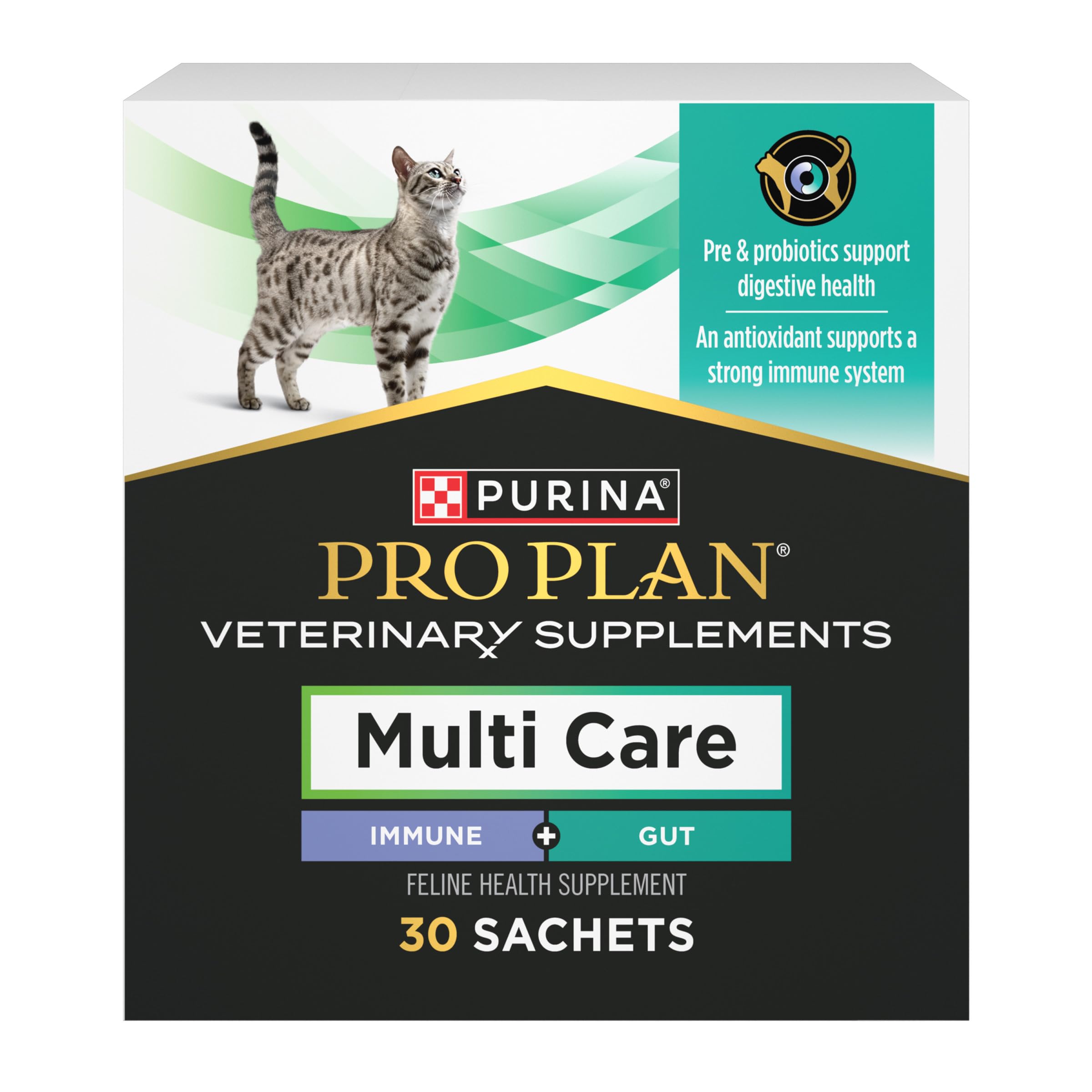
Purina Pro Plan’s Veterinary line brings the backing of major research and development, and this Multi Care supplement targets both digestive and immune function through a prebiotic-probiotic blend. The key strain is Bacillus coagulans, delivering 2 x 10^8 CFU per sachet — a robust count that has demonstrated stability through manufacturing and shelf storage.
The liver flavor is widely accepted, and owners report reduced vomiting frequency and improved stool consistency within days of starting. Each box contains 30 individual sachets, which some owners split between two cats to extend value. The addition of inulin (a prebiotic fiber) helps fuel the growth of beneficial bacteria already present in the gut, creating a sustainable ecosystem rather than just a temporary influx of probiotics.
This product is best suited for maintenance and mild-to-moderate digestive sensitivity rather than severe chronic conditions. It’s manufactured in USA facilities and carries the assurance of the Purina brand’s quality control standards.
Why it’s great
- High CFU count with stable Bacillus coagulans
- Includes prebiotic fiber (inulin) for gut fuel
- Cat-approved liver flavor
- Produced in USA facilities
Good to know
- Individual sachets create more waste
- Less effective for severe chronic diarrhea
4. Proflora Probiotics for Cats
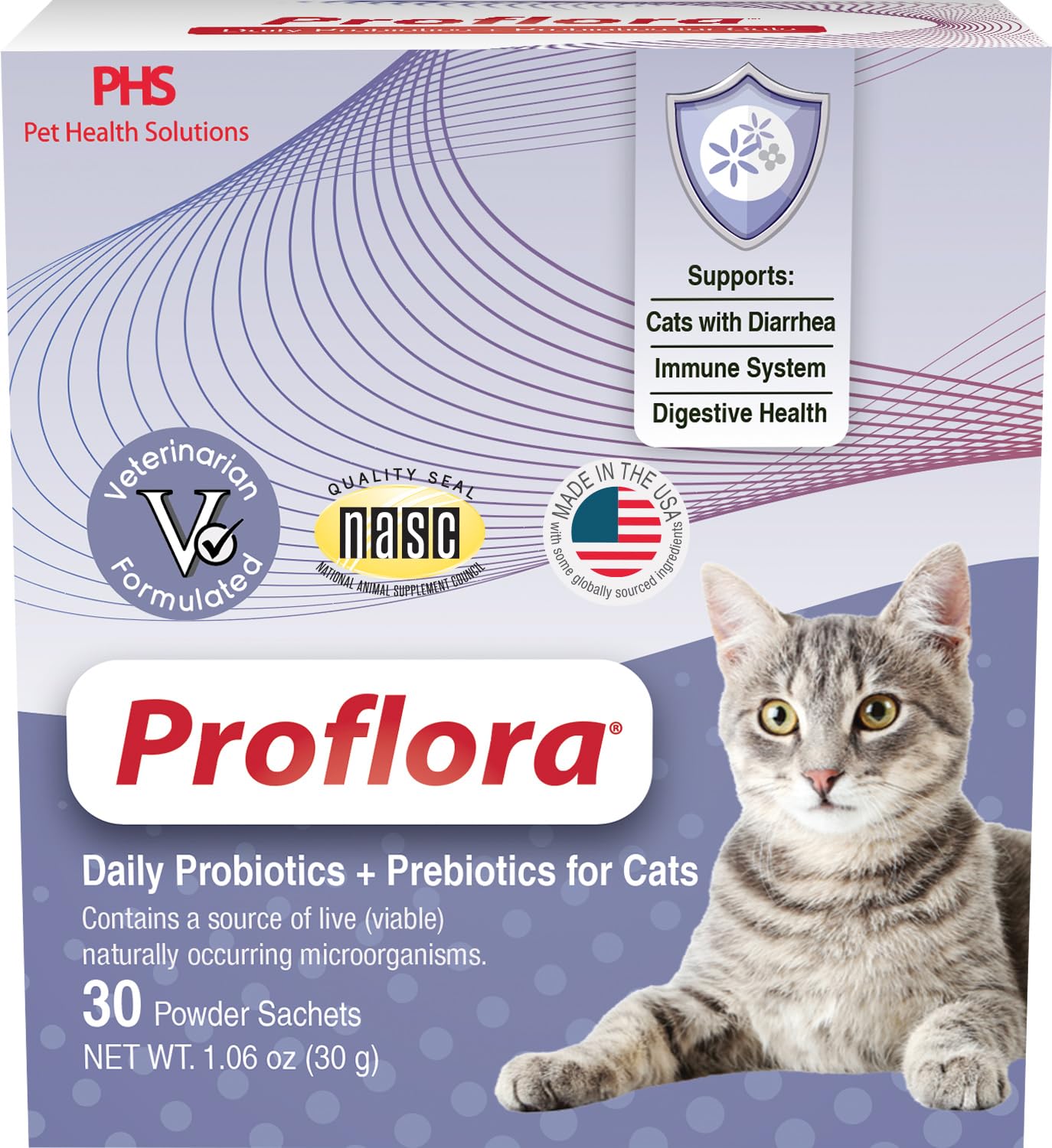
Proflora is an excellent starting point for cat owners new to supplementation. The chicken liver flavor appeals to even the pickiest cats, and the powder is notably finer than competing brands — it mixes seamlessly into wet food without the grainy texture some cats detect and reject. Each packet contains a blend of Lactobacillus acidophilus and Enterococcus faecium alongside prebiotics to support colonization.
Owner feedback highlights the product’s effectiveness for stabilizing unpredictable bowels in elderly cats and managing loose stools caused by stress or dietary changes. The NASC Quality Seal confirms the supplement meets manufacturing standards for safety and potency, and the individual sealed packets ensure each dose remains fresh with viable probiotic counts.
This is not a digestive enzyme formula — it is primarily a probiotic with prebiotic support. For cats needing active enzyme supplementation for protein or fat digestion, a combined formula would be more appropriate. But for general digestive maintenance and mild sensitivity, Proflora delivers reliable results at an accessible price point.
Why it’s great
- NASC Certified for quality assurance
- Finer powder texture mixes easily
- Chicken liver flavor appeals to finicky cats
- 30 individually sealed fresh doses
Good to know
- No digestive enzymes included
- Not ideal for severe chronic GI conditions
5. maxxipaws maxxidigest+ 3.2oz

The 3.2oz version of maxxidigest+ shares the same advanced formulation as the larger 7oz bottle, making it a practical option for single-cat households or for owners who want to test the product before committing to a larger investment. The combination of probiotics (Pediococcus acidilactici), prebiotics, and digestive enzymes (protease, lipase, amylase) in one powder provides complete digestive support from a single scoop.
Customer reviews mirror the larger size’s success: cats with chronic diarrhea seeing firm stools within days, cats with food sensitivities experiencing reduced vomiting, and even a reported case of a cat with suspected pancreatitis avoiding hospitalization through consistent use combined with diet modification. The natural flavor is palatable, and the easy-to-use scoop included in the bottle simplifies dosing.
The 90g container provides roughly 30 servings for an 8lb cat, making it a slightly smaller commitment than the premium 7oz option. This size is ideal for travel, trial periods, or supplementing a single cat without excess product degrading over time.
Why it’s great
- Same formula as premium 7oz size
- Digestive enzymes + probiotics in one formula
- Proven results for chronic diarrhea and IBS
- Smaller size reduces risk of product aging
Good to know
- Smaller container has higher cost per serving
- Scoop size requires careful measuring for small cats
FAQ
Can I give my cat digestive enzymes with antibiotics?
How long does it take for digestive enzymes to work in cats?
Are digestive enzymes safe for kittens?
Can I use dog probiotics for my cat?
Final Thoughts: The Verdict
For most users, the best digestive enzymes for cats winner is the maxxipaws maxxidigest+ 7oz because it combines survivable probiotic strains, targeted digestive enzymes, and L-Glutamine for gut lining repair in a single cost-effective bottle. If you want a veterinarian-developed formula that works for both cats and dogs in your home, grab the Rx Zyme Powder. And for a budget-friendly entry point with NASC certification and a cat-approved chicken flavor, nothing beats the Proflora Probiotic.

Mo Maruf
I created WellFizz to bridge the gap between vague wellness advice and actionable solutions. My mission is simple: to decode the research and give you practical tools you can actually use.
Beyond the data, I am a passionate traveler. I believe that stepping away from the screen to explore new environments is essential for mental clarity and physical vitality.