Our readers keep the lights on and my smoothie glass nicely filled. As an Amazon Associate, I earn from qualifying purchases.
Merino wool’s unique performance — temperature regulation, odor resistance, and moisture wicking — depends on the natural lanolin coating on each fiber. The wrong detergent strips that coating, leaving your base layer feeling like cardboard after three washes. The right one preserves the fiber’s natural resilience and keeps the garment wearable for years, not months.
I’m Mohammad Maruf — the founder and writer behind WellFizz. Over many hours of market research I have analyzed the chemistry of wool-safe surfactants, reviewed thousands of real-world user experiences, and cross-referenced formulation data to identify exactly which detergents preserve merino’s structure without leaving residue behind.
This guide focuses exclusively on formulations that protect delicate protein fibers. Read on to find the best detergent for merino wool for your specific washing routine and scent preferences.
How To Choose The Best Detergent For Merino Wool
Merino wool is a protein fiber, just like human hair. Harsh detergents containing enzymes, bleach, or optical brighteners can dissolve the protein structure, causing felting and shrinkage. The ideal wool wash uses gentle synthetic surfactants or natural soap bases that clean without breaking down the cuticle scales.
No-Rinse vs. Rinse-Required Formulas
No-rinse detergents are designed to be soaked into the fiber and then spun out without a fresh-water rinse. This reduces agitation and mechanical stress on the wet wool — the moment when fibers are most vulnerable to felting. Most premium wool washes in this guide are no-rinse formulations. Traditional rinse-required detergents work fine if you use a gentle cycle, but they demand an extra step that increases handling risk.
Lanolin Content for Fiber Conditioning
Lanolin is the natural wax produced by sheep to protect their wool. When you wash merino, some of that natural coating is inevitably removed. A wash that includes replenishing lanolin — often listed as “lanolin” on the ingredients panel — helps restore the fiber’s water resistance and softness. Detergents without lanolin are still safe but may leave merino feeling slightly less supple over many wash cycles.
Concentrated Formula and Scent Profile
Concentrated formulas require a much smaller volume per load — typically 1-2 capfuls versus a quarter cup. This means a single 16.9-ounce bottle can last 20 to 30 washes, making it cost-effective despite a higher initial price. Scent is a personal choice: natural essential oils are common, but unscented options are best for those with fragrance sensitivity or for washing items that will absorb other scents (like sleeping bag liners).
Quick Comparison
On smaller screens, swipe sideways to see the full table.
| Model | Category | Best For | Key Spec | Amazon |
|---|---|---|---|---|
| Eucalan Lavender | No-Rinse | Everyday merino maintenance | No-Rinse + Lanolin | Amazon |
| Eucalan Unscented | No-Rinse | Sensitive skin / unscented loads | No-Rinse + Lanolin | Amazon |
| Eucalan Eucalyptus | No-Rinse | Travel-friendly hand washing | No-Rinse + Lanolin | Amazon |
| Kookaburra Wash | Rinse-Required | Sheepskin rugs and heavy knits | Tea Tree Oil + Lanolin | Amazon |
| Stergene Gentle Care | Rinse-Required | Machine-washing delicates on wool cycle | Non-Biological Formula | Amazon |
In‑Depth Reviews
1. Eucalan No Rinse Delicate Wash — Lavender

This lavender-scented Eucalan wash is the gold standard for merino care. The no-rinse formulation eliminates the most common cause of felting — excessive agitation during a rinse cycle. You simply soak your garment for 15 to 30 minutes, then gently squeeze out the water and lay flat to dry. Users report that a single capful in a large bucket of water cleans dirt and body oils from merino base layers without fading colors or shrinking the fabric.
The formula includes replenishing lanolin, which restores the natural wax coating on merino fibers. Over multiple washes, this keeps the wool soft and resilient rather than stiff and brittle. Reviewers who own multiple merino pieces — from hiking socks to dress sweaters — rely on this as their single go-to wash and say it works equally well for cashmere and alpaca blends.
One tradeoff: the lavender scent is noticeable but not overpowering, and it fades quickly on the dry garment. If you are sensitive to any fragrance or washing merino for sleeping bags, you may prefer the unscented version below. The bottle is 16.9 ounces and highly concentrated, lasting around 20 to 30 loads depending on your soaking habits.
Why it’s great
- No-rinse formula eliminates felting risk during washing.
- Lanolin replenishes natural oils to keep fiber supple.
- Highly concentrated; small amount per load.
Good to know
- Lavender scent may linger on some garments.
- Not suitable for heavy-duty stain removal on synthetic blends.
2. Eucalan Fine Fabric Wash — Unscented

This unscented Eucalan wash is identical in performance to the lavender version but eliminates all fragrance. For anyone with chemical sensitivities, migraines triggered by perfumes, or simply a preference for a neutral-smelling wardrobe, this is the cleaner choice. Reviewers specifically note that it removes chemical odors from new or vintage fabric after just a 10-minute soak, something sun-drying alone could not achieve.
The formula is biodegradable and sulfate-free, and it contains the same lanolin content that keeps merino fibers conditioned. Users who wash merino base layers for hiking and backpacking appreciate that the unscented profile does not attract insects and does not interfere with the wool’s natural antimicrobial properties. One reviewer mentioned that it works beautifully in a front-loading washer on the delicate cycle, leaving all their wool clothing soft without any fabric softener residue.
The compressed bottle — 16.9 ounces — takes up minimal shelf space and the concentrated nature means it lasts through many cycles. The only real difference from the lavender version is the scent profile, so if you already know Eucalan works for you, the unscented version gives you the same performance without any aroma.
Why it’s great
- Zero fragrance — ideal for scent-sensitive users.
- Removes chemical odors from new wool garments.
- Safe for machine delicate cycle and hand washing.
Good to know
- No aromatic feedback to confirm the wash is fresh.
- Same price point as scented version.
3. Eucalan Fine Fabric Wash — Eucalyptus

The eucalyptus-scented Eucalan wash offers the same no-rinse convenience and lanolin conditioning as the other Eucalan variants, but with a distinct herbal aroma that many users describe as calming and non-migraine-inducing. Because it requires no rinsing, it is especially practical for travel — you can wash a merino hiking shirt or sweater in a hotel sink, soak it for an hour, wring gently, and hang it to dry without needing a second round of water.
Reviewers specifically praise it for restoring stained Filson wool shirts and used cycling shorts. The concentrated formula means a 16.9-ounce bottle packs enough loads for a month-long trip. And because it is biodegradable, you do not feel guilty about the small amount of residual water that goes down the drain. The eucalyptus scent is noticeably stronger than the lavender during the soak but fades to a faint trace on the dry fabric.
The main limitation is the same across all Eucalan no-rinse washes: it is best for light to moderate soiling. For heavily soiled gear — think mud-caked hiking socks — you may need to pre-soak or do a second wash. But for most routine care, this is a one-step, no-fuss solution that keeps merino performing at its best.
Why it’s great
- No-rinse convenience ideal for sink washing during travel.
- Eucalyptus scent is refreshing but fades quickly.
- Lanolin helps restore fiber condition after alkaline exposure.
Good to know
- Stronger scent during wash than other Eucalan variants.
- May need additional soaking for heavy soil loads.
4. Kookaburra Wash With Tea Tree Oil and Lanolin
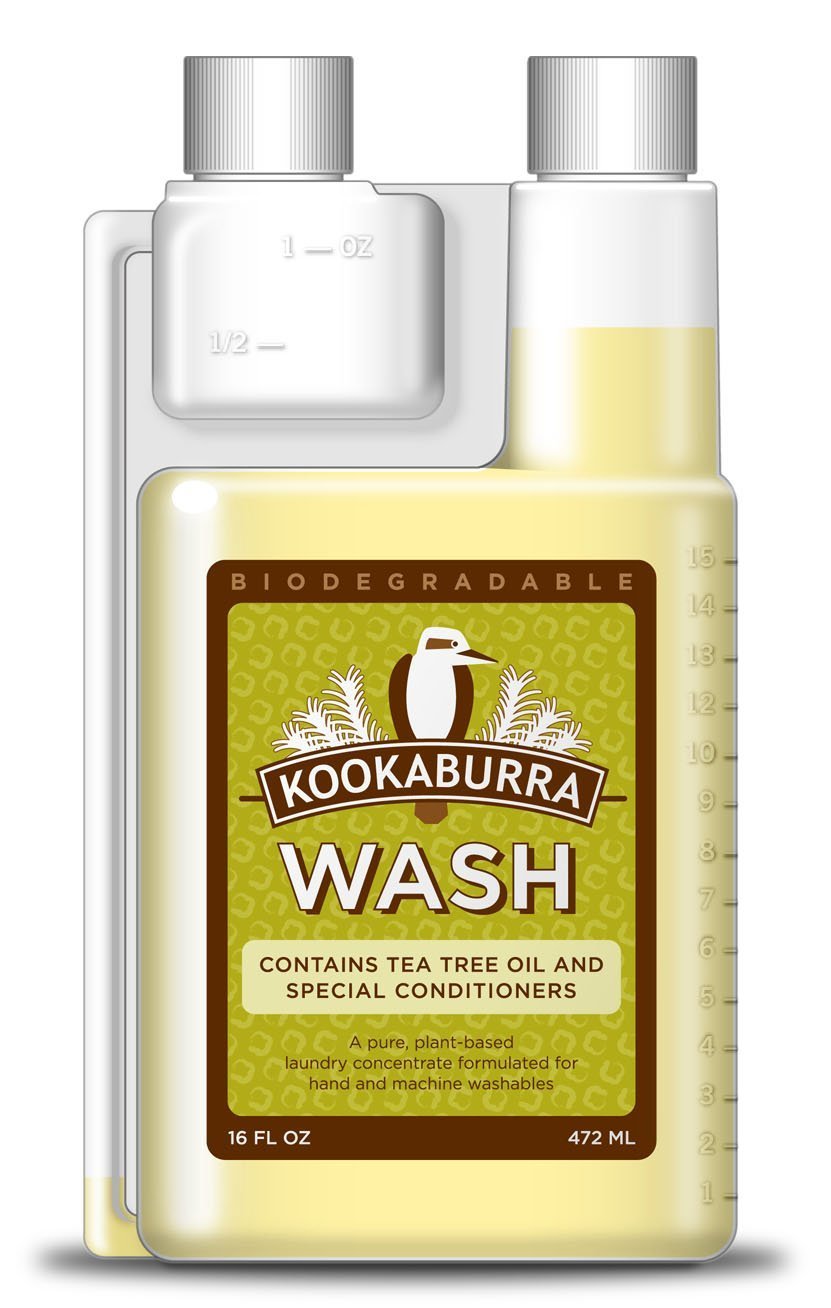
Kookaburra Wash is a classic rinse-required wool wash that has been on the market for decades. The formula includes tea tree oil for its mild antimicrobial and deodorizing properties, plus lanolin to condition the fiber. Where it truly shines is on wool items that are heavier and more prone to retaining odors — sheepskin rugs, wool blankets, and thick-knit sweaters. One reviewer documented restoring a flat, grey sheepskin rug to creamy white and fluffy using just 1.5 ounces of Kookaburra in a machine wash.
Because it requires a rinse step, you need to be more careful with merino garments to avoid felting. The recommended approach is a cold-water delicate cycle with low agitation, followed by a gentle spin. For sheepskins specifically, the manufacturer suggests brushing the fleece before washing and never using a dryer or direct sunlight. Reviewers agree that it is far more economical than dry cleaning and that the tea tree scent leaves a clean, natural aroma without being cloying.
This is not the best choice for a quick, no-fuss merino maintenance routine, but it is unmatched when you need to tackle deeply soiled wool or restore a rug that has been neglected. The 16-ounce bottle is not as concentrated as the Eucalan options, so usage per load is slightly higher. If your merino collection includes any sheepskin or heavy knits, this wash earns a dedicated spot in your laundry arsenal.
Why it’s great
- Tea tree oil provides natural deodorizing and antimicrobial action.
- Restores sheepskin rugs and heavy wool items effectively.
- Lanolin softens fiber and protects natural leather backing.
Good to know
- Requires a rinse step, increasing handling agitation risk.
- Less concentrated; requires more product per load.
5. Stergene Gentle Care for Handwash Delicates

Stergene has been manufacturing this gentle, non-biological handwashing liquid since 1948, and it has a loyal following among knitters and those with sensitive skin. The formula is free from enzymes and optical brighteners, making it safe for merino, cashmere, silk, and other delicate protein fibers. Users report that it cleans well, leaves wool feeling soft, and does not cause skin irritation — a common complaint with standard laundry detergents.
This is a rinse-required product, so you will need to dedicate a bit more attention when hand-washing. The recommended method is to dissolve a capful in cool water, submerge the garment for 10 minutes, then rinse thoroughly in fresh cool water before squeezing out the excess. It can also be used in a machine on a 30°C or 40°C wool cycle. Reviewers note that it is harder to find in stores than the Eucalan line, making the Amazon listing a convenient source.
The biggest difference between Stergene and the Eucalan no-rinse options is the total absence of lanolin. For routine merino maintenance, especially for pieces you wear against the skin, the lack of lanolin means the fiber will not be replenished and may become slightly more dry over time. If you wash merino infrequently or rotate between many pieces, this is a reliable and affordable choice. But for regular maintenance, a lanolin-enriched formula is likely a better long-term investment.
Why it’s great
- Non-biological formula is gentle on sensitive skin.
- Trusted heritage brand with decades of positive reviews.
- Works in machine on wool cycle (30-40°C).
Good to know
- Does not contain lanolin to condition the wool fiber.
- Requires a rinse step; not as convenient as no-rinse options.
FAQ
Can I use baby shampoo to wash merino wool?
How often should I wash a merino wool base layer?
Can I use a washing machine with a no-rinse detergent?
Final Thoughts: The Verdict
For most users, the best detergent for merino wool winner is the Eucalan No Rinse Delicate Wash (Lavender) because it combines a no-rinse formula with lanolin conditioning and a pleasant natural scent in a highly concentrated bottle. If you want zero fragrance, grab the Eucalan Unscented version for the same proven performance. And for restoring heavily soiled sheepskin rugs or thick wool blankets, nothing beats the deep-cleaning power of Kookaburra Wash With Tea Tree Oil and Lanolin.

Mo Maruf
I created WellFizz to bridge the gap between vague wellness advice and actionable solutions. My mission is simple: to decode the research and give you practical tools you can actually use.
Beyond the data, I am a passionate traveler. I believe that stepping away from the screen to explore new environments is essential for mental clarity and physical vitality.