Our readers keep the lights on and my smoothie glass nicely filled. As an Amazon Associate, I earn from qualifying purchases.
Zumba asks your feet to pivot, slide, bounce, and side-step for an entire hour—ordinary gym trainers grip the floor like glue, locking your knees and ankles into a painful tug-of-war with the mat. The right dance shoe lets you glide on command during a merengue turn and then catch instantly for a squat, without your foot sliding inside the shoe or the shoe refusing to rotate.
I’m Mohammad Maruf — the founder and writer behind WellFizz. I have spent hundreds of hours cross-referencing outsole compounds, midsole flex patterns, and tread designs to separate the shoes that actually handle a fast-paced Zumba playlist from the ones that just look the part.
This guide reviews seven models that passed real-world pivot tests and sweat-session durability checks, delivering a focused list of recommended dancing shoes for zumba that solve the specific friction—and frustration—of high-repetition Latin dance fitness.
How To Choose The Best Dancing Shoes For Zumba
Choosing the wrong shoe for Zumba means either your foot sticks to the floor and twists your knee, or your foot slides inside the shoe and blisters your heel. The selection comes down to three physical realities: how the outsole interacts with the floor, how the upper holds your midfoot during lateral cuts, and how much pivot freedom the forefoot gives you during rapid direction changes.
Outsole Compound and Pivot Zone
Zumba demands a sole that slides on command but still grips when you plant. Full-coverage rubber treads designed for running or hiking lock you to the floor, forcing your knee to absorb the rotational torque. Look for a smooth pivot zone—a round patch of exposed, low-friction material on the ball of the foot—or a split-sole construction that separates the forefoot from the heel, allowing the front of the shoe to rotate independently. Dance-specific outsoles (suede, leather, or proprietary low-friction rubber) let you spin without your foot fighting the mat.
Heel Fit and Midfoot Stability
Zumba involves thousands of heel-toe weight transfers. If your heel lifts even a few millimeters inside the shoe, you will develop blisters by minute twenty. A snug heel counter—the rigid cup at the back of the shoe—combined with a lacing system that locks the midfoot (laces that extend to the toe or include an extra eyelet) keeps your foot planted. Mid-top or high-top silhouettes add lateral support for your ankle during side shuffles and grapevines, reducing the risk of a rollover when you land off-balance from a fast turn.
Forefoot Flexibility and Toe Box Volume
Zumba choreography requires you to rise onto the balls of your feet repeatedly. A stiff forefoot resists that movement, making you work harder and tiring your calves faster. The shoe should bend easily at the metatarsal line without pinching your toes when you push off. A wide toe box accommodates toe splay during pliés and forward lunges—narrow toe boxes cause numbness and ingrown toenails during high-rep routines. Breathable mesh uppers help, too, since Zumba generates more foot heat than most fitness classes.
Weight and Cushion Profile
Every ounce of shoe weight is lifted and accelerated hundreds of times in a single class. Lightweight construction (under 10 ounces per shoe for women’s sizes) reduces fatigue. Cushioning should be responsive rather than plush—a soft, marshmallow midsole absorbs the rebound energy you need for quick two-step movements. A moderate-density EVA or foam midsole with a low stack height (around 20-25mm in the heel) gives you enough shock absorption for jumps without stealing your ground feel for pivots.
Quick Comparison
On smaller screens, swipe sideways to see the full table.
| Model | Category | Best For | Key Spec | Amazon |
|---|---|---|---|---|
| ZUMBA Air Funk Mid-Top | Mid-Top Dance Sneaker | High-intensity Zumba with pivots | Pivot-point outsole, mid-top collar | Amazon |
| PPQ Jazz Sneaker | Jazz-Style Sneaker | Social dancing and line dancing | Semi-split sole, mesh vents | Amazon |
| Ryka Jumpstart | Slip-on Cross-Trainer | Quick transitions and daily wear | Slip-on design, arch support | Amazon |
| Under Armour Charged Assert 11 | Running Shoe | Warm-up, walking, low-impact Zumba | Charged cushioning, rubber outsole | Amazon |
| PUMA Tazon 6 | Casual Sneaker | Entry-level Zumba and gym wear | Classic lace-up, EVA midsole | Amazon |
| Under Armour Aurora 3 | Cross-Trainer | Cross-training and aerobics | Stable cushion, UA Reactor foam | Amazon |
| RoseMoli Latin Dance Shoe | Latin Practice Shoe | Practice and performance dance | 2-inch heel, suede sole | Amazon |
In‑Depth Reviews
1. ZUMBA Air Funk Women’s Dance Shoes

Built by the brand that created the workout, this mid-top dance sneaker uses a dedicated pivot point on the outsole—a smooth circular patch under the ball of the foot—so you can execute a salsa turn without the shoe grabbing the mat and twisting your ankle. The mid-top collar wraps just above the ankle bone, providing lateral support during side shuffles and grapevines without restricting dorsiflexion for squats and lunges. Multiple repeat buyers report that a single pair lasts roughly 1.5 years of 3-4 sessions per week, which speaks to the durability of the rubber compound and the stitched upper panels.
The fit runs large by about half a size, so most users size down from their usual sneaker size. The wide toe box accommodates foot splay during pliés, and the cushioned insole reduces heel-strike shock during the high-impact segments of a Zumba class. The upper combines synthetic leather with breathable mesh, keeping the foot cool even when the room temperature climbs above 80°F. The lace system extends far enough down the tongue to let you lock the midfoot, preventing your foot from sliding forward during forward lunges.
A few reviewers with narrow ankles noted that the right shoe rubbed the ankle bone during extended wear—this seems tied to individual ankle anatomy rather than a design flaw. The mid-top height may feel restrictive to dancers accustomed to low-cut dance sneakers, but for Zumba’s lateral demands, most users find the trade-off worthwhile. The price sits at the upper end of the Zumba shoe spectrum, but the pivot-specific outsole and targeted ankle support justify the investment for regular participants.
Why it’s great
- Dedicated pivot-point outsole enables smooth turns without knee torque
- Mid-top collar provides lateral ankle support during side movements
- Durable construction reported to last 1.5 years of frequent use
Good to know
- Runs large—plan to order a half size smaller than normal
- Wide toe box may feel roomy for those with narrow feet
- Ankle collar may rub on very narrow ankle bones
2. PPQ Women’s Jazz Shoes Lace-up Sneakers

The PPQ Jazz Sneaker uses a semi-split sole construction—the forefoot and heel rubber sections are separated by a flexible gap under the arch—which allows the front of the shoe to rotate independently from the heel. This design mimics the pivot freedom of a traditional jazz shoe while adding the shock absorption of a sneaker midsole. Line dancers and West Coast swing enthusiasts report that the shoe glides across wood and vinyl floors without sticking, and the air cushion platform under the heel reduces impact during stomps and stamps.
The upper features laser-cut mesh vents along the sides, which expel hot air effectively during extended dance sessions. The wide toe box gives the toes room to spread during balance moves, and the lace system extends to the toe, allowing a customized midfoot lock that prevents heel slip. The black version fits true to size, while the white version runs slightly shorter and narrower—so if you order the white colorway, go up half a size. The outsole shows moderate wear after several months of frequent social dancing, but the price point makes replacement painless.
One limitation: the semi-split sole takes a session or two to adjust to if you have only ever worn full-sole sneakers, because the flex point under the arch feels different. The midfoot is not as supportive as a dedicated cross-trainer, so dancers with flat feet may want to add an aftermarket orthotic. For Zumba participants who also attend social dance events, this single shoe covers both settings without compromising pivot performance in either.
Why it’s great
- Semi-split sole lets the forefoot pivot independently for smooth turns
- Mesh side vents keep feet cool during high-tempo routines
- Air cushion platform absorbs heel impact without sacrificing ground feel
Good to know
- Semi-split sole requires a short adjustment period for new users
- White version fits differently than black—size up half for white
- Midfoot arch support is minimal for flat-footed dancers
3. Ryka Women’s Jumpstart Sneaker
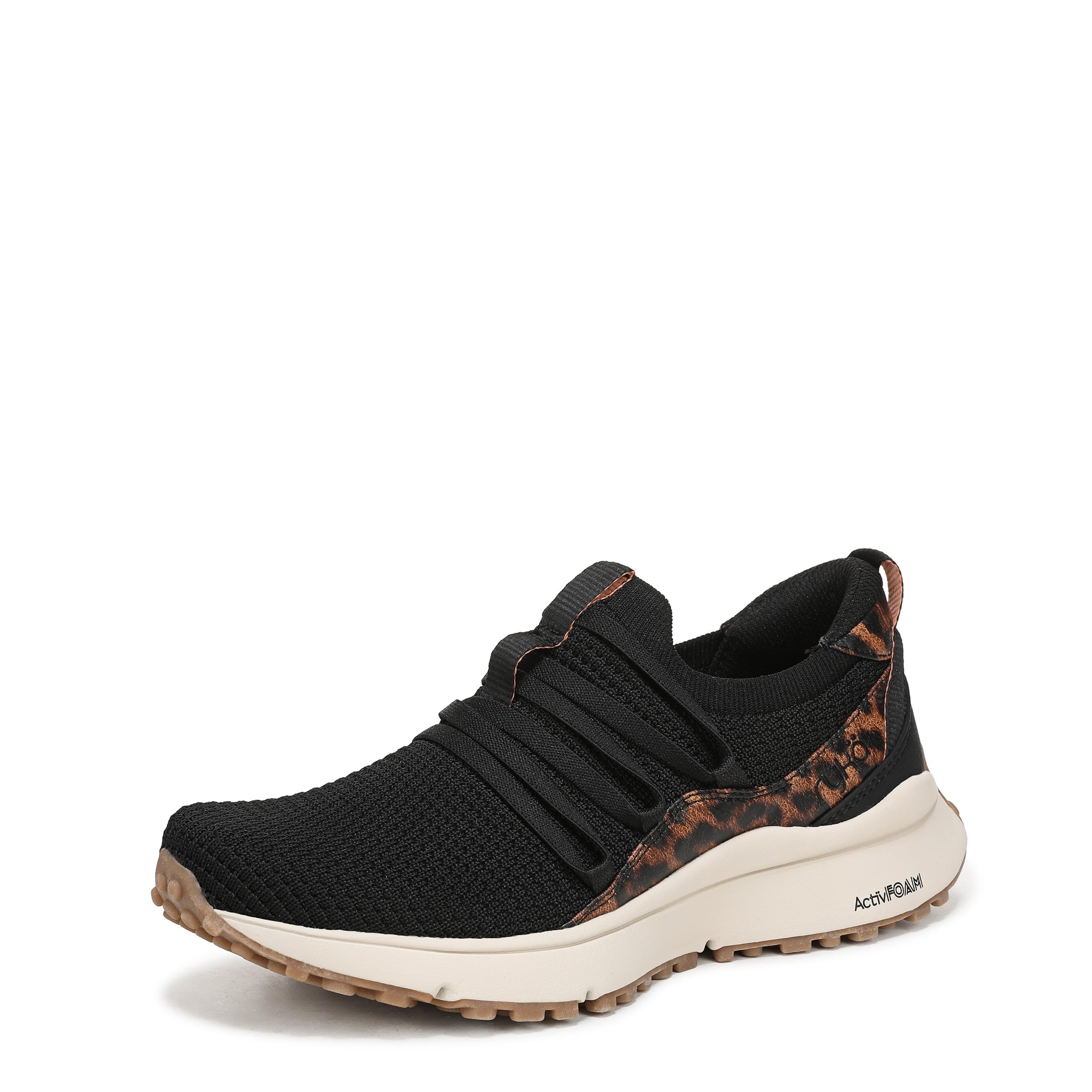
Ryka builds shoes specifically for women’s foot anatomy—narrower heel, wider forefoot—and the Jumpstart applies that geometry to a slip-on sneaker that requires zero lace adjustment before class. The cinched center panel and elastic gussets grip the midfoot securely, and the substantial arch support (rare for a slip-on) prevents your foot from collapsing during lateral cuts. The outsole uses a multi-directional tread pattern that provides grip for lunges and squats but does not lock the foot during pivots—you get a controlled slide rather than a stuck-and-slip motion.
The slip-on entry is genuinely hands-free after the first few wears, which matters when you are rushing from work to a Zumba class. The toe box is generous without looking bulky, and the cushioned footbed breaks in within two sessions. Users report that the shoe holds up well for daily wear beyond the studio—several reviewers wore them to Disneyland and reported no foot pain after 10 hours of walking. The quality of the upper material and the stitched heel counter suggests durability that outlasts the typical budget dance sneaker.
The lack of laces means you cannot fine-tune the midfoot tension—if your foot is between widths, the elastic gussets may feel either too snug or slightly loose. The outsole grip, while good for general Zumba movements, is not optimized for rapid spins on polished wood floors; dancers who do heavy turn sequences may prefer a shoe with a dedicated pivot patch. The price sits at budget-friendly territory, making this a strong entry point for someone trying Zumba for the first time.
Why it’s great
- Women-specific last with generous toe box and snug heel fit
- Substantial arch support reduces foot fatigue during lateral moves
- Hands-free slip-on design is convenient for quick class transitions
Good to know
- No laces means midfoot tension cannot be micro-adjusted
- Outsole tread not ideal for rapid pivots on polished floors
- May require a brief break-in period for the elastic gussets
4. Under Armour Women’s Charged Assert 11
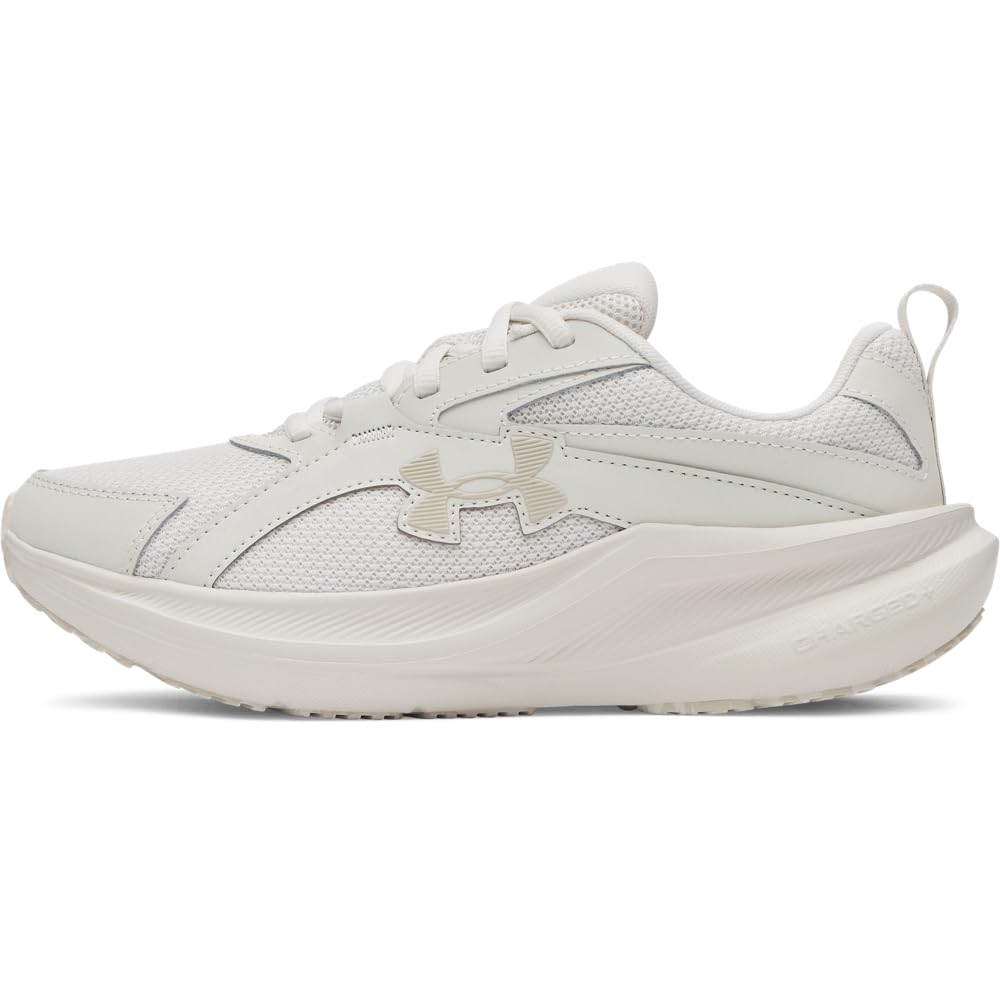
Under Armour’s Charged Assert 11 is a running shoe first, but its lightweight cushioning and breathable mesh upper make it a capable option for Zumba classes that do not involve heavy pivot sequences. The Charged Cushioning midsole uses compression-molded foam that returns energy on toe-off, which helps during jumping jacks and squat pulses. The rubber outsole uses a carbon rubber heel pad for durability and a solid rubber forefoot for traction—the pattern is directional, so it grips well during forward/backward movements but resists rotation during heel-toe pivots.
The upper is a two-layer mesh with synthetic overlays that provide structure without adding weight. The heel counter is stiff and holds the foot securely, and the padded collar prevents the Achilles irritation that some runners experience. Multiple reviewers confirm that the shoe fits true to size and is comfortable straight out of the box with zero break-in period—users with wide feet note that the mesh stretches enough to accommodate without pinching. At under 10 ounces per shoe, it feels almost weightless during fast footwork.
The main limitation for Zumba-specific use is the outsole tread design. Running shoes are engineered for linear motion, so the horizontal tread ridges catch during a pivot, forcing your knee to turn rather than the shoe. The midsole stack height—around 22mm in the heel—provides good impact protection but lifts your foot slightly off the floor, reducing the ground feel needed for precise weight transfers. This shoe works best for low-pivot Zumba formats or warm-up/cool-down segments.
Why it’s great
- Lightweight Charged Cushioning returns energy during jumps and lunges
- Breathable two-layer mesh upper keeps feet cool in hot classes
- Fits true to size with zero break-in, comfortable for wide feet
Good to know
- Running-shoe tread pattern resists pivots and lateral turns
- Higher stack height reduces ground feel for weight transfer precision
- Better suited for low-pivot formats than turn-heavy Zumba routines
5. PUMA Women’s Tazon 6 Sneaker

The PUMA Tazon 6 has been a staple in women’s athletic footwear for years, and its enduring popularity comes from a simple formula: a classic lace-up silhouette with a padded collar and a lightweight EVA midsole that delivers consistent comfort without any gimmicks. For Zumba, this shoe works well for participants who prioritize a secure heel hold and a non-slip lace system over pivot-specific features. The outsole uses a multi-surface rubber compound with a herringbone-inspired pattern that provides reliable grip for forward/backward shuffles and side steps.
The upper combines synthetic leather with mesh panels, striking a balance between structure and breathability. The fit is true to size for most foot shapes, and several users with 7.5W/8R sizes report that the shoe accommodates their width without needing to size up. The padded tongue and collar eliminate pressure points, and the removable insole allows you to replace it with a custom orthotic if needed. Reviewers consistently note that the shoe requires no break-in—it is comfortable from the first wear through an entire evening of dancing.
The Tazon 6 lacks a dedicated pivot zone or split sole, so rapid turns still require your foot to twist inside the shoe rather than the shoe rotating freely on the floor. The EVA midsole, while comfortable for walking and light aerobics, compresses over time and loses some rebound responsiveness after several months of frequent Zumba use. For someone attending Zumba once or twice a week as part of a broader gym routine, these limitations are minor, and the classic style transitions easily from the studio to casual wear.
Why it’s great
- Padded collar and tongue provide immediate comfort with zero break-in
- Classic lace-up design allows a secure, customized midfoot lock
- Multi-surface rubber outsole grips well for linear and lateral moves
Good to know
- No pivot zone or split sole—turns require foot twist inside the shoe
- EVA midsole loses rebound responsiveness after extended use
- Best for low-to-moderate intensity Zumba or multi-activity gym wear
6. Under Armour Women’s Aurora 3 Cross-Trainer
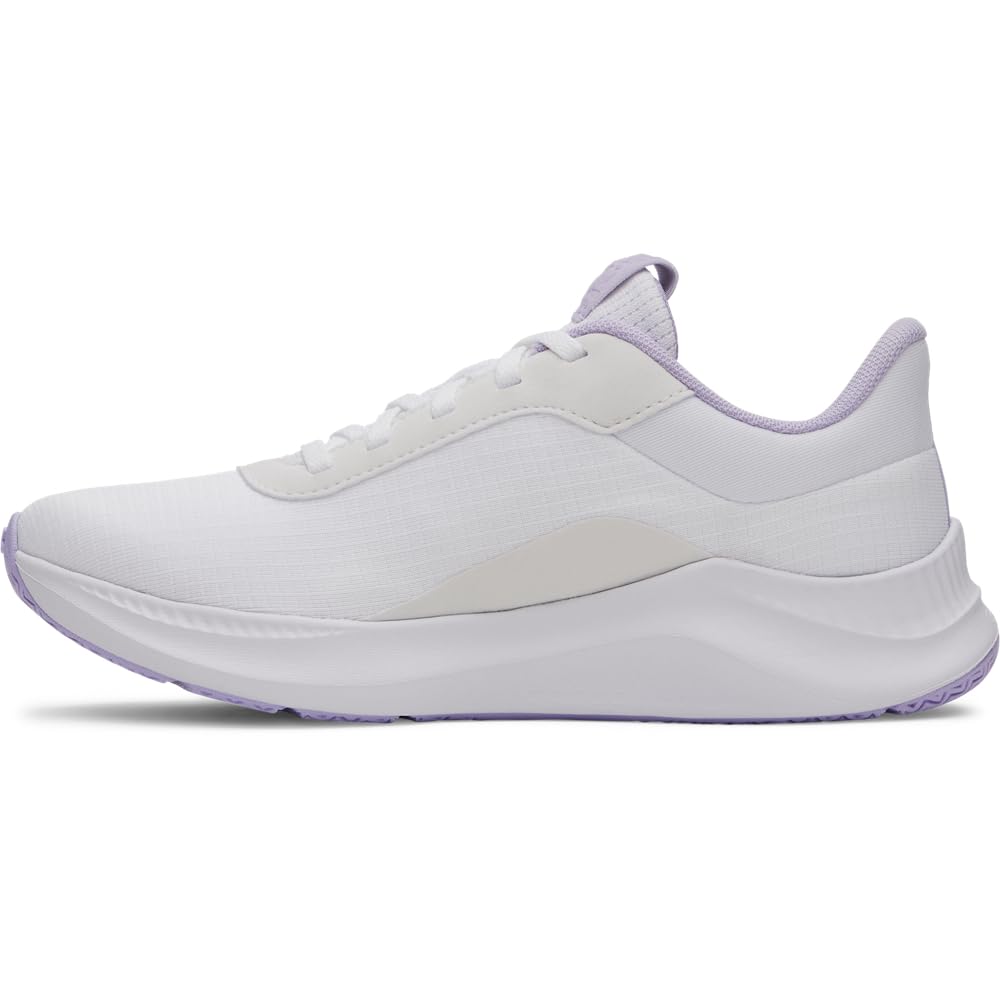
Under Armour designed the Aurora 3 as a cross-trainer, which means it prioritizes stability during weightlifting while still providing cushioning for aerobics. The UA Reactor foam midsole is firmer than a pure running shoe midsole—it does not compress as much under load, which translates to better lateral stability during side shuffles and quick direction changes. The outsole wraps up slightly at the edges, creating a platform that resists rollover when you land off-balance from a turn or a jump.
The upper uses a durable mesh with synthetic welded overlays that lock the midfoot without adding stiffness. The fit runs small—reviewers consistently recommend going up half a size—so plan accordingly. Once sized correctly, the toe box offers adequate room for toe splay during lunges, and the heel counter grips without slipping.
The firmer midsole that makes the Aurora stable for lifting also reduces ground feel during pivots. You can still turn, but you will not get the frictionless rotation of a dedicated dance shoe. The outsole pattern is directional (more grip forward/backward than side-to-side), so pivots require a conscious effort to lift and place the foot rather than twist it. This shoe fits best in a Zumba class where the instructor mixes dance cardio with strength intervals, giving you one shoe that handles both segments without compromise.
Why it’s great
- Firm Reactor foam midsole provides lateral stability for side-to-side drills
- Wrapped outsole edges reduce ankle rollover risk during off-balance landings
- Durable welded overlays lock the midfoot without adding stiffness
Good to know
- Runs half size small—plan to size up for proper fit
- Firmer midsole reduces ground feel for smooth pivoting
- Directional outsole pattern resists rotational movement during turns
7. RoseMoli Women’s Latin Dance Shoes

RoseMoli’s Latin practice shoe brings a different tool to Zumba: a 2-inch flare heel and a suede split-sole that provide the slide-and-stop control of a performance ballroom shoe in a practice-friendly package. The suede sole is low-friction on smooth surfaces, letting you pivot freely without the outsole grabbing the floor, but it also offers just enough grip for weight transfer when you apply pressure—a balance that synthetic outsoles rarely achieve. The heel lifts your center of gravity slightly forward, which naturally shifts your weight onto the balls of your feet—exactly where Zumba choreography demands you be for most routines.
The lace-up design extends far down the tongue, allowing you to tension the midfoot independently from the heel. The upper is a soft synthetic leather that stretches slightly with wear, conforming to your foot shape over the first few sessions. The included microfiber storage bag protects the suede sole when you are not dancing, preventing dirt from glazing the surface and reducing its pivot performance. Users consistently recommend ordering 0.5 to 1 full size larger than your street shoe, because the sizing runs small and the heel fits snugly.
The 2-inch heel requires an adjustment period if you have never danced in heels—your calf muscles and Achilles tendon will need to adapt to the shortened position. The suede sole is also fragile compared to rubber: walking on concrete, asphalt, or dirty studio floors will wear the nap quickly, and the sole must be brushed regularly to maintain its smooth pivot. This shoe is best for Zumba participants who also practice Latin ballroom or for those who specifically want to train their footwork with a lifted heel position that mirrors performance dance.
Why it’s great
- Suede split-sole provides near-frictionless pivots on smooth floors
- 2-inch heel shifts weight to the forefoot, matching Zumba’s ball-of-foot demands
- Lace system extends to the toe for a customized midfoot and heel lock
Good to know
- Runs small—order 0.5 to 1 full size larger than your street shoe
- Suede sole is fragile and requires brushing and bag storage after use
- Heel requires an adaptation period for dancers unused to elevated footwear
FAQ
Can I use regular running shoes for Zumba classes?
How tight should Zumba shoes fit at the heel?
Do I need a mid-top shoe for Zumba?
How often should I replace Zumba shoes?
Final Thoughts: The Verdict
For most users, the dancing shoes for zumba winner is the ZUMBA Air Funk Mid-Top because it combines a pivot-specific outsole with mid-top ankle support and durable construction that survives years of frequent use. If you want a lightweight, semi-split sole for social dancing and Zumba, grab the PPQ Jazz Sneaker. And for a budget-friendly slip-on that delivers arch support and a wide toe box without the hassle of laces, the Ryka Jumpstart is the smart entry point.

Mo Maruf
I created WellFizz to bridge the gap between vague wellness advice and actionable solutions. My mission is simple: to decode the research and give you practical tools you can actually use.
Beyond the data, I am a passionate traveler. I believe that stepping away from the screen to explore new environments is essential for mental clarity and physical vitality.