Our readers keep the lights on and my smoothie glass nicely filled. As an Amazon Associate, I earn from qualifying purchases.
That chlorine aftertaste isn’t just unpleasant — it’s a signal that your tap water is carrying more than you want to swallow. From heavy metals to microplastics, the contaminants slipping through municipal treatment plants are precisely why a good countertop filter has become the centerpiece of the modern kitchen.
I’m Mohammad Maruf — the founder and writer behind WellFizz. I’ve spent countless hours analyzing water filter specs, comparing filtration certifications, and reading through customer test data to separate marketing claims from measurable performance.
After reviewing filter media types, gallon capacities, and NSF certification levels across dozens of models, this guide delivers the definitive best drinking water filters that actually remove what matters while fitting your daily routine.
How To Choose The Best Drinking Water Filter
Not all pitcher filters are built the same. The difference between a cheap carbon block and a multi-stage ion exchange system determines whether your water still carries trace pharmaceuticals or actually tastes like nothing at all. Focus on these three factors before clicking buy.
Filtration Stages and Media Type
The number of stages directly correlates to what gets removed. A basic single-stage carbon filter handles chlorine taste and odor but lets heavy metals and PFAS pass through. Five-stage systems with ion exchange resin capture dissolved solids, lead, chromium, and even fluoride. If your water source is municipal with known contaminants, skip the two-stage and go straight to four or more.
Certification vs Marketing Claims
NSF/ANSI 42 covers aesthetic effects like taste and odor. NSF/ANSI 53 addresses health-related contaminant reduction. NSF/ANSI 401 targets emerging compounds like pharmaceuticals and PFOA/PFOS. A filter that passes all three is substantially more trustworthy than one that only mentions “tested by a third-party lab” without naming the standard.
Filter Lifespan and Replacement Cost
A 40-gallon filter that costs is cheaper per gallon than a 100-gallon filter that costs if your water is clean, but the opposite is true if your source water has high TDS that clogs fine media quickly. Check the annual filter cost before committing to a system — some premium pitchers end up costing more per year than a dedicated under-sink filter.
Quick Comparison
On smaller screens, swipe sideways to see the full table.
| Model | Category | Best For | Key Spec | Amazon |
|---|---|---|---|---|
| Clearly Filtered Pitcher | Premium | Maximum contaminant removal | Targets 365+ contaminants | Amazon |
| Waterdrop Mega ED04W-L | Premium | Electric dispensing, large household | 27-cup capacity, NSF/ANSI 42/53/401 | Amazon |
| ZeroWater 32-Cup | Mid-Range | Lowest TDS, purest taste | 5-stage ion exchange, 0 TDS capability | Amazon |
| Waterdrop ED01AW | Mid-Range | Alkaline water on demand | Electric dispense, 200-gallon filter | Amazon |
| PUR XL 44-Cup | Mid-Range | Maximum volume, fast filtration | 44-cup capacity, 2-in-1 filter | Amazon |
| AQUAPHOR 12 Cup | Value | Compact, budget-friendly starter | B15 filter, fast flow, dishwasher safe | Amazon |
| Brita Large 10-Cup | Budget | Everyday basic chlorine reduction | 10-cup capacity, 40-gallon filter life | Amazon |
In‑Depth Reviews
1. Clearly Filtered Filtered Water Pitcher
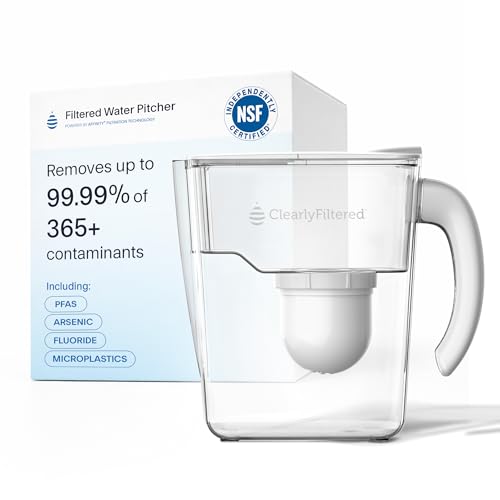
This is the pitcher for anyone who looks at a water quality report and actually reads the fine print. Clearly Filtered’s Affinity Filtration Technology uses ionic binding to capture 365+ contaminants at up to 99.99% removal, including fluoride, PFAS, lead, arsenic, microplastics, and perchlorate — all while leaving beneficial minerals intact. NSF certification to standards 42 and 372 backs up the claims, and independent lab results are published publicly.
The 80-ounce capacity (10 cups) is family-friendly, and the medical-grade Tritan plastic is BPA-free and BPS-free, meaning the container itself won’t leach into your water. Each filter handles 100 gallons or roughly four months, which reduces annual replacement frequency compared to most 40-gallon cartridges. The spill-resistant dam and ergonomic handle make pouring one-handed easy even when full.
Filtration speed slows noticeably as the filter ages, especially if your source water has high sediment load. Some users report needing to prime the filter aggressively to avoid carbon fines in the first few pitchers. But for contaminant coverage, no countertop pitcher in this comparison touches the breadth of what Clearly Filtered targets.
Why it’s great
- Unmatched contaminant list — 365+ targets including fluoride and PFAS
- NSF certified to standards 42 and 372, with published test data
- Medical-grade Tritan plastic resists leaching and cracking
Good to know
- Filtration slows considerably as the 100-gallon filter nears end of life
- Initial priming requires patience to avoid carbon dust in water
2. Waterdrop ED04W-L Mega Electric Water Filter Dispenser

The Mega dispenser solves the two biggest complaints about pitcher filters: having to lift a heavy container when full, and waiting for gravity to drip through. With a one-touch electric pump, water is dispensed on demand into your glass without tilting the entire unit. The 27-cup capacity means fewer refills for households of four or more.
IAPMO certification against NSF/ANSI standards 42, 53, 401, and 372 gives this model credibility for reducing 45+ substances including chlorine, lead, mercury, benzene, and bisphenol A. The 5-micron carbon block prevents carbon leakage that plagues cheaper filters. A 30-day battery life on a single USB-C charge means you can keep it on the counter or take it camping without hunting for an outlet.
This system does not lower TDS — if you want demineralized water with zero dissolved solids, look at the ZeroWater option instead. The plastic construction feels sturdy but is not Tritan-grade like the Clearly Filtered. Replacement filters are affordable and last 200 gallons or three months, keeping annual costs reasonable.
Why it’s great
- Electric dispensing eliminates heavy lifting and spilling
- NSF/ANSI certified against 45+ contaminants including PFOA/PFOS
- 30-day battery life with USB-C charging is genuinely portable
Good to know
- Does not reduce TDS — minerals stay in the water
- Plastic body, not medical-grade material
3. ZeroWater 32-Cup 5-Stage Water Filter Dispenser

ZeroWater’s claim to fame is removing virtually all total dissolved solids — customers regularly report dropping tap water from 500 ppm TDS down to 0-3 ppm. The integrated TDS meter gives you instant feedback so you know exactly when the filter is exhausted (change at 006 ppm). The five-stage process includes ion exchange technology that goes far beyond carbon-only filters.
The 32-cup dispenser format is ideal for high-volume households. The sliding hatch on top makes refilling spill-free, and the spigot design means you don’t have to lift the container at all. IAPMO certification under NSF standards for lead, chromium, PFOA/PFOS, and mercury provides legitimate third-party verification.
The major trade-off is filter cost and speed. Users with high-TDS source water report replacing filters every 2-3 weeks, which can drive annual costs above . Filtration is slow because the media is dense — expect to wait several minutes for a full pitcher. The water tastes extremely clean but some describe it as “flat” since all minerals are stripped, which is fine for coffee but less satisfying for drinking plain.
Why it’s great
- Achieves 0 ppm TDS — unmatched purity in a pitcher format
- Integrated TDS meter removes guesswork for filter changes
- Dispenser design eliminates lifting heavy containers
Good to know
- Filter replacement cost can exceed /year with high-TDS water
- Filtration is slower than carbon-only pitchers
4. Waterdrop ED01AW Electric Water Filter Pitcher

For drinkers who want the perceived benefits of alkaline water without installing a separate ionization system, the ED01AW adds a slow-release alkaline mineral layer that raises pH by 1.5 to 2.5 points. The 5-micron carbon block reduces 30+ contaminants including chlorine and lead, with zero carbon leakage tested by third-party labs.
The one-touch electric dispensing means no tilting or pouring — the pitcher pumps water directly into your glass. A 30-day rechargeable battery with USB-C keeps it portable, and the 15-cup filtration capacity provides enough for a small family. The design fits on most countertops without sacrificing kitchen space.
This system does not lower TDS, so if you are trying to remove mineral content, this is the wrong choice. Battery life is advertised at 30 days under moderate use, but heavy households drawing 135+ ounces daily may need to recharge sooner. Replacement filters are specific to the ED01 model and aren’t cross-compatible with standard Waterdrop cartridges.
Why it’s great
- Alkaline slow-release technology raises pH without artificial additives
- Electric dispensing saves effort and prevents drips
- 2X longer alkaline lifespan than earlier Waterdrop models
Good to know
- Does not reduce TDS — minerals including dissolved solids remain
- Battery may need recharging before 30 days under heavy use
5. PUR Water Filter Dispenser XL 44-Cup
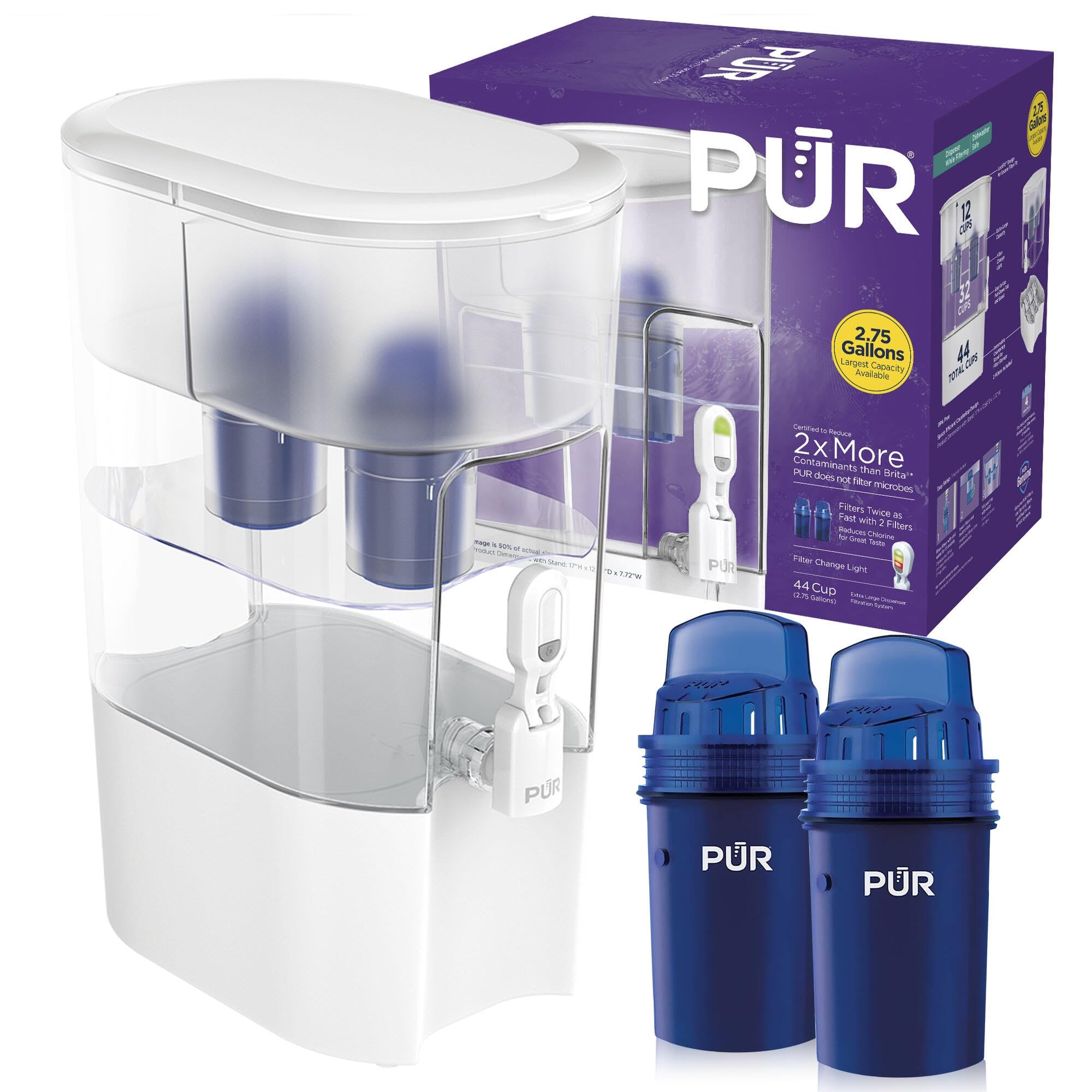
When you need filtered water for a crowd without constant refills, the PUR XL holds 44 cups — the largest capacity in this comparison. The 2-in-1 filter reduces chlorine, mercury, copper, and zinc, and NSF certification confirms the claims. The slim space-saving design fits on countertops without dominating the area, though it is too tall for most refrigerator shelves.
The pull-down spout makes pouring into a glass or pot easy, and the filter indicator light removes the guesswork for replacements. Each genuine PUR filter lasts 40 gallons or about two months. The dispenser is dishwasher safe for easy cleaning, which is rare for units of this size. Dual filters come included, giving you four months of filtration out of the box.
Some users report the spigot valve can be fragile — if it breaks, PUR does not sell replacement parts, which can render the entire unit unusable. The resin is not medical-grade, and the contaminant list is narrower than the Clearly Filtered or ZeroWater options. But for sheer volume and filtration speed, this dispenser outperforms every gravity-fed pitcher on the list.
Why it’s great
- 44-cup capacity means refilling only 1-2 times per day for heavy households
- Filter indicator light takes the guesswork out of replacement timing
- Dishwasher-safe design simplifies maintenance
Good to know
- Spigot valve is prone to breakage and parts are not sold separately
- Narrower contaminant reduction compared to multi-stage systems
6. AQUAPHOR 12 Cup Opal Water Filter Pitcher
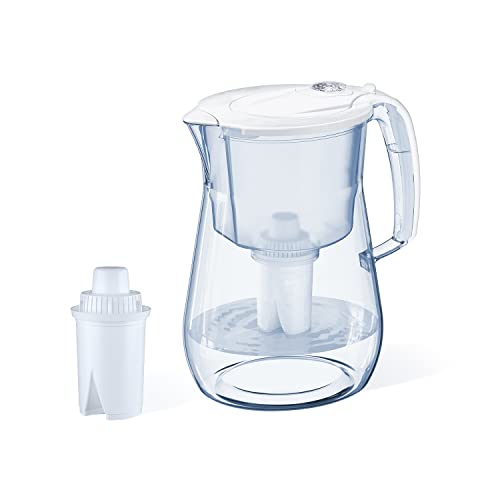
The AQUAPHOR Opal is a strong contender for anyone entering the filtered water space without wanting to overspend. The B15 filter reduces chlorine taste and odor along with heavy metals, and the 12-cup capacity splits the difference between compact pitchers and bulky dispensers. Users consistently report noticeably better-tasting water and coffee compared to tap.
Build quality is a standout — the plastic feels thicker and more rigid than Brita at a similar price point, and the ergonomic handle makes one-handed pouring stable. The pitcher is dishwasher safe (lid requires hand washing), which simplifies cleaning. The fridge-friendly dimensions (9.84 x 4.53 inches) fit most standard refrigerator shelves.
The lid is notably flimsy — multiple users report cracking if over-torqued. The filter requires a 10-minute submerged soak before first use, adding a preparation step that some competitors have eliminated. Replacement filters are easy to find and affordable, but the total contaminant reduction list is shorter than the premium options on this list.
Why it’s great
- Superior build quality with thicker plastic than similarly priced competitors
- 12-cup capacity fits standard fridge shelves without modification
- Dishwasher-safe pitcher simplifies cleaning routine
Good to know
- Lid is fragile and prone to cracking under pressure
- Filter requires a 10-minute soak before first use
7. Brita Large 10-Cup Water Filter Pitcher
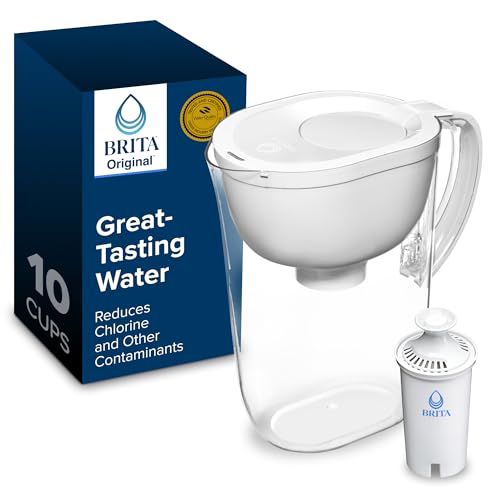
The Brita Large 10-Cup is the benchmark that every other pitcher gets compared to — and for good reason. It is NSF/ANSI certified to reduce chlorine taste and odor, mercury, copper, zinc, and cadmium. The redesigned lid eliminates the old leak issues, and the ergonomic handle makes pouring controlled. At 10.47 inches tall, it fits on most refrigerator shelves.
Each standard filter lasts 40 gallons or about two months, while the Longlast+ option extends to 120 gallons or six months. Switching to Brita reportedly replaces up to 1,800 single-use plastic bottles per year. The BPA-free plastic construction is lightweight at 2.2 pounds, making it easy to refill even when full of water.
The contaminant reduction list is limited compared to multi-stage options — it won’t touch fluoride, PFAS, or pharmaceuticals. The plastic feels less substantial than the AQUAPHOR or Clearly Filtered options. Some users find the pitcher heavy when full due to the water weight, and the filter replacement reminder stickers are small and easy to lose track of.
Why it’s great
- Proven track record with NSF certification for basic contaminant reduction
- Compatible with both standard and Longlast+ filters for flexibility
- Lightweight and fridge-friendly design for easy daily use
Good to know
- Does not reduce fluoride, PFAS, or pharmaceuticals
- Plastic construction feels less durable than competitive models
FAQ
How does alkaline water from a pitcher compare to bottled alkaline water?
Why do some filters say they don’t lower TDS?
Can I use a pitcher filter with well water?
How often should I replace the pitcher itself?
Final Thoughts: The Verdict
For most users, the best drinking water winner is the Clearly Filtered Pitcher because it offers the widest contaminant reduction with legitimate NSF certification and medical-grade materials in a practical countertop footprint. If you want the convenience of electric dispensing without lifting heavy pitchers, the Waterdrop ED04W-L delivers certified contamination protection with a 27-cup reservoir. And for absolute purity measured in parts per million, the ZeroWater 5-stage dispenser achieves zero TDS while the built-in meter tells you exactly when to replace the filter — just budget for the ongoing cartridge cost.

Mo Maruf
I created WellFizz to bridge the gap between vague wellness advice and actionable solutions. My mission is simple: to decode the research and give you practical tools you can actually use.
Beyond the data, I am a passionate traveler. I believe that stepping away from the screen to explore new environments is essential for mental clarity and physical vitality.