Our readers keep the lights on and my smoothie glass nicely filled. As an Amazon Associate, I earn from qualifying purchases.
Nasal congestion during pregnancy is a relentless physical grind — your sinuses swell from increased blood flow and hormone shifts, turning every breath into a conscious effort and every night into a restless battle with your own airway. Most standard decongestant sprays and pills carry category-C pregnancy warnings or contain vasoconstrictors that doctors explicitly advise against, leaving you with a frustrating gap between what clears your nose and what is safe for your baby.
I’m Mohammad Maruf — the founder and writer behind WellFizz. I have spent deeply focused hours analyzing the active-ingredient profiles, dosing instructions, and third-party test data for the narrow subcategory of sinus relief products that expectant mothers can actually use without triggering a safety warning.
This buying guide breaks down five pregnancy-safe congestion strategies — from mechanical nasal strips and herbal tinctures to essential-oil roll-ons and gentle chest rubs — so you can choose a decongestant while pregnant that matches your specific symptoms and risk tolerance.
How To Choose The Best Decongestant While Pregnant
Every congestion product you encounter during pregnancy passes through two filters: whether its active ingredient is absorbed into your bloodstream, and whether clinical data exists about its effect on fetal development. The safest approach is to prioritize options that act locally — on the nasal tissue or chest — before reaching for systemic formulas. Below are the three criteria that matter most for this specific category of buyer.
Local vs. Systemic Delivery
Products that deliver relief directly to the nasal passage or respiratory tract without entering the bloodstream — such as Breathe Right nasal strips, chest rubs applied to the skin, and essential oil roll-ons inhaled through the nose — carry the lowest theoretical risk because their active agents never reach the placenta. This is the first question to ask about any product: does the active ingredient cross through the skin or mucous membrane into circulation, or does it work physically or topically at the site of congestion?
Active Ingredient Profile
Guaifenesin, found in expectorants like Nature’s Way Air-Power, is generally considered low-risk during the second and third trimesters because it thins mucus without constricting blood vessels. Herbal ingredients such as eucalyptus, lavender, elderflower, and yerb santa are classified as food-grade or “Generally Recognized as Safe” by the FDA, but they can still trigger allergic responses or uterine contractions in rare cases — always test a small skin patch first. Ingredients like phenylephrine and pseudoephedrine, the classic decongestant drugs, are the ones most obstetricians recommend avoiding entirely during the first trimester.
Third-Party Certifications and Manufacturing Standards
Look for products that carry a clear expiration date, verified third-party testing for heavy metals and microbial contamination (especially in herbal tinctures and essential oil blends), and manufacturing facilities that follow Good Manufacturing Practices (cGMP). A brand that explicitly states “not for use while pregnant or nursing” on its label is exercising legal caution — check with your OB-GYN rather than eliminating it automatically, because many herbal formulas make that disclaimer simply because no pregnancy-specific clinical trial has been run.
Quick Comparison
On smaller screens, swipe sideways to see the full table.
| Model | Category | Best For | Key Spec | Amazon |
|---|---|---|---|---|
| Breathe Right Extra Strength Nasal Strips | Nasal Strip | Zero-drug mechanical clearance | 50% stronger spring bands | Amazon |
| WishGarden Herbs Kick-Ass Sinus | Herbal Tincture | Fast-absorbing herbal support | Bioavailable liquid tincture | Amazon |
| Nature’s Way Air-Power Guaifenesin | Expectorant Tablet | Mucus-thinning oral relief | 200 mg guaifenesin per tablet | Amazon |
| Prime Natural Cold Cough Congestion Relief Roll-On | Essential Oil Roll-On | Topical congestion and sleep support | 10 ml pre-diluted roller | Amazon |
| Aleva Naturals Soothing Comfort Chest Rub | Chest Rub | Gentle baby-safe congestion relief | Hypoallergenic formulation | Amazon |
In-Depth Reviews
1. Breathe Right Extra Strength Clear Nose Strips

Nasal strips offer the single most direct decongestant mechanism that involves zero systemic absorption. These extra-strength strips use spring-like bands that are 50% stronger than the original version, physically lifting the nasal vestibule to widen the airway by up to 38%. That mechanical action immediately reduces airflow resistance — you feel the difference within seconds of application — without a single molecule crossing into your bloodstream.
For pregnant women whose congestion stems from elevated progesterone causing nasal mucosal swelling rather than from thick mucus, this is the ideal solution. The clear adhesive is hypoallergenic and manufactured using 3M materials, designed to stay put through a full night of restless sleep. Each strip opens the nose mechanically rather than chemically, making it the safest possible choice for all three trimesters.
The 44-count box provides nearly a month and a half of nightly use, and the strips work equally well during daytime allergy attacks. Adhesion drops noticeably if your skin is oily or sweaty, so apply to clean dry skin and press firmly for ten seconds. Some residue may remain after removal, but it washes off with warm water.
Why it’s great
- Completely zero-drug — no ingredient crosses the placental barrier
- Provides immediate mechanical airway widening without waiting for chemical effects
- Hypoallergenic adhesive is safe even for sensitive pregnancy skin
Good to know
- Adhesive fails if skin is oily or damp; must apply to dry skin
- Does not treat thick phlegm or sinus pressure — only opens the nasal passages
2. WishGarden Herbs Kick-Ass Sinus Liquid Tincture

This is a bioavailable liquid herbal tincture that absorbs directly through the mucous membranes of the mouth and throat within minutes, bypassing the digestive system for faster onset than capsules or tablets. The blend features yerb santa for histamine modulation, elderflower and goldenseal for immune support, and horseradish to help open sinus passages — all suspended in vegetable glycerine and artesian spring water with zero synthetic fillers.
User feedback consistently reports noticeable symptom relief within two doses, with some reviewers describing it as “working like a miracle” and “heading off a full-blown infection at the pass.” The recommended dose is 3 mL in water every one to three hours for up to five days. Taste is the unavoidable trade-off: users describe it as “rancid teriyaki sauce” with a lingering aftertaste. You will need to pinch your nose or chase it with a strong juice.
WishGarden explicitly labels this formula as not for use while pregnant or nursing — but that disclaimer is standard across most herbal tinctures because no pregnancy-specific safety trial has been funded, not because the ingredients are known to be harmful. Discuss this product with your OB-GYN before purchasing. If you get the green light, this is the most potent herbal option in this category.
Why it’s great
- Fast sublingual absorption — noticeably faster than capsule-based expectorants
- Uses seven herbs with a long history of upper respiratory support
- Woman-owned, family-run company with 45 years of herbal formulation experience
Good to know
- Label explicitly advises against use during pregnancy — consult your doctor first
- Extremely strong, lingering taste that many users find difficult to tolerate
3. Nature’s Way Air-Power Guaifenesin Tablets
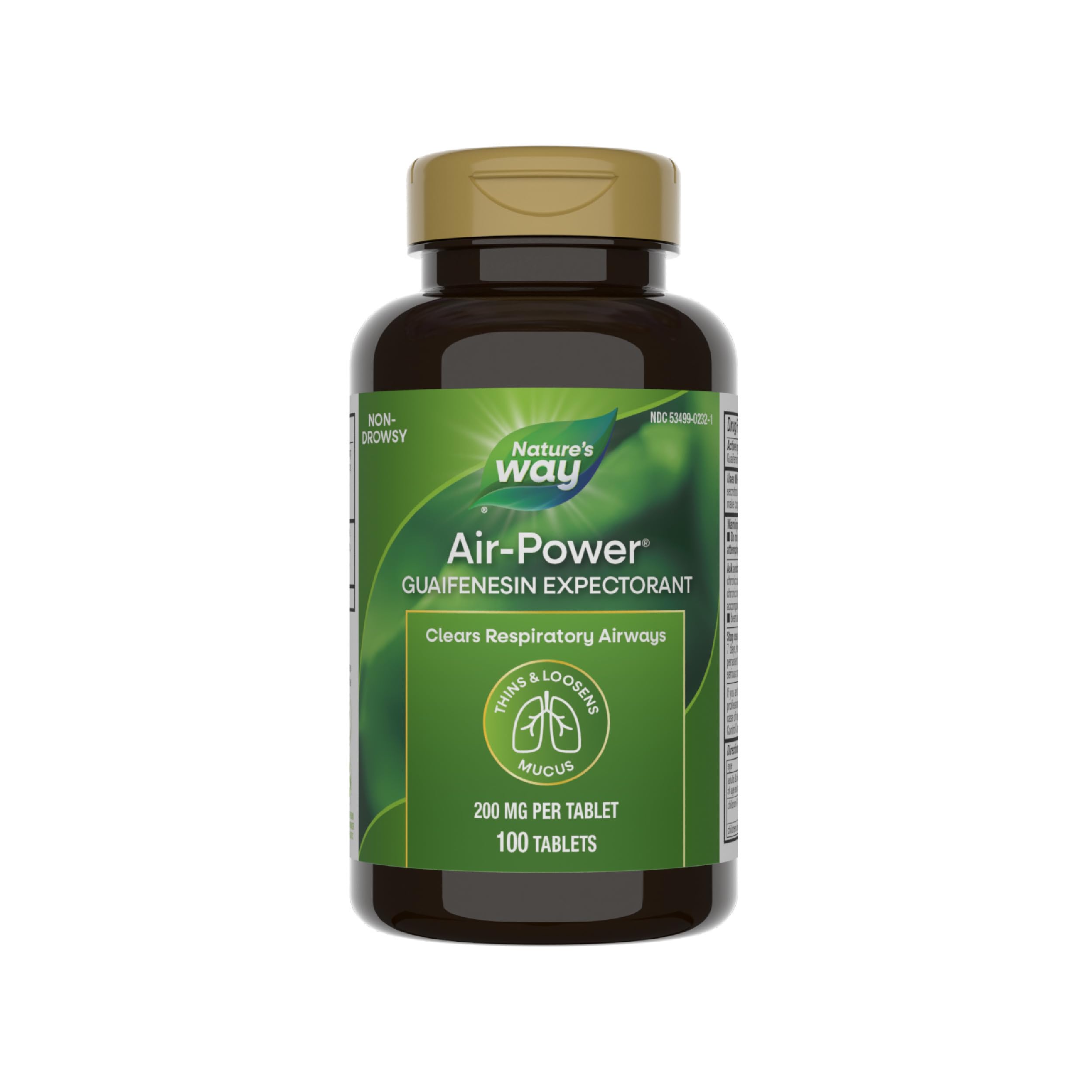
Guaifenesin is the only expectorant approved by the FDA as a monotherapy and is widely considered compatible with pregnancy by the American College of Obstetricians and Gynecologists when used after the first trimester. Nature’s Way Air-Power delivers 200 mg of guaifenesin per tablet sourced from lignum vitae, combined with a base of herbal extracts including fenugreek, marshmallow root, and mullein that add demulcent (soothing) properties to the thinning effect.
The non-drowsy formula is critical for pregnant women who already battle fatigue — you will not feel groggy or sedated from this pill. Adult dosage is one to two tablets every four hours, with a maximum of 12 tablets in 24 hours. Users who have taken this product for 12 to 20 years report that it keeps mucus thin enough to prevent pneumonia and that it works without the dry mouth or drowsiness common with other expectorants.
This is a vegan-friendly tablet free of soy, dairy, gelatin, and artificial colors. It requires drinking extra water with each dose to maximize the mucus-thinning mechanism. The 100-count bottle offers the lowest per-dose cost in this guide, making it the most budget-conscious option for ongoing symptom management through the later trimesters.
Why it’s great
- Guaifenesin is the most commonly recommended OTC expectorant during the second and third trimesters
- Herbal additive blend supports respiratory lining without adding side effects
- 100-tablet supply at a minimal per-dose cost
Good to know
- Must be taken with significant water intake to work effectively
- Should be avoided during the first trimester unless directed by a doctor
4. Prime Natural Cold Cough Congestion Relief Essential Oil Roll-On

This pre-diluted essential oil roll-on combines peppermint, eucalyptus, camphor, wintergreen, rosemary, german chamomile, and basil linalool — all suspended in grapeseed oil at a ready-to-use concentration. The mechanism is purely aromatic: you roll it onto the chest, temples, or wrists and inhale the vapor, which triggers the trigeminal nerve in the nasal cavity and creates a cooling sensation of airway openness without any actual physical dilation or drug absorption.
User feedback reveals two notable strengths: it provides headache relief alongside congestion reduction, and it helps with sleep when applied to the back of the neck before bed. The 10 ml size is compact enough for a maternity hospital bag or purse.
The essential oils in this blend are generally considered safe by the FDA’s Generally Recognized as Safe list when used topically in low concentrations. The roller ball dispenses liquid faster than expected, so dab gently onto pulse points rather than rolling heavily — users report that excess liquid runs into the eyes and causes significant stinging. This is a sensory support tool, not a medical decongestant.
Why it’s great
- Completely topical and aromatic — no systemic drug absorption
- Multi-purpose: congestion, headache, muscle tension, and sleep support
- Small bottle fits easily into a purse or hospital bag
Good to know
- Camphor content means avoid using near the face of a newborn after delivery
- Roller dispenses too quickly — easy to over-apply and get oil in the eyes
5. Aleva Naturals Soothing Comfort Chest Rub
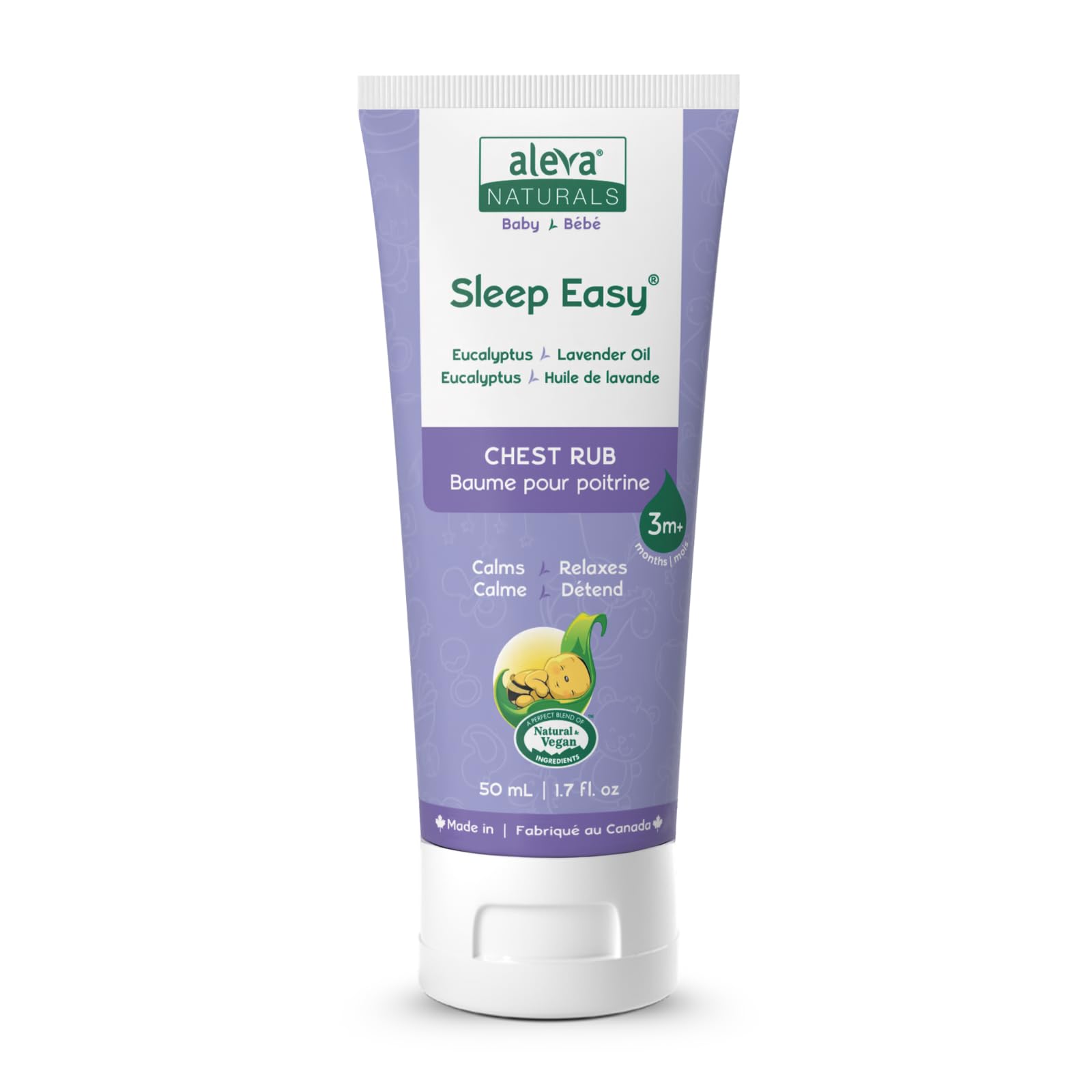
This chest rub is specifically designed for babies aged three months and older, which means every ingredient decision — from the plant-based base to the hypoallergenic formulation — was made with the most sensitive skin in mind. The active aromatic agents are eucalyptus and lavender oils, blended into organic shea butter and olive oil to create a smooth, non-greasy texture that absorbs quickly without leaving a heavy residue on the skin.
The mechanism is the same as a traditional Vicks-style rub: you massage a small amount onto the chest or back, and the volatile aromatic compounds travel via inhalation to the nasal passages, where they trigger a cooling and opening sensation. The lavender component adds a calming effect that helps settle a restless, congested night. Users report that the scent is noticeably lighter and less medicinal than vapor rubs, and the natural base avoids the petroleum jelly that some pregnant women prefer to limit during the first trimester.
This rub does not contain camphor or menthol at the high concentrations found in adult vapor rubs, making it markedly gentler. The trade-off is duration: the scent fades within two to three hours, requiring reapplication for full-night coverage. For daytime congestion in a stuffy nose without thick phlegm, this is the mildest, most pregnancy-friendly topical option available.
Why it’s great
- Formulated for the most sensitive skin — hypoallergenic and free of harsh chemicals
- No camphor or high-dose menthol, making it a gentler option for pregnancy
- Non-greasy shea butter base absorbs quickly without staining clothes
Good to know
- Aromatic effect lasts only two to three hours — needs reapplication for overnight use
- Too mild for severe congestion with thick mucus or sinus pressure
FAQ
Can I use an essential oil roll-on if I have pregnancy-related allergies?
Is guaifenesin safe during all three trimesters?
Which product works fastest for a sudden stuffy nose at night?
Can I combine a nasal strip with a chest rub for maximum relief?
Final Thoughts: The Verdict
For most users, the decongestant while pregnant winner is the Breathe Right Extra Strength Nasal Strips because it delivers immediate mechanical airway widening with zero systemic absorption, making it safe for all trimesters and compatible with other forms of symptom management. If you want a fast-absorbing herbal option that addresses sinus pressure rather than just nasal passage size, grab the WishGarden Herbs Kick-Ass Sinus tincture — but discuss it with your OB-GYN first. And for a budget-conscious oral expectorant that thins mucus without drowsiness, nothing beats the Nature’s Way Air-Power tablets after the first trimester.

Mo Maruf
I created WellFizz to bridge the gap between vague wellness advice and actionable solutions. My mission is simple: to decode the research and give you practical tools you can actually use.
Beyond the data, I am a passionate traveler. I believe that stepping away from the screen to explore new environments is essential for mental clarity and physical vitality.