Our readers keep the lights on and my smoothie glass nicely filled. As an Amazon Associate, I earn from qualifying purchases.
Finding dress shoes that don’t aggravate Morton’s neuroma means obsessing over two things: a deep, uncompressed toe box and a sole that doesn’t force the metatarsal heads together. Most formal footwear pinches the forefoot, creating the exact pressure that triggers that sharp, burning sensation between the third and fourth toes. The right pair eliminates that compression entirely.
I’m Mohammad Maruf — the founder and writer behind WellFizz. This guide is the result of cross-referencing podiatric footbed geometry with real-world wearer feedback, filtering for construction methods, material flex, and internal volume ratios that genuinely reduce neuroma flare-ups.
After analyzing dozens of models across every price tier, I’ve narrowed the field to the nine pairs that balance professional aesthetics with the structural forgiveness a neuroma demands. These are the best dress shoes for morton’s neuroma you can buy right now, ordered by how well they manage forefoot pressure without looking orthopedic.
How To Choose The Best Dress Shoes For Morton’s Neuroma
The primary mechanism of Morton’s neuroma pain is the pinching of the interdigital nerve between the metatarsal heads. A shoe that narrows at the toe or has a rigid sole that doesn’t bend at the right point will amplify that compression. You need a shoe that provides vertical depth, forefoot splay, and a sole that flexes before the metatarsal region, not after it.
Toe-Box Depth Over Width
Width labels (EE, EEE) measure horizontal room, but neuroma relief comes from vertical space. A shallow toe box presses the toes downward, jamming the metatarsal heads together. Look for shoes explicitly described as having “extra depth” or “double depth” construction. These models add 3–6mm of vertical clearance, allowing the foot to sit lower inside the shoe and reducing nerve impingement.
Sole Flex and Metatarsal Support
A dress shoe’s sole should bend at the ball of the foot, not behind it. That flex point determines whether the shoe assists or fights natural gait. Shoes with a full-length steel shank or a stiff carbon plate look elegant but create a rigid lever that torques the forefoot. A softer polyurethane or EVA midsole with a flex groove at the 60% point of the footbed allows the toes to splay naturally on push-off.
Removable Insole for Custom Orthotics
No mass-produced footbed can address the specific location of your neuroma. A shoe with a fully removable, non-glued insole lets you drop in a custom orthotic with a metatarsal pad or a dancer’s pad. The internal volume must accommodate both the orthotic and your foot without raising the heel too high or creating pressure on the top of the foot. Multi-depth shoes are engineered for this exact scenario.
Quick Comparison
On smaller screens, swipe sideways to see the full table.
| Model | Category | Best For | Key Spec | Amazon |
|---|---|---|---|---|
| Allen Edmonds Park Avenue | Premium | Recraftable oxford with wide widths | Goodyear welt, AAA to EEE | Amazon |
| Mezlan Soka | Premium | Handcrafted deerskin with tassel detail | Deerskin/calfskin upper | Amazon |
| Finn Comfort Gomera | Premium | Adjustable sandal for custom orthotics | Removable cork/latex insole | Amazon |
| Johnston & Murphy Melton | Mid-Range | Classic cap-toe with no break-in | Optima rubber sole | Amazon |
| ECCO London Wingtip | Mid-Range | Dual-insole leather wingtip | Recoil insole technology | Amazon |
| Dr. Comfort William-X | Mid-Range | Double-depth diabetic dress shoe | Extra-depth + gel insoles | Amazon |
| Orthofeet Moreno Wingtip | Budget-Friendly | Water-repellent Oxford with adjustable insoles | Ergonomic stretchable upper | Amazon |
| Dansko Sam Sandal | Budget-Friendly | Women’s dress sandal with arch support | Suede-covered microfiber footbed | Amazon |
| Dr. Comfort Wing | Budget-Friendly | Therapeutic lace-up with extra depth | Extra-depth leather upper | Amazon |
In‑Depth Reviews
1. Allen Edmonds Men’s Park Avenue Waterproof Cap-toe Oxford

The Park Avenue is the gold standard for men’s oxfords, and its wide-width availability (AAA to EEE) makes it a top contender for neuroma-friendly dress shoes. The Goodyear welt construction allows the shoe to be recrafted multiple times, meaning the upper forms to your foot over years while the internal volume stays consistent. The waterproof version adds a sealed membrane without narrowing the toe box, which is rare for a formal cap-toe.
The leather sole is firm but the flex point sits exactly at the metatarsal break. Users report that the shoe requires about 15 miles of walking to break in, but once softened, the leather lining creates a smooth, non-abrasive interior that accommodates custom orthotics well. The Chili color offers a distinct red-brown patina that shines up beautifully for formal events.
One concern: several buyers note that soles can delaminate or crack early if you receive a factory-second sold through third-party sellers. Stick to direct-from-Amazon or authorized retailer listings to ensure first-quality construction. The Park Avenue is not a “wide” shoe in the orthopedic sense, but its structural integrity and recraftability make it a long-term investment for neuroma sufferers who need a precise fit.
Why it’s great
- Goodyear welt allows full recrafting for years of wear
- Available in AAA to EEE widths for precise fit
- Waterproof membrane doesn’t compress the forefoot
Good to know
- Stiff leather sole requires dedicated break-in period
- Risk of receiving factory-seconds from third-party sellers
2. Mezlan – Soka – Men’s Cap Toe Dress Shoe

The Mezlan Soka combines a deerskin vamp with polished calfskin quarters, creating a soft, pliable forefoot that doesn’t fight the natural splay of the metatarsals. The deerskin is notably thinner and more flexible than standard calf, which reduces pressure on the dorsal surface of the foot — a common pain point when adding orthotics. The tassel detail keeps it formal enough for a tuxedo while the construction remains surprisingly forgiving.
Handcrafted in Spain, the Soka uses a Blake-stitched sole that is lighter and more flexible than a Goodyear welt. This means less material between your foot and the ground, which some neuroma patients prefer because it reduces the lever effect of a thick sole. The shoe runs slightly long, so you may need to size down half a step to avoid heel slip, but the toe box remains generous throughout the length.
The midnight blue color is a standout, though some buyers report it reads as a very dark navy rather than true blue. The leather is high-gloss and takes a polish well, but the deerskin sections require a conditioner rather than standard wax to prevent drying. For neuroma sufferers who need a soft, flexible upper that still looks sharp under a suit, the Soka delivers a unique material advantage.
Why it’s great
- Deerskin upper is exceptionally soft and non-compressive
- Blake stitch keeps sole light and flexible
- Handcrafted construction with premium materials
Good to know
- Runs slightly long; sizing can be tricky
- Deerskin requires specialized conditioning
3. Finn Comfort Gomera Soft
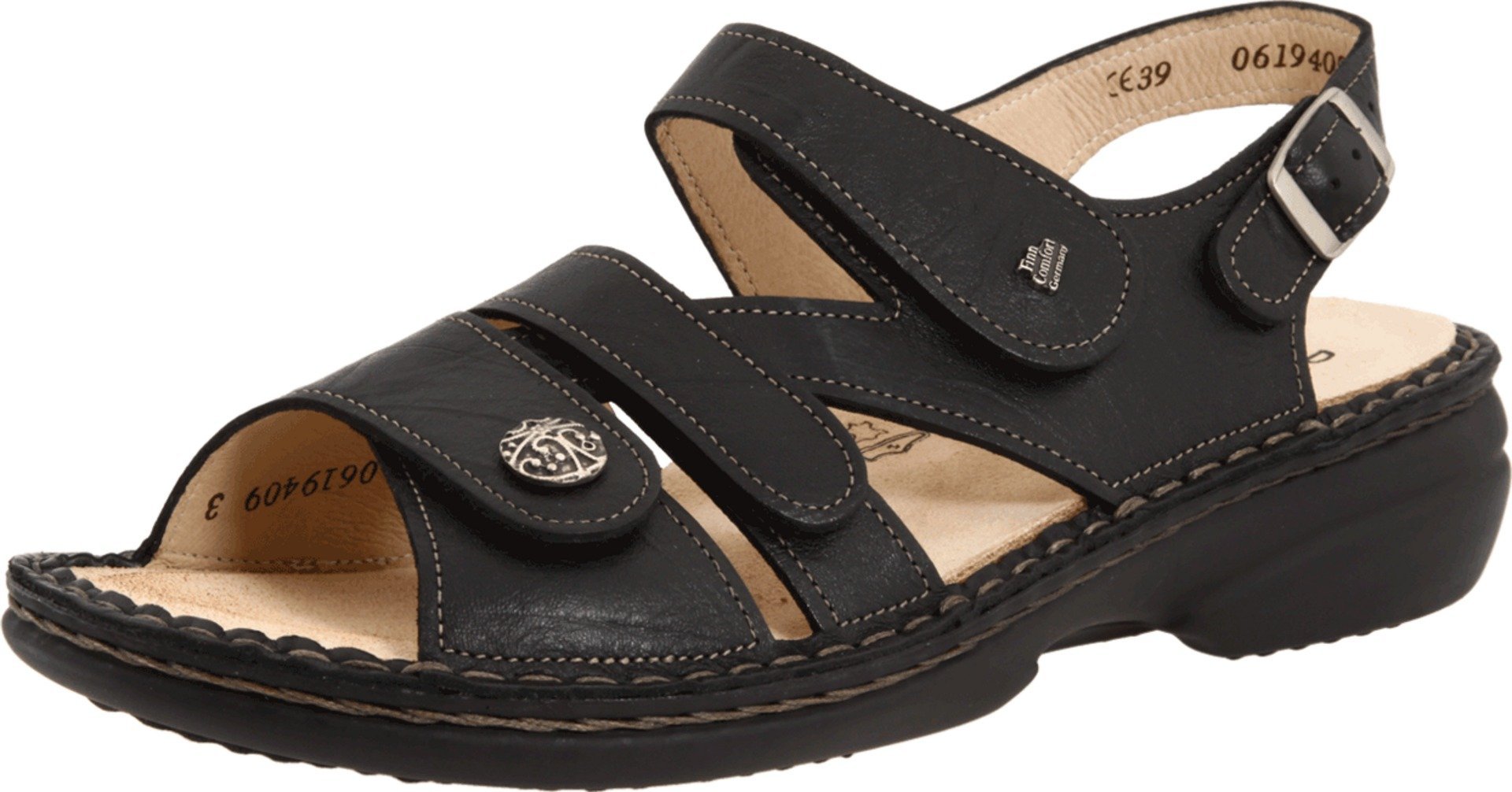
The Finn Comfort Gomera is a women’s dress sandal that uses a cork-and-latex footbed that molds to the foot over time. The footbed is fully removable, allowing you to drop in a metatarsal pad or custom orthotic without losing the arch support structure. The adjustable straps across the instep and heel let you fine-tune the fit, which is critical when the forefoot needs to sit loosely while the heel stays locked.
The sole is a lightweight polyurethane unit with a rocker profile that shifts pressure away from the metatarsal heads during the gait cycle. Users who have worn Finn Comfort for years report that the footbed “corrects” walking patterns and reduces overall forefoot loading. The Gomera is not a closed-toe shoe, which makes it a warm-weather option, but the open design eliminates the lateral compression that many neuroma patients experience in pumps or loafers.
One caveat: the cork footbed takes about 15–20 hours of wear to fully conform. During that break-in, the shoe may feel slightly firm under the metatarsal area. The price point is steep for a sandal, but the replaceable insole system means you can refresh the footbed rather than replace the whole shoe. If you need a dressy, open shoe that accommodates orthotics, the Gomera is the most adjustable option available.
Why it’s great
- Removable cork/latex footbed accepts custom orthotics
- Adjustable straps customize forefoot and heel fit
- Rocker sole reduces metatarsal loading
Good to know
- Requires break-in for footbed to conform
- Open-toe design limits cold-weather use
4. Johnston & Murphy Men’s Melton Cap Toe Lace-Up Oxford
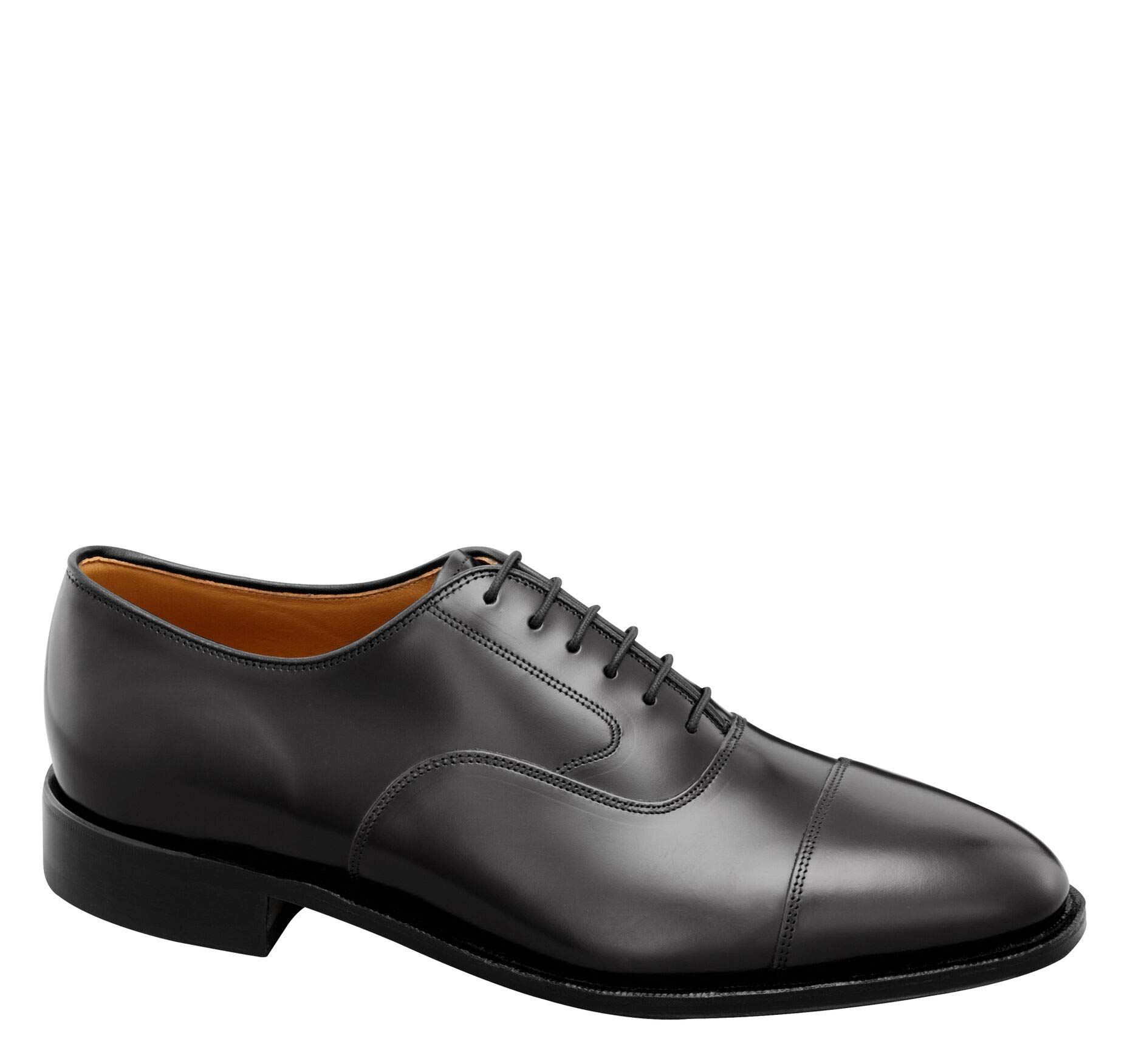
The Johnston & Murphy Melton is the rare oxford that delivers classic Goodyear-welt aesthetics without the brutal break-in. The Optima rubber sole is soft and shock-absorbing, and the flex point is placed farther back than most cap-toe oxfords, which reduces the pressure on the metatarsal heads during push-off. Several buyers specifically note that these shoes required zero break-in, a major plus for neuroma patients who cannot tolerate a stiff sole.
The upper is polished calfskin with a factory-applied shine that holds up well to regular buffing. The cap-toe design is conservative enough for courtrooms or boardrooms, but the toe box is not excessively narrow — it allows the toes to lie flat rather than stacking. The Bordeaux color looks nearly black in low light, which some users find limiting, while the black option is a true, deep solid.
Durability is a mixed bag. While the leather sole is recraftable, the heel and sole can wear through under heavy daily use — one reviewer logged 90 miles of dance and developed a hole at the ball. The tongue is sewn on one side, which may cause slight bunching for high-volume feet. Still, for the price, the Melton offers the best balance of formal appearance and immediate forefoot comfort in the mid-range tier.
Why it’s great
- No break-in needed; comfortable from first wear
- Optima rubber sole absorbs shock at the forefoot
- Goodyear welt allows resoling
Good to know
- Bordeaux color almost indistinguishable from black
- Sole may wear quickly under heavy daily use
5. ECCO Men’s London Wingtip Oxfords
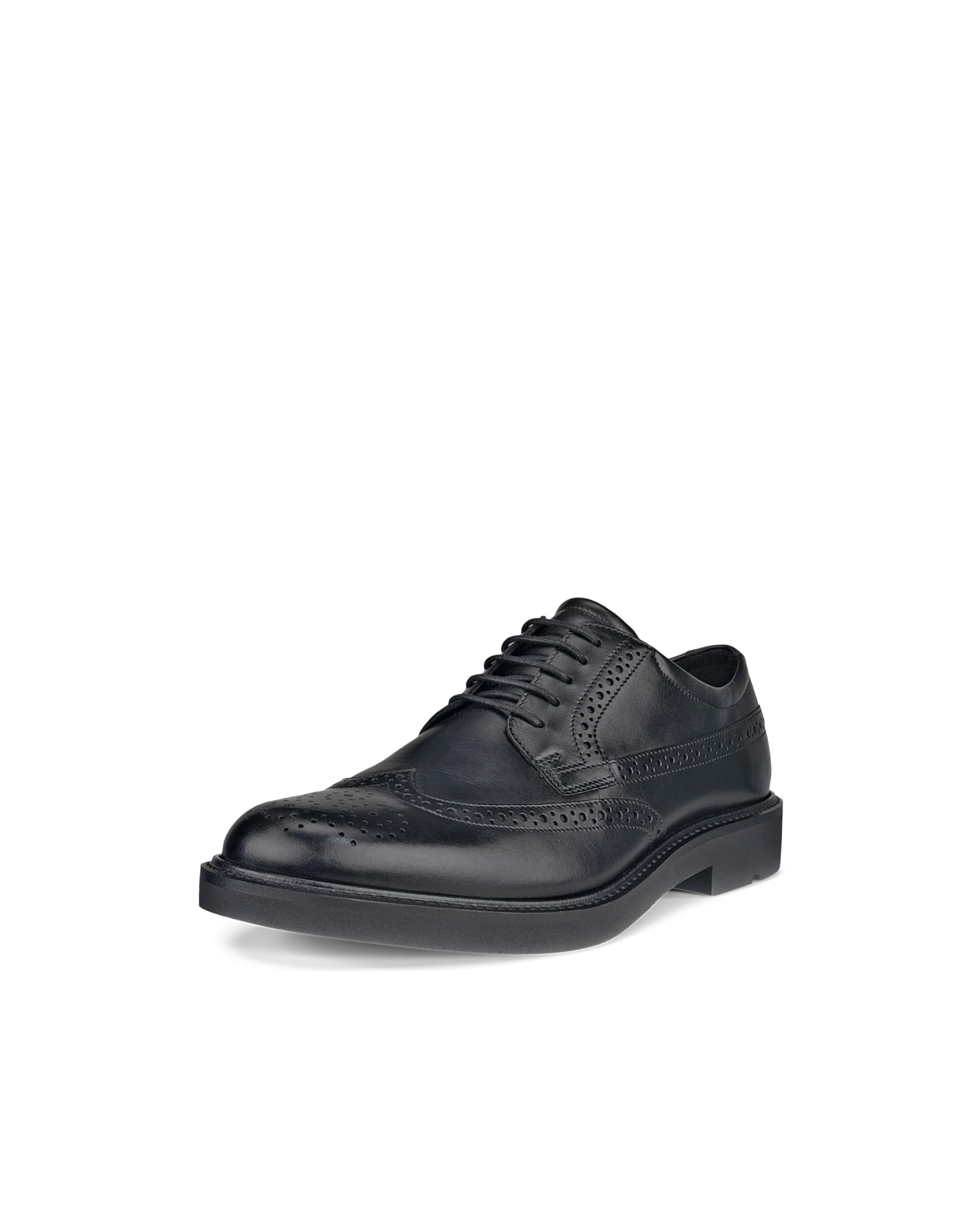
ECCO’s London Wingtip comes with a unique dual-insole system: one fixed footbed and one removable layer that you can take out to add up to 6mm of extra vertical volume. This is one of the simplest ways to create a deeper toe box without buying a shoe labeled “diabetic” or “orthopedic.” The Recoil midsole technology uses a TPU-injected platform that returns energy on each step, which helps reduce the impact load on the metatarsal heads.
The wingtip styling is versatile enough for business casual or full suits. The leather is ECCO’s own “Hydromax” treated, which provides water resistance without a stiff membrane lining. The non-slip rubber outsole performs well on wet and dry pavement, making this a strong commute shoe. The double insole system means you can run a thinner orthotic with the top layer in place or remove both for a thick custom insert.
Sizing is notoriously inconsistent. Multiple buyers report going down a full size (from 8.5 to 6.5) to find the right fit. For neuroma patients willing to test sizing, the ECCO London offers the most forefoot volume control for the dollar.
Why it’s great
- Dual-insole system adds up to 6mm vertical toe room
- Recoil midsole reduces metatarsal impact
- Hydromax leather is water-resistant without stiffness
Good to know
- Sizing is inconsistent; requires returns to find correct fit
- Decorative stitching may loosen with wear
6. Dr. Comfort William-X Double Depth Diabetic Shoes

The Dr. Comfort William-X is built around a “double depth” last, meaning the interior volume is significantly deeper than a standard dress shoe. This extra vertical clearance is the single most important feature for neuroma patients because it prevents the metatarsal heads from being compressed downward. The shoe comes with two insoles: a standard foam layer and a set of gel inserts that you can stack or swap to fine-tune pressure distribution.
The upper is a soft, full-grain leather with a single Velcro strap closure that is discreet enough for business casual settings. The strap is positioned at the midfoot, which avoids putting pressure on the neuroma site. The outsole is a lightweight rubber unit with a rocker profile that shifts the gait cycle forward, reducing the time the forefoot spends in the push-off phase. Several buyers who also struggle with neuropathy and arthritis report that these shoes cause zero rubbing or hotspots.
One notable design flaw: the tongue is short and tends to slide forward, which can create a pressure point on the top of the foot for those with high-volume insteps. A small added Velcro strip can fix this, but it’s an annoyance out of the box. The William-X is not the most stylish dress shoe on this list, but for pure forefoot relief and orthotic accommodation, it’s the most forgiving design.
Why it’s great
- Double-depth last provides maximum vertical toe room
- Includes both foam and gel inserts for custom pressure relief
- Rocker sole reduces metatarsal loading during gait
Good to know
- Tongue is short and can slide forward during wear
- Styling is more casual than traditional oxfords
7. Orthofeet Men’s Orthopedic Moreno Water-Repellent Leather Wingtip Oxford

The Orthofeet Moreno is built around a wide, stretchable toe box with an ergonomic sole that provides excellent forefoot splay. The upper is water-repellent leather, but the internal lining uses a Lycra-like material that doesn’t create friction against the neuroma. The adjustable insoles are designed to accommodate various arch heights, and the removable footbed can hold a metatarsal pad without raising the foot uncomfortably close to the upper.
Podiatrists commonly recommend Orthofeet for neuroma and plantar fasciitis patients because the bed uses a mild rocker profile that reduces forefoot pressure. The outsole is lightweight and slip-resistant, making it practical for all-day wear in an office or hospital setting. Multiple reviews mention that the toes feel “free” inside the shoe — a direct result of the vertical and horizontal space in the toe box.
The trade-off is aesthetic. The Moreno looks like a comfort shoe, not a high-fashion oxford. The wingtip detailing is subtle, but the overall silhouette is chunkier than a traditional dress shoe. The color is also darker than what some buyers expect from the product images. For neuroma patients who prioritize function over fashion, the Moreno offers the most consistent comfort feedback of any shoe in this price tier.
Why it’s great
- Wide, stretchable toe box allows natural forefoot splay
- Adjustable insoles accommodate custom orthotics
- Rocker profile reduces pressure on metatarsal heads
Good to know
- Chunky silhouette looks less formal than traditional oxfords
- Color may appear darker than online photos
8. Dansko Women’s Sam Sandals
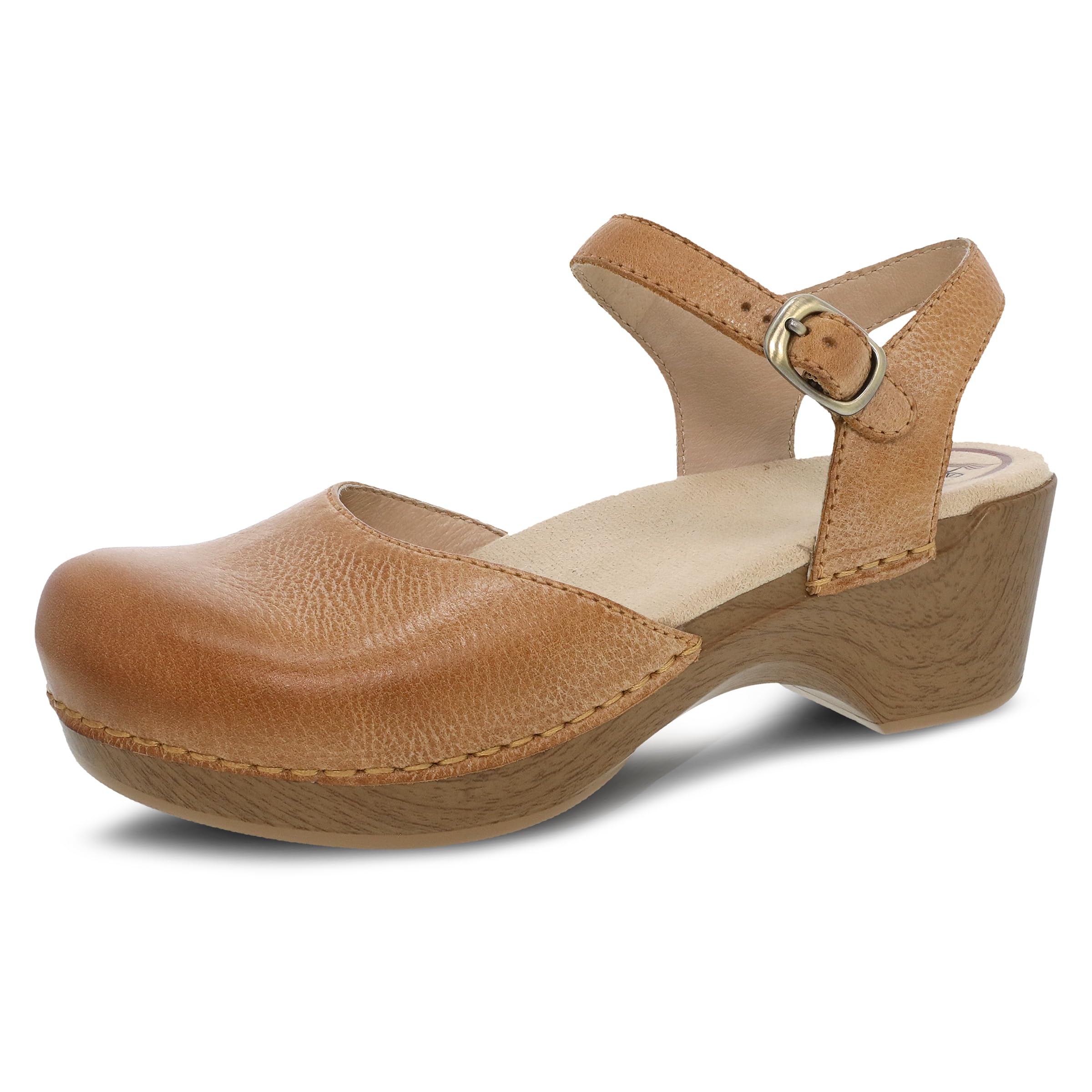
The Dansko Sam is a dress sandal that provides exceptional arch support and a cushioned footbed, both of which help stabilize the foot and reduce the rotational torque that can aggravate a neuroma. The suede-covered microfiber footbed is soft and conforms to the foot over time. The open-toe design eliminates all lateral forefoot compression, which is a major advantage for neuroma sufferers who find closed-toe pumps or peep-toe heels too restrictive.
The Sam features Dansko’s signature rocker-bottom sole, which promotes a heel-to-toe gait that offloads the metatarsal heads. The ankle strap is adjustable, though several buyers note that the left strap can be overly tight and cause bruising. The heel height is modest, keeping the foot in a neutral position that doesn’t shift weight aggressively onto the ball of the foot.
Color accuracy is a common complaint — the photo shows a richer brown, while the actual shoe is a very pale tan. The Sam is best suited for warm-weather formalwear, office attire, or wedding guest outfits where a closed-toe pump would typically be worn. It is not a full-coverage dress shoe, but for neuroma patients who need an open, supportive sandal, the Dansko Sam is the most accessible option.
Why it’s great
- Open-toe design eliminates lateral forefoot compression
- Rockered sole encourages a low-impact gait
- Excellent arch support stabilizes the midfoot
Good to know
- Ankle strap can be tight on one foot for some wearers
- Color is significantly paler than product photos
9. Dr. Comfort Wing Men’s Therapeutic Diabetic Extra Depth Dress Shoe
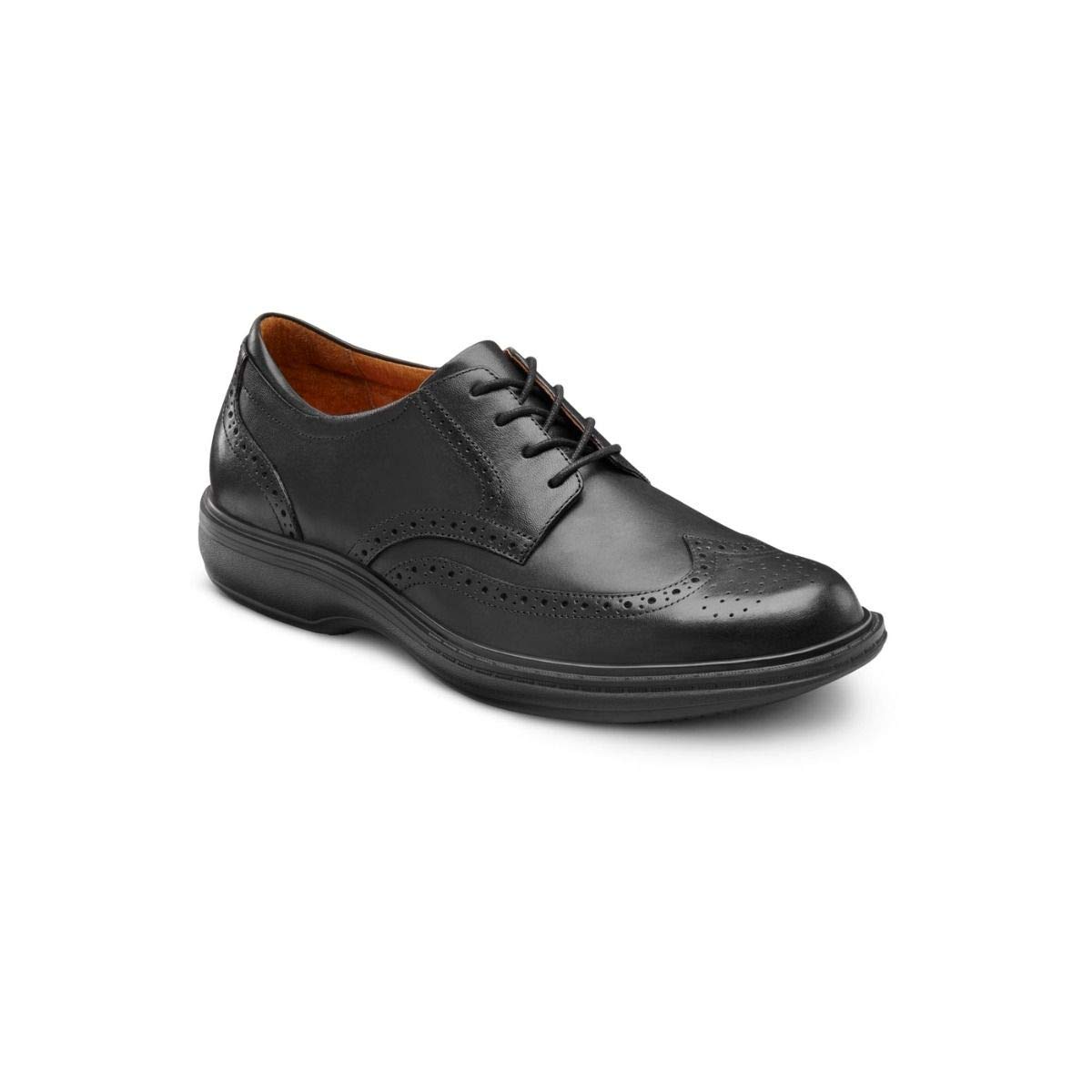
The Dr. Comfort Wing is a lace-up therapeutic shoe with an extra-depth design that provides vertical clearance for custom orthotics and metatarsal pads. The upper is a full-grain leather that holds its shape well without being excessively stiff. The interior is smooth and seam-free, which reduces the risk of irritation on the dorsal surface of the foot. It includes an extra insole that provides additional arch support for those who don’t need a full custom insert.
Reviewers who wear AFOs (ankle-foot orthoses) report that the Wing fits well over the brace, indicating a generous internal volume. The outsole is a lightweight rubber unit with a moderate tread pattern that provides traction without adding bulk. The lace-up closure allows you to adjust pressure across the instep, which is important for managing the exact location of your neuroma pain.
Buyers note two issues: the shoe is not as wide as the “extra-wide” label implies, so those with truly wide feet may find it too narrow. Additionally, the color in the product images is misleading — the actual brown is significantly different from what is advertised. The toe box is round and generous, but the overall fit is best suited for medium-to-wide feet rather than ultra-wide. For the price, the Wing is a solid entry-level extra-depth dress shoe for neuroma patients.
Why it’s great
- Extra-depth construction accommodates thick orthotics
- Smooth, seam-free interior reduces irritation
- Lace-up closure allows precise pressure adjustment
Good to know
- May not be wide enough for truly wide feet
- Advertised color differs from actual shoe
FAQ
What is the difference between extra depth and double depth for neuroma relief?
Can I wear a standard dress shoe if I add a metatarsal pad?
Are open-toe dress sandals better for neuroma than closed-toe oxfords?
Final Thoughts: The Verdict
For most users, the best dress shoes for morton’s neuroma winner is the Allen Edmonds Park Avenue because it combines a Goodyear welt, full recraftability, and the widest width range (AAA to EEE) in a classic cap-toe profile that doesn’t look orthopedic. If you want a shoe with the most vertical toe-room out of the box, grab the Dr. Comfort William-X. And for warm-weather formalwear where lateral compression must be zero, nothing beats the Finn Comfort Gomera with its adjustable straps and fully removable cork footbed.

Mo Maruf
I created WellFizz to bridge the gap between vague wellness advice and actionable solutions. My mission is simple: to decode the research and give you practical tools you can actually use.
Beyond the data, I am a passionate traveler. I believe that stepping away from the screen to explore new environments is essential for mental clarity and physical vitality.