Our readers keep the lights on and my smoothie glass nicely filled. As an Amazon Associate, I earn from qualifying purchases.
Moving a loved one from bed to wheelchair or repositioning them during the night shouldn’t require brute force or put your own back at risk. The right transfer device turns a two-person struggle into a smooth, controlled glide, protecting both the caregiver and the patient from injury and discomfort.
I’m Mohammad Maruf — the founder and writer behind WellFizz. I’ve spent hundreds of hours analyzing the engineering, material science, and real-world testing data behind patient transfer aids to identify which designs deliver genuine safety and ease.
This guide breaks down the top-rated devices for safe and smooth patient transfers based on weight capacity, handle count, material breathability, and clinical-grade construction.
How To Choose The Best Devices For Safe And Smooth Patient Transfers
Selecting the right transfer device depends primarily on the patient’s mobility level, weight, and the types of surfaces being moved between. A single caregiver assisting a partial-weight-bearing patient needs a different tool than two caregivers managing a full-body lift. Factor in material durability, ease of cleaning, and whether incontinence protection is required, and the decision becomes much clearer.
Weight Capacity and Patient Size
Every transfer device carries a manufacturer-rated maximum load, typically between 200 and 500 pounds. For bariatric patients or those who are entirely dependent, prioritize units with a 400-pound or higher rating. The safety margin prevents seam failure during lifts and keeps the patient stable. Always match the device’s rating to the heaviest scenario you expect, not just the patient’s current weight.
Material and Friction Control
The surface the patient slides across determines how much effort is required. Nylon slide sheets reduce drag considerably compared to cotton draw sheets. For patients with fragile skin, a smooth nylon or polyester top layer prevents shearing injuries. Wood transfer boards offer a rigid, low-friction path but require a patient who can slightly assist the slide. Breathability also matters for patients who spend hours on the pad, as waterproof nylon can trap heat and moisture.
Handle Quantity and Grip Design
More handles give caregivers more leverage and better control during turns and lifts. Sheets with eight handles work well for repositioning in bed, while belts with six handles provide lateral support during walking transfers. Look for reinforced stitching at each handle point and a grip that accommodates different hand sizes. Cutout handles on transfer boards and sewn loops on slings both serve the same purpose—secure points to pull without slipping.
Quick Comparison
On smaller screens, swipe sideways to see the full table.
| Model | Category | Best For | Key Spec | Amazon |
|---|---|---|---|---|
| Simply Seniors Positioning Pad | Bed Pad | Dual-purpose incontinence & lift sheet | 400 lbs, 8 handles, 34×52″ | Amazon |
| Weybaihe Transfer Board | Slide Board | Wheelchair-to-bed/car bridging | 500 lbs, 24x8x0.75″ | Amazon |
| Posey Gait Transfer Belt | Gait Belt | Walking aid & fall prevention | 6 handles, 28-52″ waist | Amazon |
| TINFAU Bed Positioning Pad | Bed Pad | Turning & sliding in bed | 350 lbs, 8 handles, 45×36″ | Amazon |
| Vive Patient Lift Sling | Full Sling | Full-body mechanical lift transfers | 400 lbs, 4 sling points | Amazon |
| NEPPT Transfer Belt | Wrap Belt | Two-person stair or pool transfer | 200 lbs, 4 handles | Amazon |
| TINFAU XL Positioning Pad | Bed Pad | Full-bed repositioning & bariatric use | 450 lbs, 14 handles, 60×40″ | Amazon |
In‑Depth Reviews
1. Simply Seniors Absorbent Positioning Bed Pad
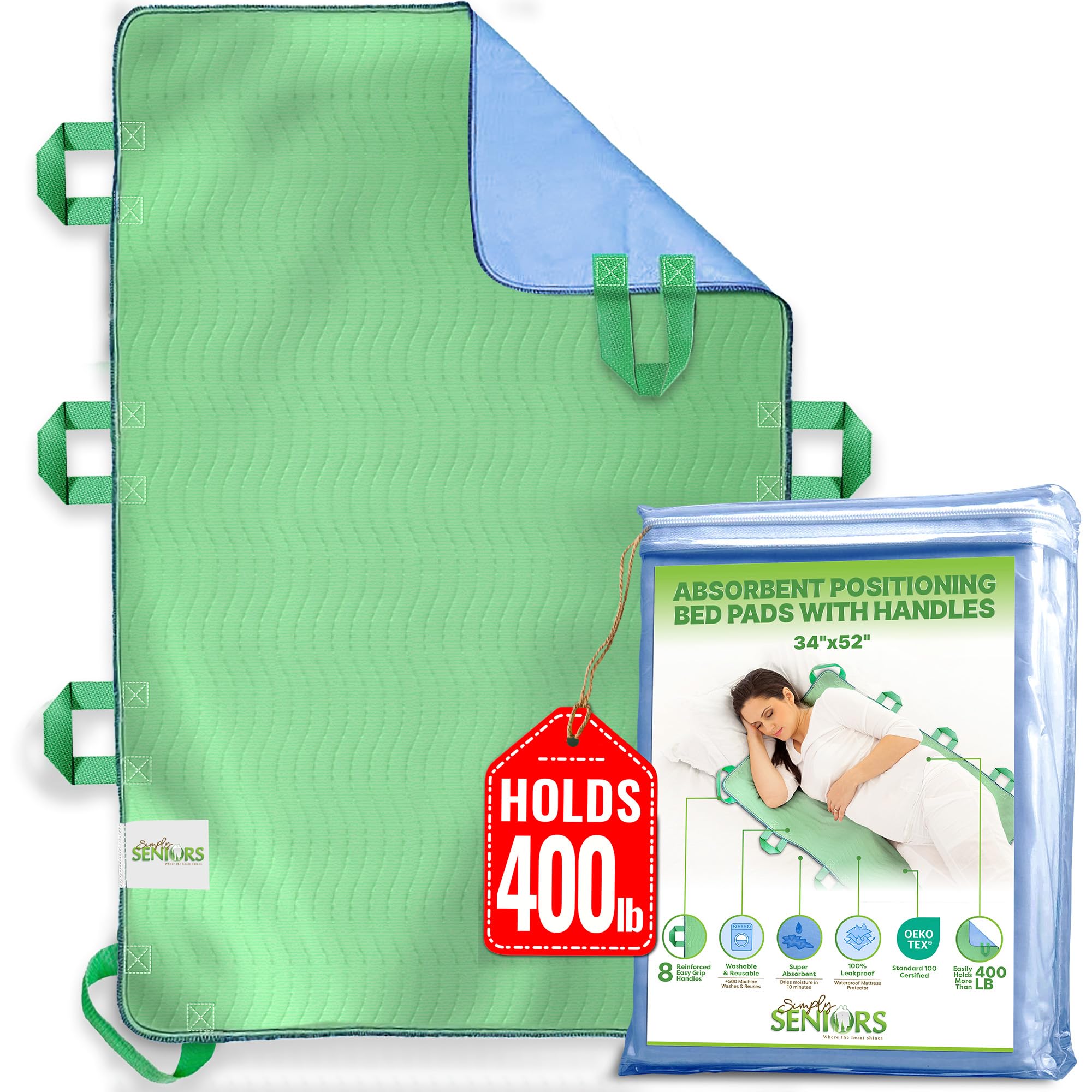
The Simply Seniors pad blends the functionality of a positioning sheet with an absorbent draw pad in a single 34×52-inch unit. The top layer dries in approximately ten minutes after absorbing up to twelve ounces of fluid, which reduces the risk of skin irritation for incontinent patients. It supports up to 400 pounds and comes with eight handles that let caregivers reposition a patient without dragging skin across the sheet.
The green and blue color scheme is practical for medical environments, and the polyester-rayon blend feels softer than most waterproof nylon pads. Users report that the handles hold firm without tearing during daily use, and the pad retains its shape through machine wash cycles. It is reusable up to 500 times, making it a strong value for long-term home care.
One limitation is that the absorbent layer adds thickness, which slightly reduces the low-friction glide compared to pure nylon slide sheets. Caregivers looking for pure slide assistance may prefer a dedicated slip sheet, but for those managing both incontinence and repositioning, this dual-purpose design is hard to beat.
Why it’s great
- Two-in-one absorbent and positioning sheet saves changing pads
- Quick-dry top layer minimizes moisture against skin
- 400-pound capacity with durable stitched handles
Good to know
- Thicker construction reduces slide efficiency
- Foam pads are for overnight use only, limiting its positioning role at night
2. Weybaihe Slide Transfer Board

This 24x8x0.75-inch wooden transfer board offers a rigid, ultra-smooth surface for bridging gaps between a wheelchair, bed, car seat, or sofa. The polished and sealed surface allows patients who can slightly shift their weight to slide across without snagging clothing or skin. Two contoured cutout handles give caregivers precise control during the transfer while keeping their grip close to the board for better leverage.
The board handles up to 500 pounds, which covers bariatric and heavy-set patients without flexing or creaking. Reviewers note that the varnish coating remains intact after months of frequent use, though some report minor surface scuffs after six months of daily transfers. The wood construction is non-slip against the receiving surface when placed correctly.
This board is ideal for patients who retain some upper body strength and can assist the slide by pushing with their arms. It is less suited for completely dependent patients who cannot shift their own weight, as the caregiver must do all the sliding work. The 24-inch length works well for most car and wheelchair distances but may be short for extra-wide wheelchair gaps.
Why it’s great
- Smooth sealed surface prevents skin shear and snags
- Cutout handles offer secure, comfortable grip for caregivers
- Ridged design holds up to 500 pounds without bending
Good to know
- Requires patient to partially assist the slide
- Wood may scuff over time with heavy daily use
3. Posey Gait Transfer Belt
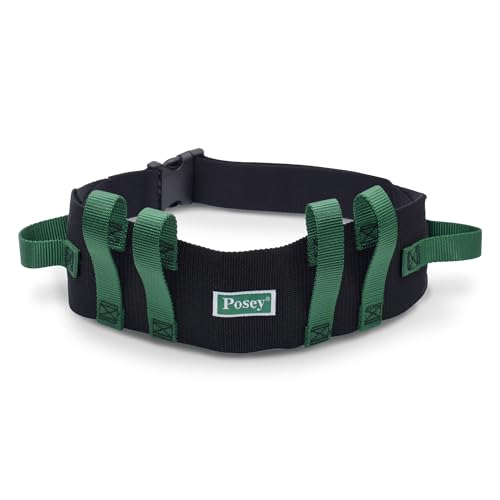
The Posey 6537Q is a classic extra-wide nylon gait belt built for fall prevention and ambulatory support. The 4-inch webbing distributes pulling force across a wider area than standard 2-inch belts, which reduces discomfort for the patient during sit-to-stand lifts. Six sewn-in grab handles surround the belt, giving a caregiver access from any angle when assisting a patient up stairs, into a car, or during walking.
The quick-release buckle allows the belt to come off instantly in an emergency or during full transfers. The belt adjusts to waist sizes from 28 to 52 inches, fitting a wide range of body types. Reviewers praise its durability in both home health and clinical settings, with some reporting years of daily use without fraying or buckle failure.
Keep in mind that a gait belt is not designed for full weight-bearing lifts of a completely dependent patient. It works best when the patient can bear some or most of their own weight. For dead-weight transfers, the belt’s handles are adequate for pivoting but not for hoisting the patient entirely off the ground.
Why it’s great
- Extra-wide webbing reduces patient discomfort during lifts
- Six handles provide multiple grip points from any side
- Adjustable from 28 to 52 inches with a quick-release buckle
Good to know
- Best suited for partial-weight-bearing patients
- Not designed for full-body lifts without a mechanical aid
4. Vive Patient Lift Sling
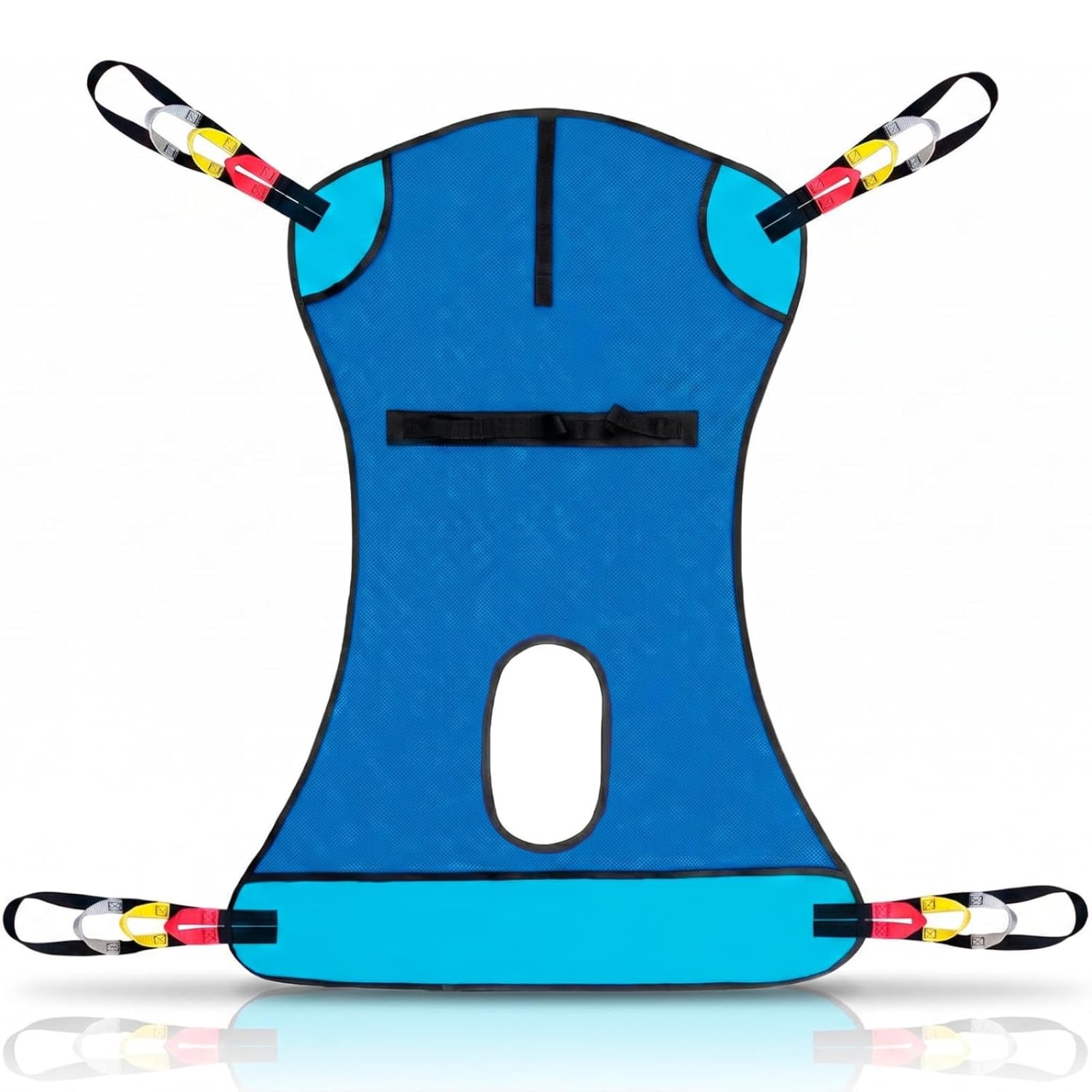
The Vive patient lift sling is a full-body mesh support designed for use with floor-based mechanical lifts. Four reinforced sling points at the corners connect to the lift’s spreader bar, while three additional hand grips under the sling let caregivers adjust the patient during the transfer. A reinforced toilet opening allows for commode access without removing the sling, which simplifies bathroom routines.
The mesh fabric is lightweight, breathable, and water-resistant, making it suitable for shower or commode transfer scenarios. It supports up to 400 pounds with reinforced stitching at all stress points. Users report that the sling feels secure and assembles easily with most Hoyer-style lift frames.
One limitation is that the sling’s single-piece design lacks a third set of attachment loops, which some caregivers prefer for achieving a more seated, upright position during commode transfers. Patients who require a more upright posture may need a split-leg sling. For general bed-to-wheelchair, bed-to-stretcher, and shower chair transfers, the Vive sling performs reliably.
Why it’s great
- Four sling points and three adjustment handles for fine positioning
- Reinforced commode opening eliminates full removal for bathroom use
- Breathable mesh reduces sweating during prolonged transfers
Good to know
- Lacks third attachment row for a more upright seat angle
- Requires a compatible floor lift—not a standalone device
5. TINFAU 45×36 Bed Positioning Pad

This 45×36-inch repositioning sheet from TINFAU uses a waterproof nylon top layer that provides excellent low-friction glide for turning and sliding a patient in bed. Eight heavy-duty handles reinforced with nylon webbing give caregivers precise control during lateral transfers. The pad supports up to 350 pounds and comes with a storage bag and handle pads for added comfort during long transfers.
Users report that the pad is noticeably thicker and more durable than standard cotton draw sheets, and it makes independent repositioning easier for patients recovering from back surgery. The waterproof backing prevents incontinence leaks from reaching the mattress. The dark blue color hides stains well in a home care setting.
A notable drawback is the lack of breathability in the nylon construction. Several reviews note that bedridden patients develop moisture buildup and skin irritation after extended use. This pad is best suited for repositioning and transfer sessions rather than as a full-time underpad. Caregivers should pair it with a breathable top sheet for patients who remain on the pad for hours at a time.
Why it’s great
- Smooth nylon surface reduces friction for easier sliding
- Eight reinforced handles with included grip pads
- Waterproof backing protects mattress from accidents
Good to know
- Non-breathable nylon can cause sweating and skin irritation
- Not intended as a 24-hour positioning pad for bedridden patients
6. NEPPT Transfer Belt

The NEPPT transfer belt wraps around the patient’s waist and thighs, providing four grab handles that distribute weight evenly during a two-person lift. It is specifically designed for situations where the patient cannot bear weight—such as emergency stair evacuation, pool exits, or car transfers. The polyester fabric is lightweight and dries quickly, making it suitable for shower or pool use.
The belt supports up to 200 pounds, which accommodates most adult patients within a standard weight range. An extra fixed band around the thigh helps keep the belt from riding up during the lift. Reviewers find it particularly useful for getting patients out of a pool or up a flight of stairs when a patient cannot assist at all.
The main limitation is that the belt absolutely requires two caregivers to operate safely. One person alone cannot lift a patient using this belt without risking injury to either themselves or the patient. It is also not designed for single-person sit-to-stand transfers. For its specific niche—emergency evacuation and two-person lifts—the NEPPT belt performs well and stores compactly.
Why it’s great
- Waist and thigh straps prevent belt migration during lifts
- Lightweight polyester is quick-drying for pool or shower use
- Four handles give caregivers balanced, secure grip points
Good to know
- Requires two caregivers—cannot be used solo
- 200-pound capacity limits use with heavier bariatric patients
7. TINFAU 60×40 Positioning Pad

This oversized 60×40-inch positioning pad from TINFAU provides the largest coverage area of any product in this guide, making it suitable for full-body repositioning and bariatric patients up to 450 pounds. Fourteen heavy-duty handles line the edges, giving multiple caregivers ample grip points to turn, lift, or slide the patient without reaching awkwardly. The nylon surface provides a smooth, low-friction glide that reduces shear force on the patient’s skin.
The pad is constructed with a two-layer waterproof nylon fabric. The top contact layer is designed to slide easily against itself, while the outer layer provides a waterproof barrier. Users consistently report that this pad makes repositioning a bedridden parent or spouse significantly easier and reduces caregiver back strain. The 24-month warranty adds peace of mind for long-term heavy use.
Like other waterproof nylon pads, breathability is minimal. The manufacturer explicitly warns against machine drying or direct sunlight, as heat damages the waterproof coating. Caregivers must air-dry the pad, which takes longer than tumble drying. For patients who need 24-hour coverage, pairing this pad with a breathable top layer is recommended to avoid moisture buildup.
Why it’s great
- 60×40-inch size covers the full body for complete repositioning
- 14 handles offer unmatched caregiver leverage and control
- 450-pound weight capacity handles bariatric patients securely
Good to know
- Cannot be machine dried—air drying required
- Nylon surface lacks breathability for long-duration use
FAQ
Can I use a gait belt for a patient who cannot bear any weight?
How do I clean a waterproof nylon slide sheet without damaging it?
What is the difference between a positioning pad and a slide sheet?
Final Thoughts: The Verdict
For most users, the devices for safe and smooth patient transfers winner is the Simply Seniors Positioning Pad because it combines incontinence protection, quick-dry absorbency, and eight reinforced handles in a versatile 400-pound-rated sheet. If you need a rigid bridge for wheelchair-to-car transfers, grab the Weybaihe Transfer Board. And for full-body mechanical lifts with toileting access, nothing beats the Vive Patient Lift Sling for clinical-grade safety and breathability.

Mo Maruf
I created WellFizz to bridge the gap between vague wellness advice and actionable solutions. My mission is simple: to decode the research and give you practical tools you can actually use.
Beyond the data, I am a passionate traveler. I believe that stepping away from the screen to explore new environments is essential for mental clarity and physical vitality.